Damion Lupo on the Law of Awareness: Balance, Tension, Flow, and Making Millions
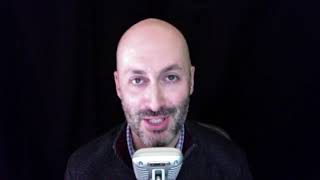
This content was created by Brad Hart. This content was uploaded by Brad Hart. This is a YouTube interview episode titled "Damion Lupo on the Law of Awareness: Balance, Tension, Flow, and Making Millions" (recorded/posted 2018-01-24). It is a conversational podcast-style interview hosted by Brad Hart with guest Damion (Damian) Lupo. The discussion covers Damion's personal hero's journey and financial rise-and-fall (including leveraged real estate losses), lessons on risk management and rules for investing, the distinction between success and fulfillment, cryptocurrency/Bitcoin experiences, habits and morning routines, presence and mindfulness, the martial art he developed (yokido), mentoring and values, and a broader mission framed by Brad's "make more marbles" metaphor about creating resources and impact for others. The excerpt is an extended, candid interview mixing personal stories, practical frameworks, and spiritual/philosophical reflections.
Questions this video answers
2018-01-24
He said he had a $20 million portfolio.
He went from a positive $5 million net worth to a negative $5 million net worth in the span of a year.
DamianLupo.com
Chapters
Welcome to Make More Marbles. My name is Brad Hart and we're here to interview the game changers, the future makers, the co collaborators and creators who are here to collaborate with one another towards a better future for all of us. Enjoy the show. We've got a great guest coming up for you right now. Welcome to Make More Marbles. My name is Brad Hart, and today I am thrilled, excited, stoked, and super grateful to have Mr. Damian Lupo on the show. Hello, Damon. How are you, sir?
Brad, I am so fired up. I can hardly stand it right now. Just based on the last few minutes.
Oh, my God. So, Damian, I were just having a conversation offline about all things related to finance. Damian is a giver. He's a financial master and wizard. He lives in Sedona, but he's currently plotting his move back to Encinitas Cardiff area, which I'm really excited about. And he was so grateful to be on the show that he sent me a huge box of books and red pens and stuff to mark him up. I was like, dude, this is this guy's rad. I'm gonna. I'm going to hook this guy up as best I can. So he's added to the gratitude wall. I'm super excited. The gratitude wall is everybody and everything that I've ever gotten that's physical gratitude is on that wall over there. And grateful to know you, brother, and connect with you. And I know we have a lot in common, so I'm looking to dive into it right now to benefit the people at home who are listening and learning about finance and the future of finance.
Let's deliver, man. Let's do this.
I love it. Okay, Damian, so let's get people coordinates about who you are, where you come from. What's your hero's journey thus far?
So I'm from Alaska. I'm from kind of the normal middle class thing. I did that thing and I went out on the path into going to college and everything, and that just completely didn't work out. I got thrown out of college the second time. The first time I got disqualified out. It just showed me the universe has given me some lessons and some little nudges saying stop doing the traditional. Stop listening to other people. Start listening to your heart. Start listening to your soul that's speaking to you. And. And instead of going to college and doing the. Started dabbling in real estate and the alternatives. So what I did is I listened to people that were doing stuff, not people that were regurgitating academic ideas. And I started doing what they did. And it led into a lot of alternative spaces, like in real estate, where I was listening to seminar guys. Things where you spend 5,000 bucks for a weekend, you learn a few things, you go out, you make 100 grand. That's what I started doing a lot of. So that became my normal and the mainstream, and it led into a lot of other things. But that was really the bridge from the normal to the abnormal, the alternative lifestyle, the alternative finance, where you don't spend 40 years to develop a million bucks in the bank that makes you scared to death you're going to lose it for the next 20. I was really just figuring out how to create money out of thin air and doing it with my brain and finding a reason to be working and not just following everybody's instructions.
I love it. Damian. So what were some of your big failures along the way? Because I feel like, you know, people can. They can relate to failure because everybody's failed, but not everybody can relate to success. Right? Not everybody can look and say, hey, you know, I totally get that, because not everybody's experienced it yet. And trust me, having financial success, as much as you think that's gonna solve all your problems, it really just solves your money problems. And guess what? You're still there. Wherever you go, there you are. So what have been some of the failures along the way that can help people orient to, like, hey, this is a real dude that's gone through some real stuff. He's not some trust fund. Maybe.
Yeah. I mean, the greatest thing that ever happened to me was after about seven years of working in the real estate space, of creating all this money, I had a $20 million portfolio, and I blew it up. So I went from a positive $5 million net worth to a negative $5 million net worth in the span of a year. So, you know, I learned a ton.
Funny how leverage can do that.
It does. And you know what really triggered it was my massive ego and the fact that my focus, my. More. There's a great line in Wall street, too, where the question is, how much is enough? And Josh Brolin says more, because it was never enough. And that was my mantra. It was, okay, I'm going to. I made a million, I'm going to make two. Now I'm a multimillionaire, and then I'm going to have five. And the problem was I was always going for more, and it started breaking me down. So the failure was I didn't see that I had this massive abundance, and it almost killed me. I ended up in the Mayo Clinic and things. The problem really was that I was driving the ship based on more money and not values that were purposeful. There was no foundation. So the ends justified the means. Which means you better get the hell out of the way because I'm going to run over you on the way to the next million. And it's a very dangerous space. So the first lesson there was, before you start, figure out who you are and drive everything you do based on that, not more.
Yeah, it's a great point. This is the Make More Marvels podcast and I always use this Make More Marvels analogy because, you know, that's important right now is we need to make more marbles for more people. We need to make more opportunities, more resources, and find ways to feed and have energy and water and shelter for every human in a sustainable way. And that's the goal. But at that point, guess what? I've made enough frickin marbles. I don't have to do it anymore or the thing can shift. Right? I'm not looking to make more as a function of making more as a compulsion. It's. I have a very specific goal. It's a big, hairy, audacious goal. It's going to take a lot of people in tandem doing it. I certainly don't have all the answers, but it's a goal and I feel like it can be achieved within our lifetime. And I'm working towards it in my way. And I don't always talk about it, but that's a really important distinction is, guys, have an end date for your goals, have a reason for doing this. Ideally, it's in service to others because that's your capacity to give is so much bigger than your capacity to receive.
Well, and think about what's going to be attracted to that. Brad and for anybody that's listening, when you're talking about what you're doing, if you're just. If you're making money and you've made a bunch of money, who's going to be attracted to that? People that are trying to get your money. If you think, if you have a focus on what you're creating to benefit and impact and create contribution and connection, you're going to have people that are wanting to contribute and connect with you. They're not trying to get something from you necessarily. So you're going to attract whatever you're putting out there. And the cool thing is when you're focusing on the contribution and the significance of your impact, one of those two of your six human needs, you're going to end up having so much wealth, money, finance, that's going to be a side effect that you're not. It's. It's going to become overwhelming. If you focus on the money as the focus, you completely screw up the universe's the laws and the rules. Bucky Fuller really talks about this. You've got to get the right thing focused on and let the other thing be the side effect and the benefit versus vice versa.
That's so true. I mean, if you focus on money, you may get money, but you won't be fulfilled. If you focus on fulfillment and service, money is the natural byproduct of that because you'll be excited and happy to work hard. And the benefit of the hard work will be actually getting what you want. And you won't just be attracting an energy of I need to get something, I need to get something. Because that exists in the world. That's part of the human dynamic. Can you dig into that experience a little bit more to kind of flesh it out for some of the people? Because guess what? You know, money problems are money problems. There's problems with not enough money, there's problems with too much money. And you were apparently attracting some energy. So I want to dig into that. Can you give us a story or an illustration of how that's happened or how that showed up in your life?
Totally, man. I wrote it. There's a chapter in my book, Reinvented Life called Success versus Fulfillment. So you just hit the chapter like you just ran into it. And it's what I was focusing on was the accoutrements and the shiny objects and things. And I think a lot of people will think about their vision board. And it has shiny objects, it has big houses and shiny cars. So I did too. Had big mansions and I had Ferraris and I was watching lots of movies. So I ended up buying the Will Smith Ferrari from Bad Boys 2 because I thought that's going to define me as a. And what it did is it got me arrested in six days on Christmas Eve 10 years ago. And I went, huh, okay, that was weird. And it's now a quarter million dollar piece of metal that I'm making payments on. And what I realized was you can go after these success moments, but the problem is they vaporize the next moment they're there and now you've got to pay for them indefinitely instead of the journey where there's actually this fulfillment, where the moments are just one big experience. And I didn't realize that because I was just Going after the next sale, the next piece of income, the next pop. When I was making 100,000, 250,000 a week selling off these houses, I thought, I am so good. And the truth was, I got very lucky. Like people that jumped into Bitcoin 5, six years ago. And hey, you know what, that was good because you were taking action. But it was also great timing. And if you think that it's just you and you deserve all that stuff and you're brilliant, you're probably going to have the universe run over you with a freight train eventually.
Yeah. It's funny you mentioned bitcoin, because I've been in it for a very long time. We were talking about this before the show, and I've realized some massive returns because I made a decision based on the other times I was in, things early, like 3D printing and other things that I was just gonna be like, whatever, maybe will be right. And I'm just gonna hold. And I'm a crypto lifer. Guess what? And now it's just going crazy, right? I think bitcoins at 17,000 today. Ethereum touched 600. Litecoin touched like 400. They shut down trading on some of the major exchanges because it just got so hyperbolic and so crazy. I think everybody's about to lose their mind. Everybody's like, how are you hedging? How are you doing this? I'm like, I've already. I've already said, c' est la vie, right? I've already said que sera sera, and I'm cool. Either way, it does present some challenges. I do have to hold to my word of what I'm gonna do. But I agree, like, people come to me all the time, like, how do I make the kind of returns you made in bitcoin or whatever? What's the next one? I'm like, you know how you do that? You get a time machine and you get a crystal ball. Oh, wait, neither of those exist. Guess what?
And then you know what people won't do? They won't get in when you got in. They won't get into the next thing, whether it's bitcoin or anything else. Because we're so afraid of loss, because we're afraid of making a mistake. We've got been trained to not make a mistake because we're an A society. Like, A's are better than B's and B's are better than C's, and if you get a D, you're an idiot. Well, you're going to have to get a Lot of D's and F's in so many things. If you want to hit a home run out of bitcoin or something and you have to get used to it. So how do you get used to it? You build the confidence muscle by doing things and messing them up and realizing that there's no tiger that's going to eat you because you messed something up. It's a process of going, yeah, all right, that's how the universe works. But unless you're active in the game, you'll never get it. And you'll always be on the sidelines going, I wish I'd done something five years ago.
Yeah, 100%. And Bitcoin is one example. It's just pressing right now. I watched my net worth increase substantially in the last day. It's moving faster than anything that has ever happened before. And it's like all those old feelings come up. I remember this. It's like, wow. It's that same feeling I had when I made a million dollars in a month. And it was like when I was 26, I wasn't prepared to handle that. It destroyed me. Excuse me, but now I'm 32. I like to think I'm a little bit wiser. I'd like to think it's just another one of those and I'm better to handle it. But those same feelings come up. You just get better at dealing with them. It's not that you become fearless. It's not that fear doesn't enter your perspective. It's that you get better at being like, oh, no, that's just fear. I know what to do about that.
Yeah. And it is. You do get. You get trained. You kind of train yourself on the experience of being able to move through it without it paralyzing you. And when you asked about some of the mistakes and things, one of them was just practicing losing, practicing losing money and realizing that like when I lost 5 million, well, technically lost 10 million, went from positive 5 million to negative 5 million. The process there that was so devastating was that my self worth and net worth were so entangled and I thought I was my balance sheet. And I think a lot of people look and they go, hey, you know what? I'm a millionaire. I've got some stocks, bonds, my house, blah, blah, blah. And that's the defining thing for them. And what they don't realize is until they move away from that, they're not really going to be totally happy and they're not going to have the self worth that's based on Something that can't be taken away because let's be honest, Bitcoin can blow up. House markets, housing markets can all vaporize. California is great for that. One day you're a millionaire with your house, the next day you're trying to figure out how you're going to short sell your house. So these things happen. And it's because we've tied our net worth and self worth together that we're so emotionally involved with it. When you start disconnecting from that, and that's where you have to really find what makes you happy. Where you're in service to others and humanity because you really own your self worth. And it's not just your balance sheet anymore.
Yeah, it's that old cliche, right? If you love what you do, you'll never work a day in your life. The only way I ever found that was working in service to others. That was it for me. And I'm not saying everybody's driving by the same things. And I, I have a working theory again, which I assign a probability to. I don't. I kind of. Here's the thing that I may have never discussed before on the show, and maybe you have a similar lean, is that there's a possibility of everything.
Right?
It might be very, very remote, but it's still a possibility. Right? Just because it's never happened before doesn't mean it hasn't happened or couldn't happen. You know, you might not know about it or it might happen at some point in the future. So with every possibility, I assign a probability. And when I'm making decisions, I try to make the best, most probable decision based on the outcome that's most likely. So I don't discount all the craziness in the world because I know it's possible. And I also don't get too hung up on it.
Right?
That's a possibility. Okay, we'll sign a 0.0001% possibility. But if it's a very likely thing, like 70% or more, I'm probably going to bet that way. But there's no 100% certainty in this world. The entire game of life is how to manage risk. And there's risk doing everything right. Risk is just a possibility of loss, in case you haven't defined it before. There's risk in taking a shower. You put down a bath mask. You don't slip and crack your head open. There's risk in crossing the street. You look both ways, just like parents said to. Those are ways that you manage and mitigate Risk with your particular situation, you were $5 million up and then $5 million down. So into the negative, you didn't have the proper risk controls in place. Right. Is that safe to say?
Totally did not understand that concept at all.
So now, looking back, how could you have avoided that? Or could you have avoided that? Or do you think you were just a total lost cause? And nowadays, what are some of the vehicles and systems and frameworks that you use to now protect your wealth and grow it more sustainably?
Well, let me say. The first thing I'll say is that thank God I didn't avoid that because it taught me so much. And that was one of the things that I'm super grateful for. So, like, we were talking about gratitude walls and all the great gratitude we have for things. I have an entire, like, kingdom of gratitude for all the stupid things I've done, and I'm glad I got to do all those and that I'm able to learn from them. The framework that I use now is my rules of engagement, my rules for business, and my rules for investing. And they're black and white, and I look at them at least once a year and adjust as needed. But these are to protect me from me, because I'm human and I'm emotional, and I see something going crazy in the market, and I understand why I invest the way I do. I really follow a lot of what Ray Dalio talks about in his book Principles, where I. I'm understanding why.
You mean this book that's on my desk at all times, the book that.
You'Re looking at right there? Yeah. I mean, it's. When I make a decision, I look at that decision and I say, okay, I just invested five grand or 50 grand, and why did I do it? And then it's. I can duplicate it. But I can also ask before I make the decisions now, because I have this framework. Does this fit into my framework? Like, if somebody says, I've got this great deal and it's a chain of strip clubs, I go, awesome. Good luck. It's not something I do. It's not part of my rule set. So I filter out.
Exactly.
No, I. I am really good at saying no to almost everything. And that's the. That's. Hey, that's a big secret between.
That's something I'm going to learn from you, Damien. I got to say no more because I'm just. I'm at the capacity, man. I get it.
And what everybody. Everybody's got options in every direction, and they all sound really exciting. And. And then you get totally splintered and fractured. And how deep do you go? You go really wide. But that's not. That's not the depth of connection. It's not the depth of understanding. You've got to narrowly focus and then become. Become something special in that space versus, hey, I can talk about 42,000 different things. Okay, great. And then I'm done after two seconds. Cause that's all I know.
Yeah, that's good. An inch. An inch deep times a million or a million inches deep.
And who do we look up to? Do we look up to the person that's amazing on Jeopardy. Or do we look up to the person that did one thing for 50 years and they became a master? Because they really focused on mastery. They focused on going as deep as possible. And it was a lifelong journey, not a year long.
I look up to Ken Jennings. That guy's awesome.
Are you kidd.
Personally, I think he's amazing. I just think he's one of the most impressive human beings. And if you ever follow him on Twitter, by the way, he's really fascinating. But that's jeopardy. There's always. There's always the exception to the rule.
I guess there are.
Okay, so, Damien, I want to get more of your kind of practical philosophy on life, because this is really opening up a couple of things. So one of the things you talked about was how you have your rules for engagement. You review them every year. You update them as necessary because you want to protect yourself from yourself. You're an emotional human being. I get that 100%. What are some of these other types of frameworks or rules or habits that you form that have created a life that now at 40, is a heck of a lot better in your life at 30, when everything fell apart.
One of the big things that I've realized, this had a lot to do with forming yokido, the martial art that I developed between yoga and aikido and reiki, it was really understanding tension and conflict. And in our lives, there's so much conflict with. Whether it's our job or with our neighbors or spouse or whatever. And we're constantly engaging in things that are either tension free or tension full. And if you're in a martial arts studio, you can tell where there's tension because people are. They're not really grounded. And that's typically the same thing we see in business, where either think people are really grounded and they're powerful, or there's a lot of tension and conflict, and you just end up beating yourself up. And there's a lot of blood and agony. And so that's, that's a big shift for me. But they're one of the same that you can. You recognize tension and conflict when, when you just are present. And this is the biggest shift anybody can make is finding ways to go more present. That's where the power is. It is not in doing things, it's in letting go and actually seeing things and being present. The fastest way to find out if somebody's present or not in a dojo is to grab onto them. And if you're not present, they're going to end up on the floor. And the same thing in life, you're going to end up losing your balance sheet, your life, everything if you're not present. So we have to find ways to go into presence. And that's why most of my days start off that way. I blank slate my morning where I meditate and I'm sitting still because everything is trying to get our attention all the time. And if we're not present, we're going to end up on somebody else's agenda instead of actually developing our own life.
I love that. And I have a similar way about myself, is that I've made my morning sacred. They start every single day the same way. And, you know, provided I'm at home and doing my normal routine, because it's just the only time, if I let it become somebody else's time, it's no longer mine. And then my life starts to deteriorate and it's really easy for me to work late into the hours, and you know that. But if I don't have that sovereign time, I don't care if I have to get up at 4 in the morning, I'm going to have that time.
There's a guy that has a book. His name is William McRaven. He's a Chancellor at University of Texas, and he wrote a book called make youe Bed. And. And when I was in Austin, I bumped into this guy and it really, really hit me that there are these rhythms that you can set up. And the reason that it's so important to do these things to make your morning sacred, like you just said, is that when you set yourself up, you completely shift your mindset and you hit the ground running based on success and based on focus, that you're in control. And if you get up and you chase your iPhone and you're just adjusting to Facebook's feed or whatever, you really don't have any control. And then by the end of the day, you're just completely zapped. And you go, damn. All the things that were important didn't even get done. So you really have to set yourself up. And he talks about the first thing he does since he was in the Navy was he gets up and he makes his bed. Success number one. Check.
I love that. And that book is called make youe.
Bed by Mr. William McRaven. Admiral McRaven.
Wonderful. I'm going to check that out. I love book recommendations. Who have been some of your key influences in life? Damian?
I had a lot of. It's funny because the way I look at my life, and this is a really great question, and I can look at the different mentors and people in my life that have been one of these two things every day. I think it's really important to ask yourself, are you an example or a warning to the future? And I spent a lot of time being a warning. Here's some great things to never do. And so I look at some of these people. Like in the 2000s, when I was building up my real estate wealth, I was focusing on mimicking and modeling other people that had been very successful but not really fulfilled. And I got what they got. I got the millions of dollars and everything. And so my old chairman that I was paying $10,000 a month to for a half hour conversation, people that I hired to coach me and things, I modeled them and I got what they got. The problem is I got what they got. So I got the house and the cars and the women and everything else. But what I didn't get was real good ethics and good morals. I got what they had because I was mimicking them. And I got a really kind of a dirt bag inside, which is why I almost lost my life at the end of this thing because I was so toxic. These mentors, I realized you have to look at the outside and the inside, figure out if these are people you really want to be. Are they smart? Are they successful? Do they have integrity? Are they healthy? I was only looking at the surface level stuff. And you really have to look overall, who are you modeling? Do you really want their life? Do you really want pieces of their life? Because you'll become them if you model them enough.
Yeah. I actually have a really fun kind of theory about reality.
Right?
Reality starts with your habits, but it doesn't start there. It really goes back to, like, what do you value? Right? What you value becomes what you believe. What you believe becomes what you think. What you think becomes what you say. What you say becomes what you do. Which becomes habit over time. You wire and fire. Neurology becomes, you know, you're a Tony Robbins guy, you know that? And then your reality, you got to look back at your values.
It all starts there. So what happens if you don't have values? You're all over the place and you become. You kind of become a mess because you're going to adapt to other people's insecurities and other people's problems because they're going to mask those. You're going to take Facebook's highlight reel and you're going to think, I need to do that. So you're going to do whatever it takes to match people. And that's not even reality. It's just. It's like the cool parts, but not the pain. And then you realize there's pain there too. So you really have to start. You have to ground down and be present and go, you know, who. What matters to me? What do I really care about? Do I care about growth? Do I care about connection? Do I just care about more bits of paper with dead presidents, like, what matters?
Yeah, and I think that's a good point. But I want to also say that I think pain is something to be grateful for. I think pain shifts us into who we need to become. I think you, you know, my experience of life has been whatever you need, want and desire, life can give you, provided you're willing to grow into the person for whom that shows up effortlessly.
There's this weird thing that we try to avoid pain. I grew up with a father that was from New York City, and he grew up seeing people killed all the time. He was basically broke, starving to death almost on the streets. And so he went from New York to Alaska and it was all about avoiding pain. It was about avoiding mistakes. It was about safety and security. So great. We got the certainty focus in our six human needs, but we really didn't get the connection and we didn't get the love. We, we didn't get these other things, the variety of traveling and fishing and whatever it was. And so he was hyper focused on that one thing because it was all about survivability. And we missed out on a lot of stuff. And it was sad because there was so much fear driving him. And the truth is, you know what? You break an arm, something happens, you lose, you make a mistake, and you're right, you grow. And so that pain is incredibly powerful. It gives you feedback and you learn and grow from it. And if you don't have the pain, you're just going to be you're going to be tiptoeing safely to death's door. I mean, it's going to be a disaster.
Yeah, I love that. So I'm from New York as well. I spent eight years in the city and grew up on Long Island. Is your father still with us?
No, he passed away a few years ago. Massive. One of the mentors, you know, one of the most powerful things in terms of mentors. I learned a lot from him. We fought for years and years and years. The last few years, we spent a lot of conversations talking about the weather in Alaska. And if you want to guess what the weather in Alaska is, it's cold and dark, like all the time. So the conversations were very similar every day, pretty much, except for the one day it rained in June. And we built this relationship over the last few years. Right before he died, I went up to Alaska and spent some time with him. I found out he was stage four and with cancer. And I flew up there the next day and we sat down and we were talking and I was. In terms of gratitude, I just went up there and I said, okay, I'm going to tell him thank you. So I sat there and I said, dad, thanks for sticking around. Thanks for being in my life. You were mean as hell. You yelled a lot. You hated your life. And he's like, I did. I hated my job so bad. I said, I know. I go, but you're really kind of nice now. He goes, yeah, you know what, though? And we're both. We're kind of just both crying and kind of a mess in this coffee shop. And he just. He looked at me and he said there were so many things that I wanted to do. And I died a little bit hearing him say that because I could feel regret. And I never felt regret from anybody else. And he had a matter of weeks until he was gone. And he realized I made some decisions that I wish I could undo. And it made me think, I am never going there. So whatever matters, I'm going to go for it. And as many people as I can bring into that space as possible, my mission is now in front of me.
That's a perfect transition. And thank you for that story. It's a beautiful story. And I'm glad that you got to reconnect to your father. And I'm sad. But I'm also grateful that he was that anti role model for you as my dad was for me who drank himself to death when I was 24. I know what I don't want in life and that's created the life that I do have. I'm grateful for my dad for being that for me. What do you want? What's your goal? What's your mission? How do you know you've won? How have you made enough marbles in the world? When will you know?
So the amount of marbles I make is really not as significant in terms of me focusing on that. I do track it. I'm a numbers geek, so I'm always looking at numbers and I can diagnose people's balance sheets.
And by the way, numbers are only one aspect of what a marble could be a metaphor for. So it could be, you know, relationships, connections, resources, opportunities, change in the world, whatever it is. The marbles are just a stand in for insert thing here.
Yeah, so 10 years ago, my marbles were just money. And so the shift was going after it was saying, okay, what, where do I lose myself? Where's the flow? Where's the natural essence of me showing up? And it was in teaching. And so I'm finding. My question is to myself after that time a few years ago with dad was how do I do what I do? How do I support and help more people? Because I've got this ability to teach people about finance, helping them let go so they can have their impact. But I'm doing it in such a small way. And my question was, how do I do this and give this to the whole world and lift people out that want to grab on and learn how to do this and be free? So the focus now is to give everything I have to as many people as possible. And if that means giving it all away, I'm good with that. I trust in that. It's a big shift between believing something is true and trusting and living it. And that's where I'm shifting into, is the trust where I'm willing to give away what I'm doing. And it's a very confusing thing to a lot of people because they're so used to what's the exchange. And the exchange is I'm fulfilled and I get lost in my work. And that's what drives me. So I'm finding that more and more. And that's where I live.
Yeah, it's a beautiful thing to just know you're in flow and to know like you start, it's like this fun. I don't know how spiritual you are. I assume you're pretty spiritual based on the conversation we had. But like, it's like this fun give and take with God of the universe. The flying Spaghetti Monster, or whatever you like to call it, where it's like, okay, what are we gonna do next? Okay, cool. And then you just like, intend and you get clear and you get centered and focused. Then all this stuff starts showing up. All you have to do is like, just react to it. It's not life is happening to me anymore. You're no longer a victim. It's not life happening by me. It's not like I got a hustle, right? I've transitioned that. It's not that life is happening, you know, through me or for me even. It's like life is happening as me. I'm just showing up and intending. And then all the vibrational pieces are coming into alignment. And this is gonna sound super woo to some people list, and I get that. But I. And I. And I understand because I used to be the skeptic about all this. But there's something to it that we can't scientifically explain. I think it has to do a lot with quantum theory if you really want to go deep on the science and geek out about it. But there are certain things that you can literally manifest in your existence, provided you're willing to a visualize and get clear and your vibrational thought and quality is high quality enough. And get off your take action. The law of attraction does not work without the law of get off and take action. So I think that's a really great takeaway. But how. Have you seen this kind of. What are some of the magical experiences you've had with life? Like, what are those make more magic moment marbles that you have going on in your life? Damon? I'd love to hear about some because I've had some great experiences.
So something you just said made me think of something I had heard and I kind of morphed. And I don't know if I heard this exactly or if I just kind of made it up that way. But it sounds like something somebody smart would have said that I probably borrowed. And it was more people. Yeah, exactly. It was this idea. I think most people think of themselves as humans and they have these spiritual moments or these experiences. And I have a different viewpoint. I think that we're spiritual beings having a human experience. And so.
Drop the mic.
It just. When you start thinking about things that way, it opens a completely different way of being and experience just understanding. There was a moment when I was teaching back in my dojo in Texas, and there's something called randori where you have multiple people attacking you. So I have these four people And I'm teaching the class, so I've got four people coming at me, swinging, kicking, punching, trying to grab me. And I'm moving around them, and there's no tension. I mean, none in my body. I'm just moving, kind of dancing. And I'm teaching, and I'm guarding people, protecting them at the same time, through the aikido practice. And I'm explaining things as I'm going, and this is full speed. And it was the funniest thing, because people are trying to hurt me. And it was such a flow for me to be able to work around them, take their energy and ground it, and then teach at the same time and guard everybody at the same time. That, to me, was magic. It was 15 years of practice. And it's what George Leonard talks about in the book Mastery. It's about being able to go into something so deep where it's a dance and you're just happy and there's nothing that can touch you because you're in such a flow.
I love that. And that could be. That's a great metaphor for any part of your life where you're in flow. You know, you've read, I'm sure, Kotler's books and all that. This flow state thing, there's really something to it. We're only really starting to scratch the surface of what can be done to put ourselves there and keep ourselves there. My other side of that, right, because everything is a pendulum swing, is what happens when we get so lost in flow that it's really difficult to ascertain whether you're being a human being or a spiritual being. And what is humanity at that point. When we connect to the Matrix and everything else, you know, becomes kind of an afterthought. You know, your basic human needs, for example, become slightly more irrelevant than they are today.
That's a big question. I mean, I remember talking to David G. At the Chopra center, not. Not too far from where you are. And. And he said, just there with Mike.
Sherbakov, who's also a big fighter guy. Anyway, there you go.
A lot.
A lot of connections here. I can't wait to dive in.
Well, so it was funny when I was out there, and he said at one point, I think he was. I want to say he was in finance, doing something in Wall street or whatever, banking. And he learned about meditating. And he realized, I love this. This is amazing. And he just wanted to meditate all the time. And then he and Deepak were talking, and they're like, yeah, the problem is you still have to eat and you still like there's still this human part of your journey, your experience or whatever. And so yeah, you can totally get lost in this thing. And then you have some certain realities and then. And then there's the conversation where people are. They're using like sun gazing, they're using these different techniques to get nutrition from things that are. They don't make any sense to most human beings. I don't really get my mind around it. And yet there's an opportunity for us to really shift our perspective on what is. What's true. And that's the biggest question I think we can ask ourselves, what is true? And when it doesn't make any sense, it means it's probably good to go deeper, keep asking the question, what is true? What is true about you? It's what broke me from being a complete, a hole when I broke down, lost everything to being in a place of where my focus is teaching and it's finding ways to teach more people. It was asking what is true and I realized I didn't like me. And that was a huge problem. But I had to spend two years asking that one question to figure out I wasn't a very good person. And there was something deeper that was trying to get out the good person. You just have to ask a better question. And that one question will truly set you free.
Yeah, it's a beautiful reminder, Damian, because I think we all have moments like that, you know, where we act or behave in a way that's just not who we are and who we want to be, at least. And it's a human thing. It happens to all of us. Happens to me certainly more often than that than I'd like to admit. But every time it comes up, what I've gotten really good at seeing is asking some questions of the people who I feel like, you know, I've wronged. And this might be like a 12 step thing, I don't know. I've heard of this like the making amends step. Right. But asking the question, what has been your experience in me? I really want to improve, generally, I want to improve. I know that, you know, we may or may not have had the same experience of that different that situation that we're no longer in relationship over. And I'd really love to just have the opportunity to improve. You don't have to, but I'm just asking, right? And just make it an opportunity for them to unload. And this is a lot of stuff will come up for you as well as them it's cathartic for them, typically, and it's really painful for you. But if you're willing to sit in that and just be like, okay, I suck. I suck and here's why, and here's how I can not suck in the future, then you can grow. But until you're willing to accept it that, hey, I suck now, it's okay, I can get better, right? With martial arts as a metaphor for life, you know, if you suck, you get punched in the face a lot. So there's a really high level of incentive to get you to suck less with life. Life kind of punches you in the face eventually. It's not as stark. It's not as. It's kind of like with your conversation with your dad where he gets to the end of his life where he's stage four cancer, where he's having one of his last conversations ever gonna have with his son. He says, I wish I could go back and redo some of the things I did. So instead of living and dying with that regret or the best left inside you, how can you maybe turn around and say, what could I do to make it better now? And how can I give myself a very reasonable, manageable amount of pain that will propel me forward? Because your brain is wired that way, right? If you have pain in your brain, you have a pleasurable outcome and you can realign those and say, okay, I gotta move like, your brain will do it for you. You just have to hack your neurology, essentially. But you do have to associate pain. You do have to associate pleasure. And that piece is where leadership starts. That's that self leadership, which can then expand to leadership of others, which gives you more and more leverage to do more and more things for more and more. And life supports that which supports life. It continues to expand your mission. I think this is a perfect segue into the make more marbles question, which I never tell anybody about before the show. Surprise, surprise. So our community seeks to serve and support those who are doing amazing things in the world and help them move their mission forward faster. The way we do that. I call it Seeds and crops, but CROP stands. It's an acronym for Connect Resources, Opportunities, People and systems together to move your mission forward faster. So you've been so generous in giving to not only me and to the community and to. We have a lot of mutual friends and I know you have wonderful relationships. But what is it that Damian Lupo is trying to do right now? And how can we serve you? How can we get back to you and close that gap and close that loop, if you will, of, hey, I'm here. I want to get to here. This stands in my way, or this is the thing that I perceive I need next. What is that for you and how can we help?
It's taking the work that I do to break people out of the financial bondage, to open them up to whatever they're supposed to be doing. I think most people are literally in a cage that they've created for themselves based on some rules that they've bought into, maybe consciously, maybe unconsciously, and to be able to bring this opening, this awareness. And to me, there's a huge power in the law of awareness versus the law of attraction. If you're aware, your reticular activator starts to do things, it starts to help you see things that are already in front of you. It's to bring what I'm doing, the teachings to break these chains of financial bondage so people can actually open themselves up and go out and really spend more time with the emotions that are highest on the energy levels. If you look at David Hawkins work with power versus force. There's a lot of space and time that we spend in force with really negative things like control. My family in the time when dad was dying, there was all this control happening and it was very hard for everybody. And I was just focused on loving him. And it was completely. My experience was totally different. When you get rid of the bondage and you go into a space of higher energy levels like love and enlightenment and trust, those things are. It's a freeing space. And so what you can do for me is to share these ideas and as I create these tools that can go to the whole world is to share those with people. They're going to be available for everybody. Because I want to see people free. Freedom is the most important thing in my life. And I think for most people, if you really dug down, it would be for them too. Because nobody wants to be trapped in a cage, either mentally or physically.
I love that. Damian. So how can people connect with you and your message in order to share those ideas with others?
Best way to reach me and connect is to go to DamianLupo.com and visit me and be part of the Transformation Nation community. It's all about transforming people into freedom. So visit me there. Connect and then share. Share what I'm teaching. Give it to people. It's available for the whole world.
That's beautiful. That's dash A M I O N L U P O dot com.
Correct that's it.
Perfect. Thank you, Damian, so much for being on the show. Any parting words of wisdom for the community, for the Marvel makers out there?
Just something that I heard from Bucky Fuller years ago, and that is that a mistake is only a sin if not admitted. It's where all the growth is. It's where all the power is.
That's really beautiful, Damian. Thank you. Thank you. Thank you on behalf of everybody in the Make More Morals community for being here, and we'd love to have you back on the show sometime in the near future. I'm grateful for you, brother, and I hope we get to connect some more online.
Thank you so much. Yeah, Brad, we'll see you in California.
Thanks so much for listening to the Make More Marbles podcast. For more tips, hacks and strategies to create an amazing, abundant life in your health, wealth and relationships, whatever that means to you, head on over to makemoremarbles.com check out our cool explainer video about what we're about and join our community of entrepreneurial game changers. We want to help you level up your life in every possible way. And don't forget to subscribe to us on itunes, Stitcher or Google Play wherever you're listening to your podcast. And please do leave a review. Thank you so much and we'll see you on the next podcast.
More from Brad

The #1 Reason AI Isn’t Working for You (Yet) #AI #businessowner #founderenergy




What tasks would the best assistant ever be able to do for you? #BusinessSystems #BusinessOperations



Nobody expects you to use a harder way when there's a better way. #AI #businessowner

Which side of the table will you be on in 2026? #AI #Mastermind #BusinessOwner

