Don Miguel Ruiz Jr: The Art of Life and How the Fifth Agreement Might Change the World
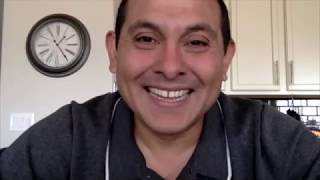
Host Brad Hart interviews Don Miguel Ruiz Jr. about his Toltec family lineage (grandmother Madre Sarita, father Don Miguel Ruiz), the origins and evolution of The Four Agreements and the later Fifth Agreement (“Be skeptical, but learn to listen”), and Ruiz Jr.’s books (The Five Levels of Attachment; The Mastery of Self). Major themes: applying skepticism + listening to reduce automatic beliefs, communication and compassion in the social-media era, relationship work, his writing process (write with the heart, edit with the mind), running as a meditative practice, and his mission to help people heal wounds from conditional love. Practical takeaways include the Fifth Agreement’s method (hold back automatic yes/no, scrutinize beliefs) and guidance on communicating to clarify meaning in relationships.
Chapters
Welcome to Make More Marbles. My name is Brad Hart and we're here to interview the game changers, the future makers, the co collaborators and creators who are here to collaborate with one another towards a better future for all of us. Enjoy the show. We've got a great guest coming up for you right now. Welcome to Make More Marbles. My name is Brad Hart and I am thrilled, honored and overjoyed to have a discussion today with Mr. Don Miguel Ruiz Jr. Who is the author of the Five Levels of Attachment which I have right here. It's a book based on Toltec wisdom for the modern world. And your father wrote something that has changed my life and many others, which is the four agreements. The be impeccable with your word, don't take anything personally, don't make assumptions and always do your best. And then, you know, I have that obviously on the wall right here. I'm looking right at it. It's obviously been a minor influence. And you're from San Diego, so that's super rad. You called me just a second ago from the phone and I get an Encinitas number. I'm like, who's calling me from Encinitas? I live there.
I was born and raised. I was born and raised in Chula Vista to be exact. You know, Chula Vista, Bonita Vista.
And you live up in Reno now, is that right?
Yeah, my dad has a house right next door.
Oh, beautiful. So you get the whole family there and little, little Ruiz compound. I like it.
Yeah, exactly. And my brother's down that way that about 20 minutes that way with his beautiful wife and beautiful baby boy. So it's cold.
I always say that having a tight knit family. I'm one of 15 first cousins and I have six aunts and uncles. My mom is the oldest of seven. Happiness is having a tight knit family on the other side of the country. You go and visit, they're all excited to see you. You tell them the stories of what happened. They're like, oh my God, it's amazing. Then you leave again for six months, you come back on holidays.
Yeah. A good majority of my 64 cousins live in the San Diego Tijuana area.
Holy moly. 64 cousins. Good for you.
Yeah. My dad is the youngest of 13.
Wow, that's beautiful.
13. 13 is my lucky number.
So for people who are listening, who may not know about your dad and yourself and the work that you guys have done, can you kind of catch us up about what's been going on so far?
Sure. Well, we come from A long tradition, a family of what we call the Totok tradition. It's a Nahuatl word that in English means artist. We are artists of life, and the canvas for our work of art is life. So from generation to generation, we teach it in our unique way. The thing about oral traditions is that it goes back as far as living memory. So the oldest we remember is Don Esicio Macias, who lived to be 116 years of age in the small town of Huanacatlan. And he taught to just a few people. Then one of his sons, Don Leonardo, he lived to be 98 in a small little town as well. And he's the one who immigrated Tijuana back in the 1940s. President Porfirio Diaz asked them to go to Tijuana to bring the Mexican sound. But he taught the tradition to a few people. And then his daughter, Madre Sarita, my grandmother, she's the one who had the vision to open the tradition up, not just within the family, but to a whole community. So in San Diego, California, because her father had brought the family to Tijuana, and she crossed the border and established the family in San Diego, and she opened a small little temple in Barrio Logan in Logan Heights. And that's where she opened her little temple called Nueva Vida. And that's where she taught to the community. She gave lectures and sermons and faith healings. And Fast forward to 2007, San Diego county inducted her into the San Diego Women's hall of Fame for keeping the tradition alive. So you can say both my father and myself and my brother walk in her shoes. And her son, Domigo Ruiz, he used to be a doctor. Then he had a moment of epiphany and decided to teach the tradition in his own unique way. And he merged science, you know, being a medical doctor, a surgeon, a neurosurgeon, to be exact. The family tradition, he took out a lot of the superstition out of it and kept what he called common sense. And from that process, that work, the four agreements, was born. And during that process, you can say that during that moment where he was taking a lot of superstition out and keeping the common sense, that's where my brother and I come in during our apprenticeship. So we continue this tradition of sharing from one generation to the other our Toltec traditions. I guess the difference between our ancestors and us is that my grandmother had this vision of sharing it with everyone, and my father continued it, and now it's our chance to do it. So that's the family history in A small little nutshell.
That's a beautiful family history, and thank you for your gracious contributions to the world and the ones that you continue to make. And I'm actually privy to a piece of information that a lot of people don't really know. There's actually a Fifth Agreement, and if you'd like to talk about that, I'd like to hear about it.
Yeah. Be skeptical, but learn to listen. You know, it's a book that my brother Jose Luis Reese and my dad wrote together. To me, actually, it's when we go through a process of everything we do, there's a moment of clarity that allows us to see the truth of what we've created. In that moment of truth, we have a choice to continue to believe this illusion or to let it go. Like I like to say, a moment of clarity. Without any action, it's just a thought that passes in the wind. But a moment of clarity followed by action becomes a pivotal moment in life. So in that moment where you decide to go in a different direction, the Fifth Agreement is, in my point of view, the most essential instrument we have. It's the thing that allows us to give scrutiny to our beliefs. To me, be skeptical, not to go, la, la, la, la, la, la. Can't listen. That's not it. The way I see it is you hold back your yes, you hold back your no, and you reintroduce something we forgot, which is to listen, which allows us to reintroduce reason, to reintroduce scrutiny. And if it survives our scrutiny, then we'll say yes. If it doesn't survive our scrutiny, then we'll say no. But the fact that we hold back this yes, we hold back this no, allows us to break a cycle of automatic yes and automatic no. So to me, be skeptical, but learn to listen is breaking that cycle of the automatic yes without using doubt as an instrument that helps us rather than puts us under, allows us to doubt our beliefs enough to reintroduce reason, see if it holds water. If it doesn't hold water, if it doesn't survive, let it go. If it does, you can hold on to it. But that's the beauty of it. You start making choices. Like my brother Jose Luis would say, what kind of messenger are you? Are you a messenger of conditional love or a messenger of unconditional love? And to me, that's the essence of the Fifth Agreement.
I love it, and thank you for putting it so succinctly for everybody, because I think it's such an important thing today. Like what if everybody just did that, not just the four agreements, which are awesome, but the fifth agreement, what if everybody just did that? They just kind of held back their yes, they held back their no, and they started asking questions, they started focusing on what really is. Let's sort this out. Let's not reject anything out of hand. Let's not throw the baby out with the bathwater.
Yeah, exactly.
The whole world would change overnight. It would be just incredible.
The only thing that would survive would remain would be the truth. You know, that's the thing. You know, we live in a time, if you want to use a contemporary example, is on Facebook sharing a post that we did not vet, but we posted simply because it reinforced an attached belief. So you can see a lot of fake news, a lot of false information being spread simply because we have that desire to be right by any means necessary, because we're attached to that belief and we share it and the arguments that ensued, protecting, defending, and all kind of thing. But if we just simply give scrutiny, just simply to what we post or simply what we share on Facebook or social media, whatever, the whole dialogue on social media would be dramatically different. Instead of this battle, who's right, who's wrong. So right then and there, that's an example. But to me, the more important ones are the ones that, in my own interior conversation with myself, the ones that says that I'm not worthy of my love, that for this reason, for that reason, for that condition, for that one, those are the most important ones that we've, I believe, are the most important ones to apply that fifth agreement. Because the only reason why we reject ourselves is because we keep saying yes to conditioned love.
I think you make a great point because the world has shifted so fast. I mean, 100 years ago, if you said I could look inside you without cutting you open, you'd call me crazy. Now we use X rays and CAT scans and PT scans every day. Ten years ago, if you told me I had a supercomputer in my pocket that could contact anybody on the planet, I would have said, you're crazy. But here we are, and we have these tools now through social media that didn't exist in the time of oral tradition, right? If somebody told a bunch of lies and walked around telling lies to everybody would pretty much figure it out. But now they spread so rapidly with so little scrutiny, and it's. The louder the lie is, it keeps getting louder and louder, and people eventually think it's true. It's just this incredible thing. What do you see as being the Way to combat that. Is that an individual responsibility? Because I really feel like people, you know, they don't know what to believe. There's so much noise and every opinion can. You can find merit and find some sort of research that backs it up or people screaming somewhere in a dark corner of the Internet that it's right. So how do people really decide?
Well, you give scrutiny, you know, the willingness to listen. It really is just an individual thing because we can't force anyone to do anything. In fact, that's one of the pushbacks. When we try to domesticate people or condition someone based on our prejudice, based upon a view or how the world should be, they always push back, you know, in certain ways they reinforce it. Oh, you judge me? Well, let me show you what you're judging me for. It really comes down to the truth of the matter is that I only control to the tips of my own fingers. I don't control that, I don't control your will, I don't control your perception. I only control my will and I only control the perception of my own life. That's it. Once I become aware of that truth is that I'm a co creator of the world rather than the main tyrant or the main director or whatever. I am co creating this community, I am a participant of this society. But it's a society that exists because of the mutual agreements we have with one another. With that being said, the changes we can have, because you're right, if everyone were to begin to apply that fifth agreement to social media, to those things we share, the world would be dramatically different. But we don't, you know, we can only apply it in our own life. And that's the thing. I can only change my own world. But I'm able to be able to give my words with clarity, integrity. And I know what they mean. What I don't control is what they mean to you. I don't control the what the integrity of what you say. I don't control the perception of your world, I only control my own. So with that I choose to double check my information, of course give scrutiny to my own beliefs. Is it true? What makes me trigger to debate or argue some with someone? What do I really win from that? And ultimately I'm just seeing my own reflection so it's totally an individual point of view. Like Michael Jackson would say, I'm starting with a man in the mirror. Like my father would say, I'm responsible for what I say. I'm not responsible for what you hear. And that's because you grew up in the way you grew up. You learn the way you understand the world from your point of view. I understood it from my point of view. But we have this bridge that is knowledge, this bridge that is language that allows us to communicate. And yes, the words we use sometimes have two different meanings, you know, that can accidentally insult you with a word I think is innocent, but to you may sound completely vulgar and insulting. And I had no idea. But the willingness to listen, the willingness to engage, that's what allows us to create a language that allows us to understand each other. And with that is compassion.
That's a beautiful sentiment. And if we could just all have more compassion and empathy and check in with each other, like, hey, is this what you meant? This is what I'm hearing, is my experience. Is this what you meant? Do you want to, you know, could you clarify and verify? You know, it's, it's a really beautiful thing to be able to do. It's just communication styles, right? Because it's for me to get what's in my head to. In what's your head? We have this dial up connection, right? It's, it's not broadband. It's not like emotions, not the way God or the universe talks to us. It's not, you know, that level of it. It's words that have different meanings to different people and they show up in your brain and they mean different things. And that's why it's so important to continue to communicate until a harmony is reached. And that's one of my highest values.
I mean, I had a workshop not too long ago, a few, a couple of months, and a young, young woman was there. And I asked her to come up on stage and I asked her in front of the whole class, what do you look for in a relationship? What do you want a relationship to be like? That's the question. And she said for it to be stable. And I paused. Okay, okay, you want a relationship that's stable. So I asked the rest of the group that's there to write that, write what that means to them. And everyone did. Once they finished writing, I asked them to read it out loud. And what we heard was several definitions none of them really repeated. There was things that were similar, but they all had their own interpretation of what that meant. Even someone saying, a place where you put horses, that's how they wrote. So I turned to young lady and said, you see, if you say to your beloved that you want a relationship that's stable. And they answer one of these, but you meant this other thing. And the other person says yes, you know what? I want a relationship that's stable too. And you're both saying yes, you're nodding to one another, but you didn't realize that you're both saying yes to two totally different things.
Yeah, he wanted the romance novel. Take me in the stable.
There you go. And that's the thing. It's like as we co create this dream of us, this relationship of society the willingness to understand one another is important. And sometimes we ridicule each other because we didn't. We don't know what one word means or not. But if we actually stood by and gave each other the time to clarify what does that mean to you? It allows us not only to break a cycle of our own belief system but allows us to see it from a total different point of view. To me, it's like Morpheus giving Neo do you want the red pill or the blue pill? If you want the red pill to keep that keeps you in the Matrix, don't ask the question. Simply say yes. And you think that everyone is saying the same thing as you do and you never see it from anyone else's point of view and you really believe that everyone has the same agreements as you. If you take the other pill, it takes you out of the Matrix. Is the current of saying, what does that mean to you? And when you ask that when you give that benefit of the doubt and you hear it from someone else's point of view and you hear that it's slightly different from what you see it. You can either choose to domesticate the other one and say, I'm right, you're wrong or you decide, you know, I see how you see it and I see it this way. How can we come to the common place where we both understand each other? And to me, me and my wife have been together almost 14 years and that's been the essence of our relationship from the very beginning. She we both grew up in two different cultures. We grew up in two different communities, even two different religions and all that kind of thing. And we come together and we created a language where we both understand one another. And it took the willingness to listen. I love that.
And the work that you're doing now. You touch on it, but it's a lot of workshops and speaking, I would imagine. Tell us a little bit about the things that you're trying to create right now in the world. Well, not trying, our creating, I should say.
The main gig is I'm a father and a husband. That's the main job of racing my daughter and my son, a 10 year old and a 12 year old. That's the main job. That's the main gig. Everything else is moonlighting for me. I'm writing a book with my dear friend Heather Ashumara about relationships. You know, that's why you can almost say that's what the topic we're talking about, almost. It's about intimacy and how we create relationships and how to have that. So that's a book written by my dear friend. She wrote a book called Warrior Goddess Training. So it's going to have one voice. So that's going to be the interesting part. We're going to have our publisher editor be the voice. We're both turning something in and it's going to be that united conversation. And plus, of course, I'm still touring. Tomorrow morning I fly to New York City with my father and my brother. We're doing a couple of presentations there in New York and in Portland, Maine. And we're doing those kind of things. So it's a balanced thing. And that's in a certain way. The main gig I'm doing is finding the balance that allows me to satisfy those three things. Plus training for a marathon.
Oh, you're training for a marathon. Have you done one before?
Yeah, this will be my fourth. Wonderful rock and roll in San Diego.
Oh, really? I just did Melbourne last year. It was my first one. I run about a marathon a week now. Not all at once, thankfully. I really love to run. I go down to Del Mar and you're from San Diego, so you'll know this. I'm in Cardiff. I go down to the Del Mar, jump in the ocean down by the chart house there out in front and I run back. Yeah, it's a beautiful run and it's almost as good as Solana Beach. But I don't live there anymore, so that's like my favorite stretch. The bluffs are just perfect.
No, it's perfect. It's absolutely perfect.
So what have you found? Kind of on the. On the training side, let's just divert a little bit. Like what have you found that has really helped you to train and to go? Because it's. I don't care who you are. Marathons are tough. Yeah, they're hard.
Yeah, there are. Well, I've been. I started running four years ago, roughly around the time I started writing books. And what I. What I enjoy more is that I get to cross thresholds that my mind says I couldn't cross. I love that feeling my mind like When I first started, I could barely run a mile, like straight. It was the most difficult thing. So I first started with a crutch, which is an instrument that allows me to start, which is I have my headphones. I would run one song, walk one song run, and I would do that interval. Then I did it two. Two songs. I would run and walk one. And that interval just started expanding until I was able to run continuously for several miles. And now my base run is a six mile. Right before this interview, I ran six miles. And what I found is that. And this happened really, when I started training for my first marathon, as opposed to my half marathons, because when I did half marathons, I used to run with my headphones. And I would always take them off around mile 10 or 11 because they would hurt so bad. At that point, it had been two hours plus. And the idea of running 26.2 with headphones that hurt. I just said, no, I've got to get used to running without the headphones. So what ended up happening is that I felt like I went from driving an automatic to driving stick shift. That all of a sudden, instead of the music dictating my pace, my body was dictating it. My body, my lungs, my. My own rhythm. And I became very present with my running style, that I felt my body. I felt it when something felt off. And I would adjust my pace, I would adjust my stride, I would change my breathing styles, breathe in lower chamber, upper chamber, and just change that kind of thing. And what I loved about it especially is I got better at. Better at running a longer distance. I say a 10 mile, a 12, 14, 16 and 18. Is that the first five miles? I can hear the chatter in my head. I can just hear all that muck, all that stuff, anything that I'm angry debating with anyone in my own head, all this stuff, all this, this, this, that, that, that. And then somewhere around mile 5, 6, 7, all that kind of stuff fades. I can tell the moment my mind surrenders. And all that exists is my environment, my breath, my body. And I'm just completely in tune with my body. I mean, I'm listening to it, I'm enjoying it, I'm feeling the breath, and I mean, just in awe of it. There's not a single thought in my head until the later miles, like, you know, the 12, 14, or 17 miles, when my voice comes back and it comes back different. It's not muck the way it would be at the beginning. I would say my ally comes back, My mind comes back as an ally helping me finish. Okay, you've got two miles, you've got three miles. Walk here, rest here, Figure this out. You got. You need this, you need that. It's like having a coach in my own mind. So in this way, I've learned to meditate with my eyes open. And it's something that it came with one getting out of my own mind. Because when you first run, you're always trying to think, okay, time this, time that, fear, this, figure that. It's just your goal centered. Let go of the goal. And all of sudden you have the whole journey front. You have the time when you begin to run and the time you stop running. That's the run. That's the time. It's not about my splits, it's not about my pace. It's not about this. It's about. This is how my body feels right now. This is how I feel right now. This is what I'm enjoying. I feel like I can run up the hill. Like today I did something I hadn't been able to do before, which is on the hill a mile three to four, there's an incline that goes up 300 square square feet. Well, 300ft in altitude. I live at 5,000ft. So I go up and down between 49 to 53 to 54ft altitude. So there's a hill that goes. Today I would. I would normally, I would walk, run, walk. Today I ran. I walked here, I ran again, and I walked. And I only walk only because I wanted to save energy for the last two miles. So I walked it. But I knew I could continue if I wanted to. And that only came because I listened to my body. My body saying, you got the green light to do it. Go. And that is something that I learned about myself. You know, it's something that. When I was writing the Mastery of self, I was just beginning to get into that with my running. I was just getting into that place where I know how that felt and how I wrote about it in the last few chapters about it. But now, since then, it's got to the point where my body is listening to my body run. Gives me this. I was gonna say presence, but it's just this harmony. This is listening to my body letting me know, you've got the green light, you got the red light more in.
The tank, or there's not right, you're empty.
And the difference is that it's not my mind telling me, you should be doing this. It's my mind saying, this is what I'm doing. And It's a whole different thing. And it's basically. I've learned so much about my own tradition, the tota tradition, just with that running. Because like I said before, at first it was about crossing thresholds that are my mindset. I couldn't cross, and I proved that many times over that I can. Then there's times where my body just won't. It's true. It starts those mornings where the body and the ankles and the. You know, there's certain times where it's just not that.
There's a. There's a saying for anybody who hasn't run a marathon. Mile 20, halfway done.
Oh, that's when the race begins.
Yeah, exactly. That's where the pain starts, baby. You get past that wall and you're like, oh, yeah. So basically, I love that idea of, like, the mind you're beating into submission. It goes away for a few miles and it comes back as your ally. That's a big, beautiful metaphor. Thank you for that.
Thank life for teaching me that. Life taught me that. It's taught me what meditation is, because some people do that with yoga. Some people do that with their daily meditation. Some people do that in their practice, spiritual practice. And it's something that I experience running. I'm not sure if it's what they call the runner's high or not. I don't know if that's it. But I do enjoy hearing when my body, my mind gives up, it surrenders, trying to hook my attention, because that's not. It's trying to hook my attention to get me out of what I'm doing. But when it's a surrender, I'm completely present. And it's. I've been able to translate that to other things in my life, you know, with my wife, with my kids, with the work I do, with the lectures. It's. And even writing. I'm introducing that. You know, I sit down to write. I apply that before I even write. I'm letting the muck of my head come out and I'm typing all that muck out. Then I get to the point where I'm starting to just get into the zone, and I hit save on whatever I did before, and I hit a new page and I start writing, and there it goes. Yeah.
Can you talk a little bit more about your writing style or how you produce content? Is it a. Is you a consistency guy? You have to do it every day? Or is it when the mood strikes or how does it look?
I. It's. I'll tell you how it is. Now, I won't start when I. When I started, because that was difficult. Now I see it as a wave that you surf. You can't force a wave to come. You. You. You work first, you work hard to paddle out there. You learn how to stand up. You do those little things that allows you to get on that board, feel comfortable in that board. And once you get there, even if you do all those things, you won't produce a wave. You won't find that wave. So you go out there and you have this moment of peace, and you prepare yourself, and all of a sudden, the wave comes. Then you start working, and you set yourself up to the point where when the wave comes in, you ride it. And if you ride it all the way to the beach, you had a very nice run. That's how I equate surfing inspiration. Now, with that being said, you write with your heart, you edit with the mind. As an author, it took me a long time to really understand that. And here's what I mean. The first draft, the audience is me. I'm the audience. So it takes me a long time to be able to purge. Now, because I'm the main audience. It doesn't have to be grammatically correct. It doesn't have to be profound. It doesn't have to be meaningful. It doesn't have to be. You don't have to play by the rules of grammar. You want the ideas to flow, flow, flow, flow. Because when you first start writing, you start wanting to edit as you go, and that's what you want. It sound pretty. Jack Carrot kind of ruined it for a lot of authors, saying he published on the Road on the first draft. That's it. There's no editing. A lot of people try to emulate that. He could pull it off. I don't know. The thing is that in your first draft, you purge. It's not pretty, but you learn to have so much trust in yourself to let it all out, let it out, let it flow. Go, go, go. And when you finish, you hit save and you walk away. You wrote with your heart, you edit with the mind. The reason why I say you edit with the mind is because now you're gonna go back. You say, imagine that page after page of a run on sentence, that three pages long. You go in there and you begin to separate. You begin to. First, don't erase anything. Just simply cut out the paragraph. Separate the paragraph so that thought ends, period. Separate it. Next one. That thought ends, period. Separate it, and you create paragraphs. Hit save, walk away, come back Read it all and introduce grammar periods, punctuation, all that kind of stuff. Don't erase, just simply put. And if it doesn't fit, don't erase it. Just simply period, period. That part just. You can even separate if you want, create a paragraph, save, walk away, come back now you're ready for editing. Now, besides grammatical, now you're editing it because the audience has changed. It's no longer you. The audience is your reader. And the reader doesn't have you sitting next to them to ask questions, to fill in the gaps. The book has to do it for you. So that's the thing. When. When I'm the main. When I'm the audience, I can fill in the gaps, no problem. Second draft, when you're editing it, you're putting it to a language they can understand. So you close all the gaps. You do your best trying to do that so that it can understand it. So basically you're translating it. That's what you edit. You're translating what you're saying into a language someone else can understand. And that's it. That's what. That's why it takes such a long time. And the hardest part, I'll tell you, is actually learning to trust yourself, to have confidence in yourself, to purge, to just let all that stuff out without giving into the temptation to edit as you go. Don't edit it. Let the thought out. Once it's out, you got this clay you get to play with. Because if you try to edit as it comes out, that clay is going to get smaller and smaller and a whole paragraph will take you three hours. That's what happens. When I first started, I took me that long. Took me four drafts to write my five levels of attachment, but which each draft, it got better and better and better.
That's 150 page book.
And then with a mastery of self. You know, the mastery of self is a tangent that I did with that five levels. It's a tangent that started as I was going down from level three to level two. I started going on a tangent that my publisher said, stop, you're breaking the line. Because when you write a book, you have a line and that arc, that line has to flow, it has to move. So you have this idea, you introduce the concept, but it all has to go in this beautiful line. So the mastery of self, a book that goes there. But it broke the line of. It just broke the rhythm. It broke everything. So we hit and save paste somewhere else. Put it in the. In the back burner. Don't touch it. Finished Finish the five levels. Finished living a life of awareness. I have the all clear work on that. And that's been my writing method.
That's really beautiful. And it reminds me a lot of the way I started writing is I just had so much stuff going on my mind. I would just go to the library and lock myself away and just type as fast as I could and get it all out. It was crap. Like 11 pages at a time of crap. But I got really good at being able to just crash through 2,000 words an hour. And now I put that every day. And it's just so therapeutic to get all that out. Whatever's kind of working and then. And then you're right. Like, I didn't realize I was doing this, but I kind of just get it out. And then I go back and I say, all right, now that somebody's actually going to read this, let me, like, make it make sense little bit and kind of make sure it flows. And I've been studying a lot of great writers, and one of the things I've had to do because I'm such a free flow writer is get a structure and you talk about that line that kind of goes and creates it. So, like, I'll study a guy like Roger James Hamilton who has 160 some odd thousand people that follow him on Facebook and millions on his blog. And I'll just have somebody who's like, got ahead for that system, process and flow. I'll send them some of his posts and I'll say, hey, can you hack this into, like, how does he put these together?
Mm.
You reverse engineer this flow so that I have a rubric now to go back and tell those stories in the way that will actually connect with the audience, because that's something I know I'm completely blind to. And the only reason I've gotten to be a better writer is because of feedback and pain and a lot of other things. Yeah, that. You know, I never had a good plan. I just had a lot of energy and enthusiasm. Yeah, you can channel that properly. You can bring a message to the world really well. So I just want to say how grateful I am for you to say that, because that gives me credence to the idea. I mean, like, you know, I got two books that I've written that I'm just not ready to publish yet because I just haven't put them into a way that I think people will really get. So thank you for that and validating.
Well, I just have to add something, like in what you were saying. It reminded me something of what Neil Gaiman says. He's one of my favorite authors. Neil Gaiman, Sandman and American Gods. He wrote, you know how to write the book you're writing, the novel you're writing, that's it. No two novels are the same. If you try to apply the same formula into a different book, it's just not. It won't work. So you be. You only know how to write the novel you're writing. And it's gonna be different from one to another because it's always a different story. Each approach. I guess the thing that repeats itself is the structure of first. First draft on the audience, second draft is the reader. I guess that's the one thing that repeats itself. But the style and technique all depends on the message. You know, as my dad's publisher, Janet Mills would say, what is the jewel that this book is going to give? What is the gift once you find that you know who you're talking to, you know who your audience is. At first, when someone asked me that, who is your audience? Wow, it was such a shotgun thing. And then I realized, well, what is the jewel that I want to give in the five levels? The jewel that I wanted to give is the ability to introduce scrutiny, to see where you are in your attachment and have a choice to stay in that level or let go. Basically, it's the redemption of the mind. I want to redeem knowledge because knowledge is beautiful, but when we're so attached to it, we corrupt all of it. But when you detach yourself from knowledge, knowledge is the perfect reflection of life as is. It's the most beautiful thing there is. And all the knowledge we can that's out there can help you in so many ways, but when we're so attached to it, we can't. It's just this vehicle. It's what we were talking about earlier about people sharing posts or links that aren't true, but the reason why they're putting is because. Fills their narrative. It feels, it fulfills their point of view. It makes them feel like they're right and why not? And there's the war.
Yeah. And that's. That's, I think, the hardest thing to go against because, like, you can only perceive the levels of consciousness that you're at or below where you're at. Right. And you have to go through them. If you, like, look at spiral dynamics and a few other kind of models for this, you have to go through them in order to get there. And you're like, oh, I remember when I thought that way. So you always wonder, like, what's above? You know, what are the levels of consciousness you haven't tapped into yet? And you see stuff in your own life and you're like, wow, okay, cool. And that's a. You know, you. You no longer look forward into the. To borrow a Todd Herman quote, happy birthday, Todd. The chasm of despair, of, oh, my God, I'll never get there. But you look back, you say, look how far I've come.
Yeah.
And you start to give yourself credit. You know, it's like, oh, man, I'm on a good journey here. We're actually making progress.
That's exactly how it is. You look at the journey like, yeah, I mean, just like you were saying. I remember having a conversation with my father about the five levels in particular, and I showed him the. Those chapters and he says, brilliant, now come down. And I'm like, what? Yeah, that's. You did the best part. But the real work is coming down. And the thing about it, when he said that, me writing. Coming. Going down from the levels of attachment, because you go from level one to all the way up to level five with fanaticism. And I'm like, oh, that's. I described that beautifully. How we. How we get to the point where we're open and we slowly close. Now my sense. Okay, now learn to detach. How do you go? Let go. So I had to do that journey within myself. I had to let go of myself. And slowly but surely, just doing the work and going that stage and like all that process that I talk about, I had to go through it myself. And once I experienced it myself, put it in writing. And of course, this conversation happened around the second or first draft of the book. The draft that got published is the fifth draft.
So I guess kind of moving from what you've done into the future, like, what is your big mission or legacy that you want to leave in the world? We talk a lot about and make more marvels about how we want to eventually create systems that serve better people. And we're working to do that through various new technologies are coming out that allow us to do that. Right. There's a great old saying, capitalism is the worst form of. I'm sorry, democracy is the worst form of government, except for all the others. That's Winston Churchill. And I think it applies to capitalism as well. It's like the best we got, right? And it's working, except I think there's something better coming and how do we create that? So, like, what are some of the things that you want to create in the world as you continue to move through it? Is it just better tools to communicate or is there something more?
You know, that reminds me, Someone asked me that question in a presentation in Ashland, Oregon, about when do we. When do you think humanity will evolve to certain cap system of financing? Not socialism or capitalism, but the different. I don't remember what name he used. And I said to him, if we actually clean our hearts, capitalism or socialism, both will work. And the reason why neither one works is because we have a corrupt heart. We let our ego, we let our selfishness get in the way. We will corrupt all of it. You know, capitalism and socialism was supposed to be something that was a huge step above feudalism. But even if someone had a wonderful heart and they were evolved, feudalism would probably work. The only one that would not work, of course, is slavery, obviously. But it all depends on where you come from. So to me, what I do, if I were to put it in one sentence, is helping people heal from the wounds that conditional love left in their life. That's exactly what I do with the work I do. That's the focal point. The work I do is to help that. Because once you heal that, the systems we're in probably do work, if you see it from that point of view. And if it doesn't, we'll replace it. We're willing to do it without the revolution, without an actual fight, without shooting a gun, because we see it like us no longer functioning. But we can't see it until we are able to see ourselves. So take a step aside from what system would work best for society and all that kind of thing, Whether a republic or a monarchy or oligarchy or trying to remember. What was that line?
A tactically collusive oligopoly.
Yeah, basically, it's anarchy, democracy, republic, a leader key, and monarchy, I guess, to a complete absolute state. I guess that's. I remember. Anyways, none of them would matter. And unless we have that heart in our minds, because that's what we're seeing. So to me, professionally, what I'm doing with the work I'm doing with is to do that, to help heal the wounds that conditional love left in my life. With that in mind, I've also. It's the balance as a human being, as a father and a husband, it's been. To me, it's been a challenge. You know, someone would say that, you know, if I went 100% only into my. My work and my book, then, you know, I'll be further along in my career. But I take the time when I, during the week I'm at home and what I, when I'm at home, I help Susan and the kids with their homework. As you can probably hear my wife walking in through the door right now and she's walking behind me right there, she says hello, says hello. She said hello. But that's the balance. You know, it's like right now, if you look at the clock, my kids still have one more hour of school. When that clock hits, I'm in daddy mode. That's the gig. When that clock before that, I mean, I'm writing a book, I'm giving interviews. And of course me and my wife had to find that balance. Like, alright, I'm going on tour, I'm going to New York tomorrow, I'll be back on Sunday, I could come back on Monday, but the kids go to school on Monday. So I want to come back on Sunday so I can be here for that. These are the balances, these are the things that in my life, my personal mission in my life is to find that balance that allows me to do what I love to do, which is be with my family, create the work, the work of books. I want to be able to help, work enough to be able to provide and to do. I'm in that nice place where I'm able to both provide and help. It's a marvelous thing that I've been gifted this opportunity. Then also the time to go for my runs, you know, go for my race. And then what I've learned also is also finding time to read a book down and enjoy a cup of coffee and over a conversation, you're cross pollinating, right?
You're not spending all your time trying to work on the problem and all of a sudden the solution to the problem shows up or whatever it is that you're trying to create, right? The breakthrough, the cross pollination, if you will. And it allows, I think, you know, when you were talking about before, that any of these systems could work. Like any moment right now can be perfect because this is all that exists. No matter what time, no matter what age, no matter what system, no matter what you're working on, no matter what the problems of the day are, right now can be perfect if you choose to make it so.
Yeah, exactly right. Right now we live in a time that we live in a moment that the possibility of every single human being at this very moment. 7.5. Forgive each other.
Mmm.
It's not a dream, it's a possibility. Mind you, the percentage is Small at the very moment, but it's there. There's also the possibility of complete annihilation there, too. Of course, the extremes are there. Life gives us those opportunities. But it always comes down to the individual. What am I going to contribute? Like my brother Jose would say, what kind of messenger am I? Am I going to be that voice that is going to create division, that's going to create hate, that's going to create that hierarchy of I'm better than you, or I'm less and more, whatever, or I'm going to be the voice of healing, of community, of engaging. You know, we live in a time where we see tragedies and we see the darkness of humanity at that moment of tragedy. But then as soon as that ends, you also see the beauty of humanity as the community comes together to help each other, to heal each other, to spend our energy helping. You know, with these fires, with the shootings, with all those things, you're seeing the yin and yang life. And it's being streamed on the Internet live, right?
If you pay attention to anything, the screen in your hands, screen on the wall, anywhere you go, the messages are coming fast and furious. And we're trained. You know, our bodies are designed to look out for danger, right? We're designed to see the things in our environment that are going to kill us. And they're everywhere. Until you opt out and say, wait a second, 99.9% of the world wasn't raped, murdered, stabbed, shot. Today, we're not at war all the time. Like, if we can just zoom out and see that and we start to see how the world is actually an abundant, beautiful place, that's when things start to shift.
Yeah. And it all depends on the individual. If I see the world through scarcity, I will always fight. If I see the world through abundance, I'm willing to engage. And it always comes down to the individual. If I have conditional love through my heart, I've got nothing but conditional love to give. But if I have unconditional love in my heart, then I've got that to give. You see, I'm the constant. In every relationship that I am in, I am the constant. And every one of the relationships are different because the people who I'm with are unique and they bring out a totally different side of me. So the version of me that comes out when I'm around them is different. My wife sees me different than my mom, and they see me differently as my kids, and they see me different from you or my friends. They all see a totally different Aspect, but I'm the constant. So if I do the work of healing my own wounds, then it gives me the opportunity to heal the wounds that ever separated us. If I don't do the work that creates a wound within me, that makes me reject myself, that makes me corrupt things around me that can turn the four agreements and turn them into the four conditions of my personal freedom, then all of a sudden, the four agreements are not corrupted with the four conditions. Now I'm like, Honey, you're Mrs. Domiguel Ruiz. Here's the four agreements. Read it, honey. How embarrassing. You didn't read the book. Now I'm domesticating her. And whenever I judge someone, I'm punishing them for agreements they never made. But I'm forcing them to make the agreements with the judgments. And that's this battle. Who is going to domesticate who? If I have that, that's because it's inside my mind. That's happening within me. But if I resolve that within me, that all sudden there's this engaging. This engage myself as I see myself, as I help myself, then I can give that like I was. We were talking about running earlier. When my mind comes back not as the parasite, but it comes back as my ally, that is what I'm able to give. That's what I'm able to share. The relationship between me and my mind. I no longer use my mind as my active domesticator, is going to be my ally. And I see it full blast when I run. And slowly I translate that to within me, and I heal that. And that allows me to heal my relationship with everyone in my life.
That's beautiful. Thank you. Thank you for that. Well, I mean, every guest I have on the show, I mean, this is the Make More Marvel show. And we just want to say how grateful we are for having you and for you just giving so much and so freely of your time and sharing your message with us and answering all my crazy questions. But we want to give back. Yeah, my pleasure. We want to give back to you. This is the Make More Marbles podcast, right? We don't want to grab for all the marbles like the Hungry Hungry Hippos. We want to make more for everybody. And the way we do that is we connect people to the resources, the opportunities, the people, and the systems that can help them move their mission forward faster. And everybody's mission's a little different. So it's time to put the spotlight on you. What are the ways that we can do that for you?
How can we help? Well, I'm gonna quote my father. Help me to change the world. Not the world out there, but the world in here. That relationship that says if I'm the voice that's talking inside my own mind, who's listening? I am. Well, if I'm the one who's listening, who's talking? I am. That voice can either be my active domesticator or it could be my ally. That's the world we're talking about. Help me to change the world. If it's a nightmare, Help by making it a beautiful expression of, you can say divinity, but of harmony. And you can. You don't really need. You can. There's our books to help if you need help. You know, that's the books me, my family, write. But all you need is really your breath. Focus your attention on your breath. Listen to your favorite song. Go put your hand in the sand and enjoy the sound of the ocean as your hands feel the sensation of the sand. Enjoy the kiss of your beloved. Enjoy watching your favorite movie. Enjoy eating your favorite sandwich. Allow your favorite pet to lick you. If you are cool with that. Enjoy life. Enjoy being you. To me, the whole point of all this work is to enjoy life. And we enjoy it by enjoying being ourselves. And that's the healing. Like I said, the world is perfect the way it is. We're seeing the yin and the yang exist in real time. That's where it is. It's always been there. The only difference is now it has an amplifier called the Internet, the media, the phone. But it's always been there. What is different is you.
It's like we're all having this collective nightmare that we can all experience with each other at the same time. But at the same time, we have an opportunity to heal together too. Because now we're used to be like, you know, Don Miguel and his family were having his problems over there and I was having my problems over here. But now we're both connected. We could talk about these things. We can learn faster each other. I don't know if you felt it, but in the last five years, the consciousness has shifted so much.
Oh yeah. Because we're interacting with one another so much. There's so much information, knowledge, learn. It's right there, you know? And because it's there, more people go like this. Because this makes me feel safe. And that makes. That might change the way I see the world. But if you're willing to listen. What does that mean to you? Simply asking that to people? Just simply say that. What does that mean to you? Given that benefit of the doubt. It allows you to perceive the world in a totally unique point of view.
So your two books are the Five Levels of Attachment and the Mastery of Self. Correct. And what's the third one you're working on, the working title?
Well, I have a third one is a little book of meditations called Living a Life of Awareness and then a collection of my dad teachings, which is the little Book of Wisdom. But the one I'm working on with my different had Arash is about the soul of intimacy. At least that's a working title. And yeah, you can find us on our website, Miguel Rees.com or Miguel ReeseJr.com that's our home base. Of course, you'll find us on social media. That's the way of the world nowadays. But, yeah, that's where it is.
I love it. And thank you so much. Thank you. Thank you. Thank you, Miguel, for being on the show. I'm grateful for you. On behalf of everybody in the Make More Marvels community, we appreciate you. We love you. We thank you. And I will let you get back to being your day job, which is, you know, husband and father and all that great stuff and all the rest of the family. And if you're ever in San Diego, we do house builds. We just did one down in Rosarito, one in December. We're going back to build another house for another family. If that calls to you, you're more than welcome to join us with the Greatness foundation and go and do something cool for a weekend.
Cool. You actually build houses for people.
Yeah. So we go down. Mike has been on 13 through Baja bounds, so he's got the Greatness foundation. And then I went on the last one. We also did some work in this year in refugee camp. So he works with a lot of different organizations around the world. But yeah, so basically go down on Friday. It's a stone, you know, concrete slab, and then there's a bunch of wood and nails. We go and we knock it together. By Sunday, they have a house and it's beautiful. So the next one is December 8th through 10th and we're going again.
Thank you so much for the work you do, man. That's awesome. Congratulations.
Absolutely. You got to make it, you got to grow it, you got to give it away. That's how you do it.
That's the way it is.
All right. I will bid you adieu, sir, and let you get back to your family. Thank you so much on behalf of everybody. Thank you. Thank you. Thank you.
My pleasure. Thank you.
Thanks so much for listening. To the Make More Marvels podcast for more tips, hacks and strategies to create an amazing, abundant life in your health, wealth and relationships. Whatever that means to you. Head on over to makemoremarbles.com check out our cool explainer video about what we're about and join our community of entrepreneurial game changers. We want to help you level up your life in every possible way. And don't forget to subscribe to us on itunes, Stitcher or Google Play wherever you're listening to your podcast. And please do leave a review. Thank you so much and we'll see you on the next podcast.
More from Brad

The #1 Reason AI Isn’t Working for You (Yet) #AI #businessowner #founderenergy




What tasks would the best assistant ever be able to do for you? #BusinessSystems #BusinessOperations



Nobody expects you to use a harder way when there's a better way. #AI #businessowner

Which side of the table will you be on in 2026? #AI #Mastermind #BusinessOwner

