Fellow Wealth Dynamics Geek and NLP Master Osmaan Sharif on Mindset Design and Strategy
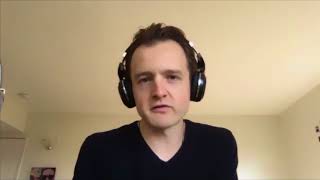
Brad Hart talks with NLP coach Osmaan Sharif about Wealth Dynamics profiles, how beliefs drive change, and why limiting yourself to three options makes better decisions. Sharif shares a client story of someone overcoming public speaking fear and explains how to design your business around your natural strengths.
Chapters
Welcome to Make More Marbles. My name is Brad Hart and we're here to interview the game changers, the future makers, the co collaborators and creators who are here to collaborate with one another towards a better future for all of us. Enjoy the show. We've got a great guest coming up for you right now. Welcome to Make More Marbles. My name is Brad Hart and I'm here today with Osman Sharif. How are you, Osman? Good to see you, brother.
I'm fantastic. I love your energy.
Thank you, thank you, thank you. I'm so grateful to have you on the show today because you're a fellow Wealth Dynamics geek. Oh, my God, I can't wait to get into it with you. So before the show, if you guys have heard any of my podcasts, I talk about Wealth Dynamics on basically every other one. And it's a test that Roger James Hamilton devised to tell you what type of entrepreneur you are. And there's people that are good at ideas, there's people that are good at people, there's people that are good at timing, and there's people good at numbers.
Right.
He calls it Dynamo, Blaze, Tempo and Steel. Yeah, I've geeked out on this. I use it with all my clients. And Osman sends me a token which is not free. It's a very nice gift to take the test before the interview, and I'm like, dude, I got you. I sent him all the interviews I've done and all the videos, all the different types, and I just can't wait to geek out on that. But first, I want to start out with Osman. Who are you? What are you up to in the world, and what is your hero's journey so far that's gotten you to this point?
Perfect. So I'm Usman, and as you might be able to tell, I'm from Scotland and I'm a performance coach for small business owners and entrepreneurs. And effectively, what I'm all about is mindset. So really kind of helping, kind of unlock the mindset of business owners and really helping them to play to their natural talents as well, which is why I absolutely love the fact that we've got that commonality in terms of Wealth Dynamics. So a bit of a plotted history of my journey for you, Brad. I literally have been running my own business, rapid transformation for the last 10 years. And before that, I was corporate through and through. I was one of those guys where you grew up, where they literally thought there was a set path. You went to school, you went to university, you got a graduate job, and basically you climbed that corporate ladder and I actually really enjoyed it to be honest. I really loved that structure. I loved that kind of like knowing what I'm aiming towards and basically smashing and getting those corporate careers. So I was a HR manager for a big large retailer in the UK and then worked in the banking industry as well. And then I literally came across this crossroads where I've always been about helping people. So that's why I thought being in a role such as human resources would really help me. But really have you ever got to that point Brad, where you get a goal that you really want? So even for me I achieved a five year goal in terms of where I wanted to be in within Marks and Spencer's achieved that within one year and then I got there and I thought is this it? And it kind of scared me because I thought this is what I thought I wanted my career to be. And I'm already kind of slightly bored and thinking this just doesn't connect with me. And then I started to do a bit of searching around well what was the missing piece? And it was all about I love people but I didn't love all that disciplinaries and all the kind of the crap stuff, excuse my language around it. I loved all that part about how do you get the best out of them, how do you help them grow? And that's kind of where I then moved my career into in terms of leadership development and very much kind of helping in the training and the growth space as well.
I'm going to take a wild guess and say you're a supporter.
Actually I'm not, I'm a trader profile.
Interesting. I like it.
Very, very unique one. And again I'm sure we can have a great conversation around that because. Because I absolutely love that element of kind of really getting my hands kind of into the nitty gritty with my clients and helping them to go right, what's working and what's not working. So that's kind of also where, and this might give you a bit of a clue into this. I obviously love lots of toolkit. So even when I was in working in I moved to the banking industry then where I thought right, let me try a different kind of industry to see would that kind of fit with me. And I did love it. And there was a point where I got the opportunity to go on NLP so a neuro linguistic programming training course. And I absolutely, that's where the penny first of all dropped from you Brad. Because when I thought finally there's a toolkit that lets you basically help get into people's minds and to create rapid transformations in terms of how people think, how people feel, and how they act. So for me, I literally got this toolkit where I thought, I love it. I dived into doing all the different types of training. I went over to America for five weeks. I did my trainer's training, and then I thought, right, okay, what did I do? Do I keep climbing the corporate ladder, or did I go out there and basically help other kind of people on their own journey? So that's kind of where I first of all started my journey with the NLP toolkit. And I thought, right, I've got this. How do I basically get that out there? Which is very much a trader type of kind of mentality as well, in terms of not going out there trying to create my own thing. It was like, I've got something that really works. How do I basically spread that out there as well? Right?
Because that's kind of the opposite of exactly right. It's like, oh, just tell me. I'm working. I don't want. I don't have time for hyperbole. I want to be in line with reality. And that's really fascinating. I have actually done quite a bit, not NLP specifically, but a lot of work with Tony Robinson, big practitioner. I've been to be 11 coming up in March, Tony events.
So five times I've done.
And all this stuff like that. I'm sure you have. What have you found has been the most effective tool for you in the NLP realm or in any of the personal development that you would have done?
I think the biggest part is about personally for me, and also when working with my clients, is beliefs. Because if you think about it, and this is what still blows my mind, how every single thing that we experience in the world, we're filtering that through our minds. And a big part of that, as I'm sure you know, Brad, is our beliefs. So really, a lot of times we could be taking massive action. We could be really focused in what we do. But if we've got those beliefs that are holding us back, if especially the ones that we're not even consciously aware of, then that's kind of what can actually be having an impact on our journey as well. And even the possibilities of what do we want to kind of make happen as well. And I know when I say it personally, I remember it was on that part where I went on my first NLP course and that kind of the light bulb started to come on in terms of, I Want to do this, I want to have my own business. And then I went on to the next level. And at that point the week before at Brad, I literally got offered an amazing promotion within the bank. And I remember coming back, I worked in London at the time. I came back home to Glasgow and I was telling my mom and dad, I was like, oh, yeah, I've just been offered this promotion. And they were saying, oh, well done, son. You know, proud, because they're very much of that mindset of there's a set path and just go and do it. And literally it got to the end of this Master Practitioner course where I was like 95% going to start my own business, but there was just something that still was, was holding onto me. And literally when I dived into it, I had two big beliefs around. I first of all thought I was too young to have my own business because at the time I was like 25. And also I thought it's very, very risky. So as soon as I then actually basically used NLP techniques on those two beliefs, honestly, the decision was made. The next morning I phoned my boss to say thank you for letting me go on this NLP course. It's been an amazing journey and, and I'm not taking a promotion and in fact, I'm actually handing in my notice. So it was a big, bold move. And I've seen so many of my clients have that same experience, not necessarily quitting their job, but once you've identified the beliefs that are holding them back and then basically transform them, it's like, well, what that ripple effect could be as well.
So can you talk about, just to ground this with some stories, some of the clients that you've helped over the last 10 years in rapid transformation and some of their stories, where they were at, what they went through and how you helped to get them.
Yeah, definitely. So one current client that springs to mind, he had this big story that he's not great at public speaking and presentations. I was quite surprised at that because a lot of his personality was shining through. So I use a lot like you do Wealth Dynamics and also kind of like the NLP toolkit with every client to do the Wealth Dynamics test, first of all. And he was a star profile, so I'm like, okay, perfect. Well, that surprised me in terms of why he didn't have that confidence to really get put himself out there. And a lot of it was down to his kind of belief that beliefs that he had, which stemmed from one specific event. So once we then dived into The. Okay, let's get to the root cause of it. Where did that stem from? How do we transform that? Literally, it's been amazing to actually see him on stage, presenting, bringing his personality there. And now he's really using his star profile and his business. So he's. He's doing loads of Facebook lives. He's got so many different kind of plans to bring his energy and his brand out there. So a really practical way, whereas before, he was kind of still hiding himself and not being his best version of who he is as well. So that's just one example that just springs to mind.
I call those people fallen stars, or they're kind of like surreptitious stars or they're just trying to be background stars and they really need to be out in front of. And you can always kind of tell if something's off because you want them to shine, right? You want them power there. Really. Their big thing is to take their personality, talk about ideas to people, talk about ideas to people. As long as they do that, they're going to create tons of opportunity. So not geeking out completely on Wealth Dynamics, but just sharing a little bit of a. Learning from my own life, you know. So stars are people like Tony Robbins, they're people like OPRAH Winfrey, Ellen DeGeneres, anybody that has that personality. They typically want to partner up with a deal maker type. So they're good with people and timing and really putting those deals together and sorting out all of the opportunities they're creating. And then a lord on the back end and making sure that that person is really solid and has, you know, kind of the systems and the numbers piece covered, because otherwise it's just slipping like a sieve through your fingers. What have been some of the things that Wealth Dynamics has helped you change in your own life about how you run your business? Is it a big organization? Is it just you? Is it, you know, do you have a lot of a team or what are the things that you. You're cognizant of? Because a good trader team, I guess, would be a lord and then a star.
Yeah, absolutely. So it's helped me massively. And one of the first things is around the design of how my business is. So currently it is me in my business, and then I've got a few people that outsource work too. But the key couple, key distinctions on it, Brad, was first of all, when I started my business, I kept thinking, okay, I'm in the NLP world, the personal development world. Who am I? Role modeling and it was people like the Tony Robbins out there, I mean, and even our mutual friend Natalie Sisson, who obviously introduced us and was on your podcast, who are obviously different profiles and again, star profiles. And that was when again the penny dropped for me where I thought, why is it when I actually try to step completely into a star personality, it just feels, it doesn't feel right for me. I mean, it takes a completely different energy. And when I read my profile as being a trader where I love really connecting with my clients and getting really, as I say, working one to one with them on a very kind of a deep level as well, that made me kind of realize, okay, that's why actually if I completely just use the star strategies, it just wouldn't work for me. So it's not to say like any of the profiles that you can't do it. So there are times where I still do speaker sessions. I am confident at talking to hundreds of people, but it's very much around, okay, let me shine the light on something like wealth dynamics, like talent dynamics and wealth dynamics or NLP and using it from that angle. So that's kind of one distinction because it completely transformed even my business. And there's people, even existing business owners and mentors and peers that have in the past say to me, you need to stop one to one coaching because it's not scalable. And I'm like, I totally understand that. And if I was a star profile, I get it. But actually knowing my personality, I know that I will always have one to one clients because that's what I absolutely love. And that's where I get into the best flow as well as working with my groups and my online communities as well. So that's kind of one thing. And the second part is collaborations. So that's kind of where I have over the years collaborated quite a lot with some star profiles. And that's kind of where it works in terms of kind of a great team and where we bring different kind of energies together as well.
And it's funny that I've noticed in my life as a supporter is that I want traders on my team.
Right.
That's my next. I seem to be able to get mechanics no matter what. Yeah, traders are the most difficult to come across except when there's stability. Right. Because traders want it's working. So when you figure out something's working, like with make more marbles, for example, I'll even go back a little further. Harwood Capital, my hedge fund. It wasn't until I had raised money and Done all the work and figured out the thesis and launched the thing and put all this together that a trader showed up and we partnered and we crushed it. We did really well and 106% a year. But I didn't even know anything about wealth dynamics then. I wish I took this 10 years ago. By the way, if anybody's out about it, we'll have a link below the podcast and I'll send you all kinds of extra videos and cool stuff. But then with make more marbles which has been since about 2014, I wound on the fund. We're only now this year I feel like really dialed in with our messaging and our programs and getting it right now all the traders are flowing into my life again, you know, and I was traveling for two years during that time. So now I have stability in my home and some of the women I'm starting to attract or traders as well because I just geek out on this stuff. I try to get everybody in my life to take this test so that I could be like, oh this person supporter. I really need to know the score, right? I need to know what people care, how to motivate them. I need to know how to what they're going to get triggered by to be effective and having great relationships so that I can serve them at a higher level by being what they need to support their greatest and highest. So it's really show up. Have you seen that to be the case as a trader that you have this kind of innate feeling of like when an organization has their stuff together or when they just don't and you're like alright, I'll see you later.
Yeah, definitely. I mean and that's kind of where cause traders are very grounded. So even when I work or if I surround myself a lot with those that are, you know, creators and stars as well, quite often it can be quite like, you know, like just hectic in my mind I'm like okay, hold on, what are you actually kind of doing there? I mean you've got loads of action happening but where's it taking you? What's the results that you're getting? So that's kind of where my natural type of thinking and questions actually go to there as well. But I also love the fact that when working with some of my coaching clients where they are doing really, really well and just by having that conversation you get to look at well, even if you actually kind of ground that in terms of what's the purpose of and how does it all kind of fit together, that's where they can make some real distinctions in terms of how do we continue to grow their business rather than them actually going, oh, okay, Carol, I'm a bit bored now. Let me go on to the next project and kind of miss out on leveraging all the great things that they've been working towards as well.
Yeah. And I just, I've noticed that having traders around, you have to. It's like building a garden. You got to build the garden and they just make everything work and you just don't have to worry about it. It's beautiful because there's a. As you know, I look at myself as kind of like the, you know, the rah rah rah champion, you know, like, oh, we're gonna make it work. And everybody's like, dude, I don't see it yet. And like, yeah, there's gotta be that person who takes an idea that's an idea and actually brings it and puts the team together and makes the money happen. And they're all like, you know, and the traders, they're like, they don't see it until they see it. Right. So it's been a really fascinating thing to see how my companies have transformed in the recent years. With that in mind. So now to the next level, let's say. Okay, cool. We're on track to do seven figures. We just did a 50k launch over the weekend. Awesome. What's the next phase of growth that I might be able to expect as a business leader since you've seen so many? As we get to seven, which I don't feel like we've already done that, I feel pretty good about getting there. And I can see a clear path 7 to 8 now, or maybe what does this business become next? Because like you, I really like to work with people one on one, and that doesn't scale charge people a million dollars each. So at least not until I'm like Tony Robbins. What do you see as the next stage of growth and development that a company like mine might see?
Right.
We do masterminding and mentorship for entrepreneurs, definitely.
Well, again, obviously that's a million dollar question as well. And it depends. Okay, so that's kind of where everything that I do, I mean, and this will be really interesting to kind of see where you are because you, you know, I keep things really, really simple, obviously being a trader. Right. So whenever I'm looking at a company or an individual to go, where are they and where are there opportunities for growth as well? I'm looking at it from three perspectives. The first one is Their design. Okay, so that's very much around. Okay, well, what are your goals? What are the goals that you've absolutely smashed that you're going, Great, perfect. That's it. How do we kind of now take that next level? But it's not just about goal setting. So obviously that's kind of a part of nlp. It's about knowing what you want, but you need to then understand. Well, actually, how do you design your business in a way that it does use your superpower? Okay, so that's very much about how do you want to be showing up and bringing your supporter energy into your business and then the design for the next phase? That'd be one question. But also what's important to you because again, that's different from your talents. That's different from your superpower. If you look at what your values are, then you can go, actually, I want to have, say, for example, I want to have freedom. I want to have flexibility. I want to have very much, kind of like a lot of fun. Well, that's going to completely change what your next direction would be. Brad, compared to someone else that might have a very similar kind of business as you. What's your thoughts on the first part, which is design?
Yeah. So so far, I've got superpowers. What are your superpowers? We're very clear on that. I know what I'm good at, and I know what I'm stuck at. And I've spent 10 years. What are my values?
Right.
What do I value right now?
Right now?
I value the make more morals mission, which is we want to make enough for everybody in a sustainable way. That's food, energy, water, and shelter. I call lighting the fuse fews. That's when we've made enough marbles. And the way we do that is through not only encouraging and helping entrepreneurs, investors, and philanthropists do more, be more, give more in the world, but also, you know, partnerships and technology, technological things that are coming that I think might actually solve that. And in fact, I have some business models that will be not only profitable, but also problem. And if you get it right once, then it'll scale. It's the Elon Musk company formula. So he doesn't want to be everything, everybody. He just wants to get it right so that the whole market comes along. Hey, well, this is cool. It's working. So for me, you know, I think this is a really important distinction because my goals for make more marbles are not to make a bajillion dollars. It's to have enough team so that we can go and do this at a big scale. Like, that's where I see all this. It's make more marvels media. It's messaging. It's growing this platform and brand to a place where it's not just this. You know what I perceive one of the problems the world to be is that we only focus on fear.
Yeah.
And we only focus on what's going wrong. And 99.9% of things in the world are going right at any given time. Where's that messaging? Right.
Definitely, definitely. And that's going to where, you know, once you kind of understand, okay, well, what is it you want? Then you can start to be going, okay, well, what would that look like for you? Okay, how could you then start to collaborate? How can you start to get some of the people with the right systems to help you escape all that as well? And then the second part is. So you might have the best design, but I'm sure you'll agree with this. Okay. Actually, there's people that come to me saying, okay, I've got this amazing vision, but I still am holding myself back. And that's kind of where the mindset kind of piece comes in. So I'd be kind of really delving into you in terms of, okay, so what is your mindset about that next phase? Okay, is it very much empowering you? Is it about helping you really go, I could do this in a way that will be really abundant and flowing and connects with your right design. So it's not delusional. So traders are really practical as well. So I hate it when people come to me and they go, oh, yeah, I've been to this workshop, I'm all pumped up. And you ask some questions. It's like, how are things? Oh, fantastic. I'm really motivated. But they're still going around in circles. And that's often because they're really motivated, but they're not channeling that motivation into a really crystal clear design of what's going on.
And they haven't formed the habits yet because the habits are working.
Exactly. Yeah.
Motivation is like showering. It wears off. So we recommend inspiration is one thing. Right. I can work with inspiration. What are you doing consistently? It's forming the habits that are creating the reality actually want. And if you're not creating the reality you actually want, you got to go back to what are you valuing, which is creating what you're believing, which is creating what you're thinking, which is creating what you're doing and saying, then doing Then habits, then reality.
Totally. And that's going to where the third part, you've already kind of said that there. So again, when I'm working with clients or businesses, I typically then, okay, you might have the right design. What's your mindset? But then it's about your strategies or your habits, because that's often where people can also sabotage themselves. So I'd be kind of interested to see what has actually produced you the best results over even the last year. Okay. And then looking at, okay, instead of reinventing the wheel, how can you dial them up? How can you learn from them and actually focus on them? And where are the habits for you personally that do get you out of flow? And. And how are you kind of mitigating against that? Through collaborations and your team, et cetera. So, again, not a specific answer for you, but that's where for anybody watching or listening, you actually need to kind of focus on those three areas to get that real clarity and to make sure it works for you. And it's not the same for the next person sitting next to you as well.
And it might take a while, you know, you might fail. You have to allow for that to happen. So Garrick Anderson was the guest on the show before, and he said something really great. He's like, you got to get something right. Just start with something where you can make enough money to survive and just continue to your thing from that place. You can then make good decisions consistently. Because if you're in infrared as Roger James Hamilton.
Yeah, yeah.
You know, you're not making enough money for the end of the month, and there's more month your money. Well, what. What kind of great decisions can you make when you have your needs met? So you got to start with at least enough, and then you can build up.
Definitely.
You know, people are used to me being a little bit of a guinea pig on some of these shows because I know way more than I do in certain areas. I just love being, you know, hey, break me down, you know, because here we are, right. Serve people through example. I don't want to be this theoretical, hyperbolic guy. I want to be like, what's working and what's in the world? So I appreciate just being willing to play with us and do that.
Yeah, definitely. Exactly. And I think this is one of the things. So when I actually went over to Bali to Rogers Retreats, you know, it was a big. It was a big change for me in terms of my business because I, again, being a trader who likes things to be really grounded, I Got to the point, Brad, when I was up and down the country, in the UK even, I went over to South Africa to deliver some training where literally NLP was my thing. It became part of my identity, it became part of everything I was doing. But after delivering, I think it was like 65, seven day long courses, all the same subject. I loved it because I was really helping people that were on my courses. But then I started to think about, well, what is next? And it was a big challenge and a good few years ago because I thought, well, I left the corporate world to go and start an NLP business. And why am I questioning that? Okay. So then I started to have those kind of pivot moments in terms of if I was to choose what I want to do, who would I want to be working with? And that's where the entrepreneurs and the business owners, especially those that have come from a corporate world, that's kind of where I really kind of connect with in terms of add the best value. And one of my mentors who's actually on Roger's team, Michelle Clark, basically said some words of wisdom that's always stuck with me. Okay, it is. What's your best thinking right now? Because I still remember on this retreat that I was at, it was a five day retreat and we were trying to make decisions and the whole point was make a decision and then how do you move that forward to the next day? But I kept thinking, well, I can't make that decision until I know what Roger's going to be covering on day three, for example. And again, Michelle's like, you're making life harder than it needs to be. Okay. Just every time that you're in, wherever you are based upon what you know or your experience, just ask yourself, what's your best decision right now? And then it allows you to be in motion. Obviously you can pivot and change, but it's so much better than actually being in motion rather than trying to get that perfect plan. And it takes you five years of inaction. So I'm sure you resonate with that as well about how actually a lot of it is about experimenting and not knowing everything, but having the confidence around. Okay, I know enough to be able to move forward as well.
Yeah. And I think that's a perfect analogy because you think about like the only thing in life that's constant is change.
Yeah.
And therefore decisions are an opportunity to either stop change or start change. Right. And if you're going along with nature, which is change, allowing yourself to just keep that energy moving is really important. Entire economies collapse because they stop moving.
Right.
Because money around all human systems, if you really break them down, they start to be an energetic quality to them where it's like, if the energy is flowing, all is good, everything's growing and expanding. When it stops and people get afraid and close off, then it all falls apart. So by making consistent decisions with the best information you have available right now and not waiting for some point in the future where you're going to know everything, which, by the way, you can consistently just keep making decisions, get the results, and come back. There's a great book I recommend to everybody. I haven't talked about it in a while, so I'll plug it again. It's called Paradox of choice by Dr. Barry Schwartz. And the two big takeaways are the more choices that people ultimately consider, the less satisfied they are with their result. And then he said, the best thing to do is to only consider three options because one is a dilemma or no, one is a mandate.
Right.
You got to do it. Two is, which one should I do? And three is like, okay, what can I choose is the best one? And just go with that. So no more than three. Ask for recommendations if that helps. But no more than three. Pick the best one, move on to the next decision. The most successful people in the world make way more are the most unsuccessful. So a little bit of a teaching moment there, but I felt called to just share that.
Absolutely, absolutely love that. Yeah. And that's why what really frustrates me. And I know it's a tangent here, but sometimes, obviously I am in the world of personal development and business development, so there's so many clients that come to me that have went and bought online training courses. Okay. And obviously the content might be great there, but especially for those people that they're left with too many extra questions about, okay, well, the person there is saying, do this or that, but how does it work in my kind of world? And that's why they can literally go around in circles or actually walk away from some programs feeling even more confused. And that's why I love from my Trader Energy kind of going, okay, let's keep it simple. What is it that you're doing? And actually what's the best decision for you based upon your business and what your goals are just now?
Yeah. You have to find what works for you. For example, totally. Trading is a great example of this. There's a million ways to make money in the markets, but not every way is gonna work for every person. But you have to Find a rule set that if applied consistently, would yield more profits than it would losses.
Yeah, that's it.
That's the game, right? And that's really the game of life. It's like, what are the risks?
Cool.
There's risk and everything risking being alive, you know, and then what are the rewards? And how do you minimize the risk and maximize the rewards over time?
Yeah.
It's not about getting right every time. It's not about planting one tree and saying, there's my orchard plant. Saying, all right, somebody's gonna live, somebody's gonna die, but I gotta water them all. Orchard that thrives and bears much fruit. That's really brilliant. So, okay, Osman, here's a. Here's a quick rapid fire session for you. Ready?
Yeah. Okay.
Love asking people. And they shake up the interview a little bit because there are no tangents, but there are some extra marbles that might get rolled around and loose.
Yeah. Okay.
What do you wish everybody in the world knew?
Their superpower. So knowing what actually makes them get in flow. So everybody has, once they experience that, I just see magic happening, but quite often it's so buried under the surface, or we think that we have to be an all rounder or we basically lose what our innate talents have been when we're younger to try and fit into moulds. So I really just wish every single person knows that they can be the user talents and they can actually kind of embrace what makes them unique.
What is the most painful moment that you're most grateful for in your life?
Actually helping someone who came to me who literally told me they wanted to kill themselves after booking in for a business coaching session. And I remember literally going, what am I doing? And literally having to pull in all my resources and my experience, my training to go, okay, how can I make this person realize that actually there's better kind of options? And so I was so grateful for that element that first of all, that they did actually pick up the phone and they were sitting there with me. But also that all the experiences I've had up to that point basically helped me just help them in some way as well.
What do you think made you a traitor? Because I have theories about like supporters might have had like a wound in belonging and stars might not have felt they were paid attention to, or creators might have not had the best ideas or they didn't think their ideas were worth anything. As children, what do you think created, what was your origin story as becoming a trader? What do you believe it was?
Yeah, I think for me, I'VE always been about customer service in a way. Right. So again, even if I look at my grandfathers, one of my grandfathers came over from Pakistan and he brought my immediate family, my mom and my uncles, etc. Here as well. And then literally he was looking at how does he survive in this country? And it only took me a few years ago for me to realize the connection with this Brad. And so literally he would come to Glasgow, the main city, he would buy stock and he would go around to all the outer islands as well on his bike, and he would be going there and basically kind of selling school uniforms and clothes, et cetera. So that's one element in terms of you have to kind of work hard and focus. And then my other grandfather, he had a retail shop as well, where, when I was a small boy, I used to love that feeling of going there on a Saturday and working and ringing up, you know, people's, you know, orders, et cetera, on the till, thinking it was all great until I was then told to go every Saturday. And then it became a bit mature. But I think that was a big part in terms of focus delivery, just being in that here and now and seeing what is working. And that's massively shaped a lot of what I've experienced and what I do as well.
So do you subscribe to this theory too, that you think your greatest pain becomes your greatest gift?
To an extent. I've never really thought about it in that way because again, I know some people. So again, one example that pops to my mind is one of my clients and a really good friend of mine. She's a creator profile. But literally all through her life and childhood, she was always creating stories, she was always using her imagination and it basically got knocked out of her brat. So effectively over the years, you know, people around her, teachers, et cetera, were saying, okay, that's not going to pay the bills. That's not going to get you far. So actually she turned. She basically left what her greatest innate talent was and actually started to go into a very corporate banking field. And she had a really successful career, but it had a massive impact on her or her desire, even her health to an extent. And it was only afterwards she realized that a lot of it, she just followed her own path, which she is now. She's now creating books and she's an author and a copywriter now. She's kind of back in flow as well. So it's a complete question about what's the chicken and an egg situation. But I do sometimes believe yes, it can stifle your creativity, but often I really do believe that we are born with those innate talents. It's about how they're shaped and nurtured as well. Right.
And it goes back to the idea of like, Steve Jobs is one man.
Right.
But Apple, hundreds of thousands of people that have been working for decades to produce that kind of value for that many people, and therefore successful. Right. And we all want to talk about the one guy or the one gal that did all the things. And they're the visionary and the leader, certainly, but it doesn't mean that they did in a vacuum. And nobody really without some sort of collaboration with others. I mean, we're collaborative species. That's our biggest competitive advantage. Coincidentally, if you read that book over there, it's called Origin of Species, they talk about survival of the fittest twice. Charles Darwin, he talks about cooperation being the key trait in successful species about 90 times. But everybody talks about the survival of the fittest part. So that's pretty interesting to me. What do you think the biggest opportunity you've ever missed in your life was?
The biggest opportunity I've ever missed in my life. Oof.
What?
Speechless. What is my biggest. You never. You never put a trader on the spot like that. I mean, I'm like, in kind of, what way?
Coulda, woulda, shoulda. Come on, give me a moment.
Coulda, shoulda, woulda. But see, every time. Okay, so one was kind of offer. When I was offered that job. Does that make sense? So in the kind of being in that leadership development kind of field, four. I would really admit to you, Brad, for a good few years, I kind of started to have my own business. And then I kept thinking, did I make the right choice? Okay, so again, a lot of my peers around me, I was still in touch with, and they were claiming that corporate ladder and they had that stability and stuff. And I kept thinking, what did I do? But honestly, I have no regrets in terms of sales. Think that with any opportunity, there's obviously things that have come out from that as well. So by me not taking that job, I wouldn't be sitting here talking to you. I wouldn't be having a lot of experience that I've had as well. So, yeah, nothing else jumps to mind apart from that.
I kind of subscribe to the Chinese philosophy. They have the same word for crisis as they do opportunity. Because reality, Right. It's the same side of a coin. I think, honestly, like, as more I think about life and the more I experience it, I'm like, we're really here to master that duality.
Right. That. Yeah.
That give and take, that ebb and flow, that whatever you want to call it. But it just seems like you could look at everything in life from two different directions. Pendulum swinging back and forth. I think the balance is really where you're at. And as a master of balance and being grounded.
Yeah.
Well equipped to do so.
Yeah. And I think. I think timing comes. Comes as well. And again, one thing that pops to mind is there are sometimes situations where I think, oh, yeah, I could have maybe acted a lot quicker on that. I mean, so, for example, our mutual friend with Natalie, Natalie Sisson, I still remember listening to our podcast for probably a year before we actually connected. And we become really great friends. We are collaborating next year as well. I've been out to our ballet retreats.
If you guys haven't checked out the episode with Natalie, it was awesome. And you got to see, like, New Zealand Wonderland with the sheep and everything.
Definitely. But so the reason why I say that is because, you know, she was just mentioning. She's like, we've only known each other since 2015, and I'm going, yeah. So part of me thinks, oh, man. Like, if I literally just dropped her an email, like a year before, it could have been another year. So there's sometimes some relationships where I think you could. I could have probably acted a lot quicker. And that's why. Have you read the book, Mel Robbins book, the Five Second Rule?
No, but we're having Mel on the show pretty soon.
Yeah. So even for me, I remember people around me kept talking about it and I thought, it's pretty simple. Right. And even being a trader where I'm like, okay, there's perfect timing. But even from reading her book over the last year, I've been literally just going, okay, you know, when I've got an idea, it's like five or three to one, let's just do it. So it stops me kind of having some of those what if kind of moments.
And that really dovetails well into the idea of the decisions.
Right.
Just keep making decisions if they don't all pan out. Just getting really good at working that muscle. Okay, okay, okay. Next thing, next thing, next thing. The only reason I've been successful is because I've been willing to fail at everything. And I talk about it all the time because it's exciting for me. I'm like, oh, I don't really look at this failure. It's like, oh, I'm winning. Oh. Or I'm learning. Oh, either way, I'm, like, closer to winning, so it's great. Okay, so let's shift gears here for a second, because we talked about your business, we talked about kind of your journey. I really think it's important that people have the three GS, right? They have a way to generate money, they have a way to grow it as investors, and they have a way to give it. As a philanthropist, do you have any investing or philanthropy projects you're working on now? What do you care about? What are you trying to create in the world?
Yeah. So for me, I love kind of business, and I love entrepreneurship, and I love kind of helping nurture that talent from a young age as well. So a big part of what I do is obviously I work with my clients. And. But even in Scotland here, we've got a great program called Young Enterprise Scotland. So over the last few years, it's been a big part of how to help with budding entrepreneurs, even those that might be thinking, oh, could this be for me? So, like a mentor as part of kind of a school with a particular kind of class, I've been a judge at the kind of award ceremony. And I tell you what, Brad, whenever working with these young kids and actually think about what they've done, how they've overcome some of their mindset challenges, and literally from not knowing anything to going out and kind of starting and having profitable businesses and working as a team, I literally get blown away thinking even some of my clients would actually take some of the action that they've done as well. So it is a big part of me thinking about, well, how do I keep helping other people that are kind of earlier on in their journey and thinking, could this be the right path for them as well, or even give them the option to think about that in that way? So it's a big part of how to continue to drive that forward in the future.
I love that. So I want to say thank you for giving back. And I think that's such an important thing that people miss. They think, oh, I got to make all this money. But it's really in giving, receive. Right. It's an adding value. That value is returned to us. And that just seems to be the law of life. I didn't make it up. I'm just getting clear how the whole thing works. So what have been some key distinctions that you've come along in life that you were like, oh, man, I used to think it was this way, but it's actually really this way. And I have evidence to support that. Or at Least a belief system that makes sense. What are some of the things that maybe you were delusional about for so long and you're just so glad you figured out that maybe could help people overcome that quicker in their own lives?
Yeah, I think we've already talked about one of the biggest ones. It's. My biggest lesson is I used to honestly think you had to be an all rounder. Okay. I used to think, well, that's the way it kind of typically worked in the corporate world in terms of. I do a lot of different kind of things. So when I started my business, I. I really was. And even to a point, I'm not saying things are perfect just now. There are times where I think, oh, I need to be the person to do that as well. But actually, that's kind of where I think I could be delusional and other people could be delusional, thinking you have to do everything yourself. So playing to your talents and your superpower is one thing that I've increasingly had that kind of evidence of going, okay, when I've not done that, it's been harder, or I've put in roadblocks, or it's just taking a lot longer. So. So instead it's actually, how do you really embrace that?
I love that. Asma and I want to just give you the platform here for a minute because this is the Make More Marvels podcast. I never tell any of those guests beforehand that I'm going to do this, but I think it's really important that there's that give and take, right? There's a give and receive. We also serve you because you've taken so much time out of your day to serve us and share what you learned over the last 10, 20 years. I mean, that's invaluable and we're grateful. So the way we do that is we collect resources, opportunities, people and systems. We call it crops to help you move your mission forward faster. So if any, if I, or my team or anybody who's listening could do that for you, what would it be? What would we be able to connect you with?
Good question. I think for me it's just about. I really would love to kind of help more people to kind of put their finger on what is not working for them. Okay. So that's kind of where I'm doing a bit of a kind of a study in terms of over on rapid transformation.co.uk, where. Where I've let you devise a really simple test, which is I call the Rapid transformation Foundation test where you could basically kind of answer 15 simple questions and it'll help you understand, okay, what is your design currently, what is your mindset and what's your strategies and which is the area to be really focused upon. My gut reaction, Brad here is that actually the mindset is the biggest piece. Okay. And what I want to do is I want to get to the point of as many single people being able to kind of see, well, what is your current reality? So if anybody would like to get the value for themselves to go, okay, what needs to be fine tuned or overhauled for me, then that's something that they could do that will be valuable for them. But it'll give me even more insight by actually getting kind of a collective group of entrepreneurs and business owners to see what really is the biggest kind of hurdle for people and opportunities so I can channel my energy in the right way.
That's brilliant. So that's rapid transformation.
CO UK yeah, absolutely.
That's 15 question test on mindset. And honestly, you know, if you have the right strategy, you can have the best strategy in the world, but if you don't have the mindset to execute it, it's worthless. Yeah, right. Mindset is the right strategy. So I'm always telling people, they're always saying, what do I do? What do I do? I do. I'm like, well, first you take a breath. It's all about the mindset. So invest in the mindset. But consistently making decisions and learning what's working, what isn't really entrepreneurship. Any of this is an experiment, it's a thesis. And you act on that thesis. And if it works, doing that, and if it doesn't work, you stop doing that.
Definitely, definitely. And even when you figure that out, I think that's kind of where it could be really enlightening as well. Because for so many people, often I have clients that come to me. It's a big part of my initial part of working with, figuring out, well, what is working, what's not. And there's people that spent years trying to figure out the best systems to use or the best habits or the strategies and, and then when they realize, okay, well, that was a bit pointless. It's obviously not pointless. It's got them somewhere. But actually they've been trying to solve the wrong problem. They've actually tried to be shoveling. As Roger always talked to Roger Hamilton. It's like getting to the end of a riverbed and going, oh, there's no water here, okay. And you start digging, thinking, that's where you'll get the water. Well, actually, the problem's typically upstream and that's where you need to go find out what the real block is. And that then allows more flow to come into your life and your business.
100%. And we're big fans of flow and capacity here. Make More Marbles and cooperate more for everybody. So I just want to say how grateful I am on the behalf of the Make More Marbles community and everybody listening today. Thank you so much, Osman, for being here. Do you have any parting words of wisdom for the audience?
I think it is just about go out and take action because that's the thing you'll never regret, the action that you take. All you'll regret is the what ifs. So just embrace it and remember what's your best thinking right now. And that's kind of way to move things forward as well. So thank you. It's been a real pleasure. I love the fact that we've only known each other very, very shortly, but I absolutely love the fact that we're on similar wavelengths and similar kind of missions as well. So I look forward to continue that journey and seeing where that goes in the future as well. Brad.
Yes sir. I really appreciate you being here and thank you, thank you, thank you. We're grateful for you and we hope to have you back again sometime. We'll geek out more in Walter.
Perfect. Fantastic. All the best years.
Thanks so much for listening to the Make More Marbles podcast for more tips, hacks and strategies to create an amazing, abundant life in your health, wealth and relationships, whatever that means to you, Head on over to makemoremarbles.com, check out our cool explainer video about what we're about and join our community of entrepreneurial game changers. We want to help you level up your life in every possible way. And don't forget to subscribe to us on itunes, Stitcher or Google Play wherever you're listening to your podcast. And please do leave a review. Thank you so much and we'll see you on the next podcast.
More from Brad

The #1 Reason AI Isn’t Working for You (Yet) #AI #businessowner #founderenergy




What tasks would the best assistant ever be able to do for you? #BusinessSystems #BusinessOperations



Nobody expects you to use a harder way when there's a better way. #AI #businessowner

Which side of the table will you be on in 2026? #AI #Mastermind #BusinessOwner

