From Asshole to 8 Figures: Founder Tucker Max on Failing Forward, Firing Himself, And The Future
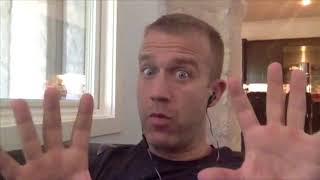
Tucker Max, CEO of Book in a Box and bestselling author, talks about failing on a movie deal, firing himself as CEO, and scaling his company to eight figures. He discusses how Book in a Box found product-market fit, the importance of action over opinion, and why learning from failure matters more than avoiding it.
Chapters
Welcome to make More Marbles. My name is Brad Hart and we're here to interview the game changers, the future makers, the co collaborators and creators who are here to collaborate with one another towards a better future for all of us. Enjoy the show. We've got a great guest coming up for you right now. Recording. Welcome to make More Marvels. My name is Brad Hart and today I'm just incredibly grateful and humbled to have Tucker Max, CEO of Book in a box, best selling author, three times, I believe, right? New York times, three times.
Number one, right?
Nice. Well done, sir. You know, I followed your career for many years and honestly, you know, between you and Neil and a few others, I grew up on your books. I learned how to, you know, kind of relate to people in a way that I never did, you know, and not be ashamed to be who I truly am in the world. So it's a huge, it's a huge honor, honestly, to have you on the show. So I want to get right into it and kind of dig into what it is you're doing now and why. I think it's so important for people understand. You know, you get a story about people, you see a snapshot of their lives, and you make up a story or a judgment about that, and that's based on your preconceived notions and the things that you've gone through in life. What I'd like to ask you, Tucker, is what are some of the times in your life when things have really shifted for you where you went from the person you were to the person you needed to become and who you see yourself as today?
Oh, man, I've had so many, like, good shift, bad shift. What?
Yeah, I mean, it's a perception, right? So what do you think has really spurred you to become the man you are today, most recently? And what is the message you want to share to others? I guess that would spur them along and making those shifts to be the person that they want to be, to grow and contribute at a higher level.
Man, that's tough, dude. Well, first off, I mean, the first thing, this is a little bit nitpicking, but like, sure, I would say there's not really a message I can share. It's like, people either want to do this or they don't. Right? So the question is not how can I help people want to do it. The question is people who want to do it but don't know where to start or don't know what to do. I can't necessarily tell them what to do. I can tell them what I did and what happened to me, and then they maybe learn from that in their own experience. But what I found, man, is that, like, you can't. It's very much like the lead a horse to water but can't make them drink type thing. You know, people. Most people say that they want to. They want to, you know, whatever it is, they want to be a star, they want to have a business, they want to be this, they want to be that, but most people don't really. They want to want. They want. They want to have it, but they don't actually want to do the work to do do it, you know? And so, like, to get back to your question, the biggest thing I have to go back to that really shifted me in my life, I think was probably the failure of my movie, which is like, it's such a rich, white person problem. There was literally a movie made about my life before I was 34, and it didn't make $100 million at the box office. And that was my failure, right? Which is like, what's wrong with you? How is that a failure? But of course, everything, our experiences are completely subjective, right? And they're completely in our mind. So I expected this movie to be a massive breakout hit. And it did like 2 or 3 million at the box office, and it actually did pretty well on DVD and whatever, but nothing like what I expected. And so it was. It was a major failure for me and a major turning point in my life. And the thing that it was, as much I hate to say it, it was probably the best thing that ever happened to me. What would you see happen to a lot of successful people? Happen to me. I wrote the books. The books that you talked about blew up and they became famous and sold millions of copies and made me rich and all that nonsense. And once you have success, if you're not already grounded, what happens is it goes to your head and you think the success is about you, and you think you're awesome and you think you can't do anything wrong. And I'm exaggerating a little bit, but, I mean, you've seen it happen with a million celebrities. I was no different man. And then also what you see is people get out of their lane. I was a great writer. Being a great filmmaker is a totally different thing. There's almost no relationship between the two things. And there are some people who are good at both, but not many. And just because you're good at one does not make you good at the other. And so Automatically, but my arrogance didn't let me see that. And so the movie failed because it was 100% of my arrogance. It was my fault. I didn't realize the movie was a collaborative art. I hired all the wrong people to work on it. This whole series of decisions that I made that sprung out of my arrogance and caused the movie to not do well. And so when it didn't do well, it kind of was a turning point for me in my life. So I got to like, when you're faced with a hard, corrective reality, I want a hard reality. What you can do is you can, you can say, you know what, I was wrong. I, I screwed up. I had a totally wrong. Something was wrong in my decision process and my view of the world and I need to go back and find it. Or you can double down on what you were doing before. You can blame other people, you can say it's not your fault. You can create a story so you don't have to face that pain. And for me, one of the few real strengths I have is, is I'm always willing to face reality. I'm not willing to hear the truth a lot of times, but I'm always willing to face reality. And that was a reality I could not run from. You just can't run. It's just, there's nowhere to go. So it took me a lot of years. That was in 09. The movie came out and man, I think maybe by about 13, 20, 13 or so late 2013ish, I had really kind of not fixed myself, but I had done the bulk of the hardest part of the work, right, which was really, I had to recognize, man, that I just wasn't that I had to crash my grandiosity, man. And I had to really face a lot of hard emotional truths. And once I did, out of that, out of that disaster grew everything I have now I've got an amazing wife. Two, well, they're two kids. We'll see if they're amazing or not. I don't know if they're, I don't want to say amazing kids. Everyone thinks your three year old's amazing. It's a three year old man. Like his paintings look just like the other three year old's paintings. Like, let's not pretend there's some magic to them. They're incredibly magical and special to me. But they're kids, right? But I love them and I have a great family. Whatever. And so like. And then incredible business. We just passed 10 million in revenue. Congratulations. Like yesterday it's so funny. I just thought about this. Like, even on my books, I sold 3 million books. I probably averaged $2, maybe 250 a piece. I didn't make $10 million in my last career. And we have in this not profit. That's just gross sales for both. And it's not apples to apples, blah, blah, blah. But still, like, the only reason I have a $10 million company is because of all the lessons I learned. Like for example, and you interrupt me at any point you want. But for example, I'll give you a big example about how that failure led to this success. We got to about two and a half million in sales, maybe three. And Zach and I, my co founder, like, we just, we were trying to scale the company and we were failing. It was failing miserably.
And that's when you brought JT in and they had that whole rigmarole.
I had to straight fire myself as CEO.
I love the post, by the way. You've been making some incredible strides and not only being self aware, but also allowing us to kind of peek into the situation and say, holy crap, where. And he's willing to share every little nitty gritty detail about his failures, which is so helpful because I think we're all something in the world and if we can't be self aware, we're screwed from the get.
Yeah, yeah, Writing about it helps me clarify it in my head and helps me really see, you know. But yeah, I fired myself and brought him on and that dude, that's why we hit 10 million. Like, like we were two and a half then and seven and a half since he's been here a year and a half and we were like a year and a half old. Like he's the difference. Don't get me wrong, we had amazing product. We had the beginning of a great company, but we were not going to be the ones to get it there. We had to have help. But before, I would not have had the humility to do that. Like on the movie. The best thing that could have happened in that movie, we had an amazing script. The best thing that could have happened in that movie would have been me getting fired off of the movie and having a baller director take it right. But I never would have, never would have accepted that emotionally in any way at that point in my life. Now, basically, we got to the same thing. We got to the limit of my abilities, me and Zach, we got the limit of our abilities and we were able to accept this and bring in people better than us at the Skills we needed. And now we're part of the, you know, we're part of the journey, we're part of the team and we're doing amazing stuff, so.
And by the way, the company. Yeah, that's a great question and great answer. Thank you very much. The book we're referring to is Book in a Box and company is of the same name. Zach Orbant, Charlie Hohn now works for you guys. Congratulations, Charlie, for listening on the new baby. You know, I've read this book a bunch of times. I've sent it out as gifts. You know, it's just an incredible process from taking an idea into a published book. And you know, I recommend you guys highly to everybody and I can't wait till somebody does something similar in the online course or mastermind space. I think there's a lot of opportunity there.
Yeah, a lot of people have asked us for that and we're like, man, we got to nail it with books first.
Books right? Before you nail it, before you scale it. Right. No, that's great, Tucker. And I think, you know, I want to start pulling on some of the threads of things you said because I.
Think there's a lot of.
There's one thing you said about, you know, you kind of had this mindset of I have to do it all myself and my ego is driving the bus. And I've had that similar failure. We had a hedge fund that, you know, did a million dollars one month and I was more disconnected and burned out because I was working 18 hour days trying to do it all myself instead of, you know, getting the team in place. And that led to me doing what I do today, which is great. But if I hadn't had that ego driving the bus off the cliff failure, as you well know, it would have never happened. So you talked about this versus now, collaboration being a core value and having the right people on your team. And what is some of the, you know, the benefits of this? Cause I tell people to start with the team, right? That's kind of how I espouse entrepreneurship. It's a team sport. You gotta check all the boxes at least to have the right people in place to push the mission forward and then raise enough capital to really go at it in the way. You can bootstrap too. But if, you know, the idea is not sound and validated, there's no way to really market well.
So what's, what's your question? Because I would actually disagree about starting with team. But it's not that you're wrong. They're Just different approaches. Both. Yeah.
And I think my strength would be more suited towards, oh, I have the right people for this and I'm gonna live there. Versus, I'm the ideas guy, or I'm the timing guy or the systems guy or the numbers guy. Right. I know what my strength is. I stay in my lane. That's how I would start a company. Maybe your skill sets a little different. And you would start with the message or you would start with the idea and kind of work from there.
Yeah, I mean, the thing. So if we're talking about starting companies, the most important thing is product, man. Well, so it depends, actually. So the most important thing at a core level is are you building something people want? So you can define that as product or you can define that as market. People define that differently. But are you building something people want or providing a service you want? That is it. If you are not starting there, then you are wrong. Now, once you have something you think people want, then I think you're absolutely right. The most important thing once you have, that's called product market fit. So once you're in a market that's growing and you have a product or service that people want, and you know that by the fact that people have paid you money or used your product, whatever, if you're social network type thing. Right. But if you are independently market validated, then you're right. Then people become the most important thing. So, like for us at Book in a Box, we were kind of lucky. We had product market fit almost before we even had a company. And so, like, for us, almost from day one, it's been people. We talk about it right now. The only JT and I talk about this basically our entire his job. He has two jobs. We both have two jobs. My job is to make it rain and to find great people. His job is to make it scale and find great people. That's the overlap for us. We got to find great people because that is the only way you scale and build a company. But you've got to have something. I say you've got to have something to scale and build before you find great people. That's not necessarily true. You can find a small team of really great people and you can start with something that's total crap. And if you have the right mindset and the right people, you can pivot to something good. I would absolutely agree with that. I'll just say that's way harder. Way harder to do that. Very few people who can think that way. There are very few true entrepreneurs. Out there. But there are a lot of great team members and great builders, and they're different.
Absolutely. And that's a great point, is, like, you can kind of fail your way forward and iterate and keep MVPing until you get it right, but that's a painful process and you may never get. So maybe start with the right idea and go from there. And guys aren't listening. I read this on your blog. Could you just tell the story? I'm sorry if you're not familiar with the story of how Book in a box came to be. You're at a mastermind. And somebody said, why not?
I was at an entrepreneur dinner, and this woman, she's like, a really successful entrepreneur, has family, business, all this stuff, and she's like, hey, listen, people have been asking me to write a book for 10 years. I don't have the time, you know, like. But. And I don't like writing. I don't want to sit down and do this, but I really want this book out of my head, and I need it in my words and my voice. And she's like, how do I do this? You know? And so, of course, I was like, well, you know, go hire a ghostwriter. No, no, no. It's gotta be mine. It's gotta be totally me. I'm like, are you asking me how to write a book without writing it? That's nonsense. And she's like, yeah, I kind of am. And so then I start to make fun of her and, like, kind of, like, shame her and, like, oh, you don't work hard enough, and all this nonsense. And she stops me and rolls her eyes, stops me. She says, tucker, this is an entrepreneur dinner. Are you an entrepreneur? I'm like, yeah, of course. She's like, I don't think so. Because a real entrepreneur would help me solve my problem and not lecture me about hard work. I was like, you. But she was 100% right. And so I became obsessed with this issue, like, how do I get this book out of her head, in her words, without her having to sit at a computer for a year? So I thought about it. I thought about it, and I could not solve this problem. And then, of course, it came to me in the shower, like a total cliche. Like, this process already exists. People have been doing it for thousands of years. The only reason we have the words of Jesus is because of the apostles. The only reason we have the words of Plato is because of. Sorry. Of Socrates is because of Plato. The only reason we have the words of Buddha is because of his disciples, we go down the list. Most of the great books of the Western world were written down by scribes, not by the authors. So why can't, you know, if Jesus can do it, why can't Melissa? And so I basically wrote down every step in the process of writing a book on a whiteboard. And I realized I only needed her for the content. There's a lot of other stuff with the book besides the ideas, but I could do everything else without her as long as she provided the idea. So every time I needed the content, the ideas, I just got on the phone with her and I would talk to her, and I realized I had to do a structured way of interviewing all these sorts of things. And the book ended up doing great. Zach and I did this book, and it did. Fantastic. Her book. Fantastic. And this is how dumb I was as an entrepreneur. I didn't think this was a company. I was like, okay, that was, like, an interesting product. This is cool. Whatever. I'm gonna go back to whatever nonsense that wasn't working that I was doing. And so she starts referring people to me, and they're like, it wasn't even like, hey, is this a company? They were like, emailing me like, hey, I've got ten grand. Will you do this for me? I was like, what?
Shut up and take my money, Tucker.
Right? No, seriously. They're like, here's my money. And this how dumb I was. I'm like, this is literally the definition of product market fit. When people are giving you money for something you're not even offering, that is like, the market's pulling a company out of you. I had to go on to a different podcast, a different one than this, and talk about, like, something else. And then this, like, I brought this subject up, something, somehow I came this up. And the host, like, talked to me about this for 20 minutes. And he's like, what do you call, you know, this company? I'm like, not a company. What do you mean? And jokingly, Zach and I had, like, said, we're making a book in a box like, thing for Melissa. That was back when, like, the dick in a box, like, skit came out from snl. And so we, like, made a joke about that. And so that's why I called it. I go, we call it Book in a Box. He's like, oh, that's amazing. All my fans should go check it out. Blah, blah. And so then, like, we got, like, $200,000 worth of business without really even a landing page or anything. And Zach's like, hey, Dummy, this might be a company. Yeah, I think it is. And so, yeah, when I say we had product market fit before we had a company, that's what I mean.
That's great. I love that story. It's awesome. So a couple things you could pull out of that. I mean, obviously the market was pulling a company out of you. They were begging and pleading with you to fix this problem. And you were uniquely positioned to solve this problem. Not only did you have high visibility and skills as an author, you had that kind of background of, you know, that Socratic way of thinking, that lawyer training, all of that. You had the audience obviously to plug into of influencers and networks of influencers. And additionally you had people literally writing you checks. I mean, how much more of a, of a prod could you need? What do you think are other opportunities like this that just nobody's really kind of dug into yet?
Dude, there are so many. I Wish I had 10 lives because there are so many business opportunities out there. It's like, look, we are in a world right now where for a hundred years there was the same way of doing business. Same way, whatever business, it was concrete, toys, toothpaste, it doesn't matter. There's basically the same structure of business. And in 30 years we have seen the cost of information, transaction cost of information go to zero. We basically went from analog to digital media. We're about to see on top and we have not even begun to deal with the whole software eating the world. Zero transaction cost of information implications for media. Now, on top of the digital media, we're adding basically free and ubiquitous video and cameras and what will amount to free and ubiquitous AI and machine learning and free and ubiquitous and like augmented virtual reality. So essentially there is more opportunity than there is not opportunity. The problem is not opportunity. The problem is no one is. Either everyone wants to do what other people are doing and no one wants to think for themselves in any way, shape or form or actually take the steps to do the work. And this is not new. It's not like people used to be baller entrepreneurs and now people aren't. I'll give you a great example. Apple, right? One of the iconic companies of the 20th and 21st centuries. Do you realize? So the interface that Steve Jobs used that he basically stole from Xerox parc, Microsoft and Apple both. The mouse stole their core technology. Not just the mouse, but the visual interface, right? They sold from Xerox parc. Do you know how many. Palo Alto Research Center. Do you know how many people saw. It's not Like Steven and Bill were the only two people to see that. I think it's estimated that something like 100 or 200,000 people saw the Xerox PARC demo over the 10 years they were developing that technology. And these are people like in computers in Silicon Valley. And none of those people did anything with that. Yet that one innovation, literally graphical interface computing, led to Microsoft and Apple trillions of dollars of enterprise value. No one built that after everyone's seeing it. And right now, I will tell you, seriously, and I'm not going like all the great futurists, Kevin Kelly, popular. Everyone will tell you There are probably 50 Apple and Microsoft's ready to be built from now through the next five years, ready in all these different industries. So if you want to, if you want to start a company, here's the best way to do it. Whatever field you love, I don't care what it is. Any field that you really. I love writing, I love finance, I like pools, I like grilling. It doesn't matter. Go into that field, learn everything you can about that field, and then seriously just figure out, okay, what's a close field that's more technologically advanced or that overlaps? What are other people doing in that field that aren't the advanced field they're not doing in this field. You can seriously name any field. Name any field you want. I'll kick out businesses immediately. It's so many. It's crazy, man.
Yeah, you're essentially looking for the key leverage point from another industry, right? To cross pollinate and create a new industry in the one that you're already obsessed with.
I mean, really, if you're a baller. What I would do is I would, I would read up on. There's so much great information now about different business models and all the new, like, stuff coming. Like, go read the Inevitable by Kevin Kelly and then go read any of Alex Osterwalder stuff about business model stuff or value chain creation. Read those two books and then just go pick a field. Like, man, name an industry Concrete. All right. How do you bring modern software and modern sales deal flow to the concrete industry? Done business. I'm sitting here in my house looking at my grill. Grills. How do you, like, bring modern software, AI, virtual reality, and like modern marketing to grills? And there's a hundred ideas you could come up with.
Plug your grill into the Internet of things and make an app and you're good.
No, I think that's really stupid because that creates a lot of problems. Right, but what would that look like if it was cool. No one cares about having their grill hooked up to their smartphone.
Well, that's the point, right? The idea is it doesn't matter, right? It's the execution, it's the iteration that gets you to the right idea that eventually hits you in the forehead. Like, oh, that's simple enough to go.
Exactly. That's the whole point. But like, no one does that, man. It blows my mind. Like I got. There's so just yesterday we're having a meeting with a client of ours is doing a book with us. They're doing more than a book, a bunch of stuff with us. And it's like the business, the field that they're in, they're looking at a 10 to 20 billion dollar opportunity. And this is not a huge field. 10 to 20 billion dollar opportunity. And I'm thinking to myself, bless their hearts, These, it's a man and a woman. They're smart, they're motivated, they're probably not going to be able to pull it off. But like, if I wasn't doing my company, I could turn this into a $200 million. Me and J.T. not just me, me and J.T. and Zach, we could turn that into a 250 million dollar company in three years and exit it for a billion bucks like without even thinking, easy. There's probably 10 opportunities like that that are close to our field that we could do. And that's just because I know a few things. That's it. There is just nothing. We are going to look back at this period the way that right now we look back at the start of the industrial age, like Carnegie and Mellon and Rockefeller and you think, God, look at all that opportunity. And there were so few people who took it. Our grandkids are going to look back at this period and say the same thing. So if you're listening to this and you're sitting there doing nothing, don't say you haven't been told.
Absolutely. And you know, you just see so many new industries coming out like crypto and blockchain and just all.
There's a whole other one I didn't talk about. That might be the biggest one.
Yeah, I read in a sci fi book that, oh wait, this is how a futuristic civilization would deal with ownership, identity, records, finance, real estate. That book is called Stock Go.
Right. That book is called the Daemon. It's amazing. I read that. Or you could go, go read Snow Crash or Diamond Age or Damon D A E M O N. Which is Daniel Suarez. No, Daniel Suarez wrote Damon. Neal Stevenson wrote Diamond Age and Snow Crash. But go read those three books. And then they're all 20 years old, but you can read them and be like, oh, my God, this is a future. I can see. I can understand from our technology that we have right now how this future comes about. Done. Done.
And you know what I love about you, Tucker? I mean, we've spent about. I've spent more time with your dog than I've spent with you, let's just.
Put it that way.
However, I've been around your kind of circles a lot, and we haven't spent a ton of time together. But one thing I've noticed about you is your. Your house is basically a library, right? You're always reading. You always got something open, cracked open. I'm kind of similar way. You know, I've always got something in every different type of industry you could think of. I always got a book, and I've always got my head in it. Because, Honestly, you're getting 10 years of somebody's experience crammed into one. It's an incredible experience. So I appreciate that. And, you know, Ryan shares. Ryan Holiday shares the same kind of ethos around that. But the other thing is that you're willing to take a very hard line stance and get aggressive in getting people and shaking them up to think a little bit differently.
Right?
You're not afraid to call me on my podcast. I appreciate that, actually, because I think we all need to kind of get over ourselves, stop letting the fear of risk dictate our lives. And I just love that, you know, we can kind of let you go off on a. On a tangent. We need more people like you to step up. So if you're listening to this Dan podcast and you got an opinion about something, I think you should go out there and really get to the heart of it and figure out.
Wait, let me just. Let me iterate on that statement. I don't want to hear anyone's opinions. Opinions are like. They're free and useless, right? I don't want. I don't want to hear it, right?
What I want educated opinion, I guess.
No, I don't even want to hear that. I don't care. I want to see action. Yes. I haven't done any action. Shut up. Because you don't have anything to say. I just spent the whole day interviewing, right? And that's literally the number one thing I look for from our. It's not the only thing, but it is the number one thing I look for in potential people that we hire. Have they created action in their Lives. Do they take action? Do they initiate action? Do they follow through on action? Do they get things done? That is the number one thing. Do they get results? Most people want to talk about things. They don't want to get results. It's cool to talk if you are also getting results. If you are not getting results, if you are not creating action, shut up and go create action and get results. Then talk about those actions and results. That's cool. You know what I'm saying? But we don't need more people talking about this. We need more people doing things. Now, I get your point, but your point is a lot of the reason people aren't doing things is because they need to be shaken up a little bit or whatever. I got it. I'm with you. I'm happy to do that if that'll help. I'll tell you, man, in my experience, I would be shocked if this podcast helps even one or two people. And it has nothing to do with your audience, man. And this is a little bit of the asshole type challenge you're talking about, but I'll say it, most people that I meet that consume a lot of sort of help me learn how to do things type media are basically using it as guilt reduction for not doing any action. So, yeah, it is a mini. Is a little bit of a call out to your audience. Don't just listen to this podcast and say, oh, he's smarter. That's a good idea. And do nothing. Go do something.
Right. Because you can never fail. You can only win and learn. Right? Either. Even the best hitters in the world, tucker, strike out 7 out of 10 times, right dugout, and look at the plate and say, oh, maybe I should go take a swing at the bell. Because, you know, even if you hit a single double, it doesn't matter. One day you'll hit a grand slam if you just keep at getting up to bat.
Yep, exactly.
So, all right, we've kind of touched on this, but I want to know who some of your favorite people in the space are. You talked about Kevin Kelly. You talked about all these different wonderful people. Have you followed the work of Peter Diamandis? Ray Kurzweil, Singularity University?
Of course, of course. I know, I know. Peter and Ray Rowell. We're doing a book with one of the professors at Singularity.
Wonderful. Yeah. So what do you think are kind of the most exciting things coming in the next five years, besides the ones we've talked about, that people can dive into and actually take action on and figure it out and what would be the first or second?
Dude, I just named a bunch of them. And then you actually named the biggest one. Dude, like the one that I forgot focused on.
We're going to Switzerland, we're going to show up in Zug in a couple months and we're talking to all the ICO people.
Crypto. Oh, dude, that's naval. Ravikant is right when he says that he thinks like that might be bigger than the Internet. Because what crypto does in the simplest way is it makes it possible for people to have financial and even sometimes social interactions without knowing each other. Like trust required interactions without having to know each other at all and having to rely on third parties. That is such a fundamental change to the fabric of humanity. It's so fundamental, it's like, it's hard to even see it. So big, you know, it's like if you're underwater, you know, you can't tell a fish how big the ocean is because the ocean's all it knows, right? It's the same thing. Like it's. God, it fundamentally changes everything, man. Everything. It's almost too big to bite off. You don't, don't go into crypto. You need to go into a tiny slice of it, right? Like the tiniest slice. If I was going into crypto right now, actually, I still wouldn't. I think it's too early right now. The only people who should be in it are people who are deep finance people or deep math programming people. That's it. It's just so early. Oh yeah, you fit those bills, so you should be in it. But like someone like me who's met neither of those things, I'm not ready, right? But let's say three years when there's like a coinbase and there's protocols that are kind of easier to use.
It's so frickin user unfriendly. It's ridiculous.
I've lost for you.
I know it's ridiculous. And it's like, I'm pretty smart. I could figure this stuff out. I worked on it, you know, I started a hedge fund from scratch. It was successful. And I'm like, wait a second, the average person is not going to even be able to understand this, let alone take.
I mean, dude, like, I just, I like, I'm cashing in big on zcash. Like I was some of the first money in on zcash. And zcash is doing well, think it's gonna do real well. And I still am like petrified to do anything with it. And I'm 500x on my Zcash investment and I probably should cash out or I don't know what to do, but I'm afraid to do anything because I'm afraid I'm gonna screw it up and lose all my money. Right? So like it's too early on that, but you're gonna reach. So crypto is where like the Internet was when I got to college. Like, you know, it's the wild west, right? And so like if you're looking for something that doesn't require deep skills, I would seriously, how do, how do I find a business that is in the 20th century and has not gone to the 21st? How do I bring them into the 21st century? You know, like, how do I apply software to concrete or whatever? Any business? There's so many businesses. Like, there's so many dude. Like, you know what I would do if I had no friends, no experience, nothing. I just like, I want to go start a business, make money. I would honestly find something, what is something that is hyper local, that no one thinks about digitizing or standardizing and processizing Something like dry cleaners, Something really boring that everyone has to have, right? What if you just took dry cleaners in not even a big city, like a mid sized city. I don't know, Charlotte. And you went and bought like three dry cleaners, right? And it does not cost a lot of money to buy cash flow businesses. You can buy them for like one X, right? Seriously? Yeah, finance it. So you just buy one, create just an uber style interface, add some basic like software SaaS, like types, customer service things and like really basic stuff and just roll up every single one in the city. Now you've got 10, right now you've 10x revenue. Now you've done all these sort of things. You can either create a franchise, you can sell that you can. There's a million things to do, man. Like this is so basic. This is like marketing 101. This is like the most basic stuff of all time, you know, like just simple ideas like that. Hmm.
So yeah, and I want this to be accessible and useful for people as well. You know, it's, it's really hard when you've gone down the rabbit hole on this for so long. You're really in a real business and now you're part of the eight figure club. So congratulations on that. But like if you, if you had one thing that you could leave people with that you think if they had a fire lit on it. So I'm not saying you gotta Light a fire under their ass. But you could also, you know, throw some gasoline on that fire. What would it be? What do you think would stoke the desire or help them to really tap into this more? Entrepreneurs or people that are entrepreneurial?
Look, dude, I'll tell you straight up again. Like we said at the very beginning, I don't think you can soak desire. Either someone wants it or they don't, right? Yeah, but I can mind people, right? So please do. If someone's kind of close, right, and they need that last push, what I'll do is I'll say something like this. I'll look at them and I'll say in. Let's say that they're. What are you, 40, right?
Me turning 32 in about a month.
Okay, so we're close enough. I'm 41. So you have kids, right?
No.
No. Okay, I do. And you will eventually. So I'll look at them and I'll say, you know, in 40 years or 50 years or 60 years, you're going to be on your deathbed and you're going to be surrounded by your children. When you look at your children, right, and they look back at you now, let's assume you've been a good father, you raised them well, et cetera. What do you want them to think about you as a man or a woman, right? Outside of a parent, that's different. So let's say you're surrounded by your friends and your family and people who know, right? What do you want them to think and why are they gonna think that? If you want them to just think that you're a good person and that you tried hard at life, that's cool, that's great. No shame in that. But if they. If you want them to think you were great, and if you want them to think that you really contributed, that you made a dent in the world, then you're gonna have to go out there and you're gonna have to take some risk and you're gonna have to take some action. Because showing up every day at work, it's not going to get you there. It's not. It can make you a good person. It's not going to make you a great contributor to the planet. It's just not right. So if you want to be that, if you want people to look at you that way, if you want people to think, this man, this woman, made a difference to lives of people they don't know, the only way to do that is through business. That's it. That's it. That's the only way you can make a difference in people's lives. By making the world better. By creating a better cab company, by creating a better hotel company, by creating a better grill, by creating. Making it easier for them to learn how to be an entrepreneur. You can make their lives different or not. It's up to you. Depends who you want to be.
I love that. And it's associating enough pain and enough pleasure to the situation where it's like, you know, if this is what you really want, there it is, you know, and there's always going to be those people that move us forward, and there's always going to be people that just kind of exist and then don't. But who do we, you know, if you want to be a legend, who.
Do you want to be? That's it. That's the question, man.
Want people to tell your story after you're gone?
And there's no shame. There is no shame.
There's no judgment about it either. It's just different.
I want to. I want to be. I want to love the people I love. And I want to just, you know, that's it. And that's all I care about. I'll just go to work and clean toilets. That's cool. Toilets have to be clean. And I will respect that and I'll respect that person, but no one will ever call that person. No one's ever going to say they contributed to the world, Right? They're just going to say that they were a great family man, and that's cool, but they're different. So, like, that. That's how you mind people, is you call their identity, you place them in the context of who and what they are and looking at their history and if they have it in them to be inspired, something like that is what's going to get them.
I love that. That's a very valuable contribution. Thank you. Tucker, you said something that kind of triggered something for me, so I really, truly believe. Is that Murph, by the way?
No, Murph is gone. This is Cookie.
Sorry to hear that. So, okay, you talked about the person who cleaned the toilets, right. But we're moving into a world very rapidly where most menial jobs, most automatable.
Jobs will be done by robots. It's great.
No one has to clean toilets, thankfully. And so I need to think of a world. So I could see it going two ways, right? I could see the powers that be trying to hoard water and mineral rights and all this crap and creating a world of frickin Dystopia or I could see it going the other way where we have this utopia. We're unlocking all this time energy, attention that's currently being spent on survival and just getting by is now being put into the marketplace place and able to contribute at a higher level. Now economics is really just the science of what we know about, you know, human decision making. Up until this point. It's about five years behind because the academics have to get together and figure it out and theories have to come through. So they're always behind the eight ball in that. So what are your thoughts on what the new economy looks like that's going to replace what we currently have?
I would say it's what I would call an earthbound utopia. So it's not going to be utopia. But the question isn't what could happen? You're 100% right, man. The end state of not even a general purpose AI, but an AI plus robots means we don't have to do sh. Tty work anymore. No one does basically. Right. And so that's amazing. That's incredible. The only problem is the transition. And that, I mean, dude, that's a really complicated discussion that is probably way beyond the scope of this podcast. But I will say this. AI plus robots does not eliminate jobs. Quite. It does eliminate some jobs, but quite the contrary, I think it's actually going to increase jobs. Think about a world. Let's just take it to its logical conclusion. So I can sit in a house like this can be built by robots.
3D printers, right.
Can be built by robots basically. And the resources can come from robot husbanded farms. Right. And if we have solar is getting to the point where energy is going to be effectively free. So free energy controls robot husband and farms providing the resources to put me in a massive 7,000 square foot robot built house on half an acre with a pool and a guest house and all this other. Cool. Right? Alright. So what if everyone can have that? There's nothing wrong with that. I think that's amazing. Or some equivalent. We all live in cities, we have nice condos. What the f ever. Right? So then what are the jobs? Well, the jobs become look at any abundant society. In fact what you should do is go look at abundant hunter gatherer societies and you can see what people spend their time doing. You're actually getting the core of it, what they spend their time doing, interacting with each other. And then the jobs are things that entertain, things that compel storyteller, entertainer, makeup. Humans are basically our entire jobs are going to Be status signaling to each other and entertaining each other, which, believe it or not, is what we're mostly designed to do. That's what we're designed. And competing with each other, sports, things like that, right? If you look at an abundant, which most hunter gatherer societies are pretty abundant, they actually tend to be very leisurely, like people. Like, if you look at the way that they're actually structured, hunter gatherer life for the most part is not hard work. It's short bursts of hard work around long periods of leisure. And then what do you do? What do you do to fill that leisure? You make things, you tell stories or entertain. And you compete with each other in activities that resemble hunting, to sharpen your skills for hunting.
And you compete with no downside, because even if you fail, does that spur more competition or does that spur less people giving a crap?
Way more. Way more, dude. Like that. I trained Brazilian Jiu Jitsu in mma, right? So it's me and a bunch of dudes on a mat fighting each other. This fight is not for anything, right?
It's a natural human drive to just compete and be better.
But no, it's not just compete and be better, man. It's not. That's not what it is. It's every day at the end of that hour, I know where I fit, right? We've got plumbers and auto mechanics and hedge fund multimillionaires and famous writers and all these other people, right? But for that hour, it's just about the fight. And at the end of that hour, we all know where each one of us stand. And we love all the other guys because they gave us each one. Each opponent gave us the opportunity to fully express our masculinity and humanity and our martial skills. There's no win or lose. There is only winning and learning and there's always expression. There is always the expression of self. And so, like, it really, it's the craziest thing, man. Like, you're getting ready to roll with someone, you're a little bit angry at them and you go hard and they go hard and they win. Or you, you win, doesn't matter. But afterwards, you love that dude. You'll love him because he gave you the chance to show who you were. And you know, if you broke, you know, if you tried your best, you know, if he was better, you know, if you were better. There's no hiding on the mats, man. That's why I love MMA and jiu jitsu so much. But all sports, everyone says the same thing, leave it on the field.
Yeah, Leave it all on the field. Nothing left. And that's really the, I think, the core of the masculine essence. You had a great podcast called Mating Grounds. I don't know if you're still doing it, but the core of the masculine essence is to empty out.
Right.
To feel like there's nothing left to give.
Yep.
And the feminine essence is to fill up. So what would be a feminine equivalent.
Of BJJ for fill up and nurture? It's, you know, caregiving. There's a million caregiving professions. Like, those things aren't getting replaced by robots. And so, like, I mean, those are. We have a lot of those roles in our company, basically, that are nurturing care. I mean, you know, it's a creative company. Right. And so, like, we have a bunch of those roles, and not all of them are women, but the majority are. And, I mean, these are smart, professional women who are making twice as much as they were at their old jobs. Came to these jobs because they are 10 times more fulfilling like, every day. They're just ecstatic with, like, they go home and it's like, I made people's lives better, and I got to feel that by doing it, you know, and they love it. I mean, the way they talk about the job is like, it's almost. You think, ah, well, this is, like, written. This is made up. No, it is, because we've constructed it that way, you know.
So I really love your take on that, and you've obviously thought really deeply about this and a lot of other subjects, too. I mean, what would you like your legacy to be as a man, as a father, as a. An author, as a company runner? Like, what would you, you know, if you had your druthers, if you had, you know, any story that you could write, what would it be?
So, I mean, I'll tell you the most important thing to me. One of our authors said this to me, and I think it's, like, one of the most brilliant things I've ever heard. They said, no man is a hero unless. No, the actual phrase was amazing. The true judge of a man is what his children think of him, you know, a true judge of a father, I should say. But, like, if you don't have kids in it, I guess it's a different thing. But, like, I have kids. So for me, the true judge is gonna be what my. What my son and my daughter and the kids who are gonna have in the future think. Because if I was not a great man to them, I was not a great man. End of story. Like, I mean, I'll tell everyone, oh, Elon Musk this. Elon Musk that. His kids hate him because he's a dad. And to me, that's always like. It's always like, let's not take away the great things he's done. And bless your heart, he's made my life better. He's made your life better. Like, there's no doubt, but he sacrificed his children to do it, you know? And so, I don't know, man. Like, that's just. That's whatever. I'm not willing to make that sacrifice. So the first thing, for me, the most important thing is going to be what do my kids and my wife think? You know, like, have I been a great father and husband? Do we have a great family unit, etc. And if we do, then the outside of my family unit, you know, the way I've always envisioned or hoped that my life would go is that when I died, I would be surrounded by first, my core family, but that the other people around me, that I would leave a hole that was so profound that it couldn't be filled. But I don't mean it like I'm important. I mean, like, what I brought to the table impacted their lives so much and was so meaningful that, like, it's just not replaceable. They're all alternates, obviously. You know, I mean, I've had friends like this man that died. And it's like, we all go on. We're fine. The world always continues. Right? But it's like, there's no one like Seth Roberts is one. Like, there's no one like Seth. You know, like, there's just something missing from the world. And so I want my legacy to be that I contributed so much that when I was gone, it's like, people are upset. Hold on, Cookie, come here. Hold on. I gotta let her out.
No worries.
She's gonna. I got a feeling you're about to make a little tinkle. Come on.
This is real life. That's a beautiful sentiment, Tucker. Thank you. I mean, that's the really, truly, in my mind, the measure of a man, and whether he's mastered his ego or not. And you never get rid of your ego. That's not a thing. But it's there for a very specific purpose, to keep you alive, keep you safe.
Right.
But I think ultimately the measure of a man is the size of his contribution to the world.
Yeah. First to his firm believer, first to his family, second to the world. Now, you know, I got to figure out a better Way to phrase this, man. Because as I say that, the thing I think to myself is if I leave a world behind me that can't operate without me, even if it's just my small world, then I've made it too much about me.
You know, systems that can operate in your. In your set. No, like, honestly, ideally, without you.
Yeah, It's. Hopefully I can do this in a way. I can contribute in a way that I can leave a manual behind or I can leave enough behind that someone can step up or a group of people can step up and do what I did.
Antifragile.
Yeah, right, Exactly. We're trying to build our company this way, very intentionally. That nothing is dependent upon a person. At least to maintain. To build, that's maybe a different thing. But to maintain and to sort of run should not be people dependent. It should be. We should build a system that can do that, you know, and people go in the system. People are crucial to the system, but the system itself should be able to keep going without us. So I gotta figure out a different way to phrase that, but you get the point. You get the point. Yeah, I'd love to hear it.
Okay, and then finally that wraps into our last question is, you know, this is the Make More Marbles community. Our belief is that. That we want to be marble makers instead of just marble takers. Right. Grabbing for all the marbles like the hungry hungry hippos. So what's a way that we can help forward your mission? You've been so generous and grateful and sharing your wisdom with us. How can we add back to your life and connecting you to a resource, an opportunity, a person, a system that's going to help further the narrative for you?
Well, I mean, there's obviously the. Oh, yeah, if you want to do a book, come work with us, of course. But whatever. That's actually not as valuable as the thing I'm going to ask for because we can find more clients. Well, we. I'm gonna come back to something I said, like show you. I'm at. I walk the walk. The hardest resource for the hardest. The only limit our growth as a company is people. So we have a job up right now for a marketing apprentice. Right. And so it just go to. You want me to send you the link? I'll send you the link.
Yeah, I'm gonna post it on Facebook as well. Make sure it gets out to the list for you.
Yeah, like, it's a pretty. Pretty cool job. Like, it's. It's something that, like the right person, like would, I think, be. It's like the. I don't want to say it's the opportunity of a lifetime, but because I don't believe. I don't even believe really in that concept. But it's. It's pretty baller. Let me. Let me put it in chat here.
Thank you very much.
Yeah, so if you're not right for the job or if you're a baller and you're like, now I'm above this, but you know the right person, we pay thousand on referral fee. So just post it to that person, give it to them. Let me see it because. Or let them see it because we need great people and I'll do anything to find and hire and retain them.
Awesome. Thank you so much, Tucker. I really appreciate you coming on the show today and sharing your wisdom. I hope we get to do it again sometimes.
Course, man. Thank you.
Have a beautiful time. Thanks so much for listening to the Make More Marbles podcast. For more tips, hacks and strategies to create an amazing, abundant life in your health, wealth, relationships, whatever that means to you, head on over to makemoremarbles.com, check out our cool explainer video about what we're about and join our community of entrepreneurial game changers. We want to help you level up your life in every possible way. And don't forget to subscribe to us on I iTunes, Stitcher or Google Play wherever you're listening to your podcasts. And please do leave a review. Thank you so much and we'll see you on the next podcast.
More from Brad

The #1 Reason AI Isn’t Working for You (Yet) #AI #businessowner #founderenergy




What tasks would the best assistant ever be able to do for you? #BusinessSystems #BusinessOperations



Nobody expects you to use a harder way when there's a better way. #AI #businessowner

Which side of the table will you be on in 2026? #AI #Mastermind #BusinessOwner

