Goal Planning and Living Your Best Life with Dreampreneur Traci Bogan
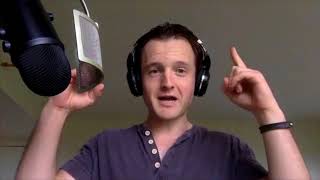
A Make More Marbles YouTube podcast (host Brad Hart) interviewing Traci (Tracy) Bogan, a self-described "dreampreneur," keynote speaker, coach and author. The episode covers her coaching framework (vision, reverse-engineering, daily accountability, belief work), mindset and overcoming 'someday-itis', appreciation/gratitude marketing tactics (handwritten/automated greeting cards, gift boxes, Starbucks $10 referrals, direct mail/high-touch outreach), her autobiographical book The Backpack Diaries (book includes QR-code–linked video content and a 90-minute film), the book-to-movie development, and audience calls-to-action (text DARE2 to 64600; tracybogan.com). The interview mixes personal travel-story provenance (two-year, 54-country backpacking trip) with practical takeaways for entrepreneurs.
Questions this video answers
2018-01-24
Text DARE2 to 64600
tracybogan.com
The Backpack Diaries (book includes QR-code videos; advertised as containing a 90-minute movie)
Chapters
Welcome to Make More Marbles. My name is Brad Hart and we're here to interview the game changers, the future makers, the co collaborators and creators who are here to collaborate with one another towards a better future for all of us. Enjoy the show. We've got a great guest coming up for you right now. Welcome to Make More Marbles. My name is Brad Hart and today I am thrilled to have Tracy Bogan on the show. Hi, Tracy.
Hi, Brad. Thanks for having me.
Absolutely. Where are you calling in from, by the way?
I'm currently in Michigan. I live between. I'm a snowbird. I live between Scottsdale, Arizona and Wisconsin.
Right on. I love both those places. The thing about cheese curds, though, as I gotta tell you, you order them and they're delicious for about one and a half minutes and then they get cold and they're just terrible. I don't know what that is. They turn into like hockey pucks immediately. Wisconsin's a great place. Well, lovely. People wouldn't want to live there in the winter.
And I don't.
And I totally get why you go to Scottsdale every year. That's awesome. You've lived in China too, huh? I just came back from there a couple months ago.
Yes, I taught English at the World Exchange College of Language for a semester and I've been to China multiple times. One of my favorite countries. But not as fun as living in Hawaii for 10 years.
Yeah, I bet. Where'd you live in Hawaii?
I lived in Hawaii Kai, on the island of Oahu. And then I also lived in Anchorage, Alaska.
Wow, you've been all over. I love it.
I have, I have.
It's rare that I meet somebody who's lived in more places than I have, but that's a pretty stacked resume you got there of living experiences. That's beautiful. And you've got a new movie deal coming out. I want to definitely talk about that. I want to talk about your gratitude marketing services. But very first things first, let's just kind of give people a sense at home of what you're up to in the world and why they should be listening to this podcast. So you are what's called a dreampreneur. And I believe this is a term that you coined yourself. But you're also a keynote speaker, a best selling author, and a leading authority on transformation retreats and coaching for women. So you really, you're helping entrepreneurs, business professionals motivated individuals to discover their purpose, their voice and their power so they can create more freedom, fortune and thank God, fun in their lives. Because if you're not having fun, what the heck is the point?
We could all have use more fun.
Right on.
Deserve to have more fun.
So let's just talk about who you serve most often. I mean, a lot of people, you know, especially with coaching, I found they tend to, you know, create a vehicle to close the gap for people. So if they were there and they want to go here, you know, what's the vehicle that's going to get them there? And also, like, they have to have gone through that transformation themselves in some way.
Right.
Not exactly the way. And everybody has their own story and their own nuances. But, you know, if you're going to be an effective coach, you got to be able to lead people where you've already been. Have you found that to be true?
Absolutely. One of the pieces of advice I give to my clients or my audiences is never take advice from someone who hasn't climbed the mountain before you, the mountain that you're going after. And you'd be surprised. You know, anybody can be a coach. Just in my opinion, humbly, most people shouldn't be, don't deserve to be. You have to walk the walk. You have to have climbed the mountain before you can show somebody else how to do that. It's that simple.
Yeah, exactly. And then you also need to understand, like, how people actually work.
Right.
If you can't lead yourself, exactly. How can you expect to lead anybody else? And, you know, I've been through quite a few trainings on leadership, and the one thing that keeps coming back is like, you know, you can know all the answers, but if you can't get people to take action and really hold their toes over the fire in a way that is specific and considerate to them and what they care about, then it doesn't matter if you know the right answer. It's totally irrelevant because 80% is getting them in the right outcome and the right purpose and the right framework to move forward. And what's their story that's going to move them forward. So maybe we can bring this home with a story of an actual client. Like, what's somebody? What's the time where you stepped into the gap as a leader and help somebody really go from A to B?
Well, one of the big things I do, accountability, coaching, one of the biggest things is mindset that many people don't have the confidence or the perseverance to be able to do it. So most people can achieve their goal or dream. They just have, you know, we deserve to have some hand holding. And by a leader from someone who's done it before you and have the inspiration along the way to keep you motivated, to keep moving forward. And those little confidence, you know, so it's like a loop. So when you increase your self confidence, you increase your self esteem. When you increase your self esteem, you increase your self worth. When you increase your self worth, you increase your self love. And it's a perpetual cycle. And the smallest little thing in noticing and taking one step, no matter how small, every little step breeds confidence. And every little step is another step and another day closer. You know, let's face it, many of us are dreamers. And to me, dreamers are those we have a disease called someday. Itis. They have big goals, lofty dreams, and exciting aspirations that they intend to pursue someday. But for most, like in the dictionary, death day will always come before someday. So the difference between being a dreamer and a dreampreneur, moving the needle. A dreampreneur is one who has the unrelenting will to achieve their boldest goal or their most daring dream that aligns with their soul's purpose and brings them a life of joy and prosperity. And it's about moving the needle. Like you said, there's a gap between being a dreamer and being a dreampreneur. It's the showing up with the activities, the accountability, the mindset in the steps that move the needle from where you are to where you desire to be.
Okay, so Tracy, let's say I'm a client. I'm somebody who's just signed up with you, and I really have this big goal or vision, right? I want to take on the world, let's say I want to change the way people grow their food, for example, just to use something as an example. And I'm passionate about it. I have the skill set, right? And maybe, maybe I've been doing aquaponics for years. I want to change the way people do farming or vertical farming. What would be the very next step for somebody like me to gain the product market fit or build the team or whatever it is that I need to make the dream work, so to speak.
Well, number one, it's mapping out and creating your vision and then reverse engineering the steps that turn into daily, accountable actions. So you have to start with the big vision and walk it backward so something can be small enough, bite sized enough, and palatable enough that you can take the smallest step forward. And then it starts. You know, the second thing we do is we prioritize and organize that list and we just put you to a daily task and A daily challenge with daily accountability to keep you moving forward. But it starts with vision.
I love that. Yeah, I heard a great story one time about how, you know, somebody wanted to be an astronaut. And that's a really big thing, right, to be an astronaut. And there's a lot of pieces that you may or may not have control over in that goal, but you can still take the first step, right? Or you can work backwards from there. It's like, well, if I have to be an astronaut, I have to probably work with NASA or a private space company. Nowadays, if I want to be working at NASA, well, I probably need to be in pretty good physical shape. I'll probably have to be top of my class at various different things. I might want to have a consider a military career. There's a lot of different pieces that go into it, but you can start taking the first steps, right? Even the president, United States, like, oh, maybe I want to be a lawyer or get into the Senate or run for public office or get used to public speaking. You know, there are all these little steps that kind of, you know, in and of themselves may not get you the whole way, but you can begin to build the case, right? Build the case for self confidence, build the case, self esteem, and being able to move forward towards goals. I think that's where people get hung up is like they have this big vision and aspiration, this desire, and they're inspired. But maybe not knowing that the first step is all it takes to kind of create that cascade. And then I like the fact that you drill it down into daily accountability and daily goals makes it so much more bite sized, right? Just get up and do this one thing today.
It's also choosing. You have to. Most people, there's two. One of two things why people don't achieve their bold goal or the most daring dream is they don't know what it is. They haven't planted their flag in the ground and claimed their stake that this is what I declare. You have to declare it in writing with a, with a do it date. Okay. And second is we don't give ourselves permission that we're worth it. Most people don't feel worthy of the dream or they fear the success or the failure of that dream.
I love that. I think it was Peter Dinklage, the actor on Game of Thrones, who talked about, you know, his career path so far. And he said it was as soon as I gave myself permission to fail that I was ready to succeed.
Oh, that's. That's brilliant. I love that quote.
Yeah, it's. It's really beautiful. And he's a. He's a wonderful man doing a lot of really great things in the world in addition to his acting career. But it's just great to see, like, what was the thing that shifted somebody? Like, what's the belief that they put on or took on that allowed them to make that shift and start capturing these. You may word a little differently, you know, you may come up with your own. But just like we become collectors of beliefs, and our beliefs are our filters through which we process information, through which we take action, through which we form our habits which ultimately create a reality. So if you don't have the right belief systems and structures based on, you know, I'm not judging anybody's beliefs just based on the goals that they want to achieve, then how do you get all the way there? Right? So really, I want to become a collector of beliefs that are world class. And that's part of the reason we do what we do here, is to collect those beliefs.
Well, you say that are world class because a lot of people have beliefs, but we have a lot of stinking thinking going on. And I call them toxic beliefs. I teach 10 keys in my coaching program, and one of them is the belief key. And the belief key is about mastering your thinking and your behavior because it is done unto you as you believed, you know, with unshakable certainty that you live your desire. You know it naturally without thinking about it, which is unconscious competence, like brushing your teeth or tying your shoes, Right? So when you can get to a point where you catch yourself in your toxic beliefs or your stinking thinking like, exercise is boring and I hate it, you can take back a piece of your power and strengthen your beliefs or your believability about being able to achieve your goal or dream. So you take back a piece of power and you notice it. And when you notice it, you replace that toxic belief with something positive, such as, I feel great after exercise, I know that I'll live longer and I'll be a better example for my family to follow. So we can create many more years of, you know, time and memories together. Or another word, people's biggest. In my experience, many people have a toxic belief of I can't afford it. The anecdote for that would be, I really desire this. And I'm working on a way to afford it because I have the resources and resourcefulness to achieve and create whatever it is that I desire. So you hit the nail on the head that it is about beliefs, but we have to make sure that they're the non toxic beliefs because we're all guilty. No matter how good we are, no matter how into personal development we are, we all get the toxic beliefs in the stinking thinking. It's how quickly that you can get it back and get the anecdote of something positive and move forward from that platform.
Yeah. A friend of mine, I just did a training sales training in Austin and he was saying that, you know, I'm always hiring coaches. You got to keep, you know, working on these beliefs all the time, especially with people that are more successful than yourself. So I hired a friend of mine for a day who's a very successful coach and has a huge email list and has helped a lot of people. And one of the things he said to me is like, your captain is asleep at the wheel all the time. And this is true of everybody, right? Most of what you're doing is a subconscious pattern that you're running. And it's only when you stop and say, oh, wake up the captain. And it's hard to wake up the captain, right? The captain means you have to, you know, it's your frontal cortex, right? It takes the most energy, the most calories, it's exhausting. Your body says, no, shut that thing down and just go on autopilot. And the captain can do most of the things, right? It can keep you breathing, it can make, you know, one foot in front of the other. But when it comes to key, high level decisions about, you know, surviving versus thriving, it's going to choose survival. And survival is short term, in the moment thinking, right? And most of the time, you know, when the line shows up, which is, you know, the metaphor, right? It's like the cortisol spike happens. You make the worst possible decision, revert to the level of your training, whatever that is, right? So if you really want to be world class, like, you got to be able to wire and fire a different result so that subconsciously you're showing up as the person who can tackle the thing at any time. Right? So I thought that was really an interesting kind of metaphor. It's like you have the captain, you have the crew, which is like, you know, it's basically a mutinous crew that's just taking over and shuttling yourself into these different things. And how do you hijack that? How do you bring awareness to that? How do you notice yourself saying things that just aren't true out of habit or reflex and thereby creating reality? Like your example, if I can't afford it becomes how Can I afford it? How can I be resourceful? Because I don't need the resources if I'm resourceful. So that's really huge. All right, so coaching is a conversation. I could talk about thousands of hours in coaching and love it. But let's kind of shift gears here and talk about some of the things you're doing with appreciation marketing or other people kind of refer to it as gratitude marketing. And I'm familiar with this and I've gone deep on it and I use it in my own business. But for the people listening at home, what are some of the key benefits of gratitude marketing? Why do you feel like gratitude marketing is a great way to get started? Because I truly believe it is, even when you don't have a huge marketing budget. And what are some of the, you know, maybe an anecdote or two that it's changed your life, you know?
Well, I strongly come from the position that the best marketing is relationship marketing. And it's truly about building and nurturing relationships. And we're here to give, not to get. And I really do believe that. And I practice that what you put out always returns. And one of my favorite quotes is you never know the fruits that will grow from the seeds that you plant. So always just plant good seeds. And I use, and I invite my clients to use when I work with them, a greeting card service. It's a system. I'm partners in one of them. I use two and partners in one and the other one I just use as a service. And I call it an automated greeting card shooter outer. You make the card one time and I know you use one of the services as well. You make the card one time and it's there in your system. So every time someone gives a referral, they get a thank you with a Starbucks card. $10. Have a cup of coffee on me. I appreciate you thinking of me and honoring. You know what I do with. With your network of people. If someone I send out birthday cards regularly, be it sympathy cards, be it, thanks for your business. When someone graduates from my coaching program, will they get a welcome card, A halfway through keep going card, Proud of you, root root, hooray. And then they get a graduation card. I'm just a big proponent of the handwritten. And yes, even though it's on the computer, you can still handwrite your card and put photos and add gifts to it. And it's just high tech meets high touch. And I'm all about the high touch. You know, we have to do things marketing to differentiate and separate Ourselves from the masses. And the masses are stuck on email, thank you emails. You know, I don't even look at those. When someone sends me a birthday email, it's delete. I don't even open it. It's always just about making yourself stand out and going the extra mile and doing the one different little thing that your competition is not doing. And those little things, I believe they build trust, they build likability. Let's face it, people generally do business with people they know, like trust and connect with. So greeting cards and the personal touch, for me, it adds the element of personalization that, that creates that ultimate connection and that's how I use it. I recommend my clients to do the same.
I love that I'm going to dig into a few little pieces that you mentioned that, that would slip by if unnoticed. And I love, I love when people like you have a midway point, you have a graduation from your program. Yeah, it's an ongoing, forever type of thing. Let's say here. It's very specific and contained and there's a result attached to it. A lot of entrepreneurs included forget that from time to time. It's like, this is a very specific amount of time that we're gonna be doing it. I'm gonna check in with you and congratulate you on being halfway through. And at the very end you're gonna get the result. That's huge. The gift cards, you know, the Starbucks gift cards, always a great time. $10 is a great amount of money because now you can bring a friend right in the poor. Two coffees maybe at Starbucks, unless they raise the price again. But that was really cool. High tech and high touch. You know, I heard a story about, I'm a big fan of Tony Robbins and we've just taken 40 people to UPW and been to 10 events myself. And anyway, long story short, the, the thing that they do that is less common nowadays, but so important, they send things to your house. If they have your address, they're going to send you a note about upw. If you join a program they're going to use, a giant box is going to show up with every program Tony's ever put out, depending on how much money you've spent. Which, you know, for me was quite a bit. And you know, just stuff like that, like you don't expect that you didn't ask for it, but there it is. And those are the things, those are the key moments that make you from like, you know, I'm happy to do business with this person to like, I'M thrilled. I'm a raving fan customer. And that's how you do it. So if you're listening, the way they fill their UPW events is about half direct mail marketing. Can you believe that? Still to this day.
Wow.
And that's Tony Robbins. Like, that's the top of the top of the top. If he can't get past how important it is to send people physical mail, then you'd be silly not to. So, like, if you're doing this email marketing, it works great. I'm telling you, it can really work well if you're dialed in, but you're leaving half your money on the table and half the possibility to affect people in a real way by just ignoring the fact that they have a mailbox still and it's not as saturated as it used to be. And they'll actually take a look at this physical item as you send them. So whatever it is, send it something.
Most people feel excited about receiving something in the mail. I know I do. And Jarrick Robbins, which is Tony's son, he's a friend of mine. In fact, I just interviewed him and he was a guest on one of my coaching calls for my clients. He does the same thing, sends out personalized gifts and books and a welcome kit to his clients. So he got me in the habit. I'm just starting to do that myself. And it does absolutely make a difference. It's unique. Few people take the time to put in the sweat equity to actually do it. Him and his wife actually pack them themselves. Yes. He sent me a picture of all the packets getting ready to go out, and I'm like, oh, my God. Wow. And he's got the budget. He can afford to pay somebody to certainly to do that for him. He just appreciates when they're sitting around, you know, before doing something, they take a few minutes and package one up, you know, here and there. And I learned a lot from that and from him. And he did talk about his dad with direct mail in that it was almost half of the audience coming in. And there's great power behind that. Who doesn't like a present in the mail or a card or. I send out lots of boxes of brownies. People. It's just, it's memorable. People never forget how you treat them and how you make them feel. And that's important.
Another thing I got was a really cool thing from. I'm going to call him out right now. Mr. Danny Annie over at Miracy, who does the course Builders Laboratory. So through a partnership, we promoted his course, and he followed up every step of the way, and he was very awesome throughout the course. But at the very end, well, he sent the brownies, and I believe it was from the same service. That was one thing. But at the very end, he sent this cool little card that was very thick. And I opened it up, and it's actually a video. It was a little TV inside this card. It was a video that was personalized that he shot for us specifically. And you can't fake that. Like, that was super high touch and really cool.
Absolutely.
There's so many little ideas here, guys, and nuggets. But I think what you need to take away from this conversation is that if you're not mailing something to people's houses, especially if they're a client, right. I'm not saying just every single person on your list, but especially if they're a client or they've bought from you in some way, at the very least, a card and saying thank you. But consider gifts, consider extras, because, you know, I don't think that money is wasted ever. You know, and people refer people who they, like, know and trust and they've done business with and they're. And connect with and connect with, right? And that's the key, right. They can't just feel like they're another number on a sheet or on a list, because at the end of the day, like, no matter what you're doing to market and get scale, you're still dealing with people. You know, it's one person or a thousand or a million. Like, they want to feel like they're valued as a human being. Everybody does, Right. They want to feel significant. It's one of our top human needs and shouldn't be the top, but it is one of the top anyway. That's really awesome. So let's hear about the book. Let's hear about the movie. What's going on that's exciting for Tracy right now. And what do you feel like is your mission in the next two to three years? That we might be able to support you with.
Lots of fun things. In fact, I'm in Michigan, and I'm hanging out at the home of my. Of the movie director for the Backpack Diaries.
Nice.
And we're working on some things. So I wrote a book. A book. The book stemmed. It's called the Backpack Diaries, and it stemmed from my journey backpacking around the world. And may I share how I went on that journey and how the book became.
Very cool.
May I share how.
You want to talk about. And I'll jump in when I think it's appropriate.
I was in the medical field for 18 years, right? And I was living in Hawaii for 10 of those, 10 of those years. And I woke up one day. Yeah, honestly, I was getting a little big for my britches. I was hanging around some high profile people and some celebrities and whatnot. And I was going out eight days a week. And one day I woke up not feeling well from being out the night before. And I looked into the mirror and I said, I am more than this. I am more than this. What is my dream? If I could do anything in time, Money and failure, redundant object, what would I do? What would I have? What would I be? What would I see? What would I experience? And I had always known, I'd always had this vision, this dream to go around the world. And I called every friend in Hawaii and I said, come to my home and take anything in my house that you'd like for free. I'm talking everything in a kitchen, living room, bathroom, three bedrooms, everything in the carport, the closets, ceiling fans, books, CDs, clothing, you name it, I gave it away. And on the 76th hour of making that choice, I got on an airplane into the unknown. I bought a map, circled everywhere in America and everywhere around the world I ever dreamed to go. I bought a backpack and I set off on my adventure 76 hours later. And there was little planning that went in and little, you know, little forethought that. But I had a strong enough why. And when you keep your eye on the why, the what doesn't matter and the how always shows up. I knew that I would fill in those blanks along the way as I went. And it was a two year journey through 54 countries around the world. And I did things like I sold my plasma, I dog walked, I house sat, I bartered with food, with butchers. I'd make a pot of spaghetti, last for a week, Brad. I ate peanut butter and jelly sandwiches 365 days in a row to conserve money. Because going out to eat was off the, off the table, out of the question, not in the budget. So I worked for one year across America saving the money to go. And then when I got overseas, I had enough money that I didn't have to do that anymore. So the point is, none of those things were fast, none of those things were easy, and none of those things were even fun. But that's the price that I was willing to pay to afford my dream. And so I asked whoever's listening, what price Are you willing to pay to afford your dream? Because dreams and our boldest goals and our ambitions don't come fast. It takes sweat equity and it takes courage and it takes choice and it takes daily commitment and it takes accountability. It takes really diving in a lot of your blood, sweat, tears and your, your energy to make it happen and to make it go. So it may not be fast, fun or easy, but I do promise it will be worth it. So that's how I got on the journey. And I wound up at an ashram in India. And I was there for somewhere a little shy of 40 days during the two year adventure. And there I got really clear that I didn't desire to be in the medical field anymore. I desired to. I knew that I had a light and I knew that I had a message of hope and inspiration for others to follow their goals and dreams. I've always been a master goal achiever. I'm a taskmaster and I just, I've always had a system that I followed and I'm always big on metrics and tracking things. And I just created this incredible program that I used and I knew I had, I knew it was my new mission to start sharing that. And from there the term dreampreneur came. I coined that phrase in the year 2002. Never did anything with it until probably just several years ago, and started uncovering the dust from a lot of things that I had written and desired. And from that the book was born. So it's the first, the first book in the world that uses the QR code inside of the book. So it's actually a 90 minute movie inside of a book. While you're reading the chapter, you can scan the code and watch live video footage. And I literally bring the world to your lap in a fun and inspiring way through a book. And then subsequently through keynote speaking and traveling the nation. Someone was in my audience and one day I get a phone call that they stumbled upon my book and the website and that it was an inspiring story and that they desired to create a motion picture from the story. And here we are today, sitting right at her home on her deck.
We appreciate that, you know, you're coming here to tell us the story about how that all came to be. So I wasn't aware of some of that. I had heard kind of the overall story about traveling the world and selling your things, but the key moments of emotional clarity. It was like, this isn't working. It's something I've always wanted to do. What was the price? I was willing to pay for that dream. I mean, we all had a period in our lives, at least I think most of us, where we've, you know, felt like there wasn't enough or there was lack. And we can choose to constrict, right? We can choose to close off, we can choose to, to be afraid, or we can choose to expand and make it happen no matter what. And it sounds like you really, you earned it. You know, you went out and you did it and you said, hey, this is what I'm going to do. And you know, it's not going to be struggle forever. You had that light at the end of the tunnel. I'm sure there were times when you felt like, oh my God, what am I doing? Yeah, I think everybody needs to go through a period like that in their life just to show themselves that it's not so bad, right. We read these stoic philosophers, the Marcus Aurelius of the world, the Seneca's of the world. They say things like, is this the condition that I so feared? Is eating peanut butter and jelly for a year? Really the worst thing could happen. And maybe not the best health choice, but you would survive it.
Right?
And most life isn't that drastic. The world is getting more abundant all the time. Which I think is an excellent segue to talk about. You know, kind of our mission here, make more marbles is like to show people that there's more abundance than they think, provided they're willing to learn the skills to tap into it and create more than ever was created before. And in doing so, we can make this world a more abundant place for everybody, Give more people the opportunity. But we're still humans with a 300,000 year old operating system. You know, so maybe it's, it's the thing you gotta, you gotta fight for, that you truly value.
I do, I do believe that and agree with that. You know, we have, I strongly believe that what we focus on is what we see. And we have fear and we have faith and neither are real. What we have fear about isn't real because it hasn't happened yet. It's not real. We fear the possibility of what it could be, but it hasn't happened yet. And we have faith and faith hasn't happened yet either. We have faith that it will, that we will draw upon that. So fear and faith aren't real yet. But I promise that whatever time during the day, whichever one you spend the most time focusing on your fear about something or your faith about it, that's what's going to show Up. And that's what you will see. Wayne Dyer, he was a personal friend of mine and one of my mentors. My most favorite man in the world. I'm fortunate enough, was fortunate enough to have known him. And he had a quote that it's not about when you know, most people say, I'll believe it when I see it. It's when you see it, you'll believe it, or when you believe it, you'll see it. When you believe it, you'll see it. It's not when I see it, I'll believe it. And that goes back to what you're focusing on is what you begin to see. Does that make sense?
Absolutely. Yeah. And, you know, Wayne is a Long Islander, so I'm certainly a fan like myself, so I can't say I know his whole catalog inside and out, but I keep hearing his wisdom come through and echo. And other people who really have key pieces of life figured out that I think we all struggle with at times. Even when you're successful, whatever that means. Right. Even when you feel like you got something figured out, like life is just ready to give you your next lesson.
Exactly. If we're open and allowing to receive it, many people aren't sure.
And anything that you have faith about can be real. Right?
Absolutely.
Starts with that vision. And then if you're. Well, it's the law of attraction plus the law of action.
1 Absolutely.
Vision. Exactly.
Completely vision.
People perish without action. Nothing happens. So I guess that's really the key. It's like, are you living, Are you feeding the fear world wolf or the courage wolf? And are you taking action towards your goals? It's not that simple. I mean, I'm sorry, it's not that complicated. But it's also not easy for a lot of people to say, is that it? Right. They always want the next whiz bang thing, when in reality, if they just took action, they would probably find the next whiz bang thing that actually worked and then look like a genius for doing it when it was just like, oh, I'm trying. I'm. I'm doing the next best thing, I think is the best thing.
Exactly. People get afraid. We're still, you know, we're stuck in our fear, and we don't realize that everything we desire is on our other side, on the other side of our fear about it. And, you know, there's a couple things when. Generally I found that when people feel fear or when they don't know what to do, generally they don't do anything. We get stuck. And it's easier to revert back to our comfort zone. But our comfort zone for many people, it's our greatest comfort, but it's also our greatest prison. Everything beyond our fear about it, the success is on the other side. And we have to walk on the skinny branches of life. And it's going to be a little wobbly going after our boldest goal, our most daring dream, and we'll feel a little shaky, and we'll feel like we're gonna fall, and some of us may fall. And it's not that you fall. It's not that you have fear. It's how quickly you recognize it, how quickly you get back up, how quickly you wipe off your knees and keep moving forward in the direction of that dream or of that vision.
Courage is not the absence of fear. It's acting despite it completely.
That's another favorite quote. I love that.
And then my friend Peter Scott, who I love to quote all the time, irrational fear. I'm sorry? Rational fear keeps you alive. Irrational fear keeps you from living.
Oh, I really like that one. That's great.
Yeah, Peter's a good friend.
Anyway, so favorite quote that I've written is, I often hear people coming into the coaching program, they do a dreampreneur strategy session with me and two of the biggest excuses, and they absolutely are excited excuses is, I don't have the time or I don't have the money. And the bottom line is this is following your dream is not a matter of cost or time. It's a matter of courage and decision. And we have to give ourselves permission that we're worth it and, you know, declare it. We have to declare it. We have to intend it. We have to act on it, act upon it, and move toward it. And most people are fierce, you know, fearful on that. It's personal growth and personal development and working with a coach and any kinds of. You're a Tony Robbins fan, as am I, have also been to his events. I'm a fire walker. Wow. Good for you. Those aren't costs, Brad. You know as well as I do, we see those as investments. We're investing in ourselves and in our education and our personal growth and our personal development. Those are investments. But some people look at that, investing in them, it's not an investment in themselves. They're seeing it as a cost. There's a huge difference.
Absolutely. Well, all right. So we could wax poetic about this world forever and ever. I do want to be respectful of your time, and I also want to get to my very Favorite part of the show. I never tell any guests about this, but here at Make More Marbles, we're all about helping people to connect to resources, opportunities, people, systems, whatever it is that they're doing. And you've been so gracious and generous with us. We want to help you forward your mission. So for myself or our team or anybody listening at home, what is a connection, a resource, an opportunity, a person or a system? Crops is. You know, we talked about planting seeds earlier, so thank you for that. That we can add that would help you get to your next goal vision. It could be anything, big or small.
Like something I can promote.
Yeah, promote something. Or if you need, you know, a specific thing. Hey, I'm looking for this. Yeah, absolutely.
I would. I'll give a gift. How's that?
Oh, that sounds great. Yeah, I'm sure they would love that.
I literally just created this. I just got it. It's taped to my computer. I haven't even given any out yet. If your audience. So I have the cure. I have the anecdote for someday itis.
I love it.
So many people have someday itis. You know, as I said in the. In the definition of being a dreamer, we all have someday itis. And death day always comes before someday in the dictionary. Right. As well as in our lives. I have the anecdote. I'm willing to give that as a gift. All you have to do is text the word dare to dare to the number 64600.
Okay, so we have text the word dare2d a r e2 to the number 64600.
Can you see that?
I can. We can.
Okay, I'll give a gift instead of making a promotion. How's that?
That's perfectly fine.
And hello, you can find me@tracybogan.com that.
Was my very next question is where can people reach out to you? Tracybogan.com that's T R a C I B o g a n.com and Tracy, the name of your book is the Backpack Diary.
The Backpack Diaries.
And they can find that on Amazon or I'm sure, wherever.
Fine book as well as. Yeah, Barnes and noble, Amazon, kindle, tracybogan.com There's a special promotion on that site if you buy it from there. And plus you get an autographed copy. Woohoo.
That's awesome. And she might even send you a really nice note in the mail.
You never know. I may. I do, actually.
Right on, Tracy. Well, thank you so much for being on the show and thank you so much for sharing your wisdom and your story with us. It's a really inspiring journey. And and for all of us here at Make More Marbles, we're grateful to have you. And thank you.
Thank you. I appreciate your time. Namaste.
Namaste. Thanks so much for listening to the Make More Marbles podcast. For more tips, hacks and strategies to create an amazing, abundant life in your health, wealth, relationships, whatever that means to you, head on over to makemoremarbles.com check out our cool explainer video about what we're about and join our community of entrepreneurs, Game Changers. We want to help you level up your life in every possible way. And don't forget to subscribe to us on itunes, Stitcher, or Google Play wherever you're listening to your podcasts. And please do leave a review. Thank you so much and we'll see you on the next podcast.
More from Brad

The #1 Reason AI Isn’t Working for You (Yet) #AI #businessowner #founderenergy




What tasks would the best assistant ever be able to do for you? #BusinessSystems #BusinessOperations



Nobody expects you to use a harder way when there's a better way. #AI #businessowner

Which side of the table will you be on in 2026? #AI #Mastermind #BusinessOwner

