How Sean Kim Changed the Way We Learn a Language Using This Simple Business Model
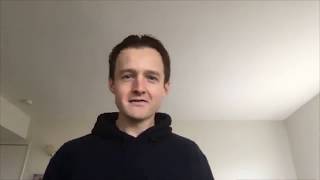
Podcast interview (Make More Marbles) with Sean Kim, founder of Rype/RypeApp, discussing Rype’s subscription-based, teacher-matching language service, its origin story, business model, growth tactics, and next steps. Covers product positioning (premium-to-mass membership), early marketplace and scaling challenges (supply-demand matching, tech), marketing/SEO growth, unit economics (LTV vs. CAC), and Sean’s founder backstory (immigrant upbringing, dropping out, travel in South America).
Chapters
Welcome to Make More Marbles. My name is Brad Hart and we're here to interview the game changers, the future makers, the co collaborators and creators who are here to collaborate with one another towards a better future for all of us. Enjoy the show. We've got a great guest coming up for you right now. Welcome to Make More Marbles. My name is Brad Hart and Today I have Mr. Sean Kim on the show from the Ripe app. What's up, Sean Gallat?
What is going on, you guys? Thanks having me, man. Appreciate that.
I'm stoked, honestly. Language learning. I'm all about catalyzing human connection and language is such a. It's like having dial up when you want to express broadband. I don't know if you've ever had this experience. I'm sure you have, having dealt in the space. But like people listening at home where you're like, you want to communicate something to somebody so badly, you just don't have the tools to do it. You know, I've traveled all over the world, 43 states, 23 countries, Asia and Africa, and just all these places. And you just want to connect with people you don't know how. So you end up being, you know, and I'm an extrovert, I love people, but you end up kind of closing off and it sucks. And I can see why people have problems because communication is everything.
Absolutely, absolutely. And especially for the people that do travel, they can really resonate with the importance of learning a language. I grew up as an immigrant. I was, I was born in Korea, so I came to Canada when I was about 7 years old. So I've dealt with this basically my whole life at this point. So I can understand the frustration and almost it's like loneliness that you feel if you're in a place where, in a foreign country where you can't communicate with anyone, especially if you're used to doing that as yourself, who's an extrovert. It's really important, especially as we become more multicultural as we surround ourselves with people that are speaking multiple languages or that come from different cultures. It's really the key, I think, to break down barriers and walls in the world that we live in today. So we're very excited about the journey and the vision that we have to break down the barriers around the world.
So tell us a little bit about Rype. And that's Rype. If you guys are looking for it, it's rypeapp.com so the rypeapp.com you can check out. You can do a free account. And they have language lessons that are both immersive and guided. And you can do them from anywhere, which is really cool. You don't have to book a tutor. I remember getting Spanish tutoring when I was in school and having this kind of squirrely dude that looked like he hadn't showered in a while show up at the library and try to coach me through Spanish. And I'm like, oh man, this is painful.
How's your Spanish now?
You know, we go down, we build houses in Mexico. The only way you learn is immersion. That's the only way I learned. And if I stop using, I start losing it. Right? I'm sure English, if I stop speaking it for a few years.
Definitely, yeah. I mean, so we started Ripe is essentially it's a personalized language service. You pay a monthly subscription fee similar to a gym membership and you get hand picked professional language teachers that are there to speak with you one on one. Like you said, immersion. But the advantages of this is that it's much more affordable. We're about a tenth of the cost of a language school. You can do it anywhere in the world. And because we have teachers all around the world, you can also book lessons any time of the day, any day of the week. And it's much more convenient. We specifically built it for people that are really busy, that want to be able to make an impact on the world or to continue living their busy lifestyle because they're working on their own business, because they have full time jobs, or they're taking care of the kids and allowing you to continuously learn while you're living your lifestyle. And it's built for people like us, essentially.
I love it. And can you share some of the numbers so far? How big is the community, users, revenue, et cetera?
Yeah, we don't go super deep into the revenue, but at this point we've had thousands of members that have come onto the platform. We've, we've got about 400, 500 teachers from all around the world. And if you guys look at our pricing, you guys can kind of do some back of the napkin app calculation. But yeah, we're very excited. I mean, we've been around for about two years or so and we started with just Spanish. I started this when I was living in Medellin, Colombia, for those of you guys that are familiar with Eternal Springs. And we just continuously grew it as we realized, like, why not provide this for all services? And we, we're very excited actually. Next month we're coming up with one of the first world's first memberships where you just have one membership and you can book all the languages that we have. So you don't have to be limited to just one language. It's just simply a flat membership with all the languages that we offer.
That's awesome.
Yeah.
And I think that's what people ultimately want is to be able, like if they're real lingua files, like I'm just waiting for Waverly Labs or somebody to come along with their pilot earpiece and just like make it easy. I eventually envision a world where we don't all speak the same language, but we have the technology to like actually communicate in real time. It's getting there, right? You know, I just was hearing anecdotes of people, like we visited China, for example, being able to communicate through the Google Translate app. And it was a little bit clunky, it took a little while, but you could get your point across and it was actually pretty good. And that's just fascinating, I mean, because there's just no way up until the last few years that that would be impossible. And I think it'll only get better. What I'm envisioning is a, you know, like an earpiece or something like that that gives you real time compatibility between languages. That really opens up the world. I mean, it's going to be incredible. But until then, learning is the best way.
Absolutely, Absolutely.
It's an exciting time. I grew up watching Tim Ferriss do all his language tricks and all that cool stuff. I'm sure you did too, and you were influenced by that. And I just see it as the future. How do we connect humanity? Well, we got to start talking to each other. That's the first part.
That's it. That's it. And people don't even do that when they speak the first. When they speak the same language. So imagine how hard it is if you guys can't even communicate with each other, you know, so, yeah, I mean, I think it's increasingly important in the world that we live in today.
So what is your strategy and mission for reaching more people? Has it been mostly word of mouth? Are you guys doing paid advertising? What are some of the. I'm geeking out on this stuff right now because I have a dear friend. He's a fellow Canadian. His name's Dan Martell. You're familiar with him. He does a lot of startup work with tech companies. But he's always asking those really tough questions like, hey, what's your path to usability? You know, what's your path to 10k and MMR. What's your path to yada, yada, yada and beyond? Because he's been able to sell multiple companies. You know, I trust the judgment in that space and I don't know well enough to really do so. I'm actually borrowing some Dan Martell questions just to kind of get a sense of where this thing is all going.
Yeah, no, I think that's important for people to know. I mean, we benefit from kind of the early days of just grinding it out. In the first year, year and a half, where we started the blog that we have now, before we even kind of came up and started refining the idea, we knew we wanted to be in the language space because of this open market that we saw of unfulfilling need. And from day one, we were pushing out content on a regular basis. And there's this tipping point that most people get to in content marketing, where for the first six months or so Google has like this sandbox where they're not really going to recognize you as an authority. But once we started guest blogging, we started building up our link value. All of the content that we had in the back end started ranking higher. So all the things that were on page six came to page two, eventually became to page one. And we just started having this exponential growth in terms of a blog. And we can share this number. I mean, just about eight to nine months ago, we were doing about 15,000 visitors a month. Today we're about 300,000amonth.
Wow, that's fantastic. Congratulations.
Yeah. And it's been pretty crazy. I almost, like, sometimes I check on our back end and I'm just thinking like, are these actually visitors? Are these actually visitors that are coming onto our website? Like, because we had this mindset where like, okay, 15,000amonth. And that was always like our limited mindset. So to have this exponential growth on the blog side and all organic, it's all free at this point, that are converting into customers now, we've kind of found the magic bullet where we're doubling down. We just hired the editor in chief of a really big travel website who's taking over our content. And that's really been a key piece for us. So it's an early, early grind for most people in this day. It's not like the sexiest thing, but we didn't have VC capital, we didn't have any angel investors. We're still bootstrapped, 100% customer funded. So we had to really hustle to push out value and eventually it paid off.
For us, I like that. And it speaks to the power of consistency and being prolific and getting it out there, because that's basically how I've grown too. We've only now, in year three or four, really started to look at paid advertising channels and had some success there. But I think the biggest success is just the consistency. Just put something out every day and be consistent about it and grow that little tribe. And you know, what started as an idea I had one day has now touched over a million people. And tens of thousands of people see it every day and listen to it. It's really cool to see that that proliferates. But in the beginning, you know, you're always seeing 1% gain, but you don't realize that the bigger you get, the 1% are a lot bigger, and they compound a lot faster as a result of that. But it's still just those little 1% moves every day. So people see that beginning of the curve and they want to give up. But if you can just keep at it, you know, I was just talking to a dear friend of mine, Amir, who's actually about to get married. He runs a blog about blockchain called Block Geeks, and they do these guides. It's really interesting. He's actually Toronto as well. I don't know if you guys have ever run into each other, but yeah, Amir talked about some of his SEO strategies, and they were just so simple that most people would be like, oh, yeah, duh, I could totally do that. But they don't. And that's the problem is that most people say, oh, yeah, I get that. And they do. So something completely different. He gets 2 million visitors in a month or something like that. It's like nuts. And obviously blockchain is a very popular space right now, but it's not anything that's magical to grow a business. It's that prolific, consistent action that actually moves the needle, the 80, 20, and just get after it. So it's great to have that reminder of content backlinking being authority. It still works. You're not going to game Google for too long with black hat crap. Just ignore that and focus on the signal, not the noise.
Absolutely. And I think this relates and translates to a lot of things in life. I mean, we've never had more knowledge than ever, whether it's losing weight, getting in shape, building a business, living happier, living longer, all those things we have, like, literally in our fingertips. And I know this is said over and over again, but at the end of the day, it really comes down to execution. For most people, because lack of knowledge is definitely not the problem here. It's simply a lack of discipline, focus and guidance to follow a path that is oftentimes going to take a little longer, probably a lot longer than you originally think. But if you think, if you can believe that it is the right path, eventually it'll pay off. Sometimes it takes a year longer, two years longer.
Absolutely. And just being able to stick with it best, all the crap. Because I know in the beginning it's like so much stress, especially when you're bootstrapped, you don't know where your next paychecks are growing, you don't know where, oh my God, am I going to pay these people? Or what do I need? And you're just kind of learning two skills at once. You're learning the skill of self mastery and then you're learning the skill of building a business. Leadership comes into that. That's a huge part of it. Self leadership notwithstanding, you know, and just keeping moving down that road. So it's just great to see that you guys are growing and doing it right. And it's to be validated by the marketplace and have so many people signing up is really a cool thing too. What are some of the things that you guys are still looking for or getting after right now?
Yeah, I think we're in a similar stage. Like as you mentioned, we've proven out this one process which is organic and we love it, it's free, it's growing, it's scalable and it's working. But that 20%, we're always experimenting. So we are looking into paid ads more, we are looking into diversifying a channel because one day Google could suddenly change the algorithm. And we're solely dependent on mostly the algorithms of Google. And we never did any black hat tactics or anything like that. But even if you didn't, there are some different algorithm changes that I've heard people can be hurt by. So we are at this point, once we have this foundation, trying to diversify into paid ads, trying to diversify into sponsorship opportunities and influencer partnerships. So the good news with us is we have a pretty good lifetime value versus the customer acquisition costs that we've seen. Just because it is recurring sometimes a lot of people are signing for the annual package. So we are able to have that bandwidth where we can pay a little bit more than most people for acquiring a customer. And that in the end, as we scale is going to be a huge competitive advantage for us compared to our competitors.
And that's the hardest part to get to is when you have an engine that's fueled by money and the more money you put in over here, the more money comes out over here. And that's it really, if you can get all those pieces together. But it's the same things. It's lead sales, value, delivery, operations. Creating an exceptional experience is getting those referrals and just continuing to fuel that engine with more and more and more of what's working.
Absolutely.
Are you going to tackle the paid ads in house? Are you going to be hiring a firm? I got some great recommendations for you if you are.
I would love some because I'm starting to get into that's a full time job. It just, it really is from a.
Founder to another founder. Just don't just stay in your lane.
Yeah. And I'm always like, you know what? I can be kind of dangerous at this. Like, I'm pretty good.
Oh, like the dangerous idea is thinking you could be dangerous at this.
Absolutely.
It's come crashing down two weeks later.
You know, we get into all these different fires and then I don't have any time to look at the ads. And then, you know, all of a sudden all the work that we've done kind of starting to delay. So. Yeah, I mean, I love some recommendations. Any people that you think would be great. You know, we're always looking for people that we can work with, so I appreciate that.
Absolutely. I mean, the first guy comes to mind is a fellow Toronto guy, Nicholas Kusman. She's probably the best Facebook ads guy I know of. I just saw him at a party the other night. Nick's a friend and I think he does great work. I buy all his stuff, but even I like, I just buy it so that I could like get a cursory Glanza and I give it to my ads guys, say, hey, look at this and send me the notes.
Right.
Send me the bullet points, understand the strategy. And that's. I had to learn a long time ago, is that if I had the smart people on my team and I'm incentivizing them to win and we're aligned just getting them the resources and support they need to do their job and staying the hell out of their way is the best possible thing I can do.
What's been like the.
But that's, that's a lesson for any entrepreneur, you know.
Yeah, absolutely. And it's hard to let go sometimes when you think you're dangerous like myself and in certain areas where I'm actually not. And I think it's harder for Most people that are just starting out. But what's been like for you something where has been really good for incentives or figuring out what the right incentives are. Cause that's something I'm always toying with. It's like what is the right incentive? Because it's different from most people. Right? Yeah.
I think there's downside, upside. Right. Everybody's trying to manage the risk they don't want to lose. And then everybody's trying to gain as much as they possibly can. So by structuring deals where they get a minimum but then incentivizing them to outpace the minimum so they can get paid more. So let's say X. But if you, you know, if 10% of ad spend is more than X, then blah blah, blah and you're not incentivizing people to spend more until we can generate an roi. So getting set ROI is the key point. Like they know that that's their, their outcome and their metric. I'm going to pay them regardless. And I'm not dealing with idiots, I'm not dealing with people who are just not going to get the result. But incentivizing get there because it's a little different for everybody. Right, right. You get there as quickly as possible for that audience and that offer and whatever. And we're dialed in and we know we can scale. Okay. Now it's a function of scaling past that downside mark. So now your 10% or whatever it is is more than that. It's just that specific to ads.
Right.
That's the way I. But you know, really at the end of the day, I'm a pretty good deal maker. Deals are just what are the two, you know, if you can really understand when you're negotiating, what are the needs that the other person has and then how preempt them in a way where I can tell them what I think would be a good deal based on what I believe that they need and give them what they're looking for and not hem and haw too much and not have to split the difference or bracket or do all this extra shit. How do we get to the answer quickly? How do I have the right people on my team? How do I not waste time in getting the outcome which is ultimately what you want, not the deal or grabbing for all the marbles. How can we make more damn marbles?
Yeah, yeah, absolutely. Yeah. I mean specifically to ads. I've been trying to avoid the whole fly retainer and try to make that incentive work. So that's really good advice for sure, yeah.
And it's okay to pay people, right? Just like, do you want a sales guy who works only on commission? Some of those people will crush, but likely the ones that you really want want a stable base salary because they know even if they're the best in the world, it takes time to generate. It takes time to kind of get flowing. So you need to give them a few months of Runway so at that they can take over a commission. It's the same kind of principle, right? Paying people a base salary allows them to have the space where they're not in scarcity, so they can make strong moves. You can't make strong moves from place of weakness. And on the entrepreneurial side, you can't play your A game when you're playing with B and C players. So you got to have those A players on your team. And those A players, they want that stability and certainty so they're not making decisions out of infrared. I've had to learn this painful lesson over and over and over again to the point where I'm just like, fuck it, I'm not bootstrapping anymore. I won't do it. Either have the money to do it right, or you don't do it.
Gotcha. And did you guys raise capital for your company?
No. No. But that's the last six months or so. I've gotten really clear on that. And I've raised money for other ventures like my hedge fund. But, you know, in entrepreneur land, I've always bootstrapped. And it's. It's always been a slog, and it's always not been worth it when I could have just went out and found an investor that was aligned with the mission and just started from that place. Most people are afraid to ask, and I'm afraid to ask sometimes. Like, I don't want to unfairly impress upon people. But fundraising mechanisms are all changing now. It's making me. When I think I just interviewed somebody who raised $36 million in 66 seconds in an ICO, and granted, that was a very specific outlier use case, but the whole market's changing. And the ability to do things like we have idiots raising money with vaporware or a white paper, billions of dollars, it's staggering, right? If you actually went out into that marketplace and delivered value and gave people a piece of the upside, not that just you're going to give them some token, they may be worth something someday in whatever ecosystem you're trying to create, but actual tangible value that's tied to your success. I think there's a huge win there.
Well, the thing is, there's so many people that are just good artists these days that if you just have a great product, if you're a great entrepreneur and you have an idea and vision, then that itself is going to help you stand out amongst most people in this kind of days today, you know. Yeah.
And that's why I'm only looking at ICOs. I get hit up 100 times a day about blockchain and cryptocurrency. We had to create a course just to stem the tide. Right. To help people if they want to be helped. And we give away a lot of content for free as well. We have a cheat sheet. But with cryptocurrency specifically, what I pay attention to is business models are already working and generating revenue under the current paradigm, and they just want to use ICOs to fuel that fire faster versus I'm creating something new that's never existed before. Because now you're taking startups, which are risky, and 9 out of 10 fail times blockchain, which is still a new and nascent unproven space, which I believe truly, that maybe only 500 to 1,000 people in the world understand at a high level. And the margin rate of failure is going to be astronomical for the next 10 years. But right now you have the greed muscle working overtime and everybody's throwing money at everything. So we'll see how it all shakes out. I just know, looking back at history, it's going to take a while. The Internet was the thing in the late 60s, early 70s and didn't really become a thing until the 90s. And it really didn't become a thing until the 2000s where it started to become reality and really start to stop being so frothy.
Yeah, I mean, it's definitely going to take a while before it really catches up. I mean, even it's just too volatile, I think, for it to be a real currency in the short term.
Yeah. Blockchain notwithstanding. And cryptocurrency is exciting, it's fun and we see people making all this money, but the blockchain is really where it's at. That's going to upend industries. It's just going to take some time to find its groove. But it's a better system, serves more people. You can't keep it down forever. It's like saying people, you know, we should really use carrier pigeons to smoke signals. I don't think this Internet thing's going to go.
Yeah, but it takes time. Right.
It's just a matter of time for everybody's doing it anyway. So that was a nice tangent. So back to focus at hand. Sean, can you give us a grounding story about your journey through this world and how you decided to become an entrepreneur and solve this problem and some of the steps along the way that people can relate to Because I think ultimately when they see a successful young founder like yourself, not everybody can relate to that success, not everybody's been successful like that, but everybody can relate to failure. Could you share some of the failures along the way as well?
It's all been failure. I mean at this point, I mean it's ridiculous the kind of the ups and downs and everybody has our micro failures along the way as well. But, but the biggest thing I think that a lot of people can relate to, maybe not on the specific end, is when I first started my first business, right now I'm 25. So when I first started my first business, we raised capital and I was in my last year in university and I dropped out of university to go full time on the business because it was either finished my last year of school, which I wasn't really passionate about. I always knew I wanted to be an entrepreneur and I knew this was the path and I had this kind of golden nugget where I had great founders, you know, money in the bank. And I ended up dropping out, which is a big no no if you have Asian parents. Because number one, I wasn't even going to be a doctor or lawyer initially. But number two, you're already dead to.
Them from the Gap.
I was like 50% dead. And then once I dropped out, I didn't even tell them first of all for like six to nine months, right?
The shame.
And I was like, how do you even break this news? How do you even start to break this news? But the worst part is start out.
With mom and dad. I'm gay, I'm dropping out of school.
See, you gotta anchor it, you gotta anchor it. That's it.
There's anything wrong with being gay. Everybody's 80, 20, it's 2018.
I should have used that strategy. But I mean they didn't know for six months. But the first three months of getting into the business, business actually flopped. So we ended up not pursuing the business and there was this whole pivot idea. I didn't like the new vision of the company. So I ended up booking a one way ticket to bonus Stars Argentina where probably had like $700, $800 in the bank. And keep in mind, I don't know if anyone has been to Argentina, Brad, I don't know if you've been there, but back in those like three years ago, they had those, the whole currency arbitrage where dollar was worth about 8.5 pesos Argentina pesos officially in blue market. But if you went to the black market, which is where you go to this main street in Argentina, in Buenos Aires and people yell cambio, cambio, cambio. And at a certain point at this time when I was there, you could trade a dollar for 16 Argentina pesos. I basically doubled my money from the little money that I had, which I used to pay for rent and gave me some time to find consulting work. And that was what really allowed me to coast through. And I should also mention that before that I actually was rejected from the US border because after failing in my first business, I actually tried to get a job in New York where I was denied a visa and I was sent home at 4am this is when I took away all my lease in Toronto. I picked away all my stuff. I didn't really have any friends in Toronto. So for about a month and a half or two months I was homeless. So I lived in a hostel for like the first week and then slept on my friend's couch. So I think that was an important point for people to know before I decided to go to Argentina. And my original goal was just to stay there for three months and then come back to Toronto like real life. And I ended up getting this great contract gig which I used Angellist. There's this article that I wrote which is how to win 30 consulting offers in 30 days using AngelList and hacking that platform to get jobs as a consultant. And I managed to break through and the final trip was supposed to be Machu Picchu and I go home but my trip was canceled so it was postponed for another two months or so and I didn't have the money to go back to Toronto and then come back to Machu Picchu. So my logical thinking at that time was to stay in South America. And three month trip ended up being 18 months. And at this point I've just been living in a different country for four months for the last three years while running this remote business. And the idea of ripe started when I was living in Colombia to go back to the original story where I was working. I was making decent money for Medellin standards and Columbia Standards and I realized I was eight months into this trip, but I didn't know a word of Spanish. And you know, I had Spanish friends and stuff, but not Enough to really speak the language. And that's really where this idea of helping busy people learn effectively in an affordable way came through. And here we are, so 36 months in and still traveling and running the business. I love it.
And can we talk about some of the challenges with regard, are you a coder? Did you build the whole thing?
I didn't build anything.
How did it all come together?
So initially I had a teacher that I took lessons with from Argentina. So when I was in Colombia, I called her up and asked her, hey, do you want more students? Because I know in Argentina it's tough, you're limited. Most language teachers don't really know how to market themselves. So I was able to convince her. And for like probably the first four months, I had one teacher that was teaching about 25 different students. And I would make people to fill out a form. It was like this Google form, wonky form, and a simple landing page that I built through optimized press and which is like a WordPress plugin for those of you guys that are familiar with it. And it looked like this whole like hand picked matching service with algorithms. Because I asked a whole bunch of questions and then like five minutes later I would say, oh, we believe that your teacher should be Marielle. Little did people know that was literally the only teacher that we had six months. But people were amazed by how concierge, how customized, how hand picked the service was. And which is why we just had to start with Spanish. And then eventually I got a teacher from Columbia who is another teacher of mine, and it just became this internal referral network initially and for probably 18 months or so, sort of like 12, 12 to 16 months or so, it was just this hand picked concierge service that nobody really thought was, you know, kind of like this dopey service that I was matching hand people as an agent, really I was an, I was a language teacher agent. And eventually we started doing four figures a month, five figures a month, and just started growing and growing from there.
That's wonderful. And then what were some of the biggest challenges along the way? Because you're one guy basically being an agent with a website at first, and there's obviously people coming on and you can see there's demand here. But what were some of the big pivot points or challenges along the way that you had to fix that?
Definitely the chicken and egg problem. We kind of, I guess, got a little lucky where who had this great teacher that was able to handle all these students, but managing like the ratio of teachers and Students being able to find the right teachers for the variety of students that we had, people started just wanting Spanish, but there's all different types of Spanish as well. So I think with every marketplace, whether it's Airbnb, Uber, kind of managing the supply chain and managing that with the ratio of demand is always tricky. It's still something worth trying to figure out. And then obviously the technology end is something that was tricky because it's hard to scale something when I'm the only one that's doing this hand picked concierge service. As great as I was trying to figure out it for people, for that one teacher that we had, it was definitely a problem. So it's constantly a challenge. Still a challenge today, but you know, we're having a much more efficient way of being able to match people together.
I love it. It's still just a quick little form. You can say, hey, I want to sign up in Spanish. This is a type form. I want to learn five to seven hours a week. You can enter your email to get some free Spanish lessons and then you're on the list and away you go. How's the pricing model changed over the time?
So we started out with a pricing model that is very low and this is something that we'll go back to. But the way, the kind of the framework that I looked at, especially because we started bootstrapping, was we wanted something that would really gain a lot of attraction. And low pricing is one way to do that. But we kind of modeled after the way ClassPass did it, ClassPass.com where they had a single offering and they kind of came out with the bang, which was unlimited classes. We knew that that was going to put us in the red and we knew that was not going to be a scalable way. It turned out it was actually profitable for us because of the cost model that we have. But that was what we kind of shifted to. And then we started raising the prices from there as demand grew. And then it's. It's kind of like the way, I guess because we're bootstrapped and we don't have those outside capital, is we're using the kind of the gross margins that we get from the initial higher prices in order to launch to the lower prices. And the way we looked at it is because we're really going after the early adopters in the initial stages for the people that are willing to pay the higher prices. And that means lower volume of people are going to be kind of exposed to us. We can get that feedback. So Once we are perfecting the experience and we have really a good product that I think people are going to stick around to, that's really when we can lower the prices, which is going to happen in the next month or two so that we can expose ourselves to a mass audience and it's less risk for us while we still have the revenue to grow.
Oh, sorry, I muted. I really like that. Yeah, it's the best way to grow is just to start with a premium product. This is a Tesla model. You know, start with the highest you can get and then move your way down to a more mass market. And you're kind of still using currency arbitrage in a way. Right. Since your time in Buenos Aires learning, you know, hey, you know, Spanish teachers living in X country versus Y country, the Philippines maybe, as opposed to the United States would be able to offer their services cheaper and still make a decent living. And to them it's a deal. And to the people that are paying for it, it's a deal. And it's a great way to connect people together. And it sounds like you have teachers all over the world now, is that right? How many teachers do you have?
We have about 400, 500, something like that. We have a full time teacher manager that manages the process for us now and is handpicking all the teachers that we bring on. But yeah, I mean, it is really the currency arbitrage that we have. Advantage. Except my life isn't at risk this time. I don't have to go to a sketchy alleyway and go into a room where exactly half the time like the room would just black out because electricity doesn't work in Argentina sometimes. So yeah, it's more. It's more safe for sure. Yeah.
I spent some time in Argentina, a lot of fun out there in Cordoba and Buenos Aires and Mendoza. It was a lot of fun. Honestly, I enjoyed it.
I love it. Did you go to La Bamboo de Tiempo on Mondays?
No, I haven't.
Oh, you haven't checked it out? It's amazing.
I'll go back someday. It's been a few years now. I love South America for sure. Peru is awesome. I haven't been to Colombia. I'll have to get back there. But yeah, man, that's rad. Awesome. Okay, so what's next for you as far as this business, as far as personally and how can we help? I guess I'll frame this a little better. Our mission here is to help you move your mission forward faster. And we do that by connecting resources, opportunities People and Systems, that's my little crops acronym, so that you can go ahead and help more people and do more things and make more marvel. So what can we do to help support?
Yeah, I mean, I really appreciate that. I mean, for us, really the vision and vision as we continue to grow and our high level mission is to help people that are busy, that are impacting the world improve. And we're realizing that, okay, we started with languages because this was an opportunity that I saw that was clear, that had a need. But we realized that as we start talk to the students that we have, these are just regular human beings. These are people like you and I that are not just looking to improve by learning languages, by breaking down those barriers, but they're looking to gain more knowledge in general. They're looking to improve every aspect of their lives to optimize their mind and body. So one of the next moves for us that are going to be pretty big that we'll announce in the next year or so is we're starting with languages as a platform, but we're going to shift into different industries that are really going to be built off of this model that we have. So we want to help, initially help people learn languages, but eventually we're going to help people learn faster by reading books faster. We want to be able to optimize people's health and mind and mental mindset. So that's another move that we're really excited to be announcing. And really for us, it's really just to be part of our mission, to be part of our community. Whether you want to check us out now or you can check out some of the free content that we have on our blog and just to be involved in the community. So you can check us out@WriteBap.com and let us know any feedback that you have because we're always improving. We're a bit far away from the concierge model where we have one teacher, but there's always room to get better for us. So we're excited about it.
Absolutely. It looks like you have a lot of really great reviews and people are loving it. So congratulations on building something that's helping so many people. I appreciate that anybody wants to reach out. How's the best way to do that?
So yeah, the website is writebapp.com r y p e a p p dot com. If you guys want to share any feedback personally, you guys can reach out to me@seanritebapp.com that's s e a n writebap.com the Irish way. The Irish way, yeah. It's kind of ironic for an Asian guy to have this, to have this name, but he's Irish.
Get a few points in him.
That's doesn't work so well in South America. Nobody knows how to pronounce my name. It's always like scene or sian. It's a nightmare for South Americans. But you guys can reach out to me there. It's easy spelling S, C A N. Or just hit me up at any of the social channels that I have. Eyshawn Kim.
Right on, brother. Appreciate you being here and thank you so much on behalf of everybody in the Make More Marvels community. Thank you, thank you, thank you for being here. Any parting words of wisdom? If you had a microphone, it's everybody's ears across the world. What would you want them to know?
Create your own path. I mean, I think it's easy to follow a path that's already been taken. I think it's important to follow a framework on a high level note to figure out what's worked so that you can get there faster. But at the end of the day, you have to figure out it on your own because a lot of the things that you want to create in the world haven't been created yet. And it's only when you look at it in hindsight that you think it's a great idea. But at the end of the day, you have to be able to experiment on your own, figure it out on your own to be able to create your own path. So that's what I would encourage everyone to do that's listening today.
That's beautiful. Thank you, Sean, for being here and we're grateful for you, brother.
Yeah, really, really appreciate you guys listening. And thanks so much for having me, Brad, and taking the time to talk.
Thanks so much for listening to the Make More Marbles podcast for more tips, hacks and strategies to create an amazing, abundant life in your health, wealth and relationships, whatever that means to you. Head on over to Make More Marble. Check out our cool explainer video about what we're about and join our community of entrepreneurial game changers. We want to help you level up your life in every possible way. And don't forget to subscribe to us on itunes, Stitcher or Google Play, wherever you're listening to your podcasts. And please do leave a review. Thank you so much and we'll see you on the next podcast.
More from Brad

The #1 Reason AI Isn’t Working for You (Yet) #AI #businessowner #founderenergy




What tasks would the best assistant ever be able to do for you? #BusinessSystems #BusinessOperations



Nobody expects you to use a harder way when there's a better way. #AI #businessowner

Which side of the table will you be on in 2026? #AI #Mastermind #BusinessOwner

