How to Bring 45,000 People Out of Poverty, Sustainably and Scalably by Giving Work with Leila Janah
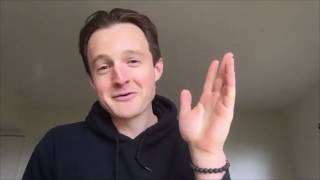
A Make More Marbles podcast interview (host Brad Hart) with Leila Janah, founder of Samasource and LXMI, describing her origin story (volunteer work in Ghana), the Give Work mission, and operational impact: Samasource employs ~2,000 people, has lifted ~45,000 people out of poverty by moving average incomes from about $2/day to over $8/day, and became profitable as a nonprofit social enterprise. Janah also founded LXMI (luxury skincare) sourcing ingredients via women’s cooperatives in northern Uganda; LXMI is described as the first fair-trade and organic certified brand sold nationwide at Sephora. The conversation covers strategies for scaling ethical businesses (long-term growth, hiring complementary leaders), leadership lessons (delegate, hire people different from you, 'no' people), a recent severe health scare requiring multiple emergency surgeries and a three-week hospital stay, and calls-to-action (share the GiveWork message, buy products, use hashtag #givework, contact via Facebook @leilajanah).
Questions this video answers
About 45,000 people (as stated in the interview).
Nearly 2,000 full-time employees (reported).
From about $2/day to over $8/day (reported).
Described as the first fair-trade and organic certified company to be sold nationwide at Sephora (reported).
She had an emergency procedure for a twisted organ in Finland, subsequently developed a severe bacterial infection requiring two more emergency laparoscopic surgeries and was hospitalized for three weeks (reported).
Chapters
Welcome to Make More Marbles. My name is Brad Hart and we're here to interview the game changers, the future makers, the co collaborators and creators who are here to collaborate with one another towards a better future for all of us. Enjoy the show. We've got a great guest coming up for you right now. Welcome to Make More Marbles. My name is Brad Hart and today I am thrilled. I've known Lila for quite a bit now. I've known, I think we met in 2011 on a trip to Africa. And Laila Jeannau is an incredible powerhouse of a young lady. She has done some incredible things in her time. From Google venture backed NGOs that worked in multiple countries around the world, lifting people out of poverty. Over 45,000 people have been lifted out of poverty by her efforts. To her latest skincare and product line called Lakshmi. To her book Give Work. She's just an incredible lady and honestly one of the, like, you meet some living saints in your life, I think, like really people that give everything they have and more. And Lila is one of those people. So I'm so grateful to have you on the show, Lila, thank you for being here and for being who you are in the world.
Thanks so much, Brad. It's an honor to be here and I'm really excited to share what we're up to.
Absolutely. So why don't we ground it for people? If you could just share a little bit of the story of where you calling in from today, by the way?
New York, from the WeWork SoHo south office in Manhattan. I've been there.
Wonderful. Okay, cool. So the Internet should hold up and everything should be solid. But you know, if anything goes down, then I apologize in advance. But yeah, give us a little bit of a grounding story. You know, let's, let's tell people how you got to where you are today.
Well, when I was 16, I was like a nerdy Indian kid who was applying to every scholarship I could find because my parents didn't have the money for me to go to college. So I applied for this scholarship from, of all places, a tobacco company. And I got it. And it was like a $10,000 check in the mail. And then I felt kind of weird about using money from big tobacco to go to college. And I also wanted to have an adventure. So I figured out a way to use the money to go and do volunteer work and graduate early. And I found this like, program in West Africa. I had never been to Africa. I had no connection there. But I found this program in Ghana which seemed kind of interesting and exotic at the time. And so I thought, okay, I'll go and have an adventure. I'll do some service work. I won't use big Tobacco money just to further my own college education. And I did that. I was 17 when I set off for Ghana. I graduated a semester early and I worked at a school for blind kids in a rural part of the country. And I lived in a village where people made probably $1.50 a day on average and saw global poverty up close for the first time. And I was shocked. I wasn't so much shocked. I mean, I was definitely shocked by the conditions in which people were living. But I was mostly shocked by the fact that so many people there were really talented. Like, I had fed into this myth that people are poor in places like rural Africa because they have zero skills and they're kind of sitting around hoping that we'll show up with water and food. But I was really shocked to see that Ghana was much the same as my parents home country, India, packed with really talented people who could read and write good English and who just didn't have job opportunities. And I thought to myself, this is so silly. You know, we think that we're gonna save these poor starving people by giving them aid, but what they really need is work. And the more I talked to low income people and lived in their communities, I went on to spend a lot of time in poor parts of Africa and Asia, living and working in poor communities where people made a dollar or two a day. The more I talked to them, the more I realized what they really want from me is not to give them a handout, but to buy stuff from them. And so decided to make it my mission to give work to low income people to help them move out of poverty. And I think the most ethical kind of relationship we can have with someone from a different background is through some kind of mutually beneficial interaction. And that's what trade really is, especially if we're paying people fair wages and we're trading on fair terms. And that's what my work is all about. I started Samasource now in September. It'll be 10 years. Congratulations.
Wow, 10. Huge responsibility.
Crazy. We're now the largest data services company in East Africa. We employ nearly 2,000 full time people. And we became profitable last year as a nonprofit social enterprise, which is a really unique space to be in. But essentially it means that though we got started with grants and donations, we're now able to fund our own operations through business revenue. And what's most remarkable about Samasource is that we move people permanently out of poverty. On average, we take them from about $2 a day, which means no access to clean water, sanitation, health care, even food. And we move them to over $8 a day, which is moving someone to middle income in a place like Kenya. So really strong poverty reduction. And you know, everyone's heard the saying, give a man a fish, feed him for a day. We're not only giving women and men fish, we're teaching them how to fish and we're showing them the path to fishing in the digital economy, which is a much more powerful way for people to earn income than in traditional fields like manufacturing or agriculture. So in so many ways, samasource is kind of paving a different path for people living in poverty. And then I started a second company. We talked briefly about that Luxme. We became. This is what the products look like, actually have one right next to me. We're the first fair trade and organic certified company to be sold nationwide at Sephora in the US and our mission at Luxembourg is very similar to sauna. It's to give work through the supply chain, but instead of doing it through data services, we're doing it through sourcing rare ingredients from low income places through supply chains that benefit women. So in this case, we harvest our raw ingredients from northern Uganda through women's cooperatives. And this is the new packaging. It's got a fun Africa.
And thanks again for sending it over. I don't think I'm the target demographic, but I gave it to one of my friends and she was really thrilled and she said thank you very much.
You're welcome.
But yeah, it's a beautiful thing. And apologies for. I still didn't know how to pronounce it. I was like, Lakshmi Lakshmi. All right, anyway, yeah, the branding is wonderful. The mission, I know, is from a place of well thought out. You know, you approach things from a way that I think most people never will. Right. How do we actually get to the root of the problem and not just continue to play the game as it is? Right. We want to change the game. And by giving people out of poverty, you solve two problems, right? You're not just giving a hand out, which creates more of a victim mentality. You're giving a hand up. And that, that's what I really love. And it's been very successful. Obviously you're self sustainable. You've lifted 45,000 people out of poverty. You're bringing people into living wage. How do you see this continuing to Expand and balloon from here on out.
So I think the biggest critique of social enterprise businesses that help people measurably is that they don't scale. And doing things the right way is more expensive and it takes longer and it's much harder than doing things the easy way. Like the default method for, or the default mode for, you know, for, for example for skincare companies is to put horrific toxic fillers and chemicals and emulsifiers in your product and to ship it with the cheapest possible packaging that leeches, you know, BPAs into your, you know, into this thing that you're putting on your body and to use ingredients that not only don't do any good in the world, but actively do bad for your skin and your body. Right. And if your kid ate the ingredient, you'd be worried that's the default setting. And it's always easier to kind of pursue a business in the default mode rather than to innovate. So for us it's to show that we can scale true impact businesses. And my kind of guiding lights here are companies like Patagonia, which didn't happen overnight. Yvon Chouinard took 30 years plus to build that brand into what it is today. And I think that's sometimes what it takes to scale truly impactful businesses. The VC model of pumping tons of money into something and trying to get a 5x return in five years is really not applicable I think. And frankly I don't think it's the way that long run value it's created in the world. I think the most interesting problems are the ones that often take the longest to solve. So for us it means scaling. It means getting to from 2,000 workers to over 10,000. With Sama, I think we can build the biggest tech business in sub Saharan Africa. That's my interest. And with Luxme, it's to scale into the largest social impact luxury brand in the world. We were called the Chanel of social impact by cnbc. And I want a business that grows to be as iconic as Chanel, with beautiful packaging and beautiful design, but that actually does good in the world. Not just looks good on a duty free counter.
That's beautiful. I share that mission very much. I really see the potential for doing it right at scale. They always talk about do things that don't scale because that's what people really love. But I think there's a way to do both. I think there really is a way to bring what you consider to be the highest quality possible to the masses. And you know, you're certainly Doing the right things. How has your leadership had to evolve over these years in the way you interact with your business? How have you had to grow? Who have you had to bring in to help you get to these next levels? And what are you still struggling with as a leader in your organizations?
So, God, where do we begin? So I think a few things. One is like, I'm a very typical founder. I think there's like a certain type of founder entrepreneur DNA. And typically a typical founder or someone like me is impatient, not always taking time for pleasantries. I think I can often not be the nicest person. I don't. I feel like I'm always running out of time, so I don't invest enough time sometimes in relationships. And I think one of the things I've learned is that I don't have to be good at all aspects of managing people or a team. I can hire people around me who are really good at the stuff that I'm terrible at. And so over time I've really kind of looked to find people who are very different from me to bring into the business and it's really helped us scale. So with samasource, I brought in a CFO who had a background at Oracle, and I brought in a senior leader to help me run the samisforce business who has a really strong services background. Neither of them had nonprofit careers before. They hadn't really done much work in this category, but they were really solid business people. And I also tried to find no, I call them no people. I'm like a chronic yes person. I am constantly excited by possibilities. And so if left to my own devices, I will start lots of stuff. And I need people around me to help me whittle down the ideas that are most valuable, figure out the opportunities for the highest return on our investment, and focus our time and energy. Because my natural tendency is to not do that. So luckily over the years I've learned that about myself and I'm happy that I now have this amazing team of people who's, we're all really good at stuff that I'm terrible at and together I think we make each other better. And I think it's a very hard thing, especially as a younger woman entrepreneur. I started Sama when I was 25 and I still feel like I'm not taken seriously half the time. I still feel like I have to bring in more traditional looking members of my team when I'm fundraising, for example. So I kind of had a chip on my shoulder and was a little bit defensive before about delegating and allowing people to really fully own what they were doing. Because I was always nervous that people wouldn't somehow see me as the CEO or that I wasn't going to be credible as the CEO if I didn't have full control over everything. I think one of the things you have to learn to scale something is that you really can't have full control over every single detail. You have to kind of empower people and let them, you know, occasionally let them make mistakes if that's what needs to happen for them to take full ownership.
Yeah. Cause ultimately, you want people to be aligned with the mission, and they'll push it farther, faster than even you could ever. Right. Because you only have 24 hours in the day. As talented as you are, you're one lady, right. At the end of the day, you need that team that's really driving as hard as you are in the ways that you're not as good, you know, and that's not. It's, you know, can't be everywhere at once. So they think the leadership lesson I'm getting here is have those. No people around. Cause I'm the same way. I'll start a million things. I'll make all the marbles. It's making the Mari marbles at the right time might be a better focus. So I appreciate that reflection. Lila, you recently had. I don't know if you're willing to talk about it, but you recently had some health challenges. Would you kind of talk about that a little bit? Where you're at, what kind of led to that? What, you're changing about your lifestyle now to maybe readjust and go forward from here?
Yeah. So I am pretty athletic, and I'm very active, and I've always kind of regarded myself as like a trooper. I traveled alone in Africa since I was 17 and, you know, always kind of handled things. So I never really viewed myself as frail or that I could succumb to some sort of, like, you know, cataclysmic health issue.
By the way, I hung out with Lila for eight days. I came back with malaria.
So, yeah, it's not fun, but, you know, like, if you've gone, if you spend a lot of time in developing countries and you have things happen to you, you kind of develop a resilience. And at a certain point, you kind of get this feeling that you're invincible, which I certainly had. And I was kite surfing in late November in Brazil and, like, learning how to hydrofoil and feeling just, like, very, you know, this always happens to me, I get like crushed by the universe when I'm feeling most overconfident about myself. So I was like feeling like I was rocking the world. And then I had this book tour. So in addition to Sama and Lakshmi, I thought it was a good idea to launch a book last year and then do a book tour around it. Which I think in retrospect, I wish I had given myself a little bit more time to focus on the businesses and maybe put. Push the book out a little bit later. So I kind of showed up in Europe and was on book tour and had just gone to this kitesurfing trip and was like fully amped and my body was just exhausted. And I ended up having a random emergency procedure for an organ that twisted around itself, which is kind of a rare event. It can happen. And I had to go to the emergency room in Finland, got this surgery, and then left the hospital and flew to another city two days later and continued my work. I was fundraising at the time for one of my businesses. And then I had a fever and I kind of ignored it, thinking it was just the flu. And over two weeks, this fever kept getting worse. And finally I was like, okay, I'll just go to the doctor and just do a blood test and see what's happening. And they like stopped me at the Munich hospital and were like, you are not allowed to leave. You have like a very severe bacterial infection from this surgery. And it just had spread all over my abdomen. And I had to get two more emergency laparoscopic surgeries. And the doctors, you know, when German surgeons are like, worried, then you get worried because they're pretty. It's a pretty.
They're a pretty stoic bunch.
It's a culture that hurts my patients. So, like, my Germans are after, like the third surgery I had within three weeks, my fever hadn't abated two days later and they had. They were like pumping me full of different courses of antibiotics and they were like, we don't know what's happening. And, you know, I started getting really panicked that maybe the antibiotics wouldn't work. And I had some sort of crazy superbug in me that was going to be multi drug resistant. Long story short, finally the antibiotics started working. The surgeries, they removed the infected stuff and it got better. But it was like a really shocking awakening, especially for someone who's always been pretty healthy and, you know, never broke a bone. So I was in the hospital for three weeks and the blood results from the infection were so high at one point that like, good friends of mine, who are doctors, were kind of scared, and it really was a wake up call. First and foremost. I was so grateful that I spent my life doing work that I really love. I felt like if I had, like, died in that hospital, at least I would have been able to say that I spent most of my time doing stuff that I think matters and that I really love.
Yeah.
But then the second thing it brought up was just, you don't have to run yourself into the ground. And I kept thinking in the hospital, like, wow, if this is really it, like, all the stuff I want to do in the next five years for Sama is not going to happen. So you yourself.
So how have you changed your lifestyle? Like, obviously that was a very painful experience for you, and pain usually gets people to change. How are you changing your lifestyle as a result of that, or are you changing your lifestyle as a result of that?
I think I'm much more. I'm much more aware of what a gift good health is and just grateful every day that I wake up and I'm not waking up in the hospital in, like, tons of pain. And again, for someone who's never had that kind of thing happen before, it's an important kind of reminder. And I think that gratitude is, in general, a really healthy feeling. So that's one thing. The second is I think I'm a little bit less impatient. I think part of what led me to that situation is just chronic stress. And I'm always. I'm always impatient. I'm always feeling like I'm, you know, not hitting the objectives I set for myself and that we're not moving fast enough and that we should have been getting everything done yesterday. And that constant stress is really bad for your immune system. It's like, bad for your body. It causes aging. It's bad in so many ways. And I think I beat myself up a little bit less. And I also try to remind myself that, like, you know, it took Yvonne Chouinard a long time and Patagonia is like a freaking amazing company. And so if it took him 30 years, maybe it'll also take me 30 years. So we don't have to do everything yesterday. In fact, if we try to do that, we might, you know, I might end up jeopardizing my health and then there won't be 30 years from now to keep building stuff. And there's that saying, you know. Sorry.
No, no, I was just gonna say, like, the math works out too, right? People talk about these like, you know, you're trying to make 10 and 15 and 100% gains. But what if you could just make 1% gain and then realize that you're 1%? And the way you move the needle, if you can do it consistently over time in a year, that's not 365%, that'd be addition, that's 3,778%. You can get 38 extra turns compounding every single year on top of each other, on top of each other, on top of each other, because you're already on that exponential part of the growth curve. You can make a phone call right now that can change the entire course of your business. Most people aren't accessible in that level. The most people don't have the access to the resources and connections that you have. So now it becomes less of how can I beat my head against the wall to make it grind and make it work. It becomes a question of who's the right person to now tap into. That has the flow that I need to build my business to the level I want to build it to. And you know, that's my reflection is like, I just know that you know everybody and that your story and the way you present it, you will crush. I just know it's now the right people at the right time and not beating yourself to death, it's finding the right exact thing you need right now. That's the finesse, that's the next level, I believe.
Yeah. And there's this saying, I'm just watching that Tony Robbins documentary and he says this saying that I love, which I repeat to myself, which is that most people overestimate what they can do in a year and underestimate what they can do in 10. And I think especially if you're trying to work on a big problem like poverty reduction or climate change, these are big entrenched problems and steady, slow progress that you continue and don't quit over a long period of time almost always beats these like flash in the pan, you know, seemingly overnight success stories or attempts at that. So I wrote this post recently about the motto for Jeff Bezos Space Company which is step by step, ferociously. And I read the story also recently of an Arctic explorer who was very inspired by Ernest Shackleton, who was a famous, sorry, Antarctic explorer in the early part of the last century. And it talks about how he eventually died, but how he made several expeditions in the South Pole that were really remarkable as a one man solo expedition, you know, in the most treacherous part of the world. And those types of expeditions you also have to approach as A marathon and not a sprint. You can't, like, burn yourself out too quickly. You have to ration your food. You have to think about making incremental progress day by day and getting through the tough low points. And I think there's such a metaphor there for entrepreneurship.
Well, it's like the Grand Canyon is a trickle over millions of years.
Yep.
You know, just water over rocks, over. Over long period of time that'll get there. And we don't have forever. We don't have millions of years, but you can do quite a bit in a decade. And you have, you know, I mean, you're still in your 30s, and you're still a huge career ahead of you. Don't jeopardize it. That's all I'm saying. I'll be happy. Everybody, you know, like, that's just a friend talking. But we want to see you continue on in the way you're continuing on, but not burn out in the process. Right. You're a bright, shining star. We all believe it. And I know, you know, it's. We want to see you have many more years of success, not just for you, but for everybody who's live you impact, because I know you're not somebody who thinks of themselves first. So do it for everybody, but do it for you too. And we love you, Lila. Okay, so changing gears, I know you have a limited amount of time. I want to ask you the question I always foist upon everybody on the Make More Marvel show. So this is all about collaboration and winning more through collaboration than we ever could through competition. That's the whole Make More Marvels philosophy. The way we do that is by helping each other connect to the resources, opportunities, people, and systems, they call it crops that they need to move their mission forward faster. So what are some of the ways that myself, my team, anybody listening can help you move your mission forward faster?
Probably the number one way is just to spread the word. If you share some of this message and just use the hashtag givework, we're really on a mission to shift thinking and philanthropy and in social good away from, oh, my gosh, how sad. Here are these starving people in Africa towards a model that's more about solidarity. That's like, okay, if we want to help these people that, you know, maybe have. Were born into poverty or have less material wealth than we do, the best way to help them is to kind of view them as producers, as equals on a level playing field and buy from them. I think if you care about the plight of women in the Developing world. If you care about violence against women, buy from women. Don't patronize them by just giving them a handout. So that's the most powerful, I think, thing anyone can do is share. And sharing through social networks is what builds movements. So the more we can spread that message of giving work, the better.
I love it. Thank you, Lila.
And buy our products. You can buy my book and tell your friends about it.
It's on Amazon. I've bought a couple copies for friends. It's an amazing book. Thank you for writing it. And you can check out luxme, which is lxmi.com I believe and samisource.org it's s a m a s o u r c e dot org and Lila, you're doing it right. I just want you to make sure you don't burn out in the process, that's all. It's just me talking from a place. Yeah. In any way we can help, please. What's the best way to reach out? If somebody has a connection for you or a way to do that, they're going to share on social media, hashtag give work, vote with their dollars. Most importantly, empower the women that are being abused or otherwise mistreated because they don't have economic freedom and solidarity. We appreciate that. And then you know how they reach out. If they have comments, feedback, or lending hand or listen to this and they're inspired to connect you to somebody that can really help you move your mission forward faster.
Yeah, the best way is through Facebook. I'm justilajana on Facebook and I read those messages at least once a week, so.
Right on.
That would be the best.
Thank you so much for being here. On behalf of everybody in the Make More Marvels community, it's great to see you and I'm glad you're well and doing your thing. And New York City is a great place, so enjoy yourself.
Thanks so much. Look forward to connecting again soon. Brad.
All right, thanks so much for listening to the Make More Marbles podcast for more tips, hacks and strategies to create amazing, abundant life in your health, wealth and relationships. Whatever that means to you. Head on over to makemoremarbles.com check out our cool explainer video about what we're about and join our community of entrepreneurial game changers. We want to help you level up your life in every possible way. And don't forget to subscribe to us on itunes, Stitcher or Google Play wherever you're listening your podcast. And please do leave a review. Thank you so much. And we'll see you on the next podcast.
More from Brad

The #1 Reason AI Isn’t Working for You (Yet) #AI #businessowner #founderenergy




What tasks would the best assistant ever be able to do for you? #BusinessSystems #BusinessOperations



Nobody expects you to use a harder way when there's a better way. #AI #businessowner

Which side of the table will you be on in 2026? #AI #Mastermind #BusinessOwner

