How To Build A 300k Email List Using Contrarian Success Advice with Eric Barker
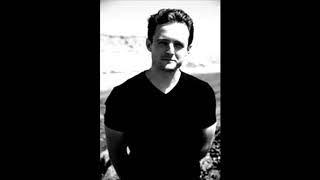
Eric Barker built a 300,000-person email list by publishing one deeply researched post per week. He argues self-compassion beats raw confidence, and that success means knowing your strengths and picking the right environment to use them in. His blog translates academic research into practical advice.
Chapters
Welcome to Make More Marbles. My name is Brad Hart and we're here to interview the game changers, the future makers, the co collaborators and creators who are here to collaborate with one another towards a better future for all of us. Enjoy the show. We've got a great guest coming up for you right now. Go. Welcome to the Make More Marbles podcast. My name is Brad Hart. I am here today with Eric Barker from the Barking up the Wrong Tree frame and book and also the base. I don't want to say it wrong. Eric, is it Basayudo?
Bacadecio is the URL. Yeah, the blog's Barking up the wrong tree.
Right on, brother. Well, I'm so grateful to have you here. Thank you so much for being on the show and for the people listening at home who may not be familiar with your work. Can you kind of give us just one or two things that you really care about or you're really looking to change in the world like a world class problem you're trying to solve or what's really you're excited about right now?
I mean, basically my book just came out and the focus of that is basically on getting rid of these myths of success that we all grow up with these maxims we all hear and actually trying to get look at the science, look at the research, talk to the experts and get the real maximums of success, not the myths we grew up with.
Right on. So kind of like Freakonomics or Tim Ferriss meets a very scientific reasons approach. Is your background? I know you're UCLA alum, right? Or are you on staff there?
Alum. Yeah, I got a grad degree at ucla.
Right on. Yeah. So you have a very scientific, reasoned approach to things. And have you found in your life that that is the number one thing that's kind of driven you to seek more is this kind of desire to really get to the heart or the truth of things that are repeatable and factual. Because I have a biology degree but I went through finance and real estate now help entrepreneurs grow their businesses. So I'm always fascinated to hear about people who approach problems with research and the scientific method, you know, and not just a kind of an intuition or a gut which so many people are want to do. It's an easy thing to do. Just kind of go with your gut. But when the data contradicts that, that's where the real magic starts to happen, is you start to realize that maybe your gut was wrong all along.
Yeah, I mean, I think the thing is like, you know, 25 years ago, you know, before the explosion of the Internet, you know, information was hard to come by, you know, but I mean, the sources generally were, you know, a little more legitimate now, you know, we got more information than we can read, more information we can handle, but we don't really. But you know, anybody can post anything on the Internet. So it's like, you know, trying to figure out what the academic research has to say, what the experts have to say, and translating it into something in English that people can actually read, not like jargon. You know, I think that's, it's really important for us to basically turn an eye towards, you know, towards self improvement, having a better life, make sure it's coming from legitimate sources so that, you know, we know that what we're doing is the best way.
And Eric, what was the moment when you really kind of just said, okay, this is what I really want to dedicate my life to, you know, this pursuit of being able to break down this academic research into bite sized pieces that people can understand and utilize in their own lives. Because I think there's always that kind of moment where it's like, nope, this is something I needed to change, or this is not being done right.
I mean, definitely the thing for me was, you know, I had made a big, I made a big shift in my career. I've been a screenwriter in Hollywood for a decade. I've written for Disney and for Fox. And then I really shifted gears and I was asking a lot of questions, I wasn't sure about things. And I started going down the rabbit hole, looking at this research, started interviewing experts, started posting all the stuff on the blog. And that eventually led me to what would become the book Barking up the Wrong Tree, which was me figuring out career wise. It's like you hear all this stuff, nice guys finish last. It's not what you know, it's who you know. Winners never quit, quitters never win. And these things are all really pithy and clever and easy to spread. But does this stuff really hold up? I know some nice guys who've done well. Is it really true? And so that's when with the book I really turned a laser focus on saying what makes a successful life. And are these different maxims that we've heard? Are these actually really good guidelines to live by or is this just stuff that's pithy and clever? Maybe it was true decades ago, but is it true now? And, and that was a big, big moment for me because I was looking for answers myself.
I like that. And really like being Able to consistently reevaluate things. That is, you know, and you made a great point. It could have been true in the past, but the world is changing so fast. I mean, you look at influencers like Peter Diamandis and Ray Kurzweil, Singularity. And what they're trying to do is teach people not to think locally and linearly, but to think exponentially and to really understand that the world is moving in an exponential fashion. If you're not disrupting yourself or your ideas or your, you know, the things that you believe are true.
Right.
Change is the only thing that's ever constant. You're going to be left behind very quickly. So what are maybe one of the two top things that really blew you away when you first started along this path that you thought were true but turned out to not be factually true?
I mean, one thing that was, was really interesting to me was the whole issue of confidence. Because, you know, everybody is always talking about, you never hear anybody say, like, how can I be less confident? Everybody. You know, you'll hear some people say, oh, you know, it's no, it's what you know, no, it's who you know. And you can get a good back and forth debate there. You know, you don't see any books on how to reduce confidence. You know, everybody's pretty damn sure that, you know, confidence is essential and you have to have it. And, and so, you know, I started, I started looking at it and, you know, the truth is that the problem lies in semantics. You know, where there is a problem with too much confidence, but we give it another word. We'll call it hubris, we'll call it narcissism, you know, but we kind of put it in a separate bucket once it gets to be a problem. And then, you know, low confidence, we think is terrible and scary and awful. But that's because once, you know, when you, when you aren't super confident, we have another word for that. And it can be humility. It can be somebody who's humble, who's open to other ideas, who doesn't think they know everything. And what's really interesting is that there's a lot of research showing the whole confidence paradigm is problematic and that we can actually do just as well without the downside of hubris and narcissism. By focusing on the Buddhist concept of self compassion. And research by Krista Neff at University of Texas at Austin shows that self compassion, as opposed to self confidence, it has all the benefits of self confidence without the downsides of turning into a know it all who's a jerk.
I like that, Eric. And you put up something really important to understand is that you're creating instead of a binary like confidence is good or confidence is bad. You're creating a kind of a spectrum, if you will, between, well, it could be humble, right. Or it could be complete hubris, right? When people get overconfident, that creates just as many problems as not having enough confidence, for example, or not being able to act or being paralyzed by fear. So by creating that spectrum, you help people understand that life is not a, you know, a 0 or 1. There's a lot of gray areas in between, you know, and what might be right for this outcome is not necessarily right for that outcome. And that's a really fascinating thing. So tell us a little bit about how, you know, self compassion plays into your daily life because that seems to be a very important topic for you. I want to kind of pull on that thread and see how these principles have really shaped you into the man you are today.
Yeah, I mean, what's interesting about self compassion is as opposed to the problem with confidence is that it's often either delusional or contingent. And delusional, meaning you're telling yourself you're better than you are. I'm awesome, I'm amazing, I'm this and that. And eventually reality is going to catch up with you and that's going to hurt, that's going to be bad. The other problem with being so focused on being super confident is that confidence is contingent, where you feel like, I need to prove myself, I need to go slay a dragon, and then as long as I do that, I deserve to feel good about myself. And the problem is, one day you're not going to slay that dragon, one day you're not going to achieve that goal. And then you're on this emotional roller coaster where you constantly have to be on this treadmill of proving yourself in order to feel good about yourself and self compassion is more the idea that I'm going to see things realistically and I'm going to forgive myself when things don't go well. And that allows you to not be delusional, to have a very accurate vision of what's going on, you know, to not be a jerk, to learn because you don't think you know everything, you actually can actually just forgive yourself when you do screw up, as opposed to thinking you're superhuman. It's a much more, you know, kind of friendly attitude. And you also see research consistently that a lot of the problems we all face, you know, procrastination and issues like that actually clear up. You know, when you procrastinate and you beat yourself up and you feel bad and you put pressure on yourself that this actually produces a vicious circle. And what the research shows is that forgiving yourself, realizing that, hey, you're not perfect, you procrastinated. All right, I'm going to stop. I'm going to do it now. Is actually a much healthier, much more productive way to handle things. Yeah.
It's being realistic with yourself. Right. Nothing changes until something changes. Right. And if you've been deluding yourself into believing you got it all together when nobody does. Right. It's just not realistic for everybody to have it all together all the time. As soon as you can let that truth come out, then you can start from a place of like, oh, I'm not wasting all this energy and attention on keeping the story up or looking good to myself or others. And now I can just really start where I am. And that's a beautiful thing because then you can have the compassion for yourself and eventually others, which will really like the most successful people I've ever found and maybe you seeing this to be true as well, are they also the most empathetic? They can really put themselves in somebody else's shoes and from that space, create value for that person and grow businesses and do all kinds of wonderful things. I know we have different backgrounds. Yours is more writing for film and blogging, and mine was in finance and real estate. But I really didn't cross the line until I could really take myself out of my own head and put myself into the hearts of others.
Yeah. And I don't. I think that's really hard to do once, you know, once it's so focused on kind of like, you know, I'm the greatest. I'm the best. That starts to create this. This imbalance between who you think you are, who you think other people are, you know, as opposed to, you know, again, seeing things realistically, then you can make realistic plans. You know, if you see the battlefield accurately, you can make realistic plans. If you see other people as peers, not as less than you, because you're so awesome, you know, then just like you said, you can be more empathetic. You know, you can be very relatable as opposed to, you know, creating this imbalance, which is. Which is frankly gonna. Because confidence is really. The truth is the research shows confidence really does impress people, but it doesn't make you very likable. And that's where that's where the breakdown occurs. And again, if the confidence isn't justified, then you're not going to hold on to that power very long. And you're also not very likable.
Yeah, I heard a great quote from actually one of my speaking coaches, Thomas Blackwell. He sells from stage 300,3,2 Million dollars worth of infusionsoft every year. And one of the things Thomas says is that people will respect you for your success, but they'll love you for your failures. And to never be afraid to really show people that you are vulnerable and open. And Brene Brown, one of the top, or if not the top TED Talk of all time, is all about the power of vulnerability. So I think there's a lot of, you know, depth and ability to dig deeper there. So for you, what do you think the biggest struggle is that you're going through right now? You know, at this stage in your life, at this stage in your career, you've obviously had a lot of success in various industries and with growing your blog. And I want to dig into that in a minute. But what do you think the thing that you're struggling with is the most right now in your daily life or are you aware of it?
I mean, the big thing for me is it's funny, the sixth chapter of my book is all about work life balance. And I remember when I was reading it, I started to feel like a hypocrite. I'm sitting there and I was so focused on the book and getting it done and trying to use every productivity tip in the book and just focus, focus, focus. And I realized that I didn't have much balance. And as the research shows, it's like that monomaniacal focus works in terms of getting things done. However, it doesn't lead to a very balanced life and it doesn't make you very happy. And that's what I was finding was that the same drive, ambition and just crazed focus was producing results in terms of the book and the work, but it wasn't leading to a very well rounded life. And then transitioning out of that, you know, is tricky. When you focused everything and then stepping back, you know, you've developed some bad habits. And so it's for me just striking that balance where it's addictive to be working that hard, seeing the results, moving the needle, that becomes, it's very dangerous. When you look at some of the research on work life balance, what you see is one of the problems people have is what's called a collapsing metric, which is Basically they start to evaluate everything in their life by one number, one metric. And this is very dangerous because obviously the very common collapsing metric is money. Make the number go up and people focus just on that and their health goes to hell, their relationships go to hell, their happiness goes to hell. But hey, the number's moving up. And for me, it wasn't money, but it was getting everything done. I just found that evaluating myself completely by my productivity was really starting to become a threat to my balance. And now I'm trying to see where's that good balance for myself, where I can still make progress that I'm proud of, but I can still be a well rounded human being.
I really love that. And it reminds me of another friend of mine, guy named Charlie Hone, who wrote a couple books about the fact that he almost burned out. He worked for top entrepreneurs like Ramit Sethi and Tim Ferriss for many years. And he was always taking on more and more and more to the point where he's like taking provigil just to stay up and get it done. And what he learned was that after he went to all the therapists and did all the different, you know, retreats and meditation, all this stuff, the thing that really helped more than anything, which almost was like he laughed when he figured it out. He's like, I just need to play, man. Like I need to be a kid. So he wrote a book called Play it Away. And that was his literal cure for anxiety. It was a beautiful thing. And I love. Charlie just had a baby. So congratulations again, Charlie. But you know, the just understanding that we're not automatons. No, we're not just here to do the one thing, although that one thing's important, you know, how are we going to transition into this new world with all this extra productivity and capacity and leverage, you know, and that's the world I want to create is like, you know, how do we, how do we transition from this current system to the next one, which isn't. There's no analog for the time that we're entering? We're already part of. Honestly, you know, like, what if you didn't have to work for money? Or what if you didn't just have to spend all your time, energy, attention paying the bills and I don't know where you lean on that side of the line, but I really feel like the future, the analogs and the systems that we have today will have to evolve to meet that capacity.
I mean, we're entering a new world. I mean, that's some of the stuff I talk about in terms of work life balance is that, I mean, it's funny because people, we talk so much about it now and, you know, 20, 30, 40 years ago, you know, nobody was familiar with the term. Nobody talked about it. And, you know, the issue is that in the past, you know, the doors of the office used to close at 5pm and being an entrepreneur was very difficult. You know, there weren't the online options, all these incredible resources, you know, available, especially technologically for so cheap. So the real work life balance challenge is the issue of now. It's all on us. We have so many options, we have so many possibilities. You've always got your phone in your pocket. You can always check email. You can be working 24 7. The doors at the office don't close. The documents that you had on your desk are available in the cloud. So if you want to go 24 7, you can. So instead of being told, hey, stop working, you have to tell yourself. And that's really tricky. And so all of a sudden the onus has shifted on us and that's where it becomes. So the world, like you're saying, is definitely changing. And I think that's the crux of the problem with work life balance is that people are still looking at that old model where, oh, you know, I leave work at 5. Yeah, but it doesn't matter. You can fire up your laptop at 10pm and keep going. Are you going to choose to do that or not? Or is the big promotion the big thing? Or is spending time with your family or. You didn't used to have to make those decisions in the past. Now it's all on you. So I think you're totally right. We need to update kind of our ideas about work, how work, when does work stop, when does work start? What time is set aside to be a person? We need to update all of that because it's still based on the old model. If you watch Mad Men, yeah, it looks okay. That working world is very different than today's and I think we need to update our ideas about it.
Yeah, it's a great point. It's like almost updating the human operating system. It's like, what does it mean to be a human now that all this stuff has changed and you can be on 247 and how do you create that balance? Really, it's fascinating work and I'd love to hear more data around that. And if you want to add a couple links to the show notes, we'd be happy to promote those along with this podcast that people can check out more your work, which is all very well researched and well put, which actually transitions well into. I mean, I don't know how long you've been blogging exactly, but you guys have a pretty large following, about 300,000 people get your weekly updates and I'd love to hear, and I'm sure people listening would love to hear, like some of the key things you to want learned about how to do that.
Right.
Because you obviously didn't have 300,000 conversations individually with people. You use the leverage and the tools that are available today to get your message out to more people. So if you could share any of your key learnings from that, I'm sure people at home would be very grateful.
Yeah, I mean, what I think is really key is producing content that really has value to readers. And now that sounds really generic and typical. But the truth is, I think from most entrepreneurs to most websites to most companies, blogging or producing content is another box to check. It's something to do, but it's not really evaluated qualitatively in terms of, hey, this is going to be to a high standard and if this is not something that people are going to find valuable, we're not going to put it out there as opposed to, hey, get it done, make sure it's this long and make sure it's done by 5pm I don't think you can really treat any kind of content like that. Having something that really speaks to the reader, that gives them something valuable that they can take away, that's legitimate and it takes a lot of work, it takes a lot of time. But I just don't. I think most companies, you know, and even entrepreneurs, you know, they're like I said, the time investment isn't there, the focus on quality isn't there. And most of all, it's seen as veiled. It's veiled marketing. It's like, I'm just trying to get my ideas out there and hey, I'm gonna present it in the form of a blog post as opposed to if you give something people can really use, if you give something that people go, holy crap. Where, you know, a standard I always hold myself to is I post the research on all kinds of topics from happiness to productivity to relationships to parenting. And I always want people to look at something I post, and maybe I post something on parenting and somebody doesn't have kids, I want them to look at that post and say, hey, you know what, this isn't for me. But holy crap, somebody spent some Time on this. This is legit. This isn't for me, but this is impressive. And I think the amount of stuff you see out there like that is few and far between. I think it's often very thin content that was much more focused on hitting a deadline than it was on trying to hit a quality bar. And as opposed to making the reader go, wow, this is really valuable. I want to get this on a regular basis. I want to share this with my friends. If you do that, the spreading the word, the marketing angle becomes very easy. As opposed to, like I said, something thin that's just trying to get out there, that's just trying to market. I think put the marketing second at best and first and foremost, give people something that they want, they can use, that they're really going to find valuable. And I think that's really the key to success, is giving people something that is really valuable to them, that they will keep, they will cherish. They will say, I'm gonna sign up for this, and they will share that. As opposed to thin content that's really just trying to market a site or a product.
I think you really hit it on the head, Eric, and you said something that's really telling is that I want people to come and see my content. And even if it's not for them, say, wow, this is awesome. Because guess what? People know people. Even that person who's not a parent knows a parent or two that they're gonna send that to if it's that good.
Right.
People are going to take the initiative to share a great resource and remember you as a resource when the next time they're looking for an answer is. So, you know, you may get that guy who wasn't the parent who signed up for your list, and then he gets a productivity post or he gets another post that is relevant to him. But you wouldn't have gotten that relationship established if it wasn't for that extra time you took on the parenting post, to use that example.
Absolutely. Yeah.
Because people want quality, right? In a world of noise, what do you listen to when YouTube has a hundred app? I think it was like 100 million hours a day or some crazy thing, or a million hours a day of content being uploaded. It's just impossible for anybody to really understand what's good, what's not. And really, you know, the algorithms are gonna drive the day. So if you want to please the algorithms and play that game, you can. But at the very end of the day, the algorithms are driven by human decision making. Right? The humans are Making it. And they're using the data to update the algorithm. So really, please. The humans meet the needs, wants and desires of the humans you're looking to serve, fall in love with the humans you're looking to serve, as Alex Jarfin would say, and that is half the battle. Then you can create something that they would truly, you know, it's specific, it's considerate, it's valuable for them.
I think it's really, really the really the key there is again, sounds cliche, but building trust, and how you build trust is by putting the reader first, giving them something that's valuable, something where they're not second guessing what it is or why you're doing it. I mean, Clay Shirky said that the problem isn't information overload, the problem is filter failure. It's just there's so much information out there. Yes, but there's always been tons of information. Just before was hard to get to, there were filters between you and it. And you know, that's what inevitably, in one form or another, whether it's algorithms or curators on the Internet, there's going to be more filters. People are going to demand them because everything else is overwhelming. I mean, Google is a filter. What ranks first and gets the most clicks, that's a filtration method. So if you are somebody that is putting people first, giving them stuff they can use, giving them stuff that's legitimate, you can act as that filter. People trust you and you can't abuse that trust. The trust is very hard to earn, very easy to lose. And if you create that where people feel like, hey, I can trust this, that's a really powerful bond. And that's something where, like I said, then you don't have to think as much about marketing and signups and any kind of angles that might start to get gray area or dubious. You know, if you provide a really valuable service to people, you know, they're going to be thrilled, you know, to be a part of it. They're going to be thrilled to sign up to join, you know, and their friends are going to be recommending and the friends are going to be vouching for it. Because you're trustworthy, you're reliable, and you're not going to want to violate that trust once you build it.
Absolutely. And that's a great point is the trust that Bill, you know, takes five years to build, five seconds to lose. You know, it's incredible. So tell us a little bit about your organization, Eric. So I see a lot of really successful bloggers out There that, you know, they have a team behind the scenes. I don't know if that's you or not, but I'd love to know kind of how you navigate the waters of, you know, keeping deadlines and doing everything you need to do and still having the time to really enjoy your life. Do you have a team or.
No? It is literally just me. So there's. There's no team. And that's. And I mean, I'm getting to a point where I probably need to consider something else. But no, I mean, I write the post myself, you know, I maintain the blog myself. I wrote the book myself, you know, and I guess I'm a control freak. But especially, like I said, creating the content is something that I cannot and will not ever delegate because to me, that's critical. That's what I'm doing, that's what I produce. And. And also, people know when they write to me, they're writing to me. And that's really important to me. Certainly it can get overwhelming. And so I do need to be particular about how I use my time, especially when I was doing the book and the blog. Basically breaking it up in terms of four days a week for the book, two days a week for the blog, and one day a week to try and. And relaxed. And, you know, it's those. That issue of trying to make sure you're getting everything done. But for me, it can get very tricky because I try and focus so much on quality. That means that setting hours becomes very difficult because I'm not simply going to say, well, you know, 5pm it's done, it's just going to be done. No. So that means that, yeah, I end up working some pretty crazy hours at times. And it's very hard for me at times to gauge just how long things. Things will take. But, you know, it's. It's something that has been tricky, like I said, in terms of. In terms of doing it. But no, right now I do it all myself.
That's wild. So give people kind of a framework, like, help them understand. Like, is the smallest amount of time you're taking on a blog post the longest amount of time you've ever taken on a blog post? And what's kind of like the middle ground that you seek to hit? I mean, I know the time isn't the key driver, it's quality, but, you know, what kind of hours are you putting in?
It can get pretty crazy. Like, if I'm. I mean, it depends on what you want to include. So, for instance, you know, like I'm. Everything I'm writing is usually is coming from, you know, other sources, you know, that I'm citing. So I have to read those sources. And the other issue being I have to, you know, read more sources in order to find the good sources. So it's like, so are we going to include how many hours it takes to read a book? And then are we going to include the three books I read that didn't have anything valuable in them? Fourth book, which was valuable? And then sometimes I'll contact the author or the academic and interview them, and I'll prepare for the interview. I'll record the interview, then I'll get the transcript and edit it. And so, I mean, it can range. I've had. I've had things. I've had some things take, you know, like, dozens of hours. And I've. And I've had. I've had certainly things that. That, you know, where I already had, like, the sources on hand. And I was. And I knew. I knew a point a through line that I wanted to work on. So, you know, that might take. I'm trying to think minimum, you know, might be. At this point, minimum, might be like six hours. But I mean, it takes a lot of time for me to do what I'm doing. I mean, I know when I was promoting the book, it was crazy because, you know, when sites were talking about it and they wanted to use excerpts, I was like, hey, great. When I want to do an interview, I was like, oh, great. When they were like, oh, we want you to write original content, I was like, oh, my God, this is gonna take me. Like, I mean, I was, you know, I did it at times, but I was so, you know, I was so reluctant to produce original content because it just takes me to do what I. What I'm gonna be able to be happy with and not feel guilty is gonna take me a lot of time. And currently I do. I do one blog post a week, and that goes out my weekly email. But. But, yeah, it takes a long time.
That's great. I mean, well, but listen, like, you have the capacity to do it. You know, obviously you have the drive to do it. Like the best entrepreneurs I've ever met, and I would include you in the category somebody who built something from nothing, right, as an idea or really scratching their own itch. Like, you wanted this to exist. It was a desire you had, and that was a cause set in motion which created it. So, you know, what are some of the. The itches or, you know, what are some of the things that you'd like to scratch going forward where now you're at your place where maybe you're starting to consider, you know, you can't outsource the marketing, you can't outsource the checkbook, and you're going to continue to write the content. You know, to use that analogy, that's going to be your baby. But what are some of the things that maybe you could get some leverage on in your life and by and large, like, how could you increase this mission and help more people if that's what you want to do?
Yeah, I mean, the, the thing, the thing for me will be more of kind of the ancillary tasks because, you know, the, the content, the weekly email, you know, that's all going to be me. You know, if, if I, you know, I mean, in terms of that, that's, that's going to be a tricky area. But it's more kind of the outside, you know, kind of supporting stuff. I mean, frankly, I think a lot of it would be more on the personal side because, you know, those are things that are you critical path type activities. Because, you know, with the book, you know, I was, I was just so kind of head down focused on that and it was really hard to shift gears to go back and forth between, you know, getting the book out there and then, and then the blog. And sometimes there was some, there was some overlap in terms of, you know, marketing the book on the blog and that, you know, that made things slightly easier. But you know, I've got to say that there, you know, maybe this is a flaw, maybe this is a flaw in how I do things, but I just find there, there aren't tremendous efficiencies in terms of quality content, you know, and I'm generally kind of skeptical about that because, you know, I think like I said, my history and my past in filmmaking and, you know, I think that you can leverage technology to do things better. But in terms of actually doing things well, especially with writing, it's still going to take a lot of time unless you're going to have somebody else write it, which is just not how I handle things. I think scaling effort in terms of efficiency, I think that's, I don't know how I could do that. I think that's a very difficult challenge. I think there's other stuff, site design, SEO, backend stuff that can certainly be outsourced. But like I said, I'm totally focused and my blog is not the most beautiful thing in the world and I'm very focused on the content. And I don't think that's something that lends itself easily to scale and efficiency. No.
And I love it. We're only now after three years, for example, Make More. Marvel started as just a blog that I threw together and it's not pretty, but it is what it is. And I was more concerned with getting it out there than, than worrying about that. So I could totally relate and only now are we doing like a rebrand and all that great stuff. But you're right, like, you know, if you can focus on the one thing which lights you up, makes you happy, and you really, you love it, which is creating the content, I would say go for it. Like, it just reminds me of my friend Felicia Sparr. She's a great copywriter and coach up in San Francisco. And she's basically outsourced everything in her life that isn't writing words shop. She doesn't drive, she doesn't cook, she doesn't clean. None of these things are in her purview, like literally everything that she can outsource. So the low level or mid level task has been outsourced and all she does is write words all day and take care of her body and that's about it. And it works.
No, I think, I think that that's, that's where, that's, that's where I think I'm headed.
So she could be your example. Absolutely. So Eric, what would you really love for people listening at home to understand or to take away from this as like the, you know, the one to two to three valuable takeaways that we all look to seek to create?
Right.
I always want to create content which is both spur of the moment but also very valuable. So what would be the one or two or three things that you would really love for people to take away from your message and your mission?
I mean, you know, I've, I've. Geez, it's like I write about so much different stuff. But I think one of the, one of the, you know, the key takeaway, I think from my book that, you know, from looking at the research and talking to the experts was basically when I spoke to Harvard Business School Professor Gothamakunda, some of you know what he was saying. Also some work by Boris Groysberg there in terms of, you know, what produces success. And we, you know, success is a very general term and we can define it ourselves. But one critical formula there which, you know, which everybody should keep in mind, is that often success is a two part thing. First and foremost is know thyself is, you know, knowing who you are, knowing what. And what that means is knowing your signature strengths. And there's a lot of research done at University of Pennsylvania by Martin Seligman and others in terms of signature strengths are the things you're uniquely good at. Those are the skills that you really have. And all the research shows that the more time you spend using your signature strengths, the things you're uniquely good at, the happier you are, the more respected you feel. And obviously you're good at it. So the better you perform. So knowing yourself, knowing what your signature strengths are, but also knowing what your intensifiers are, and that's something I talk about in the book, and that's part of Gotham's research, that intensifiers are qualities which are negative at the mean. In other words, they might be bad qualities, but in the right context, they can actually be good. So in other words, you can be stubborn, and stubborn is a negative quality. However, if you're an entrepreneur, stubbornness can very easily be grit. You stick to something, you don't give up. So all of a sudden, whereas stubbornness in your typical hierarchical corporation might make people angry and make you difficult, as an entrepreneur, stubbornness is almost essential. So in the right environment, those intensifiers, those qualities which are generally negative but can be a positive. So understanding your signature strengths, understanding your intensifiers, that's knowing yourself. And then the second part of the success formula is picking the right pond. In other words, that is finding an environment that rewards your signature strengths, that rewards your intensifiers. So if you could be the most creative person in the world and you might get offered a job at the best accounting firm in the world. Now, those are two top that you're the best in being creative, and they're the best at accounting. But that is not a good combination. So the issue becomes alignment is looking at your signature strengths, your intensifiers, finding a context, a group, a company, or again, forming your own company, which rewards your signature strengths, rewards your intensifiers. That's a way that you can find success in almost any arena. If you're thinking about who you are, what you are, and a place that rewards that. And if you're an entrepreneur, that means structuring your company, structuring it so that it does take advantage of your signature strengths and intensifiers, or that you're surrounding yourself with a management team who compensates for your weaknesses, that you're not trying to do things that you're not good at, they're handling those. You're rounding out your weaknesses and you're focusing on your signature strengths and intensive fires. So knowing myself, picking the right pond, that's a really good takeaway. I think that people should realize in terms of finding success almost anywhere.
Yeah, you bring up a really fascinating point and I feel like the narrative, and maybe this is something you could dive into at some point or maybe you have already. I haven't checked out your entire catalog yet, but I'm looking forward to it is, you know, when Darwin talked about the origin of species or the survival of the fittest law, he talks about really adaptability as being one of the key traits. The other trait that he talks about is collaboration being one of the key traits among successful species, especially with regard to humans. Like humans that compete with one another for resources tend not to do as well as tribes that collaborate. And now the narrative seems to be that you need to go off into and do it on your own. And what we're learning is that solopreneurs and people who really tend to set themselves up for failure are actually struggling because they're not collaborating at the rate that we used to when we were evolving, which gave us the competitive advantage because we all had skills, we all had strengths, and we surrounded ourselves with each other. And you know, we didn't have everybody building roads or building houses or farming. We had people doing specialized things. And creating an economy was a way that we could specialize but also derive the benefits of others work and labor and production. So, you know, I'd love to hear your thoughts about how, you know, the, these two models kind of mesh. Right. So you love to run your business on your own and you don't like to outsource based on quality. But also you're saying that the number one trait is to find your strengths and find your pawns and then surround yourself with people that balance out your strengths or balance out your weaknesses. So I'd love to hear kind of your, your take on that.
Yeah, I mean, I think, you know, again, if you're an entrepreneur, if you're, if you're forming and you're trying to create a company that, that can scale, then, yeah, I mean, you're going to want to be hiring people, you're going to want to collaborate. I mean, competition, you know, makes competition. You saw historically, often because resources were scarce. And so it became a zero sum game. You know, the easiest way for me to get stuff was to take it from you, you know, as opposed to now. You know, we live in a world of abundance. And so you have the, you know, most things aren't zero sum. There's plenty of ways to make money or feed yourself. You know, so collaboration, you know, working together makes a lot more sense and again, allows for scaling. So I think, you know, for that, it just becomes really an issue of first, like I said, the issue of success is knowing yourself and then picking the right pawn. And what's interesting is, like I said, the Harvard Business School researcher I referenced earlier, Boris Groysberg, he actually did research specifically on what you're talking about, where a lot of people get this idea in their head that, oh, I was successful and I'm a success, and therefore I'll be successful wherever I'm at. And that ignores the pick the right pond issue. And Roizberg did research and found that wasn't the case. There was that very often, I think he looked at top analysts on Wall street and he found that when they jumped ship and went to another company, they were no longer top analysts. However, if they jumped ship and they brought their team with them, they stayed top analysts. Interesting. Yes, because the issue being that, again, the rounding out of that skill set, you know, is in terms of rather than you trying to be a solopreneur and doing everything you saying, here are my signature strengths, here are my intensifiers, this is what I can handle. And for X, Y and Z, I'm going to have a team. They're going to handle that. They're the best at what they do, and with that, we've got all the ground covered. Well, if you just pick up and move by yourself, you know, you have your signature strengths. Who's covering those other bases? Do you have that shorthand? Do you have that trust? Do you have that real connection where you can rely on. No, you're going to have to build that up from zero again. And who knows if it's going to work out. And that's why those analysts didn't stay top analysts. They brought their team with them again. They had the full package. They had rounded everything out. They had all the bases covered. They could pick up and just start running again at a new company. I think that's the kind of thing that entrepreneurs want to look at in terms of making sure all of the responsibilities that need to be handled by the company are handled by people where that's their specialty. That even allows, like I said, people to jump ship, go to another firm, hit the ground running, and stay top of their game. You always want to be rounding those things out. And again, to do that well and be able to continue to scale and grow. Yeah. You're going to need a team.
That's brilliant. Thank you, Eric, for that. Because that's basically the entire core ethos of what we're looking to do here, is just get people the support and help they need to do the things that they want to do in the world and work together to win more.
More.
So thank you for that. And that perfectly kind of segues into the next point, which I'd like to open up the floor, really. I mean, every guest we have on here gives so much and adds so much value to our audience, and we want an opportunity to do the same for you. And we're always looking to, you know, plant seeds and grow crops. And crops is actually an acronym. It stands for Connect Resources, Opportunities, People and systems together to help you further your mission and goals. So how can we give back to you in that way? How can we add a connection, a resource, an opportunity, a person, or a system to your life that would add value.
I mean, you know, the best thing people can do is check out my book or check out my blog. I mean, I, you know, I'm putting information out there to try and help people, and I want to make sure that, you know, people are getting a look at it and they're seeing, you know, if it's valuable to them, if it's useful to them or somebody they know. So, I mean, if anybody wants to. Wants to check out my book Barking up the Wrong tree, or my blog Barking up their own tree, you know, that would be fantastic. And I really appreciate you putting the offer out there.
Oh, it's my pleasure, Eric. And, you know, we want everybody to win together. That's really the point of this whole community and everything. What's the best way to get people in contact with you? If you could spell out the name of your blog, just so people can find it easily. And then also the best way to contact you personally.
The best way, because the URL is Japanese and a lot of people wouldn't be familiar with. The best thing is to Google Barking up the Wrong Tree blog and it'll be the first result. Or Google my name, Eric Barker. The book is Barking Up Their Own Tree. On Amazon, you can put Bark up Their Own Tree or put in my name, Eric Barker, and it'll come right up there. The best way to stay engaged with me and what I'm doing is to sign up for my weekly email, and I send it from my email address so anybody can reply to that and reach me. But there's 300,000 subscribers on there now. People will get the latest content in terms of what I'm doing, the research I'm finding, and hopefully it's something that people find useful.
You're awesome, Eric. Thank you so much. On behalf of the whole Make More Marvels community, we really appreciate you being here today and we look forward to seeing what you come out with next week.
Thanks so much, man. I really appreciate it.
Oh, my pleasure. Thanks so much for listening to the Make More Marbles podcast. For more tips, hacks and strategies to create an amazing, abundant life in your health, wealth and relationships, whatever that means to you, head on over to makemoremarbles.com check out our cool explainer video about what we're about and join our community of entrepreneurial game changers. We want to help you level up your life in every possible way. And don't forget to subscribe to us on itunes, Stitcher or Google Play wherever you're listening to your podcast. And please do leave a review. Thank you so much and we'll see you on the next podcast.
More from Brad

The #1 Reason AI Isn’t Working for You (Yet) #AI #businessowner #founderenergy




What tasks would the best assistant ever be able to do for you? #BusinessSystems #BusinessOperations



Nobody expects you to use a harder way when there's a better way. #AI #businessowner

Which side of the table will you be on in 2026? #AI #Mastermind #BusinessOwner

