How to Get Your Financial House in Order and Why You Should Sell Bitcoin with Eric Finnigan
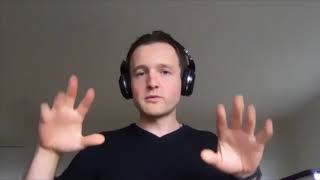
Eric Finnigan, a former Wall Street investor turned entrepreneur, explains how to organize your finances: clarify your goals, focus on income-building before speculative investing, and watch your fees. He argues Bitcoin is too volatile and risky to buy now, comparing it to past bubbles.
Chapters
Welcome to Make More Marbles. My name is Brad Hart, and we're here to interview the game changers, the future makers, the co collaborators and creators who are here to collaborate with one another towards a better future for all of us. Enjoy the show. We've got a great guest coming up for you right now. Welcome to Make More Marbles. My name is Brad Hart, and today I am thrilled to be joined by a fellow Wall street warrior, Mr. Eric Finnegan. What's going on, Eric? How you doing, brother?
Hey, Brad. Doing great, man. Looking forward to chatting.
So I really want to get into Eric's story because it mirrors my story in a lot of ways. You know, we did the hedge fund thing or the Wall street thing for a while and then got out of that. Now we both help people to make wiser, smarter decisions. And what I really like about Eric is that he's actually. You'd consider bearish on Bitcoin, right? He actually put out some really great content recently. About five reasons that people should sell bitcoin. It got a lot of traction, and I'd love to dig into that because even though I've been in it for a very long time and it's treated me very well and I have no reason to sell it, right? One of my rules, I never sell a rising stock, or in this case, coin. I think it's important for people to understand what I've done isn't necessarily what everybody should do, and for good reasons. So just kind of talking around that. And then additionally, Eric has some great advice, just in general, on investing that we want to dive into. So I'll stop yapping for a minute. I'll just turn it over to Eric. Eric, why don't you give us a little bit of a grounding story. Basically a hero's journey from where you were to the call to adventure to now what you're doing.
Yeah, great. So I guess it started around the time I was 23. This is 11 years ago now. I'm 34. I was in a band and we were touring around the world, and I got home from one of the tours and realized my bank account was negative. All my credit cards are overdrawn. My student loans were starting to come due. I realized, like, man, I gotta grow up. I have to, like, be an adult now, right? And looked at all my different options. I just graduated college with a degree in environmental policy, and I knew that wasn't gonna make me a ton of money, but I really did wanted to become rich someday within the next 10 or 15 years. So heard people are doing well in finance. So I spent a few months trying to get a job in finance and eventually got hired at an economics consulting firm, Research investments consulting firm out in California. So I did that started that basically launched a 10 year career on investments in Wall Street. Ended up getting a master's in economics. I got to be promoted to VP at a $36 billion investment fund. It was the youngest VP in the company. And we worked with the biggest investment investors in the world. You could think of sovereign wealth funds, university endowment funds, super high net worth individuals, that sort of thing. And then once I got promoted and I got to this place that I really was like looking to get to, I kind of looked around and realized, man, this is actually what I wanted. This wasn't making me happy. I was just as miserable then as I was in the 10 years before working up to this position and really just saw like, okay, the next step after getting to be VP was my boss's job and his office was 10ft away from mine. And then from there it was his boss's job and his office was 20ft away from his. I could kind of see the next 30 or 40 years of my life charted right in front of me. And these people just didn't look happy and I know I wasn't. So I had a real crisis, I'd say, of like my, what I was really here for, what was I on the earth to do? And spent some time learning how to build businesses, tried some stuff on the side, failed. And I remember I did a, did the Landmark Forum curriculum. And the day after I did one of the courses, I was like, this is, this is it. This is my chance to face my fear of going out on my own. So I walked into my boss's office that day and told him I was quitting. That was September 2015. And the last couple of years, a little over two years now, I've been working on my own business stuff on the side and really haven't touched markets, investments, had this like 10 year career that I really walked away from completely. And in the last month or two, it's slowly coming back together. And I've been helping friends actually starting with this, with this bitcoin content that I did, but helping friends like get their investment portfolios squared away, making wise investment decisions. I mean, I've got a list of 10 people I've talked to and we had some pretty significant breakthroughs so far.
That's awesome, Eric. And I'm grateful because I'm actually on a Similar track. I mean, I did the funds in 2013. We did really well. But making all that money made me realize that money was never going to make me happy. And I know why that is now. I was doing something that was more somebody else's flow, and I was doing it well only because I had the right team behind me. And then when I went really deep on that team and community building, I started to really find my flow and helping others to achieve that well as well. And having 15 years in the markets myself, I know exactly what you mean. I see people doing crazy stuff that makes no sense all the time. I just wish I could just catch them and be like, hey, I know you're excited and I want you to invest. But like, crypto is a great example. 8 out of 10 people who want to invest in crypto have never invested in anything before. I'm like, you're going to go play with dynamite? You never played with firecrackers? Are you kidding me? Let's start with those little snappers and throw those in the ground, you know, once you get from the ice cream man. So, yeah, I really resonate with your mission and I'm really grateful to have you on the show because I think we have similar values in that regard and we're both out to help in our different ways. But also, you're more of a contrarian on certain things, which is. Which is good, which I'm a little bit more bullish on maybe. And I just like to hash it out because I feel like your opinion is well reasoned as well and maybe could influence mine in some way, and it's vice versa. And it's not that we need to each be right all the time, it's that we need to have a set of rules that consistently will help us make really good investment decisions over time and therefore win more than we lose. And one of the people I'm always geeking out about, I get a whole stack of books on finance and investing, but this one is just blown my mind is Ray Dalio, Bridgewater Capital. You worked at a 36 billion dollar hedge fund. This guy's hedge fund is six times that, give or take, which is the biggest in the world. And he's put out a book of basically all his rules. This is what's made me so successful over the years. This is why I turn down billionaires all the time, want to give me their money, is because I have these set of rules. So you know everybody, I always get them on this one whenever I do a podcast or A webinar or class or something like that. I always ask them, well, you know, finish the sentence. Rules are meant to be understood, right? Not broken. Rules are meant to be followed if they're the right rules. Right. Keep your rules rigid, keep your expectations flexible, and every once in a while, update your rules in the light of new information every day. Certainly most people don't have a plan, they don't have rules, and therefore they lose more than they win. That's really it. If you can just get really good at making decisions that are high probability, you're going to win, consistent. So let's talk about your hedge fund days because I'm sure you guys had a methodology that made you that successful. I'd love to know what that was and now how that kind of groks for the average person as well.
Sure, yeah. So we weren't, quote unquote, a hedge fund.
We were an.
Investment advisor for institutional funds. So what they would do, and we would focus 100% on commercial real estate, actually. So, you know, there's say a pension fund from a state teachers. State teachers pension fund. They would have, you know, their fund size is hundreds of billions of dollars. They allocated say 5% of it to real estate and then we would compete with other three or four or five other managers for that allocation. So what we would do is we offered, we looked at kind of what they were looking to do. So people, institutional investors brought real estate in as an uncorrelated investment, low stable returns. Over time, they didn't need to get huge capital gains. They really just wanted the cash flow so that their assets could match their liabilities, which means that the stuff that they own, they could then pay out their creditors and the pensioners within. So what we would do is we'd start with essentially a fundamental view of what was happening in the economy and what's happening in the markets. So we take a look at this, a hard look every about once a year and then every quarter we would update any outlook or any predictions we had. And that would fundamentally that drives into our pricing assumptions. Then we had acquisition teams all over the ground searching out underpriced assets, searching out distressed sellers, a lot of different sort of idiosyncratic things. But we would start with a fundamental understanding of markets and the economies.
Right. And from there you could derive great decisions because you had a clear view of reality.
Right? Exactly.
The number one best traders and investors I've ever met are just the best at really interpreting what's actually going on and understanding how it all fits together. That's it. That's a very simple way to talk about a very difficult thing.
And they don't get it right.
But even not getting it right is built into their model, which is more than they lose. So. All right, so let's now relate that to how the average person can approach the markets. Where can they get the best information? How can they build the best rule set? How can they approach a marketplace, any marketplace, whether real estate, stocks, bonds, forex, crypto, whatever it is, and just understand what's actually going on so that they.
Can make great decisions? Yeah, I would first, even before going out and like getting a bunch of information and talking to a bunch of people, working with anyone, I would say it starts with knowing why they're investing. What are you investing for? Do you want to buy a house in three years? Do you want to retire when you're 65? Do you want to just make a quick, take advantage of a super fast rising stock and just make some money? What are you actually wanting to do here? What are you optimizing for? And that, that tells, that tells me what kind of risk you're willing to accept. Okay. It tells me what kind of return sort of profile they're looking to get. You know, for somebody that's retiring when they're 65, what they would invest in is completely different from someone that is wanting to buy a house in three years, for instance, or looking to sell their business, or wanting passive income as soon as possible. So I would just start there really fundamentally, like, what are you investing for? What does your life look like? What are your goals? And just to get really specific on that. And then I would go out into. It's hard for me to put myself in the shoes of an average investor because I have a filter through which I see news and I see analysis that I've spent decade, you know, more than a decade of my life developing. So I would actually, for most people, I would say to not look at investment news, not to read investment advice, don't read about the markets, don't read about the economy or politics and have that influence your investment decisions. Because too much information. I think for people I know, for me then it's paralyzing. And actually the more information I have, the more likelihood that I'm going to make a wrong decision.
Yeah, agreed. And it's really important to understand how markets work and economies work from a high level before you really drill into. Okay, these are my conclusions. Because every piece of news that you consume is biased in some way. Shape or form, both purposely and just unconsciously, people spouting opinions for which they have no. It's just an opinion to influence. So I. I actually published a document about how I ran my fund. We looked at five things I called the Mosaic strategy. I take into account fundamentals, what is actual published data about things, technicals, what is the historical performance of this asset class or stock or whatever price action in real time, what's actually happening on the tape? Who's buying and selling right now? What does that look like? And that takes years to master, but it's certainly a masterful skill. Sentiment, bullish, bearish, neutral. Where is it at? Just what does the market look like right now? And then finally, news. And news is one ingredient in a larger funnel. It does influence stocks. It's not something to ignore completely, but I think in the larger scheme of thing, in that mosaic, it's just one point of light. So that's kind of how I look at it. Is there anything that you would add or take away from that or from that analysis? Yeah.
So for someone that doesn't have, like, you know, the Mosaic that you. That you named and all of our strategy and processes around making these very large investments for large funds, that works, I think if we have a lot of time and we have a lot of expertise. Right. To read this stuff.
Or it's your job.
Right. Right.
Yeah.
You have to do it, I think. But for a lot of people, it's like, it starts with knowing, like, where. What you're already investing in and what you're. What you're actually looking to do. So for someone that, like, I could choose between these five stocks, like, to get to make a really good decision about that, it's going to take quite a while of research time to say, okay, I'm going to machuist this stock B out of stock A, B, C, D, or E, and I'm gonna feel really confident about that. And for a lot of people, they just don't have the time or the resources or the expertise to filter out that information. So, you know, I would say, like, it starts with, like, knowing your highest return on time. Time. And, you know, so for somebody like you, you could spend a week researching these five investments. I'm not sure how long it took you. But for someone else, they could spend that same week and come no closer to making good decisions or come away.
Much more confused than they started, which is exactly right.
So it's a. That's a bad outcome. Right.
I'm on an information diet, personally. I Try to, try to consume as little information from the right sources as possible. When I make that's worked a lot better for me than trying to take it all in and just getting nuts. Because there's way more of it being created than you could ever consume. And it's not, it's not vetted by anybody. It's just that we live in the age of just a sea of information. So.
Yeah, so the thing I would just add there is what I would call like, what's my highest impact investment? So either my time or my money. Where can I put the my time or my money? Whatever I have in excess of to get the most return. Okay. So if I'm a business owner and as I've been starting businesses for the last couple of years, my highest return on time or money is, is not in the stock market actually it's in building my businesses to generate revenue so that marginal thousand dollars that I could throw into an SSPY stock that month or I could hire a business coach or a mentor or Facebook ads or somebody to build a website that actually would have a 5 to 10x return on investment versus a stock which you're lucky if you get 10% average a year.
Yeah, that's a great distinction. Eric is most people's wealth will be created through income, not investing. The faster you can grow your income, the more money you have to invest and the more likely you are to be right more than you're wrong.
Right.
Because you can make multiple investments. It's like planting an orchard. Instead of one tree, you plant one tree and say there's an orchard. What happens if that tree dies? But if you plant an orchard and you have a thousand trees, you water them all, eventually you'll have a thriving orchard.
Totally.
So, alright, so basically what you're saying is if you don't have your income sorted out, if you aren't generating enough to have excess, then investing maybe isn't your best thing to start out with investing in the traditional sense, meaning like stocks, bonds, gold, commodities. Invest in yourself and your ability to earn for sales and marketing value delivery operations, building businesses, building systems that help more people so that you can earn more income.
Definitely.
Yeah, I love that. Okay, great. And then what would you recommend somebody who, you know, wants to go down that track. Right. And wants to really understand business. What has been the one or two things? Like for me, example, masterminds have been my number one toolkit. I've been a part of 25, I've run five myself. I love masterminding it's really my jam. It's the one tool I would keep if I threw everything else out. But I can't imagine that it's the only tool that's worked for you. So I'm wondering what you would do if you were just getting into business. You want to be an entrepreneur or even an entrepreneur in another organization, but think entrepreneurially, what would you get involved with?
Yes. So for me, when I was first starting out, I was very, very technical guy. I went to school for economics. I was the master spreadsheets guy. Like, is very good at quantitative stuff.
Right.
But what I wasn't good at is understanding people from, like, their emotional side, their irrational side. So it actually, what I did is I spent a lot of time learning direct response marketing. So what that is is a technique and a skill that you can use writing and in your words, to influence people to make buying decisions. So you're kind of in the study of direct sense marketing. You understand. Start to understand why people do the things they do. Why they would click a button on a website, why they would send in a postcard with your offer on it. And that actually was like, for me, that was a link between where I was and what I could offer and the people that I could serve. Okay. So before I learned direct response marketing, I was thinking that people respond to facts, logic, reasons. I could just present my product and why. Right. Shaking your head.
They sure don't. Totally. Right, Exactly.
And I never understood why the stuff I was starting just didn't work and nobody cared. Okay. So then I spent about, I'd say a year doing different things, but like learning direct spouse marketing and copywriting. And now what I can do is I can have an idea and essentially connect it with the future audience much more easily. Okay. And that link for me has been the game changer. Knowing even, not even just like having an idea, but you can actually learn how to find ideas from your market, from your audience, and then craft the message in such a way that they want that thing.
Yeah, that's, I would say for me, marketing, yeah, marketing is huge. Sales and marketing, I always say, are the two mega skills. Like they. If you can master both those skills or even one of them, you're in really good shape to add a lot of value to an organization, to start an organization, it's really four things. It's leads, sales, value, and operations. If you master those four things and you're in good shape to really run the business and not have it run you or not just create another job.
Or Three jobs or whatever.
But if you just start with sales and marketing, the ability to attract people to an offer and to get them to actually buy it at scale, I mean that, that goes to infinity, right? You think about like the biggest companies in the world didn't start from investing, they started from increasing their income and helping more people. Right. If you can get one offer for one person. Correct. And find systems in order to scale it, you can reach a million people. Theoretically, it's just throw more gasoline on.
The fire, as I like to say. So those four, those four categories you mentioned, what was it? Lead, sales, value and operations. Operations. So I would say it's like the marketing, the direct response marketing skill covers the first three even is if you're getting leads through just generating attention, right. You're selling by hitting triggers and presenting benefits in a way that they resonate with and then actually delivering the value. You can use these techniques to frame people and prime people to actually be receptive to acknowledging and owning the value and leveraging it.
That's really important distinction. Thank you for that. Because I think a lot of people fall short of the complete customer life cycle, right? People spend their attention first. They like what they're getting for their attention, they spend time. If they like what they're spending for their time, then they'll spend money. But that's not where it stops. Also, the value delivery process is consistently messaging people, consistently checking in with them and making sure that they're using the product or service in the way in which it was intended so that they're getting the most valuable possible. And I've been guilty of this in the past too. And that's when you start getting people being like, oh, this isn't working for me or this feels like a scam or whatever, right? If you have leads and sales, no value, that's a scam. But it's up to you to portray that value. Because values of perception as well in the highest possible light and keep people accountable to actually using that product or service in the way it was intended to get the results. Because there's a two way street, right? If I just give you a product, it could be the best product in the world and you have it sitting on your shelf. This is a great example. I like this product. It's a crypto wallet to make sure that nobody steals my keys. So I keep them offline, right? But if I don't use it, it just sits on my desk in the plastic wrap. Doesn't matter that product.
And if you didn't Use it. Would you buy any more products than them? Would you recognize that as a really good product and like be wanting to buy more stuff from them?
Exactly. I would never, ever do business with them again. And it's not their fault.
Right.
And it would be an entirely emotional decision on my part if I was at that level of consciousness which, you know, everybody's at a different level, but you can only perceive the level you're at or below. If you're gonna really serve people, you gotta get to where they're at. You gotta really meet them where they are. So a great direct response copywriter can make things very simple and work with their emotions, which will help them make a great decision for them or not. Right. It's just about getting them to the yes or no, clearly. Not manipulating. It's just a tool. Right. When they're in a yes or no, clearly. Then finally giving the logical reasons to back it up. Because that's how people make decisions. They make emotional decisions and back them up with logical reasons which are all, if you've done Landmark, are all stories at the end of the day. And by the way, I did landmark in Boulder or in Denver rather, when I was living in Boulder. So fun. Yeah. So, all right, great. So we got a good map here. Right. We've talked about how to grow money, but more importantly, we've talked about how to generate it and what skills people could use to get the most leverage the most quickly in order to do it. Direct response copywriting is a skill. It takes years to master, but so is investing. Any of these skills are going to take some time, you know, and there's the people that are looking to just do it really quickly, just commit to mastery of something. It doesn't have to take years. If you really committed to mastery of one or any of these skills, you might be really good in six months. And really good is much better than nothing. So that's what I recommend.
Personally, I agree.
Okay, so let's talk about what you're doing for people on a one to one basis. Actually, before that, let's jump into bitcoin. Let's tear it apart. Give me five reasons not to buy bitcoin. If I'm already in it, that's a little bit of a different story. I realized my particular story where I was looking at bitcoins in 2009 when they were 5 cents, that's not what most people are experiencing right now. Why shouldn't people buy bitcoin right now?
So like I said, there's a video I did, where I outlined five reasons. It took me about an hour to.
Lay them all out.
But one story I talked about on that was the story of John D. Rockefeller, who ended his life the richest man in the history of the world by far. Okay, so when he. And I might get the dates wrong, but when he was just starting out or when he was early on in his career, a consortium of investors, so five different people gave him a bunch of money and told him to go find oil wells to buy. And he's really excited. This is a really new opportunity. He could, if he got a good investment and made them money, it put his career on fast track. Okay, so he went out in the market, looked at all the investment options, went to oil fields, like, talked to a bunch of different people, and he ended up going back to the investors empty handed and said, now is not the time to invest. He gave away or gave back the free money. Okay. And how he got to that decision was a mix of like, he had seen like crises before. He kind of detected this mass public interest in oil and investing in oil. And his conclusion was that they couldn't do anything at the price that people were asking. They couldn't make money off these oil wells confidently. And what ended up happening was he said he gave back the money. And when the next crisis came, which is a couple years later, three or four years later, I think that's when he went into the markets like headlong and he made a killing. And he put himself on that track to success where he ended his career with the equivalent of like 340 billion in assets, which today no one's even close to.
Yeah, it's absurd. 20, $18? Yeah. That's crazy.
So the moral of this story here for me is oil might be a really good investment. Bitcoin might be a really good place to put money. But it all depends on what price you're getting into it and what the, what other people are doing. Can you add anything to this investment that would help it do better? Or are you one of a hundred people trying to buy that last bitcoin? So why I stay away from it is it's, you know, it's. I can go to a casino and put 1,000 bucks on roulette. I can put $1,000 into Bitcoin. I can double my money either way. Which one am I wanting to do? And I would say roulette. I would want to do it on roulette because that's over quickly, you know, yes or no? Within seconds with bitcoin. You're staying in the markets, you're paying attention to the price movements every day. Your physical body chemistry is responding to this stress. It actually decreases the quality of your life and decreases like impacts your health. So I personally don't want to put myself in my investment portfolio on that much volatility. And if you want to get into Bitcoin, I'd say wait for the next crash or wait for the next correction if you really want to.
And that's a great distinction is like you have, clearly we're different wealth dynamics, right? You like systems and numbers and you said spreadsheets. My eyes went, I don't know, more of a people guy. And that's fine, right? And for me, that, that was part of my investment journey. When I ran my fund, I was up and down sometimes $100,000 in a day of my money and other people's money. The most I've ever personally lose was a Mercedes in a day. So I know exactly what happens when I lose 70 grand in a day. I cry in the hot tub and I eat Ben and Jerry's. But you know, most people have never lost any type of money like that. Like, if they're going to get something as risky as, like you say, the roulette wheel or the bitcoins and they're not emotionally able to handle that, they don't know how to deal with that. They don't. It's not money that is completely risk capital, that they're 100%, you know, okay with losing. They have no business in the first place. It's better to start, okay, how do I earn more money so I can get at infrared? So I'm not looking for these big wins. How can I maybe get into a, like a really solid cash flow life insurance policy that could be a good investment where it's mostly guaranteed, I mean, as much as anything, I guess. Or a really balanced stock portfolio like a Dalio might put together, or real estate. There's so many asset classes, guys. There's so many ways to invest that you can't. It's really like there's as many ways to invest as there are personalities that.
They are suitable for.
So knowing that about yourself and why you invest, as you said earlier, Eric, is way more important than what to get into and when. But then once you know, okay, these are the types of thing I like to invest in, then it makes more sense to get into them headlong. And by the way, I've done exceptionally well in cryptocurrency. I've done exceptionally well, and I'm not the norm. I know that most people, provided they don't have a time machine or a crystal ball or both, are not going to do as well as I did in bitcoin. And I even stumbled into it as a seasoned investor. I kind of fell headlong into it, not knowing anything at the time. Had I bought it when it was five cents instead of putting five grand into a bitcoin trading app, I'd be a billionaire twice over with a B. However, I missed that boat, and that's okay. I've still done well. I'm not upset. However, understanding timing is everything is really important. I love that Rockefeller story, by the way. It was half a million dollars. He went back, gave it back, and a few years later he ended up crushing it because he was just. He just knew his lane. He just knew his lane.
Yeah. So that's like, do I have any special insight here into the markets? Or like, do I want to follow, like, model myself on the, the actions of the, literally the richest man in history or do I think I can make money in bitcoin today? Like, to me it's a decision right there, like yes or no.
Yeah. And in the meantime, you can focus on just earning more, which in any economy you can earn. When people say the economy is bad, really, they're just saying, I'm giving up. I'm giving up on ways to add value. When, by the way, most of the most successful companies have come out of recessions. If you look at the story of any Google, any Facebook, any this, that they weren't the first and they usually started during times of lack, like the tech bubble crash? I think this is really important to compare those two. Are you up on the tech bubble of 2000 as far as numbers and size of it versus the cryptocurrency markets today? Maybe we can just talk about.
Yeah, I'm not like, I don't have the like market caps or anything like that.
I've been doing some great research around this and I think it's just really pertinent. It dovetails nicely in this conversation, so.
I'll just talk about that.
We're running a course on this too, and I'm trying to be the, you know, the one that comes out and says, hey, I know you're excited about crypto, but let's just give you some really solid investing understanding. So comparing the two. So in 2000, the market crashed, the market for US equities in the tech sector got up to about $3 trillion. It cratered overnight by 40%, pretty much. And that was the crash, right? And then it started downturn. A lot of the crap just went out of the market. That's what you call like that first, you know, wave of everything. It didn't mean the Internet was over. It doesn't mean the Internet isn't. You know, obviously became the thing that we use and know and love and we're talking on right now. So the Internet was still a thing, but that original group of crazy, overvalued companies went out. And that's kind of where we're at with blockchain. You know, that's kind of where at.
With cryptocurrencies, most of its crap.
And we're gonna have a big crash. And a lot of, you know, the early people that just got in didn't really understand the space are gonna get hurt. That's going to happen. That's human nature is what it is. But the entire size of the cryptocurrency market is not yet a trillion dollars. So let's make some comparisons here. We're talking about a worldwide cryptocurrency market versus the US stock market. In one sector, we're talking about $2,000. So 1999, $2,000 US dollars versus $2018, which the comparison is a silly one because since 2008, they've been printing billions and billions and billions of billions every single month ever since that. And then finally just the number of participants and the sophistication of participants. It's way easier for people all over the world to get involved in these markets. And actually there's more of a demand to get in and people can't get in. I've been seeing people very difficultly having a lot of trouble getting into multiple exchanges as a result. It goes to show you, like, you have an unsophisticated, brand new worldwide crazy market that's the wild, wild west versus a relatively sophisticated market back in 1999 with big players already involved. Institutional money is only just now getting into the space. I think this bubble could be the biggest in history, and it's very scary. And I think it has a lot bigger. I think there's bigger moves ahead. That's my personal stance and how I bet. But again, I'm not in for a notional principal amount that's going to hurt me even if I lost everything tomorrow. So, you know, just take that caveat in mind is like my entire. If I lost everything I put into all these cryptocurrencies, it would suck, right? They've gone up quite a lot. But it wouldn't hurt me overall because as a function of all the investments I have, it's a relatively, it's a, it's a manageable risk to me based.
On how I like to invest.
So my thoughts are those I don't think it's too late if people want to get it. I don't think Bitcoin is necessarily wanting to get into. But just as a whole cryptocurrency blockchain, I don't think it's too late whatsoever. I think we're just in the first phase of a many phase boom and bust cycle that we're going to see. Or it'll be nothing at all and it'll go to zero and we'll move on to the next thing. But there'll always be an opportunity to speculate. There'll always be an opportunity to invest, to trade. That is never going to change unless the entire world comes to an end. So that was my spiel on that, coming from really drilling into the numbers and seeing where we're at in this particular hype cycle. It's only nine years old. Nobody knows what the hell is going to happen. Could be the coolest thing since the Internet. It could be nothing at all. We just don't know. It's too soon to tell. But if you have good rules and you understand what the possibilities are, you can start to assign probabilities to them and then make decisions based on those rules.
Nice. Sounds like you've done your research.
This is all I do all day. I got a stack of books right here to prove it.
Thanks.
So, all right, Eric, let's talk about how people can get additional support. So I get reached out all the time to do one on one coaching, investing. I do some masterminds. It's really hard for me to commit time to one on one. But you seem to have capacity right now to really help people from a sober reason perspective, to really get their what, their why and their strategy based on that sorted out with regard to investing and potentially business as well, because you been dabbling in that for the last few years. So what are the best ways for people to reach out to you if they need that additional support?
Totally. So before, before I just go, before I tell you how to get that, there's a couple ways that I've helped people in the last. This is just like a few weeks now that if this, if any of these fit the profile, I'd be totally interested in talking and see if we can. I Can help you, we can help each other. So one guy runs an E commerce business. He's doing multiple six figures a year and he's starting to prep his business for sale in the next 2012 or 18 to 24 months. And he's looking to take some of the cash off the table, but also keep his asset, his business asset, in really good shape so that when it does sell, it's for the best amount, best value. So what we're doing is setting up a program for him to take incoming cash and funnel some of it off into unrelated investments and some back into the business, including bringing in a lawyer to get all his books in order and everything like that. That's one thing I've helped three or four of just my really good, really close friends save like 1 to 2% a year just paying in fees that they're paying in mutual funds. So we looked at their mutual funds, identified where they're paying the most fees, how much those fees equate to over their lifetime and compounded interest and all that. And we, with each of them, we save them between 60 and 100,000 just on fees itself in the span of an hour, hour and a half session. I had a friend that has a portfolio that's between 1 and $2 million. And what she's really looking to do is pull off passive income off that principal, off that portfolio. And when we looked under the hood, it turns out she's invested in oil and gas stocks for forex investments, cryptocurrency, super high risk stuff that is not generating cash flow. So we're moving her all into very low risk bond type investments that with almost no risk on the table at all, she's able to get 3 to 5,000 passive income every month.
That's great.
Yeah, so that's kind of, that's an idea of how I've been helping people. I've put together a little package for listeners here. Make more marbles listeners. That includes. So if you're interested in why the five reasons I say to sell bitcoin, there's a video on that, it's about an hour long. I'll send you. And then if you actually have bitcoin profits or you have money to invest right now, I set up a flowchart to help people identify their highest impact investment. So it's like a personal framework, you answer a few questions, leads you into, okay, I should invest in my business or I should invest in 401k, I should invest in stocks every month, that sort of thing. So I'LL send you that. I'll send you five telltale signs that you're getting biased investment advice. So a lot of people that are out there, financial planners, financial advisors, things like that, actually have a pretty strong embedded bias in what they're telling you. So I give you five really telltale signs that you're getting bad advice. And then also with that, five practices that you can take on to filter out that bad advice or biased advice rather. And then the last thing is a link to book a call on my calendar where we can just sit down for half an hour or so and walk through what your goals are, what you're invested in now, and making sure that the investments are lined up with the goals.
I really love that, Eric. And I think it's important to understand the frameworks and the distinctions here as far as what an entrepreneur does is move resources from area of low yield to areas of high yield. But once you're at high yield, you tend to be at high risk, too. So it's ways to take that money that you've earned, maybe in Bitcoin or anything else, and then finally moving those from high risk to low risk so that you can have consistent, stable cash flow for the unexpected. Right. And I'm sure there's, you know, just the fees thing would be worth it if you worked with Eric. And that's huge. Just being able to point out that, hey, you know, maybe this 4% load on this mutual fund is not the best thing. You should be in this index fund, which is the same thing, and it's probably going to outpace that because only 4% of the unicorns in the world actually beat the S and P, which is fun fact. You know, fees are everything, guys. Like, if you had an 8% return on 100 grand over, let's say, 30 years, that's 1 million and $6,000. But if you account for 1% fees, it's 700 grand. If you account for 2% fees, you're around 550,000. 3% fees are like 350, 400,000. You end up giving away 70% of your money. If you have a higher fee load, it's crazy. You're giving them passive income and cash flow on the fee structure, and you're giving up all your certainty in the future. You're taking on all the risk of that investment. There's no guarantee it's going to win. And if you get clipped by 2008, when you're about to retire, you're going to lose half your net worth. So there's better ways to invest in that and Eric can help see your way towards that clearly. So I would, you know, happily refer anybody to Eric. You know, I know he's got the background, he understands this, and I recommend you guys reach out. What's the best way to do that? Eric, how can people.
So instead of a special URL here, my company is called Zen Invest. So Z E N Invest company marvels. So ZenInvest co marbles go to that. You type in your email address there and I'll send you emails with all these. The four points of this offer.
So that's Eric Finnegan. He's at Z E N I N V E S T co Marbles M A R B L E S. Thank you so much, Eric. I really appreciate you being here. Any parting words for the audience? Anything that you. If you have. This is a question I love to ask. If you had a microphone that magically whispered into the ears of everybody in the world, what would you wish everybody knew? Breathe.
Just take a breath. It's all gonna be okay.
It really will. It really will. It really will. All right, guys, well, we dumped a lot on you today and we're grateful that you're here and thank you so much for listening to the show. Eric, thank you so much for being here and being a great guest and being a heart centered servant and I hope a lot of people reach out to you and end up helping a lot of people with this.
Thanks so much, Brad. Really appreciate the opportunity.
Thanks so much for listening to the Make More Marbles podcast. For more tips, hacks and strategies to create an amazing, abundant life in your health, wealth, relationships, whatever that means to you. Head on over to makemoremarbles.com check out our cool explainer video about what we're about and join our community of entrepreneurial game changers. We want to help you level up your life in every possible way. And don't forget to subscribe to us on itunes, Stitcher or Google Play, wherever you're listening to your podcast. And please do leave a review. Thank you so much and we'll see you on the next podcast.
More from Brad

The #1 Reason AI Isn’t Working for You (Yet) #AI #businessowner #founderenergy




What tasks would the best assistant ever be able to do for you? #BusinessSystems #BusinessOperations



Nobody expects you to use a harder way when there's a better way. #AI #businessowner

Which side of the table will you be on in 2026? #AI #Mastermind #BusinessOwner

