It Takes Health To Succeed - Make More Marbles PODCAST with Brad Hart
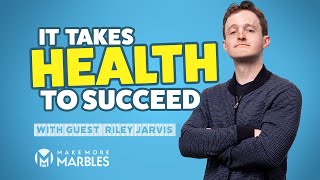
This content was created by Brad Hart. This content was uploaded by Brad Hart. This is a YouTube podcast episode titled "It Takes Health To Succeed - Make More Marbles PODCAST with Brad Hart" (published 2023-11-08). It's an interview-style conversation between Brad Hart and a host (labeled Speaker B). The host and Brad discuss his personal and professional background (difficult childhood on Long Island, college crew, bartending, brief Wall Street stint, real estate, entrepreneurship and Make More Marbles), and—primarily—his health optimization journey. Key topics: habits and mindset, athletic training (crew), dietary changes, lab-driven biohacking (SpectraCell testing), identified nutrient deficiencies (zinc, glutathione, chromium, vitamin D and later vitamin A), hormone markers (testosterone, DHEA), supplementation strategies, and working with high-performing entrepreneurs (mentions of Tim Ferriss, Tony Robbins, Dean Graziosi). The conversation frames health as a performance lever for business and personal productivity.
Questions this video answers
Zinc, glutathione, chromium, and vitamin D.
Vitamin A (mild deficiency).
About 550 ng/dL (he said "I think it was like 5, 50").
25 milligrams (he worked up from 10 → 20 → 25 mg).
At 24 he was about 210 lb (≈40 lb overweight); later he said he weighs about 170 lb.
Chapters
Foreign. Hart.
Brad has over 20 years of experience as a business owner, has managed melt wealth for 16 years. He's written best selling books and has been featured magazines like Forbes Entrepreneur and Time. His own company, Make More Marbles, helps entrepreneurs through messaging, mentorship and masterminds. Apart from business, Brad is really interested in digital money like cryptocurrency and he also lives in Arizona where he enjoys being outside, riding motorcycles and spending spending time with his family. Brad, welcome to the show.
Hey, thanks so much. And you know, as far as that plug in the beginning, I kind of want to do those things. I want to have genius ideas all day long. That's pretty sexy. So I hope everybody listening today gets something really great out of this podcast and gives you a new direction to go in if you want to.
Awesome. Yeah, let's get to it. So I love, you know, everything you're doing because unlike a lot of other entrepreneurs that I speak with, they're very, you know, singular focused in one thing. But you seem very multifaceted. It seems like you've done a lot of travel, you're into so much health, you've done lab testing on yourself, you have a whole spreadsheet of all the supplements you take. So it was quite impressive. So I was, I was kind of interested, sort of on a personal level. What kind of got you started into this whole health journey?
Yeah, so I kind of was healthy, wasn't healthy, was healthy, wasn't, you know, healthy. I had a lot of different ups and downs in my life before I really got it dialed in somewhat. So if you're out there and you're like, well, screw this guy, he's always been healthy. No, it's really not the case. In fact, I got an email the other day from somebody on my list that was like, tell me how much money you started with and don't say it was zero. And I'm like, well, actually, I know why you're asking me that question, because you have a belief. But the reality is, you know, it doesn't matter whether you start money or not. Doesn't matter whether you start with, you know, good health or not. If you're blessed to have finances or great health, which, you know, I didn't actually, at least on the health side, I've been pretty good. It's really your habits that define where that ends up, right? It's not where you start up, it's where you end up. And that's defined by your habits, which if you go full scale all the way back to like, hey, what am I thinking? Right. What are my beliefs that allow me to think that? And what, what actions do I take as a result of those thoughts? And then what habits are formed naturally because the things we do consistently become habits that create our reality. Right. So if you're unsatisfied with the reality of your situation, health, wealth, relationships, whatever, you have to think back to, okay, what am I believing that has led me to think, act and do these things? Right. Yeah. So for me, like my story started on Long Island. You know, my dad was a alcoholic. He was a lumber truck driver. He got hurt when I was two years old. He couldn't work anymore. So that was a rough start, right? I was an accident. I wasn't meant to be. My mom was very sick during her pregnancy. She has to leave by the time I'm five to go get work because she's working in a deli. And now my dad doesn't have an income and they're really struggling, you know, they're going to lose the house, so. So mom leaves to go support us and send money back. And that became a whole thing. So I had to like learn very quickly how to survive and grow on my own. I could just remember being a kid going to school. I had to get myself on the bus. If I didn't. My dad, you know, he was up real late and didn't wake up early in the morning. He'd be real pissed if he had to drive me to school because it was in the sun, was in his eyes the whole way. That was the thing that annoyed him the most, right? That he would let me know that like I got to drive to the fucking zone again, drive you up to school, you should have got on the bus and blah, blah, blah. And that was my dad. And you know, so, so here I am, I'm this kid, I'm eating breakfast at home, which is just cereal and milk, right? And I come to school and I'm exhausted and I'm acting out. That was kind of it. Like I just, by the time lunch came around, I was just thrilled to have a frickin brisk iced tea, which is sugar and caffeine, to just feel a little bit of normalcy again. And I would usually perk up in the afternoon and crash again. And that was like my life for years, that I just didn't understand health and nutrition and you know, I'm growing up in the 90s. What do we know, right? We know the food pyramid, right? So our belief structured our thoughts, right? Which structured our actions, which structured Our habits, which became a reality, which is I was sick a lot and didn't feel good and didn't have a lot of energy and acted out in school. Somehow I managed to make it through all that. And by the time I was 15, 16, I started taking up sports. And it was the first time I'd really done a lot of athletics besides just being a kid. And I felt like shit all the time. And I couldn't believe these other kids just, you know, they could run and hit and jump. I was doing, like, football, and I was always on the sidelines. Cause I sucked and I was trying to lacrosse and like, all these things, and just. I would just wheeze and gasp and like, I had asthma and all this stuff. And I couldn't figure out why. Right. Cause I'm eating the same stuff everybody else is eating. I think. You know, I'm coming up in the same sort of environment everybody else, I think. But it really wasn't true. And when I dug into it deeper, I realized that there's a lot of components that affect your health, Genetics being one of them, certainly. But also what you're putting in the fuel tank. Right. If you got a Ferrari and you put, you know, unleaded gas in there 87, it's not going to run. Right. Right. You really got to go premium, maybe even seek out the special gas stations to fuel that sucker up. And you got to maintain it. You got to. You got to change oil and all that good stuff. And I wasn't doing any of that. I was just eating what was ever in front of me. And a lot of ketchup and a lot of. A lot of sugary stuff, A lot of soda, a lot of TV dinners and, you know, American cheese singles and Kraft singles, potato bread rolls and like, just all the crap that you eat. Chinese food, pizza, you know, stuff that you eat when you're a kid. We look forward to Taco Bell day at school, school lunch, you know, and that can hardly be called food in some ways. So, you know, as I grew, I didn't really have any sense of what, you know, food was or. Or why it was important to. To even consider it, you know, and not even to mention, like, all the chemicals and pesticides and crap that they put in food to prepare it like that. That. So anyway, moving forward into college, we started going on a meal plan. So it was, like, mandatory that you got a meal plan. So, like, you know, mom, dad couldn't pack lunch. It was. It was less affected by, you know, the sodexos of the world or the, the food service companies of the world that were providing this food and the fast food joints. And I started to eat a little bit healthier because I know I had more options, right? So you go into the, to the food hall and they'd have like vegetables and eggs and nice things that you could make on a consistent basis. And it, you know, it didn't cost me any energy cognitively eat that. I just make healthier choices because I healthier choices to make. And at this point I had made the distinction that if I work out I feel better. So if I work out really really hard, I should probably feel really, really good. And I know college is going to be really, really hard. And I'm working to be a pre med and a doctor and I had all these visions and dreams. My grandfather actually died of a heart attack when I was six. So my whole grand plan was to be Dr. Hart the cardiologist. Didn't work out that way, but that was where I was at at the time. So here I am like 18, 19, 20, 21. I joined Binghamton University, which is a very cold place, lake effect snow and you know, you walk from one campus the other at 4:30 in the morning, you go to crew practice and your, your face and your penis are frozen by the time you get there, even if you're wearing clothes. But you know, you, you do what you do and you get there and you know, I can remember working out 18 hours a week to three hour practices, six days a week plus regattas on Sunday and a full course load with extra science credits and all that and three girlfriends and eating 6,000 calories a day and everything I could get my hands on and being shredded with a six pack and operating on four hours of sleep and somehow pulling off a 3.4 grade average after all, or 3.6, whatever it was after all that. So I found out like kind of through that first piece was like if I work out hard, everything else gets easy if I do the hard thing in the beginning. And like there were maniacs on the crew team and if you don't know what crew is, it's rowing, right? There's eight people on a boat, they're all rowing, they're paired up and then there's the cox and the small person on the front of the boat that steers and also yells. So that's what crew is and it's the hardest team sport you can participate in, in my opinion. I'm sure there's stuff that's harder for different reasons. Like rugby and, and soccer and like, you know, every, every sport has a hard thing. But like overall with the things that you had to do to prepare for crew, it's, it's pretty gnarly, right? So I had to be able to run 10 miles at the drop of a hat. I had to be able to do wind sprints uphill, I had to be able to row constantly at full out speed for 2km, which doesn't sound like a lot, but when you're doing it for six, seven, eight minutes, like people would pass out, they would see tunnel vision, they, they would fall over, they would, they would gasp, they would, you know, like you're pushing yourself to your limits to, to beat your 2k time. I can give one example of Jim Warner, who's one of my friends who now we work together on a project actually, who he, he would come down earlier than 4:30 or whatever the call time was to try to beat his 2k time every morning on the ergometer, which is that rowing machine you see at the gym where everybody's doing it wrong. They look like flailing fishes and they're probably gonna hurt themselves. And, and the problem with that machine is nobody knows how to actually do it unless you rode through. So I take the time to teach, but it's, it's been a really interesting thing to see is like everybody does it wrong and the trainers don't know how to train them so everybody just stays doing it wrong. But I, you know, anyway, the ergometer is a beast, right. And if you've never done a 2k time trial, like really push full out and see what you can do. Most people will land in the 9 to 10 minute range, a professional will land in the 7 minute range and a world class person will land in the six or so minute range. And Jim was doing six and a half.
Wow.
At that age like in, you know, people can do crew for a long time if they're really on it, but he would come to beat his time every, every week and sometimes you have to like we'd find him passed out on the floor, we have to wake him up. And you know, he went on to become Dr. Jim Warner and learn how to code Python and now he works at a startup that I help fund. But it's, yeah, he's, he works at NASA. He's like, you know, people who do great things tend to do hard things first. Yeah, right. So that was my first like oh my God, this is amazing. So, okay, one lesson learned is like do hard things, great things may follow. Right.
Got it.
And great things to me were really athletic things. And crew was like that first thing. Even the second year I was on crew, I did it for two years. I didn't even go to the regattas. I didn't even compete. I just stayed on the team to go to the workouts. And my coach is like, you're a crazy person. Why would you do this if not to compete? I'm like, because it just keeps me aligned with my goals, and I'm eating well and I'm doing well, and I just want to keep up that momentum. So I stayed doing that. And this is fun. Cause I haven't talked about this in years. So thank you for allowing me this space to kind of unpack it in my own brain. But. But yeah, so. So I fall off after college. Long story short, right, I come out of school, it's 2007, and med school isn't looking like a prospect for right then, right there. Because I didn't do as well in the mcat as I was hoping I would do. So I decided to defer for a year and try to do it again, right? And I became a bartender in New York City. So all of a sudden, I went from getting up at 4:30 every morning till working till 4:30 in the morning and then going out drinking until 9 in the morning. So you can imagine how that went off the rails. I did that for a while. I ended up, you know, and the market collapsed. And all the bankers used to come in and give me 20% on the dotted line. They went away. And, you know, Goldman shut. Not Goldman, sorry, Bear Stern shut down. Lehman shut down. Goldman stopped showing up. All these people with these expense accounts stopped expending. And pretty much my income went from $500 in cash tonight to a hundred dollars in cash tonight. And I couldn't afford to live in New York City anymore. So I had to move up to Harlem or like Midtown I was living in. I moved up to Harlem and I pounded pavement trying to find another bar job. And I realized that that wasn't going to work. And I remembered a quote that I'd read from Warren Buffett. Warren Buffett was like, hey, when everybody's running out of the room, you should run into the room. I'm like, well, what's a better time to get into Wall street than right now where everybody's throwing shit out the window? You know, when the stock market is down 50%, when the real estate market has collapsed, when. When we're Uncertain if America will continue to be a thing. Like, it was scary back then. People didn't know what was going to happen. We just know that like every day the market would just dive, dive, dive, dive. So like, okay, what if I got a job on Wall Street? And finance had always fascinated me and I decided to do that. So I got an internship. Essentially it was a paid internship for $8 an hour as a cold caller to learn how to become a broker, to get my Series 7 and all that. I lasted at that job a couple months. It wasn't very long, but I had to do the stuff I was doing before. Like, I had those habits of like, you're up at 4:30, you're on the train, you're at your desk by 6am calling England All Day UK, right 500 times in the morning. And then you go and you get a coffee and a bagel and you know, maybe a new tie from the little kiosk on Wall street because you spilled coffee on the first one. And you go back to your office and you sit in that brick room again, you know, at 44 Wall Street, 9th floor, you know, an asset manager. I'll never forget it. And I'll make another 500 calls to the US and then some people would stay after hours and call Australia and other places like that and just hand off the leads to the senior broker. They're pitching Visa stock or whatever it was at the time, which ended up doing well. It wasn't like a chop shop or anything. But yeah, that didn't last very long because I was also getting my real estate license at night. So I decided not to stay and keep calling. I decided, all right, I did enough of this for the day. Let me go do something different. I want to be where the money is. And again, the market had collapsed. I'm like, let's go into this industry. So I got my real estate license at night and I got recruited by a woman named Olinda Turturro who I credit with putting me on the right path. I really appreciate you wherever you are. She got me into this company called Bond New York which had grown from nothing in eight years to having 450 agents and five offices in New York City. And they were like competing with Prudential, Delegates, Element and Corcoran and all these big firms. So I became an agent. Within two years I had five promotions. I had six people working under me. A great mentorship. Nelson. Shout out to all my team members. Shout out to Bruno Noah, who ran the company, gave me a Shot like they really saw the potential in me because I'd been a cold caller. I wasn't intimidated by being on the phone and I had that crazy work ethic as I described, where I would just be there all the time. But the health started to suffer again. Right. So you go from bartending and drinking to now I'm working all the time in real estate and I have, you know, and things are happening. I'm starting to make money. But it's, it's been really challenging to stay on the health track. You know, you're eating out of delis, you're eating bagels and egg sandwiches and stuff like that. I still hadn't really made that connection between eat good, feel good. I had the connection between work out well and feel good. And I was sort of doing a little bit of that. But not the level of crew. Like that just keeps you on, right?
Yeah.
So here I am, 24, I'm 40 pounds overweight. 40 pounds overweight. I weigh almost 210. What do I weigh now? 170. So like almost 210 pounds.
Wow.
Yeah. So it was like a real wake up call and I didn't know what was up. So I'm going to pause now because I've told a lot of the story and I want to just get any questions and clarify anything. But I think that's powerful and I'll talk about the transformation next.
Sure. I think that's really fascinating. I also think it's really cool how when you focus on fitness, it brings everything into alignment, into place. And the fact that you just, you know, went yourself because you wanted to work out.
It was the only lever I had. It was the only thing I knew for sure. If I do this, I'll feel better.
Yeah, yeah. And I think that's so powerful. And I guess, you know, we can go into your transformation, but you've worked with a lot of other top guys too, like Tony Dean. I'm sure you've seen many other high performing executives. Are you seeing them burn the candle from both ends while sacrificing their health? And in the end for them, what usually ends up happening?
Well, it's a loaded question, right? Because everybody's got a different mode. Like if you, if you listen to Elon Musk's biography by Walter Isaacson, which I just picked up, I just started like, that guy had a rough life and he's got a work ethic that's crazy because he's seen hell. He's been there. Right. There's an old Joke that religious people don't want to go to hell and spiritual people have been there. It's kind of like that, right? It's like, I've been to where bad is this, isn't it? And I'm just going to. I'm never going to go there again. I'm going to work my ass off not to ever go there again. And that drives people, and it can be unhealthy to do that. But I think everybody's on a mission, and this. This life ends the same way. No matter what, Whether you complete your mission or not, you're not going to make it out alive. So there's people like myself, like Tony, like Dean, who. They find their level and they're always trying to push beyond it. And the reality is your capacity will increase. As long as you don't try to go from zero to a million tomorrow, your capacity will increase. Or can you close that for a bit? Thank you. Your capacity will increase as you. As you do that. And I found the amount that you could do this, and it's based on science and Steven Kotler's research into flow. The amount you can actually do and stay consistent is 1%. You can do 1% better every day in your skills, your habits, your routines. You can really sustain that. If you start pushing past 4%, you burn out. If you do less than that, you get bored. You're not living up to your potential. But you can increase your capacity over time. I have a huge work capacity, and I've increased it consistently over years in different ways, right? Because physical work is different than mental work, is different than sales calls, is different than whatever, right? There's just creative work. There's different levels of work that you have to increase your capacity for. So when I see somebody like Tony, who, you know, JJ on my team, he's my business manager. Amazing guy. Like their friends, right? So I hear from Tony more often than most people because he's pretty. Pretty busy guy. You know, he's got health challenges. He's. He's. He talks about it publicly. He's had mercury poisoning. He's had other things going on. His voice is. Is. Is in rough shape, but he always finds the gear no matter what. He's. He's serving a mission that's bigger than him, and he's always finds the gear that makes it work. So if you really drill it all down, you listen like Jordan Peterson. A lot of people talk about this. It becomes the vision, right? If you have a vision that is compelling, it will drive you and others to perform regardless of the circumstances, regardless of the shit that comes up, and people who make excuses based on my kid, this one, that one, the house, the whatever obligation that is thrown in life, it's. Their vision isn't strong enough to pull them through that and to find a way to make it happen regardless and stay consistent and be 1% better every day no matter what. So that's really the mindset piece. The belief that I believe really drives people like that. Having been around Tony Robbins, Dean Graziosi, Tim Ferriss, all these people, like, whether they're conscious of it or not, whether they're being driven by pain or pleasure or whatever it is, they definitely have a vision that's bigger than themselves. Got it.
I think that's. I think that's amazing that you see that as a recurring theme in a lot of these other podcasts you'll listen to. And just hearing people's stories of what they have gone through. And no matter what happens, despite the odds, they're still still able to make it.
Yeah. And I would have kept going on that path. By the way, I forgot to mention the most important part. 2010, my dad died. That was the only reason I broke the spell. And I realized, oh, shit, I'm 40 pounds overweight, and now I got to make some changes. It wouldn't happen otherwise. Wow. I would have kept going. So in a way, that was a blessing. It was really sad, but it was also a blessing.
Yeah. Yeah.
Wow.
So fast forward to today. It's very interesting what you're doing with your health, doing lab testing and everything else. And I think you recently got your blood biomarkers tested, Is that right?
That's right. Yeah. So. So picking up the story where we left off. Right. So now I'm 24, I'm 40 pounds overweight. My dad just passed away. I'm sad. Obviously, I've been making some money, but not crazy money. And he had a little bit of money that he hadn't blown through yet. And one of the reasons I'm so interested in investing is my great uncle left my grandfather's stock that became millions of dollars and hundreds of thousands of dollars a year in dividends that. That my dad inherited when I was 16. And by the time I was 24 and he died, was almost gone. So, like, I inherited what was kind of left, like, the house and a little bit of money. And, you know, it was like the first time I could take a breath and be like, ah, okay. It's going to be okay for at Least a little bit where I can like take a break. And I took a break for a year. I don't recommend doing that, by the way. If you ever get an inheritance, don't stop working. That's just, you know, let me put that out there. I did it the wrong way, but I learned. Right. Um, but what I did do during that year was I got my health in order. And that was so important. And I didn't know where to start. But Tim, who I'd met, so Tim Ferriss and I met 2009, I was still working real estate. I used to take lunch when the gym was not crowded. I would go to the gym. And that was when I could fit it in because I had meetings all morning and I was working real hard and that's when I could fit it in. So I show up to the gym in Cooper Square one day. It was New York Health and Racquet Club. And I'm walking around doing my workout and I'm the only guy in there. And then there's another guy who's the only guy in there and he's kind of bald. And I'm like, interesting. Like I kind of recognize this guy, but I'm not sure. Do I have met him somewhere? Is it my client? Like, where do I know this guy? And I'd read the Four Hour Workweek like seven times at this point. So I'm very familiar with his work. So I catch him in the mirror as I'm walking by. Because you don't like look directly at people in the gym. That's just creepy, right? And I'm like, hey, hey, man, are you Tim Ferriss? He's like, yeah, I am. I'm like, holy shit, that's so cool. I've read your book like seven times. Like, oh, yeah, my. I'm 14 minutes in my 15 minutes of fame and all this. He hadn't written any. He hadn't become like the 800 pound gorilla that he is today. He just had the one book that was really successful.
Yeah.
So we chatted for like 20 minutes in the gym just shooting the shit. And we're both from Long island, he's from East Hampton, I'm from Wading River. And we just had a really good conversation at the end. I went back to my workout. He came and found me afterwards. Like, hey man, it's really great to meet you. I hope our paths cross again. I was just really touched by that because he was a hero mind. Right? Yeah. So. So that happened and then fast forward two years now. All this has happened. It's 2011. So 2009, 2010, my dad dies. 2011, he comes out with this book, the Four Hour Body. I'm like, oh, shit. You know, the four hour work. We changed my life so much, and I learned so much from that and, you know, increasing my capacity and productivity and dreaming up businesses and all this cool stuff. What could this do for me? You know, he's a crazy guinea pig. Well, let's see what he's up to. So I. I reach out to Charlie Hone, who's a dear friend of mine who worked with Tim at the time, and he. He was his director of special projects. He says, you know, Tim's doing this promotion where if you buy a thousand Books hardcover, which 700 page book hardcover, that's a lot of books. A lot of weight will do a trip anywhere you want to go. And a lot of people were applying for these trips and wanting to and buying the books. But Tim was like, I don't know if I want to spend 10 days in a foreign country with some of these people just based on who's applying. But he met you, and you guys had a cool bond or whatever, and, you know, you had that one interaction and seemed all right. So he's willing to do the trip with you. So I said, all right, I'll buy the thousand books, right? $16,000 later, we picked. It was like, India, Argentina, or Africa. Like, when am I going to ever go to Africa? And I get to go with one of my heroes. This is cool. Let's do it. And nobody else is on the trip. It was me, Tim and Charlie. And then we went and visited Samosource, and we spent 10 days in Africa. We went all over Kenya and Tanzania. We did the Batamara. We went and did all that cool stuff. So. So on this trip, I got pretty close to Tim, you know, at least I thought, you know, he had other ideas. But that's fine. That's a whole nother set of conversations. And I learned a lot from him and I to kind of witness how he views life. And I got some really great advice from him. He gave me some guidance. But most importantly, I got the book. In fact, I donated 900 of the thousand copies of charity. I got 100 delivered, and it was enough boxes to completely cover the wall of my garage and make the FedEx man very merit mad at me. I probably still have a few kicking around somewhere. I gave them all away as gifts, but I'm sure I still have a few kicking around. But that book really gave me a lot of insights into health and things you could do that weren't like a whole thing. Like, because I had the gear, right. I could work hard, but it wasn't like a whole amount of thing you had to do. I just started with this low carb diet and this low carb diet, you can learn all about it. It's all over the Internet. But that got me to £30 less. And then the spectracell test, which we'll talk about next, was the thing that gave me the insights and the data because I had just been winging it before to know exactly what my body needed, wanted, and was missing. So based on that, which was a whole thing, I had to go. I was in Long Island. I had to take a ferry to Connecticut because it wasn't legal to send New York blood out of the state. That's still that way. It's a very crazy state with the American Medical Association. They have a lockdown on that, which is stupid. Anyway. So I go to Connecticut, I go to the university hospital, they draw the blood. I wait six weeks or whatever it took. They sent me a bill six months later. It was like a very strange process I didn't understand. And I get these results, and I'll share with you these results. I don't know if there's a video podcast, but I have them in my. I had the most recent one in my. In my inbox right now. I can share.
Yeah.
And the cool thing about it is it pointed out that I was deficient in zinc, glutathione, chromium, and vitamin D. Interesting. Yeah. Yeah. And, you know, I will neither confirm nor deny that cocaine is awesome or that I've done it, but when I finally started supplementing these four things, I felt like I was high on cocaine all the time. I couldn't believe how good I felt. Like the up was insane. Like. Like for just making that little tweak by having, like. Most people take a scattershot approach to everything in their. In their life, and they, you know, some of the stuff works and most of it's wasted effort or. Or detrimental effort, but when you have, like, a sniper shot, when you get a test and you know exactly what you're needing and wanting and your body is depleted in. And then you give it just that. It's just like, oh, my God, thank you. Right?
Yeah.
It's like when we get cravings. Like, I think pregnant women have certain cravings because, like, your body intuitively knows it needs that thing to help the baby grow.
It's the.
It's kind of like that. It's like you feel amazing because it's what your body needs and wants. And your body can't tell you with language what it needs and wants. It can't say, hey, dummy, give me more chromium. But when you give it to it, it's pretty receptive to it. So that was a really cool breakthrough for me. And that. That got me hooked on the whole experimentation thing. I was like, this is wild. I can't believe I feel this good. I'm going to do this all the time. Why wouldn't I? Right?
Yeah. You go into that. That new positive addiction. And were those deficiencies the same ones that were there each time you did the test? Testing?
No. No. So they shifted over time. So now the most recent test, I'm actually deficient in vitamin A. Right.
Okay.
So I've been supplementing that. I'm like, okay, cool. Yeah, that makes sense. Right? I don't eat as many carrots or vegetables. I used to. Maybe. Then there's. I forget what the other two were on this time around. I can just pull it up and show you. Let's do that. Am I able to share screen on this? How does it work?
Yeah, let's take a look here. Yeah.
Share screen. Cool, cool. Labs share. So this is a Spectracell test. I don't have any affiliation with the company. I would love to have a deal with them, but I just don't. This is my. This is my stuff. Right. Try not to use it in a. In a nefarious way. But, yeah, it tells you exactly. Okay. Here's all your B vitamins. Here's where you're at. Here's the reference range. And anything that's green is like, we're cool.
Right?
We're in the. We're in the zone. Anything that's red is deficient. So choline, which comes in eggs, that's one thing. Vitamin A, which I mentioned deficient. I'm just under. I'm not like, crazy under. I'm just on the line. Right. So just a little bit more like I'm nudging it back into the right range. And then slim. Right. And again, that's exactly on the line. So these are things that, you know, I've been at this a while. 10 years. I've tweaked and changed stuff a lot. And it gives you a better insight into what. Where you're good. And maybe you need to even back off. Like, you don't want something to be over, you know, over the thing either Too much of a good thing is bad thing. But these things that are deficient, for sure, you want to take a look at, right? And surprisingly, zinc is still a thing that I struggle with, even though I don't drink anymore, which kind of zaps your zinc. That. That also has an effect. But again, this all comes down to I want to feel as good as I possibly can. Because if you have energy and you feel good, you can do well and you can. You can put that into productive pursuits. Right. And I want to feel like, you know, Even though I'm 38, I want to feel like I'm in my 20s, right. I want to feel good. And eventually, you know, maybe that's testosterone replacement therapy or maybe that's some other thing that eventually will be. Will be good. Like, so that's the other thing I pay attention to, is what are my hormone levels? So we did those tests as well. I'll show you those in a second.
Yeah, that was testosterone.
Yeah, testosterone. I think it was like 5, 50. But what I love about this test is, like, it gives you a sense. Like I was a cell bio major and learned a lot of this stuff, but it gives you a sense of how the cell uses this and what your body actually needs and what that, what that means. So, like, if you're missing selenium, this stop happening. Or if you're missing a, this stops happening. And it affects everything in these pathways. And this is probably above most people's pay grade, but it gives you kind of a breakdown of each thing that it recommends for you and where to get it. So that's really helpful. So 12 page report. Super worth it. I think I paid, let's call it a thousand bucks with the labs and the tests and everything. And a lot of it was covered by insurance. With my insurance, I think I ended up getting paid for this because I have a weird setup where it's like they bill based on cash and then they reimburse based on whatever the company would normally pay. So if there's a differential, I end up getting cash, which is kind of cool. So that's awesome. So no complaints there. Yeah, shout out to Sidecar Health. They're awesome. Sidecar Health is great. Not an affiliated, also just a fan. There's that down below.
Was this all blood test?
Yes, that's all blood tests. I think we took eight or 10 vials, something like that. I don't have an issue with blood. I'm actually becoming a phlebotomist. Because I don't want to pay IV therapist to come in. It's 400 to come to my house and do an IV, so I'll just start doing it myself. That's in November. But this also gives you a sense of testosterone. Like I said, 550. If this starts dipping under 5 or maybe 450, I'll probably consider TRT because even though the range is 250 to 1100, you have a lot when you're young, as a young male, and this is not appropriate for women. So just la, la, la. Right. Earmaster, this one. But, you know, if your estrogen is too high as a man or your testosterone is too low, that really can affect you. That's a. That's a big one to watch out for. And then my free range is actually pretty good too. So, yeah, freeze.
Looking pretty good.
Yeah. So, yeah, just to give people a sense.
Testosterone is so important for males, you know, one every year at the age of 30, it usually goes down by about 1%. And there's. It's all the microplastics in the water bottles we have from deodorant, from parabens.
We're being assaulted. It's rough. Yeah, yeah, it's really rough.
It's really everywhere. So first you have to eliminate that, and then you have to get rid of, you know, all this junk that's inside of your body. And that usually requires a detox chelation. And once you finish that, then you can plant the seeds in this new garden that's not full of weeds, and you can really start going into a positive upward spiral.
Yeah. So this DHEA was another one that was really effective for me as far as mental health. So when you've had a lot of trauma as a child, and I don't want to go into all that right now, but when that has happened to you, your body, it's harder to feel good. You're always in protection mode. You're always in fight or flight. Even when things are great, you're always looking for the other shoe to drop. Like, these are all things I deal with on a regular basis and I'm working through this stuff, but it takes time, Right? So dhea, as far as, like, mental health was. Was something that once I got my levels balanced, really helped as well. In addition to the precursors and all the different things we talked about earlier with zinc and all that, this was a game changer. So I actually supplement 25 milligrams. I worked up from it because it was too much at first. So I think I started with 10 and then 20 and now 25. So that's been huge. Trying to think if there's anything else. This is only a five page report, not crazy, but yeah, this is all the blood stuff I do once a year.
Amazing. I think that's great. It's really interesting where the future of health is headed, especially with high performing entrepreneurs. They want the 1% edge in everything that they do. And if you can hack your inner machinery and turn it into a Ferrari Instead of a 1980s Toyota Corolla, you're going to be a lot more optimized. And the things that you're doing, you'll be able to achieve more with less output because there's more of that efficiency happening inside there. So it's a great place to be whenever that happens.
Yeah. So, man, I'm, I love my life. I'm so blessed. I have great relationships. The business is doing pretty well. We're growing our money, we're growing our, our, our community. You know, all the things that they look at, like if you look at those 100 year centenarian studies and blue zones and stuff, like it's, it's use your body, you know, walk uphill both ways. It's not going to kill you, right. It's actually going to keep you alive. Have community, have a purpose, have a vision, right. And just that, that's such a creative act. I love setting a vision because like that's where the juice comes from and it drives you through. Because we all start with the vision and then it's like, yeah, exciting. And then the work hard, the hard start and then it, like you're in a pessimism valley. It's like almost the valley of despair. And then you got to come back to success and normalcy. Like we all go through those ups and downs in life and you can read about all that in quite a few places. But I study a lot of this and I'm like, well, what's the difference between people who really crush and really don't? And every single time it comes down to their vision, which drives their beliefs, which drives their thoughts, their actions, their habits and their reality. That's it, that's it. It doesn't take much, gang. I can make you rich in five years. I can make you rich in five years. It's not a question. I could set you up on a real estate team fundraising for deals where all you have to do is do one qualified call a day, 250 work days a year and raise two and a half million dollars, right. And you'll, you'll be rich in five years. You'll make an average of $700,000 a year. If you just stay at that, at that pace, or 500,000 a year, whatever it is like you'll get rich. It is not, it's not crazy. You know, it's like this is, this is a hackable thing. But if you're going to be happy and fulfilled, you need to have energy, you need to have something that excites you. You need to have something that motivates you. And you won't take those actions to get rich if you're not those things. So, like, people have a lot of beliefs about what it is to create wealth. It's a lot harder than you think. But I think it is for a reason because you wouldn't start if you knew how hard it was.
Yeah, yeah, absolutely. Love everything you said, Brad. What are your top recommended books? I'm sure you've read a lot for our work week.
That changed my life. I'm really digging Elon Musk's biography right now by Walter Isaacson. He's the guy that did the Steve Jobs biography and Benjamin Franklin and a few others. He lived with Elon Musk for three years and saw all his crazy tirades and all the stuff with Twitter and all the stuff with SpaceX and all the. Just all of it. Right. Just complete, unfettered access to Elon like a fly in the wall for three years. And he wrote the book and it's, it's awesome so far. I just got it yesterday. I'm still reading it or listening to it rather. And he basically told Elon Musk after he wrote it and published it, he's like, don't read this. Just keep, you just keep doing you. You're not going to like this book. So I'm like, oh, I'm intrigued. Let's go.
Yeah, it makes me want to read it too now.
But he talks about growing up in South Africa, which was a war torn country when he was a kid, and like all the crazy children, Lord of the Flies type shit that happened to him as a kid that turned him into who he is, right?
Yeah.
And he doesn't talk about that a lot. He's kind of a goofy, nerdy guy that just builds companies and wants to save the world. But like he is driven by a vision that most people can't even see. Like vision is hitting a target. Is, is seeing a target that most people can't even see. You know, like there's, I don't know, I'm muddling the saying, but it's like hitting a target you can see versus not even be able to see the bigger target. Right. This guy sees the bigger targets like, hey, we are all going to die if we don't get to Mars. Yeah, we are all going to die if we don't figure out electric cars. We are all going to die if we don't figure out whatever. Right. Solar. Right. That's what he pays attention to.
Yeah.
And he's a flawed human. It's fun to watch on a world scale. You know, I'm not like a Elon hater or Elon lover. I'm just saying like he's a fun human. He's doing it right. In my opinion, like he's going balls out and he's doing everything he possibly can in this lifetime because he knows this is the one we got.
Yeah.
So that's a great book. That's a great book. What else? The 12 week year is a great book to redefine productivity. That's taking a 12 month year and realizing like, oh shit, that's a long time to plan for. A lot can change in a year. And just breaking it down to what can I do in the next 12 weeks? What are one or two things that if I just inputs equal outputs, if I just put the inputs in, it'll over engineer the outcome. Right. That's what we want. So that's a great thing for salespeople, that's a great thing for business owners. It's a great thing for like just taking all the noise and putting it aside and be like, what am I going to accomplish for this 12 weeks and then going on a sprint and then taking a week off and then doing it again. Right.
Amazing. Thank you so much for coming on today, Brad. I learned a lot today. Where can people find out about you, what you do? Yeah, all of your work.
So we got a lot of stuff out there. One of the things we do is we help people to launch, fill, run and scale profitable mastermind groups so they can add at least $100,000 in profit to their business, if not more. We've had people add millions to their business, so it's definitely scalable. And we want to be able to do that in five, ten hours a month, ongoing delivery. Right. So it's a better model if you're a coach or consultant or speaker, author, whatever it is you're doing. If you're doing it one on one or courses or whatever that Put all that stuff aside and maybe check out building a Mastermind as a core offer because it's the most leveraged way to build your business on that side. And it's a great way to build relationships too. Like, some of the best people I've met have been through Masterminds. I would say 90% of the most wealthy, successful people I've met, fulfilled people, have been through Masterminds, even though we have a big list and all that great stuff. You can learn more at mastermindtomillions Live. It's an event we run twice a year with my mentor Jay, who's been doing this for 30 years. So there's that. You can check out my book on the topic. It's a bestseller. It's called the Eight Minute Mastermind. You can go to eightminutemastermind.com we'll give you some free resources, bonuses. It's a free plus shipping offer. So you pay six bucks. I'll ship it to anyone in the world. It's guaranteed. If you don't love it, I'll refund it. And what would be the last thing? If you're an investor out there and you're like, yo, I want to learn how to invest. That's my wheelhouse. I love investing. I ran a hedge fund that was very successful. We did 106% in a year. We're building a massive real estate REIT. It's gonna be a billion dollar REIT in I would say 10 years that we're about to launch. So definitely check us out. And you could start with that over at moneymastermind Live. Three buckets. Moneymastermind Live Three buckets. I don't know when I'm running another Money Mastermind, but they're awesome. I bring in like a guy who did $5.2 billion in deals, a guy who's done 400 exits, a guy who's, you know, top influencer, marketer's now 120 million in Instagram and like all this great stuff. So you can get all that at that link.
Amazing. We'll put all that down in the show notes below. Thanks again, Brad. I appreciate it.
Thank you, everybody. Thank you for letting me tell my story. I don't get to talk about this stuff very often, so I hope it was valuable for you and I hope it gives you some new rabbit holes to dive down. And if you want to check out my supplement sheet, you can also go to Marbles link supplement that's free, no pay. Just go check it out and I update it every six months or so.
Amazing. We'll put all this down in the show notes below for everyone to access as well. I hope you guys enjoyed the show. If you'd like to learn more about how sleep can benefit your personal and business life, visit thesleepconsultant.com.
More from Brad

The #1 Reason AI Isn’t Working for You (Yet) #AI #businessowner #founderenergy




What tasks would the best assistant ever be able to do for you? #BusinessSystems #BusinessOperations



Nobody expects you to use a harder way when there's a better way. #AI #businessowner

Which side of the table will you be on in 2026? #AI #Mastermind #BusinessOwner

