Make More Marble Podcast with Brad Hart guest Riley Jarvis - Supplements, Biohacking, Energy & More!
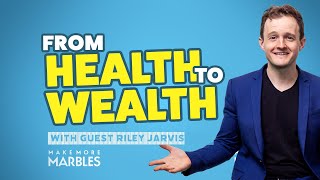
Brad Hart interviews Riley Jarvis, founder of The Sleep Consultant and Performance IO, about sleep optimization, supplements, and biohacking. They cover lab testing, habit-stacking, and health tech gadgets for entrepreneurs looking to boost energy and focus.
Chapters
Foreign Facebook.
What's up everybody? Welcome to the Make More Marvel show. My name is Brad Hart. If you haven't checked out Mastermind to millions yet, you can go do so at Mastermind to Millions Live. It's the number one event to build out, fill and scale your Mastermind group. If you are looking to do that, we have a really special guest today. Again, I'm always meeting interesting and wonderful people. This is a great platform to kind of dig into what makes them tick. They are world class performers, incredible entrepreneurs, people that have a huge giving heart and they're looking to make more marbles, not take them away.
Right.
They're not the Hungry Hungry Hippos. So Riley Jarvis is somebody who I just got connected to by a cold DM on school of all places, which is Sam Oven's really cool little platform that we're all using now that is like Facebook but less noisy. And Riley, you're just, you're an awesome human. We had a great little chat and I wanted to dive deeper onto some of the things that you're really geeking out on. So first and foremost, I'd love for you to introduce, introduce yourself in 60 seconds or so and we can go from there.
Sure. Well, first of all, I appreciate you having me on. It's always nice to meet like minded people who know Sam as well. But yeah, my name is Riley Jarvis. I'm the founder and CEO of the Sleep Consultant, but and also Performance IO. We help entrepreneurs increase their productivity, performance flow, so they can make more money, their business, deeper relationships and everything that goes along with it. I've been doing this for about, you know, 10 years now myself and I can go into a little bit about my story, but it all started from being diagnosed with Crohn's disease and autoimmune disease and basically putting through remission one year later and haven't had any symptoms since. So we can definitely dive into that. But that's kind of what sent me on this whole journey. And yeah, it was definitely a blessing in disguise and so far it's been very rewarding.
Yeah, I feel like the journey is important. Right. Because I grew up in New York and it was very work a day culture. You know, you show up on time and screw your health and your feelings. Nobody cares.
Right.
And I worked my butt off, you know, like I went from college where I was on the crew team and like perfect health and 18 hour a week training to by the time I was 24, 30, 40 pounds overweight, maybe pre diabetic at that Point, like really rough drinking a lot, that kind of thing. And I just got tired of feeling bad and, and had to shift some things. So, you know, the, the, the long story, very, very short was I found out about Tim Ferriss. I read his book.
Yeah.
Went to Africa with him for 10 days, got to meet him and all this stuff. And I, I went really deep on the diet that he had in there. That slow carb diet, that's what he called it.
Yeah.
And you know, did that for a while. I lost a bunch of the weight loss, but it wasn't quite all the things. So when I went to dial in my health a little further, I did this thing called Spectracel. I don't know if you know what that is. And it was like a micronutrient deficiency test. And this thing blew me away because it told you exactly what your levels were of all these different micronutrients. So zinc and vitamin A and vitamin B and chromium and all these things. I found I was deficient in four things. I was deficient in zinc, chromium, vitamin D and glutathione. And when I re. Added those supplementally into my life, I felt like I was high on cocaine all the time. I couldn't believe how good I felt. And you know, again, that's all. You don't know what you don't know. Right. It's a comparison. We can't, we can't understand the world except through that lens. So for me, I became an evangelist. You know, I, I told everybody to do this and it wasn't easy to do because like New York wouldn't let you ship blood out of state and there's a whole bunch of restrictions and it's kind of the mafia, I don't know, whatever. But yeah, I'd love to hear more about your journey as well because I've been at this for 14 years, since I'm 38 next week. And I'm like, yeah, I'm always looking to learn new little tips and hacks and tricks.
So it's always optimized. Yeah, you know, mine I really got in around when Tim Ferriss was doing it too. You know, with the four hour work we kind of got, you know, it's interesting for us entrepreneur types, we kind of look at unconventional things, whether it's health or whether it's finance or whatever it is. And for me it was really no different. I originally took my degree in finance and I kind of wanted to go down that, but I was kind of data driven. But I was also equaling to health. But it was at that point that Crohn's hit me. Around the age of 21, 22 years old. I'm 33 right now. And it was after, it was at that point that I basically, I was forced to quit. Quit my finance job and kind of fell into a deep depression because side effects from the medication were actually making me feel worse. I was, you know, I didn't really know where to turn. Doctors told me that, you know, this is all we can do for you. So I had to take help into my own hands and kind of start up first principles. So that kind of was just, you know, looking up online. I remember the old forums of like selfdecode.com, tim Ferriss and some of these other ones and Masterminding, because what's around today in terms of health was definitely not around back then.
It was, we're living in Cambrian explosion of science data. It's pretty wild.
There's.
You can get convinced of anything at this point. So it's wild.
I know. So we're so lucky now for everything that we have. But yeah, back then it was just, you know, it was all I focused on. I would study it for like 10 hours a day trying to hack my health. Became a biohacker. Went into like Dave Asprey, Ben Greenfield, some of those old health blogs and really just trying to fine tune. Then I attended Masterminds. And then it was kind of seeing functional medicine doctors spending tens of thousands of dollars on my health. Kind of give it the root cause where it was all coming from. You know, one month, I would exercise one month or dress supplements, then sleep. What it was interesting with sleep because once my sleep improved, it's like the inflammation started to go away and all this other stuff came into the mix. But it was getting to the root cause instead of just a band aid on the, on the, you know, temporary solution. So it was at that point, one year later, went back to doctors and doctors said I didn't even have Crohn's. And even today it's been, you know, the symptoms have not even been there at all. So it's really interesting how that works. You can have. So then what I sort of learned from that is, you know, you could have a gene for whatever it is, but it's how that gene expresses itself based on your environment. And so you could have all, you know, not given the best roll of the dice in terms of genetics wise, but if you have a great environment that those genes don't have to express themselves. So express the good genes, don't express the bad genes.
Yeah, so we're talking genetics versus epigenetics, which for people that understand like you have the code, but the code doesn't necessarily run unless the environment says for it to run. So that's a, that's an important distinction.
Yeah, yeah, definitely. Um, so it was really at that point that it allowed me to, I just saw, you know, a new, a new way of life. And then after that point just started helping out people out locally, um, kind of made a local name for myself and then it kind of expanded to today to, you know, internationally what it is helping people and sending lab test kits to their house and analyzing everything kind of from the ground up.
Okay, cool. So if somebody's just learning about you and what you offer, if you could give the kind of 30 second elevator pitch of what it is. Exactly.
Yeah. So what I do is it's, I primarily start out sleep, but what I do is I work with people to optimize their diet, the routine, their, you know, their sleep environment, their supplements, their exercise regime, pretty much every single facet of their day to day to allow them to lower inflammation in the body and increase the, their output that their body's basically able to make basically their inner machinery. So if you think of your body runs like a car, we really want to increase that inner machinery. So you run more like a Tesla versus a 1993, you know, Toyota Corolla.
Don't shit on my Corolla. I had a good time, so. That's awesome, man. So, so yeah, I mean, now 14 years later, you know, from my perspective, this is like a must. Right. So every year we go and get the test, we get the spectracell and make sure all the blood panels are right. And you know, there's things that show up in your blood test that an average doctor with an average medical education will tell you are wrong. They're, they're way off. Like my cholesterol is actually pretty high, but the, the ratio, if you look at it from that perspective, is optimal or better. Right. And obviously life insurance companies have written huge policies on me, so they don't expect me to die anytime soon. I think they have better data than the doctors, to be perfectly honest. So they're not worried. I'm not worried.
Right.
So, so my thought for you is like, how do we start to understand what to test for then? What do we do with that data once we have it? And really I want to kind of get to the place where we're encouraging people to kind of become a little more knowledgeable about this stuff because so many people don't think about it, they don't have any kind of workflow for it, they don't have any routine around it. Uh, and it's not about overnight becoming like a super biohacker, but it's like what can you, where, where's the, like the, the one thread you could pull to get started?
Yeah, you bet. So I think the closest thing that you can do is going to your local doctor and just getting blood test drawn. I would say some of the most important there, it's getting your thyroid, you know, TSH, T3 free T3, T4 thyroid, TPO antibodies and really just getting a full spectrum there. The second best you can do is you know, overall hormones, if, if you're a man, testosterone, you know, free total S, H, G, B albumin, magnesium and some of these other ones, those are like the core ones you can get. And the first ones you wanna start with are ones that are most accessible to you. So instead of going advanced, right its way to more functional testing. What are the low hanging fruit that you can do just with your doctor and just you know, screening for any deficiencies that you have. Like do you have potential slow thyroid or deficiencies in your vitamins or are you deficient iron or B vitamins or anything like that? Once we get that screening out of the way then we can hyper optimize and go further down. But we just wanna screen out because a lot of people don't realize that they may have some. It doesn't have to be a disease state, but it could just be, you know, sub functioning of some kind of gland or whatever that is in your body.
And your body's really great at creating a hack. Like if it's not getting enough vitamin A, a bunch of other things get borrowed from. Like you can look at all these different charts of like oh, this leads to that leads to that. So it'll compensate really well for a while and then crap out. So you'll, you'll, you'll be in like a pre disease state for a long time without realizing and your body's just compensating, compensating, compensating. One day it'll just give up and you'll end up with a, with an issue and you can get back to health. But it's better just not to have those, those issues to begin with. It's like if you're driving your car around, you never change the oil It'll do okay for a while. Maybe it'll go 10,000 miles, maybe it'll go 20,000 miles, but one day it's going to crap out. And there's no reason to. To subject it to that. You just want to be, you know, garbage in, garbage out. You want to be putting good stuff in your system.
Totally. It's. It's really comes down to, like you just said, it's kind of the backup generators or the backup reserves of your body. We. We really want to not try to use those backup reserves because when we start to, that's when we're really, you know, tapping into those reserves when we really need them. And that's when people can start feeling burnt out pretty fast over time. Yeah.
And. And you're not getting, and I'm sure you could speak to this, you know, having been a Crohn's efferer, you're not getting the type of nutrition from food that even a few generations ago humans were getting. Totally planting in good topsoil with good fertilizer. Like, all our food has been stripped to. To the bone of minerals. And you can pay money and get better food, but also you can supplement. And I'm not saying wine is better or whatever. We could argue about that. But the reality is, even if you had a great diet and all your stuff comes perfectly, you know, sourced and all that, you're probably going to miss something somewhere.
Totally. Yeah.
It's just important to know what that is. So, yeah, data and science. You're gonna have a hard time because a lot of people take the shotgun approach to supplementation. It's like, I'll take my multi and forget it. Well, you know, some of that stuff you need. Sure. And some of the stuff you just don't. And maybe it's actually poisonous or like, you can overdose on vitamin A, for example, and a few other things that are. You're really important to pay attention to and keep in the right range or levels.
Yeah, completely. And I think that's, you know, the luxury we have in today's generation is we can, you know, have precision with the testing that we're having. And like you said, like, we can take too much of one supplement. There might be deficiency. Like if we take too much zinc, we might be deficient in copper or, you know, there's all these different examples that we can have. So having it that way is a lot better opposed to, you know, we heard take this supplement from our local health food store rep said, then another guru or YouTube video told us Take this. And eventually we're collecting this whole supplement graveyard and we don't even know why we're taking it anymore versus, you know, we find out what exactly we have to take and then long term we can actually save money because we just take the essentials and what's needed.
Yeah. And I just want to point out, like, I used to worry about the cost as well. And I've gone the rabbit hole with every. I've been self employed since I was in my early 20s.
Yep.
So I've gone down the rabbit hole with every traditional and non traditional insurer. I've tried them all and I finally found one through one of my mentors who runs a family office called Sidecar Health where they sign you up. It's, you know, whatever it is. Monthly, they give me up to 2 million a year in coverage, but it's on a cash per cash basis. And what that means is basically they go out, they shop it to all the different insurance carriers. Whoever gives them the best rate, they get that. And then whatever you paid, you either get a credit or a debit.
Oh, I like that model. Yeah.
So it's like they're, they're sharing in these, these expenses with you. So if you have like a run of the mill visit, it's like whatever, 100 bucks.
Yeah.
They might pay 50 bucks, they might pay 150 bucks. I don't know. But sometimes when you're doing like a big surgery or, or something that's more like a blood test, like that blood panel with all the stuff and the follow ups is like a thousand bucks. I got paid an additional 500 on top of that.
Wow.
We're just going. Which I can then credit to anything else I use. I went to the emergency room last year. I had something stuck in my throat and it just wouldn't go. I went. It was like an 8,000, $9,000 bill we racked up. I got paid to go to that emergency room visit.
Wow.
So I had money on top of that additional. Which is crazy to think about.
Yeah, that's crazy.
So if you're like holding off for money reasons, that might be a solution to look into, I think. So far so good. I can't warrant. Insurance is a funny thing because you buy it and they give you one thing and then when it actually, it's when you use it, that's when, that's when you know if it's good or not. So I would never give somebody a, you know, a testimonial if I hadn't actually Used it. But you know, those are two examples where it really worked out great for me. And they gave me like 12 chiropractor visits a year. And cool stuff like that. We even get our couples counseling paid for.
Wow.
Which is wild, you know, so like, that's wild. So, yeah, that's. There's, there's starting to be better solutions out there. And I just want to give people a little bit of a sense of that because I get it. It's a line item. You're trying to, you're trying to adjust things. You're trying to make more money. You're doing this, but invest, investing in your health, your energy. You'll be able to make more money. And one thing's gotta come first. So you can either burn yourself to the ground and hope you don't get sick or dead in the meantime, or invest a little bit of money in your health and get way more output on the other pieces. Like sometimes I have too much energy. I'm like, what do I gotta do to use this so I can go to sleep?
And I think that's what it comes down to. Because for entrepreneur types, they really want to have the most amount of output. How do we compress our work window and get more done in less time? Imagine if you could take your eight hour workday to and compress that into six hours. Now you multiply that two hours of additional time or days, weeks, months, years. That's a lot of additional time. Spend time with loved ones, do another side, hustle, you know, do things that you've always put off. You know, the opportunities are limitless. It's all these, take a nap, take a nap.
Yeah.
Do what you do as you have to do. But yeah, like you said, it's all these second and third order consequences that we don't realize that when we get our output working, we kind of focus on the inside first and then the outside second. You get so much more out that way.
Well, and that's the thing. Like I quit drinking alcohol 10 years ago, plus now I've had a few back and forths, but like generally speaking, off alcohol for 10 years.
Wow.
People don't understand how good you will feel.
Yeah.
Until after the fact. Because most people take it for granted that they're getting drunk every so often and they're waking up hungover every so often. I haven't had that in 10 years.
Yeah, it's been great.
And how I feel now, I wouldn't trade it for any, any drinks, you know, and it comes up from time to time when, you know, a situation arises and I'm just like, no, I just want to feel good. That's the most important thing to me. Even ice cream and sugar and shit. Like, I'm starting to really get to a place where I. I want it. And then I sit with it for a minute, wanting it. Then I'm just like, no, I don't actually want it because I don't want to feel like crap in two days, you know, and it. Yeah, there's always a delay between what you feel now, which is amazing because sugar is amazing. And it feels great when you first start eating it, versus two days from now when I'm depressed and I can't figure out why.
Exactly. That's what it comes down to. And, you know, a lot of people are just stuck on a negative addiction, Whether it's, you know, drinking or sugar. I mean, we all have cravings like that. We're human beings. But once you get on that other train of positive addiction, you see what actually feels like, you'll look back at your old self and not want to go back to it. And you're like, why did I even do that in the first place? But it's hard to see that when you haven't made that jump or leap yet. But it's all about baby steps. You don't have to do it overnight, but, you know, implementing systems and doing all these different strategies to make it as easy as possible so you can stick out and make it consistent.
Well, and I'm sure you're geeking out on this, too, because I am. And we were in that kind of crew with Sam and everybody. But the guy rion that bought consulting.com.
Oh, yeah.
He works with Steven kotler. I've been following Kotler's work for 12 years. 13 years. Something like that. Like, we've met each other. I text him from time to time. So Steven's, like, really on my radar. I had no idea that rion and Steven work on the flow collective. So when you start adding stuff like what we're talking about, having that energy with the ability to focus and the attention and the work product that you're creating with flow. It's like you can thousand x your productivity.
Oh, yeah.
It's really wild. And we're not talking about thousands of dollars a month or tens of thousands of dollars a month. Like, if you're going to hire an employee without optimizing this first.
Yeah.
I think you really owe it to yourself to optimize this first.
Yeah.
Why send money into somebody else's pocket before you put it invested into yourself first. You know, if you got even another two hours a day of real cognitive work done, that's like, you know, an additional. It could be a million dollars for your income. Who knows, right?
Yeah. Yeah. And I think we talk about that, you know, in business a lot. It's like, what is the ROI of this, you know, business? The more efficient we make our business, the more output from our business we can get with less input. But the same with our body. Like, for one unit of input, we can get 10 times plus output. And the investment of the ROI on that is just, you know, unfathomable. Really. Yeah.
And people. That's the other thing that tends to happen. I grew up in New York, hard charging, you know, a lot of Jewish influence, a lot of Italian influence. And we're all eating carbs and drinking coffee and. And bagels and cream cheese and all this stuff that just kind of comes with the territory because we had, I think underneath the surface is there's a myth of the separation of mind and body.
Yeah.
When in reality, there's. It couldn't be further from the truth. And people are starting to wake up for this. But, like, I'm watching suits reruns right now, and like, Harvey, who's obviously an Adonis, fit guy, actor, usually takes care of himself. He's eating bagels and drinking coffee all day.
Yeah.
That guy with that job would never survive that long.
No, not a chance. Yeah.
You know.
Yeah, that's so.
So we're being lied to in some way, shape or form, or it's lazy writing or whatever it is. But the reality is, like, real top performers, they treat their body like the Ferrari that it is. They don't put shit in the gas tank.
Exactly. Yeah. And once I think you're right and once you see it that way, it's really easy to make some of those decisions. And it becomes effortless because if you see the outcomes that you want, whether it is more money and you have that purpose, you know, what is the fuel to go into that purpose. And that's everything that you put in your body. It's, you know. You know, I would say for the first, like, three months, it's a little bit difficult to hop on this new train of different habits and stuff. But after that, it becomes pretty effortless once you rewire your brain that way.
I kind of have a hack for this too, which is helpful, is pick one. Pick one thing.
Yeah.
30 days. Do a 30 day challenge. You do 12 of those a year, that's 12 things you've changed about yourself. In three years, you've done 36 things. You're an entirely different person.
Totally different.
And it's something you can actually stick to because it only takes willpower for the first 30 or so days. Sometimes a little more, sometimes a little less. Once it becomes a habit, you don't think about it. So I've been stacking habits for 10 years, 12 years, years, 14 years. That's however many we could do the math. Hundreds of habits. I've added. I'm not even close to the same person I used to be, so you could do that too. People take it for granted that they are who they are. In reality, you're just your experiences up till now, your beliefs up till now, and the consequences of the decisions you made up until now. And those can all change. And here's the cool part. Let's say you had a stock portfolio and you could get a 1% return every single day on your stock portfolio. You would have not a 365 return in a year. You'd have a 3778 return. With compounding. Now, I don't know a lot of traders that get 38x a year on their money. Yeah, but you could absolutely get those kind of gains in your habits and in your skills and in your mindset or more. And it's exponential. And it, it just, you do that for a decade, it's, it's unbelievable. Like, you know Bezos, I just watched a documentary on him. Started Amazon in 1994. Now he's one of the richest men that's ever lived, launching dick shaped rockets into space and hang out with supermodels. He used to be a nerd. Yeah, I used to sell books. Now I sell whatever the I want. Like, yeah, 30 years is a long time. But it's just that kind of stuff adding up over time. It's not like he, he woke up one day and became that guy. He worked at it for 30 years and there he is, you know, and like people give up too fricking soon. They give up in a month or 60 days or 90 days. They're just not playing the long game. And we may live 150 years, I don't know. Like, but people on this call right now, barring any, you know, bolts to the head or car crashes or any shit like that, I think we can live over a hundred for sure. And maybe as long as 150, 200 years with replacement parts and 3D printing, like, there's more stuff coming. So if you could just stay alive and stay as healthy as you can until that point where we hit that singularity, who knows where you could end up? So if you love life like I do, and I know you do too, Riley, stick around. It's only going to get better.
Yeah, it's. It's really going to get better and better. And that's what they say. And that's one. Why longevity. The topic of longevity is becoming such a popular topic right now. It's like, how do we live long enough so the technology will be around to where we can, you know, maybe turn back the clocks on time and reverse aging or stop it entirely, who knows? But the future is really exciting that way. What the next 10, 15, 20 years will hold is. Will be revolutionary. But back to what you said. I think it's so important is it's really easy for people to just see all these different habits and to not even start, because it's that analysis by paralysis. But if you make just that one step each month and just focus on that one thing, you'd be so surprised by how consistency in that compounding effect will work in your favor. And when you just relatively feel better, like if you feel 5 or 10% better, that gives you much more fuel to want to do more things. So at minimum, try one a month. But just by how you feel, you'll be in such an upward spiral that you'll want to be doing maybe two or three or five things new a month. And. And it's something that you don't.
Don't overwhelm yourself and fail either.
Right.
There's a. There's an up limit, but absolutely take on as many as you feel you can sustain. And don't beat yourself up if you fail. Just get back on the horse. Like, I don't meditate every day, but when I do, I feel better. So I keep trying to do it as much as possible. I think my longest streak is like 16 days in a row.
Nice.
You know, it's good.
Yeah, just water under the bridge.
That could be a good one to start with. You mentioned water. Start with water. If you just drink water for a month.
Yeah. Try that for a month. Yeah. Do that when you first wake up. Yep. First wake up, you lose about a liter of water from your breath alone while you sleep. So just have, you know, one liter of water when you wake up. Put in some. Pick a million sea salt, squeeze lemon in there, see how much that changes your day.
Yeah. And your Poops.
Yeah.
So. So Riley, I know you have a company that helps people with this. How can people get started? What's the offer?
Yeah, definitely. So you can, pretty easy just go to the sleepconsultant.com on there. There's a bunch of free resources. You can look at all the best biomarkers. The complete masterclass. Everything on there is free. How I work with people though is I send lab tests and kits directly to their house. We analyze about 2300 biomarkers. Your genetics, your hormones, your gut, thyroid, everything A to Z and we see where the bottlenecks in your inner machinery. And then I'll also send you an oring. It will track your sleep and mount on your biometrics every. And there you go every day and night for up to three weeks. And in this compressed three month window, we're usually able to make people feel extremely better, whether it's focus, energy, stress, any of these things. Because you know, we give the body what it needs and at the end of that three months, if you don't feel it, then I just give every full refund, full money back.
But that's how no risk on your part, that's great. And then what are the things like, because I'm pretty dialed in at this point, but what are the things that people miss routinely that are big wins, that they just don't consider, like what you don't know that you don't know kind of stuff. I'm always asking that because the further you go down, the diminishing returns happen and you're like, oh yeah, I really want a new cool thing I can try out. So what are the things that like, are really blowing you away lately?
Yeah, so I think, I think the number one for a lot of people is, you know, the basics are the most important, the fundamental thing. So when it comes to sleep, your energy, cold bedroom environment, you know, making sure block the blue light before you go to sleep, don't eat too close to bedtime, you know, get a lot of, you know, good clean foods, filtered water, everything like that. But once all that stuff is out of the way, you can go pretty advanced on some of the supplements, you can go pretty advanced on some of the technology. So just to give some examples, so if you're feeling stressed, one of my favorite gadgets to use, you can use, you know, it's called Apollo Neuro. You can increase your heart rate variability. There's another device called heart math that's really good called the inner balance and that's increasing your heart Rate variability. Just like a muscle when your heart rate variability is kind of the overall resilience of your body. I kind of see it as the master score of, you know, an aura ring or whatever it is. And the higher that is, the better. You can also use another device called sensate. It's called getSense8.com and on there it's kind of like a pebble that vibrates on your chest before bedtime. And like no matter how stressed you are before bedtime, within 10 minutes for most people I've seen use it, it just lights out. You can do like focus, flow, all these other different exercises. But these are like really good forms of tech that you can use. Other quick ones, those, you know, like blue eye glasses. My favorite are the TrueDark Twilight classes by TrueDark. Those are really great. So check those guys out. Also on your computer, you know, kind of that red light filter is really important, but also screen flickering ensuring that, you know all that's good. So there's a software called Iris Tech I R I S T e c h.co and that's one of the best ones that you can use. There's a, you know, other ones called, you know like the, you know, the filter and stuff like that. But this one's just really next level. So those are some things that you can play with. But yeah, you can go way down the rabbit hole with this. There's also a device if you're looking to increase your brain performance. It's called Sense Sens AI and that's going to be really cool. It kind of combines neurofeedback, photobiomodulation which kind of, you know, sends infrared into your brain to increase mitochondria and a few other things to heart rate variability. So really exciting stuff ahead with some of these forms of tech. But besides that, you know, supplements depending on what you want to do. If you want, you know, nootropics, take a look at Alpha Brain or Neurohacker Collective. They got, you know, one called Qualia Mai is really good. You know, it's just all this stuff. So I don't want to overwhelm people, but these are some really good things they can.
Yeah, yeah. And again that's, that's meant to be a menu, not a, not a full solution, right?
Yeah, yeah.
Try their own little different thing. And that's really the call to action here gang. If you're needing help with this specifically, you know, reach out to Riley. How do people go ahead and do that? Thesleepconsultant.com Yep.
Go to the sleepconsultant.com or you can look me up on social media. Riley Jarvis, and I'm on LinkedIn and Facebook.
Yeah, that's a great place to go. And. Or just pick a habit, start feeling better on your own, and then you'll see like, oh, maybe these guys got something on the ball.
And.
And then you can circle back on that. So I know we mostly talk about business and entrepreneurship and investing and all these different topics, but we can't have true wealth without our health, right? I always tell people when they say, oh, my kid or this one or I got sick or whatever, I'm like, health and family first. Like the money stuff. If that's clean, it'll be a lot easier, trust me. So I always tell people, prioritize, focus there. If your loved ones are good, if your health is good, all that stuff becomes ten times easier. Otherwise, you're fighting a losing battle and you haven't even started, you know, completely. Well, that's awesome, man. Thank you so much for taking the time today to explain all that to us. Check them out@thesleepconsultant.com Riley Jarvis on social media. And here's to your health. Cheers.
Thanks, Brad. Really appreciate it.
More from Brad

The #1 Reason AI Isn’t Working for You (Yet) #AI #businessowner #founderenergy




What tasks would the best assistant ever be able to do for you? #BusinessSystems #BusinessOperations



Nobody expects you to use a harder way when there's a better way. #AI #businessowner

Which side of the table will you be on in 2026? #AI #Mastermind #BusinessOwner

