MAKE MORE MARBLES PODCAST Mastermind For Entrepreneurs with guest Paul Hoffman - SCULPTING Your Life
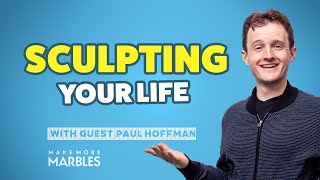
Paul Hoffman went from tour manager for Pink Floyd to jingle writer (Ford's "Have you driven a Ford lately?") to addiction and recovery on November 14, 1988. Now he coaches people on daily rituals, asking for what you want, and using fear as a signal to step into bigger roles.
Chapters
Foreign.
What's up, everybody? Welcome to make more marvels. My name is Brad Hart, and today I have a very special friend and guest today. His name is Paul Hoffman. We are in the flight club Mastermind together, and he is the guy who wrote all the jingles that got caught in your head that you probably still think about. Like, have you driven a Ford lately?
Not bad, bro. Not bad. Pretty good. You got almost all the notes correct.
Almost all of them. But why don't we fill in the gas ball? Why don't you say hello to the people, tell them who you are and how you got to where you are.
Hey, everybody. It's so, so good to be here. Brad, thank you so much for. For the invite and for the opportunity to spend some time with you. You know, I always love hanging out with you because you are one of the smartest people I know. And so those of you that are listening and then follow Brad and know about him as much as I do, you know that number one, the man is kind. He's giving, he's considerate, he's here to serve and help, and he's selfless in his desire to lift you up and make sure that you live the epic ideal life that you dream about. So, Brad, thank you so much. And every time I get to talk to you, I always leave feeling better than when I started. And so thanks so much.
That's a beautiful reflection. I received that. Thank you, Paul.
You're welcome.
But the question that you so expertly deferred, how did you want to know about it today? Yeah. Yeah. What can we learn about you, Paul?
Of course. Well, of course, I had to let everybody know how much I think about you because it's important when you're in a relationship or when you're working with somebody or. Or actually creating whatever might be. It's important to acknowledge each other in a way that inspires and empowers. So, a little bit about me. So I am what I call the personal discovery architect. And so one thing about me is that I love to create my own language because, you see, there's a lot of noise out there in the world that Brad and I live in, and I'm sure many of you live in. There's a lot of noise out there. So I'm of the belief that I can go out and make my own noise. Now, sometimes that's beautiful noise, sometimes that's disruptive noise, and sometimes it's just plain nonsense noise. But anyway, it's my noise and I own it. And I'm Going to stick with it. So the reason I call myself as a personal discovery architect is again, because I guess I am in the personal development world, or the personal growth world, whatever you want to call it, and so many other people. So I believe, and I think everybody that's listening or that will listen to this should understand that if you're going to create your own lane, what you want to do in your life, then you got to be true to you. And you've got to really give yourself the opportunity to express your authenticity in everything you do so that people get to understand that they get to do that as well. So I help people discover what they want to develop in life, then I help them architect it. And I've been very fortunate to be able to do that. As Brad said, I was in the jingle business for many years before that. Just a little brief history of me. I went to college in a basketball scholarship. This is important to know, because when I got to college, I thought I was going to be a pro basketball player. Not that I could have been, but that was my mind state. I call it mind state as opposed to mindset. Again, my own language. And I got to college and I played. I remember walking out on the court the first. The first practice. So going from high school to Division 1 college, you know, you're taking the next level in your life. So everything you do in your life when you're looking to take it to the next level is you got to up level your game, you got to play a bigger game. You got to really, you know, understand that what you've done prior to that, that particular moment is just a springboard to that moment. So I played for a year and then I kind of gave up on myself because as I said, I walked on the court the first day, I looked around and I said, you know, these guys are good. And of course, what did I do? Well, maybe I'm not that good. You know, the little thoughts started to happen. We all have them. Those, I call them mind traps. The mind traps started to come in. You know, I'm not good enough. Scarcity, you know, lack of commitment, not taking responsibility. All the things that we do in life that get us farther away from who we truly want to be in life. And so I played for a year and quit school. Of course, I made the excuse it was okay to do that. And I always tell people that two things. See, life's an either or principle. Either you're going to do it or you're not. And I always tell people there's two forms to an excuse. There's the excuse you make and then there's the excuse you make for the excuse which then becomes. Gives you permission to, like, believe that your excuse is your truth. Anyway, more on that later. So I quit school and I got a job as a roadie for a rock and roll band called Edgar Winters White Trash. Now I remember the guy who gave me the job said, hey, man, you can be a roadie. I said to him, what's a roadie? Because I never set up an amplifier in my life. So make a long story short. Moved to Rhinebeck, New York, sat in. In a farmhouse, lived in a farmhouse with 26 people, the band, the kids and so forth, and wives. And I went on the road setting up equipment for a year for this. Before you were born, bro. This was in 1971. 1970. No. 71. Okay.
Wow.
And so Edgar's band was. They were very popular at the moment. And so we opened for bands like, you know, Rod Stewart and the Faces, the Allman Brothers. Yes, Chicago. You know, all the bands back then, Led Zeppelin and so forth. And so I set up amplifiers for a year or set up a stage for a year. And then my friend got fired. They gave me the road manager's job, which meant I didn't have to drive the truck anymore. I get to fly with the band. And I did that for another, I'd say, six months. And then that band broke up. And the lead singer of that band asked me to manage him because he started his own band. So I said, you know, his name was Jerry Lacroix. I said, hey, Jerry, I have no idea how to manage a rock band. He said, don't worry, I think you can do it. And Brad knows me, and I'm the kind of guy that first of all, I tell people I'm Italian, so I throw things on the wall and see what sticks. And so what happens is, I said, okay, if you think I can do it, Jerry, then I'm going to go do it, okay? Because I'm fearless in how I pursue life. And so I ended up moving to California. Really didn't know what I was doing as far as managing it. And so I figured, okay, I need to find a co manager. So I found a friend of mine who had met through the years as the roadie. His name was Ron Strassner. He managed the band called Rare Earth. They had a big hit in the 70s called I just Want to Celebrate. And I said, hey, Ron, you want to co manage Jerry with me? He said, I really don't have time, but I have some friends that probably would want to do that. And the company was called Reb Foster and Associates out here in California. And they managed at the time a band called Three Dog Night and a band called Steppenwolf, which had that hit, you know, born to Be Wild. So I went to them, they said, sure, we'd co manage. So we co managed Jerry, I got him a record deal on Mercury Records and then we went on the road as the opening act on a 45 city tour for Ozzy Osbourne and Black Sabbath.
Wow.
And so we were on tour, we were in Chicago, the drummer in our band got in a bar fight, got killed and that band broke up. That's another story. That band broke up. And so at that point, I've been on the road for almost three years. I said, you know what, I think I'm going to go back to school. Okay. Because I had a very, very keen interest in law. I wanted to get a law degree. And so lo and behold, my buddy Neil, who gave me the gig as a roadie, set up, had set up a tour management company. And so he called me up and said, hey man, sorry to hear about Bobby. He said, but listen, I set up this tour management company. My first, my first client is a band called Emerson Lake and Palmer, which was back in the, in the early 70s, a very big band. He said, would you, would you be willing to fly to Germany and tour manage them? I said, okay, cool. So he sent me a ticket, I flew to Germany and for two years I worked for elp, lived in London and was, was, you know, privy to a lot of the royalty of rock and roll and hung out with many, many different famous people in rock and roll and I don't need to drop names and, and it was an interesting life and but it's also taught me a lot of things that I practice now in life, which was, you know, business sense, organization systems techniques, so forth and so on. And then after I left elt, I became Pink Floyd's tour manager at the age of 24. So I worked for.
All this happened in your early 20s? This whole story.
I was 21 through 27. Wow. And then, and then. So I managed Pink Floyd, tour managed Pink Floyd and did their Dark side of the Moon tours. And then after that was done, I was done and I decided I was going to go back to school. So I moved back to the States and I was going to nyu. My brother was a recording engineer at a jingle company in New York and they were looking for a second salesman. So I kind of took the gig and I went around to all the major advertising agencies at that time, J. Walter Thompson and Leo Burnett and BB Dno and all the big ones, and I'd get them work. And then they ended up making me their executive producer. And I still wasn't writing music yet. And my brother and I left that company, set up my own company. And in 1980, I wrote have you driven a Ford lately? And it put me on the map. And so then from there, lots of other things happened, including drug addiction and other things. But. But, you know, everything that's happened in my life prior to this moment, when I'm on this beautiful podcast with you, Brad has been instrumental in who. And development of who I truly am. So that's kind of my history, if you will.
You waited until after the whole party scene. You were in this from 21 to 27, and somehow it didn't go off the rails until after you started writing jingles.
Until after. Yeah, because I was making.
Talk about that. So, like, there's a lot of people out there struggling with alcohol and drug addiction or they're in recovery or what have you. What was your journey like with that? Being around all that all the time? Did you manage to keep your nose clean for that long because you had so much responsibility? What.
How do you think? Absolutely. Yeah, absolutely. Because, you know, I mean, I was responsible. Like, for instance, when I. When I worked for Emerson, Lake and Palmer, I had 55, a 55 man road crew. I had 55 people under me that I was.
So you couldn't be screwing around because then they would screw around and the whole thing would fall apart.
Well, yeah, and then I'd get fired and whatever. And this was like a great opportunity for me. Good money, great opportunity, meeting amazing people and a springboard to other things that were going to happen in my life. So. Yeah, so. So my nose is clean. And. But when I got into the jingle business and was around cocaine, cocaine was my. My drug of choice every day. You know, I ended up starting to dabble in it. And then that dabbling became what I call a robust. I love that word, robust daily habit. I spent $2,500 a week on cocaine for about 10 years.
Good Lord. Yeah, that's. That's crazy. But somehow managed to keep together on Isaac Osborne. Just saying.
Well, not a discipline issue. It's not. It wasn't discipline. I didn't have it, was it. But I even had discipline when I was in the jingle business. But, but unfortunately what happened to me was my success was, was skyrocketed because of have you driven a Ford lately? And all the other accounts. And I was probably one of the top five jingle guys in the country at that time for about maybe seven, eight years.
So what does that mean? So this is the 80s, right?
Right.
What kind of money are we talking about? Like what kind of residuals you get for a jingle like that? Obviously?
Well, with Ford, Ford I made six figures a year just on Ford.
That's great.
So I'm talking millions of dollars.
That's awesome.
And you know, I mean, not only did I did Ford, I mean I did all the big accounts. And being one of the top, top, you know, five guys in the country is basically every time there was an account that came up, a big account, right. That needed a jingle, I usually was one of the people they'd call. They would have a competition was called an open competition. And they'd usually call maybe between five and ten jingle music houses is what we were called. They'd call five or ten music houses and I would be one of them. And so I'd get to present on some of the biggest accounts out there. You know, I had Ford, I did, I did every Ford commercial. Brad, when I wrote have you driven to Ford lately? I did every Ford commercial. Actually I worked on Ford a year before have youe driven to ford lately in 1979. And the campaign there was called Lookout World, Here comes Ford. It was the bridge campaign and that ran for a year until I wrote have you driven to Ford lately? But my biggest fun and claim to fame would look out world, here comes Ford was I got to Tony Bennett sang it nice. I got to work with Tony Bennett, right. And, but, but as I said, so I ended up being, being privy and being a part of many, many major accounts. I worked on Ford and Burger King and Pepsi and Coke and McDonald's and what have you. And, and when I, when I wrote have you driven to Ford lately? I as I said, I basically started to write music when I first went into the jingle business. Now I've been into music all my life but, but totally self taught. Can't read a note of music, can't write a note of music. But I'm really good at creating and composing and producing. So for those of you out there that think you have no musical talents and you can't sing a note and so forth, the truth of the matter is I'm sure you can just get out of your own way and go for It.
Well, that's what Jasmine tells me all the time. She says I should be a jingle writer, get with Paul and start writing jingles and make millions of dollars. I'm like, okay, because I write songs about our dog Juniper all the time, and I just kind of.
Well, let's get after it. Okay, so. So. So then I won't give you the idea on the podcast because it'll be between you and I. But I. I'm going to. I'm doing music for animals. Okay. And so maybe we'll.
We'll collaborate on something. That'd be fun. I mean, it would just be really cool if I came up with something like you could help me plug in the pieces. We just split the revenue. I don't give a shit. Like, you just get in front of the right people and make those decisions. We're good.
And we. And we. We actually know somebody who could help us do that when it comes to animals. Lee Richter. Yeah.
Yeah, yeah, yeah.
Right. Yeah. So anyway, we can do that. We can do that. So that blessing, how I did Lee.
Richter, by the way. God bless and keep Lee Richter. I'm about to sign an enormous deal that she just put into my lap. So very, very happy. Thank you for that.
Absolutely. Are you.
Thank you.
The Vatican.
Vatican related to that, but not that.
Yeah, yeah, yeah, yeah. And. And absolutely. So. So that's how that all kind of ended. And so then when I got out of the jingle business and 1988, I was actually. November 14, 1988, my drug addiction had taken over my life. Nobody wanted to work with me because I was impossible to work with because I was more interested in drugs than anything else. And then on November 14, 1988, I was put in a straight jacket, sent to the 14th floor psych ward of St. Vincent's Hospital in New York.
Yep. Right in the Village. I know it well.
And that was it, bro.
Yeah, a lot of times.
Yeah. Yeah. I lived. I was living on.
Thankfully Never on the 14th floor.
Yeah. But it was. It was awesome. It was awesome. And so. So I got out of the rehab, that rehab. I've been three rehab in my life, and I'm totally transparent if anybody ever wants to ask me any questions about it. But at the end of this thing, I'll tell you how to get in touch with me. So I ended up moving to California, and I didn't know what I was going to do, Brad. So I said, you know, the jingle thing, you know, I don't know if I want to do that anymore, but kind of that was really what I knew how to do at that point. And so I ended up getting back in the jingle business in 1980, the end of 1989. Because I took it. I took. I. I like to say, Brad, I took a year off of work, bro. Actually, nobody wanted to work with me. So that's from 1988 to 1989. Nobody wanted to work with me. So, you know, I. Luckily I kept some money. I moved. I was in California. And so I got back in the jingle business, reinvented myself, got successful again, this time clean and sober, if you will, and did really, really well. But you know what, man? I kind of lost the juice to do that. And so I remember getting invited. I was part of a spiritual community in California called Agape.
Am I really?
And so I was on the board of directors. I was on the board of directors of Agape for 15 years, my spiritual center. But I met a guy there named P. Harv Ecker.
Yeah.
Okay.
Shout out to him.
What? Shout out to him, hey, T. Hey, Harv. You know, T stands. You know the T stands for.
No, I don't.
The. And that's the truth. So anyway, so. So Harv says, hey, man, why don't you come to my Millionaire Mind Intensive? You know, some of you on this call might. Might, might have been to that. Anyway, so I'd never been to a personal development experience in my life, right? So I. I go to sit at the. It was down in Newport Beach. I go to the Go. There's probably three to five thousand people there because back then he was getting huge audiences. And this was his signature course, and it was called the Millionaire Mind Intensive. So I sat there for three days. I loved his teaching. I loved his information. I didn't like the way the hours that he taught. But. But after the event, he came up to me, he said, so, what do you think, man? I said, harv, you're an awesome teacher, man. I've never, never experienced anything like this. I said, but. But I gotta tell you, man, your music sucks. He said, what do you mean, my music sucks? Now, of course, I come from a marketing music background, right? And I said, well, Harv, you seem to play every popular money song out there to fit into your principles, why don't you have your own song? He said, well, how will I do that? I said, well, I'll write it for you. So I wrote him a song called I've Got a Millionaire Mind. Again, the course was called the Millionaire Mind Intensive. So I sang it live. He comes up to me after and he says, hey, man, could you write songs for all my courses? And I said to him, the only negotiating tactic which I ever use in negotiation, which is if the deal's right, I can do anything, right? So I ended up making a deal with him. We actually, Brad, we sold this song, I've Got a Millionaire Mind, this one song before I wrote these other songs for him for $7 and sold a shitload of them. Excuse my language, right? So after I did that for him, all of a sudden I got a call from Jack Canfield. So Jack Canfield calls me and says, hey, man, I heard you wrote a song for Harv Ecker. How do I get one? I said, that's interesting. Then Mark Victor Hansen, Robert Allen, Brendan Burchard, and so forth and so on. So I said, well, I think I got something. So I created a company which I still have called Success Song. So if you go to successsongs.com s u c c e s s s o n g s.com 3s is in the middle. You can give me your name and email and I'll send you two songs. Okay.
And they're great songs.
Yeah. And so. So I ended up doing that. And then. Then I. I called Harb up one day and I said, harvey, you know, it's really fun doing these songs. And I'm kind of digging this whole PD space and, you know, changing my mindset, which I now call mind state. And I said, but I really like to start speaking, so I'd like to start speaking on your stages. He said, well, what would you speak about? I said, you know, I would speak about mind state back then. I called it mindset, habits and rituals, which is what I talk about, which is what I teach people. Because if you have. If you don't have the right mind state, if you're not fully aware and able to focus your attention on what you want in your life, you won't create the right habits that get you there. And the only way you can get the right habits in the right state and mind states to get there, in my opinion, is to have a ritual, a daily ritual that helps you set up your day. So that's what I do now. And so my platform now is called sculpting your life. So Harv really got me on the road to this, and. And I've been very fortunate, very lucky, and. And so sculpting your life. The metaphor is, when Michelangelo saw the block of granite, he saw David. All he did was take everything in the way out of the way. And there's David. And the block of granite was very flawed because nobody wanted it. It was cracked and discolored and, and, and, and chipped and so forth and so on, just like human beings are. But he saw David, as I said, and took everything in the way out of the way. So, so I, I created sculpting your life because I believe, okay? And this is just my belief. I believe that the biggest obstacle to success for anybody is themselves. So you are your biggest obstacle. Now. You could either be your greatest ally or, or your greatest enemy, but it's all about your mind state. So I ended up being creating after that. I got a. There's a company called mindvalley that some of you might know. And, and I have a brain technology which takes binaural beats, heartbeats, and breathing patterns. I call it multivariate resident technology. And what it does is it resets, rewires, and recodes your supermind. And so I take this technology, I write this really cool music to it, and I do this process over it, which I don't call visualization, which I call mind sculpting. And what it does is it will shift the way you look at life. And I do it in nine different areas of life. And I've had a little more than 3 million people download that. And so from the songs to the brain technology, which I don't call meditation, by the way, because you know me, I like to create my own language. I call it tuning in. Okay? And so Tuning in is my, my platform to help people get out of their own way and to actually live a fearless, epic ideal life. And I have other programs that I, that, that are available anywhere from one called the 21 Day Mind Makeover to the 12 dimensions to sculpting the masterpiece known as you. But it's all about being able to give people the information and the opportunity to really get out of their own way and not be beholden or stuck in the old patterns and old beliefs that have kept you in what. What people might think is your comfort zone, which is your no zone. Because if you're in your comfort zone, you're going nowhere. So that's what I do now. And I have a lot of fun doing it. And I still write a little bit of music. I write all the, obviously the, the brain, the brain music. And, and now my, My passion is to, to, to really help people or inspire people to understand that everything in their life, everything in life is created by some thought and belief that you have about you, period. At least that's my opinion. And. And so if your thoughts and beliefs are out of alignment with what it is that you want in your life, then you'll never have what you want in your life because you'll be keeping searching, searching, searching. And, you know, there's this. There's this old expression that I kind of learned in the PD space. And I don't know who came up with it, but everybody uses it in the whole. It's called, you know, your inner reality creates your outer circumstance.
That's right.
And. But I reframe it and say your environment in environment creates your environment, your e. You know, and so whatever. So. So when I talk about rituals to people, I talk about, you know, so when you wake up in the morning, you got one of two choices. As I said, life's an either or principle. Either you're going to do it or you're not. It's not a gray area. There's no gray area as far as my opinion. So when you wake up in the morning, you're faced with one or two choices. One. Oh, another day. Oh, no, man, am I going to. Oh, no, another day. Whatever you tell yourself or what I do in the morning, and I think probably you do this too, Brad, is I wake up in the morning and go, okay, man, bring it on. What am I going to do today to create the epic idea life that I want to do? And so what happens with most people when they come up with a new idea for what they want to do in their life? They do one of two things. They have a great idea. It could be they want to create a business. Maybe they want to lose weight. Maybe they want to find their, you know, ideal partner. Whatever it is, that's your idea. And then, then there's the outcome, which is obviously the realization of that. So from the idea, which is the A part, to the outcome, which is the C part, what happens in the B part is the most important part of anything. And usually what happens in the B part when you come up with an idea, not you and me, Brad, and hopefully not a lot of people on this call. What happens in the B part is when you come up with an idea, you say one or two things to you. So, oh, I don't know how to do that. And you'll never do it because now you're just telling yourself you can't do it because the universe hears that. Or you should ask yourself the one question, what do I need to do to make it Happen. And here's a great example for all you people that are listening on this. I've known Brad. I met Brad at the Flight Club, our mastermind that we do together. I immediately loved what he's doing. We immediately connected him. He told me about his podcast, and I wanted to be on it. So what did I do, kids? I said, hey, Brad, I'd like to be on your podcast. Now, if I didn't say that, I'd still be wanting to be on his podcast, but as you can see, I'm on his podcast. So what did I do to make it happen? I said, hey, Brad, I'd like to be on your podcast. So ask for what you want.
Yeah. And then be flexible in the outcome. Because Brad doesn't like to plan his podcast. And Paul wanted to have a whole call about the call, about the meeting, about the call call. And I'm like, oh, we're just going to do a podcast.
Exactly.
That's it. We're going to get on a call and we're going to do the podcast. That's it.
Which is what we're doing, which I love, you see. So we. We both got to participate in the outcome.
That's right.
So it's good.
So it's about wanting what you want, being clear about what you want, being willing to ask for what you want, then being flexible on how that outcome is achieved.
Right. And then showing up, bro, you got to show up. And then showing up.
Got to show up, baby. Let's go.
And that's it. So that's how I got. That's how I got to where I am today. And, and, and so, you know, I spend a lot of time in critical thinking. I spend a lot of time in creating new ideas and new, new programs. And, and what I know from the, the, you know, I don't call it work. What I do, the play that I do in life, I call it play, is everything I do is designed to help me get out of my own way and to continue to discover, uncover, and discard all the old bullshit that I keep carrying. I can guarantee everybody on this call, including me, and I can't speak for bread, has old, old, old tapes going on in your mind that, that you need to just shut down and start to create new, new love, new blood, new new ideas, inspiration, so forth, so that you truly can. Can wake up every day and be. Enjoy.
Yeah. So I want to pull one thing out of here that's kind of coming to me as we talk, right? Is this idea of expanding into A bigger version of yourself, right? And stepping up, like, what I love about your story, Paul, is how you are always sharing, like, hey, I got this opportunity, I took the opportunity. I got this opportunity, I took the opportunity. You didn't try to, like, craft it. You didn't shy away from it. You figured, hey, I'll throw spaghetti against the wall, see what sticks, see where I grow into. And it's this feeling of, like, ease in your body versus constriction in your body. Anytime you get a feeling of ease, it means you're probably going in the right direction, right? Because your gut's smart. You have neurons in your brain, your heart, your stomach, all that great stuff. So your gut is really a supercomputer that's giving 10,000 pieces of data that are due and then giving you an answer, yes or no. So if you feel a sense of ease, if you feel a sense of, yes, if you feel a sense of, let's do this, awesome. But if you feel a sense of constriction, you might want to look at that from both angles of like, is this my old stuff showing up? Is this a previously made decision, A previously made habit? Like, what is keeping me from leveling up? So case in point, I got an opportunity to step up in a much bigger way on the Internet marketing side. I won't go into the details of that right now, but that's pretty close to the finish line and is going to be seen by hundreds of thousands of people. And I've been practicing for this for years. In all objectivity, I've been a public figure for many years now. I've been doing lives, I've been doing, putting myself out there. I've been sharing my vulnerable, authentic story for many years. And the old fears still show up. Now, when I think about going from this many people to that many people or millions of people, the same fears show up. And I kind of know what to expect at this point. It's nothing new, but I want you to be aware, whatever it is, anytime you encounter a new level, it's a new devil. And anytime you feel that constriction in your body, I want you to question, why am I feeling this way? Is it valid? Or is this just a protection mechanism for my ego to keep me small? And what happens if I ignore that? Or what happens if I change that? Or what happens if I reframe that with a new story that's more empowering? So the new story I came up with is somebody's going to be in front of all These people. And it's going to be somebody who may not have the same values, the same experience, the same level of care, the same level of wanting to do the right thing, whether or not I achieve that or not the desire, right? This person may not even be that, you know, that talented or that dedicated to the, to the ideals that we're trying to uphold here or the values you're trying to uphold here. So if not me, then who? And if I'm going to give up that opportunity or shy away from that opportunity or keep myself small for that opportunity, what is going to happen, if anything that's going to be better or worse, right? So that you have to think in third order consequences like these millions of people out here need me to step up. Otherwise I'm holding myself back. I'm holding them back. And I'm not making the world a better place. And if that's what I really want, then I have to step into that. So any fear or any crap about me has to stand by the wayside. I have to take the risk in order to serve those people and ultimately serve my greater goals and mission and vision. I mean, and let the trolls say what they will, right? I just fucking what? Whatever it is or what, Whoever, right?
Yeah. I mean, here's the thing, man. So, and I thank you for that, that's a great story. And I'll tell you, tell you one of mine which, which is a mirror image of that, okay? But so here's the thing. So you know what, who cares about the troll? You know what, there's always going to be people for whatever reason. And the regulators, it could be jealousy, envy, the regulators, whatever it might be, try to put a barrier in front of your desire to do what you want to do in your life. And like you say, you know what, if not you, then who? Okay, so, so if, if Brad doesn't step up and do it, one or two things is going to happen. Brad's going to say, jesus, I wish I would have done that. Which I'm sure you probably said to yourself, sometimes I know I have. Or you're going to do it and you, and you're going to do it in such a way because it's, it's part of your DNA, man. It's part of who you are. It's part of those, that new neural network you built, you know, and the neural harmony that's happening in your, in your mind, body, spirit and soul that gives you the confidence and the permission to step up, step out and step into who you truly are. Okay? And so you. You know how to do that. And those fleeting moments, bro, that come into your mind, which is your old tape and old tip, which go, oh. Oh, my God, do I know? Should I. Should I really do it? Whatever you say, whatever question marks you.
Put in front of you, the fear overanalyzing the.
Yeah, exactly. And. And they're going to show up, but at this point in your life, they're few and far between, okay? So for me, I still have those two. So every time I sit down to write a song, okay. Or create a program or create a new med tuning in, you know what? The first thing that comes to my mind is?
Not good enough.
I like this.
Yeah.
No. Who's gonna like this? No one's gonna like this. And then you know what the next one that comes to my mind is? Well, Paul, guess what? You've had billions of people. Billions of people haven't driven a Ford lately ran for 10 years. You know how many people sang that song? Billions. You know, if you've got. You had billions of people seeing your stuff. So. What are you talking about? You know, stop putting. Stop putting these. These barriers in front of the voice in your head.
Right? Or are billions of people right?
Exactly. And exactly. And so. So the whole idea of being able to understand if you're. See, you know, man, I talk about the struggle a lot. Okay. I love the struggle. You know what the struggle gets me?
Results. Clarity.
And clarity. Okay. Okay. When I start to battle with my demons, you know who's going to win that battle? I am. I'm gonna win that battle.
New level, new devil, Paul comes out on top. Boom, boom. Let's go.
You know what I wrote? I wrote that. I just wrote that. By the way, I wrote that down when you said new level, new devil. I love that. I'm gonna probably have to use it. Okay.
I don't know if I came up with that, just to be clear, but.
Well, but I'll tell people that's where I heard it. Okay.
All right.
I always. I always get. I always give credit. Well, and I get.
I get upset because I meet people like Joe Polish, who remembers everything that everybody ever said, ever. And I. I find myself repeating things that I don't even remember who said them. And I would love to create credit, but I just can't remember, literally.
That's okay. So. So don't beat yourself up about that. Your intention.
My intention is when I do remember.
Always good. It's always good. So it's. It's like so when I, When I do my. Do a keynote, I always. There's one part in there where I always. I always use a quote from Les Brown, but I always say, hey, so I need. So I say, so here's what my friend Les Brown told me. So Les Brown said to me one time, and I never forgot. He said, hey, man, you know, in that voice he's got. I'm hungry. Whatever. He said, hey, man, if you're going to fall down, fall down on your back. So you're looking up. Never forgot it.
That's great.
Perfect. Perfect fit into what I do. You know, the other thing I always say, and I think Oscar Wilde said this, at least Hillary told me he did. And I trust her. I always tell people, you know, you might as well be you, because everybody else has taken.
That's right.
And I think Husky Wild came up with that. Yeah, it's all so, so all of you who are listening to this and have followed Brad and hopefully, you know, I can, I can create some, some new ways of thinking is, you know, everybody has a gift. Everybody has a treasure and a talent within them. There is nobody. When you look in the mirror in the morning, folks, when you look in the mirror in the morning, realize that what you're looking back at is a masterpiece and understand that there is nobody on this planet or in the interplanet or in the. Whatever fear sphere that's like you. You're unique. So be you step into who you are. You don't have to live your life on somebody else's terms. You know, I wrote a song and, and the lyric was, you know, today's the day I get to say I'm living life in my own way. So just say that to yourself every day and live your life in your own way. Because if you start, if you're going to give into the whimsical or the desires or the, the BS of somebody else telling you who you are and what you can do, then, you know, you're going to be unfulfilled, in my opinion. And you're not going to live the epic ideal life that you desire to live, because everybody. You're, you're. Everybody is a piece of art. You know, there's a beautiful picture. I'm looking at Brad right now. There's a beautiful, beautiful picture behind his shoulder. And it speaks to who he is. It's the energy of who he is. And, and so you got to understand that you are a masterpiece. So all those masterpieces that are in great museums in life just Imagine, imagine your pictures in one of those museums. Because you know what? It can be. It will be if you choose it to be.
And with that, let me ask you, Paul, this is the Make More Marvels podcast. So how can we support you? How can we add the most value to your life right now?
You know what, man? By being on this podcast brings more value to my life because I get to have a deep conversation with you and learn from you, which I love to do. And hopefully there's some new folks on here who, who I can help change their life. And for me, you know, just being able to tell my, my story, Brad, just being able to, to give my gift is really all I want to do. You know, I'm here to serve. I'm here to understand that, you know, my life has been been shaped by many, many, many people, including yourself. And, and so once I, once I realized that I didn't know it all or I didn't even know what I didn't know, then I opened myself up to a, what I call, because I love this word, a plethora of on wonder that's always available to me. And so allow yourself, allow yourself the ability to be firm in your belief about you. And so just as I say, just being on here is, is, is a gift. And so I'll take all the gifts I can get then.
Yeah, I'll give Jason Gaynor this one because this is where I heard it from. You're not self made. You're community made. There's no such thing as self made.
No. Well, you know, it's like I, I, you know, so life, life is a team sport.
That's right.
Okay. So I always tell people, you know, I mean, I play sports, okay, so we don't have to be sports. It could be the debate club. I don't care what it is. But life's a team sport, man. You can't do it by yourself. Now you think you might be able to do it by yourself.
I just think about, like you can't think about a newborn baby, right? Newborn baby's helpless without the mother, the friends, the family, the father. Like we have dear friends of ours that just had a baby and the mother got sick and the father's doing double duty and we're going over and cooking meals, and I'm falling asleep with this little baby on my lap. And, you know, it's just like, it's beautiful. It's a blessing. And I'm just thinking like, everybody was like this at one point. Everybody needed that amount of Care from like four adults who are working around the clock just to make sure this little baby stays alive.
Well, we all came out that way, you know, and, and, and, but, but the, the good news is, is that as we developed in life, we, we, we. We got to develop our own, our own sensibilities. We were able to understand our weaknesses. We were able to understand how to, how to work through whatever perception we had about the limiting mind traps that we thought were truth, which aren't true. You know, again, the end of the day, man, the only limitations that you believe or anybody believes are the ones you make up. Because you're limitless, man. Everything that is necessary for you to live what I, again, what I call your epic ideal life. Because everybody's got an ideal life. You know, how many times have you asked the question or you've been asked the question, you know, hey, what do you want your life to look like? I mean, come on, it's like a, that's like a standard question, everybody. That's like when, you know, Brad, you said to me, you know, you know, the, the treats that we make here, right? You say, hey, man, what happened to those treats? Well, we're gonna make.
Oh, they're so good, you guys. Hold on, I gotta, I gotta gush about these. They're called. It's All Good bars. They might be changing the name. And they're the best damn thing you've ever eaten. Like, literally, he'll send them to my house. I'll eat them like that day. Like, I don't even. Wait, it's, it's a problem. If I was on subscription box, I'd.
Gained hundreds of pounds and you're going to be on a subscription box on me. But, so, but, but the truth of the matters is that, you know, the, the, the, the. If, if, if you're going to allow, you know, the hiccups of life, if you will, or the, the disease of doubt or whatever you want to call it to, to, to get in your way, then you're gonna. That's going to be your norm. But you know what? You don't get to the. You don't get to the highest point in your life by playing safe, okay? You don't get to those kinds of places unless you're willing to take risks. You're willing to bet on yourself, okay? You're willing to be fearless. You're willing to go through it and when you get slapped in the face, okay, good, let me, let me not go down that road anymore. I'm going to Go down this one. When one door closes, another one's getting ready to open. There's all this stuff that's ready for you because you know, the universe and I believe that the universe is limitless. It's abundant. You're abundant. And when you start to close off that spigot of prosperity and abundance, and I'm not just talking about money, I'm talking about relationships and health and whatever, then you're going to live a very sheltered life. But when you expand, when you expand and not contract, and when you face adversity with the confidence to work through the adversity which you have already within you, you just got to activate it, man. Brush it off. Brush it off, you know, because we're all diamonds in the rough, okay, to use a cliche term. But we get to the place in life where we're truly in the empoweredness of who we are by going through that adversity, going through the struggle, winning the battles that your mind see. You know, your mind is my next book. The working title is your mind has a mind of its Own. So your mind can do one of two things. It can be your greatest ally or greatest enemy. And everything that happens in your life has been been created again by you. But if you, if you start to give in to those moments of, of self doubt and am I good enough or am I worthy or all the stuff that as human beings we do, it's that shit's going to happen, guys. It's how you deal with it that's important. You know, how do you face that? What do you do every day? You know, how do you, you know, again, how do you take the good with the bad? Not that there's any good or bad, but just for the purpose of this conversation, but there's all this, all this opportunity out there for you to, you know, show up in who you are. Because if you don't live your life and be you and share your uniqueness, then the, then the puzzle of life, what I call the puzzle, is not complete because you're not bringing your best self to it. And then nobody gets to experience who you are. And by you being who you are, you give permission to people to be who they are.
So we're all just looking for permission to be who we are, right? And there's those folks that give the permission, some people are waiting around for it. But ultimately that's what we're looking for, is like, yeah, what's acceptable within our societal norms that we can push the boundaries of and create something New and exciting that hasn't existed before.
Right? And. And. And if you have to give yourself permission, nobody can give you permission. I can't tell. Tell you, Brad, what you should do. You kind of give yourself permission to. To. Because you know who you are, man. Who knows you better than you? I'm pretty sure nobody knows you better than you. So you know your. You know your, quote, drawbacks. You know your. Your. Your talents and gifts. You know how you can push the envelope. You know all that stuff. But I also know one thing about you, and I think you and I have this in common. We're fearless, bro. Now, we're not out to hurt anybody. We're not out to create. What about. But. But I'd say you and I are disruptors in a good sense. And by being disruptors, we get to disrupt our own status quo, which we sometimes think is the. Is the. Is who we are, but that's not who we are. Because every day, something happens in your life every day that makes you a more better excuse, makes you a better person, gives you permission to live your life in a way that first of all inspires you. Because if you can't inspire you, you can't inspire anybody else. There's a great tendency that human beings have. I mean, I used to do this myself. When we come up with an idea, again, it's that whole ABC part of an idea. When we come up with an idea, we immediately sometimes say, no, no, no. Carry around an idea journal, folks, Go to the store, find something that you love looking at. Little book, little journal, whatever it might be. Write down every freaking idea that comes to your mind. Never censor yourself. Just write it down. Okay? Look at it at the end of the day or look at it at the end of the week. Whenever, whenever. But don't focus on it. Just write them down. Write them down. I've had some crazy idea. Here's one of my crazy ideas. Okay, I'm still. I might still do it, though, Brad. Anyway, so write down every idea. Every idea. Every idea. And then look back at it and. And you'll. Two things will happen. You'll say, oh, my God, what the hell was I thinking? Or that could be something that maybe can happen. You know, Your mind is limitless. Your imagination, oh, my goodness, is fertile. Everybody. And so. So don't. Don't censor yourself. Don't. Don't get in your own way when you got a great idea. Don't talk yourself out of shit. Don't do any of that stuff, you know, again Be your greatest ally. Give yourself the permission to truly express the genius, brilliance, and greatness of who you already are. Because everything necessary for you to have the life you want is already in you.
I love it.
Not outside of you. It's in you. Okay? And all you got to do is access it, activate it, and integrate, period.
And with that, I think that's all the time we have today, Paul. It's a blessing, brother. Thank you so much for being on the show. Thank you for sharing your story. It's always inspiring to hear from you. And how can people reach out to you and get in touch if they want to follow up?
First of all, Brad, thank you so much. It's always fun to hang out with you, bro. In any circumstance. So, okay, my email, kids, is Paul Hoffman. My name Paul Hoffman. The number 24mail.com. There you go.
Simple as that.
That's my personal email. Now, if you really want to talk to me, here's my Cell phone number. 323-810-5588. If you got something that's a burning desire to talk to me, but you're afraid to talk to me because you think I won't talk to you or I'm too busy, then that's on you. But I'm here to serve. Brad's a dear friend of mine. Anything I can do to support his audience, because I know that anytime, if I need, If I. If I don't need anything, but if there's something that. Yeah, man, let me talk to Brad about that. Brad will always be there for me. And so with that, I want to know, once you all know, that I'll always be there for his audience and so forth. So. Paulhoppin24gmail.com 323-810-5588. Look forward to hearing from you. And just remember, be you. Because everybody else is taken.
I love it. And if I was doing anything, if I was doing any better, I'd be you, right?
Yeah. Because I am nothing short of phenomenal.
I have to give a shout out to Paul because it's the first time anybody's ever given out their personal email and sell on the podcast. So take them up on that. I hope you don't end up blocking anybody. Everybody play nice.
I won't blog anybody. I mean, I, I listen, hey, listen, call if, if there's something, there's something you can tell me that will improve me. Bring it on, man. I'm there. Okay.
I love it, Paul. Thank you. I'll talk to you soon. Stay blessed everybody have a good one.
Much love.
More from Brad

The #1 Reason AI Isn’t Working for You (Yet) #AI #businessowner #founderenergy




What tasks would the best assistant ever be able to do for you? #BusinessSystems #BusinessOperations



Nobody expects you to use a harder way when there's a better way. #AI #businessowner

Which side of the table will you be on in 2026? #AI #Mastermind #BusinessOwner

