Make More Marbles PODCAST with Brad Hart “8 Minute Mastermind” BOOK TALK - How to Plan Your Meeting
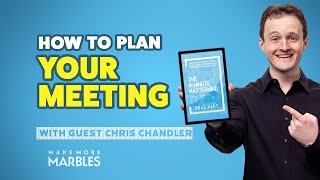
Brad Hart walks through Chapter 3 of his "8 Minute Mastermind" book, covering the practical setup for running a mastermind group: circle seating, snacks, hot-seat rules, and quiet venues like private restaurant rooms or Airbnbs. He and Chris Chandler Yates also tackle pricing, how to pitch to different people, and the fears that stop people from starting one.
Chapters
Foreign. What's up, everybody? Today we're going to talk about planning your meeting. I'm Brad Hart. I'm here today with the one, the only, Mr. Chris Chandler Yates, longtime friend and client. He's actually doing a motorcycle tour around the Southwest that we're going on in May of 2023. So if you're into motorcycles and sweaty men, this is your kind of vacation. Let me tell you what. Gonna be super fun. It's not for beginner riders like you should probably have.
No, it's. It's intermediate riders. So the longest day, the shortest day is 150 miles and the longest day is 350. So.
Yeah. So you really want to know what you're doing on a bike.
And fully inclusive, fully vip.
Yeah. It should be really fun. And you get to hang out with us because I'm gone. So that'd be fun. If you're watching live, hashtag live. If you're watching the replay, hashtag replay, Replay. But let's dive into it. We got a new chapter to walk through on the 8 Minute Mastermind. We took a few weeks off to do my thoughts on the recession. We did the pop Doc training. Go back and check those out if you haven't already. And let's get started. This is chapter three, planning your meeting. Jolie. Great guy. Read about him here in the book. If you haven't picked up the book yet, what are you waiting on? Go over to 8minutemastermind.com we had somebody in the Philippines just got their copy physical delivered to you. Thank you, shipping warehouse. We appreciate that. Wherever you are in the world, we're going to get you a copy and just pay shipping, which is like five bucks. I mean, come on. You can't beat that. All right, so we're going to talk about planning your Mastermind event, right? You want your big, happy, successful mastermind. So we're going to have to just plan for some details here. And this is pretty basic stuff, but it's good to just have a checklist. So I kind of wrote it all out for you so you don't have to think about it. So you can just focus on getting the people in the door and not about, oh, my God, what am I going to do when I get there? So thing one is, you know, make sure you have snacks. Like, seriously, Masterminds are either awesome or suck. And it's generally relative to the amount and quality of the snacks. I'm just being real. I've been to a lot of these things.
Just telling your first very first, one very first group thing we met, there was not enough food, There was not enough snacks. And I was a brutal hangry man.
The worst. You got guys like Chris, he gets hangry. You wouldn't like him when he's hangry. Six foot seven, trying to eat anything in sight. It's rough. Uh, actually when we met, you were in a 50 degree freezing room. I was cuddling under a wool New Zealand blanket for warmth with your wife. And you kept coming around the corner and you're like, what are you doing under that blanket? Nothing, I swear. Don't beat me up, big man.
Yes, that was a very.
That's a true story. Healthier the better. Keep that brain power going. Alcohol or not, kind of just depends on your values. I don't mind if people drink. I don't want people to get drunk. So I'd say like two drink max, you know, kind of thing. So I would just remind people, hey, this is not the party time. You want to have a glass of wine or a beer, cool. But let's not get shit faced. I use my phone timer. Nothing fancy there, but you can get a regular timer, have plenty of water so that people can think if they get dehydrated, that's not great either. Signs telling people where to go, take off their shoes, all that good stuff. What areas are off limits. Especially if you're doing this in a house or something like that. And you don't want to have to interrupt the flow to tell people where things are. So the more clear and clever you can get with your signs, the better. Like I used to have just signs. I would like put them up on the back of the door when people came in to hang in their coats. And I would take them out and just slap them on the, on the door so they wouldn't have to like ring the bell. They could just come on in. Where's the bathroom? Where's. Where do you put your shoes? You know, don't let the dog out, whatever it is, right? Just encourage them to grab a seat if they're late. Don't want to interrupt. Hot seats. It's the shittiest thing when you get to your hot seat and then all of a sudden somebody is like making a ruckus. So just, just wave them in, have them sit down and then, you know, acknowledge them afterwards. In between hot seats, definitely sit in a circle facing each other. That's good Feng shui, whatever that is. And have fun. This should be fun, right? Have a great time. So quiet. That's a big Thing, Right? So we used to do these at restaurants, but it was always too loud. So if we're going to do it at a restaurant, try to find a place that has a private room or a private area that's kind of like away from the rest of the restaurant with ideally, like, no sound. Like, I would go and scout these places out where, like, if they have music in the restaurant, that's going to be too loud, especially somebody speaks softly or sharing something a little more intimate, they're not going to yell it out over a bunch of Tom Petty living on a prayer, Bon Jovi, whatever the hell. Like, people are, you know, yelling over that. That's no fun. So that's fine. Also, co Working spaces, they have a really great, you know, vibe. I've used. I've done that. I've done. Airbnbs are really great. You rent an Airbnb for two, three days and just do the mastermind there. That works out pretty well. Then you have everybody stay at hotels nearby. That can work really well. We had a really beautiful house with an ocean view that we used to do these at, and that was nice, too. But it's not always feasible. Library is great. We've done them in libraries. If they have a private room, even better. Like one of those quiet study rooms that can work really well. And you're not trying to make this like a big raucous thing. So you should be able to do it in most places. Churches could work. Uh, Jesus loves masterminding. He told me. He's about it.
So the other place. The other good place you can do it is right here on Zoom.
That's right. Zoom Virtual. Although I do, like in person, I'll be. I'll be honest. Like, if I had my preference and logistics weren't an issue, I would absolutely do it in person. But Zoom is. Is absolutely fine. But not Microsoft Teams. Nobody likes that. So here's the thing. You want to take some time to really write out all the logistics and everything could go wrong, and then don't expect them to get all right the first time. But if you do these consistently, you'll notice things show up. I had to probably update my logistics 10 times before I got it really dialed in, where, like, everybody's questions are answered and then still people won't read them. So don't take it personally if they don't. But get them as good and as clear as possible, because there are people who read them and they appreciate all the detail. Like, hey, park here, walk here, go there, go in this Door, make a left, make a right, whatever. Right. Take off your shoes, don't kick the cat. All that stuff. Yeah, that's important.
Kick the cat. One of the two.
Yeah. And then we have some sample posts here for your mastermind that are all at that link. And here's our sample invite. This is like all dialed in. Have done this a bunch of times. You can basically use this, change it all you want. When you grab the book, there'll be the digital version which comes with the book that you'll be able to grab this from and use that as well.
So yeah, we'll spend some time.
Yeah. If you guys haven't checked out the book yet, go to eightminutemastermind.com to grab your copy. Fantastic thread.
Took me a little bit.
So this is great guys. First and foremost, 91 comments is awesome. So thank you for everybody who started a thread. Thank you for everybody who, who did that. Uh, and the, the prompt for the question was what's your biggest challenge in implementing a mastermind in your business? So great question, great responses. Let's just start from the beginning. If you want to hit all comments, Here we go.
9. Deciding who to put in the mix.
Okay, so let's discuss that one. I think getting clear on your values is the first step and that's a discovery process. You may not know right now or be able to articulate what are your values. So like I know what my values are. I, I value communication. Every time I come on with a client, I say, listen, the number one thing with me is communicate, communicate, communicate. I don't care if it's good, bad or indifferent, just tell me what's up and we can solve it. Right? And I always tell em like, hey listen, we're on a road here between A and B and you're on the road and I don't care how long it takes you to get to B, but I don't want you to end up in a ditch. So when you start to hit the rumble strip, let me know. So if I don't have to go get my tow truck, Right? But that requires communication. So let me know what's going on, good, bad or ugly or indifferent, and I will, I will tell you what's, what's next, right? So that's my, my value. Obviously you can adopt that value. You can try that value out for yourself. Some people don't like a lot of communication. You know, some people, they don't, they're not great communicators or they're, they're long winded, or they tell a lot of stories, or they don't get to the point. I'm a very blunt, to the point type of person. I try to do with humor and compassion, but, like, I want to get to the heart of things as quickly as possible so that I can help that person to make a breakthrough and get on track or stay on track. Right. I don't believe there's time to waste dilly dallying. I want to really get to the heart of matters. So that's my value. Right. And as you start to get more passionate about things, as time goes on, you can begin to articulate those values. And I would say get at least three to five of them down on paper. And that helps you to kind of aim towards the things that you like. And those values will naturally align with certain subsets and segments of the population. And as you build your messaging, as, as you create offers, as you create your mastermind, as you talk to people, you'll kind of speak through the lens of those values. Whether you realize it or not, you want to do it in a conscious way. That becomes a powerful tool to attract the people that you want and distract the people or push away the people that you don't want that don't share your values. Like, for example, I hate people that don't communicate and can't show up on time or be bothered to tell me what's going on with them. Right. I can't work with those types of people. And it's sad because they came to get value, I came to give value. And if we can't transmit ideas and communicate between each other, it's hard to get that value. So that would be an example of me in a mastermind. So the other thing he's saying is an evolving audience that might be part of the challenge. Yeah. I mean, in the beginning, especially when you're getting traction on any idea, any mastermind, any product, any service, it pays to focus. Right. When this is the problem is like the most visible entrepreneurs, the ones that are so successful, they have the least amount of focus. And in a funny way, it's like at a certain stage of business, lack of focus will kill you. And a certain stage of business above that, eventually it'll become a crutch to just focus on one thing. So if you look at like a Tony Robbins or Grant Cardone, whoever's at the top of this industry, Dean Graziosi, people like that, they've got a lot going on, they've got a lot of projects, they got a Lot of people to support them in those projects. They got people that own those projects and they're more of a figurehead at that point. So they're not involved in the day to day thing doing all those different things. But in the beginning, when you don't have those kind of resources, you don't have that kind of experience, you can't manage multiple projects effectively. How do you expect to operate or own 10 companies if you can't operate one company, right? You want to really focus on that one thing, that one product, that one service, or that one type of person, and really nailing that so you can scale it up so you get to the point where you're competent enough and have enough money to maybe tackle some more things. So let's say we just went with this addicts in recovery and therapists and healers thing. You know, if we were just to focus on one aspect of that, like getting therapists more clients or helping therapists to transition from being a therapist to being a coach, that could be something to focus on. I'm not saying that's the industry you should or would do, but I'm just using that as an example. That's like an example of a focus niche, right? It's a specific problem for a specific type of person. Hey, I'm sick of billing hourly. I. I want to start to build with packages, right? How do I do that? Or hey, I'm tired of doing this hourly model and taking up all my time. How do I get a more group leverage model in place? Or hey, I want to get outside of the realm of therapy and licensing and that whole racket. And I want to start to branch out into my own coaching field or my own niche, right? Those are all things you could help transition. But it's important that you're serving the percent of the population that has the money, right? Because there's addicts in recovery that are living under a bridge right now and can't pay you even if they wanted to. And then there's addicts in recovery that are CEOs of companies and have plenty of money to go to Malibu or whatever to have their rehab stint. Same deal with therapists. There's broke therapists, there's really rich therapists. Generally speaking, you want to work with the people who share your values and what your value should be in that case is like, hey, I'm willing to pay to solve a problem. I respect professionalism and I don't want to try to figure everything out on my own. Those make great clients, right? Not the people who are going to be an endless pain in the butt. So I think that's important. So, David Shelley, thank you for the question. Really excited to serve you in this way. What's the next question?
Next question was.
Money.
Yeah, there was lots of money ones. There was a lot of money ones. Actually, there's lots of people that said money and time. Money and time.
Yeah, money and time. Okay, well, being more specific, I don't have enough money. I don't have time. Well, masterminds help you create money in time. Yes, there is an investment sometimes to get that started. But you can't expect to live on seeds. You have to plant those seeds and let them grow. You have to give something away in order to get something back. That's just the law of the universe. I can't change the universe, so I'm just telling you how it is. So if you're willing to invest some time and money to learn how to grow a harvest and yield the harvest, then we can do that. So what does that mean? Well, you need to be able to attract ideal clients. You need to be able to enroll them, and you need to be able to get money across the line, and you need to be able to serve those clients at a high level. Those are all key skills of an entrepreneur, especially in the service industry, that they need to have, and they're going to struggle. So I hope that answers your question. So if money is your issue, great. If time is your issue, you're not using your time properly. You're not prioritizing what's important. It should be the highest priority to make money so that you can buy back your time until such time as you have enough time and enough money to do what you got to do. Sweet. Okay, what's the next question?
Next question is there's a. What to say was another one. Fear of letting others down.
Letting others down. Yeah, this is true. Like, so unless you're a sociopath, this is going to happen at every level, right? Unless you truly do not care or you have no conscience or no emotional quality to you, which is very rare, even if you're in a depressed state. Like, this is like less than 1% of the population we're talking about. So unless that's you, the reason you have these fears is because you care. It's because you are a good person who cares about the outcomes. You don't want to just take somebody's money and leave them with nothing. But here's the thing is, like, it's. It's partly Them paying you, and it's partly them giving you what they give you and it's partly you showing up at your highest level. The transformations are really up to, I believe a higher power. Right.
Like transformation is up to, up to what they're willing to actually do. You can tell anybody. It's like that whole analogy, you can lead a horse to water, but you can't force it to drink. That's right. You can tell everybody all the tools. You can tell everybody everything.
Right.
But unless they want to take action on it.
Well, here's, here's another key is getting.
Them to take action.
We live in. Yeah, getting take action. Keep them accountable and pulling their bullshit stories out and chopping them down into key clear metrics. I mean, let's, let's be real. Like nothing you're going to be teaching anybody isn't available somewhere else at this point. In the age of Google and YouTube and free stuff everywhere. Like there's no limit to the amount of things you can learn. There's no real specialized knowledge. It's not available anywhere else. I mean there's some, but it's just, most of it's out there. It's just hard to find and it's hard to know what to trust. So people pay attention to what they pay for and what pays them. That's why not everybody is a billionaire. Shredded perfect kids about to achieve enlightenment. That's, that's not the world we live in, is because even though we're awash in information, there's a million different things we could learn and could do. What we actually do is what we pay attention to is what we pay for and what pays us. So until they have a relationship with you where they're paying you to keep them accountable, to give them support, to give them the expertise and knowledge, the timely, consistent disciplines, execution that you're helping them to do through this mastermind group. They're never going to get as high a result. And if they don't pay enough, they're probably not going to pay attention to it as much as possible. How many people have bought a 7:47, 97 even $2,000 course and done nothing with it? I'm guilty of this. I buy stuff all the time to keep abreast of the market. Or sometimes I'll go in, I'll get the nugget I came for and I'll forget about it. The reality is the more of an investment they make, the more invested they are in the outcome relative to their income. Right? So if it's like, you know, making a million a month and I pay two grand for something, I'm probably not going to pay much attention to it. But If I pay 20 grand for something, maybe I will. Right? And you kind of, you know, scale up and down from there. So, you know, fear of letting others down, that's really imposter syndrome. And I appreciate you, you know, saying that, but at the end of the day, you're a good person. You have value to add. It's not just what you have to add, it's the experts that you can get in your network as well to add value. I'm always cultivating that amazing network of experts that I can bring in. For example, we're doing a wealth workshop, mastermind, whatever you want to call it, in November here in Phoenix. And it's invite only at this point, but I've got Cole Gordon saying he's coming. $30 million a year business Dan Fleischman, $60 million in influencer and marketing deals. I got a guy who you wouldn't know the name, but Jim, he does 350 acre land deals and develops them all the time. Another guy's done a billion in real estate. I'm bringing in the best people I can possibly find, not to brag or impress or rattle cold people. I know it's because this is what I've been doing for 20 years, building these relationships with these amazing people who are now my friends, who I want to expose to the world. So if that's something you're interested in and you're in a place where investing is a priority for you, you can check it out. But I guess what I'm saying is a little tangent aside, is it's not just up to you to add value. It's up to everybody you've ever met. And nobody's smarter than everybody, right? If you can bring those people in under the right types of deals. And then the question that always follows, that question that I always get because I've done this for a long time, is well, do you have to pay those people? Not necessarily. You can, but I don't think it's necessary. It's very rare that that's the reason they can't show up. Usually it's a timing thing. And if you got to make a deal, make a deal for the back end to split the. Split the affiliate commissions or whatever, you don't have to pay them out front unless they're a mega big deal. And then you kind of make a decision if it's worth it, if they can draw enough people and put enough butts and seats. So we're talking like Richard Branson or Obama. Yeah, that might be worth paying for. You know, that's the kind of person that could bring a lot of eyeballs and make your whole event. But if not, there's three or four or five other experts that could probably fill that gap, you know, that would be willing to do it for free or just do it over zoom. They don't have to travel. You know, maybe. Maybe you work out a deal where you cover the airfare and hotel and they come and speak or they just do it over zoom and then you don't have to pay. So that's kind of nice, too. All right, I think I've said enough for that. So what's the next.
Next one's getting the marketing language. Right? And there's the filling the group, which I feel like we're hand in hand kind of with each other. One leads to the other.
Great question. And this is an ongoing thing. You're never going to have your offer your message completely. Right, because they change the market, changes people's expectations, change. Language that they use changes. The English language is changed.
Interpretation of language.
Yeah, interpretation of language. The fact that they don't hear the message, even if they've seen the message a hundred times, they don't read it, they don't see it. It's in one ear and out the other. You might have to say it a bunch of different ways, a bunch of different times, but here are some general rules to help you get it tighter. Do it again, do it again, do it again. Get it out there, get it out there, get it out there. Promote, promote, promote. That's like rule number one. Get it in front of more eyeballs and keep getting in front of eyeballs and keep reminding people and keep getting it top of mind. Because push comes to shove, the loudest message wins. So that's thing one. Thing two is speak to the buyers in the audience. It's a lot harder to get a free person to become a buyer than it is to get a buyer to buy. And they're different people. They're different people. Right. I'm a buyer and it's. Think about it this way. Like, if I went into. I don't. You know, I'm not in the market for a supercar right now. I don't want to drop 200 grand on a car. But if I was in the market for a car, I might buy like a Porsche 911. Right? That might be my Car, I don't know, or Tesla or something. Let's say a $200,000 car. I go into the dealership, I say, hey, I like that car, I want to buy it. And if the next thing the dealership says or the person the representative says is, oh, well, can I show you this car and this car and you like this color and that color, I'm out, I'm gone. Right? I'm going to walk to the next dealership, I'm going to buy that car. If the next thing they said is, sure, let's go write it up and I'll get you out of here in 30 minutes. Cool. Done deal. Yeah, Right. And I've heard this from multiple people. I know some very, very wealthy people. Dean Graziosi tells the story. Same thing like, I walk into the dealership, I want that car. If you can get me outta here in 30 minutes, it's a deal. He doesn't wanna hear anything else. And if that person says anything else except for yes, sir, let's go, you lost that sale, right? Same thing with using the same metaphor. If the pricing's off, you're also going to have a problem. If I go into that dealership and it's a $200,000 car, and the salesman walks up to me and says, hey, tomorrow, today only, you can buy this car for $20,000. What's my first question? What the hell's wrong with it? Why am I getting such a good deal and I'm not going to buy it? Most likely because it's too good to be true. That's what happens with your pricing. If you underprice, you're pushing away the most affluent best customers who can and want to buy your product, but it doesn't make sense to them, therefore they can't do it. Like, I see this in investing all the time, too. It's like when people are confused by any of the elements or it doesn't make sense or it doesn't add up, it could be the best deal on the planet. They're going to walk away from it. So you just have to have everything line up with the expectations of your market. And this is something that takes a little bit of time to figure out, but there are some great books that can help you do it. Anything to do with. Go ahead, Brad.
I want to jump in on that just real quick because I'm the opposite. I'm a researcher. I like to research into things and I like to build that know I can trust. So when it comes to your messaging, it's also, as Brad said, continuously serving the message so that somebody like myself can see it. It's not that I don't want to buy from you, but it's that I want to make sure that you're going to be the right fit for what I need. So take for example, this other coach that I got earlier this year to help me take myself to an even different to do some messaging in a different way. I was searching around and I went to three or four different free masterclasses in that, but with the intent of I'm looking for somebody that I connect with that can give me and show me what I need. Now, if you don't know what you need, then that's the messaging that you need to work on. Is that what is it that my customer needs? And am I talking about it?
Yeah.
And so I recognized it and then I found the person and I was straight in. It was like, yep, cool. Now give me that car. I want to buy it now. Because I know that that's the one that I want and I want it in pink or I want it in red. Can you give it to me right now? I want the red one. And then it's like, yes, wait, let's go.
Yeah, I love that because you just described the buyer's journey too. There's people on the sidewalk, there's people in the slow lanes, people in the fast lane. So I described the fast lane buyer. Chris kind of described the slow lane buyer. Like they're in the market, but they're kind of testing the waters and seeing what's out there. So it's like you gotta have messages that match the expectations, the needs of those different buyers. So like, I would say this, have a 5 minute version of your message, a 60 minute version of your message, and a 5 day version of your message. So you catch everybody, right? So a five minute version would just be like, here's the deal, here's the offer, here's what you get, here's the price, let's go. That's gonna get a certain segment of the market, maybe 5, 10%. But those are your best buyers, right? They're just, hey, cool, sounds good, I'm in, let's go where I send the money. Then you have the people who are like, I need a little bit of understanding here. More like Chris and I could get it in about 45 or 60 minutes. So that'd be like a webinar, maybe 90 minutes at the gate. Then you got people that are completely not in the market to buy they're just kind of learning. They're still convertible, but you're going to need more time to do that, to break beliefs, to set them up for success, to get them a win in advance, all this great stuff. And that could take three to five days. So you might want to have a challenge or something along those lines for.
Those people or just expect that they'll come to like three or four year master classes and then probably buy on the fourth or fifth or sixth or tenth one and that's it. I've got.
Consistency is the name of the game there.
Yeah. I've got followers that have followed me for two or three years. They haven't bought. I'm just selling the same exact thing, same exact message over and over and over again and then they finally buy a year or two later.
Yeah. I guess what I want you to come away with is there's. This is an art and a science, but it's mostly an art, I believe. It's trying things, iterating things, having different versions of the same message and being able to convey that message quickly, not so quickly and then slowly depending on where your people are at, hopefully that's helpful. Okay. And then filling the group, same kind of deal. You just gotta start. Right? You just gotta start. I just made a list of all the people I know that are seven figure plus and I'm reaching out to them, kind of 10, 15 a day as I have time to catch up with them, see where they're at to maintain the relationships and just see if I can help them or not. Right. And yeah, I got stuff I could sell them, but it's not the point. The point is just to add value and keep in touch. And when there's a need, then hopefully I think of you first. There's a time and a place for the hard sell, but it's not all the time.
Always reaching out, always making those connections.
Yeah. And just seeing how you can help. What are you struggling with right now? What are you challenged by? What are you looking to move faster on? What obstacles are you facing? Who are you looking to hire?
Great market research too.
Yeah, great market research. Just, you know, getting ideas from talking to people and just evaluating their needs and do your best to help them regardless of whether it's something you offer or not. Like that's the other thing is like I have a great network of people who, and I tell this all my clients too is like another way to add value is just to see where they're at and then connect them to the right Resource, the right person, the right system, the right whatever. Right. You know, if you can.
It goes back to the languaging. When you're trying. When you're working to fill the group, you're getting the best languaging to then be able to use the language to fill the group.
Mm. So.
So I think this one's affording the license, insurance, and location costs. And I asked her, are you currently running masterminds of any kind? She said, no, I can't afford them. I have to get a business license and insurance as well as pay for a location.
Do you, though? The reality is, nowadays. And again, I'm not. This is not legal advice. If you want to talk to a lawyer, they'd be happy to charge you a bunch of money to tell you this, but basically, you got to just be able to manage the risk. Like, what's the risk of doing a virtual zoom where you give clients. They sign an agreement beforehand saying, hey, we're not going to hold you liable for your advice or anything like that. You're not doing any kind of financial consulting. Like, there's really pretty low risk in that. You know, what's the risk? Like, you give them their money back if they're not happy. That's kind of the risk. Maybe you get liable.
It's contract. It's making sure that you have a good contract and stuff like that.
Yeah, but even like before that, like, when I got started, I didn't know all the legal stuff, and I just did it. I just helped people and I got paid for it, and that was it, you know? And then I got a little smarter and a little bit better, but I wouldn't let any of that hold you back. I would just say mitigate that to the best of your ability. You don't need an office. You don't need a location. There's no business license that I'm aware of that you need, unless Washington has some weird law that I'm not aware of. But, yeah, it's. It's like you can always make an excuse not to get started. I don't have the money. I don't know enough. I'm afraid really just boils down to fear at the end of the day.
Yeah.
Fear will always hold you back at every level. And fear is just anything that's outside your comfort zone.
I remember when I started with you, I had those same. I had those same questions. How do I. How do I do this? Can I make this happen?
No.
Can I make this happen? Can I actually, you know, do it? And yeah, you overcame all those for me.
Yeah. Well, you think about like, what do you really need to start a mastermind? Well, you need people. Okay, well that's free or cheap, depending, right? Nowadays you can reach out to people on Facebook or LinkedIn or, you know, get a group together or join other people's groups. Like there's so many free ways to attract people and build relationships. What Does Zoom cost? $15 a month, not a big deal. Calendar software, maybe another $15 a month. So you're talking like 30 bucks a month to start your business. And everything else you can use is free. Email, Facebook, Google. You know, what do you really need? Like, you don't need a physical location. Why would you want a physical. I don't have a physical location. That's a pain in the ass. I have an office in my house that I use. That's a write off to my business.
You know, we talked about this earlier in the, earlier in the video. You can do things in the very, very beginning. You can do things. Things where you're in Airbnbs or things like that. Or you can do Zooms and different things require different.
Or a restaurant, everybody do potluck and just buy some at the restaurant. You don't need it to be a whole big expensive thing to get started. Now when you start making money and you want to reinvest in the business, that's fine. But I wouldn't worry until you get a few clients that are paying you. I wouldn't really worry about investing a ton of money and all that other stuff. It's nice to have, but it's not a must have. When you start to have something worth protecting. When it gets to the point where you're making enough money and you got cash, you got reserves in your business, then definitely make sure to do that. And do your best to talk to lawyers and accountants, but they're always going to give you the most expensive advice that serves them. But it's a chicken and the egg kind of thing. You got to be okay with some risk in the beginning. On a small scale, trust the universe to be benevolent, which it is, and get you to where you need to be. But you know, it's really not necessary to have. Again, not legal or accounting or financial advice. It's really just not necessary to have all this stuff in place to get started with a couple clients. Like, you could be a sole prop and it's fine. It really is. You could be a contractor and it's fine. It's not a big deal.
Yep. Awesome.
Hope that's helpful.
Yeah, very good.
So thanks, everybody. Appreciate you. Hashtag live if you're on the live. Hashtag replay if you're on replay if you need us. If you haven't read the book yet, check out the book, 8minutemastermind.com book on investing, 8minutemoneymanager.com and as always, if you need our help growing your mastermind or your business, just go on over to build a mastermind.com schedule now. That's buildamastermind.com schedule now. Or just ping Chris or myself or somebody on the team and we will serve you. All right. Have a great day.
I'm going to add one more thing in there. If you ride motorcycles and want to go ride the Southwest in May, as Brad said in the beginning, come join us. Just ping me, just message me and.
I'll should be a good time. We'd love to meet you again. Intermediate plus.
Intermediate plus.
No beginners, please. We can't do that.
And it's going to be a. Hey, we're talking about masterminds. It literally is going to be a mastermind on wheels. So there we go.
Mastermind on wheels.
Mastermind on wheels. That's what I should have called it.
Wheels on wheels can suck it. We're a mastermind on wheels.
We're a mastermind on wheels.
And also we'll eat some meals.
Awesome. All right, everybody, for watching and we'll see you guys next time.
All right, Talk soon.
More from Brad

The #1 Reason AI Isn’t Working for You (Yet) #AI #businessowner #founderenergy




What tasks would the best assistant ever be able to do for you? #BusinessSystems #BusinessOperations



Nobody expects you to use a harder way when there's a better way. #AI #businessowner

Which side of the table will you be on in 2026? #AI #Mastermind #BusinessOwner

