Make More Marbles Podcast with guest Liz Germain - 3 things you MUST DO to GROW your channel
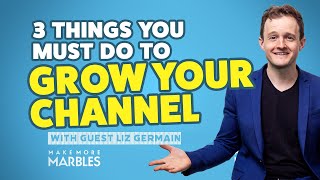
Liz Germain, a YouTube growth expert, breaks down three essentials: define your audience first, prioritize YouTube's recommendation algorithm over external traffic, and use repeatable formats to make videos bingeable. She shares a client who gained 25k subscribers in a month and hit $6k monthly AdSense.
Chapters
Foreign.
What's up, everybody? Welcome to make more marvels. My name is Brad Hart and today I have two very special guests. We have Chris, who's always on. He's just here and this is what he does. He's. He's amazing. And I have a dear friend of mine, Liz, who we haven't seen each other in too long. Liz. I miss my taco buddy.
I know. I need tacos always.
Where are you so grateful that you could join us. I'm so grateful we get to catch up. So back in San Diego, we had like, I don't know if you call it a coven or a commune or a community or something. Some sort of something that, you know, we had the mastermind. We had like all these really cool things going on that we could all hang out together and it was just like, it was nice. Like, I don't miss the place necessarily. I miss the people. And Liz is one of my people. And she moved to Idaho. You're still in Idaho, right? Yeah, and I moved to Phoenix and we're not in San Diego anymore. I'm like, yo, I miss you, bro. And. And she was like, yeah, let's. Let's hang out. So I was like, well, I'm going to do this call anyway and Chris is here, so let's, let's do it. And she's a YouTube exper, so we can ask her all the questions about what works on the YouTubes. So let's dig into it. So first things first, Liz, tell us a little bit about yourself and what you do.
Yeah, so I'm a YouTube organic growth expert, and basically I help people grow and monetize profitable YouTube channels without paid traffic. So essentially who we can support the most is experts, coaches, consultants, service providers, entrepreneurs, I mean, you name it. If you want to grow a brand on YouTube, we can help you do that. So.
So you've heard of Beast mode? This is Mr. Beast mode.
Yeah, exactly.
If you want to be dominating on YouTube, you need to listen to Liz.
One of my favorite things that Mr. Beast or Jimmy says frequently is that all roads lead back to YouTube and when you understand data and engagement and reach and performance and conversions into paid offers, he's 110% correct.
Isn't he also like the top of TikTok too? Doesn't he have the biggest channel there too?
I'm not sure that's a good question.
Yeah, I think he's pretty big on there too. Yeah, I've watched some of his stuff. It's not necessarily my demographic, but it's really entertaining and super fun, and they spend stupid amounts of money to produce it. So it's like, oh, get something good for it. And I think that's what people really start to realize, like, you don't have to go the traditional publishing, the traditional studio, the traditional producing, the traditional whatever route. Just make your best stuff and put it on the Internet. People will find you and you're off to the races. And if you need to monetize, you can do Patreon. You can do a whole bunch of. You sell tickets to shows. You know, I'm using more of an entertainment thing, but, like, I've been listening to this. This show. It's super, bro. It's called Are you Garbage? Is two guys from Philadelphia. They're comedians. I've literally seen them come out of NowHere and get 150,000 subscribers. And they're selling out shows all over the United States. And I'm going to Phoenix. I'm so excited to figure out if I'm garbage. I'm definitely garbage. But, uh, it's like a simple premise done well. They're consistent. They're doing it every week. They got their Patreon. They're making a couple hundred grand on Patreon too, which is awesome. And it's like they have a whole new lifestyle, a whole new possibility. Uh, so how do we get there, Liz? Like, who is it right for? How do you know? People leverage it. What do you see the common mistakes are? Let's just go from there.
Yeah, well, I think. I mean, using kind of that anchor of the biggest YouTuber in the world that everybody knows about. I mean, even Mr. Beast, he started his. One of his very first viral videos was sponsored by a brand that they kind of liked what he was doing and whatever. And they offered him 5,000 to go out and make a video for him. And he said, trust me on this. Round it up to 10k. I'm going to go out into the street and I'm going to give it to somebody that needs it. And that's the whole video concept. So he didn't actually make a dime from any of that. Um, but he was able to enroll the brand into doubling the sponsorship amount. And then he ended up giving that to somebody on the street who actually genuinely needed that money. And the video popped off because there's something to be said about the psychology of human beings. And people love to support high quality, ethical, really good content that they see aligns with their own internal identity. So when you're Getting started on YouTube, the number one thing you need to focus on is who am I creating the videos for? And anytime Mr. B says this all the time too. Anytime you catch yourself saying like, oh, I need to do this for the algorithm. Swap out the word algorithm with the word audience and you're already going to be ahead of 90% of YouTube creators. Right. Because if you focus everything that you do on YouTube, organic, specifically catered to the type of audience that you want to attract. And then we're not just talking demographic info here like mapping out age, genders, locations, education levels, income levels, that's all very important for sure. However, we're also talking about the mindset things, the fears, the values, the triggers, the beliefs, why do they do what they do? And the better you can understand the person you're actually making the content for, the easier it is to recognize patterns in top performing content. So really what YouTube is, is a process of analyzing and adjusting what works best for a particular and specific group of people. What do they watch most, what is most intriguing to them, what aligns most with those internal, you know, lizard brain identity pieces. That's what we help creators figure out is essentially who are we creating the content for? What do they like to watch most on YouTube and then how do we triple down on those particular formats or those particular topics and then basically just washer and repeat that entire process so that we can see exponential channel growth. Yeah.
So I always love to ask experts, especially people have been in the weeds for a while. You've been doing this for as long as I've known you. What's the one thing that, that moves? Like what's the pre show principle? Like the 20% that gets you 80% of the results. So the 4% that gets you 96% of the results in your mind, like if you were to start a channel from scratch, would it be that focus on the audience or is it something different?
Yeah, the audience is going to dictate everything that you do. But the core thing like this kind of the step number two is to prioritize recommendation traffic.
Yeah.
So this is something traffic sources on YouTube Organic is the biggest mist that I see literally everybody make. Right. There's lots of info out there about how to rank for certain keywords through YouTube search and that can be good for leads and sales and things like that, but it's not necessarily great for audience building. I see a lot of entrepreneurs specifically try to game the system, so to speak, and apply a paid traffic strategy to kind of speed things up. That's not great. And the reason that those things are not great to do is because you're not optimizing for how YouTube's algorithms actually are built, which is to keep you people on YouTube longer. And essentially the. The 20 gold really comes when, when a creator understands the traffic sources, the importance of traffic sources, and getting YouTube at a over 80% rate to be the one that's bringing the traffic to you versus you sending social media, Instagram, you know, Instagram story content, you post the video link over there that counts as external traffic. So whether it's that or even if.
It ends up on YouTube. So sending it from my Instagram to YouTube is actually hurting what you're saying?
Yes.
Oh, interesting.
Typically, because what happens is, and you can think about your own behavior in this, let's say you get an email or you see a social media story or post or something, and someone's sending you to a YouTube video, you might click through to watch it for a second, but you're in the middle of doing something else. So you're not already on YouTube in a binge mode of hey, I'm here to watch videos for the next two hours straight. Right? So you're gonna be okay. But your audience retention ends up going off a cliff, essentially. So you'll see a lot of times when people are sending this either paid artificial, like influx of traffic or external social media or email list traffic or whatever, they're not prioritizing YouTube recommendations, which is homepage and suggested, you'll see that, yeah, you might get a lot of initial clicks and the total views might be, you know, sky high because you have a huge million follower Instagram account or something like that, because a lot of people click through to watch it. But then you look deeper into the audience retention reports and we see retention just fall off a cliff after 30 seconds, 60 seconds, 90 seconds, et cetera. So people aren't watching the bulk of the content because they just clicked on it because they were curious. They're not actually already on YouTube trying to find relevant content that is either educational, entertaining, or some combination of both. So it just ends up overall harming the general performance of not only the individual videos themselves, but also the channel averages as a whole. And YouTube's algorithms are looking at that. And really all those algorithms care about is relevancy and performance. So the way that YouTube channels are designed organically is to serve a single value proposition to a very specific audience. And as a creator, your number one priority and goal is to get YouTube to recommend the content you're making on the homepage and suggested, and then occasionally in search as well through, you know, ranking in the top five to 10 videos that pull up.
Okay, but when you send all this. Go ahead.
Yeah, so when you send all this external traffic to the channel that doesn't always translate and so your performance data will decrease and YouTube will look at that and it'll be like, oh, this video must suck because everyone's leaving at 30 seconds. Right. So there's no chance it's going to go viral. There's no chance it's going to get pushed out on the homepage, no chance it's going to get pushed out and suggested because the performance data isn't there to warrant that. So that's the biggest mistake that I see, especially first time creators or people that really don't understand how YouTube organic works end up making the most.
So it feels like, and maybe I'm just kind of paraphrasing here, but correct me if I'm wrong, but it feels like you really want to optimize for having people find your videos while they're already on YouTube. They're already there and it solves their problem so well that they watch the vast majority of it, they binge watch. And you really want to just focus on that. Like if you can create binge watchable content that keeps them on your channel, you win the game.
Yeah. Ultimately what we try to do with organic creators is identify usually four to five main repeatable formats that they can do on the channel. Because it's one thing to get somebody to watch one video, it's a whole separate game to get them to watch one video that leads to the next, that leads to the next, that leads to the next. And when you can crack that second piece of those rabbit holes of related videos that people go down, that's when you start to see exponential channel growth. So ideally, when we're supporting clients, we're looking for where are those repeatable formats that can become a permanent part of the programming strategy of the channel. And we're building that based upon their breakout videos or their top performers. So when you have a video that does far beyond your typical average, as long as it's bringing in the right audience that you meant to bring in, then you would want to double and triple down on that basically until the end of time. So we're not just making individual videos that, you know, every once in a while you have one that does really well. We're looking for the ones that far outperform the typical average in performance and then trying to align that in a way that we can essentially just recreate that same video with different characters, different scenarios, different circumstances, et cetera, until the end of time. And that's how.
Think about your favorite procedural cop show. Like you're gonna watch Law and Order. It's the same Law and Order. You've seen it 50 times that you keep watching it. Why is that? Because you're hooked on the format.
Exactly. Same with like Friends or Seinfeld or some of these TV series that have been around for 20, 30 years.
I met your mother SWAT. Like, I'm watching SWAT right now. I'm in season three. I'm like, I watched Honda do this break down the door thing 58 times and I'm still watching it. Why is that? It's because.
Yep. So it really is. Like people think, I think in their first days of YouTube, they think, oh, if I create the content, they will come. And that's not necessarily true. First, we need to understand who are we even trying to get to come and watch the content. Second, we need to understand what do they watch most or binge watch most on the platform. And we can study the patterns in that top performing content, both from other creators that are already speaking to that audience in a really engaging way, as well as through the analytics data on the the creator channel itself to find those patterns and top performers. And then from there we're basically just trying to repeat that until the cows come home or whatever they say.
So are these all tools that YouTube provides and insights they provide? Are there special softwares that you need to grab? Like, what's the easiest, fastest way to. And I'm open to take this whatever way. Like, I was totally just wanting to catch up with you personally. And we could still do that. So we could go down that rabbit hole. We could go down the rabbit hole of let's look at a bunch of nerdy YouTube stuff and give people some value. I feel like if we're going to have a chat where it's like, hey, we're in front of an audience, we should probably give them some value. Right? I don't. I don't know. I'm speaking for him. But Chris, do you have questions like, where do you want to go? Liz, what do you think?
I'm down for anything, honestly.
Let's go down a YouTube rabbit hole.
Let's. Let's do it. Okay, let's do it.
And then we can always cut the cameras at the end and have like the real green room podcast at the end where we catch up and talk about tacos, because I still want to come see you and I still want to get tacos. So that'll be fun. And are you in Boise? Are you north of there? Where are you? You're in Boise? Okay, cool. Yeah, I love Boise. I'll pop up and see you. All right, cool. So do you want to share your screen? You want me to fumble around or what do you want to do?
Well, I think it really just depends on what do you think people struggle with the most. I could tell you a list of.
I would. Because you say things and I'm like, I would love to just be able to see. See me. Show me one, like, example of. I'm gonna go find a format.
I'm gonna, I'm gonna throw it out there. Brad. Liz, do you want to look at my YouTube and see what I'm doing? Completely and absolutely, utterly wrong.
Yeah, sure, let's do it.
Yeah, you could do that. And then how would you do it? Right, to find the format that's gonna work for Chris, to be able to scale or the four or five formats, wherever it is. Like, how do you go about finding that? So that, that could be cool too. So what's your channel, Chris? And let's pull it up.
It's just Chris, Jenny Yates.
Okay, great.
Pretty easy.
Chris Chandler Yates.
We're gonna go a little deeper. I actually want you to pull it up and share your screen and I'm gonna take over and we're gonna dive through your analytics.
And just while he's doing that, Liz, what have been some of your biggest wins on YouTube?
I think the most recent, I mean, we just are like over here.
Just omit the names too.
And just one big one that we're really excited about and very proud of is within six months, a new client that we just onboarded in January in the health and wellness space had the first three, really the first one to three months, we're considering testing based on patterns and top performers that we're trying to recreate after we go through audience mapping and all of that. And so that first three months was a series of testing videos. Of those 12 videos, because we're doing weekly long form content, we had two that far outperform the typical average. So we started stacking upon those. The channel has had over 1000% growth rate in literally every single category you could have watch time views, AdSense, revenue, etc. And so even this last month alone, now we're six months in. In June, they added an additional 25,000 subscribers.
Wow.
To the channel as a whole. And their AdSense revenue is up over $6,000 a month.
That's killer.
Amazing.
Plenty to keep the lights on and keep moving. And if you keep growing at that pace, you'll be at 60,000 in no time.
Yeah, they're gonna. We're gonna have another couple hundred K plaques behind us here very soon. Love it. So that's a really big one that I'm very excited about.
Well, that's fun, because that's where you got your start. You started making videos in the health and fitness niche years ago, and now you're still crushing it, even though the whole world's changed since then.
Yeah, I could do health and fitness channels blindfolded and handstand upside down. Like the whole.
That's why I tell people about masterminds. Like, you can try to start a mastermind. We've never tried before, but at this point, that's probably not a good idea. Let's just stick to what's proven.
Yeah, exactly.
All right, what do we got, Chris?
There we go. We got it.
Oh, you're gonna be very small. Okay, so you have a very small.
Yeah, I'm very small. I'm. I'm very, very small.
So we're gonna have some limitations here in the data that YouTube will give you, because until you have bigger subscriber viewer engagement metrics, some of the reports that I'm going to show you today are going to be very limited.
However, if it's not too small, I don't know, I'm at like a thousand subscribers.
Ish.
939.
Okay, we can do both. Honestly, now, if you're listening and you are also in that situation where you're brand new, basically the best thing for you to do at this stage is to find the. We always challenge people to find the top 10 to 20 creators that are getting the best engagement for the audience they want to attract. So if you have not yourself become a YouTube viewer and consuming the top performing creators on the channel in your niche yet, that's step one. You'd be surprised how many times I hear people say, oh, I want to succeed on YouTube. I'm like, how much time do you actually spend watching YouTube videos? And they're like, none. I'm like, okay, that's step one. Become a consumer of the content itself.
I watch a lot of it, just not in my niche.
Well, that's step one is start watching.
There we go.
You're competing with. Because without understanding those basics, it's going to be really difficult for you to match and mirror the patterns in that top performing content. So we'll do our best here to give you as many insights as possible. Brad's definitely putting me on the spot here, but that's fine. Again, we could do this blindfolded. Let's go all of 2023 so far, and we're going to take a look at first and foremost, the number one most important thing, who is the audience? So down here, YouTube's going to show you it's mostly male. Okay. Almost 90% male currently. Top country, US. That's perfect. That's what you want. That's where your highest CPMs, RPMs, best conversions are going to come from is first world countries. Especially if you're already in the States. You want US traffic.
Okay, I'm based in New Zealand, so. But I do want US traffic.
You still want US traffic. Just trust me on that one.
So that's actually, I'm trying to break into the US So there you go.
Beautiful. Where you're already on your way. So most of the people that are interacting with your content right now are not actually subscribed. Majority is male. And you have quite a split here, mostly between Gen Z and Millennial. Millennials. Okay, so is that. I'll just pause there. Is that the actual audience you want to attract?
Depends on which one I'm. I'm going for. Like where I'm coaching individuals. Yes.
Okay, so this is another thing you want to kind of pay attention to is your new versus returning viewers. So what this is telling me is you're probably doing a lot of shorts right now. Let's.
Yeah, I have been for the. I spent three months in the US and all I did was shorts pretty much.
So you see those blue spikes, right? That's all the new people coming in, seeing your content. But we can already tell they're not subscribing in the. At the levels that we would want them to convert into subscribers. They're also not coming back to watch more content on the channel. And this is a big, big challenge with shorts that a lot of people don't realize that, yes, you can have a lot of viral growth with shorts. However, are those actually the right types of viewers and are they leading into watching multiple videos on the channel or creating those rabbit holes for people to go down? And currently, right now, that's not the case. Yeah, look at this. So shorts feed is 95% of the traffic you're getting. Your main goal on YouTube. If you really want to grow a massive channel, a massive audience and make a lot of money doing it is to get the top three traffic sources on your channel to be browse features, which is YouTube homepage and subscription feed, which is essentially channels that are subscribed to you and they have a secondary homepage for just the channels you're subscribed to and then secondarily or this one's harder to crack, so that's why I put it second. But second, you want suggest a video. So when someone's on the watch page, you want YouTube to put your video up next or in the sidebar recommendations. And then third, if you're using YouTube especially for business, YouTube search traffic is also something you want to kind of optimize for. So Shorts feed is a completely separate, separate algorithm. You almost want to see Shorts as like Russian roulette. The CPMs, the RPMs, the quality of viewers, etc. Tends to be way lower. So while you may get a lot of views on Shorts, you may get some subscriber conversions from Shorts. If they're not going on to watch multiple videos in a row, then we have an issue. So if we look at so far just with the content, and this is just since January, we're in Shorts here right now, but let's look at all the content. Most of your subscribers right now are coming from Shorts. Most of your views are also coming from Shorts. However, we just saw that the new verse returning viewers, those brand new Shorts viewers are not coming back to watch multiple videos on the channel. And so I'm going to pause screen share real quick and show you this because it's going to literally simplify. Everything that you're doing is all you really need to focus on. Okay, first of all, who's the viewer? Who are we making the content for? That's super important. We want to look at demographics, psychographics, online behavior, offline behavior. And what we're trying to do is map out a typical day in the life of what those people enjoy, what they're interacting with, what they're watching most on YouTube, et cetera. So we want to get a really clear picture of who are the people. And if this is something that a lot of people struggle with too, is like if you struggle with narrowing your niche in that way. What we would want to look at is do you know a group of 30 people that share a lot of the same characteristics in real life? Because if we can find a group of 30 people that share similar characteristics and goals and values and triggers and beliefs and whatever the likelihood that there's 30 million other people just like them. I know everybody thinks they're a unique snowflake and that is true on some level. But human beings are they also. We have, we're tribal, right? We have groups of people. So really creating content is identifying first and foremost who's the group of people that this is going to really speak to the most. From there then we can analyze and identify where are the top performing pieces of content or creators on the channel that are already speaking to those people and engaging them in a positive way. Find those patterns, isolate the patterns and then put them into our own video plan. So that you're not starting from bare minimum 0, 0 information, 0 data, etc. We want to find the top 10 to 20 creators that are already speaking to them and then study patterns in their top performing content so that we're much more likely to succeed with that same audience. So let's say you put together 10 experimental videos based on patterns you found in top performing content. From there, your second kind of goal, and this is how YouTube works, this is what it, it prioritizes from the viewer perspective. And you can think about when you're on YouTube too. You go through all, all four of these phases. First and foremost, do you see the content in impressions? Okay, so when we're talking about traffic sources and optimizing traffic sources, we have the homepage here, right? And then we have the subscription feed. Like I mentioned, this is the, basically a homepage for the channel somebody subscribed to. So these are the two homepage browse feature traffic sources, so to speak. Then we have, let's say we're on the homepage and we click on something, give CODY Some, some AdSense revenue, right? So if you're on the watch page, we have suggested video. So that's the second recommendation traffic source. Suggested video includes these sidebar recommendations here. And then at the end of a video, after the end screen that a creator can pop on their video. You've probably seen this before. YouTube, just like Netflix does this too. It will show you, hey, we recommend these videos next, right? So that's YouTube recommendation traffic homepage. And suggested those are like if you want to grow really fast, really big in the shortest period of time, you have to prioritize that recommendation traffic. Okay, so the third one that we want to prioritize is YouTube search. That typically works better for generating leads and sales around certain search queries that your customers have. But the limitation if you just do a YouTube search strategy is we call those resource channels. It's like you Might have one video that has a million views, but the rest of them on average have three to 500 views. Right. So that's showing you like, oh, people are really interested in this one topic, but they don't have a relationship with you as a creator. So you have pros and cons to each type of strategy. But step one is do that. Does the viewer even see your videos in one of those three main traffic sources we want? You don't have direct control over that, but what you do have direct control over is the next three phases that a viewer experiences. First, not first, but second is if they do see it there, what percentage of people are actually clicking through to watch it. So your click through rate and the packaging, the title, the thumbnail, the topic, and is it relevant or not, that's what determines click through rate. So is it relevant for the audience that you want? First and foremost is the foundation. And then your click through rate is going to be determined by the packaging that you create for the video. Your packaging of the video is just as, if not more important than what the video itself actually is. Because if people don't click on it, it doesn't matter what the video is. Right. So most people's biggest opportunities with YouTube organic is to get better at packaging their videos in a clickable way. And really that comes down to writing better titles, creating better thumbnail designs using some of the core fundamentals of not just YouTube best practices, but also human psychology. You know, a good thumbnail, for example, has three main elements. It has simplicity. It uses color theory to elicit certain emotions or pop off of a white or black background, because that's all YouTube will ever be. And there's always some kind of conflict, momentum or curiosity gap that's created in that imagery and those thumbnail images they have. You have like 13 milliseconds is the average length of time that it takes for the brain to process images. Right. So your thumbnails are so important it can't be stressed enough. Mr. B piece will make like 50 different thumbnails just for one video.
Or is he like somehow split or is he like somehow split testing all those?
Yeah, he has like teams and teams of people that help create the thumbnail designs. And I can't speak specifically to all the nitty gritty details, but what I can tell you is they will usually look at the click through rates in the first hour. The first. Right.
So if it's not what they expect, they'll change it up.
Exactly. And they have, you know, up to 50 thumbnails, sometimes even more that are already ready to go. So they're measuring within the first hour, the first 24 hours for sure, the first 72 hours for sure, and then probably in between there to hit baseline goals for what we're looking for. So usually with click through rates, we're looking ideally for a 7 to 10% minimum baseline in that first week after upload. If you can get higher than that, you know, sometimes he'll get, you know, if you get a 20 click through rate, that's, that's pristine, right? So 7 to 10% percent is kind of your typical average baseline. That means like, okay, this is a good video, we packaged it well, etc. If it's any lower than that, especially in the first week after upload, it's what that's communicating to you is that either the topic isn't relevant, the packaging wasn't clickable, you didn't create enough of a curiosity gap. You, maybe your titles were too long winded and it wasn't easy for somebody to understand in 13 milliseconds what the value proposition of that video is. So this click through rate is super, super important. Can't be stressed enough from there. Let's say they do click on it, right? When they're on the video, how long are they staying on the video? Do they drop off after 30 seconds? Do they watch five minutes, do they watch 20 minutes? Like what percentage of the, of the video itself are they actually making it through? So with that, we want for long form content, we want minimum baseline and this is like bare minimum baseline would be 40% retention, whether it's a five minute video, an hour long video, et cetera. If we can't keep their attention for 40% of it, then we have a little bit of a problem. Maybe we didn't set up the, the concept of the video correctly. Maybe the hook wasn't truly intriguing. There's all kinds of things that can come into that. Maybe the editing sucked, maybe it was just boring, it was too long winded. I see. People will repeat the same thing over and over like three times, right? We didn't need three times for that. We could have just had one punchy sentence to communicate the exact same thing. Right? So all kinds of things that go into audience retention. But that's, that's kind of phase three is getting them to watch larger and larger percentages. Because everything on YouTube is built to keep people on YouTube. So you as a YouTube creator, the more that you align yourself with YouTube's business goals, which is to keep people on YouTube and to get them to come back tomorrow, the better that your channel will perform long term. So that's audience retention. And then from there, let's say they watch 70% of a, of a video that they click through. Do they just leave and they never come back to the channel from there or do they go on to watch another video and another video and another video and they come back next week and they come back week after. This watch more piece is really where that new versus returning viewers element comes in. So the, a challenge with like what you have on your channel currently with just shorts strategy, you might get a lot of new viewers in, but if they're not converting into active, engaged long term viewers, then it's essentially the same as having a vanity metric. Right. Like it doesn't really do anything for you in the long haul as far as building relationships, increasing watch time, increasing revenue, pulling in a higher quality audience that actually cares about what you're saying versus just like the concept of that quick little short that you made. So even though you can't control impressions, what you can control is getting better at click through rate audience retention and bringing people back to the channel by creating series of related videos based on your top performers. And when you get better at these three things, your impressions are pretty much guaranteed to, to go way up because that's what YouTube's built to do.
Okay, so if we were to kind of just, just bullet point this whole conversation. So basically what are our people watching already? Right? Who are our people? What are they watching already? What are the formats that we can repeat again and again? Let's test those formats. Like test until we get ones that like really hook and then make as many of those formats as possible, keeping people on the channel as long as possible and not necessarily sending traffic from shorts or from anywhere else for that matter, until you get that down, until there's like a really high quality stick rate where people are like going to stick around on this channel and start to binge watch and, and subscribe and all that great stuff.
Yeah, essentially. Yeah. And we don't want to be infiltrating that with less engaged people that already aren't already on YouTube because that can reduce your performance in retention and total watch time.
Yeah, and like this is, I, I don't, you know, this is my channel, but it's something I do listen to. Like this is really high quality funny content and like even their, their thumbnails are just the same thing again and again. It's just like a couple of pictures. This guy's laughing and. And, you know, they, they do all right. You know, this guy's got 500 videos, 150,000 subscribers. They're doing another 70, 80,000amonth on Patreon. Like, they're, they're kicking ass, taking names. They just sold out a tour around the United States. Like, they're doing really well. And they came out almost nowhere in a year, you know, so this can be hacked as well. Once you get the format right, I think that's the most important thing. But they have the format. It's a fun show that they, they have, like a cool way to do it. They're really excited about it. And it's just like, these are funny guys.
Exactly. So we're trying to create series of related or repeatable formats. And so basically, your initiation into the YouTube organic world is going to feel like how you would do with paid traffic, too. You're going to test out a variety of campaigns designed to pull in a certain audience. When you have one or two campaigns outperform the rest. And we're just going to double, triple, quadruple down those things. And that's how you start to see exponential channel growth.
I love it. I love it. And then a lot of people have already figured it out. So it's just being that consumer of great content where you're like, oh, okay, cool. I always like to cross pollinate, too. Like, you might, let's say you're, I don't know, just use my example. You're a mastermind guy, right? I don't want to figure out what people want to learn in the mastermind niche necessarily by myself. I want to go to, like, you know, other people's channels and figure out, well, what's working for them. Or I can even go into, like, a different industry. Like real estate training, I think, is really good. Like, there's a ton of competition in the real estate training niche. It's a, it's kind of a cutthroat industry in a way, but, like, they've got the content game down. And what I've noticed is, like, as far as a format, there's people are just like, recording them, making calls to buyers and agents and sellers and just, just, just for hours. And it's like three hours. It's just like, like, literally he's just, he's just calling, cold calling for three hours with the camera on him. And I'm like, people watch this shit. But it's true. Like, people watch it because they want to get that confidence of like, oh, I could do that too. And what did he say?
People watch gamers all the time. It's crazy. You know, the whole gaming thing. Like when. But like when people started telling me that, oh, you can watch somebody game for 12 hours, 24 hours, I was like, really? People pay to watch that? Like, but it's crazy because it's something.
You would have done anyway in a room by yourself. And now you can monetize it on YouTube.
Exactly.
It's wild.
I'm gonna give you both, and we could, we could easily pull back up your channel and I'll show you kind of the back end of where you're even supposed to be looking for this information if you want. But before we do that, I would love to give you both one of the most valuable tips that I could give you in the short, impromptu meeting. Let me switch over to a dummy account.
Isn't she the best? Clap it up for Liz. Hashtag Liz rocks.
So let's look at. What was it? Are you garbage?
I just went and followed you on YouTube as well, by the way.
Why?
Yeah, subscribe on YouTube. What's your channel? Is it just Liz Germaine or something else?
Liz does video, but I don't have time to do my own content right now. However, that will be changing next year, so stay tuned. Let me give you this. Okay, so let's say you find. Okay, here's the top 10 creators in my space. When you install Vidiq, this is literally like a YouTube PhD in five minutes. Install Vidiq. You asked about tools you need tubebuddy and you need vidiq. Each one has pros and cons, things that they're, you know, strengths, weaknesses, whatever. This is one of the best parts about Vidiq is on any channel, when you find top performing creators, you can use Vidiq to look at what's trending for them. Now, the difference between looking at this versus recent videos they've uploaded or most historically most popular videos on the channel is this is going to show you which view or which videos they have that are getting the fastest number of vph, which is views per hour. This is also called Velocity. So these are the ones that are getting the most, the most views on the channel. Right? So instead of looking at an entire channel strategy, this is like the ultimate shortcut is just use this trending tool and see if you notice any patterns in that top performing content. And this is where you would want to pull ideas and do a brainstorm from is when you find the top 10 to 20 creators within your space. Go and look at what's trending for them and see if you notice any patterns in that top performing content. So like I was just doing a consult with a, a health related channel earlier, earlier this morning and some of the. I can tell you, Dr. Berg and Stanberg, I'm just, I'm just going to show you this, right? So if you were a health creator, let me pull up these two dudes channels. This is obviously by no means an exhaustive list but if we look at and we use that little hack, we look at their fastest feed videos. One thing you're going to definitely find over time is that you'll see the formats. Right? So if we look at. Let's look at Dr. Ekberg here. He's got Top foods is a repeatable format. He has that does really well. Warning signs of XYZ heart, you know, condition, health condition, clogged arteries, heart problems, warning signs of Alzheimer's. That's something that's this perfect example of what we're talking about with formats. And then he has another format too that he repeats a lot which is the number one thing you need to know about xyz, right? So that's what we're talking about with formats or top foods. For example, here's the, you know, top five foods you need to eat for this result where he can repeat that until the end of time, right? So we instantly we can see out of his highest viewed videos that are happening on the platform. 888 views per hour, 687 views per hour. Etc, we see those top performing formats. Now if we go over and look at another top performing creator and just for the record, he has 3 million subscribers and Dr. Berg has 10 million subscribers, almost 11 million subscribers, right? So these are the big channels that you really want to be pulling these patterns from. If we look over here, check that out. He also has a warning signs format, right? He also has, look at that, 23 signs. That's a warning signs format that. Let's see if he has some of the other top foods. He also has the top foods format. Okay, great. We just basically crack the code if you want to be successful in the health and wellness space, test those formats out because we can see success leaves clues. And this vid IQ trending tool will show you not just you know, here's because we could also look at this here, right? Like look at the historically most popular, the videos that have gotten the most views. But some of these are really old. Four years, seven years, four Years, six years. What worked seven years ago may or may not work now. So the benefit and the value of using this trending tool is we can see what's actually working right now as we speak on the channel. What's getting the most amount of engagement, the most amount of reach, most amount of views. And then from there we're just looking and aiming to isolate patterns in top performing formats that we can then recreate in our own unique way, but without sacrificing the fact that there's clearly a pattern here with these formats.
Right.
Like if we just. If I'm in health and wellness, this is exactly what I'm going to do. I'm going to roll out a topic, top foods. I'm going to roll out of warning signs of XYZ condition. I'm going to roll out a number one thing you need to know about X desired result, etc, and we're going to test those out instead of just spinning our wheels and putting out, you know, random things that aren't matching up with these patterns in the top performers for that.
I love it. And then let me, let me ask you, is it linear or is it exponential when it comes to like exponential having a channel with like a million views versus 10 million views, are you making 10 times as much money or a hundred times more money? Like, like where does that.
And it has no cap. So.
Yeah. So like what's, what's Mr. Beast bringing down on YouTube now? What do you think?
Oh my God. Literally just be. Well, he has like six different channel properties, so each one of them is producing insane levels of revenue. However, there's like he could spend, you know, 10 million on a video and then make it back in 10. He'll make, you know, a million dollars in 10 minutes. That literally just happened a few weeks ago. So his, he's on this like insane revenue roller coaster. However, there's a new tool that's coming out that's going to change that and bring in projected around 6 million a month, which creates the video budget for him so he doesn't have to be on this like high and low roller coaster.
Yeah, well, he's got other properties too. He does. Mr. Beast Burger brings in a ton of money. I think they did 100 million with that. That's nuts. Like, there's so many ways to monetize that. I think Alex Hermosi, he did a, an interview with this guy who had like 5 million subscribers. Like, if I had 5 million subscribers, I'd be a billionaire. Because I can convert. Right. It's like you have the ability to convert, you have the ability to build an audience. If you have both, it's game over. It's unbelievable.
Yeah, yeah. You're just, you might as well retire tomorrow. Yeah. Unless you want to work like us. We're all.
Yeah, I think that's another. Well, we enjoy what we do. If you look at it from the perspective of short term versus long term as well, like, like every platform but YouTube is devaluing your content. YouTube is the only one that's getting more valuable as you go. And like I've got videos from seven, eight years ago that are still getting views a lot. Like, you know, quite a few views and they're not even like they were kind of an accident, you know, it's just interesting. I've got one that has like 77,000 views and people still reach out to me about it, like thousands of them. It's crazy.
I know. It's awesome when you crack that, especially when you're using this, this repeatable format strategy.
Yeah.
Because eventually, let's say you have one video that's a breakout video and you start stacking upon it and all of a sudden you take that one top performing video and you turn it into 10 related videos to it. Because of how YouTube's recommendation system works.
Right.
Rising tide will lift all boats. So that one video will continue to perform evergreen long term. And then the second and the third and the fourth and what, whatever, you know, you might come back to it. Yeah, exactly.
And you reference it in the video. I'm sure, like I had this video, go check it out.
You're linking them together to help manually create data relationships between videos. And then YouTube say I sees that and it's like, oh my God, this is amazing. Look, people are spending on average two hours watching this creator content. Let's blast them out on the homepage. So that process can. Is way more evergreen than like timeline, social media based, you know, going viral on TikTok. That's great. You might reach a lot of people. But are they the right people and are they actually interested in going deeper with you and buying a product or spending 20 minutes with you at a time, et cetera. So yeah, overall plus YouTube pays more than any other platform above and beyond, like just next level. I think Instagram just got rid of their little creator bonus thing that they were rolling out, which is unfortunate. But I've also noticed recently in the last like month or so, Facebook has started kind of copying what YouTube's doing with having mid roll ads so it'll be interesting to see how that changes for, for the Gen X and older millennial creators because that's who's on Facebook.
I would say I'm short YouTube and Facebook or sorry, I'm short Facebook and their properties Meta and I'm long Google and YouTube for that reason is like they're just aligning with more like I, I. It's heartbreaking to create Facebook content for 10 years and they'll throw you out in two seconds and none of the content still is relevant years later. It's just as. And you can put the same content on YouTube and focus there and in 10 years you could have a whole life, you know, built on YouTube. Now that you know that that has its challenge as well. I would diversify that out. But you know, it's, it's really interesting. And then when you start to look at Patreon, you start to look at product you like start to look at sponsorships and consistent revenue streams and just the amount of things you can do is just having that YouTube channel, it's, it's kind of like endless, you know. But anyway, we could beat that horse to, to a. Paul.
I've got, I've actually got a question on that because I've spent a lot of time on Instagram and like my business that initially I'm ex law enforcement Liz and then I went into helping with fitness type side of stuff. Helping people pass the fitness test and give them the tools not to burn out. I'm now pivoting into just eliminating burnout in police departments. What I'm hearing is that instead of trying to focus a lot of my content now around the burnout and mindset stuff on Instagram. I should be doing long form videos and focus really hardcore on the content of YouTube so that it's a multi revenue stream as such.
Yeah. Because YouTube will open up. Yeah. You, you'll get more better qualified and higher quality leads and sales for offers. But it also leads to adsense revenue, leads to potential brand deals and sponsorships, affiliate revenue if you're ever featuring a product. What I can tell you for sure about the especially Gen Z and millennial male audience that's going to resonate with somebody that has a law enforcement background. They're probably lean more to the right politically. You probably follow people like Andrew tate, you know, PBD, podcasts, etc. They're wanting to become better. Some of the core desires and values you're probably going to see with that audience are building muscle, having confidence. I'm Trying to think of some other things that I've seen as far as.
Patterns with that male confidence motivation. I literally did a poll on Instagram just to see running a new webinar and the top things that are getting his first steps to eliminating burnout, taking back control, how to prioritize yourself and steps to unlock mental strength.
I would say substance abuse is probably one that would resonate.
Yeah. How not to substance. How not to do. Yeah. How not to fall into those addiction.
For sure. I wouldn't make that a core central piece of the programming strategy, though. Those guys are going to want to know how to get girls, how to attract quality girls. They're also going to want to know how to make more money, how to keep them. Yeah, right. And they're going to want to know how to look and feel good by having, you know, like the bigger muscles type of deal.
Yeah. Be the SWAT guys.
Yeah. Essentially, like when we're looking at patterns in audiences, it may seem for especially in this current climate that we're like, it's very stereotypical. Stereotypical. But it's because it is like people have patterns of behavior.
Stereotypes are for a reason. They're stereotypes.
Exactly.
It's a lot of times it's true. I'm not saying it's generalizing everybody, but that's the truth. You know, if I'm a white male that's 37, I'm gonna have a different living in Phoenix, Arizona. I'm gonna have a different set of values than somebody who's living in Portland or somebody's living in New York or somebody's living even the same white male. Right. It's just different. Different.
Yeah. So you want to get crystal, crystal clear on what's actually important to them, especially with values, beliefs, fears, triggers, etc, and then structure your content based on who are they already watching most within the industry that I'm in. So, like, you wouldn't want to go full blown Andrew Tate style with that. If your core offers are related to health and fitness, we'd want to be looking at more, you know, like, I tried keto for 30 days. Here's what happened. Right. That I tried. Format might be something that's more interesting for you or speaking into some of the common things that I'm seeing patterns in around a lot with that particular audience, which is, you know, what is it like to take testosterone shots? Right. Or, you know, maybe you look at certain products or gym workout routines, like best upper body things to build size and bulk in the shoulders. Like, what are those core Things. Things that they actually want. And how do you match your strategy? Not just in a way that's going to attract them in based on those.
What would be your. Because I'm working to kind of get away from being the, like, being that fitness. Doing all the, all the fitness kind of side of stuff and more the mindset, you know, using mindset.
Nobody buys mindset, bro.
Yeah, I know that you can't speak to the.
You can't speak to the core issue. You got to speak to the symptoms that they want to understand. Right. It's like, like if you, if you go in as the doctor and you're like, oh, you have this. And they haven't done the logical and emotional leaps together.
The, the. The issue is people don't want to suffer from ptsd. They don't want to get nailed by the trauma.
Yeah.
That's what I'm solving.
Yeah. And is that what they say or is that what, you know, is the issue underneath?
No, like they, they literally are. They're literally saying along the lines of this job screws us up and nobody should do this job anymore because it screws us up.
Okay.
And nobody cares about us.
Yeah.
Is that law enforcement specifically or.
Yeah.
Yeah. It probably also extends to military veterans, et cetera. Okay.
Hardcore law enforcement right now. Like, I know, I know almost every cop that I've talked to that is retiring or that has been in for more than five years is going. I wouldn't even. I'm telling my kids, don't do this job. Yeah.
Is the system broken? How to. How to, you know, make sense of the current state of policing. That could be a headline. Top 10 Ways I Top 10 Things I Would do differently if I started over as a police officer.
Yeah. If I had to start over here as four steps I'd take.
Yeah.
That's a really good repeatable. Not necessarily repeatable on the same channel, but I see that pattern across a bunch of top performing channels too. Like, each of them has at least one or two videos.
The number one thing that cops. Causes cops to burn out. Out the most dangerous myths about being a police officer that you wish you knew before you started or whatever. You know, you could kind of play with that.
Yeah. All those kind of the truth about.
Being a police officer that nobody will tell you.
Yeah. Or X things I wish I knew in my 20s, you know, or X mistakes that I made going into law enforcement or the reality of. Or the truth about. Right. Like some of those core things, warning.
Signs you might be about to burn out Out.
Yeah, I think, yeah, that's a really noble cause. And if you are able to. One thing that you could do. Okay, so one thing that you could do, and this has the potential to be much broader audience. But then whenever you go broader audience and you grow an audience bigger, you're going to have a higher percentage of the people within that bigger audience that are going to be perfect ideal viewers for you that are going to become the binge watchers, the lifers, so to speak, or we call it your love group. Right. So what you'll find over time is when you're developing four or five core repeatable formats on, on a channel like this is that each series of related videos is going to be really good at some things and not so great at other things. So for example, series one might be really good at getting wide reach and bringing new eyeballs to the channel, whereas series three might be really good at converting a percentage of that wider audience into an offer on the back end. Right. Because it's very specifically catered and it's not going after the wide audience. So. So when you are trying to pull these types of guys in, you need to study up on red pill content. Definitely study up on anything happening in politics, study up on changes in the law. Basically anything that's going to be like if something happens in this regard or if there's a big controversy or there's a big trend that's happening, especially if it's polarized. Right. Can you be the voice for those people and provide reaction or review content even to what's happening in the world around them that makes them feel that experience of being overwhelmed or being like, nobody cares about me. Right. What's the antidote to that is to feel like they're significant by being able to kind of spitball and complain about what's going on in the world around them. Not that you're going to create content that like feeds into the complaints, but can you become a kind of a pillar of support and, and you know, reinforcing good ethics, being a good person despite what's going on around you, etc, by using some of the trending topics or breaking news stories even that are going to already have the attention of that particular audience. Does that make sense?
Makes total sense.
Yeah. Caleb at BetterWealth, he just did a big video because Dave Ramsey got sued and Dave Ramsey's like his biggest competitor, so he did a whole breakdown video, the whole lawsuit. And, and the thing was like $150 million lawsuit with Dave Ramsey and like that was that was the video and it crushed. Right. So it was just him going through news articles and giving his opinion and kind of giving both sides of the story and that was it.
What I'm hearing is YouTube's the place to do it. Not everywhere else currently at the moment.
I mean, I'm biased, but that's because I know I look at data all day, every day. So I can tell you the quality of viewers you're going to attract, the revenue potential and the evergreen nature of YouTube content as a whole. It's a much smarter play for the long term, especially with way higher ROI potential than pretty much everywhere else.
So that's beautiful.
Probably social media managers will debate me on that and I will, I will debate until the cows come home because I'll show them the numbers, especially with profit numbers. Right. But that's my.
I want to, I want to say thanks, Liz. A lot of good stuff for me today, like with things and I could ask you a million questions. I could be here for like the whole rest of the day asking questions about it. But I know.
Yeah.
So I appreciate it.
How do people get in touch with you, Liz? If they want to work with you, who's right to work with you? What stage of the game they need to be at? Who your ideal clients? Let's send them your way.
We can help pretty much anybody that has the goal to grow an audience that's profitable. So my preferences for people to work with is coaches, consultants, entrepreneurs. We really are good at obviously health and wellness related topics because that's how I got good at YouTube in the first place. And as far as contacting anywhere on all platforms at Liz does video or you can go to vidfluence.com v I-f l U-E-N-E.com to learn more about our services and programs.
That's vidfluence.com or Liz does video anywhere on the social. All right, Liz, you're a rock star. We appreciate you. We're going to cut this and if you got a few minutes to stick around and catch up, I'd love to do media. So.
Yeah, for sure.
Thanks, everybody. Hashtag replay. If you're watching the replay, hashtag live. If you're on the live, hit us up in the comments. You can tag Liz Germaine on the comments as well. I'll talk to you soon.
More from Brad

The #1 Reason AI Isn’t Working for You (Yet) #AI #businessowner #founderenergy




What tasks would the best assistant ever be able to do for you? #BusinessSystems #BusinessOperations



Nobody expects you to use a harder way when there's a better way. #AI #businessowner

Which side of the table will you be on in 2026? #AI #Mastermind #BusinessOwner

