Masterminds Success with Entrepreneur & Finance Expert Brad Hart - The Creator's Adventure #17
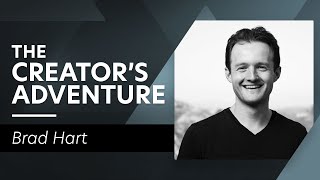
Interview with Brad Hart (founder of Make More Marbles) on The Creator's Adventure (#17) about his path from Wall Street to entrepreneurship, lessons from running a hedge fund, and building a values-based company focused on helping entrepreneurs generate, grow, and give wealth. He explains the 'Make More Marbles' metaphor (flow, capacity, growth vs. certainty), contrasts books, courses, coaching, events and masterminds, and gives tactical advice for launching masterminds (start with 8–15 members, focus on hot seats/networking/content, vet for mindset and confidentiality rather than status). He also mentions upcoming investment services (Series 65), crypto education resources, and where to find his books and free materials (8minutemastermind.com, 8minutemoneymanager.com, NFT Crypto community).
Chapters
Welcome to the Creator's Adventure where we interview creators from around the world, hearing their stories about growing a business. My name is Brian McAnulty. I'm the founder of Heights platform. And today I'm talking with Brad Hart about his journey from Wall street to entrepreneurship, how to run a successful mastermind, and how to help people make more impact, earn more and gain fulfillment in their.
Hey everyone. We're here today with Brad hart. And with 20 years of experience as an entrepreneur and 16 years managing wealth under his belt, Brad is committed to helping entrepreneurs and investors reach their full potential so they can focus on solving the grand challenges of our time. His company, Make More Marbles is focused on helping people generate, grow and give wealth based on their core values. And with his books and trainings, he helps leaders heal the world with masterminds and learn time tested principles for managing wealth. Brad is the author of the 8 Minute Mastermind and the 8 Minute Money Manager. Brad, welcome to the show.
Thank you so much for having me, Brian. It's a wonderful pleasure to be here. Thank you everybody for listening. I hope you get something really wonderful out of this interview that helps you.
Cool. So I want to start off where you went from working with hedge funds to starting your own company. Make More Marbles. Can you tell us a little bit about your story and how you got there?
Sure. So the condensed version is money was always an issue growing up. So I always wanted to make a lot of money. And I felt like the best way to do that was as an entrepreneur. And I didn't really know how to spell entrepreneur up until I was like 20 something. Right. You read the book Rich Dad, Poor dad, you kind of get this idea in your head of what it could be. So my first foray was I was working on Wall street at the time. I got my license to sell real estate and I did that in New York for a while. And that was my first entrepreneurial job. I had a really great career group of people that taught me a lot of wonderful things. Give a shout out to Bond New York. They're still running strong there. Top 10 real estate firm in New York. And within two years I had gotten like six promotions and had a bunch of people working under me. It was really great. So that was the first time I'd ever learned to market, to spend my own advertising dollars to generate leads, to work deals, to negotiate with big landlords. And that was a real turning point for me realizing like, oh, I can be responsible for more than just one segment of a business or not just Be a cog in a wheel, but actually think about myself as a business. So when that came to an end, around the time my dad passed away, I realized that I wanted to do something that was more entrepreneurial. I took a little bit of time to learn how to trade stocks and options and eventually had a hedge fund that did pretty well as my first, I would say, big success startup company that had a really great year. We over doubled the money for our investors, a little less net of fees and, and ended up shutting that down in 2014. Just decided it wasn't for me lifestyle wise, but I had, you know, achieved what I had set out to achieve, which is make a lot of money in a short amount of time. And it gave me the two realizations. One realization was that money wasn't going to solve all my problems. And the second realization that money, you know, success tied to nothing but, you know, in and of itself is kind of irrelevant, right? Like, why are you being successful? Who are you trying to help? What are you trying to serve? And that's a different answer for everybody. You know, Tony Robbins talks about the, the science of achievement versus the art of fulfillment. I believe everybody's answer a little bit different. But I wasn't fulfilled doing what I was doing, so I had to switch gears. So Make More Marbles came out of this desire. Where I had been in Wall street and I'd been all these different businesses that were all part of the wealth cycle, but they were the part where like, things are divvied up and decided and competitive and, you know, it's like Hungry hungry hippos grab them for all the marbles. I'm like, what if we just made more marbles? I was like, oh, that's kind of a catchy name. I'm going to call my company that. And for the last, you know, almost 10 years of having to explain to everybody what it is. So if I was to name a company again, I might not go for the inside joke, but to catch people's attention and stick in their mind. So, yeah, like, like you said, we've become, you know, pretty big marketers, you know, top affiliate for Tony. He's had a huge impact in my life. I've been at 15 events. We came in number eight, his big affiliate promotion a couple years back, which is great. And we've helped, you know, thousands of people at this point through our books, courses, masterminds, et cetera, to get more leverage in their business so they can help more, earn more money, invest that money and then give it away as well.
Awesome. So I want to actually go into a little bit more about. If you could explain about the name and the metaphor. So we saw on your website you have this promotional video where you talk about the metaphor of flow and capacity. So can you explain a little bit more of that analogy and how that connects with the name? Make more marbles.
That's actually great. You guys dug deep. I haven't looked at that video in probably years. But the idea of that is as we grow, right? There's. This is again, going back to what Tony teaches. There's really six human needs, right? And they're based on the ones you focus on the most is how your life is going to go. The vast majority of people in society are focused on certainty and security, right? Certainty and let's say significance are like the top two. And the problem with that is that they're opposed to getting variety in your life, right? So you're always feeling like you're lacking variety and they're opposed to love and connection, right? The more significant you feel, the less loved and connected you feel as well. The only way to break out of that, just long story short, without diving into the whole teaching, which could take hours, is to focus on the needs of the spirit, which he calls growth and contribution. So if you're always growing, you're always giving. The side effect of that is that your certainty will be taken care of. You'll get variety in your life, you'll feel significant and you'll be connected to people and you'll have love in your life. So when I think about flow and capacity, I think about. It's this idea of getting into flow, about pushing past your. You know, I'm kind of mixing a few different books here. So this is like power versus force. So it's like pushing past what you know you can do, but not so far past it to where you break down and not so far below it where you're. Where you're bored or you're just not growing and you kind of fall out of. Out of flow, right? So flow is like that 1 to 4% mark above where your current level of capability is. And that in turn increases your capacity, right? Over time. It allows you to achieve more and be able to do more. So on a percentage scale, you might only be going 1 to 4% above your current capacity, but that in and of itself is actually compounding and growing because your capacity is growing over time. So, you know, if you were in the stock market and you got, you know, 1% gain per day, that would be an insane return. Right? That would be like 3,778%. That'd be 38 times in a year over a decade. It's multiple millions of percentage. And you know, most people don't realize you can't really do that with investments necessarily. But you can do that by investing in your skills. You can do that by growing yourself. You can do that by, you know, having the, the anticipatory effect of like bringing people around you that are also striving for being the top at something, for example. So if you yourself are working on yourself and you're surrounding yourself by people who are working on yourselves and you're aligning your interests and your incentives in the same direction, now things become exponentially more incredible. Right? This is why you can now have multi billion dollar companies coming out of nowhere in a couple years. Because between leverage of technology people and systems, you can go really far, really fast.
Awesome. Yeah. So I like that, I like to hear that transition of how you started in something like finance and to now what you're working on with this coaching, the masterminds, everything like that. Because it's so different, it's such a different world that from.
And it never stopped being my love. I'll be honest, like we're going back that direction again because I get so many people coming out of the woodwork asking me about crypto. I've been in crypto for 10 years now or whatever it is. And you know, I was looking at bitcoins when they're $0.05 and I was buying them under a hundred bucks and I was buying Ethereum at $8 and most of the time I just held and I would kind of weigh in when people would ask me questions because I had the traditional finance background. But generally speaking, I wasn't giving advice, I wasn't trying to specifically give anybody recommendations. I was trying to help them understand. And that just came organically so overwhelming that I had to build systems in my life to be able to do that. So I gave out this free cheat sheet for people about early blockchain technology that got downloaded tens of thousands of times. And then that became a crypto course and a couple other things. And now recently, with the big rise in NFTs, DeFi gaming, all this kind of stuff, we're seeing a lot more interest in these things. So I'm actually, I'm launching a fund and maybe a registered investment advisory just to help people with crypto because it's gotten to that point where they're all asking me. And most of these knuckleheads out here aren't really giving people the understanding that they need, and they're not licensed or paying attention to the laws. So we're going to try to do it right. Even if it costs a little bit more money, it takes a little bit more time. So, like, I have my series 65 test on Friday. That's going to allow me to register as investment advisor and do that. So, yeah, I think it's all important. Right. And to continue to grow, moving back to my old thing. And just part of these, the masterminds, which we'll get to in a minute, is this idea, like, what can I do for others that increases my capacity to serve and increases my fulfillment in doing so. Because if I just sit around and count my shekels, not that there's anything wrong with that. You know, I've worked very hard to get where I am, but that's. That's a very meaningless life.
Right.
To be on top of the mountain and have nobody to share it with. So I want to share it with my clients. I want to share with my readers. I want to share it with the people who, you know, troll my Facebook pages and groups. I want to. I want to share with as many people as I possibly can, knowing that whether I become the next Joe Rogan or not is irrelevant. But if I can help one person avoid stupid mistakes and prepare better for their future, then I've. I've done a mitzvah, so to speak.
Yeah, I think that's a good takeaway for somebody who's really just starting out as an entrepreneur to think about instead of. Most people think, well, how am I going to make money? And then it's easy to fall into a trap of doing something that makes money in some way, and then only to realize, hopefully eventually realize in your life that you're doing something that's maybe not as fulfilling as it could be. And so if you're trying to think of what you want to do now and you feel clueless about that, I think it's really important to think about what can you enjoy, what can you feel that you're providing value to the world with and also make money with. Really, you can make money doing anything if you're good at it.
Anything. Yeah, that's true. If you're the best in the world at something, it's very difficult not to make money at it. Right. Money tends to be a byproduct of being incredible at something. Yeah, exactly. Ikigai. It's a Japanese idea. It's four things. I can't remember all of them, but you essentially hit on three of them. It's like, what are you passionate about? What does the world need? What can you make money at? And there's one other which is escaping me at the moment, but if you look up ikigai, it's I k a ig I I believe kai guy. Yeah, something like that. You can really get a good sense of this. And this is like a moving target, right? You're never going to nail it all. Like, maybe you hit certain parts of your life where you got them all firing at once, and then you have to balance and harmonize with other parts of your life, like family, relationships, health and all that. But if you can continually be focusing on and moving towards a goal and setting higher and higher standards for yourself, you can create a really beautiful life. Because we were meant to grow, we were meant to give. That's how we are most happy. The vast majority of society gets into Twitter wars or whatnot because they're just. They're not happy. And they're not happy because they're not contributing in a way that's meaningful to them and they're not making whatever impact that they were here to make. And if everybody just increased their level of impact by 10%, the world would change drastically, exponentially, overnight. It would be insane. But that's not the general mindset. So what we can do, aside from that is just kind of remind people, like, hey, all of these interim distractions are irrelevant. All this technology is not making us any happier. And in fact, the more we can focus on the relationships and the things that we care about, our values and serving those, the better things are going to be.
Yeah, and there's like, there's the values you have now, and there's aspirational values. Like, I'd really love to aspire to be somebody who is extremely philanthropic to the point of, like, giving away billions of dollars one day, but I have to grow into that person. It just doesn't happen overnight. It's not an accident.
You know, it's a great point. So I want to get into talking about masterminds a little bit. You're an expert on masterminds and you've been part of many masterminds as well. So I think there are a lot of creators out there. Maybe they have an online course, maybe they have a coaching program, a membership. Maybe they're thinking about building something like this and they've heard about the mastermind. Can you Explain a little bit about what is a mastermind, first of all, and then why is it so powerful?
Yeah, so I'll kind of break it down. I'll talk about masterminds in and of themselves, but I'll talk about them in relation to other things. Like, so if you're a coach consultant, you're in the information business, right? And all entrepreneurs are content creators to some extent. They have to communicate with the marketplace, so they have to create content. And you have a couple choices, right? The big choices are like books, courses, coaching and consulting, one on one, and like events. Let's just say there's those four main things. Books are great, you know, they're low price, they're great for getting your, you know, your, your buyer intent, so to speak. Like people willing to buy something low ticket maybe will be willing to buy something higher ticket. They're great for indoctrinating and introducing people to your concepts. You know, they're amazing for visibility, branding and expertise. And having written three books now, two of which are of note, bestsellers, you know, they take a long time to write, they can take a year to write or more. They don't really make a lot of money in and of themselves. Uh, you know, they're more of a lead in than an actual profit center. They're expensive and difficult to market. You know, it's very saturated, a lot of books out there. So books can have challenges, right? Courses, highly leverageable, you can produce it again and again. This is on the pro side. You could sell it again and again. Theoretically, the price point doesn't require a phone call, which is nice. You know, you could sell a course on a webinar or in another fashion, like on a sales page. You know, it doesn't have to necessarily be a one to one, but the cons are, you know, there's a low completion rate on courses, not the most perfect way to get information across. People don't technically consume more than, you know, 10% of a course on average. It's a high refund rate, 5 to 15%. Sometimes it takes a lot of work to get off the ground. You got marketing copy funnels, team affiliates, depending how you're launching, etc. So it's expensive and also difficult to market. Very saturated. And there's different people and systems that can make this easier. But it's generally, it's not an easy thing. Overall, you know, I've marketed a lot of courses over the years and it's been a challenge, one on one. Coaching, consulting, highly customizable, you can kind of do offers for each specific person. You can do high ticket, high value, low refund rate. You know, although refunds can be pretty devastating, especially when you're talking about money. The cons are, you know, you have concentration risk. If you lose clients a big part of your income, they take up a lot of your time. You know, you have to sell on a call, typically and potentially customize each package, which can be a lot of work and difficult to keep track of. And you might end up offering things that you don't ultimately want to fulfill on, or it's not scalable to fulfill on. And then you're on that dreaded income rollercoaster, right? You sell a bunch of business and you have to fulfill a bunch of business, and then you have to go back and sell again and you're kind of all over the place as far as income goes. Events, I mean, all I have to say is Covid, right? If you're running events for the last three years and that's, you know, been your bread and butter, it's going to be really challenging during a pandemic time. But they're super high scalable, you know, high touch, high scale. You know, you can go to thousands of people, great environment to pitch. You have a captive audience. They're super sticky and you have like transformative environments. But the cons are they're kind of susceptible to pandemics, right? You know, tons of overhead, risk and liability. If somebody gets hurt, there's a massive undertaker with many moving parts and they're extremely capital intensive. So let's talk masterminds. So why do we like masterminds versus all these things? Because masterminds are kind of like, you know, I believe the Rolls Royce of this industry because they don't really require a lot of inventory. They don't have any overhead or expertise necessarily required. You can bring in experts to help you. They're high ticket, high touch and low time commitment. So they have a lot of benefits that, you know, others don't have. They're extremely leveraged and scalable. You can have a lot of masterminds going. They don't require a ton of your time, like five, ten hours a month for a typical mastermind. And they don't require a lot of risks either. Right? You don't have the concentration risk. You can have a lot of clients. You don't have a lot of liability, especially if you're virtual and whatnot. And there's little to no cons compared to these other models. So that's why I really love masterminds and I've been doing them for so long, they kind of call me the mastermind guy, Right? So I've been a part of like 35 of these things. I'm joining them all the time. I've traveled all the world doing them. 25 countries, 43 states. I wrote the book on it. I wrote another book on it. You know, it's like, it's the whole thing, you know, and we've helped hundreds of people launch these on a one to one basis, you know, really helping them out individually that have generated at least six figures for them or more in their business, which is really fun. That's a lot of profit. That revenue typically is 50% more or more in profit, which is great. So I hope that answers the question of why I like masterminds and what they.
Yeah, yeah, it does. So well. What would you suggest then to someone who's a new entrepreneur or maybe they're an online coach and they want to start a mastermind? What's, what's the first step for them?
Yeah, the first step is really just identifying what you could be doing for your clients if you had unlimited resources at your disposal. Most people think about what they can do from a constraint perspective, like, this is the amount of money I have, the amount of time I have, etc. It's easier and better to design the perfect experience and then work within the bounds of what's possible. Because then it expands your thinking to say, okay, well, what could I create or who could I bring in or what could I, you know, offer? And it doesn't have to be right away, maybe in phases, right? Phase one, do this, phase two, let's do that. And you build it into the thing you want. And I kind of lay out all these different strategies. I'd say there's at least 30 really solid strategies in my book. It's called the Eight Minute Mastermind. You can check it out. We have a free plus shipping offer and we also give you a bunch of bonus stuff. So it's like, even if you don't get the book, cool. Free stuff is 101 questions to ask at your next mastermind. Because we want you to get in the game and see what it's like. It's 50 hot seat recordings, so you can listen to me actually give these hot seats. And that's, I believe, like, of the. One of the three things that are most important to Mastermind is hot seats, networking and content. And then third thing would be a cheat sheet to get you up and off the ground. So if you just want to start a Mastermind, we'll give that all to you. Because I could go on and on and give you a ton of content right now, but this is a short form interview, so I would say go to eightminutemastermind.com, grab those resources. Consider grabbing the book as well, which expands on all this. It's a great read. I've gotten a lot of great feedback on it. And then if you really need a lot of help, or you're just the kind of person like me who just wants to kick things in a high gear and say, hey, you know, let's pay to go fast, then we have options for that as well. Cool.
Yeah, I think you touched on a great point though too. When you start to plan it out, to think of the ideal situation rather than just what you feel that you have capacity for right away. Because not only does that help you build it to that ideal situation later, but you may also realize that some of the things you may have not considered early on, when you really think about it, maybe you can do some of those things earlier as well. So it's good to think of what's the whole ideal thing that you would create and work backwards.
Yeah. It's such a powerful frame too, because in order to expand, to grow, which is kind of in the theme of what we've been talking about, you have to set standards for you yourself that are higher than what they currently are. Aspirational standards. No, I'm not that person yet that can have these things. But if I was, how would I start to work towards it? How would I become that person? And then you start to create your own reality in the sense of, like, you envision it, and then you work backwards to find the pieces and you just take bold leaps until you get there and one day you wake up and you're like, holy crap, I'm actually that person. It doesn't have to be years from now. It could be six months from now or three months from now. But people way overestimate what they can do in a day or a week or a month. And they way underestimate what they can do in a year or a decade.
Yep, definitely. So you've been part of these masterminds and been holding these masterminds all around the world.
So from co leading a mastermind of 52 people in China and Hong Kong, to running local weekly mastermind group in San Diego with over 500 members, do you feel that, like, there's an Optimal member amount for a mastermind. And why is that?
Yeah, I always tell people to start between eight and 15 people. That's a manageable group and it doesn't require multiple facilitators. You could get through those people, hot seats and just do it yourself. Even if you have to break them over a day or two. When you start getting into the 50 to 100 range, you're going to want to have multiple facilitators, breakout sessions, et cetera, different content. You're going to probably want to rent a space for that, not your house or an Airbnb or something like that. So it's really just comes down to the size that matters for you. And I want to put a little asterisk next to the 500 members. That wasn't every single time. That was the people who were in the mastermind. Generally that would come to meetings at least once. Right.
So when you hear big numbers like that, don't get discouraged. I started off with one person and then two people and then five people and then 20. You know what I mean? Like, I work towards it and I've had the benefit and the blessing of just finding this niche, this little, you know, thing in the world that's not new. I didn't create it. You know, they've been talking about these for a hundred plus years. I mean, even Henry Ford had a mastermind with like Westinghouse and the people of his day. It's really just people coming together and helping each other get clear on and solve their problems. And that's a really big part of what I teach is like, how can we simplify the art of overcoming challenges to the place where anybody can do it and get a ton of leverage on anything that they're trying to accomplish. You know, whether that be connections, resources, opportunities, people, systems. However, you're going to move forward faster in your business and life is going to continue to help. Because like I've met people, day one, they're crying because they, they hate their business and two years later they're selling that business and they're, they're thrilled, right? And they, they couldn't even talk about it at first, like they were, they would break into tears. I've met people that, you know, started out being like broke, working $12 an hour job, you know, living in their mom's basement to, you know, having a million dollar month in business less than a year later with a team that supported them and really finding their own skills. I've had people that, you know, they created very niche masterminds like, we have one guy that's got a manufacturing. I don't know what you want to call it. It's like a membership group almost. And he decided to build a mastermind for it, so we can define that too. Before I go further, memberships are more low ticket and high touch, or I'm sorry, more low ticket, low touch. Consistent content over time, you know, lower dollars and have a broader reach. So they typically make sense when you have an audience of 50,000 plus. But masterminds are smaller. So you can start high ticket, high touch, and you can go right away without having a big audience. The biggest mistake people make that I see out in the marketplace is they try to start a membership, but they don't have an audience. That's the hardest thing to do because you're going out and trying to get a few hundred bucks here and you're going to fail before you get to any profitability. If you're charging a thousand dollars a month or more with a mastermind, you can be really good shape really fast, making good living, six figures plus within your first 10 to 15 to 20 clients, depending.
On like, I mean, it's.
Really like a lifestyle choice in a way, but it also depends on the kind of content you want to teach. Some things may naturally fit well for a mastermind. The way that you want to interact with your clients may naturally fit well for a mastermind, or it might fit better for an online course or a membership. So it doesn't have to be one of those things. But definitely it depends on what you're after. And I would say, I don't know, I don't know if you have a different opinion, but for me, I wouldn't say go after what you feel is going to make you the most money, but what you feel is going to serve your audience the best and create the lifestyle you want the best.
Yeah, and that's a good point about content is specific to the medium, right? The type of content that people want to learn. But that's part of the magic, right, is we teach you how to do market research so that you can understand what's the best way to present this for these people. Or maybe you have multiple offerings, maybe there's a course component, maybe there's mastermind component, and people can kind of work their way up to it. Like, I have a book, I have a course, I have a mastermind, I have all these things. They all have a useful part of my business. But if I was going to start somewhere, I'd start with the mastermind and work through the other ones. I wouldn't try to start with a book. It would take a year and all that stuff. I would just go straight for the mastermind coach. I can get that up in a couple weeks or a month, you know. Yeah.
Well, I think a good way to use a mastermind, I guess, is what you're hinting at here is that you can get a small group of people and then use that to validate your idea and use that to understand their problems and challenges. So if you do want to create a book or create a course now, you have the content for that. You have the roadmap for that.
Yeah, you shouldn't really write a book. Here's, like, for all the authors or aspiring authors out here, having wrote three books and working on my fourth, don't write a book until it's bursting out of you. That's the best advice I ever received from Ryan Holiday, who writes probably a book a year at this point. It's just. It's gotta be, like, in your head and ready to go on the page. And then what I do is I brain dump for, like, two weeks. I'll just sit in a room. I don't talk to anybody, and I'll just write. And I have an editor to go and, like, make it into a book. Like, it's. It's a painful process, no matter how you slice it. But if you can get leverage on it, it becomes a lot easier. And the easiest thing is just to wait until you have so much content that you could just put it all in the book. It's like, not a lot of figuring stuff out as you go. So by the time you go to write, you should just write. You shouldn't be thinking about all the different things you're going to say.
Yeah, yeah, it's a hard thing to do, so why not make it easier for yourself and be ready to be at that point? So with masterminds, though, again, I think something that I feel is important is to vet your members. So what kind of vetting process would you have? Or do you have one for vetting members who want to join your mastermind?
Yeah. So in the beginning, it's another mistake people make is they assume that masterminds have to be exclusive and they can only be for people who are at a certain level. But the problem is that they're not at that level yet, so they're gonna have a really hard time attracting people at a higher level.
Right.
They're gonna end up with a lot of People who are just starting out, just like them. And there's nothing wrong with that. But when you start to present yourself as something you're not, it creates all kinds of challenges. So the better strategy, in my opinion, is not to get too hard up in the beginning about, you know, who's at what level and oh, it's gotta be such a great thing. Like obviously have general rules, like you can't be a jerk, you can't bully people, you can't do. You got to stay private confidentiality, like that's all important. But it shouldn't matter if somebody's really successful or not in the beginning. As time goes on, maybe you have higher end masterminds and you decide, okay, well, I really want to create an elite group. That's cool, I have no problem with that. But generally speaking, most people in the right mindset, with the right amount of experience, regardless of their financial success, have some value to add. Especially in a format which you control. Right. It's not about them giving value to each other as much as it is about you providing a format by which everybody gets value. So it's less important who's in the room and more important that you follow the structure. Does that make sense?
Yeah.
That's great.
Because I think people would be apprehensive to feel that maybe they can't start a mastermind yet because they have to have this elite group.
Yeah. No, if you're doing it right, you're not the guru, the expert or anything. You're just the facilitator. You're used, you're playing the playbook, you're making sure everybody gets what they need. And you're taking personal responsibility for the outcomes of the mastermind. You're not trying to make sure it's full of amazing people necessarily or like super high, you know, level entrepreneurs or rock stars or whatever. You know, it doesn't need to be Warren Buffett for everybody. Have a good time.
Cool. So we saw recently a post on LinkedIn that you made where you started. You mentioned that you started a dozen masterminds on topics that you knew almost nothing about. Can you tell us a little bit about how you would do such a thing like that?
Yeah. So this is part of the reason that I believe masterminds are so powerful for my personal development and growth is I don't know everything. I don't believe everybody does know everything, but I don't need to know everything if I know everybody. So as a function of that belief, I always try to get people in the Room who have different varying knowledge skill sets. And I kind of organize people around what they're interested in. So, perfect example is I met a guy named Michael at an event with Jay Fisette, who. It was another mastermind. We were at the VIP table and, you know, locked eyes over the. Over the mashed potatoes or whatever you do at those events. So we started talking and, you know, I just realized, like, oh, this guy's really interesting. I asked him what he was up to. He says, oh, you know, I. I got this little Amazon business. It's turning like $100,000 a month in revenue. Like, I'm like, cool, man. How long did it take you to build that? He's like, oh, I did it with my family over, like six months. I'm like, that's amazing. And he's like, yeah, and here's the best part is I work about five hours a week. I'm like, five hours a week to make a million dollars a year? That's pretty great. Teach me your ways, right? He's like, okay, cool. I don't really coach people. I don't know what to say. But, like, if you want me to coach you, like, it's not something I really do, but I'll charge you 30 grand and we'll start. I'm like, okay, 30 grand. I could do it, but did I want to? I said to him, listen, are there other people that want to learn this from you? He's like, yeah, tons. I get interest all the time. Everybody I talk to wants to learn this from you. This is going back maybe five years ago now. And I'm like, well, have you ever considered building a mastermind? And he's like, no. I'm like, great. Well, does everybody in your network who wants coaching have 30,000? He's like, no. I'm like, great. Well, wouldn't it be better to get 50 or 100,000 and help a lot of people and do it in one shot as opposed to spreading it out over a lot of one on one conversations over maybe the course of years? It doesn't even seem like you want to coach people. He's like, yeah, you're actually right. I'm like, well, let me bring my genius to the table. I've built a system to build masterminds. Let me make a mastermind around you. I'll go sell the seats. I'll. I'll split the money with you and we'll like, do something that you're already doing, like going to China and Hong Kong and looking at these product Fairs and whatnot and helping people source products. We'll just do that. So we won't play travel agent. You know, we'll just have everybody figure out their own flights and accommodations. We'll put out the schedule here, be here at this time, and, you know, all that. And we'll do some parties and fun stuff as well. And we'll make it into a mastermind and we'll train people leading up to it. Because you know how travel is. It's really difficult to sometimes focus and learn when you just flew halfway around the world. So we'll, we'll train people leading up to it so by the time they hit the ground, they're like ready to go. And it's just, we're answering questions that they have along the way, but they'll like be sourcing their own products, starting their own Amazon businesses. So that's basically we did. So we, we filled the group. I think I've sold 35 spots in two weeks. By the time we left, it was like 52 people came with us. You know, we generated a bunch of revenue, ended up splitting that. He didn't care about the money. He spent his on a boat party. But I paid for my trip. You know, I ended up meeting a lot of really great people, but they asked better questions than I would have asked, you know, know, and from different perspectives, they took better notes than I would have took. I introduced myself to a lot of really wonderful folks. We ended up partnering on a couple deals and out of that Mastermind, I probably would have got value from the coaching, but out of that mastermind, we created like a hundred million dollars worth of value. When you talk about value for everyone launched out of it. Right. So. So that by kind of moving, moving, removing myself from what I wanted and creating an opportunity for everybody, I not only made money, but I also expanded my capacity. So coming off the back of that, the two partners and I, we launched a company that went from 0 to 75k a month in 6 months and recurring revenue as an Amazon marketing agency. We decided not to launch our own products, but to then go market for other people and to learn the game from that perspective because it's a little less risk now. I ended up selling my share in that and getting back to what I really love, which is helping people build masterminds. But it was a really powerful lesson for anybody to be like, oh, I understand how Masterminds could be an educational tool and a leverage tool versus just a thing to sell. Awesome.
Well, I think that's a Great explanation. I think you inspired me to want to get more involved in Masterminds with hearing all this, so that's really helpful. One more question I want to ask is we like to have each of our guests come up with a question of something they want to know from our audience. So if you could ask our audience anything, what would that be?
Yeah, absolutely. Why haven't you built a mastermind yet? That would be my question. You know, if you've had some misconception or maybe you've never heard of masterminds, you don't understand what it is, maybe you have thought about it, but you're like, oh, I can't do that for X, y or Z reason. Trust me, I've heard everything and I've covered most of it in my book. You can check that out@8minutemastermind.com I recommend you go for it. What do you have to lose if you start a new part of your business or a new business that generates six figures plus in revenue with mostly profit, you know, in five to 10 hours a month? You know, sure. And certainly be a little more work to you off the ground in the beginning, but once you get going, it's really not that much maintenance. That could really change your. Your game. Right. That could give you the leverage and the scale to help people that you never anticipated before. Or you could just use it to learn a new skill that you didn't have before and then go make money with that.
Yeah. All right, well, awesome. That was all my questions for today. But, Brad, you mentioned they can find you@8minutemastermind.com is there anywhere else that sure you'd like the audience to be able to find you online?
Yes. That's a great place to start. Again, free 101 questions for your masterminds. Free 50 hot seat recordings and free cheat sheet. So just for taking a look at the page, grab that. And then if you want to grab the book, it's just a free plus shipping offer. So you pay for the shipping. We should send you the book, all guaranteed. If you don't love it, I'll refund it. No big deal. If you want to do the same thing for investments, I have a book called the eight Minute Money Manager. If that's where you're more interested at this moment, you could go to 8minutemoneymanager.com, same deal. I got a bunch of goodies for you. And then you can grab the book as well. And then finally, if you're just interested in crypto generally and you want to get more into that world. A lot of people ask me about it so I created a group with a ton of free content. There's like 30 hours of beginner video to get you up on up to speed on NFTs Gaming, DeFi, all that great stuff. You can go over to NFT Crypto community. Com. That's a free group.
Cool. Awesome. Well thanks so much for coming on the show Brad.
My pleasure. Thank you so much for having me Brian. Thank you everybody listening at home again. I hope you got real value out of this but don't just listen and go on the rest of your life. Take something that you want to take action on, write it down and grab a resource. I have a lot of resources. Or just reach out and take an action step towards it. It doesn't take much to change your life. You just got to start.
Awesome. Great point. Thanks Brad.
It.
More from Brad

The #1 Reason AI Isn’t Working for You (Yet) #AI #businessowner #founderenergy




What tasks would the best assistant ever be able to do for you? #BusinessSystems #BusinessOperations



Nobody expects you to use a harder way when there's a better way. #AI #businessowner

Which side of the table will you be on in 2026? #AI #Mastermind #BusinessOwner

