Moving to America: Finding Success Through Reinvention with Philip McKernan
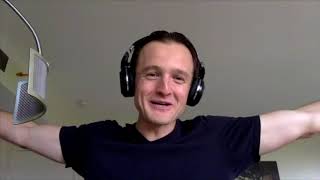
Episode of the Make More Marbles podcast (host Brad Hart) interviewing Philip McKernan about his personal/professional reinvention after leaving Ireland and moving first to Canada, then the U.S. Major themes: identity and self-worth (including lifelong self-sabotage and dyslexia), therapy and emotional work as catalysts for change, trusting intuition, importance of collaboration and building teams, cultural contrasts between Ireland/Canada/USA, and McKernan’s applied work with veterans on identity transition. He outlines two projects: GiveAndGrow (documentary/resource) and One Last Talk (15-minute personal storytelling platform), and shares contact hubs (philipmckernan.com, onelasttalk.com, giveandgrow.com).
Chapters
Welcome to Make More Marbles. My name is Brad Hart and we're here to interview the game changers, the future makers, the co collaborators and creators who are here to collaborate with one another towards a better future for all of us. Enjoy the show. We've got a great guest coming up for you right now. Welcome to Make More Marbles. My name is Brad Hart and today I am thrilled to be joined by Mr. Philip McKernan, all the way from. Well, you're in Boulder now, but you're originally from Dublin, County Clare, I believe, is that right?
Well, Dublin. I brought up in Dublin. I feel my spiritual home is County Clare in the west coast of Ireland.
Wonderful. I've been. But it's been many years. I've been through Dublin a few times and I gotta say, like, the Irish people are some of the most welcoming people in the world. I've had incredible experiences and being a little bit of Irish descent myself a long time ago, I really feel like a kinship to that land. So thank you so much, Phil, for being on the show and I can't wait to get into it with you. You definitely have a lot of things in common with the Make More Marvelous community, with the Greatness foundation, some of the charities that we support. So. So I'm really excited to dig into you. So why don't we start with kind of the hero's journey. What are some of the things that shaped your journey along the way? Some of the trials and tribulations, if you will, Some of the things you've learned along the way, and how did you get to where you are today?
Wow. Okay. So I think a lot of my learnings won't be much of a surprise to you or maybe your listeners or watchers, depending on how this goes out. Is a lot of my greatest growth claims proved a lot of the greatest pain that I experienced. So while I'd love to be sitting doing what I'm doing today without having experienced the pain I think the pain that I experienced, the discomfort I experienced, the misalignment that I had to eventually get to, really allowed me to kind of uncover the courage that already was existing there within me to make the changes, but also allow me to really relate to people and empathize with people at a different level. Because when I work with clients who are misaligned, I don't just. I can't just intellectually picture it. I can also emotionally connect with it. And I know what it feels like to walk this earth disconnected from who you are, perhaps not living, you know, a Bit more on purpose and connected to your gift rather than your talent, etc. In fact, for 37 years, I think I, excuse me, walked everybody else's path, lived everybody else's dreams and aspirations, and really did not live my own. And I think that was primarily down to the fact that I didn't know who I was. I didn't have a sense of. Real sense of identity. So some of the, I suppose the things that have, I suppose, you know, kind of formed who I am is obviously growing up in Ireland was very influential on me. We had a thing, an economic hiccup and economic explosion, whatever you want to call that, called the Celtic Tiger, where Ireland went from a very poor country, second poorest country in Europe, to the second wealthiest country on earth per capita over a space of about 10 years. And I saw firsthand the social cost and the implications of that, both personally and socially, within the country where people all went crazy trying to make money. Really, we lost a lot of who we were in that process. So that was saddening for me. And then I left Ireland, the place I loved, moved to North America, moved to Canada to reinvent. I think it's very hard to do that when you're surrounded by the people who love you, but they don't want you to change, they want you to be happy. They just don't want you to be different. So I left and found myself in America 12 months ago. So I'm going to give you the time, top notes, but there's a lot in between. And never imagine for one second I'd be doing what I'm doing today. I'd love to tell you some part of big vision or dream, that would be it. I'd be lying to you, myself and everybody else. So it was a little bit of coincidental, coincidence, serendipity, you know, mistakes, just. But. But now that I'm doing what I'm doing, I believe this is what I was meant to do and will do for the rest of my life.
I love it. And you talked a little bit about how you had some missed starts where you didn't know who you were and you were doing things that were kind of living somebody else's life. And I bet a lot of us. You know, there's an old saying one of my great speaking coaches talks about. He says people can always relate to your failures, but not always to your successes, because everybody's failed, but not everybody succeeded. So what are some of these failures along the way that people might be able to relate to? What are Some of the careers that you went down or rabbit holes you went down that just weren't fulfilling for you.
Well, I think I felt like a complete failure from the inside out. It was less about having specific failures and to me it was like my entire exist. A failure to the point where when I was about 14 years old, I can't remember exactly, but I went to my mother, maybe I was a bit younger actually. And I went to my mother and I said listen, I want to change my name. And I wasn't asking her permission, I was letting her know. And now, you know, also asking her to kind of assist me in going through that process. And really it wasn't because I didn't like the name Philip. It was actually I didn't like who I was. And it was my naive very, I have a degree, a lot of compassion and sadness. You know, like picture that young kid so disjointed, so unhappy in his own skin, trying to fit in, trying to pretend he was okay, going to his own mother, thinking if he changed his name that would eradicate all the associated pain and disconnect. Deeply insecure, dyslexic, couldn't read and write. So I always felt weird and you know, just completely, just unseen and unheard. Not so much for my parents, but just society in general. And then obviously every day teachers telling me that I was stupid, I would amount to nothing, I was lazy and that I would not literally, and I quote, you're not going to make it in here and you're definitely not going to make it out there. And they pointed to the window and the window represented life. So when you're told that pretty much consistently every day, it's not about a matter of failures. What you're yearning for is the odd little success here and there and they were few and far between. So that has been a real shift for me in my latter, you know, kind of my mid life, you want to call it that becoming okay with. Because you get used to failing, you get used to being a loser. And what ends up happening is when success starts to are you the perceived success and money starts to flow, you'll do your damnedness to go back to that default position that you're comfortable with and you ultimately you'll try and mess it up in some way. And that's something that I've had to be work extra hard on and get guidance on that on that front as well.
So when you are confronted with your self sabotaging behavior, does it still come up now? Is it something you've been able to overcome. What are some of the resources or mentorship that you've seen or sought to correct that? Because you can see it, you're aware of it.
Yeah, Every single challenge that I've ever encountered will be with me for the rest of my life. To me, it's never about overcoming anything. And again, it's not, you know, getting into a disagreement with any of the speaker, any of the guests you've had, or even what you believe personally. To me, I think one of the biggest mistakes we can make in life is to try to eradicate and to break out of and to break completely free of any of these deeper patterns. Because the minute we do that, then we think it's behind us. I cannot tell you how many clients I work with that's. Tell me when we get into number one is they typically come with X marks the spot, which typically isn't the case. We get into why and they go, oh no, hang on a second, Philip. Just so you're clear, I've already gone, I've already worked on this, I've already done this, I've already moved beyond this. Yeah, good luck with that one. And I have found that I tried that strategy, I tried denial and now I've realized that actually the self sabotage is with me, will always be with me. What it does though, is it equips me this with this deep awareness, knowing it's going to be there. It's not like, it's not like a negative feeling. And when it starts to appear, I can, I can, I can name it and I can feel it a little bit faster, just a little bit faster than I historically did. So what ends up happening is my decision making process, my. The hole or the vacuum I get sucked into doesn't go as deep. So to me it'll go back to. Your question is, number one is yeah, it's there. It will always be there. And I think being aware of it and it all came back to self worth. I mean, at all the core of this, the source of all of this was do I actually believe I have a voice, I have a story, Do I believe people are going to listen? And do I believe my core that I have something worth listening to? And that has been my entire challenge, my entire life. And I believe at the core of most people's real challenges in this world.
I really love that. And there was a saying, if you want to have a dog, first you name it and then you teach it to come when you call its name. So that's kind of what. What you've done is you've created a identity that you're not owned by. This identity. It's not something that you need to be beholden to anymore, but you can be aware of it. You can shift your own energy and focus. Like, oh, that's just playing over again. I'm going to sidestep that train right now. Get back to being productive and happy and healthy.
I think actually just even a recent one. I'll give you a recent example. And again, I know to some extent people expect me to have my shit figured out, which I'm always deeply intrigued by the fact that people. People think that I should have it all figured out. I had a lady who interviewed me, God love her, about six months ago, and her first question, and I wasn't trying to catch her out. I wasn't trying to be an asshole, she basically said, tell me, how did you become so unbelievably authentic? And I went, well, you're making an assumption. I am. And then she, like, got totally dejected, went, you're not. And I went, well, no, I'm more authentic than I've ever been. I'm just not fully authentic, and I don't think I ever will be. That's. That's.
And who is, for that matter, is everybody else 100% of the time in all situations? Of course, not totally, but I think.
We'Re sabotage and doubt. And so that starts to creep in, I think, in powerful, you know, things that I come up with. I'm very creative. So I created a concept called One Last Talk. And I think there's a part of me that kind of sabotages the momentum around One Last Talk. And I was literally challenged by this with one of our team, Amy, the other day, and she says, you run away from this, this concept because it's so goddamn powerful. And. And there is a part of that that still plays out today. So that's one area where, for example, it's literally coming up again and it's old and the pattern is old, but it's relating to something that's very current. Excuse me.
I like that, Philip. And you kind of touched on something that we talk about a lot here at Make More Marbles is this idea of, like, you know, your strengths and weaknesses and you're self, aware, which allows you to then bring a team together that can help keep you accountable and round you out. How has that journey looked for you from being a solopreneur to an entrepreneur?
Oh, I think. Well, I think on a very basic Level, I think, asking, you know, asking. Being able to ask for help. And even before that, realizing that, actually, you know what? I can. I can try and do this on my own, but actually, I don't think I'll be able to do this on my own. And really reaching out and going back as far as the first time I got, you know, therapy, which I think there's such a stigma around it in so many circles. And to me, you know, what the hell, you know, I mean, you just go. You talk about stuff that's always. You just talk about your truth. You have a place to talk about it. And if you can't do that at home, well, you know, do it with a stranger therapist as opposed to not doing it at all. And I always remember that. That, to me was this Jerry Maguire moment where I said, shit, you're not gonna make me cry, buddy. I don't know if you know the movie, but it's like that. You're not gonna make me cry. And I remember walking, literally walking into this room. I recited this story the other day for the first time in a long time. I walked into the room. There's two chairs. One has this enormous box of Kleenex. It looked like three boxes of Kleenex on top of each other, almost like a mini skyscraper. And of course, the naivety, the stupidity, the arrogance of me. I look at that chair and I'm thinking, I sit in the other one, and I'm kind of thinking to myself, God, he must have a bad cold. The therapist comes in and goes, sorry, Mr. McCurdian, you're actually sitting in the wrong chair. And I walk over and I look down at the Kleenex and I'm thinking, screw this. I'd say I was there two, maybe, maybe three minutes before the tears started to come. And what I realized was the amount of untapped emotion, unresolved anger, blame, victim mentality that I'd been holding my entire life, telling myself, of course, the opposite story, been completely unaware of this reality. I'm telling you one thing by the 59 minutes. And he goes now, just to let you know, we're just wrapping up now. And I'm thinking to myself, this. I'm thinking, I'm only getting started. I've got so much to unpack here. Don't you cut me short after an hour.
So to me, the floodgates, buddy. Yeah.
Yeah, exactly. So that was the first time I'd really. I'd love to tell you I owned it. I was forced on me to some extent. But I chose to be in the room, so give myself a break. The first time I realized, oh, my God, like, you know what? I honestly don't think we can do this. Not just because I coach people, but I honestly don't think we're meant to do this journey on our own. If we, we want to live and walk through this earth on our own grave, but if we want to be honest with ourselves and kept honest with ourselves and to have people around us to make sure that. Because we ourselves all the time, like we constantly ourselves, and we're brilliant at doing it, rationalizing, justifying, you know, who we are and why we are the way we are. And I'm no different in that regard. So to me, having people who support you and challenge you and keep you accountable to some extent in this world has been absolutely imperative.
Yeah, we want to, you know, as modern people, I think we're trained in a society to kind of fear other people and can't trust other people. But our greatest strength, like we read the. I have it over my desk here. From such a simple beginning, the works of Charles Darwin. When he talks about the Origin of Species, everybody harps on that survival of the fittest thing. You know how many times he talks about that in survival? Twice in survival in Origin of Species, he talks about collaboration being the number one trait and successful humans and tribes of humans, like 90 times throughout the course of the work. But everybody harps on that survival of the fittest thing. And I'm like, wait a second, something doesn't match up here. So that's our number one competitive advantage, is the ability to collaborate towards a higher and better good. That's the whole reason this whole thing exists, is because we can collaborate with each other. And if we were meant to love each other and grow together, then it doesn't make any type of sense to try to do it on your own.
I guess just on that, if you don't mind me jumping, I want to share one little thing just to build on something you shared about the concept of trust. And what's emerging more and more in my work is that when we think about trust as humans, we think about trust externally. We think, do I trust the postman? Do I trust my banker? Do I trust my financial advisor? Do I trust my wife, my husband, etc. What I've really begun to realize is that so few of us actually trust ourselves. And I mean really, truly trust ourselves. And where that comes in is I have a number of people like, there's a real trend of People coming to me in recent times saying, hey, I don't just realize that, you know, intuition is this. Is this more spiritual, softer concept. But I also believe it has this genuine ability to help me make better decisions in my business and my finances, for that matter. And I'd love you to help me tap into that because it's something that I don't do. And what I find is that actually when you break it all down, they're born to be intuitive. So it's not a case of that. You need to help them learn how to do it. They already know that what I focus on is what's blocking it. And one of the things that comes up a lot is that they simply don't know who they are, therefore they don't trust who they are. And therefore why would they trust their intuition? There's no. There's no. So I wouldn't give my kids to somebody I don't know. I would not give my children to somebody I don't know for a night or an hour, five hours. Why would I trust a decision about my life's direction within myself if I did not know myself and therefore trust myself? And it's so simple. But people go, yeah, yeah, yeah, yeah. And they kind of like, you know, judge that this concept. But the people who've stepped in and really done the work in this, they walk away feeling that I'm beginning to trust myself for the first time ever. And you know what? This thing of intuition, it's obnoxiously accurate. Obnoxiously accurate. Like, it's just staggering. And it defies logic to some extent. You can have a real estate deal. I'm just using a kind of an intellectual idea. And the numbers are like, showing the cash flow, showing the capital appreciation, the markets on the way. All the economic fundamentals are great. And if you go against your intuition, almost certainly for me, every single time the market has shifted, something happened, there's a flood or whatever. The intuition defies all logic if you can actually tap in and trust it. And I don't mean live in that place, but at least use it as a guidance and then use the computer, the brain, to. To execute.
And not to go woo woo or anything, but there is a sort of an energetic quality about life that we can't yet describe with science. Quantum physics is getting closer and closer to understanding it. But there is that, you know, imperceptible gut feeling that you get when something's just not right. You can't put your finger on it. And then ultimately you'll learn logically and intuition with. With your, you know, brain. When that catches up many times, it's a lot. Much later you'll figure out why you had a bad feeling to begin with, but the bad feeling was instantaneous. And like you said, it's obnoxiously accurate. I just want to add one point to the trust thing, is that when people can't trust themselves or don't trust them to act in a way that they believe is above board, or they think all wealthy people are greedy. They think all this, whatever story they've created, they can't trust others because they're living in that story about themselves. Right. They think because they can't keep their word that other people won't keep their word, et cetera, et cetera. So I think that trusting goes deeper into yourself than anywhere else. And what you're withholding from the world is what you want from the world. Right. So the thing that you think that the world is withholding from you, you're actually withholding from the world. It's a really beautiful kind of mirror for what you're putting out there.
Yeah. In terms of. I'm a big proponent of. Like I said to a client yesterday, I said, if you, if you, if you make an extra million dollars, no disrespect, good, good for you. I really don't care. It doesn't do anything for me. It doesn't fire me up. And it's probably good for testimonials, and that's about as far as it goes. But if you tell me you're more connected, you're more passionate, you're more engaged, you're more. You're better at home, your wife loves you or sees you and connects with you more, your kids are more present with you. That's what fires me up. So to me, in the context of that trusting thing with external relationships, we're often looking for that person to let us down. As you. We're actually almost looking for that person. The one thing I do is just very, very simple. But it's. If you picture any relationship in your life that you would like to deepen and just ask yourself one question. What does that person, not you, what does that person need to do? This is for all your listeners, all the viewers, what does that person need to do to facilitate a deepening in your relationship? But the caveat and the most important thing is here, irrespective of whether you believe they want to do it, are capable of doing it. Because people say to me, okay, yeah, okay. Get it? I get it. I'd like to deepen my relationship with my dad. The one thing my dad needs to do is be more open and vulnerable with me, but he's no interest in doing it. And he's never shown any examples of this, so it's unlikely he's ever going to change. Forget about the latter two things. Okay. So the thing is, it's your dad. That's what you identified. And vulnerability. Okay, great. So there. If he was more vulnerable, that would help deepen the relationship. Yes or no. And the answer is yes. So the question then becomes very simply, are you doing that with him? Are you doing that with him? And some people will instantly go, well, of course I am go. Really in a way that he really feels as vulnerability, or is it conditional vulnerability where you're waiting. He's waiting for the other shoe to drop. Like, it's almost like you're expecting a result. Are you really doing it? And what you'll find is 100% of the time. I was going to say 90% of the time, but 100% of the time is you're not or you're not doing it in a way that it really feels sincere. If you start doing it, you be the change, as Gandhi said, I'm sure it was. He didn't coin it. You'll find that that is the only time that that person has the ability and the capacity and the space and the freedom and the trust to do the same thing back.
You must be willing to give and go first if you want to receive. That's a really great point. Absolutely. And I think people are always trying to verify their story about life, too. You know, they're always trying to like, oh, everything is this way. So I expect it to be this way. And therefore I'm going to act as if it's this way. And therefore, I'm confirming and creating that. It's kind of an incredible thing. Once you're aware of it, like, oh, I'm exactly the way I'm thinking and acting could produce no other result. In an orderly universe, then you can start to say, oh, well, I'm not going to do that anymore and expect the same result, a different result. Right. Because that's the definition.
Yeah.
Philip, talk about a little bit around your kind of differences with where you grew up versus here. I mean, you talked about a few of the differences with the way maybe Americans or North Americans might approach things and the Irish might approach things. There's an old funny saying that, you know, the. The Irish not psychoanalyzable, you know, and I don't think that's true, obviously, because you were balling within three minutes as part of your story. What are some of the other cultural differences that you've seen that have allowed you to either thrive in your work that you're doing or been a struggle because you just couldn't quite grasp the underlying mechanisms of the society that you're in now?
Yeah, it's a really interesting question. I've never been asked that before, but I think there's something that, to me, I don't think you need to, I don't think you have, have to move away from your environment to recreate or to, you know, to reimagine who you are. But I do believe that is the case for many of us that, you know, the one thing that I, you know, how many of us that are listening today have had friends and family and people say to you this, the following statement, but John, but Mary, but Henry, but Philip, I just want you to be happy. Right. Which actually in itself, particularly when you say in an intimate relationship is actually, is really bloody annoying simply because that person doesn't even know what happiness is. It's actually delivered with this idea that you're helping them and you want the best for them, but actual fact, it comes with this massive layer of expectation and pressure on their shoulders because they don't even know what happiness is in many cases. So for me personally, I didn't realize this till after the fact. I needed to leave Ireland, okay? I needed to leave the people I love, the country I love, the place I loved to really give myself freedom to reinvent. I moved to a country called Canada. I lived primarily in Vancouver. Beautiful place, one of the most beautiful cities on earth. Great people. But Canada, and I say this very respectfully, is conservative and it's been conserved for many years. I won't get into why I believe it's conservative and so on and so forth, but it is conservative. And I felt it allowed me to grow. And I also have to take a lot of self responsibility. It's not just like pointing the finger at Ireland or Canada, whatever. And then I felt the next evolution for me was to move to the United States. And I moved here approximately 12 months ago. I made a joke recently, probably not a good one, that I love Trump so much, I needed to move to here when the minute he got in, I had to be here. And of course, I said, of course. My timing was perfect as usual. Meaning it wasn't. I made that joke in front of somebody that really cannot stand Trump. So I don't believe in politics. I don't follow politics. I don't watch politics. I certainly don't believe one's individual leader are the leader of a state, the leader of a nation is going to determine the rest of my life. But coming to America, and I want to be really clear on this one thing. I went into a bank and we, like every other Irish person, got caught out in the real estate bubble. So we bought real estate. Some of it did well, but the other stuff did shit. The whole thing fell apart and we had some debt on our shoulders. And in Ireland, there's a tremendous amount of guilt associated with that. That failure owing the bank money. People put priests, bank managers and teachers on pedestals and whatever they say historically goes. And I remember walking into a bank here and we've cleared everything up, so we have nothing outstanding. We didn't run away with people's money, any of that stuff. But I went to a bank here in Boulder and I just wanted to be completely transparent. And I said, by the way, guys, just a heads up, we had a tough time in the recession in Ireland going back to 12, 15 years ago. And the guy looks at me, goes, yeah. And, well, I just want to be. If you have any questions. But he goes, you know, great, thanks for telling us. In other words, it's like, you mean you. And I'm even sure I'm crazy with this word, you failed. And I went. I kind of went emotionally, yeah. And he goes, well, sure, haven't we all? And so in Ireland, that is like, you walk into a bank and it's like, so have you had any this and any of that and whatever. And the guilt associated. A lot of guilt floating around Ireland. Maybe it's the Catholicism, I don't know. So failure is not encouraged here, but it's accepted here in a way that is not accepted anywhere else on the planet. But I want to share one thing, and I say this very respectfully. Who am I to tell you about your country, about your fellow men and women of this beautiful continent or country? But the one thing that saddens me over the last number of years, and I think it's easier to see this when you're looking at from the outside, is the amount of Americans that are disjointed, unhappy and genuinely sad at the landscape. Forget about whether it's just purely political or the landscape they find themselves in today, the social landscape. And to me, I want to say one thing. I'm not telling you. But I'm telling you what I believe, and I believe that there is opportunities everywhere in the world. And America has historically been known around the globe as the place of opportunity. I disagree. I think there's opportunity everywhere in the world right now. But America, to me, is still a place of possibility. Possibility. The dark side of that for some is the fact that anybody can become president of this country. Some see that as a negative. I see that as an extraordinary possibility in a country where if you're willing to work hard and add value, people will give you a shot. So to me, I believe to my core, it's not better than Canada. It's just different. The energy in America is one of acceptance. It is one of, we're going to give it a shot. Anything is goddamn possible. And that's why I want to be here. It's not. I'm not just here for money. I'm not here to extract something. I'm here to give primarily and hopefully receive secondly. That's what I'm here to do. But I want to be really clear on why we moved to the United States.
I love that the opportunity is everywhere, but the possibility is in America, at least for you. And I do agree with that. I mean, being an American, my family's been here since the 1690s. So I'm like, pretty much before it was the United States, we've been here. And it's an interesting thing to see how the United States has changed in those, you know, 200 and some odd. Let me see. It would be somewhere around 230 years now, 240 years now, than since we've been a country. I could do the exact math, but suffice it to say that everything has shifted right, technologically. The types of people that have been here, the kind of waves of different immigrants that have come through, and we've made this kind of melting pot and boiling pot that has created something new that never existed before. It's not the old stodgy landowning barons of Europe that still exists in some form today. If you were born into a certain class, you'd be pretty likely to stay in that Senate class. There is true upward mobility here, and it really is open for anybody to create. And that's an exciting thing in the world. And I think there needs to be more of that. And I think that's why a lot of immigrants are coming here, because it still is the land. Like, maybe not so much of opportunity that's everywhere. You can create an opportunity anywhere you are, especially now. With cryptocurrencies and everything that's going on. So much opportunity in the world sloshing like incredible opportunity, like lapping up against the shores anywhere you go, I guess even below the ocean as well, we have plenty to explore. But to me, it's a possibility. I really like that. That's a great.
You think about it, I mean, you know, without sounding kind of, I don't know, without trying to be too kind of almost romantic about this or boastful, but like you've got a dyslexic kid from a small village in Ireland. I mean, I grew up in a very small little village and, you know, couldn't read and write and still struggle deeply in that front. And I come to this country and through a series of people believing in me and inviting me to share certain platforms and stages and different things. I'll just give you one example. I'm sitting in the Pentagon at a meeting at this big, you know, very important meeting. And their biggest challenge in the military, or sorry, one of the challenges in the military is this whole sense of identity. So when a military personnel takes their uniform off, drops it on the ground or puts it in their closet, they don't know who they are. Now, the military are looking at this as a challenge, a vacuum. And terms of when they leave the military, there's 22 military personnel a day. Committing suicide does not account for the thousands and thousands and thousands that are struggling with substance abuse and depression and everything else. And we're sitting at a meeting and they're talking to this military challenge. And I say, excuse me, if you don't mind me saying that this is not a military issue. This is a human issue. This is an identity crisis that women face when they say goodbye to their kids. They look in the mirror and they go, who the f am I now? Entrepreneurs who pour so much their identity consciously or subconsciously into their business, their business becomes who they are as opposed to who they are really at the core. So what they do, who they are and what they do gets muddied. The fact that I could be sitting in that room irrespective of whether what I said was received or not, the fact that they would even listen to me, to me, illustrates whether I believe what the military do. It's not the point. The fact that I was sitting in that room at a Pentagon, at a high level meeting, an Irish guy, I didn't even have an American passport, is testament to the fact that they don't care what color you are necessarily whether you're as can you give us something that we, that can help us? Yes or no. And if you can, they're not going to judge you based on who you are and what you've done in the past. Like, what can you do for me today? And that is just immensely important and so simple to remind myself and hopefully some of the listeners today that still believe that this country is phenomenal. It's not better than anywhere else. It's just phenomenal in its own right.
Yeah, I love that. And thank you for sharing that story. I didn't know that you were involved so deeply in work with the military and transitioning veterans. I'm sure you're familiar, familiar with Phil Randazzo.
Well, that's how I ended up there. So, yeah, Phil's great.
The work they're doing is incredible. I'm always sending in people to speak on stages. One of my passions, the three groups of people I tend to support are entrepreneurs in the veteran community. I have multiple clients that are either retired or active military people in, you know, female entrepreneurs. Because I met Sarah Blakely one time, the first self made female billionaire, and she said, hey, female entrepreneurs are the most underutilized resource on the planet right now. I'm like, hey, you're right. And then finally, you know, young adults that are trying to get an entrepreneurship, the young millennial crowd or Generation Z or whatever they want to call themselves. So a couple of friends of mine, Sean and Doc and Dan and Matt, I'll give you guys a shout out, made a documentary called Project 22 talking about that exact figure and it's been picked up by PBS and shown around the world. You can check it out@pbs.org project22 and it's just caught like wildfire. And I was really grateful to know them during that time when they're creating that on a shoestring budget. Just what's working? How do we integrate people back in the community? How do we get these, these leaders into a more community focused role, more entrepreneurial focused role. And it's just been an incredible journey. And I'm happy to say that that statistic hopefully will continue to decline over time as more treatment programs become available. But it was a horrific thing when we heard about it. And I remember like clear as day, that whole saga and being involved in that at least tertiarily, was one of the, I think one of those defining moments where it's like, I need to do more, you know, I need to help more and give more to that particular subset of the community. So I'M grateful that you're sharing that path. And I have a lot of veteran friends who are doing great things in the world and I love to connect you with them as well.
Cool.
So, okay, let's work in people if they are interested because I want to make sure this is relevant and specific and valuable. Consider it to the people listening. Learn more about your work with veterans. Learn more about what you're doing in the world and how can they connect with you.
Yeah, a lot of the stuff I do is kind of behind the scenes. So I've got a number of different kind of joint venture projects I do with entrepreneurial groups. I do couples, you know, experiences. I do live experiences, but they're not on my website and stuff like that. So probably the easiest thing to do is just philipmckernan.com and that's from there. That's kind of the hub. We're shifting the website and the offerings around as we speak, and that'll be going live in the next couple of weeks. And then I created a concept called One Last Talk. So One Last Talk, Calm and GiveAndGrow.com, which is another kind of basically just talking to the difference in a talent and a gift and really helping people kind of understand the difference and making sure that a lot of my work work is helping people eliminate regret. Statistics and science and all the studies show that so many people either walk this earth with a lot of regret, but go to their deathbeds and line the deathbed with enormous, not small. They don't regret not buying the Ford Mustang versus the Mini Cooper. They go to their deathbed with fairly life like major life regrets. I really should have started that business. I really should have connected with that person. I really should have been more vulnerable as I walked through this earth. And while one could say it's a kind of a slight negative perspective, a lot of my work is helping people address conversations today that don't haunt them tomorrow.
I like that. And to live with no regrets is really to be alive.
Right.
There's nothing anchoring you to this, this plane. It's like you're truly living in the flow that you're created for. It's a beautiful thing. I like it. And since this is the Make More Marbles podcast, Philip, we want to make sure that we are giving back to you since you've been so generous in sharing some of your kind of key learnings and strategies for your life. What are some of the connections, resources, opportunities, people, systems, strategies? What are you looking for in life right now, that can help you further this mission.
Well, thank you for that. I always struggle with that one, quite frankly. I'm very good at giving and my wife reminds me constantly that I'm not very good at asking. And when I do.
This is your time to receive.
Yeah, I start to. I start to get uncomfortable and bumble my way through words, but I. But actually, it's funny, if you'd asked me six months ago, I wouldn't know what the hell to say. I would have said maybe spread the fellow. And we did a documentary, Spread the Word on Give and Grow. The thing I'm actually the thing that's really igniting me and the thing that's also deeply scaring the lift out of me right now is One Last Talk. And it's basically, without getting into all the detail, it's about basically creating a platform where people get on stage and deliver their last talk in 15 minutes. The one last talk in 15 minutes. And the reason for that is very simple. It's not theatrical, it's not exposing people. It's basically we want to create a dialogue that's deeper than the mind. We want to go into what I call soulset. Ted shares ideas worth spreading, which is very often very intellectual, very scientific, phenomenal, brilliant, did an incredible job. We want to go a slightly different direction. We want to talk about stories. So in those 15 minute one last talks, people are not allowed to talk about global warming. They're not allowed to talk about politics. They're not allowed to talk about anything that happened outside of them. They have to share part of their personal narrative. And the simple reason and rationale behind it is that most people on this earth don't value their story and therefore they don't value who they are. We want to help people tell their story, realize how important it is, and encourage them and challenge them to create the bravery or requires to share their story publicly to do two things. One is to release their story so it doesn't control them anymore. So there's a therapeutic, freeing effect that allows them to live in more flow. And secondly is by releasing their story and other people hearing it, other people will go, oh my God, I'm not alone. And maybe, just maybe, my story has value too. So that's why I created One Last Talk. It's not about me, it's about the speakers who share their one last talk. I'm writing a book on it. We want people to put their hands up in different parts of the world and say, I want to bring this to this city. I Want to bring it to this town. And we are basically working right now in terms of creating a system to do that. My vision is I want to give this away. I want to gift this to the world. Exactly how and the mechanics, I don't know. But I want people to be aware of it, look into it, and if they're really drawn to it and attracted to it, put their hand up.
I love that. Thank you, Philip. And what's the best way to get in contact with you?
Basically, it's via onelasttalk.com or just our main. Our main, maybe main website. That would be really cool.
Awesome. And I see you have a link as well to the documentary you want to give away for free. Thank you again for that wonderful contribution to the Make More Marbles community. That can be found at giveandgrow. That's G I V E A N D g r o w.com makemoremarbles and you can go and get that there. Thank you, Phil, so much for being on the show. Is there anything you'd like to add as a last parting word?
No, I suppose the thing for me is just something came up. I did a screening of the documentary in Vancouver last week, and the thing that kind of came up and hadn't planned on saying this is that people were talking about how they make a change and how they make a shift and how they make more money and how do they create more meaning and how do they do this? And I think there's something that's been overlooked and continues to be overlooked in so many camps. And I literally had an entrepreneur in my home yesterday for a private meeting, and the same thing occurred again. He's a very successful business. He's challenged on the personal front, but he's unwilling to do one thing, and that is sit with the reality of where he is right now and get in touch with it. So a lot of people are looking to move intellectually very fast. Okay, say hypothetically, I don't like my job. Say hypothetically, I need to pivot my business. Okay, how do I do it? And what they're doing is they're locked in the intellect. They're not landing emotionally. And therefore they make all these different changes and these little tweaks and they pivot here and there, but the same pattern emerges and emerges and emerges. But can you have the courage? It's an ask. I'm not telling. It's an ask. Can you take a piece of paper today or tomorrow, go for a walk and sit down and just ask yourself, are you really connected to the work you're doing, like, really without judgment, without being bitter about it now beating yourself up. Do you really love the city you're living in? Is San Diego really the place for you? Is Vegas really the place for you? Is Boulder really the place for me? Am I really living with the people I love, and am I having dialogue? Do I have deep, meaningful relationships? The challenge is so many people are looking to improve these things, but very few people are sitting down and honestly looking in the mirror and sitting with the emotion and the gap and the pain and the lostness. Why am I asking people to consider that? Because what happens is then you don't just have an intellectual awareness of your current reality. You have an emotional connection. And what ends up happening is when you land, transcend out of your brain, out of your mind, and feel the reality you live in. There is no greater motivation and inspiration to really help people move the needle, but move it authentically. The challenges. People are jumping from one intellectual idea and content and strategy and goal thinking that that's the answer. But then they hit the same wall after four years or two months or six weeks. Land emotionally and really face the reality of the life that you. That you inhabit and that you exist on a daily basis. Be honest about it, without judgment, and then make your move.
I love that. And I really appreciate that you ended with make your move because before the show, we talked a little bit about Tony Robbins. I'd love to get you.
Oh, yeah, there you go. Yeah. Because he.
Well, make your move. But, you know, to wire and fire different things. He talks about, like, intellectual understanding, which is what you kind of talked about, the awareness that something's going on, that emotional transference which allows you to wire and fire it over and over again until it's a physical reality. Right. Until you just. You can't help but do it. And that's one of the strategies I use my clients all the time. It's Peak Performance 101. It's like, hey, if you can get yourself to do this thing, and you've been doing this thing your whole life, you've had a physical reaction to this response or this stimulus. You can also wire and fire this one. With enough practice, it takes a little bit of willpower to start, and then it becomes habit. Yeah, that's a beautiful thing. And I hope everybody at home does that exercise. I've done it quite a few times. You know, you've moved a lot in your life. I've visited, let's see, 23 countries and 43 states. And one thing I've learned is wherever you go, there you are. So if you're not where you're supposed to be, you know you're doing the work. If you're not quite, if it hasn't all clicked together yet, keep going. You're going to find that place where it all dials in. And I can't. I can unequivocally say Encinitas, California, is the best place I've ever lived. For me, I'm not saying it's right for everybody, but it's been incredible. And Philip, I just want to say thank you. Thank you so much for being on the show and for sharing your gifts with our audience today, and we'll hopefully have you on again sometime.
Okay, thanks for having me. I appreciate it.
Okay, thanks so much for listening to the Make More Marbles podcast. For more tips, hacks and strategies to create an amazing ability, abundant life in your health, wealth, relationships, whatever that means to you, head on over to makemoremarbles.com, check out our cool explainer video about what we're about, and join our community of entrepreneurial game changers. We want to help you level up your life in every possible way. And don't forget to subscribe to us on itunes, Stitcher, or Google Play wherever you listen to your podcast. And please do leave a review. Thank you so much and we'll see you on the next podcast.
More from Brad

The #1 Reason AI Isn’t Working for You (Yet) #AI #businessowner #founderenergy




What tasks would the best assistant ever be able to do for you? #BusinessSystems #BusinessOperations



Nobody expects you to use a harder way when there's a better way. #AI #businessowner

Which side of the table will you be on in 2026? #AI #Mastermind #BusinessOwner

