NASA Chief of Staff and Virgin Galactic CEO George Whitesides Talks Future of Space Travel
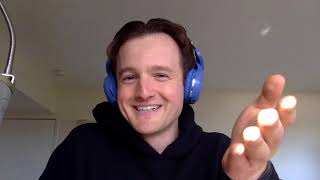
Podcast interview (Make More Marbles) where host Brad Hart speaks with George Whitesides (former NASA Chief of Staff and then-CEO at Virgin Galactic) about making space more accessible. They cover Whitesides' background, differences between NASA and commercial firms, Virgin Galactic's suborbital spaceplane and LauncherOne small-satellite launcher, goals of lowering cost and increasing flight cadence, asteroid/space resource ideas, technologies like 3D printing and AI, human stories (e.g., Wally Funk), and the broader 'Spaceship Earth' framing.
Chapters
Welcome to Make More Marbles. My name is Brad Hart, and we're here to interview the game changers, the future makers, the co collaborators and creators who are here to collaborate with one another towards a better future for all of us. Enjoy the show. We've got a great guest coming up for you right now. Welcome to the Make More Marvels podcast. My name is Brad Hart. Today I am honored, like, sincerely honored, to. To be interviewing a change maker, a future maker, somebody who is really pushing the envelope of what's possible for humans everywhere. Mr. George Whitesides. Thank you so much, sir, for being on the show today.
It's nice to be with you.
Absolutely. So I have a little bit of experience with Virgin Galactic in the sense that I've studied everything that Peter has talked about for many years. The X Prize and then basically landing on the Runway after the X Prize was completed and Richard buying the thing right out from under him and saying, hey, we're gonna go and do that. I spent some time in Miami with Sir Richard Br. I don't want to talk about my story. I just wanted to bring you up to date on all that good stuff. But I would really love to learn what's brought you to this point in your career and what you can kind of point to as some of the things along the way that you learned. So why don't we dive right in and just start with how did you get to where you are today?
Well, I have always been inspired by space. I really. I think it's important to our future, and I think it's important to the planet. And so as a kid, I was interested in space, and when I got out of my education, I basically decided that I wanted to be involved in space. And I actually went to work for Peter on a company there, and then I did something else, and then I worked with Peter on another thing and anyway started working on space companies and eventually wound my way through, you know, government space policy, and finally the galactic.
Fantastic. And I just had the pleasure of meeting Peter Diamandis at his Abundance360 event in Los Angeles not too long ago. I was more excited to meet him than I was the President, United States. I was really psyched because when I read his book Abundance in 2011 on a road trip, it changed everything that I ever thought about the perception of scarcity and that we can always create more and new, different things. I've been following his stuff very closely ever since. So the fact that you got to work with him is just, I hope I get to say the Same someday. Great. So talk about a little bit, if you would, please, the transition that you made from government service to the private sector and some of the things that are the same and maybe not the same what you hope to achieve with Virgin Galactic.
Well, my background is really more in private sector stuff than it is in government. So I had a period of time in government where I was chief of staff at NASA. And NASA is a national treasure. It's, you know, 15,000 people, but it's got a contractor base of, depending on how you slice it, 50 to 150,000 people. You know, nearly $20 billion a year in revenue, or rather in budget. And so it's a huge organization. And it's got, you know, hundreds of different projects. It's got dozens of different locations. It's a massive, massive entity. Galactic is something that is more like a laser. We're trying to do just a couple of things really well and to really change the game in terms of how humanity can access space. And so what we're doing is very focused. We've got a pretty big team for a space company, but still very small compared to, you know, a government agency like NASA.
So you're really looking to commercialize spaceflight. Right. So that people could as easily visit space as they can visit, you know, the other side of the country. Is that correct?
Yeah. I mean, the way I would phrase it is that space is not very accessible to you and me today. Right. And it's been that way for a long time. You know, we have only flown around 500 or so different human beings to space since Yuri Gagarin went up in 1961 as the first human being into space. And I think that's crazy. You know, I mean, in that time, we've flown, I don't even know, tens of millions, hundreds of millions of people in airplanes. And you look at the curves between early aviation and, you know, the first 50 years of aviation and the first 50 years of space. Now, obviously, space is a lot harder, but first 50 years of aviation, you know, you had this huge ramp in the number of people who could access space. But you haven't seen that. Sorry. A number of people can access aviation, but you haven't seen that in terms of space. And so what we really want to do is radically open space to both people and to applications. So we're not just building a spaceship for human beings beings, but we're also building a small satellite launch vehicle called Launcherone. And the thing that unifies them is that what we want to do is radically Lower the price of space access. We want to radically increase the number of times that we fly to space, and we want to make that whole experience easier for people. So we want to fly on a regular basis so that it's much less like, you know, this big campaign that you mount and then eventually get to space. But, you know, it's like, we fly to space once a week, or we fly to space multiple times a week or whatever. Those are really hard things to do. But they're really, I think, really important because space. Because of how important space is to our future.
Absolutely. And thank you for kind of painting that picture because I think it's really easy to get caught up in kind of the hype versus the mission and the vision. And everybody talks about spaceflight as something that's, well, you know, someday, Right. It would be really cool. And I share the vision that, you know, Earth being the single point of failure in the system and the engineering system that is the human race, if you will.
Right.
Whether something happens to it, that's our fault or not our fault.
That's it.
This is the only place we live. So getting off of this planet is probably the next biggest challenge that Elon Musk and Richard and the like are taking on. But you guys bring a new dynamic to it. You make it cool and hip and fun, additionally to the kind of dire piece of it. Right. It's like, oh, God, if we get hit by an asteroid, that's it. So I just. I can really appreciate that.
Yeah. I mean, if I could just jump in. I mean, I think, you know, for me, what is so important about space? I'm super excited about going to Mars. I'm super excited about going to the asteroids and potentially blocking an asteroid someday. But I think what's most important for people to realize is that Earth is a very unique object in our solar system. Right. I mean, it's really. Functionally, it's our spaceship Earth. And really, for the time being, it's our only spaceship. And so, you know, I think the thing that humanity needs to focus on right now is to use all the tools at its disposal, and that includes things like space technologies to make sure that we're protecting and making Earth thrive. And at the same time, it's appropriate for humanity to make these exploratory journeys that will go out and start to teach us more about the universe. And so for us, I think for us at Galactic, and I'm pretty sure that Richard feels this way, it's not sort of like we want to set up A plan B on Mars, but it's more sort of like, what can we do to use space to improve life on Earth? Protect life on Earth, and, you know, and by the way, it's awesome to go explore the universe. I think that's the way that at least I think about it.
That's really beautiful. And thank you. One of the things you mentioned was stopping an asteroid or perhaps mining an asteroid. And I know you're familiar with planetary resources just based on the conversations of the people you're hanging out with. Can you tell me anything more about their mission and how much impact do you believe that that could create? Because I'm an economics guy, I always think about the numbers. Like if we could go mine an asteroid, we could change entire world markets overnight. As far as abundance versus scarcity gap.
Yeah. I mean, I think we'd love to launch some of planetary resources satellites someday, and I think we'll maybe be able to do that. I think they're a really exciting company. The general principle is I think they're interested in looking for resources beyond Earth, and that's really an exciting goal. And those kinds of concepts, which have been basically science fiction for so long, are starting to become possible. And as you say, you know, if we can start using the resources of space to benefit Earth, I think that that's huge. Like, what's an example of that? I'll give you an example. That's probably pretty far in the future, but it's, but it's an exciting one. So if we could actually. You can actually take the. Basically the top layer on the moon and you can make stuff with it, right? So that's called regolith, but it's a complicated way of saying, like the top layer of the moon, and it's basically, you know, rocks and stuff. And what you can do is you can use it to make metals or other different things. And if we could use some of those resources to build in space solar arrays in space telescopes, those are things that could both provide energy down to Earth, but also could create, you know, huge, huge telescopes that could help us image, you know, other planets around other stars and potentially, you know, teach us about whether there's life elsewhere in the universe. So using those resources that are in space could be really huge for the future of humanity.
That's really awesome. So actually, I have to tell my story now with Richard because this is actually poignant. When I first met Richard Branson, it was at a charity event for free, the Children in Miami. And they had just been celebrating this is like 2011, their 15th year, I think, flying from New York to Miami. So we're in this room, this little 12 people room, and Richard takes a minute and says, hey, if you're in this room, it matters. It was a bunch of really wealthy successful people and supermodels and then a couple of kind of hustlers that snuck in the back door like me. I'm a 25 year old kid. I'm in a room with billionaires and millionaires. I'm like, oh my God, what do I say? What do I do? And he took a moment to stare himself. He said, if you're in this room, it matters and I want to hear about your story. We're going to take a moment to go around the room and hear about everybody's story and what they're excited about. So we all went around and when it came to be my turn, I said, you know what I'm really excited about 3D printing. He says, what's that? Never heard of it at that point. I had been obsessed with it for years. Before that I'd been investing in all the stocks and talking about in my investor groups. I think 3D printing is going to change everything. We're going to be able to send a printer to the moon that could create other printers that could use the substrate that's already there, this regolith that you speak of to produce all kinds of matters of things. We could build entire bases and things along that line. I mean, relevant to the space discussion. Obviously there's a lot of other pieces. But he was blown away by that and he said, you know what, that's really interesting. You should really email me. And me at the time, I said, oh my God. Oh yeah. Rebel billionaire Richard Branson, I'd love to email you. But I didn't get his email from him. So I went to his assistants afterwards. I'm like, oh, Richard told me to email. Like, yeah, whatever, buzz off, kid. But it was like a real pivotal moment in my life because the first time that ever really interacted with somebody I really respected and looked up to and was up to big things in the world. And at the same time he's so gracious, so down to earth and he valued the ideas that I had and I learned that was like the key piece. I was like, my ideas matter.
That's awesome.
Even if you're a billionaire, doesn't mean you know everything.
Yeah, no, and he's very much, you know, he's such a humble guy and he's always looking to learn. So I'm really glad you had that experience.
Yeah, it was beautiful too, because he ended up investing in a lot of people's companies that night. Like, you know, I forget the exact names of them. It's been so many years, but, you know, I could have potentially worked with Richard Branson. So it was like a really cool feather in my cap. And I got to write about it in Forbes and, you know, the 3D printing story. So that's, that's kind of cool. Have you been to space, by the way?
No, not yet. Looking forward to it, though.
Right on. And when do you think that is viably going to happen? I know, you know, there's a few pieces to figure out, but.
Well, we're in our test flight program now and. Excuse me. You know, we are going to be, you know, going through our test program for the next period of time and then once we get to a place where we feel ready to start commercial operations, we'll bring the spaceship and its carrier aircraft down to Spaceport America and New Mexico and begin commercial operations. And I'm pretty optimistic that we're making great progress. Now, we typically like to give schedules externally. We obviously have very detailed schedules internally. But, you know, the reason we don't like to give schedules externally is that this is hard. It's never been done before, you know, providing sort of, you know, regular access to space on a suborbital human spaceflight vehicle. It's never been done before. So we want to do it right. We want to give our engineers the time it takes to do it. But we're getting real close and once we're there, I'm looking forward to flying board as well.
Yeah, I think they'll have a ticket with your name on it. What did you say?
As you may know, I bought two tickets when I was, you know, just at the beginning of Galactic for my wife and I and. Yeah, and my wife and I, Loretta, are looking forward to flying.
Right on. So I have a question. I mean, you're obviously in the know about space companies and what they're doing and kind of who's doing. Well, you got Blue Origin, you got Tesla. Not Tesla, I'm sorry, SpaceX and all the like. Who do you think, you know, if you could kind of just take a minute to talk about some of the things that are going on. Who do you think is kind of getting it right? And who do you think is like, oh, I would do that a little bit differently and not so much as, like, it's not an experiment. Everybody's kind of figuring it out. But like, what are you really excited about that other companies are doing, if you'd be willing to share that?
Well, I think one of the exciting things about the space industry today is that there's a lot of capital going in and there's a lot of great different projects going on. So, you know, you have launch providers like us and as you said, Blue and SpaceX, who in different ways are going after the same goal of reusability. And you know, right now it's a commonly expressed thing, but right now, basically when you send something to space, historically you've sort of thrown away that entire rocket. And so now we're looking at new technologies, whether it's the spaceship we're building or the other guys are building reusable sort of tubular rockets that we can bring that cost down a lot because we're not throwing away the entire vehicle every time we fly. So that's really an important theme, is reusability is a really important theme. Another really important theme is small satellites and constellations. We have great companies like Planet Labs and Spire and sky and Space Global and others that are, that are doing really OneWeb that are building these constellations that are gonna bring all these benefits down to Earth, whether it's in communications or remote sensing or navigation or other things. So that's really exciting. And then you have, you know, these companies that are trying to do habitats on, in orbit, you know, and that's a new area that NASA is really starting to look at and company like Bigelow and Axiom, I think it's called. And anyway, there's a few other companies that are, that are basically starting to think about private habitats or public, private habitats, best way to put it, I think, for the period, you know, leading up to the retirement of the space station and beyond. And that's a really exciting thing too, because I think we always are going to need destinations in space.
I love it. We have a couple questions actually coming in from the audience. I just mentioned casually a few minutes ago that, hey, I might be interviewing the CEO of SpaceX and the former chief. You want to know anything about the future? So some of those are streaming in. I'm just gonna pick one or two, if that's okay. We've got. This is a good one. What's the most fun space fact? You know, and what is the strangest.
Let's see, the most fun space fact? Well, there was an astronaut who on his final mission rode down in the space shuttle while he was Standing up the whole way down just to do it. I can't identify him, but that's pretty cool thing to do on your last. Your last flight down the strangest space. Fact. Let's see. I don't know. I mean, I think it's remarkable that what we've seen so far is how diverse planetary systems are around other stars. So, you know, we're learning about all these solar systems that are other parts of the galaxy, and a lot of them are really weird, you know, like, you know, they're packed with planets. There's this interesting system called Trappist 1 where they have, you know, all these different planets rotating in a space that I think is sort of, you know, closer than Mercury is to the sun. And some of them are in the habitable zone of that star. And, you know, I love exoplanet research because it's such a golden age right now where we're discovering so much so quickly. But I think we're going to find even weirder systems out there. And the really interesting question will be, you know, is our system, you know, representative of those, or are we strange in some way? Are we the strange ones or are we sort of like others? And, you know, jury's still out on that, I think.
Yeah. And it begs the question, like, if we have five ways, maybe six, who knows? You know, some people will argue ways to perceive the universe as humans.
Like if.
If you would have told somebody that X rays were a real thing a hundred years ago, they'd call you crazy. Oh, I have this way to look inside you without cutting you open. No way. But now we use X rays every day. So, like, we don't know what we don't know. And what we don't know could fill the entire universe. And in fact, it does, Right? So for me, you know, I always ask the question, and this is me just geeking out about space and life and other planets. Like, will they be carbon based? Will they be some other type of thing that we can't yet perceive or don't have the ability to. Are they among us already? We have no idea. Like, we can't even perceive them. I don't know. I always think about these kind of cool problems that will only be solved by exploration, by pioneers like yourself. I don't know if you have anything to weigh in on about that.
I just think we live in an amazing time when it comes to science and discovery. And, you know, we're learning things about biology on Earth, you know, ways that, you know, we can provide maybe New cures to diseases that humans have. And. But, you know, you're right. I mean, the mind boggles when you think about the different ways that. That the universe could create or, you know, may host life in other places. And I don't pretend to be an expert on that, but I think it's super exciting to think about.
Yeah, it's just fascinating. And as long as you keep that sense of curiosity, you always stay young, you always stay committed to the journey.
Right?
Because ultimately you're gonna. You're gonna hit some road bumps, especially when you're doing what you're doing, you know. But I have a saying. You can't fail. You can only win and learn. So if you can adopt that mindset, I think you keep going.
Yeah. I mean, space is a. Is a. Is a challenging business. It's an exacting business. And, you know, we obviously had an accident a few years ago. I think, you know, what we all know here is that. Or what we believe here strongly is that opening space up to humanity is a really important pursuit. And it's worth, you know, the time. Many of the people here in the company have now spent, you know, five or 10 years at the company working on this dream of opening up space so that you and I and others can go to space, can enjoy the benefits of space. And, you know, you have to have a commitment to a big dream to really make a difference in the world. And I think that that's, that's what I love, working with the folks that we have here because they, they share that dream.
Could you just select maybe one story of somebody that works at Virgin Galactic? And you can keep it anonymous, of course, but that really touched you, or it was like one of these kind of heroes journeys that really pulled you in.
Well, I mean, you know, we have an amazing person that I just had lunch with today who was actually an astronomer. But she was just so inspired by what Galactic was doing that she managed to meet the right people and everyone recognized how intelligent and capable she was. And so even though she wasn't, strictly speaking, an engineer or whatever, whatever, she's ascended to the very top of our organization. And it's because she had that dream of doing something that would bend the arc of the universe a bit. And she's put a lot of time into the company and has done a remarkable job with the responsibilities that she's had. Another great story that I like to tell is about one of our customers, and I can give you her name. Her name is Wally Funk, and she's an amazing person. She's getting a bit up there in years. I don't think she would object to me saying that. But she was part of a class of, or a group of women who were identified early on as potentially first female astronauts from the United States to go up. And none of them actually went up, whatever the program was. I don't know all the details, but they decided in the end not to send them up. And of course, you know, the first American woman was, was Sally Riot, but not until the shuttle program. And so this was a group of women who might have gone up in the 60s or 70s. And so she's been waiting a long damn time to go to space and she is really excited to, to go up with us and to fulfill that dream that she's literally had for probably 50 years.
That's brilliant. And that really brings the human element into it too because, you know, at the end of the day, there's so many stories and so many dreamers and so many wonderful like world class people. Like, you don't get to work at a place like Virgin Galactic if you're not, if you're a slouch, you just don't. Right. You got to be world class. You got to always be committed to being better and better. I think it's just so important to really just capture, capture and bring it home for people who are kind of, you know, doing a normal, more normal thing. You know, what it is to be on the team there. You know, I've heard that astronauts, you train your whole life to maybe like, maybe get up to that place. And even that's kind of random. You know, it's the most elite people in the world that get to do this job. And I don't take it for granted what one bit what you guys do. It's an incredible thing. I kind of want to ask one. Just funny thing that somebody asked. When we start going to space, do you think we'll still have to take off our shoes or take out our lap from our bags?
Yeah, that's a good question. I don't think that anybody will be taking their laptop, at least in the first years. But you know, I do think that, you know, I think people will be mostly just focused on the experience and hopefully that'll be a great one.
Right on. Okay, so besides space travel, I think we've talked about that quite a bit. What are some other industries or technologies or areas that are coming across now that are like total game changers in your opinion?
Well, I mean, I can give you all the trite answers. I do think AI is going to be pretty huge. And I'm really excited about 3D printing. Your 3D printing. We're using it actually in our company to build certain things in metal now that you can do 3D printing in really complex shapes in very, in very strong metals. And that's super exciting. And it promises to really change the game, particularly in terms of rocket propulsion. But those are all really important areas and, you know, of course, you know, biology. I was just reading this morning about how they've identified two genes that seem to be strongly correlated with heart disease. Basically, if you have a mutation in one of these two genes, you're almost immune to heart disease. And so if they can somehow figure out a way to take that genetic finding and apply it in some kind of pharmaceutical way, then obviously, so many people suffer from heart disease in our country and around the world. We're on the verge of some really, really, really huge discoveries there, I think.
Fascinating. Yeah. And, you know, for me, having lost many multiple family members, my grandfather, my father, I mean, that's a huge one. You know, I always worry a little bit. Thankfully, I'm very healthy in that regard. But you can't, can't take that for granted. I mean, if we can begin to. I don't know if it's about cheating death. I think it's more about like just improving the quality of life. And, you know, maybe one day we digitize our consciousness and something like that happens. But, you know, for now, I really look at it as like a resource game. Right. We have a certain amount of time, energy and attention that we were given on this planet to affect the change and to create the things that we want to create. And the more ways we can allow people to evolve where we're not, you know, evolving as quickly biologically as we are technologically, I think it gives us an advantage in the sense that we can, we can do more, be more, give more, and ultimately have a better experience of life. So that's a really beautiful sentiment. Thank you for sharing that.
Yeah, you're young, so it's easy. You've got a long time to go. I'm sort of mid career now and you know, I couldn't agree more with you. I mean, we have a very limited amount of time on this planet. We're blessed to be given the opportunity to contribute to the future. And, you know, if you're born in the US you're born with tremendous privileges. And I think that it's incumbent on anybody who happens to have won the lottery in terms of, you know, where you're born or the parents that you've been born to or whatever, to make the most of that and to make a contribution. And so I think you're doing that with your show and other things, other projects that you're doing. And, and you were hoping to do that as well at Galactic.
Thank you. And you know, for me, I'm just a messenger, right? I just want to bring the right people to the right people and really just connect the world in a better and more abundant way. Right. The perception of scarcity, to me is one of the biggest ills in humanity. Right? Sometimes scarcity is real. Sometimes there really isn't enough to go around. But when we perceive scarcity, we do horrible things to each other. Wars, rapes, murders, theft, all kinds of things. So for me, like, if we could, if we could switch the conversation from what don't we have? To what could we have? If we work together, cooperation over competition, we could achieve some amazing things and really unleash the potential that humanity has. Food, energy, water, shelter, at a basic level for all humans, I think is, you know, not just my dream, but the dream of the whole world. And from there, I mean, what could we unleash if we weren't all spending our limited time, energy and attention on just surviving, but actually thriving? So for you, what, what would be the message or the legacy that you would love to leave when you, when you do depart this Earth and go to space or wherever you go next? What would be the message or the legacy that you would like to impart?
Well, you know, I really think that the, that a really important idea that we need to share with all the kids around the world is this concept of Spaceship Earth, sort of this living planet that we all happen to have been born on. And, you know, we're on this shared spaceship and, you know, I love making the analogy between our spaceship and Spaceship Earth. You know, we need to take good care of the atmosphere of our spaceship. You know, we need to take care of our crewmates. You know, on our spaceship, you know, we have up to six passengers. We need to treat those people nicely. We need to treat our, our crew nicely and get along with them. You know, we need to think about the temperature of our spaceship and, you know, we need to treat our spaceship well so that we can keep using it, you know, ongoingly. And, you know, those are really simple analogies, but I think that they're super critical because A, it's true and B, I think it's just a really nice way to encapsulate a whole bunch of observations or lessons that I think are really important for young people to get at an early age.
You know, it's funny and reminds me it's actually a perfect segue to this story, which is at the same meeting where I met Richard, there was another young hustler who I just actually had the pleasure of having dinner with the other night. He and his wife are moving to San Diego soon, named Eric James. And Eric did get Richard's email and kept in touch and shared some photography that he'd done. He had this concept for a grand vision of going on Virgin Galactic on one of the first flights and being able to photograph Earth from space. And to show people that if they were to find this beautiful orb out in the middle of nowhere that was completely habitable and water, they would think it was paradise compared to what they had found before. And to be able to encapsulate that experience and journey would change the way that people look at Earth forever. Right. He basically says like, you know, you never hear about an astronaut that goes to space and looks back on Earth and says, I forget that place. You know, it's really just an awe, jaw dropping experience to be in presence of that kind of beauty and to recognize how small you are and what you were there to protect and serve.
Yeah, yeah, no, I certainly agree. And that's why I think as we fly more and more people over the coming years and more of those people return back to their home communities and share that perspective. I think that that could have a profound impact on our planet. That's one of the things that I'm really excited about. You know, right now only about people from about 50 countries order of magnitude have been to space. Of course There are about 200 countries on the planet. So imagine if, you know, in 10 years somebody from every country on the planet has been to space and maybe imagine in another few years. Many people know at least one person who's been to space and who's talked to them about that perspective about how precious our world is. And I think that's going to have a big impact. It has an impact both because it's an important perspective, but also because it's a perspective that can help influence people's day to day lives. And I think that that's what's going to really make a difference for our future.
Well, thank you, Mr. Whitesides. I just want to ask what I ask every one of my guests. I mean, this is the make more Marvels podcast. Right. It's about creating connections between resources, opportunities, people, systems, whatever they need next in order to get that next piece of their vision in place. And I know you're playing at big levels and doing big things for the world, but you just never know. I mean, unless you ask what is the connection, the resource, the opportunity, the person or the system that Virgin Galactic or your mission needs next to get out? And how would they get in touch with you to help you with that?
That's.
Hi, George.
Hey. Sorry, my connection seemed to conk out right there at the end.
All good? Yeah, no, that was wonderful. I don't want to take up any more your time. I just want to say how grateful I am for you to be on the show and let me know if there's anything I can do.
All right, great. Good luck with everything.
Thank you, George. Thank you. Have a beautiful day. All right, Bye.
Bye.
Thanks so much for listening to the Make More Marbles podcast. For more tips, hacks and strategies to create an amazing, abundant life in your health, wealth and relationships, whatever that means to you, head on over to makemoremarbles.com, check out our cool explainer video about what we're about, and join our community of entrepreneurial game changers. We want to help you level up your life in every possible possible way. And don't forget to subscribe to us on itunes, Stitcher or Google Play wherever you're listening to your podcast. And please do leave a review. Thank you so much and we'll see you on the next podcast.
More from Brad

The #1 Reason AI Isn’t Working for You (Yet) #AI #businessowner #founderenergy




What tasks would the best assistant ever be able to do for you? #BusinessSystems #BusinessOperations



Nobody expects you to use a harder way when there's a better way. #AI #businessowner

Which side of the table will you be on in 2026? #AI #Mastermind #BusinessOwner

