People First, Tech Second: How to Close Massive Deals with Dean Sutton
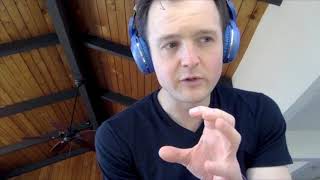
Dean Sutton moved from agency work into energy and health tech, building Insight Diagnostics for point-of-care blood testing. He closes big deals by prioritizing relationships over tactics, doing rigorous due diligence on regulation and manufacturing, and choosing partners who operate from abundance rather than scarcity.
Chapters
Welcome to Make More Marbles. My name is Brad Hart and we're here to interview the game changers, the future makers, the co collaborators and creators who are here to collaborate with one another towards a better future for all of us. Enjoy the show. We've got a great guest coming up for you right now. And welcome to the Make More Marbles podcast. As always, I'm Brad Hart. I want to welcome you today to the show. I am here with Mr. Dean Sutton coming in from Vancouver, Canada. Say hi, Dean.
How's it going, everyone?
And I am more than thrilled. Thrill doesn't even begin to describe how I feel about this meeting of the minds today. Dean is a friend now for a while, just a man of high integrity, a business maven, done many successful startups, currently launching a really new project we want to talk about and just, you know, all around a great guy that's been in the game a long time and he really values relationships like I do. And I just feel like there's more, more of this needs to happen. I want to promote people like this to the world. So I'd love to get his thoughts on a few different things. But Dean, why don't you just kind of introduce yourself and tell us a little bit about yourself?
Yeah, thanks for the kind words. So, yeah, I'm from Vancouver, been entrepreneur since I was 20. So kind of got into this game and never looked back. I've never kind of never depended on, you know, the system or a job or paycheck. Mostly just because of the personality and how I view the world and what I want to create. Got my start working in everything from E commerce to supplements to software. Ran an agency for a number of years, and then through building different products and working with bigger companies, I had a moment where I looked at what we're doing at the agency. And for all accounts and purposes, it was an agency that was growing and thriving. But what I did was after a trip I had with a couple friends, I took a look at the whole picture and said more of an esoteric way of saying life is finite. Here are some of the world's greatest challenges. Here's how much time I have in my life to tackle and do these things. What are the areas that I care most about and how can I transition from doing something that's service based and is a good business on its own? Right. But tackle some of these problems and take some bigger risks and kind of have a bigger risk reward threshold in my life. And I picked a few areas. Energy and health were the Two and jumped into starting companies and never looked back from there.
And Dean, why don't you share with us just a little bit about the story of, you know, give us the turn and kind of how things kind of change for you. Because I know you originally got into business for reasons that a lot of us do as entrepreneurs. You know, we kind of feel like the traditional route doesn't make sense or doesn't call out to us for whatever reason. And we see kind of our parents generation that, you know, kind of just got by and, you know, their whole lives went by and they, they just kind of were really grateful for what they had. And that's a beautiful thing, but we always kind of cried out for more or we didn't feel like we fit. Right. So tell us the story of how things came live for you and then once you were successful, tell us how that shifted your passion, your purpose towards, you know, these bigger things. Because I always talk about the make more models community, how, you know, we're trying to make big game changing legacies. Right? We're trying to really affect change on a global scale, like food, energy, water, shelter, at a very basic level for all humanity. And since your two focuses are energy and health, I'd really love to hear about kind of the hero's journey of how you got to where you are today.
Yeah, well, when I was running the agency, we, you know, I started to make kind of like a light transition. So when we were doing, you know, services and business development and we were, it was more of a traditional agency where we would get into the boardroom and we would start brawling. This was kind of back when the question in social media and marketing was, what is it? Then it became, how do we use it? And then it became kind of this mainstream thing that was baked into companies. So there was that transition point that I looked at. Let's do things more traditionally, let's look at business in a holistic sense and say, what can we do in a fully integrated marketing approach for these clients? And as we continue to grow that as I kind of got this itch of wanting to get into these more high priority, high impact areas through the agency, we kind of put a direction and focus out towards being a green agency, focusing on sustainability and getting into energy companies. In doing that, I was speaking at an event and there was a CEO there who ran a wind turbine company. So they were an engineer and manufacturer of small distributed wind turbines. And distributed energy obviously was of great interest to me because, you know, rather than utility scale, that Requires multiple years, multiple millions and a long life cycle prior to actually getting to shovels. Distributed allows for people to start to acquire and generate electricity on site for what it's needed for. And this company had a product that in my mind could fit right into that. It could fit into being a supplier of people that want to generate wind energy, whether it's on agricultural land or it's a farm, or it's a mine, or if it's just an industrial site. The thing that struck me at that point was I'd been in business for a few years. I spent a lot of time researching and focusing into these different areas. And when the CEO approached me, he asked me a few questions that made me really think and there were questions along the lines of what do you think of my business? What do you think about the financing climate for it? We don't know how to do these things, but we're looking to do this. And he kept reinforcing the part of the conversation saying he's an engineer at heart, he's been working in this field for many, many years. His focus is on product development, he understands the intricacies of the industry. But he painted the picture that there were massive voids in what would be required for him to actually finance and commercialize a highly engineering intensive product. And after that I kind of planted some seeds in my mind. So we kind of set up a follow up meeting and fast forward, we had three to four other meetings and we were sitting down at a. I remember sitting at a white spot in the Okanagan in B.C. and literally went through a document that put me as CEO of the company. We went through what's needed, how much money we need to raise, what roles are shifting, kind of what the roadmap is. We kind of outlined how do we get this thing to a point that we can get to commercial sales. And then we went full bore into that. That company is actually one of the things that it's still kind of being worked on by a few people. I've removed myself from the active day to day with it, but the same thing came to when so in jumping into the wind energy company, worked on that for a couple years. Still have my interest in it, but I continue to look at focus areas and because I'm not entrepreneurial add but I realized that there is only finite amount of time to do everything that you want to do. And you have to be very pragmatic with what do I put my time into, what's realistic and what actually matters the most. And Then match that up with where's the industry at, where is the market climate and is there something real here and now? And because it's focused on energy and health, I was following a lot of what Peter Diamandis and Singularity University were doing, and at that time they were launching the tricorder xprize. And I've always been really, really interested in health kind of from the standpoint of someone that understands it, really cares about it, understand that the technology is dramatically shifting, but the world, the market and consumers have not yet shifted to be able to utilize that technology because it's highly regulated arena. Long story short, I came across a technology that NASA developed 20 years ago that showed that you could basically get 21 biomarkers from a single droplet of blood on two different assay panels. And this was done in a machine that was basically smaller than a computer tower. And traditionally it was in the physician's lab or it was in a clinic. So fast forward, I was introduced to who is now my partner, but an individual is pursuing his PhD at a university here in Canada. And he had this small mobile technology that could receive a droplet of blood and translate that for glucose for diabetes. I was introduced to him and we started to talk about the immediate of what we can do for improved diabetes management protocol that uses a drop of blood. And this little coin just NFC is right near your phone. So it changes the bulky aspect of traditional glucometers and diabetes management. Then we got into if you can measure glucose from a single drop of blood, what other things can we detect in this little microfluidics device in addition to glucose? So we, you know, he had a company, it was called SHIELD Technologies and I had one called Blood Reader Technologies. We merged and we called it Insight Diagnostics because that's essentially what we're doing. We're providing mobile tools that allow someone to take a drop of saliva or blood and have insight into their health from that point of care on demand, decentralized. And that was kind of our starting point and my foray into health and where I'm currently at today. It's expanded from there in a number of different areas. But both of the meetings and the intersections were based on almost like a definitive decision and a lot of time and effort put into identifying what areas matter, what can I research and learn about those areas, how much can I know about this, what can I research, what can I read, who can I meet, what can I consume and then start to have meaningful conversations with people in this space and then I think that's where these organic relationships start to unfold, is when you have a definitive idea of what you want and more importantly, why you want to do it. And then what do you need to put yourself in the way of having meaningful conversations with people that are doing just that.
That's fascinating. Thank you, Dean. And a few things, you know, I want to pull on some threads here because when we pull on the threads, eventually the sweater unravels and you get to the exposed, naked truth. Right. So one thing that you really hit on and really resonated with me and I think what we talk about in the make more marvelous community a lot is, you know, a business needs two sets of four things. And the first set, we won't go on the second set because it's not relevant to this conversation. Ideas, people, numbers and timing. And you talk a lot about why things were right at the right time. Can you give us an example about a time when you were wrong or how you learned that lesson or some of the leadership lessons that people can take away, you know, with regards to timing the right idea at the right time and how do you kind of, you know, litmus test what's the right time and how do you validate your ideas quickly?
Yeah, you know, that's a like, it's like taking a fork and scratching it down my back. That's a very, very poignant lesson learned a very hard one. Lesson again, going back to the energy business in wind turbines. A lesson that I learned that took me a solid six figure sum and a year and a half, was when I met and because I was, let's just say, newer into the energy industry at that point, I was very enamored with the ability and impact that we could have through this product. There's a lot that I needed to learn. There was a lot that I didn't know while I was pursuing a lot and getting well connected in the space and educating myself quite rapidly on things. The fact was that it was. I got so caught up in how awesome this thing is and how meaningful it is to provide clean energy in an area that is tangible. There's a clear pathway to do it. What happens sometimes and what happened in my experience, what really taught me a lot of lessons was you really need to temper your excitement and your passion for something and kind of bring an engineer's mind in. Kind of like that. First principles, engineering and look at what are the realities of this. And sometimes because you're so passionate or interested in a specific business or industry, you almost don't want to ask yourself those questions, or you almost don't want to shed light or expose those things. Because the harsh reality is if you do that maybe your opportunity is not as beautiful and shiny and opportunistic as you think it is. So what I learned on the energy side very well, after a long time, which I should have asked and pursued in the first three months, was the regulatory climate, manufacturing estimates, the current sentiment of investment capital in that sector at that time, and the realities of that. So what I mean is there were certain things that were required for us to get through commercialization. Number one was finance the company for the engineering and the production. And then it had to be the regulatory testing of the product, and then it had to be commercialization and basically turning on the facility to bring it to market. What had happened at that time, and even just as of recently, is when we were going, when we set up the plan to pursue the fundraising for this company, the climate had immediately just shifted. There was incentives that the government had that were pulled, incentives that had shifted in different markets. And what happened was there was a previous three year history of a boom and a bust cycle which made clean tech investments the black eye of the industry for that time. If I really got into the tough questions early on, I would have immediately gone to multiples of people in the investment community in that sector and got their insights right away. I would have immediately gone into people that understand the regulatory and government incentive and reimbursement side of the industry right away. And then I would have gone directly into the manufacturing production guys. And I had all these people that I knew and I was withholding those conversations to try to build this company and bring in the capital to be able to then go engage all three. But what happened was I learned very painfully throughout that process of fundraising that the financial climate for it was very different because the incentives were a critical factor in what the turbine could produce versus what it cost it at the time. The incentives in the market for Canada, basically North America, were different as of recent. And if I had pursued those hard conversations early on, again, I would have saved a lot of money, a lot of heartache, and a lot of time. So in retrospect, everything's 2020. I've learned those three lessons very clearly, but I would have definitely gone back and had those hard conversations very early on.
Thank you. Thank you for sharing. And some things that are coming up for me is that we are always making decisions at the very base of our decision making out of either love or out of Fear. And part of acting out of a state of fear is hoarding, right? We perceive scarcity when none may exist. We look at things as like, I need to protect this idea, or this is the only idea that exists, or I have this million dollar ide. We all know, and you and I both know that the execution is 99% of any idea, you know, and you know, so when people are acting that way and they're. They're worried about, you know, this nice little red river that they've got that they're just trying to traverse down instead of looking at the big blue ocean of opportunities that are out there, they get so hung up on that idea or that path or that cool thing or that shiny object, and they're operating out of fear disguised as any number of things. Instead of stepping into love and saying, hey, what could I do? What is the highest and best use of my time and energy and attention right now? What should I be using my talents and bringing my team together and focusing on right now and creating in the space? It doesn't have to be that. And there's a timing, right? There's a timing for everything. And it's funny because we talked about ideas, numbers, timing of people. It's like they're opposites, right? Ideas at the wrong time are useless. You know, timing without ideas is useless. It's like two opposites end of the spectrum, people and numbers. Same thing, right? So it's like, you know, I did really well on the hedge fund side, you know, and had this big month, and, you know, I'm sitting there drinking champagne on the top of a really beautiful hotel on Park Avenue in New York City, and I felt more empty and alone, disconnected from myself or from other people I'd ever felt in my life. And at that moment, I didn't quite get it intellectually, but in my heart, I knew that something was wrong and that I was never going to be able to make enough money to make it go away. And what I realized that, you know, now in retrospect, is that I was on the wrong side of the spectrum. I was two numbers focused and then the people focused. And typically, people tend to be good at one or two of those things, but not all four. So that's why partnership becomes so important, because not only do you get to step out of your fear and your bullshit and your. Your understanding of. Of whatever it is, and that's limited for everybody. You get to have other people to rely on in order to bring these ideas to fruition in a timely fashion. With the right people and the right numbers on board, if that makes sense. And that can kind of create an environment where you can thrive and act out of love and abundance and flow and all that great stuff, instead of that feeling of entrepreneurial overwhelm. So that's a beautiful thing. Thank you for sharing that.
Yeah, I totally agree. And I think one of the biggest red flags for me, when I'm looking at an opportunity or a partnership or an investment, when I see that scarcity right out the gate, I'm immediately, I just run. It's just a no. And that usually comes in the form of an immediate NDA, or it comes in the form of just the way that the founder or the person presents the opportunity. You can pretty much detect right away when scarcity is the driver rather than abundance and a true understanding of two things, not only the market in critical detail, but also themselves. Because I think that's one of the biggest things when you're trying to get into, like, when you're getting to creating something substantial, it's so critical to know yourself. Because when you have to, when you understand what your personal dispositions are, when you understand what your bias, you know, what kind of different levels of bias you have towards different things, you have to basically force yourself to extinguish those right away or expose those to their opposite so that you don't have these blind spots that come in and tackle you. And, you know, like you said, you have to balance the people with the money, with the product, with the market. And again, if we had this conversation, and I know what I know now, going back to what we had, it would have been very easy for me to adopt an abundance mindset as it relates to this company, rather than trying to control our IP and our technology, keep it secret and private until we build this behemoth. Where I could have taken the same company technology, found a larger partner who would both finance it and bring it to their fold and multiply a business 10x and be a part of something much greater. But I did not have that mentality, that awareness, that understanding at that time. Therefore, no bueno.
And it's so accurately and perfectly, because I'm gonna plug our brand again to make more. Marvelous philosophy. You're trying to grab all the marbles and hoard all the marbles, but you could have just been making more marbles or, hey, this guy's got a whole set of marbles over here, and let's bring those together and everybody can win more. And it's like, we only have so much flow and so much capacity. If you want to increase one or the other, out of focus or out of step, you're gonna create pain, right? But the flow is there. You just have to go tap into it. And by doing that, by stepping into love and by giving you tap into that flow. I mean we just had a conversation just before this call that we didn't record, but I was just sharing a win with Dean about how I put together a million dollar cryptocurrency deal in five minutes. I had a very long term friend and investor and trusted mentor that came to me with a problem that he couldn't put the money to work, that he wanted to put into work in the amount of time he wanted to put it to work in. And I'm a problem solver and I dropped everything and made it happen for him. So, you know, I was able to have a five minute phone call. He said, give me a day, let me vet all the different things, let me ask around and find the right thing and make sure I feel good about it. And I had a few opportunities during this deal where I could have been like, ah, you could take a referral fee or like ah, you know, I feel like I should get paid for this or ah, and it happens all the time where like you have these kind of thoughts that creep in. They're like some just feels funky. So I had this whole spiel lined out. I was gonna pitch to him and I was like, you know, I'm gonna drop all of it. I'm just gonna tell him, listen, here's what I think we should do. I think you should go and buy your 57 bitcoins or ever gonna get for your hundred K and eventually you're gonna invest a million or whatever you're gonna do. You know, I just want to, I want to do this, I want to propose this. I'm willing to do this deal for you and just do it as a friend regardless if you balk at this and this is not for you. Totally get it. I want you to take three of those bitcoins. I want you to take one for yourself and invest in this. I'm going to invest one and you're going to invest one for my, my friends who, you know, I'm not gonna name names, but was very instrumental in making this happen, made the right connections, etc. And you could either do this deal with us or not. Like no pressure the way we're still buddies, but if you did it, I think it'd be really cool if we all went in on something together for a small amount. And, you know, you go on your merry way and we'll still save you money on commission and all that good stuff. We'll still fight for you to get the best deal and make sure that you don't get hurt. To the best of our knowledge, right? We just, we don't know what we don't know. All crypto conversations are led with the, the preface of, you know, we're not fiduciaries, we're not investing. We're not saying you should invest in any of this or buy or sell any of this. This is informational education. We're still learning the game. But I was able to do a deal like that out of integrity in five minutes with a phone call that, you know, people are like, you know, they always want to tell the sizzle, right? They always say, I closed a million dollar deal in five minutes. No, I closed a million dollar deal in five years with a five minute phone call because I established that trust. And I could lose that same trust in five seconds if I, if I don't operate out of integrity. So when you get higher and higher in the levels and you start dealing with business people who have more and more experience and have built more amazing, abundant things, it's really not a test of what you know, I'm not the smartest guy around this, and I'd be the first one to tell you that, right? I know what I know, but I know that I, what I know, what I don't know that I don't know is infinite. Right? And, and, and if I can just approach from a place of, I'm going to try to ask the right questions and do the right thing as best I possibly can. And if I'm not sure about something, just say it, you know, and try to frame it as, here's the worst that could happen, here's the best could happen. Like, you start putting together deals with all these factors and the ideas and the people and the numbers and the timing, they all start coming together in ways that they would never come together otherwise. Because, you know, when you're trying to grab for everything or squeeze that handful of sand, it slips right through your fingers. But when you cup your hands, you say, all right, let's create more. Let's grab a bucket, let's irrigate, let's grow crops, let's plant fields, let's get a water tower. Let's get buckets and collect raindrops. The abundance river keeps flowing. It gets wider and deeper. And faster all the time.
I think two things really stand out that I think you should jump into, because I think everyone listening would get a ton of value from it. Number one is the only reason why you're able to close a deal is because you put relationships first. And like I said to you before.
And that parlays really nicely into my next question. So thank you for saying that. Yep.
So the business of business people, you understand that you're a relationship builder first, and, you know, I'm seeing perspective. All the best deals that I've done are literally based on relationships that I had set into motion and fostered four years prior to that. That's what creates the opportunity. But most specifically, I think it'd be cool to go take a step back and put the spotlight on that specific moment where you made the decision to detract what you were going to do in terms of offering this complex thing. And what was it that made you specifically decide to change your game plan and go into it with the abundance mindset rather than what you were going to do originally and change your plan.
Because something fell off? Yeah, I'll tell you exactly what it was. Something just felt off. Like, I had the whole plan. I strategized it, and I've been really busy lately, so I'm like, you know, trying to get one thing done off my plate. Off my plate. And it's funny because, like, these things, these big opportunities that come along when you're the most busy and you're the least constricted, it's almost like life is testing you. Like, are you sure? Are you sure you're this guy now? Is this the guy you are? Right? And it's like, I'm like, yeah, I could be that guy. Okay, you're sure you're sure? Because I'm going to give you a test, little test, just to nudge you, and then you're going to pass or you're going to fail it. And it's not a judgment thing. It's not like, coming from a place of. Oh. Like, it's not. You're never going to get another opportunity. But at every moment, you have a choice whether you're going to step. I had this bracelet on. And if you're watching the video, you can watch this later, guys, you're on YouTube or you're on podcast. You can just trust me. I'm wearing a bracelet right now. It's called. It's this little leather bracelet, and it's a donation to Tony Robbins Foundation. Tony's been a Huge mentor of mine. And one of the things Tony says is step up. He says a lot of things. One of the things he says is step up. So I got the bracelet as a reminder that at any time, at any moment, I can look at this bracelet and remind myself that I need to step up, right? People are always saying, and quick to point out, like, we're wired this way to see the blood in the water, right? What's wrong? We're always wired to see what's wrong in a situation. And they always say, why doesn't somebody do something about that? And to that question, I answer, aren't you somebody? So at any minute, of any day, of any hour, when an opportunity to do the right thing and feels best and best and highest good is presented to you or not, you have the opportunity to step up in that moment. Because we always have a space, right between what happens when my good friend Brian, he always talks about E R equals O, event response equals outcome, has nothing to do with the events. The events happen, they're out of your control. But there's a space in which you can decide how you're going to respond and not just react blindly. You're going to respond and that creates the outcome. So when you ask about the key moment, I think that was the piece that really did it. And also I want to just give props to the other person in this deal, that third party that I named who helped, you know, create this deal, really help make it happen and vet all the people that, you know, he showed up in integrity in all his dealings with me. And you know, everybody in the community supports this guy. I mean, he's a well known guy. I won't name his name here, but you know, and just showed me like he, the way he shows up makes me want to be a better man. And I meet a lot of great people in my life. I'm blessed to have a lot of really wonderful people, yourself included, Dan. And like when you talk about relationships like you can't show up in anything less than 100% integrity. Now I'm not saying you can't make mistakes. That's not what I'm saying. You can't. You're not trying to be perfect, you're just trying to be the best human you can be and show up the best you can in every situation, every time you're given a choice to make the highest and best choice you can possibly make. And that's all you're, that's all you need to do. You don't need to be perfect. You don't need to be God. That's not what your job is. You just need to show up and do your best in every situation. If something feels off or. Or it's just not quite hitting the way you want. I'll give you another quick example. I made a joke at dinner last week with a girl I really like, and, you know, I was just like, you know, hey, do you want to go on a date sometime? High five on it. She's like, absolutely. High five. So I followed up. I'm like, yeah, I would actually like to take you on a date sometime. And I just felt it got weird, right? Just immediately, she's like, really? I'm like, oh. And I'm like, it's not up to me, right? It's none of my business what people think of me, right. I know who I am, and I'm comfortable with that. But I feel like I'm perceptive enough to see, like, she wasn't into it. So it's just like, I wrote her a note. I'm like, I was joking around, and I was thinking, oh, I would actually take her a date. But I could tell that kind of put you on your heels. So I'm just gonna let. Let you have your space, and let's just be friends or whatever. And, you know, I'm open the idea if I'm reading it wrong.
Cool.
But by and large, I just want you to feel comfortable around me, so I'm just gonna leave it alone. And she got my text. She's like, oh, thank you for saying something. I didn't know how to do it. You know, I felt like I kind of said yes without thinking about it, and da, da, da. And then when I thought about it was like, don't. You don't need to explain it to me. It's none of my business. Doesn't matter. What I want you to understand is, is that I value your friendship more than I value any potential relationship or, you know, you as a, you know, somebody I want to date. That's all. And, like, coming from that space consistently has, you know, those are just some of the examples of how I show up in my life in order to protect what I truly value. And as a function of values, you.
Yep.
Go ahead.
And you also know who you are. And I think right there at the beginning, you have this strength right out of the gate to know who you are and to be detached from the decision or the perception or what that person thinks or wants of you. I think that's A critical part to note too, because human beings, by our very nature, some more than others, we want to please people. We want to be accepted, we want to be known. We often place our own value in, well, money is one. But we place our own value directly in the perceptions of someone else about us. So if someone says something bad, immediately you have this gut wrenching feeling. You're like, why do I feel so horrible about myself? It's because someone else said it. But what you just mentioned, that's an incredible amount of time, thought, introspection, and strength to know yourself enough to irrefutably say, hey, I'm cool no matter what. I'm really even very interested in doing this. Or even if you really admire the person, it hurts even more. But to be able to say, I know who I am. I know what I'm here for. I know what I'm all about. Therefore I'm, you know, whatever you decide to say, that's.
And guys, I just want to reiterate like, I didn't just. I wasn't born like this. I've messed up so many times. Like, I keep messing up. Just want to be really clear about that. But I've done enough work on myself at this point to see when I'm messing up and being like, no, that's not quite right. Let me tweak that. And to be able to just go back and say, hey, I didn't get that right first time. Can I give it another shot? And then re. Establish. Right. I've done enough Tony Robbins, I've done enough landmark. And it's been exceptionally helpful in just getting to the point where I can be. I'm like, I want people to enroll into my vision or what I'm. What I'm offering. I don't want them to be heck maybe I want them to be a heck yes or they're a no and that's okay either way, right? There's plenty of people who are a heck yes for what I want, what I want to create. And those people who want to play like they're a heck yes and we're all in. Cool. But do you really want to be. You really want to sell somebody who's like a kind of a maybe? Or do you want people who are like, heck yes.
I'm in the first rather than the latter? Almost certainly comes back in an adverse sense.
Right? And it shows up down the road is a hundred million other things. People are never quite in 100%. They don't get the results that they really Want it. Like, I'm kind of blasting through a few different things here, like business versus relationships versus personal versus a lot of things. But in any period, in any area of your life, if you're looking at something in scarcity, it'll show up as, I need to do this. This needs to happen. I need to make it happen. I need to roll up my sleeve. I need to work harder. When you get into flow and abundance, you come from a place of. It'll show up. I just keep vibrating higher and it'll show up. And they do, and it does. And when you. Whatever you're putting out in life mirrors back to you tenfold. So, yeah, and I want to kind of get to the next question I have for you, Dean, is get your kind of perspective on this, because you have more of an engineer's brain than I do, just to be perfectly honest. Like, I think you understand numbers and systems and process better than most people I've ever met. So what. How do you, from that strength and that flow, approach the art and the science of relationships, if you will?
It's funny because I would. I would say off the cuff that I'm better at understanding people and relationships better than any technology or market, and I think that's a huge thing. But maybe one of the. You know what? No, I'd say because I understand and value relationships first. I have the opportunity and the CEO positions that I currently have. I have the companies and the equity that I have based on understanding, being perceptive enough of people and what their goals and ambitions, desires are, seeing what their pains and what their challenges and what their goals and ambitions are, and being able to loop that together into a synchronistic position that I know that they want and need and what I understand and perceive, and I'm empathetic enough to know all the millions of nuances throughout that. But I would say my strength and the reason why I have and run the companies that I have right now is because I put relationships first and understand the dynamics, people and psychology and motivators better than anything else. So I was able to forge the relationships which became companies. So I would say understanding people is better than understanding a technology. I would say that's more of a strength for myself.
I think you hit it right on the head. And it goes back to first principles, which we always talk about is all businesses exist to serve and support people. Full stop. Full stop, right? And if you're a master of interpersonal relationships, psychology, pain, pleasure, all that stuff, like, it's not from a Manipulative standpoint, obviously, you could use it to manipulate people, just like a hammer could be used to hammer a nail or build a house or cave somebody skull in.
Right.
It's just the wielder of this influence in technology and tools, you know, and we all need different tool sets, right, to go through life. Like, you know, we all be. Need to be able to flex and flow as the situation evolves. And sometimes, you know, life presents opportunities where you need to use means or tactics that, you know, maybe in other situations would be entirely inappropriate.
Yeah.
But that being said, the overarching theme is, are you doing your best? Are you, are you serving the best and highest good in every situation? And as long as you keep that principle, as long as you're saying to yourself, like, am I operating out of love for people and for this life that we're creating and this vision we're supporting, I don't think you can go too wrong. Right. You can get off course, but you can easily steer yourself back onto course. And even the plane going from LA to Hawaii doesn't do it in one line. Right. It goes off course, it gets back on course, it goes off course, but it eventually reaches its destination. Yeah, that's a beautiful thing. So, Dean, since this is the Make More Marbles podcast, and since you are a guest, we always ask a question, which is, what can we serve and support you with? Since you've taken your time today to serve and support us, how can we connect you to resources, opportunities, people, or systems that would help you further your mission faster?
Yeah, that's a good question. I kind of, what I do currently, what I'm focused on is kind of split into two directions. I have a huge and growing desire to solve a key problem that I've had since I started my first company at 20. So what I mean by that is being an entrepreneur is oftentimes a very isolating, high demand, mentally and emotionally intensive endeavor. It's relationship driven. You need mentors, need advisors, you need industry experts, you need accountability. You need people around you to build anything of substance that matters. So when I was starting out, I was very, very slow to catch on to the understanding and the action around surrounding myself with people, accountability systems and resources that I knew that I needed, but also access to areas that provide me with the resources that I don't even know I need yet, but I inevitably will. So what I mean by that is a huge desire of mine is to not in a way of just saying, like, give back, but I wanted to create a platform that I myself use every day and every week, that provides me with the accountability and the ecosystem of entrepreneurs building high impact ventures that matter and use that as more of a personal CEO management entrepreneurial role. In my day to day, week to week, month to month management of my companies, I wanted to have that ecosystem that is really valuable. It really puts things under the spotlight. It provides clarity and accountability and specificity around what you're looking to do and then what you need to get it, and a timeframe to which you do it with a human that follows up with you on that. So Action Entrepreneur is a platform that I came up with a long, long time ago, but I had never planned to or never really got to launching it. So the way that I'm splitting my time is I have this long, long standing desire to create a platform to support entrepreneurs and myself. And the difference I think with this platform is there's a lot of great people with great intentions out there building a lot of platforms for entrepreneurs. A lot of it slides towards online business, make money online, be a lifestyle entrepreneur or start an online business where this is more tactical around building a traditional business that requires people, systems in person, boardrooms, documents, agreements, all the different things that are critical in building a company from A to B to commercializing fundraising and going to market. So part of what I'm doing is creating that platform that solves a key problem and creates the high value network that I've always wanted. So there's that and that's just actionentrepreneur.com and I would love to have people that this resonates with that helps with the accountability and seeing this would be valuable to them. Sure to head that way. Enter their email if they're interested in checking out when we're ready to announce it. And the other side of call it the bigger business side of what I'm doing. It's almost like the make more marbles approach to health technology in the sense that Insight Diagnostics is my core company and we're doing some really cool things in point of care diagnostics. We're also getting to mail order kits that allow you to test your specific DNA and your microbiome as it relates to obesity and general wellness and even diabetes in doing that. And why I mentioned the make more marbles mentality is in creating Insight Diagnostics. I put myself around a number of influential people, venture capitalists, people from big pharma, people from industry, and I kind of cast the vision of how big this is, how big the problem is, how big the market is and how much more impact we can have in creating something, even on top of Insight. But Insight should be a critical part of it. So one of the new endeavors that we're launching is, I won't mention the name yet because it is going to be something that is publicly traded and I'll wait for those formal announcements. But it's a health technology incubator and investment company. Insight Diagnostics is one of the core elements inside and we've got a portfolio for the companies. We're going to focus a lot on technologies and products that help solve problems and chronic conditions that affect like one in three people. So we're looking at a lot of things like obesity, pre diabetes, diabetes and cardiac issues. So that's a big thing that I'm launching. So Insight Diagnostics, we're doing a fundraise right now. We're closing that and we're going to move towards an exciting launch of those at home kits. So Insight Diagnostics is just insight. DX.com the Health Ventures initiative, will be launched soon. And then Action Entrepreneurs, excuse me, the platform behind the scenes that I myself will be using because there's kind of like a mobile app in a system that I'm using day to day in a formula that I've come up with that helps me be more efficient, productive, accountable and strategic in what I do with my ventures from day to day. So I'm gonna be launching that to help me manage my weekday life business and run those things in tandem.
Sounds like an epic, epic opportunity and an amazing productivity tool. Dean Sutton, you are a man, a gentleman, a scholar. I appreciate you and I'm grateful for you and thank you so much for being on the show today. Where can people find you online? Just deansutton.com okay, deansutton.com that's-e a n s u t t o n.com and yeah, really appreciate it. Check out Action Entrepreneur. Check out everything else Dean's got going on. He's a man of many talents and has fingers in a lot of pies, as do many of our guests here on the Make More Marvels podcast. I just wanted to say thank you for listening. We are grateful for your time, energy, attention and we would love for you to tune in next time. Subscribe on itunes, stitcher and wherever you like or check us out on YouTube @youtubemakemoremarbles. Thanks so much, Dean. Have a wonderful day and we will talk to you soon.
Appreciate it. Thanks.
Thanks so much for listening to the Make More Marbles podcast. For more tips, hacks and strategies to create an amazing, abundant life in your house. Health, wealth, relationships, whatever that means to you. Head on over to makemoremarbles.com check out our cool explainer video about what we're about and join our community of entrepreneurial game changers. We want to help you level up your life in every possible way. And don't forget to subscribe to us on itunes, Stitcher or Google Play wherever you listen to your podcasts. And please do leave a review. Thank you so much and we'll see you on the next podcast.
More from Brad

The #1 Reason AI Isn’t Working for You (Yet) #AI #businessowner #founderenergy




What tasks would the best assistant ever be able to do for you? #BusinessSystems #BusinessOperations



Nobody expects you to use a harder way when there's a better way. #AI #businessowner

Which side of the table will you be on in 2026? #AI #Mastermind #BusinessOwner

