Richard Hecker Talks Blockchain, Leadership, and the Future of Wall Street
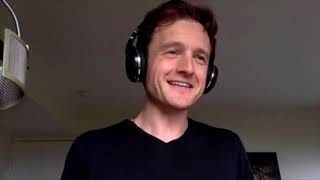
Richard Hecker discusses building teams and aligning incentives, then shifts to his blockchain work: creating market infrastructure for institutional crypto investment, launching a self-regulatory Crypto Working Group, and planning to fund roughly 20 major deals over two years. He flags fraud and regulatory risk as the biggest threats.
Chapters
Welcome to Make More Marbles. My name is Brad Hart and we're here to interview the game changers, the future makers, the co collaborators and creators who are here to collaborate with one another towards a better future for all of us. Enjoy the show. We've got a great guest coming up for you right now. Welcome to Make More Marbles. My name is Brad Hart and today I'm here with Richie. How you doing, Richie?
Hello, Brad. How you doing? I'm doing amazing here.
Love it, brother. I can't believe that's already dark in New York City. That's depressing. This clocks just changed. It's five o' clock there. It's freaking dark outside. You live in Gramercy, right?
Correct.
Yeah, I used to live there. I was on 18th and 1st in Stown for a couple years. I love New York, but it kind of wore on me. And it sounds like it's starting to wear on you, too. You're ready to come back to California? What's going on, brother?
Oh, I love it here. Maybe I moved to Connecticut. We'll see. San Francisco. Yeah, I thought about it. I thought about it. La, San Francisco. I do like it out there.
You lived in LA and San Francisco for a while, too?
I lived in San Francisco and I spend a lot of time in la.
Okay, well, let's talk about the hero's journey a little bit. All right, let's get. How did you get to where you are today? Let's kind of ground people into what you're doing in the world and why you're there at this moment. And in your words, what are some of the struggles you've overcome to get to where you are today?
I've had some big struggles, primarily because I didn't learn lessons for a very long time. So my biggest mistake is I kept making the same mistakes over and over again until one day you wake up, you realize, wait, you've made these mistakes. Why do you do it? So sometimes you just got to really take the minute off, give yourself the space to really think about where you are in the context of what you've done and where you are in your life. And then you can finally understand, wait. If the same things happen over and over again, you've got to correct the problem and really go deep in. Turn into yourself to analyze it and figure out what to do.
Okay, so let's give an example of some of the mistakes you're making over and over again. So maybe some people can learn from it, because I'm sure not. You're not the only person who's made the same mistake.
So I got started when I was very, very young. I started my first business when I was 15. Started an early advertising business in the first days of the Internet. It was very cool. We generate a little bit of revenue before the bubble burst. We got a little bit of press and I evolved over time. The problem I had was I never really wanted to admit when I was younger that I was really the super young guy in the room in the beginning. My mistake was I didn't get mentors. I also didn't start with an established network. I didn't have a business school network to tap into. I started as a pure hustle, like cold emailing and cold calling people. And I remember one day looking at every online advertising company listed in Yahoo's directory, if you remember that, and cold calling every company in the list and just figured out what's going on in the market and you kind of hustle through it. I didn't have a support structure in place to evaluate whether I was making good use of my time, whether I was choosing the right clients, ideas or partners. I kind of just kept throwing spaghetti at the wall. Some of it stuck, some of it worked well. But I was in the right place at the right time a bunch of times. And until now, and for a long time in my career, I would call the market, but then choose the wrong partners or choose the wrong deal, or not structure my organization correctly, not choose my team in the organization correctly or not start with a stable foundation. So it all comes down to building a foundation. What are you looking to achieve? What resources do you need? How do you validate what you're doing? Choosing the right team instead of the team choosing you and aligning incentives on the team and then create the right legal framework around those incentives. Now I would just jump into stuff, choose partners or let them choose me more likely and just run. And it doesn't matter if I have the right idea, doesn't matter if I even have the right network of relationships. I don't have all of those things in foundation set up correctly. The house falls apart at some point. So that happened to me several times in my career where I came really close and then it tanked everything when I had, you know, I've lost small fortunes and huge potential fortunes doing that several times in my career. And I finally started learning the importance of choosing the team, laying the foundation. You can have a great team and a bad foundation and it fails. You can have a great foundation and a bad team and it fails. And then you need the right foundation and structure. You need the right team. You need the right timing and the right capitalization, and you really need to be thoughtful designing that correctly to get there.
All right, so we got team. We got validated idea. We got right capitalization. Can you kind of dig into some of these pieces a little bit more, Richie, and help us understand why each one is important and then how each one plays into the whole and. Well, you know the chicken and the egg concept, right? How do you start with one if you don't have the others?
Sure. I'll start with the foundation. Start with a foundation where you know what you're doing, having general confidence in yourself and having done the research. You show up to the plate by being a viable party. Like, you know, you have to show up as a credible person and a serious player in the space. Why are you the right person to go after this? You'll be able to answer that question. You need to know is, what structures are you putting in place? So let's start with team. You need to have a team. I look for a few things in teams. First is trust. Can I trust the team to both have integrity and to be the right team to execute on this idea? So without that basic in line, you can have teams that are great execution at integrity. You might get screwed. You might have teams that are really trustworthy and high integrity with no idea what they're doing, in which case everything gets. So you need to be really careful to make sure that your team has integrity for where you are, where they are in their life, and where everyone is going. So red flags. One of the major investment banks, for example, I spoke with, this is, you know, household institution. They're like, yeah, we never invest in the deal if the CEO is going through a divorce because someone is not stable in their own life. You want to make sure your team members, your partners, have basic stability in where they are in their life and that they have a track record and a history or at least have a clear path. They've become enlightened. The importance of having integrity and laying a foundation and framework for how they're operating with you. You want the same thing. I've had partnerships where I wanted to build something, I wanted to partner, where the people I thought were my partners really just wanted an investor, and that doesn't work well. I'm trying to do stuff, and they really just want my money, and I don't think they're ready to take my money without actually putting frameworks in place. And that doesn't work because you're trying to offer something that people don't want. And other times, I've had partners that were just not capable. I took people that had hustle and reminded me of myself when I was younger. But, hey, I don't think I would hire myself when I was younger if I had to do this all over again.
Yeah, I like that. So you've kind of talked about some of the ways that partnerships can go wrong. How do they go right, and what do they look like when everything's actually working? Like, talk about a success now.
So what I think you need to have is you need to be aligned towards the same goals. You need to both come from a stable foundation of where you are in your life. Like, hey, I'm here. I feel stable. And stability is a state of mind. Your whole. You could have lost everything 10 days before you can have no money in the bank. But stability is a frame of mind where you are the grounded one. I am grounded as I am right now. I'm going forward. You can make sure you're both grounded in a stable frame of mind, aligned towards the same goal, and have incentives aligned to make sure that you're going in the right direction. And it's really. That's the framework. And you want to have someone that you believe is high integrity, that is going to keep their commitments and understand what their commitments mean to the people, other people in the room. No, you want. So, case in point, I have a partner in a project that I'm working on who keeps pushing me to slow down, keeps pushing me to make sure everything we do is thoughtful, thoughtfully designed, the mathematics work and the models make sense. This is in the ICO kind of cryptocurrency world, where, you know, it's very important for the projects to make sense, to be math, the work, and how the token economy is designed. So I have a colleague that keeps pushing me to build the foundation, right, to build the map, to design the map. Right. Make sure the white paper is designed correctly. And we're really going in that direction. So we spent maybe two months working on this, have a lot of it thought through. We're about to bring on a whole series of experts to plug in a lot of the areas that we need help on for very specific things. And then we're laying the foundation will go out. We'll then go out and raise money correctly into the project. We'll bring in the right series of people into the environment that we need to. And we're aligned towards the same Goal. And then we're designing the economic incentives and called cultural incentives. How the organization is set up so everyone is going to win.
I like that.
It's knowing that someone is going to make you a better person, trusting that they have their back and they're watching your back and they're aware of the impact of their actions on you. Like, if you keep saying you're making me, you go to your partner, hey, dude, you're making me really uncomfortable today. And they're not helping. Respect. They're not respecting that. You have to really look at why now. Sometimes it just may be an environment that you're not comfortable in. So you have to adjust yourself. And others are people that just don't respect you. Which cake ain't gonna work or you're gonna be miserable.
I like it. You always ask a New Yorker to break it down in ways that are simple to understand and no.
Right.
Ultimately, like, that's the key that really wastes most people's lives, is that you just. They kind of dance around the issues and you're attacking the issues head on. Here it's like, build the foundation, raise the money, get the right people on your team.
Exactly. And then make sure everyone's aligned towards the same goal and vision.
So let's talk about incentives and goals and visions and just creating that framework, because I think that's a part that a lot of people struggle. Okay, so you got the idea, you got the foundation laid, you got the money, got the people. Now how do you align everybody in the same way? What are some of the frameworks that, you know, work towards success? And then I want to get into crypto, because that's a big thing.
First thing is have a clear vision. We are doing X for Y. What are you waiting to achieve in the market? What is your vision? Where do you want to be in 1, 3, 5, 10 years? What's your vision? Can you articulate it in like a sentence? I call this the grandma test. Can you explain something to your grandma? If it's in the tech industry that does not even have a phone to understand in one sentence. That's the first thing. Second thing, once you have a clear vision, what you're going for, make sure that, you know, everyone knows what's in it for them, and everyone knows it's in it for you. You're on the founding team, you're going to get, say, 3% of equity vesting over three years or in your stock, you're expected to hit the following relative milestones and we'll Have a check in every quarter to make sure everyone is happy with each other's performance and how things are being managed. So setting up clear incentive structures for people and then offering coaching and guidance along the way. Like, I want everybody on my team to hit every milestone they set or miserably miss the milestones because then I want them to pivot into something that's better. What you don't want is people to consistently slightly miss their milestones. That's a failure. That means you're not setting milestones right. But if they're hitting them, that's awesome. Or if they're ridiculously missing them and coming up with better things to do to change what they're doing and evolve what you're doing overall, that's awesome too. Like, I believe in incentivizing people to win. I also believe in incentivizing people when they realize you're doing the wrong thing. They figure out do it better to give someone a bonus for missing their milestones and telling you where you're wrong as a leader, how to do it right.
I like that. It's just as important to know what's going wrong and where you got to pivot as is to getting it right. And you know, so you either want to smash your expectations and nail that goal or just completely fall flat on your face. You can do something that works better.
Exactly. And along with an evolution right, three things you're doing may be working. Two, you're just missing entirely. Alright, so let's say your goal this month was to generate a certain amount of prep and you didn't do it. So you want to ask why didn't you? And if the answer is, well, I don't think we're actually ready to get pressed, then you realize, wait, maybe we're not actually ready to do this. Let's slow down, let's do things right. Let's change what those milestones are and evolve. What we're doing is when you started, especially early stage, most of your milestones are what you hope to maybe achieve. Assuming everything goes perfect. Once you go into reality and you're in the, in the trenches, you learn what the practical application is and how you need to evolve it to really achieve your goal. You don't know that until you do. So you got to learn by foundation first, clear KPIs, learn by doing, evolve your KPIs and reward success, and reward failure and reward evolution. And when people are totally missing the mark, then you just gotta cut and run and you have to let them Go and part ways, friends. If people are just not respecting each other correctly or completely missing all their own goals and don't have an evolution like, hey, sorry, I missed. It's the quarter ends. I missed my goals entirely. Someone comes to you saying, hey, you know, I said we would hit a million dollars in revenue. We came up at $300,000. I don't know why, I don't know what to do. I tried my best. I just didn't work. I don't got any ideas. Then it's like, all right, fine. So you have. Then you throw the question back at them. Should we pivot? Or are you the right person to do this? Or do you need more support? If they come back saying, I don't know what to do, I don't know where to pivot, I'm done. You realize it's not the right thing if they say, hey, I need support in this, you look at, can you give them more support to achieve their goal? Awesome. Then you go test it. If they say, I need a pivot like this, all right, design a test. So you need to frame the question correctly and have a check in in the process. And then, like, I've had great partners in the wrong situations and things didn't work out. I've also had great situations with terrible partners and things are destroyed. And I have had great partners in great situations and things don't work out. I've had great partners and great situations and things worked out. You know, you kind of like, just have to be able to adapt for any of the environments that pop up in you and assume you're not going to predict everything.
So, Richie, like, what are some of the ways you can kind of get closer to understanding whether a person will or will not be the right fit for that role? Like, so we geek out on wealth dynamics, for example. It kind of gives you a sense of, hey, what are the these people really good at? Are they good at ideas? People, numbers, timing, where do they fit? And based on that framework, we can predict whether they'll be successful doing a certain thing or not. Do you have any kind of frameworks or tools that you use for that? And what are they?
First, use your intuition. Learn to have a quick read on people. Give people test projects before you take them on full time, when and where possible. That's not always possible, but get to know people over time. Test something. It could be as simple as, hey, you know, someone is interested, doing tough mudder type, like high, like kind of races, like that, and you want to see if they can follow through, so do a race with them. See if they follow through, see what they follow through and learn where their passions are, see what they're actually doing, align with their passions. And if you see they can follow through on something, that's good, just got to test it out. You know, if you butt heads on the first day with someone, it's not likely to get better unless you sit down and talk to them. You say, hey, why are we butting heads? What's going on? If they don't give you a clear answer and you keep butting heads, day two and three, it probably ain't never going to work.
I agree. And it's so important to understand is like, give people a chance to course correct. God knows I don't get it right every time. As a leader, I'm sure you don't either.
Right.
But give people a chance to course correct because that's what you want as well. Right? You want to know when you're screwing up or when nothing's working. And sometimes you just throw in a mulligan like, that day sucked. I was off that. Let's just forget about that day. Let's learn the lessons from it. Certainly, because conflict can be positive. Sometimes you just have a day where you got to throw in the towel and say, hey, listen, this was not me and my best. What I'm going to do to do better going forward and just have that space for people to be human.
Right.
It's not like we're building a machine with, you know, cogs in the wheel here. We're building a human organization with real humans. And in order for those humans to be successful, sometimes they gotta have a little bit of slack cut their way, but not so much that they can hang themselves. Right.
I always believe in giving people slack to evolve things. But it's just a matter of, you know, let people set their own. Understand organizational goals, let people create their own plan against those goals and see how they perform, offer support and coaching. If they're way off the mark, ask them why. Set up the framework for feedback.
So, Richie, let's pivot a little bit because I want to talk about your blockchain experience. I want to talk about what you're doing in cryptocurrency. Can you kind of give the audience just a little bit of a framework to understand what you're working on, on right now? What is the problem you're trying to solve?
So at the highest level, what I'm doing is I'm creating the market infrastructure to bring Institutional capital into cryptocurrency. Right now we have 100, 200 odd billion dollar asset class, give or take. The public markets are like in the trillions of dollars. The upside for crypto is to tokenize everything because tokenization or using blockchain is a better form of security issuance infrastructure, which means that, you know, the coin itself enables you to pay dividends or basically pre buy a future revenue stream and trade it better than anything out there. So we believe the world is going to get tokenized. In order to do so, you need the Rails for institutional capital. You need the right licensing, the right charters, the right software, the right currencies that are ubiquitous, that people use. So we are investing in the infrastructure for institutional capital bringing into the market. We are starting, we started something called the Crypto Working Group. It's completely off the record. We unofficially launched it. The websites are going to launch and social will launch in the next couple weeks, which is a self regulating organization for the industry. The FINRA regulates broker dealers. We're building that for crypto. Our members are large financial institutions, institutional capital players, large funds, insiders in the cryptocurrency ecosystem. We're building the community and the governance, the standards and the consulting infrastructure to enable the flow of institutional capital. And then we're investing in all of the tools around institutional capital.
And when will you know that you've won? What is your metric? To know that you've been successful in doing so?
When we've successfully brought in trillions of dollars into the market is a goal for Crypto Working Group. On the investment side, when we built businesses and invest in businesses worth billions of dollars.
I like it. Okay, so we have a $200 billion returns on that. Yeah, we have a $200 billion asset class. Right. It's never been seen anything like this before. You know, the blockchain underneath has quite a bit of room to grow and certainly pieces are being figured out every day and really smart people working on this. How do you kind of look at the space as a function of. So like let's say there's $85 trillion in currency that's currently being circulated. That's M1M. You know, 200 billion is crypto and crypto, you know, tokens and things like that. Where do you see, it's like, okay, we've crossed the Rubicon. This is going to be a thing forever. It's not going to be snuffed out by central bankers or anything like that. You know, where do you see that being the case Is it like 2 trillion? Is it 10% of the market? Is that a possibility? Do you think fiat has a future? Where do you think we're at?
Well, great. Open question. So it's a mixture of things. So first it's a flood of institutional capital in the market. It's like pornography. You'll know when you see it. But the way that we know it is there'll be banks in the space that can actually accept crypto. There'll be exchanges and make it easy to onboard buy and sell and issue. And they will be ubiquitous coins by major brands like Procter and Gamble. Having a coin that hundreds of millions of people have ubiquity, what will determine it? So for example, SMS text messaging in the US became popular because of American Idol voting. So we need to have things that create mass consumer adoption in the market and need the rails to enable institutional capital to come in. Those are the two things that I think combined will bring all the money in and we'll be able to show the success and it'll be freaking obvious right there, but you won't know until after the fact.
So it's adoption, it's ubiquity, it's utility. Right. There has to be a reason for these things to exist, which I believe there is. What do you see as the biggest threats to cryptocurrency and blockchain technologies?
Fraud.
Fraud.
So outright fraud. Many of these ICOs today are filled life with fraud, potential fraud, whether intentional or not. Like I see coins all the time that are in regulated areas that literally say they're building unregulated versions of regulated products and then they're accepting money from investors and participants in markets that are regulated. That is illegal. And you see this all the time. You have people that are going after, they're basically raising money on a business plan without actually thinking through how to execute and have zero way to execute because what's in their business plan is actually illegal.
Yeah, exactly. So you're, you're basically, you know, the SEC has weighed in and said hey, this is all securities. We're going to treat it like securities. And they're going to say, oh, we're going to make something that's not even like a security. We're going to completely deregulate this. Well guess what, that's kind of illegal because you still have to operate within jurisdictions which have governing and laws that keep people from basically defrauding each other. And you know, it's like the wild wild west. So eventually all that's going to come Home to roost. Might take a few years for it all get sorted out, but guess what, it's on the blockchain in the meantime. Those are like prosecution futures. You know, if you do something that's shady now, it's going to be tied to you forever on the blockchain. So it's really important to understand, like maybe you shouldn't be doing that, you know, and just get your eyes dotted and your T's crossed before you really go down a rabbit hole.
So we're in a market with hot money, people making a lot of money really fast that attracts people that want to make a lot of money really fast. I actually pulled myself off of three projects I pulled my name off of. I wasn't comfortable with where I went from being involved to not slow down. I want to do this carefully and thoughtfully and design a long term strategy for the fit. I took six months to design the strategy and really took a thoughtful approach and we did it and we're taking it into market right now. And you know, just taking the time to really evaluate and understand how the entire industry and community works and get to know who the key people are and how to do things in a clean and regulated way. That's really what we're about at our core.
I love it. And so Richie, what do you feel like is a good, you know, using history as a lesson, good analogy for this time in our lives for people that are kind of like, I don't get it. I understand what, like I don't see where the future is going. Like we, we kind of see the vision, it's very clear. But I want to make sure that people are getting related to like what is this kind of like that people have experienced before, seen in history. Exactly. That's what drives me crazy is how do you really show people what this is going to be?
You can't, can't do it.
At least 50 different ways.
You know, it's a digital gold rush. Not based on rationality or not even based in economics. It's based on pure market psychology. And so ain't nothing like it.com took more money to build. A lot of these organizations are bootstrapped. Before ICO.com took a lot of money to build these products, they burned a lot of money. The burn in these products are much lower than they were in the dot com days. So there's no paradigm to compare this to. You just got to jump in with two feet, your full body and learn how to swim.
I can build an Ethereum token in solidity in 20 minutes. And I have a new currency.
Yes.
I watched a 10 minute video on how to do it on the Internet for free. And now I can go build a currency that anybody can trade and derive value from if they chose. Cheese. Basically that used to be all the bankers in the world had to get together on Jekyll island and go figure out how to figure that out with a computer. It's amazing what we live in, but doesn't make it, that doesn't make it right, doesn't make it usable, it doesn't make it ubiquitous, it doesn't make it high utility, it just makes it available to you.
Yeah, but there's a hundred types of bubble gum and cereal. Doesn't mean to eat them all.
Exactly. Bubblegum cereal sounds terrible by the way. All right, so as far as what you're working on, what are the next steps? What do you see the next, you know, two, three, four, five years looking like, what are the key pieces of like I don't know what's going to happen with this or I need to figure this out or I still need this resource or connection. How can we help you really I guess is the best question.
So we're doing is we're investing in the space. We want to be investing and investing, building and operating the key infrastructure for the space and number of the big coins that come out in the market. So we're going to do say 20 deals over the next two years that are going to be big deals that are very successful and build key infrastructure and key use cases of cryptocurrency.
Got it. And then the next best question is what are the key pieces you feel like are missing? Is it more, you know, like do you already have the background and banking to kind of get these meetings that you need to gain that enrollment into the FINRA type structure or do you need that still no.
We'll be able to get the, we'll be able to get the meetings. We have access to a lot of the people. We launched the first event at one of the most venerable and most well known investment banks in the world. I can't mention the name, but we're hosting our events at the leading financial institutions, law firms and regulate and market participants. So we'll be fine. We just need to keep hustling. I actually have a project I'm doing today which I'm going to send out the invite for a soft launch party, offer more, you know, offer a lot of more, a lot more content on it into the market, design our structure we're going to share exclusively with one of the financial outlets the structure of the organization and how we're operating. We're putting a lot of the infrastructure together there. I'm actually taking that into motion today.
And then if anybody wants to get involved with what you're working on, how can they best do that?
I would say contact me at richie r I c h I e attractionandscale.com t r a c t I o n a n d s dash a l e dot com that is how to contact me. Anybody's interested in what we're doing on the investment side, they can contact me and talk to me. And you know, I have a website. We're up, we're talking to people. We're doing a lot around the space and a lot around infrastructure. We look for, you know, we look to partner with people that are passionate about the space, that are trusted, high integrity institutions that want to leverage our community access. We look for teams that are trustworthy and know what they're doing and have done it before. If someone's pitching us an idea in an industry, I want them to know that they know exactly how to execute.
Yeah, that's important.
Otherwise they're not, you know, we were very specific. We also hire people. People don't know how to actually might hire them in one of our companies. But you know, we look for partners, people that can know how to do exactly that and we can leverage infrastructure. And we hire people that have talent and potential, we can train and develop or that are execution people that need a home. And then we look for capital partners that really share a vision with us that we can build with and we can invest alongside of.
What are the pieces of your team that you still need? What are the job openings or opportunities you're looking to fill?
That's a great question. I'm looking for one investment professional that knows the space, knows how to source deals, knows how to diligence deals, has a background in both crypto and traditional venture private equity. One really good person with a great track record that knows the space, looking for one really amazing investor relations person that can help lead our fundraising efforts for all of our different portfolio companies and our vehicles. And then I'm looking for great talent. In general, I'm looking for project leads like I'm looking for. We're always hiring for chief operating officers. That's a role that we love. And healthcare, dating, messaging, communications, exchanges, banking, these are the areas that we're making plays in. So we're looking for chief operating Officers to join our portfolio company.
I love it. How many portfolio companies you have right now?
I don't disclose the exact number.
Okay.
So we're very quiet. You know, we're very quiet and specific about when we attach our name to something publicly. So you won't find any of our portfolio companies listed on our website. But I'm. You'll see me in the press all the time and you'll see my writing in the press and you'll see me with the crypto working group. So we like to keep a reasonably mid profile for what we do and for myself, and we like to keep what we actually do behind the scenes quiet until the time is right. And we attach our names to things very carefully and very specifically.
Okay, cool. Richie, I appreciate you taking the time so much today for, you know, sharing your leadership perspective and from helping people to understand what you're doing at a high level. What are some of the things that you wish people were reading or people were hit to that you're reading or that you're getting excited about right now?
You know, I would say learn psychology. If you're playing in crypto, learn. Learn psychology. Understand how the markets actually work, have good attorneys, and understand the regulatory environments of your industry. And read a book called the Master Switch. It's written by a Columbia professor. The Master Switch predicts it tells the history and story behind all the major media telecommunications industries, and it predicts what's going to happen in the cryptocurrency ecosystem over the next decade. So read the book. You'll learn a lot. Everything will start making sense.
Thank you, Richie. And if people want to reach out to you, how do they do that?
I would say Google me. Follow me on I write for theobserver.com I write for Huntington Post. You can follow me there. I'm on Twitter under Richie Blue Eyes and you can find me at my email address, richieattractionandscale.com feel free to reach out. I would love to talk, learn more. If you were interested in, you know, getting involved, talking to us, interviewing for one of our teams, pitching us something. Let's talk.
Sounds great. Thank you so much, Richie. I really appreciate you being on the show. And on behalf of everybody at Make More Marbles, thank you for being here.
Well, thank you for having me, Brad. I had a great time and have a great night.
Thanks so much for listening to the Make More Marbles podcast for more tips, hacks and strategies to create an amazing, abundant life in your health, wealth, relationships, whatever that means to you. Head on over to makemoremarbles.com check out our cool explainer video about what we're about and join our community of entrepreneurial game changers. We want to help you level up your life in every possible way. And don't forget to subscribe to us on itunes, Stitcher or Google Play, wherever you're listening your podcast. And please do leave a review. Thank you so much and we'll see you on the next podcast.
More from Brad

The #1 Reason AI Isn’t Working for You (Yet) #AI #businessowner #founderenergy




What tasks would the best assistant ever be able to do for you? #BusinessSystems #BusinessOperations



Nobody expects you to use a harder way when there's a better way. #AI #businessowner

Which side of the table will you be on in 2026? #AI #Mastermind #BusinessOwner

