Scalable Solutions for Ending Poverty and Women’s Health Issues in Kenya and Beyond with Ash Rogers
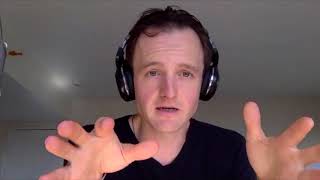
Ash Rogers runs Lwala Community Alliance, which uses community health workers and mobile data to improve maternal and child health in western Kenya. The model serves 30,000 people now and the Kenyan Ministry of Health invited them to scale to 1 million. Rogers is looking for technologists and finance experts to help expand.
Questions this video answers
Approximately 30,000 people.
To reach about 1,000,000 people over the next several years (county-level expansion).
CommCare (mobile/mHealth) and Salesforce (program management/CRM).
Nashville; sits within the Institute for Global Health at Vanderbilt University.
Email: ash@lwalacommunityalliance.org; Website: lwalacommunityalliance.org.
Chapters
Welcome to Make More Marbles. My name is Brad Hart and we're here to interview the game changers, the future makers, the co collaborators and creators who are here to collaborate with one another towards a better future for all of us. Enjoy the show. We've got a great guest coming up for you right now. Welcome to Make More Marbles. My name is Brad Hart, and today I am thrilled, excited, and grateful to have Ashero on the show. Thank you so much. Ashley Rogers. How are you?
I'm good. I'm excited to be here.
I'm so excited to have you. Thank you so much. Do you prefer Ash or Ashley? It doesn't matter.
Ash. I rebranded early in life because there was, you know, Ashley was the most common name in the year that I was born.
Which year was that?
1987.
Ooh, got you beat by a couple years. 85. And Brad was a common name back then, so it worked out.
Cute.
Were you named after somebody in your family?
I was named after a girl on the bus that my grandmother drove.
Oh, interesting. So there was actually an Ashley that you were named after? I was named after my grandpa Brad. And my grandma, she used to call me BJ because she didn't want two brads in her life. And then when I was 16, I had to say, Grandma, you can't call me BJ anymore. She's like, why, Brad? I'm like, I don't want to tell you, grandma, but just don't call me BJ anymore.
Taken on new meaning in my adolescence. Sorry about that.
So I had to tell my poor 90 something year old grandma that I wanted to see her name. But luckily grandpa passed away, so I was the only Brad in her life again. You can teach an old new trick sometimes. Awesome. So, all right. For people that don't know who you are and how amazing you are, I want to give them a little bit of a background. So why don't you tell us a little bit about your story, your heroine's journey, if you will, and how you've come to be the most amazing Ash Rogers that you are today.
Wow. Well, I will give you a short version not to bore anyone, and we can dig in more if you're so interested.
I'll pull on the threads until the naked piece shows up.
But I grew up in a suburb of Phoenix and got into the work that I'm currently in after. After university, went to Uganda for working with a nonprofit and got to work with local leaders. Was really inspired by that and did that for a couple years before grad School and then after graduate school moved back to Uganda with a fellowship program called Global Health Corps and started working after that, started working with a private family foundation and worked with them and lived in East Africa for five years and loved that work, but realized it was really fun to give away a billionaire's money and that's really fun work to be able to do. But felt really jealous of the entrepreneurs that we invested in and that we granted to and wanted to get back on the implementation side. And so Walla Community alliance, who I work with now, had been in that grant portfolio, got to know them for years and years, was really inspired by our founders. And so when the outgoing Ed reached out, I was very pregnant and living in Nairobi at the time and was supposed to hear back on the board vote about my candidacy for the role on September 30th at 8:30am and went into labor at 2:30 that morning. And so I was, yes, I was in labor in an Uber on my way to the hospital in Nairobi and took this Skype call. I'm realizing this is very like technology driven story. And took a Skype call to hear enough that I was.
What year is this, by the way, where they had Skype and Uber and Nairobi.
Yes. This is like two years ago.
Okay, got it. Fairly recently when I was there, they did not have Uber. Let me put it that way.
Let me tell you, Nairobi is a hip city. It's in there, right? Yeah. And on the curve of technology for sure. Anyhow, so I realized I was getting the job offer. I gave birth a few hours later and hemorrhaged postpartum and yeah, and that's a. It's life threatening. It's very scary. Had to have an emergency blood transfusion. But more importantly, it's the leading cause of maternal death in Kenya. And the work that LAWALA does is all around providing care to pregnant mothers so that they deliver safely and taking care of their kids through the age of five. And so it was sort of really cosmic moment for me of feeling pretty tapped in to the work that I'm doing and sort of an example of when you decide to sort of put yourself out there and to lean in to a big challenge, how the universe just sort of comes around you and makes that meaningful. So now I am the executive director of a nonprofit that works in Western Kenya. We have a hospital and a really successful community health program that's built off of the structure of community health workers. And we currently serve a population of 30,000. And my job is to expand the reach of that model from this population of 30,000 to reach a million people over the next several years and ultimately to change the Kenyan health system.
I love it. So I've been to Kenya a little bit. I spent about 10 days there in 2011 with Tim Ferriss and Charlie Hone and Sam doing some amazing work over there. So I've been to like Nairobi where it's like one side of the wall is the five star hotel, the other side of the wall is the. There's trash burning on the streets and you know, there's some abject poverty there for sure. And then I've been to Lamu, which was a really fun island. I almost got traveled by donkeys.
Beautiful. Oh my goodness. It's like one of the most beautiful places on earth.
So the donkey tramplings and the malaria happened there have also been known as Serengeti and kind of the Tanzanian border. So when you say western Kenya, where is that exactly?
So just west of the Mara. So you know, the Mara is the Kenya side of the Serengeti. And so if you just sort of go, if you just go west towards Lake Victoria, that's where Luala is, in a little village tucked in there.
Beautiful. And you're currently reaching about 30,000 lives and you want to have an impact of a million in the next seven years. So what does it look like to go from here to there? And how do we support you in doing that?
Yeah, you know, it had come about from an invitation from the Ministry of Health. So we have this really great health outcomes. A lot of this is pushed forward by technology and by data and by being able to show the impact of work on the ground. And, and the Ministry of Health reached out to Lola and asked us to expand the work that we're doing to the entire county that we're part of, which is a million people. And we're going to do that in a couple ways. So one is sort of thinking about what does scale mean in terms of our direct service delivery. So can we get just like great business processes so that we can grow the community health worker cadre that we have and their supervisors and connect them to, to the public health system and what's sort of the right level of scale for that direct service? And we're thinking that that's somewhere between 150,000 and 300,000 people. And then can we work with other grassroots organizations, sort of like a micro franchise model to help them replicate this community health model? And at the same time that we're sort of working from the bottom up, can we work from the top down and influence government policy and influence the Ministry of Health and get them to ultimately be the end payer of the model?
Okay, great. So the model just to kind of break it down so you have the direct people you help, you have the technological scalability of it, you have the donors, you have the impact, you have the Ministry of Finance connection. So it sounds like you have kind of, obviously there's a need, right? And this is a validated model. You have a lot of technology pieces, you have the ministry support. So is it just more dollars going through the machine or what do you think is the most, like, what's the biggest bottleneck right now?
No, I think it's. I think there's a couple pieces. One is this really fascinating thing that's happening globally of getting the technology right. And so there's these large electronic medical record systems that have been built out and that piece exists. And there's a lot of cool stuff happening at the moment around mobile health. So stuff that you can collect on a tablet or on a phone and get like community level data from. But the connection between the two, it hasn't yet been built out really anywhere. And then the third connection of how can you connect both of those to all governments have like large aggregated data systems. Actually most have better aggregated data Systems than the U.S. but how do you get all of that data to feed up into that aggregated data system? And that sounds just like, not very exciting. But the exciting part of it is that you can have all of this big data and that allows you to analyze a whole bunch of stuff in real time and respond to outbreaks and epidemics. You can give real time feedback to your frontline health workers that allows you to both deliver better care and deliver a service model at a larger level of scale. So like one is just like getting the technology right and then the other piece, which is a little bit more nebulous, is that we believe that our model is particularly successful because it's community led. So Lola was founded by a group of community members who just wanted to have access to health care. And because of that it's been layered upon this really cool iterative process, really participatory process over the years. And that sort of lays the foundation to have a lot of health impact. So the question is, that's fantastic, like how do you replicate that and how do you figure out how to sort of have that regenerative participatory process happen over and over in new communities?
I love that, and I think that's part of the story, too. So a couple of downloads happening. I don't know if you've read this book yet, the Surrender Experiment.
I have not.
Okay, so Michael Singer, he's the author of the Untethered Soul and the Surrender Experiment. This is the one that people have been begging me to read for a long time. And I tend to listen after, I don't know, the 50th time. So I'm reading through this book, and I just got to a part this morning, literally, when I was reading it, about how he built his company, which is called Medical Manager. It was the first medical records billing system that was integrated across the whole United States. This is back in, like, the 80s, right? But I bet this guy could solve that problem.
I think that there's lots of, like, smart technologists that could solve our problem.
Absolutely. But I have his email. I already had my Internet gnomes go and Google it. So I'm gonna just reach out to him and be like, hey, I know somebody that could use something.
Yeah, you send him a note. I would like that.
Well, you never know. I was gonna reach out to him anyway, but I'll just add that to the email. So. That's always fun. And it's obviously depressing. Cause it's, like, literally in front of my face right now. And I'm reading it, and everybody's like, oh, my God, it's such a great book. And he believes in that. The whole idea of the book is surrendering to what shows up. Right. It's like some weird podcast guy just reached out to me about some connection that he has in Africa. And these people need a solution. It sounds like this is the kind of stuff. These are the kind of problems you guys eat for breakfast. Why don't you guys have a chat so we'll see what happens in that? I never know what's gonna happen, but it's always beautiful when it shows up.
So I always put a genius on it. That's what we need exactly.
To make a genius. So if he's got anybody's got the answer, I think he would. Anyway, so that segue aside, the second issue. I always think of technology as we're moving from this world and from our programming of linear and local to geometric and exponential. I had the very distinct and rare pleasure of meeting a guy named Peter Diamandis at the beginning of the year, who has been a hero of mine for a long time. Right about the time I went to Africa, I actually read his book for the first time abundance that changed the world of how I look at things from an idea of, okay, how can we utilize resources in a way that serves more people and just eliminate waste in this idea of scarcity? Because there's way more than enough to go around if we just utilize it properly and then the technology becomes a leverage point to do that. So I'm wondering if you've had any experience, you know, kind of in the technology zone, looking at things that you're like, man, if we could just get that implemented, we could, we could really just take off and do amazing things. Or if you're not aware of a solution, maybe I could suggest some.
I love to hear what you're thinking about, but I think that like the piece to get right is how you get the service delivery and the people processes and how you get those to translate and inform the technology that you're using. So we right now use a Salesforce platform that we should have built out and built dashboards behind and then use. You know, there's lots of different types of mobile health platforms. The one we use is called CommCare and it's pretty good. But the trick is like, if we can get them to match our people processes well and if we can get those people processes right, and then of course, just like can it integrate with all of the different data systems that exist in the world that they sort of need to link up to?
Okay, so it's essentially just a customer relationship manager, like a salesforce, with the added benefit of people being able to see the impact that they're having and continue to get involved and kind of follow along on their own side as well.
And you need like, so imagine you're a community health worker and you go into a mother's home and you provide her with a home pregnancy test and you inject, find out that she's pregnant. So you begin enrolling her into this system. Now the system is going to prompt you to test for a bunch of other stuff so see whether or not she knows her HIV status and then test her for hiv. Let's say she is HIV positive. There's a whole series of other things that you need to connect her to and other types of screenings that you'd want to do. So the system both like gets you to input that data and then prompts you on actions to take. Or they might say, you know, it's really important that you teach this mother a prevention to mother to child transmission module. And so it would actually queue up that module for you on your tablet and Guide you in providing that information to the mother. And so it's, you know, so it's basically, how can we take folks who a lot of times are illiterate or have really low literacy and make them both able to consume data, to share data, to be the best possible care provider to that person sort of in the moment, and technology sort of allows us to get a lot of that done.
Yeah, I almost see this as being a device kind of level issue and a device app, you know, you have all the processes and systems, and I want to pick your brain more about the entrepreneurial side of things because obviously you had to figure a lot of this out that didn't exist before. And you've already done that in a beautiful way. I wonder if it's not just a ability to. It's essentially what you're talking about is a workflow chart, right? It's like a flowchart of if this, then that, if this, then that. And that's what computers are great at. And then just having that device in hand and that system in hand, that's easy enough to use for everybody that wants to get involved with that. So when you. When you come across something like that, you know, if I come across something like that, the reticular activating system is now activated. I'll make sure to send it your way. But for anybody listening who is a technologist, is a software person, is in the medical field, understands these particular issues that people are having, you know, I really see this as a huge opportunity to help more people. And it's just that little tiny connection, that resource, that opportunity, that person, that system that can catapult your mission to the next level. It takes it from impacting 30,000 people to a million people. And that's really what we're here to do, is just connect. That's it. As a human, or as a technologist or as an entrepreneur or whatever hat you're currently wearing, however you identify, that's. I think the point of life is to connect. Otherwise, why would we be living it and why would we need things from each other? You know, we just be all sovereign individuals. And that's really not. I don't think that's the point of life.
Amen. I'm with you.
What drives you, Ash? Why do you get up in the morning these days? You know, I know you have your original mission, but, like, what is most exciting and pressing for you right now in your life?
Yeah, I mean, I think that, you know, one quote that really stays with me is from a philosopher named Gustavo Gutierrez. And he says that the poor are a byproduct of a system that we created and that we're responsible for and that is both accusatory and sort of accuses all of us of the incredible state of inequity and social injustice in the world. But it's also like, at the same time, really hopeful that these systems that we sort of exist in, like, they were created by someone, and those people no, like, capable or intelligent than the rest of us. And so it was created by humans, and it can be broken by humans. And that, to me, is really exciting and sort of a driver of the work, like an even more personal level as a woman, as a young mother, as a consumer of reproductive health care. The idea that you wouldn't have access to that most like, basic human need of health care, of being able to decide when to have a child, of being able to give birth to a healthy child and keep that child alive, like that is, that's not available to a billion people on this planet and has really limited access for a lot of others. And so that is incredibly driving and motivational to me. And we see some people say, like, well, why work in Africa? Why work so far away? And I think that we can see repercussions of injustice that happen all over the world and that that it affects all of us. And, you know, we work in the Lake Victoria Basin, which you've seen, is beautiful, and it has some of the most biodiversity in the entire world. And it also is an epicenter of a lot of the pandemics that we've experienced, including HIV and Ebola and Zika, all come out of these forests that line the Lake Victoria Basin. And I think that's just like such a example of how allowing injustice to spread in any one location affects us all globally. And so even though the work that I might currently be doing in Western Kenya should focused on, you know, eventually this population of a million, that work has ripple effects for me and my life and for the rest of the planet.
That's incredible. And there's a lot to drive right, to kind of dig into there. So I'll start with the Gustavo Gutierrez quote. Poor are a byproduct of a system that we created and we are responsible for. I believe that's hopeful, too, because if we can change the game, and that is a literal definition for me when I talk about interviewing the game changers like yourself, you're trying to create a better game. Because really, it's just a question of there's this Great book called Finite and Infinite Games. I think it's by James Carr, but I could be wrong. And it just discusses the idea that, you know, a finite game is a game with a winner and a loser. It's designed to end and the rules are, you know, hey, somebody's got to win, somebody's got to lose. And that's what we could, you know, relate to as a zero sum game in society. You know, there's only so much sugar around. Scarcity is a thing and you got to win, you got to grab for all the marbles, right? Then there's this idea of an infinite game where the only rules that exist are so that the game can keep being played, so that more people can win over a longer period of time. And the only rules exist are to just keep, keep the game going, right? And that's a make more marbles kind of philosophy. It's like, well, you know, hey, there's not enough to go around. Let's make more, let's find a way to use these resources. And it's, it's almost like you touched on the Pandora's box effect, right? It's like you, you actually work ground zero for three major epidemics. I never knew that. By the way, thank you for sharing that. Ebola, Zika and HIV came out of the lake, Victor. And it's just fascinating to think, like if we could heal that, if that wasn't the case and then the game wasn't set up to just exploit and to keep the, you know, the poor, poor and the. And I don't know if I believe that. I mean, there's a great old saying by Winston Churchill, democracy is the worst form of government, except for all the others. I think the same could be said for capitalism, right? It's the best system we've got. It's the best system we've ever had. And it's end stage right now we're seeing the fact that as we stratify further and further, people who are just playing the game, playing by the rules, are winning, whereas other people who can't or won't or don't want to or whatever, they can't win, right? They can't win. And I believe that there is a better system and it's up to us, we have the ability now, we have the responsibility to create those better games that are more infinite and will serve more of humanity, because I believe they're out there and you know, they're mathematically probable that it will exist. But the longer we resist that, longer we have this hold on to these beliefs. That's not possible. The more it persists as we're seeing now. And the work that you're doing is, you know, it's a microcosm of a bigger issue.
That's right.
It's important and it's valuable and it's so important. But you know, anytime you see a problem in the world, we're going to be the people who say somebody should do something about that. Are we going to be the people who say I am somebody and I want to do something about that and feed the solution and not just the problem. And I want to applaud you for the work you're doing.
Thank you. No, that resonates with me a lot. And I think that one of the, you know, the space that you operate in and sort of this entrepreneurial space and the ability to have new business models and drive sort of scale through new business models, really exciting. And it represents a bottom up version of capitalism and democracy that unfortunately is more and more difficult to make happen in the current setup of the world. And I think that it's highly relevant to the work that we're trying to do as well, which is, you know, there's been particularly in global health, this space that I'm in, this is really like false dichotomy driven that we sort of think that scalable solutions are top down and they're vertical and they're sort of streamline and that you might have sort of cute boutique, holistic, bottom up, bottom up solutions developed somewhere, but they're not scalable. And I think that yet, I think.
The key phrase there is yet, because AI and robotics and automation are coming, they're coming fast and we're gonna see the end of capitalism whether we like it or not. Because we won't be able to compete with that. Nobody will.
And that will be a bottom up process that's driven. Right. And hopefully drive sort of more entrepreneurship and more democratization of the world.
It'll have to. We won't have a choice or half the population is going to die. I mean that's the real existential threat is like guys, I've seen the end stages of capitalism. If we keep going along this competition route instead of switching over to cooperation, it's game over for the human race. And I think a lot of the really wealthy people have kind of seen past the Matrix and understand this like the Elon Musk of the world. They get that and they're already advocating for things like UBI and what are your take on some of the solutions for this. Like, I mean, I know there's lots more people already discussing this in the media and other places, but I'd love to hear your take on it.
Oh, gosh, you might be beyond my capacity here, but. No, I think one thing that, you know, I'm trying to drive through my work with law and sort of like a larger life mission is to try to figure out how we find the strokes of genius and the things that are working in these sort of little bright spots all over the world or in the place that I know better is in East Africa, and how we find ways to elevate those voices and to elevate those ideas and how to do that in a way that proves the current system wrong. And so, you know, at lawa, if we can take this really holistic, really bottom up, like hyper local solution and position that and sort of show this system that it's uniquely positioned to change the system and improve the system, I think that's sort of one little chip in the, in the armor of the status quo.
I love that. And you talked about elevating voices and ideas and really calling out the people who have a better mousetrap, if you will, for what the problem is that you're trying to solve. And that's really been the thread of this conversation is like, what is the thing we're just not asking the right questions to arrive at? Yeah, that's going to just be the tipping point that's going to change your impact, our impact, everybody's impact. And I know it's coming. It might already be here. Like there's an old saying, the future is here. It's not evenly distributed, but it's here. Yeah, and, and like, you know, maybe there's a very wealthy connected person or somebody who's done a lot of, you know, thinking on this particular problem that's listening right now, who already has kind of figured that piece out. And they just need to get into the hands of people like yourself who can then be a catalyst for its adoption. Because people don't like not knowing about the coolest, freshest, hippest thing. They see somebody driving the new Tesla and they are, they're thinking like, I want to drive a new Tesla. You know, they're already Mac and egging and schem towards it. And that's how electric cars get cool. And then, so we solve this problem, right? People's needs, wants and desires drive their consumption and ultimately shift these issues on their own. But we don't have to change humans we just have to work with the human paradigm to get the result that we want. So, you know, as a function of what you're doing, what are the. Some of the ways that we can really get people involved? Like, I truly think, and I think about a lot of this because we do a lot of charitable work around the world and, you know, Syrian refugee camps and house builds and the way that we do it, you know, it's. We're not comparing. It's very apples and oranges, but I think a lot about this, and I just truly believe that there was more positive messaging. If more people heard a story of how the impact and the fulfillment piece changed somebody's life. And not just anybody, but successful people that had a lifestyle that was exactly what society said that they should want, and that didn't fulfill them. And then they went and switched over to this side where they're contributing and growing. And, you know, I truly believe every entrepreneur or every investor needs a way to generate money, make it. They need a way to grow money, you know, protect, invest it. And they need a way to give it away. The three GS, right? If they don't have a way to give it away, you're missing the point. You know, there's an old saying, money doesn't buy happiness. I just believe those people haven't tried to give enough away yet. And when they do, they might see that on the other side of that.
Generosity is like, one of the biggest, biggest gifts that we have, right? Like, the opportunity to feel generous. It's just like, huge privilege. And actually, like, I think that's like, part of the. Your philosophy, right, of, like, of. Of being able to. To network and to share and sort of make more marvels. That's right.
Somebody's got to make the damn marbles. It's like the guy at 4am on the Dunkin Donuts commercials got the time to make the marbles.
No, but, like, what. But honestly, like, what makes you feel bigger or more important than, like, being able to be generous and, like, showcase that generosity in front of others? Like, that's a cool thing to be able to do. And, you know, I think I've thought about this before and, like, the idea that in a lot of cultures, but particularly in East Africa, like, folks are so hospitable, right? Like, you're hosting a visitor and you're bringing them in, and you really go out, out of your way to host that person. And, you know, because you're a kind person and because it's your culture and because it's beautiful, but also because, like, it honors you and it makes you feel good and you like, value that opportunity to be able to do that. And it brings dignity to you and it brings dignity to the visitor, the person that you're sort of bestowing that generosity on. And so anyhow, no, I think that like one of the coolest things that we have an opportunity to do in this life is give and to be generous in that way.
I love it and thank you for being an embodiment of that. And I can tell, I talk to a lot of people. I can tell when people are kind of doing it for ego perspective or significance perspective or they're truly trying to grow and contribute in the world. And I could tell you just want to help and you want to really get your head around this issue. And we all have these metrics, those million people, it's not going to work until you work. Right? It's not going to your business or your mission or your impact doesn't grow until you grow. And you're on that path of growth. And I want to support you the best we can. So I think the best way we can do that is for anybody listening. And this is a call to action I make on every podcast. I never tell any of the guests about it beforehand. I'm very strict and tight lipped about it is, you know, we believe in seeking in every encounter to diagnose, you know, getting clear on what the issue is. Serve, support and solve, Create space. Serve, support and solve. That's the seeds we plant. And then finally crops connect resources, opportunities, people and systems together so that we can move your mission forward faster. Right. All the marble makers in tandem, making more from, from what would be less if we didn't collaborate. It's their core value. So what is a way that we can connect you to, you know, person system or resource system, whatever it is that you need next to make your mission move faster?
Yeah, I mean, I'll say a couple things. I think that there's certainly a technology piece where we're looking for smart folks, for coders, for people that can help us customize our data systems. There's a finance piece in that there's all different sort of different types of revenue streams. While we're a nonprofit and we have run a lot on charitable donations, we also have patient fees and we run a health insurance fund and we run a community bank and we're trying to build an endowment. And so smart finance folks who can help us figure out different pieces of that would be super helpful. And if folks want to donate and become part of our mission by actually giving of something of their own, they can go to our website, Lolla Community alliance and Lawala, spelled W. Sorry, spelled L W A L A lawala communityalliance.org Wonderful.
And that's a 5013C3 nonprofit, I would imagine.
That's right. So it's a charitable deduction. If, you know, if folks want to give at larger amounts, we can sort of talk you through that in different ways. You can donate stock. So all different types of ways that folks can become involved with us, certainly by donating. But also we need smart people to join the sort of strategic thought leadership and figuring out different components of what we're trying to do.
I love it, Ash, and thank you again for the work that you do in the world. And if people have more questions, I'm sure they can go to the website and see the finance guys all want to know where's the money going and how much is actually. Because you see these major corporations cross.7% of their money actually goes to the people who need it. And 93% goes to, you know, big marketing and budgets and salaries and, you know, things like that. And I don't know if it's right or wrong. I mean, maybe that 7% of what they put in is way more effective than 90% would be in another organization. Certainly need to spend money in order to make, you know, impact and lasting change. So I'm not totally beating up on, I don't know, you know, whether that is the way to go. But when you hear a number like that, you wonder if some of that 93% could go more towards the people who need it.
No. And you may know this is a big debate in the nonprofit sector for sure. And I think that you have to be able to invest in business processes like I was mentioning before. And that's really important for if you have a goal to scale. But there's probably a percentage that's reasonable and it's probably a bit more than that. No, but we have, you know, we have our 990s on our website. We could talk through our awesome and financials with anyone who give me the numbers. Give me the good stuff to dig in with us.
Yeah, Beauty. I love it. And then when you're not in Western Kenya, where are you based in the United States?
Yeah, in Nashville. So I sit within the Institute of Global Health at Vanderbilt University. And so our founders are two brothers from the village where epicenter of our work. And they started lawala while they were medical students here at Vanderbilt. And so very early on, Vanderbilt has gotten involved in our mission, supported a lot of our research, which has led to a lot of our impact numbers, and has been a lovely host for our U.S. office here.
That's beautiful, Ash, and thank you so much for everything, for sharing with us, for just making yourself available, sharing your story, and I guess we'll just kind of wrap it up with how can people get in touch if they have that solution for you? And then some parting words for the audience.
Yeah, you can reach me on email. Should I share my email address?
Sure, why not? If you like nice people reaching out to you about stuff that you need.
So you can reach me on email. It's ash a s h awallacommunityalliance.org and.
If we could spell it one more.
Time, please, Ash Ashawalla, which is L W a l a communityalliance.org alliance.org well.
Send her some love, send her some connections, send her some happy notes if she changed her life in some small way or made your day brighter. Thank you so much, Ash for being on the show. Any parting words for the people listening at home?
Hey, thanks for listening. It's cool to be part of this community. Thanks for. Thanks for letting me join Marble Makers doing cool stuff.
Thank you so much for being here.
Thank you.
Thanks so much for listening to the Make More Marbles podcast for more tips, hacks and strategies to create an amazing, abundant life in your health, wealth and relationships, whatever that means to you. Head on over to makemoremarbles.com, check out our cool explainer video about what we're about and join our community of entrepreneurial game changers. We want to help you level up your life in every possible way. And don't forget to subscribe to us on itunes, Stitcher or Google Play wherever you're listening to your podcast. And please do leave a review. Thank you so much and we'll see you on the next podcast.
More from Brad

The #1 Reason AI Isn’t Working for You (Yet) #AI #businessowner #founderenergy




What tasks would the best assistant ever be able to do for you? #BusinessSystems #BusinessOperations



Nobody expects you to use a harder way when there's a better way. #AI #businessowner

Which side of the table will you be on in 2026? #AI #Mastermind #BusinessOwner

