Shark Tank, Leadership and Saving the World with Ugly Food – Evan Lutz of Hungry Harvest
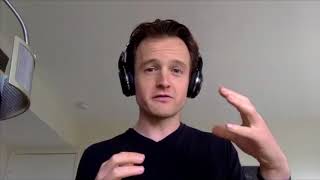
Evan Lutz founded Hungry Harvest to rescue surplus and misshapen produce, delivering it weekly to subscribers while donating to food banks. He pitched on Shark Tank and got a deal with Robert Herjavec. The company now runs school nutrition programs and uses vertical farming to reduce food waste.
Chapters
Welcome to Make More Marbles. My name is Brad Hart and we're here to interview the game changers, the future makers, the co collaborators and creators who are here to collaborate with one another towards a better future for all of us. Enjoy the show. We've got a great guest coming up for you right now. Welcome to Make More Marbles. My name is Brad Hart, and today I am joined by Evan Lutz. What's going on, Evan?
Thanks for having me. I appreciate it.
Absolutely, brother. And, Eben, you have a pretty interesting story. I've been kind of following your stuff for a little while and what you have going on, you know, and congratulations on being on Shark Tank with Hungry Harvest and all that. I just think it's really cool what you guys got going on is you're turning ugly vegetables into not only a profitable business, but something that actually helps people and helps to alleviate the food shortage. So why don't we just start out with kind of giving people a flavor of what that is and how it came to be?
So we're a produce delivery service and we're on a mission to fight food waste and hunger. We work with a lot of different farms and suppliers to recover surplus produce. So produce that would normally get thrown away because of its odd size or shape. So an apple that's too big or an eggplant that has a funny curve to it doesn't mean it's bad quality. It just means it looks a little bit different than what you typically see in a grocery store. For me, I personally don't think that produce should go to waste. And so what we do is we assemble that into really nice variety boxes and deliver it to our subscribers once a week all across the east coast and eventually around the country. We save our customers about 20 to 30% less than grocery stores. And for every box we deliver, we also help somebody in need eat healthy through a couple different programs. One is a donation where we donate. We've donated about £600,000 of producer so far in our history. And the other is called Produce in a Snap, which is a hunger fighting initiative that aims to alleviate the lack of accessible and healthy, affordable fruits and vegetables and food deserts. We work with a lot of different Baltimore city public schools and food deserts to sell our produce at a discounted rate to underserved communities. And so far, that program sold about 70,000 pounds of produce just the first year.
Congratulations on everything you've accomplished, Evan. It's really warms my heart to see somebody taking something. That's what entrepreneurs do. They take Resources from areas of low yields and put them in areas of high yield. And that's what you're doing. And then you're creating this engine that actually gives people a different sense of what it is. I mean, there's a funny story I always like to tell with regard to food. Like the baby carrot, for example. These are just ugly, nubby carrots that they kind of shaved off and made them into little baby guys. And I eat these all the time. These would have been thrown away otherwise, you know, or wasted.
Exactly. The shame is, it's really a shame how, how our perception of produce has changed over the last hundred years. I mean, 100 years ago we bought produce that was just normal looking produce. And today we've been kind of brainwashed by grocery stores to think that we can only buy apples that are pretty. Same size, same color, same shape, waxed with a sticker on it. So the difference is, if you've ever been to a farm, you might notice that not all the produce looks the same exact way as you see in a retailer. There's about 10 steps in between. It gets waxed, it gets washed, it gets processed, it gets stickered, and one of those steps, it gets sorted. There's literally somebody standing there sorting out the crooked carrots from the straight carrots, from the apples that are the perfect size, from the apples that are too big or too small or have a funny shape to them. And the person that's sorting out the produce isn't sorting out things that are bruised or damaged or molded or rotten. Produce doesn't grow that way. Right. It goes that way. It gets that way because nobody eats it. Nobody eats it because we have this false perception that produce needs to be beautiful in order to eat it. So not only is that causing a lot of food waste, but it's actually driving up costs. That person that's sorting out produce, that person has a salary. And guess who foots the bill for that salary? And the consumer. So our perception of perfect looking produce has actually driven up costs and causes cause tons and tons of food to go to waste.
And can you talk about some of the psychological factors of buying as well? Because I know that's an issue where you have like, you know, two avocados sitting on a shelf. Nobody wants to buy the last two avocados, they have to have 100 avocados. They end up wasting most of the avocados just so people will feel like there's an abundance and therefore they'll buy exactly that.
That's. That's one of the aspects of grocery stores that causes a lot of waste. People won't buy the last avocado on a shelf, they want 100 avocados. But the second thing is in a grocery store, everything has to be the same. You ever walk in and all the cucumbers are the exact same, all the peppers the exact same. Right. And so if there's an odd sized pepper, nobody's going to pick that, that's going to get last. That's going to go to waste. However, in our model, if you receive a box with two peppers and they're both different sizes, you're not going to know the difference if they were odd size or shape because they're not being compared to an entire row of green peppers. So that's the other perception issue that we have with produce, that it has to be perfect and in abundance In a grocery store.
I like it. So what do you see? Kind of the future of technology doing this whole thing. So if people want what they want, right, they want beautiful, uniform produce, do you find that there are technologies coming down the pipe that perhaps could create that consistency and beautiful produce so there is less waste ultimately, or do you think that there's. That's a direction that we're not supposed to head in and don't mess with nature?
I think it's a really good question. And I think the shift is not on technology front, it's on the consumer education front. So for example, I don't think we're going to change the shape that apples grow and eliminate ugly apples. I think we're going to change the perception that consumers have of what's okay to eat. And so that's what's going to shift in terms of technology. There's new technologies every day that are coming out in terms of reducing food waste. There's food, there are, I think they're developing in Israel this, I don't know what to call it. I think it's some, I don't want to say chemical, but it's some sort of substance that you spray on produce and all of a sudden it keeps it from rotting. It keeps it fresh for like three weeks. Right. So, and that's technology. I think it was invented in Israel. And what that will allow to do is allow for less waste from the farm to the retail store. If you can keep it fresh for three weeks and all of a sudden that product can store a lot better and there's a lot less waste. So technologies on that front will help. But I really don't think there's going to be a lot of technology that will actually help change the shape of fruit. I think it's up to us as consumers to reeducate ourselves on what produce should look like.
Totally. And I would just add vertical farming is another great example. Like if we can start to utilize some of this commercial space that's no longer under high demand because the corporations are moving out of these big spaces and starting to do more distributed workforces, there's going to be tons of just, you know, prime office space that could be used for farming. For example, I had Eric and his brother Jason Green on the show from edenworks and, well, one's from edenworks. One has another startup, but they were talking about how, you know, this aquaponics system is really cool. You know, there's this plant ecosystem that is fed by fish and the fish get fed by the plants and it all works. And they can kind of set something like that up at scale and then produce the food where people are eating the food. So you just eliminate all that extra shipping and processing cost that comes with, okay, we grow it here and then we have to bring it here and then all the waste that comes along with that as well. So I'm just really excited to see how the world's going to continue to shift to meet the demands of a growing populace, but also people who have higher and higher standards for what they're willing to eat.
If we could. You're exactly right. If we could start over today and redesign our food system, what would we do? What we'd probably do is do something along the lines of vertical farming, indoor farming, container farming, which you know is basically carbon neutral. It has solar panels as uses wind and water for energy. You grow it hydroponically, so you're only using water, you're reusing it. It's very little nutrients and everything grows the exact same. You can climate control it. And you put those. You're right. In every single community. So the produce doesn't have to travel or the food doesn't have to travel. Unfortunately, we're not living in that society. If we cannot, we have to find a balance between ideally what that looks like and practically what the world is like today. So we do have these G farms, we do have smaller farms, we do have companies that are starting vertical farms. But our job is to work towards an ideal world, but also to understand the realities that there are farms out there that are struggling to get by because they're. Unfortunately, weather happens and it causes a lot of waste. So we're looking for Ways to help out those farmers as well.
Yeah, And I just look to the stats. I mean, you know, it used to be everybody was a farmer. 90% of people were farmers of the original entrepreneurs. 100 years ago that was the case. And everybody sold everything they grew up and maybe like 150 years ago. But as cities became more of a thing and as the ability to produce more with less grew, now you have like maybe less than 2% of the population actually farms and the rest is made up. So I think it comes down to again, like you said, the belief system and structure. And then over time, you know, these types of technologies might catch up. But I agree. I think shifting the perceptions at the consumer end drives the demand. Right. Because you walk into any grocery now and find gluten free options. You could find low fat options, you could find paleo options or this option or that option. Because that's what people are voting for with their dollars.
Exactly.
Yeah. To continue, your point is like, how do we kind of marry that economic standpoint with the ability standpoint, with the belief structure standpoint and get people to maybe take ugly vegetables on a ride? And it's obviously working because you wouldn't be sitting here talking about it and how successful it's been if it wasn't. So can you kind of talk a little bit about how this came to be and why you, how did you get involved in this? Like, what's your personal hero's journey that's brought you to where you are today? And can you tell us highlights along the way?
Thanks, I appreciate the kind words. And by no means do I think we're successful yet. We found some success in expanding and growing. But you know, we still got.
You got on Shark Tank. You're good with me. It's one of my favorite shows. I watch it all the time.
Thanks, I appreciate it. So my great great grandfather Abe Lutz was a first generation American and he had a farm in southern New Jersey where he grew and sold produce in Philadelphia and a little produce stand. And that was about 100 years ago, a little bit more. And ever since Abe Lutz was a farmer, there's not been a single person in agriculture. My family, I think that's actually a lot of families or immigrants. And people and generations in this country are the exact same way. 100 years they have an farmer. And so I heard this story when I was a kid maybe. And I always was fascinated with this idea of entrepreneurship, of social entrepreneurship, specifically of creating a better planet through transactions, through creating value, through employees. Through fundraising. So I was always obsessed with that concept and obsessed with food specifically. And my senior year I attended the University of Maryland. I started this little farm stand outside of my dorm. And we had a supplier that approached us who was a farmer who had too much of his harvest. He couldn't sell all of it to his normal retail outlets. So he approached me and said, why don't you try and sell it? And I was like, yeah, why not use it for a class project and internship? First week we had about 10 students buy from us. Next week it was 20, next week it was 30, next week it was 40. In four months, we had about 500 students buying from us every single week. So just exploded in size. And May 2014, about three and a half years ago, I turned that model into a home delivery based model called Hungry Harvest. And so I'm the first one in 100 years to bring agriculture back into my family.
That's beautiful.
Thanks.
So obviously with your background and that story, it's probably your mission. I'm not going to put words in your mouth, but to make food more accessible to more people.
Exactly.
Heroes like Tony Robbins donates 100 million meals to charity every year. He's going to donate a billion in seven years through organizations like Feed the.
Hungry or.
Food for America, I think is one of the big ones he works with. What are some of the kind of charitable aspects of this? Right, because we always talk about a.
Way to make money.
We talk about way to grow and protect money. We talk about a way to give it back as well on make more marbles. And I kind of want to just bring it home for people. And I've seen some of the things on your website, but I'd love to hear from your own words is like, how are you helping to impact the real food shortages and food insecurities that exist, you know, amongst Americans today?
Yeah. Well, I'm gonna ask you a question before I ask my answer.
Yes, please. I like it.
What do you think is the purpose of business?
I believe the purpose of business is.
It's really.
Every business is a system that adds value to people in a systematic way, especially if it's a scalable one. Otherwise it's just a little, you know, little hobby you might have that might add some value for some people. But if you really want it to, you know, impact the masses, it's got to be scalable.
Exactly. I noticed you didn't mention something which is typically associated with business in that answer. Didn't mention anything about profit or money or Investment or capital. Right. It's not the purpose of business, that's byproduct. So the way I look at business is I look at it through this lens of conscious capitalism. And back in the 70s, there was an economist, famous economist, named Milton Friedman. Friedman, Freeman. Freeman, something like that. Friedman, yeah. He argued that businesses sole purpose on this planet was to make a profit. And by making a profit, they employed people, they had, they, they gave people's jobs, they gave customers what they want. Now I look at, and basically businesses exist just to make the most amount of profit for shareholders. The way I look at business and many people look at business, including your answer, is this idea of conscious capitalism, that there's more stakeholders and businesses than just shareholders. Shareholders, in fact, are just one of five stakeholders. There are five different stakeholders. There's buyers, the customers, their suppliers, there's the community, there's employees, and then there's shareholders. For us, we treat our employees as the number one stakeholder. We treat our employees well, make this the best place to work that they've ever worked. Guess what? They're going to treat our customers with better care. They're going to treat our vendors better, they're going to go and volunteer in the community and ultimately we're going to make more profit for our investors. Right. So the purpose of business for me is to create value. It's great value for all of those different stakeholders that I just mentioned. And in terms of profit, right. Like I said, it's a byproduct. It's not a goal, it's one of our goals. Of course, we're a business. We gotta make this thing scale and we have to make a profit. There's no questions there. But it's a byproduct of creating great value for our employees, for our customers, for our vendors. And so we look at charity when we say, like, let's take hunger, for example. We're the only produce delivery service that's on a mission to fight food waste and hunger in the United States. When we look at hunger, we say, this is not a charity problem, this is a business problem. This is a problem of supply and demands not being met. There's 50 million people, nearly 50 million people that are food insecure. There's enough supply out there, they're not intertwined. And so we came up with this model called Produce in the snap, where basically we're selling our produce at a discounted rate, on average just half of what we normally sell to our other customers, to underserved communities, so they have access to affordable, accessible and in demand produce. And we're looking at that as like it's mini business in a business, but it's a solution to a problem that's typically looked at as a charity problem, not a business problem.
No. And I love the fact that it is a discount and not a charitable thing because you give people pride of ownership, you give them the capacity to still contribute back and to see that exchange of value. Because I think the biggest problem underlying most poverty is a sense of disenfranchisement or a sense of non contribution or a sense of they didn't help create the solution in some ways, they don't feel like they have any type of ownership over it.
Right.
And I'm sure there's a lot of reasons that people are poor. And I just think really it comes down to having the ability matched with having the urge or the desire to create something and being inspired to do it gives people the ability to rise out of this victim mentality perhaps, you know, and sometimes circumstances suck. I'm not saying they don't. Right. But when, when all things being equal, when you have the ability and you have the inspiration to actually make a change and you desire to make a change, giving them a way to do that is a really wonderful thing. So it's not just give a man a fish, it's teach man a fish. Right?
Right.
And trained fishermen. You train, you feed world hunger.
Right.
You could solve world hunger. So I really love what you're doing. I love the model and that it still incorporates, like you said, these capitalist fundamentals which work and end stage. Capitalism was what we live in now, certainly that is the best system that we have. But there's an old Winston Churchill saying, democracy is the worst form of government, except for all the others. And I think the same could be said of capitalism. What's coming next and how can we create that?
Yeah. And capitalism, I think it's a terrific system for, for economic value creation. But I believe in conscious capitalism. Like I said, if businesses do the right thing for the sake of doing the right thing, because they believe that their existence on this planet is not to make a profit, but create value for people. There are a couple instances of capitalism gone wrong. Wells Fargo, for example, the Ford Pinto. Have you ever heard the story Ford Pinto?
No, but please tell it. I'd like to get.
Okay, so ford in the 1970s made this car called the Pinto. And they determined that when it got rear ended by another vehicle, it burst into flames. Okay. So it would kill the passenger and cause all types of damage. Now, Ford did a financial analysis and determines that if they got sued for somebody that died in one of their accidents in the Ford Pinto, they'd be sued, I don't think a million dollars or 8 million, whatever the figure, whatever.
The settlement was the average settlement.
So they said. So they did a financial analysis. How many people are going to die? How much money is that going to cost us versus how much money will it cost us to recall the cars? It would cost them more to recall all the cars than it would. It would be cheaper for them to keep the cars out there, have people die and sue them. And so that's the decision that they made. They made a decision based on finances and capitalism and not based on human life and creating value. So that's an example of capitalism gone wrong. But I think capitalism is a beautiful system. When people believe in the stakeholder model of there are more stakeholders than just making profits. Here, it's employees, vendors, customers, the community and shareholders.
Yeah, it kind of brings back to your original point about the five different people that are or the classes of people that are affected by a business. I think Richard Branson has a great quote about this too. I take care of my employees the best I possibly can because then they take care of my consumers, and my job begins a lot easier. Right, Exactly. You know, when you do it from that perspective, it's like this is a community effort. Everybody wants to talk about the Steve Jobs is and the Bill Gates and the, you know, the Mark Cubans and all these, you know, singular figures, because we want to latch onto a hero and a story. That's how we're wired. But realistically, a company like Apple, for example, is millions and millions and millions, if not billions of people around the world who purchase and who derive demand and who create these things and who, you know, we love to talk about the visionary and the leader, but this is millions and millions of people around the world that have to do with the story. So by abdicating responsibility, you're thinking, oh, one person is special. Then you're kind of missing the point of all capitalism or of all economics or commerce.
Exactly. And it's. And it's. To your point, it's an important story in capitalism because we do like that hero's journey and that hero's journey of, like, anybody can make it, you know, if you have the will and the wherewithal and you want to, you can become the next Steve Jobs or Mark Cuban. But that's an important principle as well. It gives people A chance. And what we're trying to do is we understand that there's. Take Baltimore for example. 600,000 people in the city, 200,000 are known as food insecure. So they don't know where their next meal is coming from, don't have access to affordable healthy fruits. And I believe that puts. It's not just my belief, but it's fact that puts the people at a different disadvantage to the capitalism system that we have. Right. They probably don't have as good of a chance as Steve Jobs or Mark Cuban or somebody that grew up in the suburbs with healthy meals readily available. Right. And so what we're trying to do is to mock exactly what you said before, democratize healthy food. Because I believe people have accessible, affordee healthy food and will make a decision to purchase that then that can potentially affect the rest of their lives.
And I like what you said about all their time, energy, attention is going into where their next meal is coming from, which can't be then used to educate themselves. It can't then be used to learn better skills. It can't then be used to build businesses that add value to more people and ultimately break the cycle of poverty.
Yeah, well, let's put. Let's put ourselves in somebody's shoes in Baltimore City. So let's say you're a kid in sixth grade and in West Baltimore there's violence, there's drugs and street gangs. There's lucrative opportunities to sell drugs. Even middle schoolers, the teachers, when you go to school, you get bullied or there are tons of fights. The teachers don't care. They don't give a sh t. The administration, there's no resources. The school itself is crumbling and potentially your father isn't home. There's not a lot of father figures in West Baltimore, and that's a big generalization, but unfortunately it's very true. Now, on top of all that, on top of all those circumstances, you're also starving, you're also hungry, you have a sugary breakfast, you have no food at home, and your lunch is maybe a fried chicken sandwich and some fries. Now how in the world are you supposed to do well in school and compete for education, compete for jobs, when right down the street there's a lot more lucrative opportunity selling drugs? So by putting ourselves in those shoes, by reminding us of, like, how important healthy food plays in our lives, I think we can all come to value it a lot more. And I think we'll all waste a little bit less in our own kitchens.
So what do you see? You Know, because I grew up in the same boat almost. You know, we were very poor, and it wasn't like Baltimore, I'll tell you that. But we had a lot of issues with gangs and drugs and bs. And I can remember, like, you know, getting myself up for school and having the sugary cereal. And then, you know, at lunch I was like, jones in for a fix. I want my iced tea before I even eat my food. And I just thinking it back to that, like, reminding myself, you know, my dad's idea of parenting was, is there enough TV dinners and Coca Cola in the fridge until the next two weeks when I get paid again? Social Security and disability. So I really do get that at some level. And I can't, you know, certainly, you know, blanket statement, all experiences across all. I'm still a white guy from Long Island. I still have definite, you know, advantages. But at the same time, you know, I wonder, what do you think that, you know, exists nowadays or could exist nowadays that we have the access to, that we could teach kids who were like me or who are like the kids you just described more about food, nutrition, education, and then ultimately influence their choices of what they eat. And then also on the other end, like, what are the supply that they have? Right. If the school lunches suck, how do you fix that? Like, what are some real practical applications? I'm sure you spend a lot of time thinking about these problems. I would just like to know what some of the solutions are.
Yeah, there are a couple really great companies I can point to doing this. So one is. I mean, we're. Our program produces. Excuse me, produces Snap. We want to scale that to more than just Baltimore City, the D.C. we're going next in Philly, South Florida. Everywhere else we're delivering to. And hopefully that will make a real impact by partnering with schools. Right. Another organization, I forgot what it's called, but it's run by Kimbal Musk, Elon Musk's brother. And basically he starts gardens, vegetable gardens at schools that are in underserved communities. And it's a really amazing program that actually can teach kids in underserved communities, like where food comes from, what it looks like, how to grow it, how to eat healthy. Right. And it's awesome organization. And the other, another company I can point to is, Man, I can't think of the name of it, but I met him, he's a Forbes 30 under 30. And I met him at a conference in Boston a few weeks ago. And basically he runs a business that sells healthy processed food like muffins for example, it takes out the sugar, puts in yogurt, takes out artificial preservatives and flavors, puts in real fruit, and sells that to schools. And so we need more companies like that to pop up and start to sell into schools and say, hey, we can get you healthy food that's just as cheap as the Cisco's, as the US Foods, as all the other large multimillion or billion dollar organizations out there. The more competition, that's. This is why capitalism is such a beautiful thing, right? Because it pits the smaller players against largest players. If they have a healthier product at the same price point, they'll pick the smaller players. So we need more companies out there that are trying to get healthy foods into the school system.
And Kimball's startup is called the Kitchen Community.
Yeah, right.
That's kitchencommunity.org so you can check that out. And they're doing great work.
And I'll look up the other one. So you can.
Yeah, we'll throw it in the show notes, of course.
Yeah. Appreciate it.
Yeah. Because that's kind of one of my things is in addition to this victimhood mindset, right, the idea that we can't act and we believe that, and therefore we don't get any results whatsoever, is this sense of, you know, everybody wants to say, oh, that's a problem. Somebody should do something about that. Well, and I kind of asked this question quite a lot. I'm like, aren't you somebody?
Right.
There's, you know, not everybody can do everything, but somebody can do something. And if you're somebody, what can you do? And then just having that knowledge coupled with a real solution that you can get to be a part of, you can be that person saving those starfish, and it matters to them, you know?
Yeah.
So that's a piece. And then just this idea of this victimhood.
Right.
Or let's focus on the problem and feed the problem. Why not feed the solution? Right? That's ultimately what's gonna. What's gonna change. The only thing constant in the world is change. And I just really love interviewing changemakers because they get that at a high level.
Right.
That they're gonna direct and shape the world that they want to see. And I'm endlessly grateful for you being a part of that.
Thanks.
So let's talk about Shark Tank. Let's segue into that because I would love to hear about your experience. I've had a lot of friends be on that show, and I watch it all the time. What was that like for you? What do you think the main takeaways from that were? And do you have any kind of reflections that you'd like to share with.
The audience as well? Sure. I mean, it was. The word I use to describe it is exhilarating. So it was a mix of really exciting. But I was nervous as hell. I was really, really nervous. I mean, I had practiced for like three weeks before going on the show. And I rehearsed, rehearsed. I was like, I was like shaking when I was going on there. But somehow I nailed all my lines, asked for a deal for 50,000 for 5%, came away with a deal with Robert for 10% for 100,000 and got pretty intense on there. I think I was on there for probably about 30, 40 minutes. Actually they aired about six minutes of it. But it was really exciting and I'm really glad it happened. We got so lucky. Extremely, extremely lucky. I mean, if there's any entrepreneurs that are listening that are thinking about going on the show, you have to get very, very lucky to make it on. As we were, we were very fortunate. About 45,000 companies apply every year. I think they let a few hundred go into the next couple rounds. They actually fly about 160 out to California to go film. They only film actually about 140. So some people that fly out and don't even tape them and then actually they only air about 120 every year. So I actually know two different people, two different people in Baltimore who were flown out to Shark Tank filmed on their show never aired, which is crazy. So we had the expectation that that was going to happen to us the entire time because the Shark Tank producers kept telling us like, you know, we don't know when it's going to air or even if it's going to air. So we said, you know, I don't believe this is. We don't really know if this is really going to happen until it does. So about Christmas 2015, we were all handwriting thank you cards or holiday cards to our customers at the time. And I check an email and it says Shark tank air date 1/8, 2016. And we all, you know, we all celebrated. It's, that's what we're doing. You know, next few months of our lives were the busiest stuff ever been. We were in the office at least 16 hours a day trying to scale this thing because it's not like we have an app or it's not like we have a software business where I turn a couple switches or buy more server space. We have a full Operation supply chain, logistics, et cetera, to scale. So it's really difficult with four people, but we did it and our. It just exploded our business. We went from 500 active subscribers to about 2,000 overnight. I remember the night of we had seven governor of Maryland came out to our watch party, and we had the Howard county executive and about 100 family and friends and just hugging my family. It was really cool. I forgot to turn my Twitter notifications off my phone, so I couldn't even. My phone was blowing up so much that I couldn't even get to the settings on my phone to actually turn it off. It was exhilarating. I mean, I was in the office that day. It aired at 9. I got to the office at 5, didn't leave till midnight, back at the office at 5am the next day, answering 10,000 emails that came into our inbox. So it was exciting. It was really, really great. We were really lucky to have it happen. Definitely no regrets about that experience.
So, being an avid fan of the show and everybody on it, I have a question specific to this. So a lot of deals end up dying after the deal is made.
Right.
In due diligence or something goes wrong later on. Are you still worri Robert, what's that experience been like, and what have you learned from the whole working with a shark experience? I guess is the next question.
Hold on one second. I'm gonna move to the other. Sure thing. That's fine. Thanks. No problem. Can we just cut that part out or.
Yeah, we'll fix it in post. It's fine.
All right, cool. So your question was I booked a table or a room that. Or I didn't book a room that I was in.
Oh, the joys of co working. Don't worry, everybody understands.
Yeah, right. Question was about deal. Okay, so, yeah, we still work with Robert Herjavec. We made a deal. I can't tell you what it was, but we did make a deal with him. And he's been a really, really awesome partner. His group, the Herjavec Group, is full of really, really talented people because that's outside his wheelhouse.
Typically, he's more of a tech and software guy, so he's actually getting involved with more kind of.
Yeah, he really believed in the mission of the business. Yeah, he really just believed in the mission of the business. And, you know, he had some really profound experiences that he shared with me on the show. He was. He actually divorced his wife of like 25 years. I'm gonna keep talking while I'm moving. So we can get away from the noise. He divorced his wife of 25 years, which was a terrible experience. And he actually sought out a pastor's help, a pastor's help. And pastor told him, why don't you go to a homeless shelter, actually, and spend a couple weeks there? And that can just help you maybe get. Help you get back on your feet and feel gracious for all the things that are in life. And so he did, and he really resonated with what we were doing and how we're helping him to serve communities. And that story resonated with me. So I thought, you know, this is a perfect partner for us. I love that.
And it's great because, you see, I had a great speaking coach. His name is Thomas Blackwell. He sells three and a half million a year from stage, and he's a great guy. But the thing that really resonated with me is that people will. They'll respect you for your wins and your successes, but they'll love you for your failures that make you human. And I think everybody who is looking to make an impact needs to understand they need to lead with what's gone wrong and be completely transparent about where they've screwed up. Because it gives people, like, a reference point for humanity. Right? It's like we've all screwed up.
Vulnerable. Vulnerable is a key, really key attribute they need to display. And what I always say is, like, very similar to what you just said, but great businesses and great things are not. Great businesses are not built on the shoulders of accomplishments. Great businesses are built on the shoulders of our learning from our mistakes and our failures. The more we make mistakes, the more we'll learn and the faster we'll grow. I did won a pitch competition for about $25,000 a few weeks ago, but to be honest, I don't really care. That doesn't affect me at all. You know, it does the fact that we're running into growing pains as we expand from 10 to 30 employees, and we're learning so much along the way about remote culture and how lines of communication and all these things that you wouldn't anticipate as problems, but you eventually run into as you scale a business. Those failures that we're having culturally are actually making us a lot stronger, and we're learning so much more. The pitch competition wins. Yeah, sure, that's what people hear about. But in terms of what great businesses are built on, it's not how many pitch competitions we win, it's how close we get because of our culture and our failures and our Mistakes.
So if you were to talk about leadership from a high level and what you've learned, what has been some of the maybe the top two, three takeaways of growing from four people being on Shark Tank now you're kind of coming up to 30 people. And I run an organization of about 12 myself. So I'd love to hear your takeaways and thoughts on that.
Yeah, I tell every new employee these three things that there are three key pieces to Hungry Harvest culture and kind of my leadership style. Number one is honesty. So we need to be able to have honest discussions about everything that's going on. It doesn't matter how painful it is. Being honest is really, really important to having a good culture and honest about not just the good things. Not just saying, hey great, good job, but being honest about the co workers, hey, we really need you to do this or this is what is going to happen. Second is transparency the best way to hold people accountable? You know, used to in the old and say like the medieval times, they used to hold people accountable by chopping off their heads when they make a mistake. Right. Can't do that anymore. People be held accountable by. It's holding people accountable when people are either older than you or have more experience than you or have more expertise is very tough. How do you do that? Right. It's not through fear. I hold people accountable through being transparent, through talking to them about why I gave them a task and why that deadline needs to be hit. Because if they're at that deadline, then this person's gonna have more work. This metrics gonna but not be hit. We can't hire this person, the company's gonna lose money, etc. I will never give somebody a task without explaining to people why. And that's the best way to hold people accountable is that transparency, why you're doing what you're doing. And the third is vulnerability. You have to be willing to be vulnerable with your team and say, guys, I messed up here, I made a big mistake. Here's what I learned from it. Here's how we're going to move on. And you ask and when you do that, your team all of a sudden becomes vulnerable about their mistakes. Good organizations or bad organizations are one that try to hide their mistakes or try to push them under the table or push other people under the bus saying, look at all I accomplished. Great organizations are ones that admit their mistakes, embrace them and say here's what I learned from that and not to reflecting onto other people. So that's at the core. I Mean, we can talk about this all day, but at the core, that's what my leadership is centered around.
I love that. So honesty, transparency, vulnerability, giving people the tools that they need to understand your decision making behind it and ultimately come to the same conclusion as a function of like, you know, here's the value chain, here's what happens if this screws up and this screws up, or we miss this or you miss that this person has more work, or this doesn't get happen and this affects the company as a whole. Giving the people the, the understanding of that. It's almost like third order consequences. I don't know if you've picked up Ray Dalio's new book yet, Principles.
Oh, I haven't, not yet.
It's incredible. It's my best and favorite book of the last five years. Hands down unequivocal. And Ray has changed my life. Actually emailed him this morning thanking him in multiple ways. But that's great. He talks about like third order principles, third order consequences. Thinking about things from a sense of like, natural evolution, being like, okay, what's the best and highest good for all people concerned, even if I don't get what I want? And that's the way nature is set up. So, like when you look at a lion or a gazelle in Africa and you think, oh, that's horrible, the hyena swarm apart. Well, what's the best and highest good in that situation? It's just what the hyenas want. It's just what the antelope wants. Just what the lions want is what everything needs to have happen in order for survival and evolution to continue to take place. And if that's the ultimate goal and you can look at it from that place, you know, I like to think that, you know, God exists and that there's, you know, rhyme and reason of the universe. But when you start thinking like, what what would God do? Then you start getting better answers and clearer functions of reality. It's like you actually see things for what they are and now how you think that they should be. And from a spirit, not ego, right? Yeah, yeah, exactly. That's really fascinating. And I think that's the best tool you could use as an entrepreneur. I mean, the closer. I have a saying. You can argue with reality provided you're willing to be wrong 100% of the time.
Exactly right. I want to touch on ego for a second. The fact that you just mentioned that ego is. It's important not to take your ego out of it, because ego, I think, provides a Lot of personality and provides a lot of flavor. Right. We all have egos, but the key part of ego is to be aware of ego. People that are aware of their ego, we consider down to earth or human or personable. Those are the people that we consider have be aware of, no matter how big their ego is, just aware of it. So I think awareness is really the key. And I do meditate. Oh yeah? Yeah, Awesome. I meditate as well. And I've started. I've only started meditating actually the past six months. But it's completely changed my life. And including that, by the way, big asterisks.
Everybody who I've ever met who's successful subscribes to some sort of meditative practice.
Yeah. Headspace. It's simple. It's $15 a week, a month, or $12. Whatever it is, just do it. It's life changing. Don't go to Chipotle for two times that month and subscribe to Headscase. I promise it'll change your life. Really good. But anyways, in the past six months, it's fundamentally changed how I think about my ego and how I think about where I am and what my purpose is and recognizing where I am in situations and conversations. This whole awareness piece that I think, like I said, like you said, the most successful people in life, the people that we consider down to earth or personable or just people that just get it right, are aware of their ego and aware of who they are and their self being.
I love that. And you know, there are benefits to ego or wouldn't exist.
Right.
Everything is that paradoxical dichotomy.
Right.
A hammer.
Exactly.
House. Or it can cave in a skull. It's just what you choose to do with it. So the ego being a tool of understanding and connection and empathy and, you know, bringing your own flavor to something. I think that's a really beautiful way to put it, you know?
Exactly.
Sometimes it's just that little gremlin that needs to go in the corner and chill the f out.
Yeah, yeah, exactly. And as long as you're aware with it, you know, your ego can. It can tell you to say, hey, I want to be a self promoter or I want to, you know, be on stage, or I want to put my name out there. My name's most important. But. And some people's egos, that's the way it is. As long as you're aware of what that's telling you and what that means for other people's egos and what that means for other people's Performance as well. That's the most important piece.
I love it. Evan, what would you give yourself advice wise 10 years ago, Evan, versus today. You're in your 30s. I would take it. You're about my age.
No, I'm actually 24.
You're 24?
Yeah.
Oh, my Lord, they're getting younger and younger. I'm not saying that in a derogatory way. I mentor some people who are in their teens that. That run circles around me. And they're so smart and so connected.
Yeah.
It's incredible. They're making six figure paychecks every month, and I'm like, oh my God, what am I doing wrong? But, yeah, we all have our strengths and abilities. And you're 24. That's amazing. Congratulations on everything you've accomplished at such a young age.
I appreciate that. I was at Forbes 30 under 30 a couple weeks ago, and same experience. Like, there are people that are 20, 21 years old who are just like, running $20 million businesses and. Or saving the world, and it's insane. It's pretty crazy.
It gives you hope, right? It gives you hope for the future of humanity. Everybody wants to talk about the millennial generation and how horrible they are. And I don't know what you, you know, self as.
Yeah. You know what? For all our faults, for how much we complain, how much we want to change jobs every year and a half, or how much we want to be fulfilled in our workplace, or how much we're on our phones or avocado toast, you know, whatever that is. For all those faults, I think that greatly. Greatly is outweighed by the fact that we want to make this world better than we found it universally, like, that's almost universally wanted by millennials. So that fact, you can take all the faults of buying $18 avocado toast and being on our phones all the time and wanting different workplaces, the fact that we want to make this world a better place than when we found it. This is probably the first generation in history that has universally said that, accepted it, embraced it, and made pushes towards that in very tangible ways. So we can rip on millennials all we want. But at the end of the day, like, this is a generation. That's the new face of entrepreneurs, the new face of changing the planet. Yeah.
And I think every opportunity, I'm sorry, every generation rises to the occasion of what they know. Right. And you can't compare baby boomers to frickin millennials. It's not the same world. It's not even close.
Right. And yeah, I mean, my parents worked at the same company for 40 years. You know, my dad was a lawyer. He stayed with the same law firm for 40 years. My mom's a nurse, stayed at the same hospital. And you look at that. You look at. You know, I look at some of my friends, LinkedIn's or some of my friends, what they're up to, and, like, they're switching jobs or complaining about their jobs or, like, saying, oh, I have to work. You know, I had to work 10 hours today. Or, like, you know, I feel like our grandparents or my parents would. If I ever said, oh, God, I have to work 10 hours a day, they would say, son, when I was 24, the only hours I worked, I worked six days a week on a farm. I was sweating in the sun. It was 12 hours a day. I didn't complain about anything. I worked $8 an hour. And granted, the times have changed, and maybe your work ethic has decreased a little bit as a generation, but like I said, I think that's greatly outweighed by the fact that this generation universally wants to make the world a better place.
Well, and just what work means is changing.
Right.
We talked about that leverage and that functionality and the ability to serve more people, the amount you can actually get. I mean, we're having a podcast now that's gonna be listened to by thousands of people, and it's awesome. Like, that's the capability that the average person has nowadays if they're willing to just put energy and focus into it.
Yeah.
And create better systems to serve more people as well.
And sort of the values of society have changed too. Before, you worked for yourself and your family, which is great. There's no problems with that at all. And now a lot of people are working so they can help others. And I'm saying one is better than the other, but they're just different moral imperatives. That society, I think, has shifted from helping yourself and your family. And I think that's exactly right. It's because of the amount of impact you're able to make with technology. And we're able to talk to thousands of people without even talking to them. Right. That's exactly what's changed. Yeah.
And just to kind of harken back, I believe Sarah Blakely is going to be on the new Shark Tank.
Is that right? Oh, cool. Cool.
Yeah. So Sarah, I had the opportunity to meet her back in February. Wonderful woman. We went to Spanx headquarters and did this whole thing with a mastermind I'm a part of, but two things I gleaned from her that really changed the way I look at things. She's a billionaire. First female self made billionaire, incredible woman. And one thing she said was that female entrepreneurs are the most underutilized resource on the planet right now. It's like, of course, it makes a whole lot of sense and, you know, very simple and actionable. How do we, you know, basically support more female entrepreneurs? And that's one of my missions now, but also that the level of your impact or the amount of money you want to make, like, if it's just about you, you might make 75 grand a year tops. If it's about you and your family, maybe it's 150, 200. If it's you, your tribe, your family, your community, now you're talking half a million bucks. If you want to make millions, you want to make billions, you got to think about how you can impact, you know, a commensurate number of lives above and beyond the people that you'll ever meet. And when you start thinking on orders of scale like that and solving problems that affect lots and lots of people, then the real wealth starts to come in. If that's what your goal is.
Exactly. Yep, that's. That's exactly what, what we're here for. Yeah, I love it. Believe their purpose on the planet is, is no longer just to, you know, support their family and themselves. It supports society as a whole.
And Evan, I'm so grateful to have you on and talk about what you're contributing to the world. And you've given so much to so many people. You've given so much to us in the short time we've been together. We want to turn the spotlight proverbially back on you. And I never tell my guests beforehand what we're going to do with this, so just bear with me. Essentially, we have a saying here at Make More Marbles. We're going to win more through collaboration than we are through competition. And the way we collaborate is by connecting. Once we're really clear on what people need, we connect them to the resources, opportunities, people, and systems they need to move their mission forward faster. And my little acronym for that is crops.
Right.
So what are the ways that we can help you move your mission forward.
Faster, Help us spread the word about what produce actually is? Not enough people know the story. Everybody thinks eggplants are grown in a grocery store. Right. Or they're grown perfectly in a grocery store. The biggest thing that we're trying to do on a societal level is reeducate people on what Produce is and supposed to look like and supposed to taste like. So next time you go to the grocery store, take a look at what's in that store and tell yourself or ask yourself like, is this the same stuff that I would see at a farm? Probably not. It's really, there's this awareness play. The other thing is if you live in Maryland, dc, Philadelphia, South Florida, Raleigh, North Carolina, we're delivering those places currently and we'll be expanding across the country within the next few years. So if you live in those places, please sign up. You can actually use my name as a sign up code. Evan Lutz. Just one word and two things will happen. One, you'll get $5 off, but two, more importantly, you'll help me win our inner office competition. So if you live in the zip code, sign up. And if you don't, you can always just be aware of where your food is coming from and help spread that word organically.
Evan Lutz is the so one word. Evan Luz.
L U Z. Yep.
On the, on the website. And you can be found at what's the URL hungryharvest.net hungryharvest.net thank you so much, Evan, for being on the show. What's the way that people can get in touch with you if they have other opportunities to help you spread your message? Maybe other podcasts, other, you know, TV shows, whatever.
Yeah, shoot it. Shoot an email to partners@hungryharvest.net if you for other podcasts or speaking engagements or if you just want to talk. And you can always follow us on Twitter and Instagram, Facebook @HungryHarvest. Homework.
Awesome, Evan, thank you so much for being here. And do you have anything else that you'd like to leave us with?
That's it. But thank you so much for having me. I really appreciate it.
My pleasure. And I have a question. So if people don't live in your geographical area and they can't use your service, what are some other ones that are, you know, ones that you think, oh, they're doing it right and they're serving other areas as well if they want to get involved. I'm just curious for, like in California, for example, I don't know.
So in California, there's a company called Imperfect Produce which does a very similar thing to us over on the West Coast. They deliver ugly produce to people's homes and they're a great organization as well. And that's all I can think of for now. Okay, cool.
And if we link any more, I will do them on the show. Notes, Evan thank you so much for being here. I really appreciate it.
Thank you so much.
Thanks so much for listening to the Make More Marbles Podcast for more tips, hacks and strategies to create an amazing, abundant life in your health, wealth and relationships, whatever that means to you. Head on over to makemoremarbles.com check out our cool explainer video about what we're about and join our community of entrepreneurial game changers. We want to help you level up your life in every possible way. And don't forget to subscribe to us on itunes, Stitcher, or Google Play wherever you listen to your podcast. And please do leave a review. Thank you so much and we'll see you on the next podcast.
More from Brad

The #1 Reason AI Isn’t Working for You (Yet) #AI #businessowner #founderenergy




What tasks would the best assistant ever be able to do for you? #BusinessSystems #BusinessOperations



Nobody expects you to use a harder way when there's a better way. #AI #businessowner

Which side of the table will you be on in 2026? #AI #Mastermind #BusinessOwner

