Silicon Valley Biohacking Secrets : How to Create an Optimal Life Through Biology with Geoffrey Woo
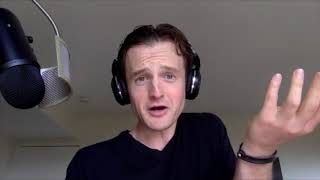
Geoffrey Woo, CEO of Human/HVMN, discusses nootropics from caffeine and L-theanine to modafinil, personalized biohacking via genetics and biomarkers, and his WeFast community of 10,000 people who fast 36 hours weekly. He separates evidence-backed low-risk choices from hype and explains how CRISPR works and why it matters ethically.
Questions this video answers
January 25, 2018
2007–2011
Glass Map; sold to Groupon in 2013
Fasts 36 hours every single week
Approximately 10,000 participants (he cites ~10,000)
Chapters
Welcome to Make More Marbles. My name is Brad Hart, and we're here to interview the game changers, the future makers, the co collaborators and creators who are here to collaborate with one another towards a better future for all of us. Enjoy the show. We've got a great guest coming up for you right now. Welcome to Make More Marbles. My name is Brad Hart, and today I am thrilled, honored, and overjoyed to have Jeffrey Wu, the CEO of Human, on the call today. Hi, Jeffrey, how are you?
Hey, Brett, thanks for hosting.
Absolutely, brother. And we got some SoCal in the house. A little bit of San Diego, a little bit la. You're up in San Francisco now, but you grew up in la, is that right?
Yeah, a town called Palos Verdes, which is southwest of LA proper. My folks are still there. My brother lives in downtown arts district. So Louisiana is cool. So SoCal at heart. SoCal team.
I know where it's at, man. Yeah, I love Rancho Palos Verdes. I mean, you go up those hills and the cliffs and the bluffs.
I mean, it's beautiful.
Yeah, that's a hell of a drive. How long you been up in NorCal?
So ended up in Northern California because I studied at Stanford, so came up for college and stuck around ever since. So about 10 years now in the Bay Area.
Love it. And I lived in San Francisco in 2011, right? In, like, kind of Hayes Valley area. Like, I guess you could call it, like, Lower Pack Heights. But I could see all the little restaurants and things coming up. Like, how has San Francisco changed since you lived there? Because I've seen it, like, go crazy.
Hayes Valley is one of the coolest, trendiest, most expensive neighborhoods now. And I think around that 2011 period was when it became gentrifying. Right. And I think we talk to residents of the city that have been here for a long time, people will say, yeah, you know, 20 years ago, Hayes Valley was under a freeway underpass or overpass. And it was just, like, super sketchy. I mean, right, the 101. Yeah. And I think literally a block away from the nice areas of Hayes Valley are projects. So it's still. I mean, I think San Francisco is one of the weirdest cities where you have the best tech companies in the world and people are making millions of dollars, and then you have some of the craziest, saddest homeless people. And I think it's definitely a crazy juxtaposition. When visitors come, it's just like you have someone, you know, peeing on the streets or pooping on the streets.
You walk a couple blocks east where I lived, you're in the Tenderloin. It was right past Polk street. And there you go. It was like heroin, needles everywhere.
And it's like, yeah, it's a crazy city.
So tell me about kind of the way you grew up. What's happened to you in your life that has brought you to where you are today as the CEO of a really successful and growing nootropics company. What first got you excited about that and kind of give us the journey up to this point?
Sure. So I studied computer science as a specialty at Stanford. So definitely come from an engineering science mindset. So always was a self proclaimed geek nerd, Played video games, sort of growing up, gone to science fairs and doing science research, working with different UCLA physics groups, you know, as a high schooler attending all the international science fairs and all of that. So you know, obviously somewhat self driven and motivated to, you know, accomplish in an academic setting. And then at Stanford it was an interesting. So I went to Stanford between 2007 and 2011 and that was essentially the time when startups became really, really hot. I think today you hear about startups, everyone thinks Silicon Valley is like this cool shiny object on a Hill. But 10 years ago, you know, investment banking consulting were like kind of the standard jobs that people would go to and computer science was really for nerds. But I think you saw the transition happen really interestingly where during my time at Stanford, I joined the entrepreneurship club. We saw a couple things happen, like the social network movie came out, the Facebook movie. You started hearing pockets of discussion of all these kids making millions of dollars on apps. And computer science really quickly went from, you know, kind of a fairly small major at Stanford to now one of the largest majors at Stanford. So it's interesting to see that transition. So I actually started off as I ended up being the president of the entrepreneurship club at Stanford. And it was interesting because at the time, sort of before my year, a lot of the presidents of the entrepreneurship group would have, you know, went into banking or vc and I thought, hey, we're the entrepreneurship club, we should be building startups. So sort of on that lark or on that sort of principle, started building apps with my friends. We actually got funded by Y Combinator, a Silicon Valley based investment firm, to launch my first app company. It was pretty crazy where we hadn't even graduated college yet and we had 170k check come into our account and they're like, hey, you have a company out, go build your software. And that was Like a crash course in building, not just a software program. I mean, we learned how to do that in college. But turning lines of code into something that people wanted, something that could actually generate a sustainable business model. The app was called Glass Map. It was a really efficient way to track your friend's location. So it's kind of like if you read Harry Potter or Harry Potter fan, it's kind of like Marauder's Map for college kids. Long story short, we sold that company to Groupon in 2013. So it was a really cool first learning experience. And it's just like a truncated MBA essentially of how to negotiate, go to market, raise money, and then eventually negotiate an M and A. So I sold that company just before I turned 24, which is negotiated right during the Christmas holidays in 2013. In between 2013 and 2014, I remember taking calls from my parents home down in Palos Verdes while hanging out with family, negotiating with the corporate development folks at Groupon. It was definitely a fun, crazy, stressful few weeks towards the end of that year. And that point that sort of got me on the level of looking at what is next. And I knew sort of quickly when I had joined Groupon, there was some golden handcuffs vesting out some shares that, you know, as part of the acquisition, that, hey, you know, big company was my cup of tea and I knew I wanted to work on something else. But knowing what that was was, you know, it's not easy to find like a next big inspiration. But what did spark my attention or capture my interest was this notion of if I didn't know necessarily what I wanted to work on next, I might as well optimize the system that would work on the next problem, which ended up being my brain. That got me on the journey of biohacking and along the path of creating human, which is a biohacking company based in San Francisco. We're excited and focused on developing, researching novel compounds and bringing that through FDA and other regulatory bodies and producing products that can enhance various aspects of human performance. So kind of a drunken walk of entrepreneurship, going from a computer scientist, an engineer, and eventually applying those skills onto biology into the human body.
And I like the kind of parallels you draw between, you know, you understand that you're very talented and you have all these mathematical skills and computational skills, and you can code and do these things. But also it's like, if my mind isn't optimized, if my body, if my environment isn't optimized, whatever I'm going to create is going to be Affected in some way. So I like the way that you're kind of like going to the Elon Musk would say core principles. Right. What do we know for sure? Well, we know for sure whatever I work on next is going to be for them.
And this system is.
Yeah, the space between my ears.
Exactly.
So how do I optimize that? So I've done quite a few nootropics over the years. I won't name names. I know a lot of the people that run these types of companies, and I think it's great that we're pushing into the science. The questions, I guess, the skeptical questions I have, because I have my own experiences, like taking Bacopa. I become an asshole on Bacopa. Like, I just can't be around people.
Right.
And that's one of the things I love. So, like, I'll snap at people and be like, what's wrong with me? Oh, yeah, that's wrong with me. Right. Or something like that. And I don't know if, you know, people's experience is the same, but, like, I know I run high. I know I'm a fiery guy. I already have a lot of energy. And I've learned that stimulants, like more than a cup of coffee for me is too much. I just can't do it. So, like, even if I dabble a little bit in this world, I don't know if I'll ever go full hog because I was literally having panic attacks on some of these various nootropics. Right. What have you seen have been the ingredients that seem to work the best with the best, with the most number of people, and then is there a personalization element that anybody's tapping into quite yet?
Yeah, I think those are both great topics. And I think you identify a couple interesting sort of conceptions that I think people are sometimes confused about. So nootropics, as you mentioned, represent compounds, enhance some area of aspect of cognition or learning. But that covers a whole spectrum of different chemicals. Right. Like on one hand you have things like Bacopa, which is a botanical. It's been used in Chinese and Indian herbal medicine for thousands of years.
And it dials you in.
It works.
It really does.
And it has some really interesting, compelling data on healthy human volunteers, especially in terms of working memory capacity as well as spatial memory. So that's actually one of the ingredients that we have in one of our stacks called rise, and it has actually some of the best clinical data on it. But it's interesting to hear that sometimes, if you're in flow, you kind of get snappy when people break you out of that flow. So I think that's an interesting area. And then business supplement, it's generally regarded as safe, but on the sort of the other spectrum, you have things like Russian Alzheimer's drugs, racetams that are research chemicals, not necessarily generally regarded as safe or for consumption, but perhaps not scheduled illegal drugs, but kind of in limberland gray areas. So I think you have a whole spectrum in the biohacking community of people that, you know, do all of it. Right. Like you have people talking about microdosing LSD quite often to, okay, you know, people eating like a healthy diet and tracking all those things. So I think I just went to.
A party recently where they had freaking psilocybin in the chocolate, in the, in the fondue. I'm like dipping it in. I'm like, what's wrong with me? I don't feel good. And they're like, oh, it's got psilocybin. And I'm like, thanks for telling me.
Damn. Come on.
I got dose at a party.
Come on. That's funny. I mean, I think that'd be quite frightening if you read some of like the CIA, the history of them using lsd. It's like a truth serum. I mean, it's interesting, right? Like, if you were just starting the trip and you had no idea what's going on, you probably think you're going insane if you're just like seeing visuals. So, you know, stacks that are well backed by clinical data, simple things like L theanine, caffeine. So a cup of coffee is probably the most commonly used nootropic in the world. Right. There's two billion cups of coffee consumed a day. And not all of them, probably most of them, are not like nice cappuccino dates with your girlfriend.
How much does everybody else drink? Because 2 billion is pretty much what I put away.
Yeah. So there's actually good clinical data showing that L theanine stacked with caffeine. L theanine is an amino acid. It's actually found naturally in green tea. So when people drink green tea subjectively, people feel a little bit more relaxed than just a straight stimulant effect of just straight black coffee. So, you know, L theanine and caffeine. There's actually good clinical data showing that that stacked together is better than just caffeine alone on terms of reaction time and semantic word memory. So, for example, this task is, can you identify that a beagle is a type of a dog But a canary is not a type of the dog. So people on L theine and caffeine score better than just caffeine and placebo. So those, I would say are, you know, nootropics that are relatively safe, low side effect profiles. And these are sort of what we focus on at human things that have low side effect profiles but are effective and shown in clinical data. But people get a little bit more adventurous with things like, you know, rational drugs, things like neupept, piracetam, the racetam groups. I think that's an interesting bucket. I think a lot of people are experimenting with. I had a friend who runs a, or founded a company called Ostrovok, sort of a Russian expedia WHO uses SSRIs, antidepressants and MDMA and nicotine as like a kind of a stack to like feel like you can socialize better and perform better in context. So people can get pretty aggressive on tailoring their stack. But I think it really reflects the second point that you brought up, personalization, right? Like, we all have different genetic makeups, right? My DNA is going to be different from yours. And there is already early data being published showing that, hey, you can actually see your DNA. You could be a fast caffeine metabolizer or a slow caffeine metabolizer. For myself, I know that I'm a slow caffeine metabolizer, meaning that caffeine stays in my system longer. So theoretically I should be taking a different caffeine dose than if, you know, if you were a fast caffeine metabolizer, maybe you have a different ratio of L theanine and caffeine. So I think there's definitely, that's definitely the future. But I think in terms of data to really make rigorous claims on, like, hey, you know, Brad, I can guarantee you that a 2 to 1 or a 2.5 to 1 ratio of alkyne to caffeine is the optimal for you. The theta's not quite there yet. Yeah.
And how would you test for that? Right, so like.
Well, you mean you would do like a bunch of n equals 1 experiments or find people with the same genotype as you and just do it like that. But I mean that's, you know, that takes a lot of time and effort and resources.
Well, I can remember that, you know, when Tim came out with four Hour Body, I read that book and that book helped me change my life. I did this low carb diet. I lost 30 pounds.
It was great.
And I remember one of the things he talked about a Couple things was like Neuranjin to extend the effects of caffeine. So eat a grapefruit, drink a cup of coffee, it'll last longer. Seems to work. Right. The other thing he recommended was Spectracell, which is really difficult company to deal with because they just take a while to go back and forth. They didn't build me for like six months. It's very strange experience. But their test was really accurate. And in figuring out all these little micronutrient deficiencies. So I'm wondering, like, where have we gotten on that piece?
Right.
That the actual physical things that your body needs versus the things that we're adding that maybe you don't need to survive but would optimize. Then what could be a similar type of profile or one that exists? Or is this a company idea where it's like we can test for what pieces of your genetics or predisposed makeup allow you to have these certain attributes. And then if you want to increase the ones that are like, kind of like, okay, this one's a 10, you want to bring it up to a 15. What are the things that would allow you to do that? Are we way far away from that?
I'm just curious. Yeah, no, I would say that there's people, smart people, working on all aspects of that stack. And it's a complicated puzzle. Right. And I think it's also complicated in the sense that there's a medical FDA perspective on that as well. So regulators are very clear that if you are changing someone's medical practice or what they do to their health, that's considered medicine and you need to be advised or go through a doctor. So I think you actually saw some issues with 23andMe in the last couple years where some of the genetic tests were falling into a medical device territory, where their diagnostics on your genes would essentially tell you, hey, you have a likelihood of this disease. And people would ask their doctors and essentially modify their treatment protocol. So I think more aggressive biohackers that are in our community in Silicon Valley essentially work with their doctors to get prescribed all these tests you're talking about. So like, you know, last year I did, you know, sort of a Biohacker challenge, 90 day Biohacker challenge where I did urine, blood, saliva, fecal urine tests. I just literally took all kinds of liquids from my body and, you know, went through medical grade tests to get the baseline of all these different measures and optimize and see if different nootropics and fasting could alter and optimize those biomarkers so these services do exist. You can access them either through your doctor or there's some consumer grade services that are being spun up. Now usually they're a little bit less robust because, you know, they're afraid of getting in trouble with regulators. But there's only services out there that give you data, surface of data. I mean, I think the basics to start is yeah, I think something like 23andMe will give you a baseline sensitive genetics you can run through special services like things like Athletogen, Promethease that take that raw data from 23andMe and run it through more speculative, more, you know, more aggressive predictions given your genes, your SNPs, which are, you know, specific chunks of your DNA. So there's a. Yeah, I think the data is out there. It's just like, not necessarily like, hey, this thing is an awesome easy apple experience. And that was kind of the impetus to start human. Whereas a lot of people have been playing with nootropics in biohacking for forever. Right? Like our entire speech has been predicated on the notion of wanting to be more effective, stronger, faster, better, you know, and I think it was like, hey, there's a ton of information out there, a ton of crazy stuff, kind of legit stuff, kind of sketchy stuff. How do we provide the best experience for people like myself who didn't start with like a hardcore bio background, but it was very motivated to become a relatively up to speed biohacker.
So you were talking about how, you know, we're getting into that kind of FDA realm where they start to overregulate things or not over regulate, they want to protect people. Obviously that's not the right word, but regulation is obviously a thing that needs to happen so that all these massive crazy claims can't be made. But additionally, so that, you know, good medicine rises to the surface, what are some of the ways that you see that process evolving or is it going to, you know, because I see it as like the big juggernaut. Pharmaceutical companies have an advantage there and they kind of like that. They have the advantage there is that they can own this process and most of the little startups can't get into that realm and play in the realms that they play. So where do you see maybe with new technologies coming out that starting to close the gap? I'm obsessed with blockchain is one example. I think that's going to change a lot of things. But what are some of the things that you see?
I know a lot of awesome entrepreneurs working in the Space of making pharmaceutical discovery a lot cheaper. I think as applied to biohacking, I think we're really going to start seeing a bifurcation of what the FDA will start regulating. So you have classic medicines. Medicine is defined as the diagnosis, prevention and treatment of disease which is very sort of narrowly defined in terms of bringing sick people to normal states. Right. But that's not the full spectrum of human performance. There's also the notion of normal to enhance states or healthier states that's always been less quantitative, a little bit fuzzy. And what we think biohacking is all about and where more and more sensors are allowing us to finally do, is that we're able to bring people from normal states to enhance states in a very rigorous engineering style way. So I think there's going to be a new category of regulation around what I call enhancement technologies. And this kind of falls in line with some of the recent developments with digital health programs. The FDA has a new classification around apps that are giving health and wellness advice and potentially helping people go through mental issues or metabolic syndrome like diabetes. And these would have classically been almost like medical devices, but they're going through an expedited approval process. So like companies like Apple, Google are sort of getting fast track processes. So I think regulators are, I think are important partners here. Like we can't build a long standing business or a community against the law that just doesn't work long term. So I think FDA is learning fast adapting its policies and I think you'll start seeing more and more policies that make more sense. And I think one way to look at it is that industry often does just drive what legislation happens. So I think a good example is that in the 70s there's a group of California farmers who decided to have a higher standard of farming. So they named their practice of using like no pesticides and etc, etc as organic farming. And now there's like a USDA program around what organic even means. It took like 20, 30 years to go through California in the United States Senate and Congress. But at least there's a precedent that industry can come together and with community interest really just drive how policy is decided.
I really like that because it gives hope to the people and it's gonna happen faster and faster with the Internet. I mean make no mistake, it might have taken 20, 30 years to get organic on the shelves. And you know, we have a pretty clear definition of what that means now from a legal perspective. But ultimately I think things are gonna continue to speed up and that's really exciting.
Yeah, I mean, I think one way I look at it is like, biohacking, just like, is a populous revolution within healthcare. I think I've talked to a lot of doctors and insurance, health insurance folks, and I don't think anyone would say that, hey, American healthcare is awesome. Let's not do anything about it. Whether you're on the left, on the right, if you like Obamacare, hate Obamacare, like Trumpcare, don't. I mean, I think everyone agrees that, like, healthcare is. I don't know if you can curse on the program, but it's pretty bad, right? It costs a sixth of gdp. So my sense is that as you're talking about with the Internet, we're educating people more and more. We're empowering individuals to take control of their own health. I'm accessing data on my own blood panels, my own urine, saliva, blood, fecal, all my biomarkers. And 10 years ago I would have to go through a doctor and how to have like, some sort of serious medical condition to access all these data points. But as an engineer, like, the more data I have on myself, the better, sensible decision I can make. Like, it just seems so obvious from an engineering perspective. Like, why hide data and knowledge from the end user that cares the most? I'm going to care about my body the most. Like, my doctor does not give as much of a shit about, like, my health as myself, I'm sure, Like, for yourself, right? Like, you care about your health probably more than anyone else, maybe. You know, Mama, I had to leave.
The state of New York to go get the test done in Connecticut for the Spectracel. This is six years ago now, because they wouldn't do the test there without charging me three grand. It was insane. So I had to go up to the University of Bridgeport and get my blood drawn there. It was like 200 bucks.
It was great. Yeah. So I think that the status quo is not going to stand. So, yeah, I'm hopeful that folks like yourself who are a little bit more aggressive on and a little bit more responsible on your own performance, will care more and more about optimizing ourselves.
Yeah, we get to be these fast movers, these early adopters, but that also comes with a huge risk. And we've got to talk about any, any sensible podcast about nootropics or anything that could alter your chemistry, brain, body. Otherwise you have to talk about the.
Downsides, the potential downsides.
Could you kind of speak to that for a little bit?
Yeah. So as we were talking a little bit before, I mean, there's a Whole spectrum of different nootropics, right? Some are broadly considered safe, like things like, you know, l theine, caffeine, Bacopa as we mentioned. But other things that are a little bit more speculative, like Russian Alzheimer drugs, you know, or things like Adderall or Ritalin. Right. These are like, you know, I think Adderall is a great example. I mean, Adderall, it's basically methamphetamine. It is a dietary salt of an amphetamine. So essentially it's taking speed, but it's a legal version of speed. Do you really want to be doing that every single day? I mean it's like basically like mowing a lawn with like a machine gun. Like we just. I mean it could be good if you want to go on like a three day mission to, you know, you know, in combat. But to do that every single day at work, maybe not optimal for long term health. So I think people that are going to look into enhancement, I think the whole goal is to enhance yourselves sensibly, responsibly, increase overall longevity and health. I mean, my goal when I'm a biohacker is not that like be super awesome for one year and then like be useless for the next 100, you know, next 20 years. So I think there is some self responsibility there, right? Like, you know, with the access to information, with access to more and more tools, you have to be able, you know, you also have the flip side of responsibility to do it well for yourself. But I think that's kind of the risk reward. I think that's kind of the hacker ethos. Some people on the edges are going to be a little bit more aggressive and some people might kind of hurt themselves. But I think in some ways that's kind of innovation. So I think there's a fine line to walk in the sense that if people understand the risks and still want to do that, that to me is kind of like the American ethic. That's like people on, you know, going to the, taking the Oregon trail in the 1800s. People like being the frontiersman, but we're no longer frontiering, you know, on the globe or frontiering on what are, you know, sort of internally what we can do with our own bodies.
Yeah, we're pioneers into the end of the depths of the mind.
Exactly.
Human. Human potential.
Yeah, exactly.
It reminds me a lot about the Flow Conversation and Stealing Fire, Steven Kotler's new book. I don't know if you read it.
No.
So Kotler and Peter Diamandis wrote a bunch of great books. And also Steven Kotler has written a number of others called, like Tomorrowland and Stealing Fire is about the hacking of flow, how to get into flow, what the people who are achieving flow on a regular basis are doing, especially extreme athletes, and how they're literally putting their lives on the line to get into flow, and they're pushing the edge of what's possible for humans. But we're learning a ton from their experiences.
Yeah.
You know, and some of them don't make it. But it's like that. That pioneering spirit, you know, the one that goes first. So it's pretty interesting dynamic. Like, we wouldn't have what we have it wasn't for the people that are willing to risk everything for it.
Yeah. I mean, I think that. I think we shouldn't just revert to the mean. I think. I think in society, I think everyone wants to pull you to Norm, and I think Norm is very boring. Norm is very average. Do we all want to be average, or do we want to have outstanding outcomes? If you want to have outstanding outcomes, well, then you must have some sort of outstanding characteristics that would drive you to have an outstanding outcome. So we ought to do something different.
That's Tony Robbins language coming up. Outstanding outcomes. Last 2 millimeters.
Sure. Yeah, right. But, I mean, I hear good things about Tony Robbins, but I've never been to.
You never been to Tony Robbins? I brought 47 people. The last one. You got to come with us.
I hear it's in San Jose.
We're going to San Jose in March. I got the best price on VIP tickets. Come with us. It'll be a lot of fun.
Yeah. Here. It's like that guy is a superhuman. Like, the guy just incredible. Like six hours and doesn't freaking.
Like six. Try 15. Tony wears a watch. He never looks at it.
Yeah, yeah. I mean, that's. That's. That's. That's good stamina.
I'll show you a few things about how this body that you have works. Oh, my God. Yeah. The nootropics be damned. I mean, that's why I'm so high up. Because, Tony, I've been to 11 Tony events.
Okay.
Anyway, sorry about the digression. But, you know, what is. What's the end game here like for you? As a mission, as a company? Like, what would you like to see happen if you had all your, you know, hopes, wants, and desires made? Is it just progress? Is it just moving the ball forward? Or is there an outcome in mind that you consider to be outstanding?
I like to think about what we're doing. The biggest outcome for me is that can we really change culture in a way that I think computing has changed culture today? I think 30 years ago, if you talked to the average person and were saying, hey, you're gonna have a supercomputer in your pocket that's gonna give you access to the entire history of humankind and all the knowledge produced, they'll be like, wow, that's like a frickin crazy magic device. But that's a standard for us today. I think there's the same potential with biohacking. Can we optimize our cognition, our longevity, our aerobic physical performance using nootropics, other technologies, and sort of redefine what it means to be human. So, you know, if we can make some sort of impact in changing what people think is mainstream. I think, I think, you know, in our wallet streams in 10, 15 years, everyone is biohacker, just like part of our daily lives for sure.
And I think as time goes on, what it is to be a biohacker will shift. Right now it's cutting edge and eventually it'll be like, oh, yeah, everybody does this kind of stuff. This is just normal. It's like everybody switches from, oh, we ate, you know, what we grew, and then we started eating low fat and then we started eating, you know, we start realizing that was horrible for us. We're getting all this weight and now it's like everybody's trying to get rid of sugar and gluten and dairy and wheat and soy. It's like, okay, the more we know, the more we know.
Yeah.
And I think these cycles of out of balance because everything moves in waves and plateaus and moves and will begin to get shorter as we learn more and we grow faster. I think the dangers lie in. I just had a great interview earlier where somebody talked about this, that we buy the hype before we have the data to back it up or we share information without really vetting it and getting to what the core of it is. And it's so easy to do on our social media age. Everybody's got a platform nowadays. Yeah, you know, I guess it's just coming back to, okay, let's, this is cool, this is exciting. Let's just, you know, give it a little bit of time to sort itself out. What's true, what isn't. Like the caffeine thing. I mean, we kind of know what that is.
Yeah.
You know, it's, it's our favorite poison. You know, it's got its downsides, certainly, but we love it and we're going to keep it. It's not killing anybody as far as.
Well, there's some good, interesting data where it's correlated to just overall longevity. I mean, reduce the risk of all. All mortality, which is like, people don't understand why, but I think it's an interesting data point. Like baby aspirin apparently reduces all mortality risks and so something called metformin, a diabetes drug. So in a clinical trial, diabetics using metformin lived longer than normal people. So there's like certain things out and so caffeine is like one of those things where like caffeine correlates to less mortality, but it's not necessarily causative. But there's interesting correlations there at least.
Yeah, well, what's the most dangerous one you've ever heard of? So I know you've gone down the rabbit hole on all these. I'm just kind of curious, like, what's the thing that, like Provigil was a really good example. Like the one that fire pilots are using in Israel that like some people are using recreationally or to just get their work done. Yeah, like that's dangerous. That's a dangerous compound. You shouldn't use it.
Modafinil. Yeah, I mean, it's definitely one of the more popular ones. I mean, I think it's a narcolepsy drug. Right. Like this is. It's a disease where you can't. You just fall asleep randomly, so it just keeps you up. I mean, I think there's just like literally infinite variations of compounds. Right. They're like. There are literally research peptides developed by DARPA that help you heal faster, but only been tested on rats or things that are like precursors to build new neurons. But they've only again been tested on animal models and people are acquiring them and kind of.
We're gonna accidentally produce some X Men mutants with those or something.
Yeah. Or, you know, they accidentals. Cancer. Right. So like, I think, you know, there's a lot of exciting things that have early promise in animal data, but we are not mice, we are not rats, we are not C. Elegans, little, you know, nematodes. So I think take the more speculative with a grain of salt. But again, I think that's the beauty of the hacker community. Right. Like, I might not necessarily take as big of a risk at this point, but I think, you know, there's definitely people that you know. But if you're open to it, you read the risk, understand it, the risk reward profile, and it's something that you're interested in. I think it's like, hey, it's a free country. I think that's the beauty of our country.
Yeah, I agree. And being able to self direct is the absence of freedom.
Yeah.
Being able to have to make informed choices, to have the information make informed choices. That's the definition of life, liberty and the pursuit of happiness.
Right.
It's not going to look the same for everybody.
Yeah.
So I really appreciate that you share that worldview. What would be one or two pieces of advice that you would give somebody that's interested in this world and doesn't.
Know where to start? I think the first part is get educated. So that's a big area that we've invested as a company. So we run one of the largest intermittent fasting communities called We Fast. So I personally fast 36 hours every single week, have over 10,000 people just doing all sorts of different types of fasting with us. So I think that's the interesting part and a big part of that is that it's kind of like a shared activity, a free activity that biohackers from all walks of life can participate in. I think it's a great resource for people that are interested in biohacking to ask those stupid questions. We have a biohacker guide on our website, hvmn.com biohacker guide or biohackerguide.com that talks about a lot of like the early questions, like, what is cognition? How do we hack it? Like, how do we even measure cognition? Like, you know, when we talk about hacking it, how do we even know it's improving if you don't know how to measure it? Right. It's great resources from there or just like find us on social. I mean, I think like we. There's also, you know, besides our platforms and our content resources, I mean like things like Reddit nootropics or Reddit keto. There's just plentiful groups of crazy people tinkering with all sorts of random technologies. There's some friends across based in Oakland that are using CRISPR to make glowing beer. You genetically modify yeast to glow and you can have beer that glows under UV light. So and that's, I think biohacking in a little bit of a different context. We're not optimizing human performance, but you're hacking biology. So there's people out there. So just like type it into Google, reach out. I think everyone in the community that I've come across are super nice and I think we know we're kind of at the cutting edge. And I think a lot of people on the cutting edge just want to share their story and bring more people into the future if you will reach out. I think the worst is they ignore you and you don't lose anything. Yeah.
And I appreciate that perspective too, because I mean this, this conversation just came out from a reach out. It's like this is something I want to learn more about and I want to have a really smart person who gets it on the, on the show. So you can check out hvmn.com how to study cognition. Like how do you measure cognition?
I really love that.
Biohackerguide.com is also yours.
The.
The funny thing is that I've been fasting for five years. I didn't know that community existed. So I'm going to check it out for sure. And then additionally, when I was in school back in Stony Brook, I actually used to create jellyfish and things that would glow. You know, like we take the jellyfish protein and we put it into Drosophila, for example, and they would have glowing eyes. I thought that was pretty rad. So I'm glad to hear that people are making beer with that now. That's going to take St. Patty's Day to a whole new level.
Yeah, exactly. That's actually interesting. Yeah. We should sell it, right?
I don't see why not if it's harmless.
Apparently FDA is trying to seize his equipment, so he needs careful about selling or I think he can like use it for research use only. But he can't sell it commercially. I think that gets. That also gets into the weird regulatory line.
So I have a biology background, so I know what CRISPR is. But could you explain for the people at home that don't know what it is?
Yes. Well, it's. It's all under. It's a technology under the umbrella of genetic engineering. Right. Like there are things called genes that dictate how kind of the characteristics of how our bodies react and form. And you can edit these genes to kind of control the outcomes. So CRISPR is a relatively new technology sort of invented out of, you know, just some. Well, it's a little bit too deep. I was good about the reference. I was like kind of IP struggles. People are suing each other over the technology now from mit, Broad and Berkeley. But I think it is a pretty big breakthrough in biology where it's a lot more efficient, a lot easier now to be targeted in cutting out and replacing certain genes. Some of the initial technologies came from bacteria, where bacteria Are sort of able to inject their RNA into a cell and have them procreate. That's kind of how disease happens, right? Like a bacteria takes over a healthy human cell, hijacks equipment and then prints out copies of itself. So you kind of. So scientists have kind of hijacked that pathway to figure out, okay, we want to place this kind of gene in this specific location. And crispr as a technology allows you to do that.
Yeah, we used to. I remember playing around with Plymouth chain reaction and doing all that and being able to mess around with the various pieces. It was like you could literally create life that had never existed before in a lab.
Yeah.
By using the kind of pathways that already exist. It's pretty wild. And it's going to potentially lead to designer babies. And know you want blue eyes, brown eyes, this eyes this size. You want to look at like nobody's ever looked before. And it's pretty wild.
Yeah, absolutely. I think you can finally start engineering biology. Right? Like, I think that's where, like the biohacker, I think explosion is going to happen. Where with genetic engineering, but also with other types of hacking. Right. We're starting to really allow an engineering approach to the human body. Like, let's.
What makes you human? You know, at that point, what is human versus not? I mean, it kind of blurs the line between everything. My dad used to have a great saying. He used to say, well, we should just keep screwing each other until we're all the same color. And that would solve the race problem. I'm like, that's one way to go about it. It might take a while, but we might get there.
It doesn't take a while, but I think. But that is. I mean, I think that is a fair point, right? Like, I don't know, there's like all these different, like, projections for the average American is going to be this kind of beige looking person in 2050. And I don't know, maybe that, you know, maybe that is an optimistic view of how, you know, as we know, there's a lot of, you know, interesting social problems. Not interesting, but there's clearly social challenges with our society today. If we eliminate a factor of discrimination, just how we look or skin color, maybe that's beneficial. But the pessimistic side of me is like, okay, well, maybe it's not skin color. We're gonna be judging each other on how smart we are or our social class now.
Like, I think, well, that's one piece of it. And then you think also, like, wait a second, do we need to be the same in order to not hate each other. Like, do we need an alien race to come and attack us? Like an independence day to come together? Like, what is the piece that's actually gonna. It's just mastering the ego, man. At the end of the day, like if we just get out of our own way and stop hating on each other. Notice that, hey, we're all here.
Complicated. But I mean the data shows that it is kind of complicated. So.
But then again, you look at, you know, you can only see the level of consciousness you're at and below.
Sure, yeah, that's it.
You know, and I think the more we can do to educate and raise consciousness, the better. And giving people the tools might open up their minds to another thing, you know, and it's kind of a cascading effect. If I had never done the slow carb diet, I wouldn't be sitting here talking to you today.
Yeah.
And that seems so irrelevantly tied together, but it's really just a chain reaction of events over many years.
Yeah. I think you were exposed to a concept that led you down a path of open mindedness and exploration. I think there's like a great Mark Twain saying, like traveling is like the best antidote to like local like small thinking and racism. It's like. Yeah, if you just. I'm sure if you travel around like every culture, every country essentially have the same kind of dreams and goals. People want to have good health, a happy family and a way to make a living and do something meaningful. I think we should have enough resources on this planet to allow everyone to be able to do some form of that.
Food, energy, water, shelter at a basic level for all humans.
That's a good goal. Right. Let's work towards that.
Now that we have, you know, now that we have the ability, I think, to do most of that, if not all of that now we also have the responsibility to shift our beliefs about whether it's capable or not or what.
The incentives are around it. Right, right.
You know, it's like if we could just free up all that time, energy and attention that's now currently being used to just survive for most people into what could we create with that productive. I mean, the whole world shifts.
Yeah, absolutely.
World shifts. And another great quote that somebody was telling me earlier, don Miguel Ruiz Jr. Who, his father wrote the four agreements, said that I've spent my entire life healing the wounds of unconditional love. I'm sorry. Of conditional love and introducing unconditional love into my life. And what does that look like. And that's kind of the answer, right? It's like, it's that cliche, like, love is the answer. It's all you need. But it's really true when you come down to it. Like, if we just care for each other, if we just spent more time focusing on what we give to others, which is technically unlimited, versus what we could get ourselves, which is definitely limited.
Right.
The whole world would shift overnight. And that's kind of the whole philosophy here. And this is why we have these conversations. Because these people out here, like yourself, in various industries that are kind of these marble makers. Right. Let's make more for everybody.
Sure. Yeah.
Be above and beyond what they could ever need for themselves. I mean, you already sold a company. I'm sure you're doing fine, but you're still out there pushing the envelope.
Yeah.
You know, even though you don't need to, you desire to. You have a higher aspiration. And we get to come together and all do that and collaborate with each other and cross pollinate across industries in ways that had never happened before. And that's really the vision I see. It's like, how do we get all the smartest people in the world talking to each other and creating better solutions, better systems that serve more people?
Yeah, well said. I mean, I think that's. Yeah, well said.
If I could be a catalyst for that. I've done my life's work. This is where it starts with a podcast. Gotta start somewhere.
Gotta start somewhere. Yeah, I agree.
Jeffrey, I really appreciate you being on the show. I want to kind of just put the focus on you now since you've been so generous and sharing your knowledge and wisdom and what you've been working on with us. I do this all my guests, and if you haven't seen the show, I never tell them beforehand, but you know, we have this thing called seeds and crops and crop stands for connect Resources, opportunities, people and systems together to move your mission forward faster. So how can we help you move your mission forward faster?
I think some of the resources that I shot out earlier are great places to start. Right. Our websites, our biohacker guide, our community. WeFast.
But what do you need? What do you need?
It's hard.
I know. You're a giver, I get it, but you gotta. Everybody wants to desire something.
Well, I can use some sales, I guess. I don't know.
Promote human.
Done.
Try this product out.
Promote human. Right. Like, we have actually a link for all your listeners.
Oh, sweet.
Yeah.
What's the link?
Go hvmn.com mmm. Make more marbles.
Love it.
10% discount for all you listeners out there. But yeah, I mean, not to. Yeah, I mean, I think it's just like, honestly, I think it just like, I think more people that are aware around, hey, we can actually take responsibility of our own health and start understanding own biometrics, the better. I think that's. What if I were to ask, like, hey, just be a part of the community, be a part of the dialogue. Let's help spread the knowledge around that, you know, it's not your own health, your own performance is not just like you going to the doctor every year or two. It's about being like, you probably care more about your computer or your car more than your own body. For a lot of people, like look at it as like the most valuable machine that you own. And if that is the case, like you will study on it and try to put the best inputs into it.
Yeah. You wouldn't put, you wouldn't put regular gas in a Lamborghini. So why do you put it in your body?
Yeah. 100%.
I like that. And then. Okay, so go hvmn.com mmm. And then get 10% off on whatever they want.
Yeah.
What do you recommend to start out with if nobody's tried your stuff yet?
So my favorite nootropics or nutribox products are rice and keto. And these are great daily nootropics. Bacopa is one of the ingredients we use in one of the stacks. And keto 3 is a supercharged omega 3 stack. So we've all heard about the benefits. Omega 3, I think that's kind of well understood. But there's two fatty acids within the omega 3 classification, DHA and EPA. And usually in biology, EPA is the head is the higher ratioed one. Well, it turns out that DHA is the one associated with brain health. It forms the main precursor for our neuron cell walls. So we turbocharged the ratio of DHA in our Cato 3 product. Or if you want to go even super lightweight, we have an awesome product called Go Cube. It's a chewable coffee cube. It contains an alphenine caffeine stack. Half a cup of coffee in a cute little cube.
We were on shops that I'm gonna try. That sounds awesome.
And we're in actually a couple thousand convenience stores in the country, so getting some good retail distribution. So you can find us in. I think some of our biggest retailers are come and go in the Midwest and a lot of the west coast. Seven Elevens. So either find us in retail and convenience stores or find us online also on Amazon.
Yes, sir. Absolutely. Jeffrey, thank you so much for being.
On the show today.
I really appreciate it. On behalf of everybody at Make More Marvels, thank you, thank you, thank you. We love you, we appreciate you, and we want you to continue to win out there in the world. So let us know how we can help.
Cool, thanks. See you next time.
Thanks so much for listening to the Make More Marbles podcast. For more tips, hacks and strategies to create an amazing, abundant life in your health, wealth, relationships, whatever that means to you, head on over to makemoremarbles.com check out our cool explainer video about what we're about and join our community of entrepreneurial game changers. We want to help you level up your life in every possible way. And don't forget to subscribe to us on itunes, Stitcher, or Google Play, wherever you listen to your podcast. And please do leave a review. Thank you so much and we'll see you on the next podcast.
More from Brad

The #1 Reason AI Isn’t Working for You (Yet) #AI #businessowner #founderenergy




What tasks would the best assistant ever be able to do for you? #BusinessSystems #BusinessOperations



Nobody expects you to use a harder way when there's a better way. #AI #businessowner

Which side of the table will you be on in 2026? #AI #Mastermind #BusinessOwner

