Testing out YouTube Live with Andrew
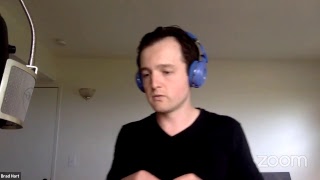
Brad Hart and Andrew Mercier test streaming from Zoom to YouTube while discussing business strategy. They cover 1% daily improvement, creating multiple income streams, and whether to chase purpose or money, drawing on Brad's hedge fund experience.
Questions this video answers
306 people
168 hours per week
3,778% (as stated in the stream)
He said he "made a million dollars in a month."
Seven income streams (on the income side), as stated
Chapters
During the live stream, a webinar on Zoom. I mean, on YouTube. Setting up your webinar for YouTube Live.
I think that everything is moving smoothly, unlike it was before.
Oh, yeah, baby, here we go. 306 people are about to get a notification.
That's awesome.
Oh, we are on. This is exciting. So let me. Let me mute that over there, because it's going to make me crazy. All right, guys, what's happening? We're live on YouTube. Welcome to Make More Marbles. My name is Brad Hart. As always, my trusty sidekick and partner in crime and sales baron, warlord of some kind, probably a warlock as well. Andrew Mercier. Mercier. Mercier.
Mercier. Yeah, that's right.
Andrew Mercier is here with us today, and we are just making this quick YouTube video live. Ah. To figure out how to do this thing, because we just got some new toys and we're testing them out. So, yeah, this is how you do it. You go and you talk to Zoom. You find out that you have two accounts that you're paying for. You have them nuke one of the accounts and apply the refund to the other account, which allows you to have cool new toys like webinars. And this webinar, when you go in, will allow you to stream from Zoom into YouTube and Facebook Live. We tried it on Facebook Live. The bandwidth just wasn't happening. YouTube seems pretty. Pretty strong, right, Andrew? I mean, yeah, no, the video is.
Moving along really clear. And it's not like it was before. It was kind of like that Susan powder commercial. Stop the insanity. And now we've got smooth, clean, fresh video of Brad doing all of his tai chi moves.
So, all right, as long as you can see me doing tai chi, I guess that's what the YouTube was made for. So, yeah, let's keep doing these. And we love you guys. Thank you for watching. Check out the vlogs. Check out the other content I have on YouTube if you want, like, more cool stuff like this. How to make magic happen on the Internet. That's part of what we do here at Make More Marbles. We also serve and support entrepreneurs with masterminds, messaging, and mentorship. What else?
Become a marble maker as quickly as you can and then make as many marbles as possible.
Literal marbles. Like, we actually make real marbles as well as the other things I mentioned. So this is actually a fun story. So did you guys know that marbles are just sand? I mean, they're just glass, right? And there's plenty of sand. There's plenty of silica.
In the world.
And as creators, you know, I have a belief. I don't know if it's the right belief, but it works for me. Like if we are created in the image of a creator, right? If you believe in God or collective consciousness or, you know, whatever, if we were created in the image of creator, then we are also creators. Very cool, right? And we get to co create this experience. We also have free will, therefore we get to choose what we create. We're always creating. There's no such thing as destruction, right? We're just, you know, creating new things. But sometimes the things we create are ill intended or negative or, you know, what have you. So I kind of look at it like we're in this big sandbox of creation. We can make as many marbles as we want, and if we don't have enough marbles, we don't have to grab for the ones that are already there. We could just make more. Because there's literally never an ending amount of marbles we can make. So why is this relevant? It's relevant to me because I see so many people in this world spending all their time, energy and attention on survival, right? And they have these beautiful true resources this time and energy and attention. And they only have so much. I mean, you can increase your energy, you can increase your intention, but your time is very much limited. So whether you're Richard Branson or Bill Gates or whoever, or the guy on the street, you got 24 hours a day, seven days a week, 168 hours a week. So how do you do more with what you're given and to whom they do well with what they're given. To quote another Bible verse, if you will, more is given, right? If you're giving what you're given and you do well with it, more is given. It's a parable of talents, really. You know, a talent of silver. It could also be a talent of, you know, yours. The skills pay the bills, if you will. So, you know, I focus on two different things. I focus on the 1%, right? 1% better every single day. I don't need to be 100% better. And 1% doesn't sound like a lot, but when you start compounding over time in a year, it's not 365% better, it's 3,778% better over one year. You got 3,778% return on anything in life. That's 38 times better. It's not a year compounding. And it continues to compound at that kind of rate. So just 1% better. That's one thing. I think another thing to be cognizant of is that we can get leverage, right? We can always make more money. You can't save your way to wealth. You can't do. It doesn't work. Things are always getting more expensive. The only way out of poverty, and poverty serves nobody, including the poor, is to earn more money. How do you earn more money? Add more value. What is wealth anyway? It is just value added times, leverage. Very simple definition. So the more value you can add to more people through systems and processes and teams and leadership, the more you can make. But that's not really the point. It's really about what can you give. So if you can just focus on those two things right now as the message for today. One percent better every day, and how can I help others? What you have will naturally increase, and it won't all come from the same place. You got to kind of suspend disbelief for a little while. Like, you're not. If you're trying to process everything through your brain, you're going to have a very limited purview. But if you start coming down into your heart and using, you know, coming from spirit instead of ego, you'll start to realize that there's so many ways to add value to the world, and you don't have to necessarily worry about it coming back from one thing or another thing. Just keep helping people and learning and investing in your mental capital, right? Your skills, then your mental capital, then your relational capital. And the capital will start to flow. More opportunities will flow across your desk. More deals will. Will come up for you. More opportunities for growth, more opportunities for service at a higher level. And, you know, you may be sitting there saying to yourself, you might say something like, oh, money can't buy happiness. Well, I would challenge you to give more of it away, make more of it and give more of it away. And I'm not saying you have to give blindly. I'm not saying I love the charitable organizations that exist today that spend 80% of every dollar on more marketing to raise more money. I'm not saying that's the right way. But what if we had a way to give into trusts and charities that were assets that produce cash flow, and we could impact more people. Maybe we invest some back into the fund or the charity. Maybe we invest some into the world. I believe we can create assets together. I believe we can make more marbles together. I really do. I think that we need to. Right? Why do I love entrepreneurs? Why do I serve and support entrepreneurs? I was a hedge fund guy in New York. Why didn't I just keep doing that? We were making good money? Because I realized that it was all about the people for me. You know, I made a million dollars in a month with my partners, and I didn't get to keep all that money. But I had this moment where I'm standing on the top of the roof at the Gansworth Park Hotel and we're cheersing to our success. And I felt more empty and disconnected and burned out than I'd ever felt before in my life. And I realized at that moment that there was no amount of money that was ever going to make that feeling go away. I was being driven by a different human need. Need of significance, as opposed to growth and contribution. Significance as a whole you can never fill with money. It just gets deeper and wider and deeper and wider the more you try. However, growth and contribution is a virtuous cycle. The more you grow, the more you give, the more you have to give, the more it comes back to you. The more you grow, you continue to invest again. Skills, mental capital, relational capital, actual capital. Learning how to invest. Shifting from the entrepreneur mindset, which is to bring resources from areas of low yield to areas of high yield. Well, that also invites more risk. Eventually you're going to have to move those resources, like an investor, from areas, areas of high risk to areas of low risk, and then balance your income streams and your asset classes so that you have diversification, so that if one thing doesn't work out, like we talk about the orchard story, let's talk about the orchard story. What is an orchard? It is not one tree. An orchard is maybe a thousand trees. You plant a thousand knowing full well that some will live and some will die. But we have no earthly idea which or which beforehand. So we plant many, knowing some will live and bear much fruit. And if we have enough trees planted, we'll have a thriving orchard. So diversification of income streams and asset classes allows you to not only balance balance risk, if one goes away, you have six more. The average millionaire. And by millionaire, I mean not just a million dollar net worth, but a million dollar a year in earning power has seven asset classes, or, I'm sorry, seven income streams on the income side, and many asset classes. Because ultimately the game is not how fast you can make money, it's how sustainably can you continue to make money and compound. Because compound interest, as Einstein said, is one of the most fascinating forces in the universe, most powerful force in the universe.
Right.
That 1% over one year, 3,778%. And it's not just related to money, it's related to skills. It's related to getting a little bit better, running a little bit faster, jumping a little bit higher, losing a few more inches, you know, finding that girl or guy of your dreams, traveling the world 1% better. Every day doesn't just live in the realm of money. And there are all these intangible currencies that we trade every day that we can't put a value on, but they certainly exist. So that's the make more marbles philosophy. Let's make a few more marbles. Let's not just grab for the ones already there. Let's get a little bit better every single day and help some more people. And as a natural function of such, more will be given to you because you did well with what you were given. Andrew, do you have anything to add to that?
You know, one of the things that you were talking about a little bit earlier is moving that thought process from the head down to the heart. And one of the greatest ways that I've ever heard it explained is get a 120 pound jet jockey trying to take control of a 3,000 pound elephant. This 120 pound jockey is just fighting the reins on this 3,000 pound elephant. And if the jockey works in correlation with the elephant, then you get this beautiful thing where you're able to go out and win races and do all the stuff that you want. But if you're fighting against the animal, you're always going to be struggling. And that's where the struggle comes in. And that's where one of the greatest things and one of the greatest gifts that you gave to me and you know when, when our relationship began was the idea of understanding that, moving from my head and following my heart. Not in that way that some people. Oh, go. Follow what it is that you want in your heart. Rather understand what truly your flow is and then move towards that and then just get in the river and ride the lazy river all the way through. You'll be able to make it so it happens. So, you know, let go of that jockey and start letting that elephant guide you to where it is that you got to go. I like that.
And the elephant never forgets too. That's a good metaphor to think about. Your heart knows what it wants, it knows what feels right, it knows what feels wrong. And whatever you're doing that feels heavy, put it down. If something feels heavy, put it down. If you're living in your heart and it just says, this is not right. Keep thinking around it, keep moving around it, keep feeling around it until it feels right. Right. Like I've had a lot of deals that, you know, if I push it the wrong way, wouldn't worked out the same way. You got to really learn to trust your intuition when it comes to that kind of thing. And living in your flow is a specific thing to each person. Right. Your flow and my flow just happen to be the same. That's one of the eight personality types of entrepreneurs we talked about. We're both supporters, which is why this type of flow is so natural to us. We love people, we love one on one conversations. We love just big ideas and stories and just painting a beautiful world. And that's super valuable to the right people at the right time. But we're not great at is ideas. You know, we can make up an idea, but it's not always the best. We're not great at timing and we're not great at numbers as much. And yes, we can all do all of those things, but if you try to swim upstream instead of just floating with the flow, you're going to have a problem. Right. Don't tell a fish to climb a tree. That's the monkey's job.
Well, that's, you know, that's how we ended up here today. You know, being that we're great with stories and stuff like that, but not so great with numbers. We had two accounts on Zoom and that's how we ended up with getting.
This fancy new, this little chat going. So, yeah, that's a fun story. Yeah. Apparently I told Savannah to go ahead and re update the account and it's not her fault. I had two emails running because one was associated with my Facebook, my personal email, and then one was my business email. Anyway, guys, you know, I know there's a lot of people on YouTube that have watched my videos, maybe about alcohol or some of my vlogs. I would love to hear about what your experience has been of making more marbles so far in the comments because we're. This kind of started as a blog that I threw together three years ago based on an idea was that I didn't want to play a zero sum game anymore. I wanted to create win, win, win generative relationships and deals for everybody that I encountered for the rest of my life. And life has consistently tested me and my resolve in doing so. And I'm committed to this purpose because I feel like it's a better way and I feel like eventually the data and the science will begin to back up and you might say, oh, economics in this thing. Let me tell you something about economics. I ran a very successful hedge fund. I understand economics, right? I don't have an economics degree. I didn't go to school for. It doesn't matter. What I'm going to say is that economics is not a science in the fact that it doesn't change. It's not a hard science. It's the collective knowledge of all human decision making right now. And it's really five years behind because by the time the academics can piece out all the pieces, all the technology has shifted, all the decision making has shifted and the resources have shifted and the opportunities have shifted. So really you're looking at a picture that was taken five years ago of a situation that doesn't exist anymore. So if we're on the bleeding edge of economics every single day, which is just the theory of all human decision making, we have to be thinking to ourselves, what is a better way to make more? Right? Why do we go into work? Why do we do what we do? It's not just to make money, it's to produce value, it's to create wealth, it's to create sustainable systems by which we can provide for more people. And if you've never read the book Abundance or Bold by Peter Diamandis, this may be a conversation that's relatively new to you. You may be saying, well, Brad, there isn't enough to go around. I challenge you to zoom out. Sometimes scarcity is real, but only typically if you look at it in the very zoomed. In this situation right now, when you look at the aggregate of all there is, and the fact that the universe is expanding in every direction and that the Earth is a plentiful, abundant place, we've had many problems with scarcity in the past, but they really are just problems of perception. When you zoom out, most of the time, there's more than enough to go around. And the technology and the leverage we're creating, the productivity we're creating is allowing us to do more and more and more with less and less and less all of the time. Right, Let me tell a quick story to illustrate. So there's a king with a pile of gold in medieval times, and this king has serfs that lives on his land and he wants a way to house himself and protect his serfs. So he decides to build a castle. Now he's got this pile of gold and he gives it to some masons and some architects and some builders and Some workers and some soldiers to protect all those people while it's being built. And, you know, they build this castle and it's a beautiful, strong castle. And now if his serfs are ever under attack, they can retreat into the castle. It provides security. Now he has a family and place to live for his family. Now this castle can stand the test of the time. The property value of the land is higher. It's a tradable asset, it's a cash flow asset. It can produce revenue. And on and on and on we go. However, the gold that he originally converted into these things still exists and still has the same value to the people who own it. It may not be in his possession anymore, but it hasn't gone anywhere. So similarly, in our wealth creation journey, we need to understand that the money is there. It's always circulating. People want, need and desire things which set this cause in motion many, many eons ago. The way we keep track of it is irrelevant. Whether it be Bitcoin or fiat currency or gold or whatever, the needs, wants and desires of humans are what drives economy, right? In commerce. And the fact that we can't live without each other, we literally, like one human being, would not survive. And in fact, if you don't give babies enough attention, they would just not survive. They would literally fail to thrive and die. You know, means that we need each other. And economics is a function of that. But where people get it twisted is that they think that economics is a zero sum game. But there's constantly more value being created. We can print as much money or whatever store of currency we want to look at, but you know what we can't do? We can't make more time, we can't make more energy, we can't make more attention. So what I would challenge you to do is to expand your capacity to earn, invest, grow, help more people. And on and on we go. And there doesn't. There can be a limit, right? You can decide on what your target's going to be, and maybe it'll increase over time, but start somewhere, right? There's a lot of ways to get from London to Moscow. You can walk from London to Moscow through the Channel, across Europe. There you are, right? It would take you a while. It's probably not the most efficient way. You could ride a bike, you could drive a car. You're getting a little faster now. This is a little more efficient. You could jump on a commercial airliner. That's a pretty good way to get from London to Moscow. You might have to take a stop or layover. Or you could take the private jet. There's a lot of vehicles to get you from A to B. Some are more effective than others. All I'm saying is, is that as time goes on, what you'll seem to. What you'll realize in your life is that your time has value, but only if you confer a value on it. And therefore, if you really want your life to mean something, it's got to be more than about money. It's got to be about passion, purpose, whatever it's going to be for you. And there's no judgment about values or what you decide that is. I'm just saying find what that is. And if you don't know what it is, your purpose is to find it. If you don't know what your purpose is, your purpose is to find it until it's not. And you find it. And then you live that purpose. Maybe live that purpose for a reason. A season or a lifetime, I don't know. But keep going until you find it, because it's got to be worth more than money. I know everybody says that, do what you love and all that stuff, but also I think there's some pieces that people miss, is like, do what's in your flow. Partner up with the people that allow you to stay in that flow and do the stuff that you hate that they actually are in flow and love. Right. So we talked about a few big ideas here, but let's give you a few more. Why not? We're giving out just knowledge. We're gonna drop some knowledge bombs. Let's talk about the four things, two sets of four things that all businesses need on another quick Facebook Live. Karen, I. I'm just gonna wrap this up. Two seconds, and I will be right with you. Okay, guys, it's been an absolute pleasure. Have a beautiful day. Thank you. Andrew. I have to take this. I'll talk to you soon.
All right, guys, take care. If you're looking for more information, find out at the Wealth Dynamics test. Brad will have a link for it. We'll talk to you later.
Talk soon. Bye.
More from Brad

The #1 Reason AI Isn’t Working for You (Yet) #AI #businessowner #founderenergy




What tasks would the best assistant ever be able to do for you? #BusinessSystems #BusinessOperations



Nobody expects you to use a harder way when there's a better way. #AI #businessowner

Which side of the table will you be on in 2026? #AI #Mastermind #BusinessOwner

