The Kingmaker of Personal Development: Kyle Wilson talks creating Jim Rohn International
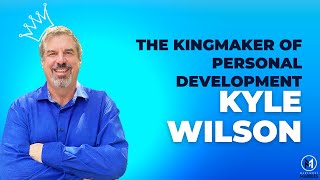
Interview with Kyle Wilson (host Brad Hart) about Wilson’s background as a seminar promoter and longtime partner of Jim Rohn, and about the Inner Circle mastermind he founded (circa 2015). Wilson explains the mastermind’s invite/application model, modest pricing with grandfathering, preferred event size (~50 per event though total membership has exceeded 100 post‑COVID), and member-selection criteria (values fit, non‑transactional). He describes COVID pivots—weekly expert Q&A calls and virtual events recorded into membership content—and shares practical tactics for building a mastermind and network (leveraging podcasts/events, offering gifts, collecting contacts quickly, follow-up with value, testing low-cost events first). He emphasizes principle‑based marketing (product quality, strategic focus, know your audience) over chasing tactics. The transcript ends with book giveaways (Success Habits of Super Achievers, Think Big) and contact prompts (email and Instagram).
Chapters
Foreign.
And welcome to make more Marvels. My name is Brad Hart and today I have a very Special guest today, Mr. Kyle Wilson. How you doing today, Kyle?
Hey, I'm doing good, Brad. Good to see you, man.
Thank you. Thank you so much for being on. And if you haven't watched these series of interviews I've been doing lately, a lot of them are with folks who I call mastermind masters. These are folks who they've been in the industry for a while. They've been helping people, serving people, impacting people. And one of the ways they do that is with their mastermind groups. And they've built these mastermind groups to seven and sometimes eight figures. So I just want to show people what's possible so that they get inspired to create their own mastermind groups. Because I for one believe this is the most impactful way to serve people in the self education movement, which is becoming huge and we only want to fuel it further. So Kyle, give us a sense of who you are, where you come from and how you got to where you are today.
Sure, yeah. So, Brad, a lot of people know me as the guy that was Jim Rohn's 18 year business partner. But at the end of the day, I'm a marketer, I'm a strategist. I was a seminar promoter and I would put on big events and I would hire Jim Rohn, hire Brian Tracy Ogmandino. And then in 1993 I made Jim an offer and we became partners and I started Jim Rohn International. It was actually my company and that allowed me to start. I took him from 20 speaking dates to 110, then tripled his fee. And I always say, because you're a Jim Rohn guy, right? You're a Jim Rose.
Oh yeah. I mean if you're a Tony guy, you're a Jim Rohn guy too.
Yeah, yeah. I would always say Jim was the gateway drug to personal development. So people would discover Jim and then they would want to discover more. I started your success story and that's why I started also promoting Brian Tracy and Mark Victor Hansen and Les Brown. And so all these intellectual properties 300 over the years I created not just with Jim, but also Brian Tracy in particular. I was also the agent for Dennis Whateley. Internet came, built the first million plus email list and then 2007 I sold my companies in all the intellectual property in the list and I got paid well and I retired for seven years. And since 2015, know a mastermind's been a big part of what I do.
Now I love it. And what led you to starting your first Mastermind group?
Yeah, so when I came back out, my default was to start joint venturing like I'd always done in the past. I did. I never wanted to be the talent. I think that's what makes me unique in the industry. Seminar promoters, guys putting on events, a lot of times they eventually want to be the guy on stage and that was never what I wanted to do. I, I would hire someone else to do the intros. So I was creating product, doing events, but it was, it was never, you know, I was never the talent. So when I came back out, I started doing joint ventures, did them with Phil Collins and Def Leppard, Darren Hardy, Brian Tracy. And then it was 2014. I went on a ski trip with my good friends Darren Hardy and John Assaraf. And Stephen Cox was there, Eric Berman, who runs Brian Tracy. And we were together for about five days. It was at John's place in Telluride. And they were all part of a San Diego Mastermind. And it's like they had so much camaraderie and connection and Brad, I'd been retired and so I felt like I was in the desert and I'm like, guys, this is, Tell me more about your mastermind.
Now, is this Eric's mastermind? Was this flight club? Which one was this? Because I've been a part of a few of these now.
This was 2014, 2013 and it was just something. Mainly it probably was one of Eric's. I think Eric gave two or three. Yeah.
Even though it's Speakeasy and a bunch of others I'm part of. Yeah, that's great.
It was one that Darren and John and so it was probably a Internet marketer type 1 and they said, dude, you should just go back to Dallas and start your own. And so true story and true to this day, I started my mastermind. For me, like what could make me better. I was so turned on by what they were doing. And of course theirs was in the truest sense of the, you know, sense of the word of Mastermind. You know, there wasn't a cost to be involved. It was getting a group of guys and, you know, kind of peers. It was one of those type of things. So that's how I started mine. I started mine in Dallas. I invited ron White, the two time US memory champion who had been Ron's agent, my 20 year friend Robert Helms, who had the biggest real estate investor podcast, the Real Estate Guys radio show, and a guy known since 96, Colonel Tim Cole. So it was just this group of eclectic people. And simultaneously I started one in Los Angeles too. I had some friends in Los Angeles and Lisa Hacha, she's married Lee Aronson, the creator Two and a Half Men and Big Bang Theory. And they would host them at their house. And Mark Victor Hansen would show up, Jeffrey Gittermer would show up, Phil Collin and Def Leppard would show up. And it was just this cool thing we were doing that started growing pretty fast. And I think one of the things that has made mine different is I don't have a crazy price on it because it was never. Was never about how much, how much you have to pay to be part of it. It was who do I want to spend time with? So some people would have gladly written the high check. That's not the price of admission. That's why I've always had an application. I have to check off who I want to be in the group. And if I think it'll be a good fit for me and them, there's some people I don't think we can help, you know, so if I don't think they're going to get a lot of value out of it and if I don't think they're a good fit for the group philosophically, you know, if they're transactional minded, because mine really has become a community. And what's been cool, Brad, is I've built it around what I want it and also what I'm good at. And I'm a promoter at heart. So I feel like I'm shining the spotlight on the talent we have. We have so much talent in the group. So it's not like, hey, come learn from me, the marketing guy. You'll learn some marketing. But it's more about learning from everyone else in the group. And so it's been, it's. I've learned a lot, it's been interesting, it's been amazing. Very eclectic group of people. And to have it in Dallas, in Los Angeles, two very diverse areas and cross pollinization between the two exists. You know, I'd just say it's been really good, people coming together.
So you do these two different locations. It's invite or application only. Ultimately there's no real high price, probably just to cover your expenses. And the goal is so that we can serve each other and serve the world at a higher level. And you're looking to put the spotlight on the talent and really share with people who share your values. Is that a good sign?
It's definitely been a evolution and a pivot. The longer we've been going, I would say the higher quality of people have, have we've attracted. I probably had more transactional people, people coming in. What can I get from this? And I have a way, you know, being a seminar promoter for 20 something years, I can make people feel unwelcome if I feel like they have an agenda. So I, I really do. As a seminar promoter, you got 2,000 people in the room. I. I'm there to serve the audience, never the speaker. And so for me, I've made it centric. What's going to be best for the people that have taken a day or taken two days. And in the beginning now, the price was modest. I've slowly raised the price. But I did something interesting. I grandfathered people in at the price they started at, right? So anytime someone comes in now, the price will never go up if they want to stay in. And here's one of the main reasons I did that. I have, you know, just like you, everyone's busy, right? So I have people that have 500 employees, you know, businesses all over the world, and they might make one event every two years at times. So I've given them incentive to stay in because I want them to stay in. They make the group better, they make me better. So I don't want that's become an issue.
So if they came, forgive me if I missed it. What do you call it?
My group.
Yeah, what do you call the group?
The inner circle.
Inner circle, Got it, Got it, yeah.
So, Kyle Wilson, Inner Circle Mastermind. I started in 2015 and it's just been a consistent pivot evolution. I have always kind of felt the cap for me was a hundred people. I didn't want to get bigger. I did, and I have more than 100 now. And that just kind of happened after Covid. But I don't want to try and have more than 50 people for any one event because we have a roundtable and it just all kind of magically works out. I did add Philly later on because I had so many people on the east Coast. But I would say post Covid, we've become Dallas Centric. I do less in Philly, less in la. Those are two areas that are more difficult as well. You have to deal with more things with the hotel. But Covid really changed the game for me because when Covid happened, we immediately started doing weekly group calls. And I would bring in, you know, the doctor, over 14 hospitals, you know, telling us exactly what's going on the CPA that, you know, would read the 600 pages and tell us what a PPE and, you know, what all the different programs are. And colonel, the Marines that ran a presidential inauguration telling us how the different levels of government operates. So Covid gave us an opportunity to quickly put some of the smartest people on a weekly call and do Q and A. And the other thing it did, Brad, it allowed me to start doing virtual events where Les Brown and Brian Tracy and Mark Victor Hansen and Dennis Waitley and Phil Collin and Defer Lupburn would hop on. It's hard to ask someone to come and invest a day with you. Right. Get on an airplane. But to do it on Zoom was not an issue. And so we could record it and then put it in a membership site. And I really enjoyed virtual. A lot of people don't, but for me it was. I felt like I could serve more people.
Yeah, yeah. And you weren't stuck in, you know, one particular method or, you know, modality. So you have been a part of other masterminds in the past.
Which of them really. Not really.
You haven't really joined too many others.
Besides, that's the thing. I. And this is. This is me, period. I'm very much a contrarian. I learned by doing. I, you know, when I was in the seminar business, I saw what some people did, but I went did it my way and so on. The masterminds, I've never been a part of another mastermind. I've never actually attended one. I spoke it a few and they were a lot more expensive than mine, I would think. You know, I know price is not the determining factor of quality because some people. So there were distinctions I made in that regard. But I can tell you this has never really been a business model for me. It's been more of my own personal goal. But I've, I, you know, it's financially, it's a financial positive model for me. And it also helps people become part of some other projects I do. But at the end of the day every year I kind of do inventory and say, do I want to keep doing this? What am I doing that I feel like I'm being true to myself and true to my calling. And I will say we've probably spun off 20 other masterminds from my members. They've gone off. And I have a lot of real estate investors. I have a lot of, A lot of talent in the group that have now gone off and done their own. And that's been cool to watch.
So since you're the kind of person that loves to make experiments happen and do things on your own and figure it out, what are some of the things that you started out doing that you no longer do and some of the things that maybe learned along the way that turned out to be really awesome.
Yeah, I think early on we would have everyone introduce themselves and that can, that can take a long time. We tried to have different groups in different cities versus cross pollinating. I think honestly I go back and forth. Sometimes I'm very member centric about presentations, other times I'll bring in some really high end speakers. I will say, Brad, I think the biggest shift has just been the quality of the people and realizing that if you get good people together, they'll keep referring more good people. And then if you have people that have agendas, not that I'm going to judge that, that's just not for my group. You know, my group, it's more of a community, it's more of getting. And again, you can trace almost everything back to my philosophy of Jim Rohn. You know, Jim Rohn is a great filter for specific philosophy. And so I attract a lot of Jim Rohn type of people that I think have, you know, they're philosophically driven.
Yeah. And they share your values. Ultimately, I think that's the number one thing is if you can bring a group of people together, share values, you can really make an impact in the world. So with the folks who are in here, how many do you feel like are direct connections to you or how many versus like percentage wise, how many have been referred by other members?
Probably half and half.
Okay, that's pretty good.
If I did the math, it might be more on the referral end, but having been 30 years in the seminar business, a marketer, you know, I just know a lot of people, so I was able to attract people. And that really is a good mix too because if we're not careful, we go too heavy in the real estate investor world. And I do get excited anytime we have diversity. I think the biggest shock is people think I would have more speakers and authors and we have a decent amount. But I think at my core I'm an entrepreneur. Even though I've been the agent for all these big speakers and I've published, sold over a million books, I get turned on more by entrepreneurship and people that build things and from that they become a speaker and author. So I think, you know, again, demographically and you know, I don't like to sell the dream, so I'm not promising you know, if someone wants to be a speaker or author, I push them a little bit on really, here's what that road looks like. It's not much different than being a musician or an actor.
So to make this really valuable and actionable for everybody who's listening. Not everybody has a great network like you yet, and they're maybe looking to build it. Obviously, you have some. Some things you can say about that. What are some of the things that you do differently that might be interesting to people just starting out that they don't necessarily need a network for, like in your marketing process or in your referral process or in your sales process that they could just pick up and be like, oh, that's a cool nugget. Let me try that.
Yeah. I mean, first of all, be authentic. A lot of people are trying to pick up on what everyone else is doing. And I think the more authentic you are, you're gonna save time. You're. You don't want to attract people that long term, it's not going to be good for them and not good for you. I really do believe, you know, I think being true to your message, now here's the thing. You need to have a message. I don't think everyone should just go start a mastermind. I think you have to really solve the value equation. What kind of value can you bring? You got to know, is the mastermind about you? I would say a lot of masterminds are about the person leading it, and that's powerful. At my core, I'm not a teacher. That's not my thing. I don't like to teach. I am more of a guy that can put like it put on an event, then make it all magical. So you have to figure out what your gifts are and what you're going to bring. The equation, what can you bring? What can the other people receive? Is it going to be a group that's interactive? Is it going to be a group where you're the guru and there's no right or wrong? And then one thing I do just in general in business, Brad, I'm always looking at where do people come from? And I think that's kind of my marketing gene. I will pretty much always know the genesis of any relationship. We met on Clubhouse. I've been on clubhouse less than 10 times. But, you know, you're someone I met on Clubhouse. I will always know. Okay. I met that person because I spoke at James Malinchuk. I met that person because I did a Facebook video. I met that person because they signed up for 52 lessons. And so I call that connecting the dots. So I think if people can really get clear on how do they meet people attending events is a big one. If someone attends their industry events and makes connections, oftentimes the very people that they would want to have in their mastermind, they can meet at these industry events even though no one's pointing at the finger at them. And so always have taught on the thing called the wheel. You know, you get people on the wheel, you take them around, you have spokes. Well, the big thing is how do you get people on the wheel? And so obviously social media is a powerful thing, but if you meet people at events, you have to have a mechanism to, you know, whether it's their business card or they give you their contact to say you're going to send them something valuable. And when you send them something valuable now, they're on your email list. And and my thing is I don't do funnels. I know people are into funnels. I have funnels, don't get me wrong. And I have membership sites. But in general, my marketing philosophy is bring value, bring value, bring value. And occasionally give people something to say yes to. So if you're talking to your audience bringing value and you say, hey, I've got a mastermind opportunity coming up, who's interested? And to that point I'm really into testing. And so I started my mastermind with doing a couple of free ones and then I had some special guests come. So I actually probably did three where I had a full day with someone else and we charged I think 397. This is 2015. And from there I sold people into the Mastermind. So I think that's a good strategy, Brad, is leverage someone else of value that will help get people to your, to your house or to the hotel. And if though if the person you're leveraging also has a list, you know, maybe they get the front, front end of the day, but you get the back end opportunity to sell them a mastermind.
I love that. Yeah. We have a couple strategies which are similar specifically around the events. If you can be the person putting on the pre event, let's all hang out and get to know each other eventually, well, you immediately become the rock star. I call it the Remora strategy.
Right.
The shark can't eat everything, so you can kind of pick up some of the scraps. And if it's the right event and the right industry and then people share your values, I think that's a really great way just to Become known. And I was sitting at an event recently where one of my clients did this from. From the Build a Mastermind program. And 200 people were coming up to him being like, oh, my God, Tim, thanks so much.
It was so great.
Thank you. And like, you know, it's really easy for him to just be like, yeah, let's follow up. Because they know who you are. And knowing and liking is first thing to trust.
No, I love that. And the key to that, practically, is how do you get them on the wheel? And so for me, I always offer to give them something. And so whether it's a book or whatever, I have some really cool tools I'll use. But if they don't have a business card, I just have my phone ready. And I handle my phone. It's already on notes. I say, give me your name and your email. And then I'll type in a couple of notes. You know, lives in SoCal, Big Jim Rohn fan, real estate agent. And then I'll follow up later in a very giving. Here's great stuff. Can I share a success story that's kind of.
Oh, please.
Yeah.
I love stories. Go for it.
Yeah. So, Brian Buffini, do you know who Brian is, by the way?
I don't, no. Please tell me about him.
So Brian's done a billion dollars. He's kind of the biggest guy in the real estate agent space. And we go way back, and he's got 400 employees. He's in San Diego, but he's kind of this quiet guy that if you either know him or you don't, but if you know him, he's a rock star in your world. And so he had me on his podcast. I knew it was a very. I knew his audience was a rock star audience, and so he said. So I was giving away a free gift at the end, and he wanted me to send people to a website. And I'm like, well, Brian, I'm just gonna have him send me an email. And in the email, if they'll just tell me, hey, you know, put book or whatever, but say, hey, if Brian's changed your life, how do you change your life? Or if Jim Rohn's changed your life? And so my email blew up. I kid you not. I had like 700 people. And it was all said and done. It's crazy. And I had systems, you know, it's not my first rodeo, so it's not like I had all kinds of systems on how to deal with it. But one guy I had on my podcast was Kevin Eastman NBA WORLD CHAMPIONSHIP COACH and he said, with players, it's not what makes them tick, it's what makes them talk. And if you can get a player to talk and you listen, then they'll listen to you. And by asking people to share more about themselves in the email, some just said send book. But some said, brian changed my life. I was broke. I was, you know, on the streets. Now I'm the biggest realtor in all of Southern California. And for those, then I could come back and I'd say, I got a book project or I have my mastermind, or it allowed, you know, it opened up the door for them to talk, which allowed me to then very specifically reply. So right off the bat, I had people that qualified themselves because I got them to talk. That's great. So bringing this back home to being on a podcast or if you're an industry event, you're talking to people and you get to know them, have them give you the information, follow up with them, but don't go for the sell. Just say, here's some cool things I have that you might be interested in. Most of the time they're not going to bite. But now they go on your list, value, value, value. And then occasionally say, I got another event coming up and that's fishing versus hunting. And that's always been my model, going back to Jim Rohn International Days.
That's beautiful. And how has, you know, you've been in the industry a very long time, what do you think has changed the most in the time you've been doing this and what are you excited about that's new and maybe going to change things?
Well, I think I've always talked about tactics versus principles. And tactics always change. Principles never do. And so the same tactics, you know, that I used in 93 to fill up a room or 2000 when the Internet was coming around, or 2010 or now 2022. The tactics are constantly changing and, and now, but the principles don't. And the principles have allowed me to continue to have success in all these different time frames. And I've seen contemporaries go up and down and they're starting over, starting over because they're so tactical driven. So I think today with technology, we can become slave to the tactics. And that's probably the biggest mistake I see is people are doing too much. They're trying to make every social media platform work, and that's okay in certain business models, but they're doing too much tactically and not enough principally. And the principles will compound over time, you know, if you can get someone on your list, build a relationship with them and you're patient. Like, I don't have to have a vineyard producing wine in a year, I'm okay to wait five years. And so if someone can, so what I see the problem in the marketplace is the overabundance of tactic driven philosophy, which might get short term results, but it doesn't allow people to really go as vertical as they could and to really understand the rhythm of why people buy, why people become raving fans. I think, you know the little quote book I did that moved 6 million copies virally. I had multiple 7 figure viral products. But they were all intentional and they were all based on principle based marketing. So that's the biggest challenge I see in the marketplace. On the positive side, there's never been more opportunity. I mean, anyone can go direct to consumer. The main thing is be good, you know, it's better, undeniable, right? Yeah, yeah. I don't buy into throw it up against the wall. To me that's a bad philosophy. The right philosophy is be intentional, make it good. It's what Apple does, it's what the, it's all the things we buy that we're fans of, that we refer. So I'll tell you, my business is 90% referral. But that's intentional. That's not a mistake. That's my number one marketing philosophy. You know, it doesn't mean all the other tactics don't work. You just have to get them to work within the principle based marketing that you do.
So if you had to pick, say three principles to share with the audience today, what would they be? The ones that are just, you know, never going to change.
Have great products. Nothing beats having a great product. When I do a book, I'm thinking 20 years from now, every Jim Rohn product I created, Brian Tracy, Dennis Whaley, I was thinking 20 years for 20 years from now. So I broke what most people teach by me being my own editor. I edit my own podcast now. Yeah, that's an investment of an extra. Now I don't do the actual editing, but I am making all the notes because I'm thinking, you know, who knows my audience better than me? So yeah, I'm going to invest an extra hour and a half, but I'm also honoring my guest that I had on. You know, I'm trying to really take it at the highest level of their intellectual property, their time, my time, the listeners time. So yeah, I'm going very old school on that. But it's not because I'M you know, it's because I believe that's what works. So have great stuff that's undeniable. And number two, be strategic. You know, less is more. What's the one thing that's going to knock down all the dominoes? Back in the seminar days, if I was going to go into a city, I go into Chicago, not know one person, I got to get 2000 people and in 70 days there might be 50 things that work. You know, putting business cards on windshields works. It just doesn't work very well. So, you know, what are the one or two things? You can almost always find the one or two things that are going to work 80% of the time. And for me, that's why I don't do one offs. Because a one off now I'm putting all this energy in something that won't compound. So I want things that are strategic that are gonna compound over time. So that's a big one for me. And then another one is just always know who your audience is. Who's your avatar, what's your secret sauce, what's your goals? Stay true to that. There's a lot of sexy things out there. But if it's not really getting you the particular avatar that you're after having and you gotta do that work, you gotta sit down and take the time to say what your goals are, what your purpose is and to flush that out. Because always say the worst thing, the thing that would be worse than, or, you know, you go accomplish all your goals, but you accomplish the wrong goals, right? So you want to be very intentional about what you're trying to accomplish.
So where do you see the next 10 years of your life going with regard to Mastermind and also you personally, what other dreams and goals and visions do you have to fulfill still?
So, you know, Brad, I got to tell you, it's always been unfolding for me. You know, I didn't know who Jim Rohn was. You know, I got to tell you, almost everything that's happened to me has had a serendipitous aspect to it. But it's birthed from some principles. You know, service, hard work, honesty. You know, Zig said never do a good deal with a bad guy. So really focusing on who you're working with. And if you sow good seeds in the right places, good things will happen. So when I look into the future, everything I'm doing right now, I love. There's nothing I'm doing I don't love. It's all by choice. And I also like the excitement of new things. But I'm very, I say no. You know, most of the time, you know, 49 no's to one. Yes. So when I look into the future, I'm open to things I don't know yet. So I really don't know what's next for me other than to keep doing what I'm doing and be open to those opportunities.
I love it. I try to live my life the same way. There's that human part of you that wants to have everything figured out and, and have some, you know, rudder if you will, down the waters of life. But in the reality is, you know, you wouldn't want to know the end of the movie. You wouldn't want to know how it's going to go. Right. Even if, you know there's got to be some magic to it. Otherwise why are you doing it? Right?
Yeah.
So that's beautiful, Kyle. Where can people learn more about you? I know you have a gift for us. I'd love to hear about it. And then I have one more thing to talk about before we wrap up.
Yeah, I mean, I would love to give people, I do these books. This one's called Success Habits of Super Achievers. And it's got some, some amazing people, all really good friends. Darren Hardy, Brian Tracy, Les Brown, John Assraf, Art Victor Hansen, Phil Collins, Def Leppard, on and on and on. And someone said, how did you get all these New York Times number one bestselling authors to be in your book? And that really is back to principles. These are 20, 25 year relationships. They're a phone call away. We didn't go through. Well, I won't anyway. There's some big names. I don't go through their managers or their agents. I go directly to them. But I have those deposits in the bank and so I'd love to give people this book. It's a 300 page book, the digital copy. And when I send it to them, I'm also going to send them a bunch of other books. This is a new one called Think Big that has Brian Tracy and Brian Buffini and amazing people in it. Chris Gronkowski. And if they'll just send an email to infoolwilson.com put Brad Hart, tell me a little bit about yourself, right? Tell me what you guys are doing, how you found Brad. If you're a Jim Rohn fan, if you have a mastermind, I will reply back and I'll send you some cool stuff.
So that's perfect. And I want to ask on top of that, since you're sending Kyle an email anyway, I want to know, Kyle, how can we help you most? Because this is make more marbles. We're here to add value as well. What can we do to make your mission move faster?
Wow. Thank you. They can follow me on Instagram. I really love Instagram and I tend to follow people back. You know, if I actually do take the few seconds to go check someone's profile and just make sure we're, you know, everything's good there. But I'll typically follow people back, and that'd be one thing. And I, you know, on these books, we, you know, Jim Rohn would tell me, say, Kyle, we do good work. And I feel like we do good work on our books. We, you know, so if someone's interested in learning more about PNB in a book, they could reach out to me about that. But I guess if someone's a Jim Rohn fan, just let me know, because that always touches my heart. That's the way to get through to me is tell me a Jim Rohn story.
I love it. Okay, so send Instagram dm. Sorry, Follow him on Instagram. Send him a story about Jim Rohn or way that you've been impacted by this work. Check out the book for sure. It's a really great, incredible read. Kyle, thank you so much for being on. That's infoilewilson.com Brad.
Thank you so much and good job. And, hey, I've loved your energy. You know, the first time we met on Clubhouse, I was blown away by your story growing up and the things you went through and being a Wall street guy, and you're a brilliant guy, and I get your emails and they're prolific. I delete a lot of emails. I save yours. I read them.
Oh, that's really nice. Thank you. I appreciate that.
That's why when you reached out, I was really quick to say, yes, I.
Appreciate that so much.
Ask. It's like, yeah, say see when, and I'll be, yeah.
And it's so weird how the universe works because I literally was on a plane coming back from Denver and I was in the Denver Airport, and I was just like, kyle Wilson. It just came in my brain, like, I haven't talked to you in a while, right? So I reached out, I sent a voice message. It was super loud and noisy, which I apologize for again. But I was like, hey, man, I'm doing the series. I think it'd be a great fit. You want to jump on? He's like, yes, okay, great. I'M like, perfect, let's jump on and do it. And that's all it is, gang. It's, it's not about what you can get, it's about what you can give. And also just make sure to touch people once or twice a year. It's not like everybody expects you to reach out every week, but if you can just be adding value consistently over the long term. People always ask me, I'll just share one quick story to hammer this point home and then we can wrap up. I have a dear friend who, we were at an event together and he mentioned, hey, you know Oren Claff? I said, yeah, sure, I know Oren. And Oren's kind of a big deal if you know he is. He's like the pitch anything guy. He's written all these best selling books, raised billions of dollars, yada, yada, yada. How'd you get to know Oren? I'm like, to be honest, I can't remember how we originally connected, but I went through my phone, I just scrolled through all our texts for the last three years. And I'm not saying we're best friends, we hang out every day, but we text a lot, number one. Number two, we're neighbors. So I've been to his warehouse, I've been to his office. We used to share our sleep stats and how we were getting better sleep scores on the Oura ring. And it was nothing about business even. But if I call him, he's there. If I call him, if he calls me on there, right? And we just know we have one more ally in life to go out and change the world. And we don't even share a lot of the same values, but we respect one another and we appreciate one another and that's, that's really the game, gang. It's not about what you can get, it's about what you can give and just be a friend, you know, that's.
A hard lesson, I got to tell you. I, I was a type a seminar promoter and very driven, very results driven and I'm a better person now than I was then. But some of these lessons, I get it, it's hard, like you're trying to get yours and it's hard to think what's the best thing for the customer. You know, Bob Berg's book the Go Giver is a great philosophical book about the natural law of when you give, you know good things are going to happen. My friend Jeffrey Gittermer said, when you give, you don't have to get paid back. The universe will pay you back. And once you start believing those things, you know, it opens up a whole new world. But, hey, we're still humans. So forgive. Forgive yourself for talking to the audience, for, you know, still having to learn these things, which I'm still learning, too, 100%.
And if you are feeling the strain of money, it's okay to get a sales job or work in another organization that's already got a lot of the stuff figured out, or he has the cloud, the branding, you know, the relationships. And just learn while you earn so that when you go out on your own, you're not coming from a place of scarcity, where you have to feel like, oh, my God, I got to be, you know, either a martyr and go without or, you know, a miser and take everything I possibly can. You got to find that. That line, right? You got to find that abundant line between those two. Anyway, we could go on and on, Kyle.
I agree. Hey, thank you, Brad.
Absolutely. So that's infotylwilson.com. check them out on Instagram. The book is incredible. Thank you, Kyle. And we'll have you on hopefully, again in a while. And I appreciate you.
Thanks, my friend. I appreciate you too, Brad.
All right, let's get this stopped here.
It.
More from Brad

The #1 Reason AI Isn’t Working for You (Yet) #AI #businessowner #founderenergy




What tasks would the best assistant ever be able to do for you? #BusinessSystems #BusinessOperations



Nobody expects you to use a harder way when there's a better way. #AI #businessowner

Which side of the table will you be on in 2026? #AI #Mastermind #BusinessOwner

