The Winning Mindset and Strategies Every Entrepreneur Needs To Gain Momentum with Alex Charfen
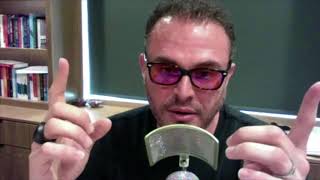
YouTube interview (Make More Marbles podcast) in which Alex Charfen and host Brad Hart explore the "entrepreneurial personality" and practical strategies to create and sustain momentum. Central claims: many entrepreneurs are mischaracterized by society (labels like ADHD etc.) yet are an evolutionarily distinct, physiologically sensitive, momentum-driven personality type; high "pressure and noise" disrupts flow and can lead to resistance or full constraint; lowering pressure/noise and treating oneself like an athlete (hydration, sleep, movement, routines) plus building teams and asking for transparent support create momentum. The episode closes with promotional specifics: a new podcast on the entrepreneurial personality (launch stated in the interview) and a free downloadable book (freeMomentumBook.com).
Questions this video answers
21st of the month mentioned in the interview (spoken as 'On the 21st of July 2017' in the transcript).
freemomentumbook.com
Chapters
Hey there guys, it's Brad Hart. You are about to join in to the Make More Marvels podcast.
What you're about to see is going to help you live the life that you want to live.
I've taken this video right here to show you.
This is how I want to live my life. And you are free to help, free to live yours the way that you want to live it.
Hope you enjoy the podcast. It's going to be a treat for you. Welcome to Make More Marbles. My name is Brad Hart. Today I am thrilled to be joined.
Oh man. Brad. I'm trying to share the live stream and now it started talking.
I'm thrilled to be here with Alex Charfen. Alex is a speaker, an author, a very well known entrepreneur, very successful man in more ways than five. And I'm just thrilled to have you on the, on the show, man. Thank you so much for being here.
I'm excited to be here. This should be fun.
Absolutely. So, all right, let's just kick it right off. If people have never heard of you before, what are the things that they should know about you? Just from, you know, from the get, what do you care about, who are you, where are you from? That kind of stuff.
I think entrepreneurs are the most important people in the world. I believe that we are the only source of positive human evolution and we always will be. I think we're the most mislabeled and misunderstood personality type that there is. And I don't think that we are singularly unique, isolated or alone like we think we are. I think we're far more important than we understand we are. And my mission in the world is to help entrepreneurs see past the deficit based evaluation that society enforces on us and see their real strengths and ability to run multimillion dollar organizations, build teams and change the world.
I love that. And we're very much aligned in that regard. Like I came from a background of finance and real estate, very zero sum games, very competitive and I really want to help people collaborate and make more. So that's awesome. Thank you, Alex. And I remember my first time ever hearing your name or seeing you spe was actually Funnel Hacking Live. I know you've been friends with Russell and them a long time and I've known Dylan a long time and I always love supporting that community. And the one thing that you said in that speech actually really hit me right between the eyes because, you know, I think we all have this kind of different upbringing, right? We have maybe a lot of pain, we're growing up but you said something.
Pressure and noise.
Yeah, pressure and noise.
I was exactly about to say that. Oh, sorry, man.
He totally nailed it. Means that we're in sync.
That's perfect.
But yeah, the pressure and noise thing was just like, wow, he really gets it. Like, it really is like you're just going through the world and there's something there that's wrong, and you just can't figure out what it is. And as long as you're in your head, it gets worse and worse and worse. But when you go into your heart and your spirit, where your capacity is, then you begin to expand. And you can really start to make it not just about you, but about your mission, about a greater number of people. And that's really the only true way to create value and wealth in this world. You know, if you. If you want to help a. If you want to make a billion dollars, you got to go help a billion people. At least a dollar, right?
Yeah. Yeah. I mean, I think, you know, I look at it much more, you know, I look at it in a very realistic way, Brad, because I've worked with some of the most successful people in the world, you know, and I still do. And when you look at how we're evaluated in society, you know, we are those who are most likely to be labeled, to be told that there's something wrong with us, to be isolated, to be separated from the crowd and the. Is. When you look at who we are, I think entrepreneurs are far more alike than we are different. And once we figure that out, things change for us. When I talked about pressure and noise, when you look at entrepreneurs, when there's high pressure and noise in our lives, just that can cause everything that makes us successful to cause us to show deficit and to become symptomatic. And when we have low pressure and noise, those same attributes, those same qualities can help us change the world. And so understanding who we are and understanding why in the world systems we experience so much pressure and noise helps us get along here. Because the fact is, when you look at the entrepreneurial personality type, that kid, that adult, that person who's always been driven to move forward, to go over the next mountain, you know, to answer the questions, to ask the questions, to envision a better future than demand it become real, is not the kid, the person, the adult that society really supports, because the vast majority of the world clings to average or strives for average and clings to the status quo. They want things to remain the same. They want it to be like it always has been. We're just fundamentally different than the rest of the world. That's why we experience so much internal and external conflict.
And we've accepted the very basic premise that the only thing that's constant is change. Right. If you're expecting things to stay the same, that's an unrealistic expectation. And, you know, you can argue with reality all you want, provided you're willing to be wrong 100% of the time. So I really appreciate you giving people the voice and really helping them to understand that they're not broken or wrong. In fact, they're more in flow with life and creation than anybody.
Well, I mean, here's how I look at it, Brad. When you look at the entrepreneurial personality type, I want everyone to just take a step back and self qualify and see if you're one of us. Because if you're listening to a podcast like this, I'm just going to tell you, by the very fact that you're listening, I can make a prediction that you either are or you care about someone who is and you're trying to figure them out. Yeah, probably the first. And so there's really. There's four types of people in the world, and they're clear separations. The first type of person, if you look at the four, and it's the biggest population, is the type of person who likes to take care of other people. And you know, a lot of entrepreneurial personality types immediately say, oh, well, I'm one of those people. Well, here's the fact is, you're really not. Because the people who like to take care of other people like to do the physical labor of taking care. They like to actually change the bedpan. Brad, do you like to change bedpans?
I used to do it, actually. I was an EMT for a couple of years. So I did it. It was fine, but it wasn't something that really scaled. So I had to kind of take a step back and realize, hey, I could do this. Yes. And it's a great service to humanity, but it's a great service to one person at one time and it doesn't scale. So if I want to help more people, I have to step back and think of it differently. But yeah.
So you wanted to do more.
Absolutely.
And so. But you know what, Brad? There's people who do that, and there's nothing wrong with this. There's people who do that who don't want to go past that. They're in that. But, you know, you started there and then quickly wanted to continue. So, you know you made your pass through it. But the fact is there's people who just want to stay there. And our evolutionary tribe needed that population to survive. The second type of human being, the second type of person, I call them the communicators. Our evolutionary tribe needed somebody to carry on oral tradition. Because the fact is, people like you and I, we don't really like small talk. We don't talk about stuff that doesn't have an outcome. We're not going to say things like, hey, watch out, there's a woolly mammoth over there. Don't fall over that cliff. Hey, the weather's coming. But we do need the person who says all that stuff. And so those communicators. That is an important evolutionary part of the tribe. Oral traditions critical today. We know who those people are. I mean, they can talk about anything. They literally say things like, hey, let's talk about the weather. Like, holy, I can't conversation, you know, like, you gotta be kidding me, man. You go outside and it's the weather. Who gives a. Like, come on. Unless, like, I need to know to wear a jacket. I don't care. And so, you know, but we needed those people. Now, the third type of person. And if we're gonna have conflict, here's where we find it. We find it with the organizers and the memorizers. And now this is that part of our tribe, of the human tribe, that is not part of our sub population, not part of our smaller tribe, because the organizers and memorizers, they're the ones that love fine print. They're the ones who want more rules. They love regulations. They want. You know, they live in that stuff. They live for that stuff, and they really want to keep things the same. And when you look at that population, we will conflict with them because what we're doing is challenging the status quo, challenging the fine print. We look at rules as something that's just meant to be broken where there's probably an opportunity. But did our evolutionary tribe need the organizers and memorizers? Absolutely. We needed people to figure out the seasons and figure out what happened and keep time and actually have food there. So now if we look at our evolutionary tribe, we have the people that take care of people. We have the people who are communicating. We have the people who organize, who keep things going, who will put some systems in place. And now what are we missing? We're missing. Well, the people who kill shit.
Oh, okay. We kill it and bring it back for us.
Well, the hunters.
Yeah.
You know, Brad, and here's the fact. When you look at the personality of an entrepreneur, we are hardwired different than the rest of the world. We are evolutionary hunters, men and women. And when you look at the subpopulation of entrepreneurs, highly sensitive and have unique perception and innate motivation. And we're driven to move forward and we have to have an outcome. And as we approach the finish line for any goal, it loses importance to us because we are hardwired to keep the tribe alive and go back on the hunt. The kill doesn't matter as much as the next hunt. And that's how we've always been. And when you look at us as evolutionary hunters, here's what you realize. Those highly sensitive kids who can't pay attention, who are squirming in their seats, who have a fraction of the awareness and the understanding and the comprehension that you and I do, are in a situation right now that you and I probably could not survive. They're being told that they have learning disorders. I would present the school has a teaching disorder, because everything that kid is doing is absolutely natural. And for me, I don't look at just entrepreneurs as entrepreneurs. I look at the entrepreneurial personality type as the human being who gets up every day and is driven to make something new. And if you look at that personality type, here's what the fact is about people like us. Every one of us, including me, has been convinced that we are isolated, alone, a party of one, that there's no one else like us. I mean, I remember when I was a kid, the teacher flippantly said something in like first or second grade about the pyramids, like a theory being that they were created by aliens. And it struck me that that could have been where I came from because I was so different than the other kids.
Wow.
And when you look at throughout history, the greatest people who've done anything, who matter to be remembered. When I was a kid, I didn't have a lot of friends. I didn't do a lot of social things. I read a lot, and I obsessed over success. And I read self help books. And by about book number 10, they start conflicting each other. So I just started reading about successful people. And I read hundreds of biographies. And at the beginning, you read enough biographies, autobiographies, personal histories, they look different. But when you read enough about entrepreneurs, about people who accomplish, about people who change the world, the artists, the playwrights, the screenwriters, the actors, the actresses, the scriptwriters, the cameramen, the people who are driven to put themselves out there and be vulnerable for an outcome are just completely hardwired different. And we all know that no matter what, we can't turn it off. And I would present to you that that set of characteristics that today is labeled everything from ADD to ADHD to Asperger's, autistic, bipolar, manic depressed, and all kinds of other complete bullshit, is the exact description of every great person in history who changed the world. And today we have this ridiculous equation that says that anyone who doesn't learn like everyone else, act like everyone else, read like everyone else, and grow up like everyone else is broken and should be medicated and diagnosed and, like, pounded into submission. And what history has taught us is that exact description doesn't look like everyone else, doesn't read like everyone else, talk like everyone else, sound like everyone else, is brilliance. And there is a socioeconomic condition that has caused us to get that completely confused. Because today, literally, the human condition, being an individual who wants to improve conditions for everyone, you're going to get diagnosed and pushed down more than you ever have in history.
So what's the way out, Alex? What are people who want to really create something for themselves? It's different, you know, not going the hard path, because it's easy to say, oh, you got to just grind it out. Right. Everyone wants to talk about hustle, and there's plenty of influencers.
Yeah, that's just good.
How do we find our flow? Like, I've really studied and gone deep on one tool that I think is really great. Wealth dynamics. I don't know if you're familiar with Roger James Hamilton's work, and I kind of take some of the language and shift it around to make it really simple. It's like, are you good at ideas, people, timing, or numbers? Easy. I do consults all the time, and I help people find their flow and then build teams around them that allow them to accomplish more, because solopreneurs are setting themselves up for failure. You think Steve Jobs is a solopreneur? You know, like, come on. Like, hundreds of thousands of people went into creating that vision. Sure. He was the leader.
The myth. It's a. The happy solopreneur that makes a lot of money is a myth.
Yeah, absolutely.
It's a myth perpetuated by the people who teach people how to be solopreneurs.
Yes, 1000%.
And nothing of.
Nothing. Yeah. Nothing of great merit was ever accomplished alone. So how do you kind of like, I want to create a quiz that's kind of like a match between, like, all the things you've done with evolution, all the things you've done with that piece, and you've really gone deep, and you really have a great narrative and a way to. To bring the gravity of it home with some of the things that Roger's talking about, some of the things we're talking about, like how do we really create a tool that gives people everything they need, the mentors, the books to read, the exact advice that's going to work for them. Because I've had mentors, and I'm sure you have to. Where they give you great advice that works for them because it's in their flow, but it's not in yours. And I don't that every entrepreneur is cut out of the same exact cloth. But we're part of the same type. Sure. But we all have different skills and different flows, and how can we all work together and better. Better serve each other to win. Right. Because this competition crap has to kind of take a back seat to the fact that we need to collaborate for a better future. That's how I feel. Yeah.
I mean, you know, there's so many different ways to answer that question, like, how do you get into flow? How do you get into this place where you. You can continually move forward, you know, and how do you get the right information? Well, here's. Here's the problem, Brad, is that most people who are out there coaching to be successful really haven't had the success they're coaching.
Yes.
A lot of really confusing information in the market.
Thousand percent.
And the fact is that the vast majority are people who are teaching them, like, hey, here's how I did this thing. And there's no framework, there's no structure to it. There's no organization to it. And that's dangerous. That's knowledge without basis. That's knowledge without foundation. It's dangerous. And today there's this marketing message that gets drummed into us that it's easy and it's fast, and you can do it in 90 days and you can make $100,000 or shit. Like some people say you can make a million dollars. You know, I can't tell you how often I get together with an entrepreneur today who somewhere, like, I'm at an event. I'm speaking funnel hacking. There was a million of these. It's funny, I said a million. But funnel hacking. There was probably 20 entrepreneurs that I said, well, hey, you know, how long have you been in business? And they answered an answer under a year. I said, how much have you done? And they answered, under $100,000. And then I said, what's your Goal for the year, and they said a million dollars. No, one said under a million, and one said 10 million. What entrepreneurs don't realize is that here's what we're doing with ourselves these days is that we're here and we're setting a goal in a place where you can't strategically build a connection to it, and it doesn't make sense. And we're being encouraged to do things in just a weird way. And here's why my stuff, like, here's why how I encourage entrepreneurs is completely different than the rest of the world. Because, Brad, my first position, I didn't grow up in Internet marketing. I'm not an online coach or anything like that. I ran businesses when I was a kid. I failed a ton. But I became a consultant at 21, and I owned a consultancy and worked with some of the top companies in the world. Fuji, Sandisk, Microsoft, Bose, Belkin, Monster Cable. I mean, I worked directly with Noel Lee, who at the time, his company, Monster Cable, was rumored to be worth well over a billion dollars with no outside investment. It blew me away to work up close and to see how people like us actually worked. Here's what you find, is that. The simpler you can make something, the faster we go. And we don't need all kinds of crazy. You know, tell me all the books, tell me all the everything all at once. Here's what we really need is to get into momentum. Because here's what I know about every entrepreneur is when we're in momentum. Brad, you know what it feels like, right? What does it feel like to be in momentum?
It feels like I have a list of things to do, and here they are. And it's staring me right in the face, out of sight, out of mind. So I put it right there on paper, and I just go through those things and knock them out.
And when things are going your way, how does that feel?
It feels great. You're ringing the cash register, clients are happy. You get the testimonials rolling in. Everything's working. You're building businesses, you're creating collaborations. It's a beautiful flowing feeling. It feels like you're doing exactly the thing you're put here to do.
Yeah. It feels like you're alive. So I go all around the country and ask people, what does that feel like? And Brad, they tell me things like ecstasy. Feels like you're high. It feels like, you know, you can conquer the world, you can do anything. And it feels. It feels like you're alive. So for us, we get convoluted we get out of where we really should be, we stop thinking about momentum when we start thinking about other stuff, like, oh, maybe I want to be happy or I want to be this or I want to be that. And the fact is, if we're in momentum, everything's going our way. People like us don't really understand that whole happy, sad thing. I mean, really frustrated, pissed off, tipped off, confused, angry, and just plain not going to talk to you. What's the difference? For people like us, it's all the same. It's just a bunch of noise about how you feel. Tell me what's really going on.
Yeah.
And the dumbest question you can ask someone like us is, how do you feel? Because here's what I have to do. I have to translate what's going on in the real world to a feeling you might interpret as how I feel right now, rather than just saying, here's what's going on. I don't like what's happening, and here's why. I didn't want this to happen. Instead, I wanted this to happen. Somebody wants me to instead say, I'm fucking irritated and I don't care. Or frustrated or confused or pissed off or ticked off. Because by the way, I could be feeling any one of them. And so for us, being in momentum, that's what really matters. We are hardwired differently. We need to be on the hunt. So the second state for us, like, here's the challenge. If we get out of momentum, we go into this place called facing resistance. Now, you can spend some time there, but it's hard. And it's not a place we like because it's where circumstances, where people, where places, where things, where the operational drag you've probably imposed on yourself is slowing you down. And, you know, it might get to the place where you are the only one who sees the light at the end of the tunnel, or if anybody else sees it, they're saying, hey, it's a train, right? And so for us, as long as we can see the light at the end of the tunnel, even if we don't have the resources, the times, the skills, the abilities, that is when we will create momentum. I was on a zoom call just like this a couple weeks ago with an amazing human being. Blew me away. His name's John Morrow. I met him here in Austin in person, and he's got a pretty dynamic team. I gave him my information, and he and I have been talking just because I've learned so much from him and I'm helping him with Some of the thought processes around doing exactly what we're talking about, getting into momentum and building the team. Here's what's so amazing about John Morrow, is that all he can move is right here. The rest of his entire body is paralyzed and he has to do physical therapy every day. And he navigates the entire world through a straw. He sends every text through a straw. He answers his phone, he drives his cart or his chair. He does everything through a straw. We're on a zoom meeting. He set it up through a straw. And he said something amazing on our call. He said, you know, Alex, I've always felt different than the rest of the world. And it had nothing to do with the chair. That's that profound understanding that we're hardwired different, that we don't feel like everybody else. And the third state, now this is the one that we have to be careful about, Brad, the third state for us, you know, you're either in momentum, you're facing resistance, where you can see the light at the end of the tunnel, or you are in full constraint. And that's that place where we can't see the light at the end of the tunnel. We don't know the next steps. We get overwhelmed in the moment too much is going on. We allow pressure and noise to go up too high and it makes it so we can't see that future that drives us, that compels us, that makes us want to move forward. And here's what can happen. And I go into detail here because I want everyone who this has ever happened to to understand. You don't need a pill. I forgot we were live on Facebook. My kids might see this. You don't need a pill to stop this. You need to understand who you are. Because pressure and noise is cumulative. When we allow it to increase in our lives, when we don't treat our bodies like professional athletes, when we don't do what we should be doing, when we don't get up and do a morning walk, when we don't stay, when we don't get the right nutrients. Here's what happens that affects everything else in our lives. And if pressure and noise gets high enough, we get into full constraint. You can go from having a good day to having a panic attack. It happened to a client of mine yesterday and he's growing a multimillion dollar business. He had his first six figure month. He's going to have probably. I mean, I wouldn't be shocked if he had his first seven figure month in the next 12 to 18 months, which doesn't happen. It just doesn't happen. And when you have an infrastructure in an organization that's growing that fast, and I've been there, Brad. And what'll happen is you just hit a day where three or four people have complained and nothing's going your way and you get a bad phone call and a bad text message and a bad email all in a row and you're walking out to your car and suddenly it feels like life and death and the woolly mammoth is right behind you and your heart's beating out of your chest and you don't really know what's going on. And any entrepreneur who hasn't been there yet just hasn't been in the game that long or tried hard enough because it happens to all of us. We are evolutionary hunters. And if we are on the hunt and we lose perspective, our bodies hit a panic button and it pushes us all the way into fight or flight. And evolutionarily we would have gone and killed something. And you know and I know that then that happens to you. Half the time you do want to kill something or you feel like you're dying. So today people like us, if you want to be in the zone, be focused, go forward, be in flow. The first thing you must focus on is to lower the pressure and the noise in your life. Start taking better care of yourself. Like this is the path to success. Start hydrating, hyper hydrating on a daily basis. Drink more water than you ever thought you could go to to getthirstynow.com it's a program I put out for free for entrepreneurs just so you'll drink more water. Because here's what I know. You follow my water program. You're going to buy business growth programs from me because within 10 days you'll drink more water than you thought possible. And if I can do that, I can help you grow a multimillion dollar company. And the reason is it's a direct correlation in my life. Hydrated entrepreneurs, hyper successful entrepreneurs. There's a reason why Bill Gates has 16 water filters in his house and he travels with one. No kidding. We didn't set that up.
We didn't. We were just joking about it before. I'm like, oh you're wearing swannies. Oh you got two Nalgees. Oh you got three bottles.
Well, and the reason is I'm obsessive about pressure and noise. I spent an hour in an infrared sauna today. I was out and I did a walk by myself without noise on a multi plane surface. We call it the primal walk. You know, I'm very. I have a morning routine that I follow. I meditated before I've been on this podcast with you because here's what I know about flow and about being in that place is that you're fully present. And to get in that fully present and magical place where we are literally creating the future and we can dip out in that direction, come back and make it happen in real time, that is a low pressure and noise state. And the more that we help ourselves get there, and this is how we stay in momentum. And Brad, anyone listening can check this on any period of momentum in their lives. They always have three things. So, Brad, think of a period of momentum where you in your life where probably early on an early one's usually a good one where something happened and, you know, you just went into that period of momentum where you make massive forward gains. For me, when I was 13, I met this teacher, Rick Lara. He was a speech and debate coach. And up to then I had a really hard time in school, but he was like, I was. He was like us. And he was just like the most dynamic teacher. And I got into this massive period of momentum in his class. And I remember it was like from 13 to 17. Do you have one of those periods?
Oh, absolutely. I'm experiencing the most growth I've ever experienced in my life right now, actually. And it's all due to really being ruthless about my mornings and then getting into that flow as early as possible. I'm up at 6. I don't touch work until 9. I'm writing, I'm running, I'm journaling, I'm ordering 15 bottles at a time from Carlsbad, getting somebody to go pick it up like it's. I'm dialed in, man. I get it. And the only reason I can do it is because I hyper focus on lowering the pressure and the noise, as you say, and giving my body what it needs and making sure I'm ruthless with my sleep and my habits. And if you're not there at least while you're doing the thing, right? Because when I'm off, and that's another story, I just came back from Greece and Italy and I ran every day and did all my things there so I didn't get sick. But if you're not hyper dialed in, you don't have that routine that gets you in that place. And thank you for showing up and doing the meditation and being this present, by the way. You're setting yourself up to fail. You're not bringing all of you to the situation at hand.
Well, and here's the fact, you know, every one of us is a physiologically sensitive momentum based being. That's my definition of the entrepreneurial personality type. We are a physiologically sensitive momentum based being. We feel more, we are more physiological than most, we move around more than most, we have a hard time sitting still, we're more kinetic than most. Wouldn't you agree?
Stand up desk, baby. Same before Facebook lives.
My first stand up desk I got when I was 16 because it hurt me to sit down. I had ashgood slaughter. So every time I had to sit in a low chair, my knees hurt. So I've been in a stand up desk most of my life and it's because I'm physiologically sensitive and highly adaptable. Wouldn't you agree?
Yeah.
And so when you look at people like us, we are so physiologically sensitive that if we don't lower physiological pressure and noise, it will get to us. And if you get up in the morning and here is what stay in momentum. To stay in those periods of momentum, you need three things. You need a clear outcome. You know what you're on the hunt for. The second thing is you have to have a clear scoreboard. Like something is giving you perspective because people like us, every period of momentum has that scoreboard. And the third thing, clear understanding of what you're going to do and how you're going to make a contribution. You look at any period of your life where you had momentum, there was a clear outcome. It was probably very humble. Like for me, when I got into Rick Lahr's speech class, it was survive Rick Lahr's speech class. You know, what happened was over the course of four years, literally we had a scoreboard in that class. So I had a clear perspective. And when I figured out who he was and how he was, I decided I wanted to win everything. So I had a clear understanding whether I was doing it or on. And the third part was, you know, I knew what I had to do to show up in that class and I was getting contributed to from him. I was coaching other students. It was like this incredible period of momentum because here's what we need. We are tribal hunters. We need a clear outcome. And we. You said something earlier about being alone. You know, I share with entrepreneurs that we learn nothing alone and very little standing still. So build a team or join a team and start going forward fast. Because when we sit in loops of research or analysis or looking at the same thing over and over again, we go into these loops and spirals where we go nowhere. It tightens up our bodies, it tightens up who we are. It doesn't allow us to create momentum for us. Here's what I know about every one of us. We are capable of the same earning potential and affluence potential of a professional athlete. So if you aren't treating yourself like one, I ask why. And every entrepreneur I've ever met, if I say, hey, do you think you'll ever earn a million dollars? They say something like, oh, I'll earn a million dollars in a year or I'll earn a million dollars in a month. Again, 3% of companies ever do, but we have the confidence that we do. Well, that makes you a million dollar racehorse. If I had a million dollar racehorse, you would know it was taken care of if you looked at it.
That's true, that's true. And you know, you spend time with entrepreneurs and they're never neglecting their body and what it needs. Never once. They're never neglecting their primary relationships either. They're making sure people around them are always the people that are going to force them to grow and contribute at a higher level. Right. Because growth without contribution is the motto of cancer. Right?
We're all. Well, when you look at radically successful entrepreneurs, you can say yes to that. But I laughed a little bit because I think it's the opposite, Brad. I think most entrepreneurs today are neglecting just about everything except for the hustle, like the vast majority. I think successful entrepreneurs like you get around the ones who are really 97%.
Because you said 3% ever hit that million dollar a month. And I had a million dollar a month by the way.
No, no. 3% hit a million a year. And you can get to a million a year and kill yourself.
Oh yeah. I was more disconnected, more burned out, working 18 hour days, completely neglecting my health and primary relationships. I knew something had to give. And everybody's like, what are you doing? You're killing it. Make us more money. I'm like, there's gotta be a point to this. I can't just shift around sand all my life and have more money than I started out with. What the hell's the point of that? And that was what changed for me, you know, it was like that. Contribution, focus.
Well, and I think when you look at entrepreneurs, we are the first people to neglect our bodies, the first people to neglect our relationships, the first people to neglect ourselves. And then what happens is we will focus everything on our outcome, on the hunt, on that destination. Everything on that place where we want to be. And if we don't also focus on the rest, that's where it really damages us. And I think here's the unfortunate thing, is the vast majority of entrepreneurs today aren't doing those things. And when you look at, like, most of the messaging to people like us, when you look at most of the noise directed at entrepreneurs, a significant percentage of that noise is hustle harder. In one way or another. It's push yourself harder, stay up later, get up earlier, do more with less, take stimulants, take smart drugs, just push yourself to a breaking point all of the time. And that is the only way that success is ever created. And the fact is that that is the biggest load of bullshit. Brad, I've got friends that are billionaires that do two week, no talking yoga retreats. I've got a friend who literally goes to a retreat where you don't talk for two weeks to lower pressure and noise. And so you look at the average. And my friends that are billionaires, they pay $150,000 to fly across the country on a private jet because going through an airport raises noise so much for them that they know that they don't calm down for two days. So it makes sense to have the jet and to fly it. And when you look at the average entrepreneur today, I would propose that the average entrepreneur appears to be in a competition to see how much noise and how much pressure they can absorb. Because you watch most people's public presentation of themselves and it's, hey, I'm killing it. I'm working harder, I'm doing more hours, I'm basically burying myself. And for some reason, we've assigned this badge of glory to the hustle. And the fact is that when you get above a million dollars in income, not in gross revenue, but in income, and you get into a room of people who have net worth that is in the multiple seven or above eight figures, and the conversation almost universally and immediately turns to health, relationships, taking care of yourself and showing up for your business and relationships is your family and your kids. And I've done entire classes and retreats where everybody in the room had multiple millions in net worth. And the conversation hardly is about business because they've realized the better that they can make everything else, the better they show up in the business.
Absolutely. The better it gets, the better it can get. So, okay. I mean, it's really easy for a couple of relatively successful entrepreneurs to come and talk on a podcast about how, you know, what it takes to be Successful. But what about the people listening out there that are kind of just getting started or maybe they have a job or maybe they're part of a team or entrepreneurs or wherever they're at and they really want something different. They want to create something that's never been done before. What would be your number one piece of advice for them right now? Getting started.
So if somebody's getting started, I always encourage people to not try and be the first and not try and do something that's never done before. But try and find something you can do.
Great advice.
And the easiest way to find something you can do is to find the population you care about. What's the movement that you actually want to lead? Here's the fact. Figure out who matters enough to you that you'll do anything for them. Because as an entrepreneur, that's what is required. Because you will be vulnerable in a way that you've never been before. You're going to have to ask for help more than you ever have, which we need more help than the average person to be successful. But any request for help makes us feel vulnerable and exposed. You're going to have to get used to living in vulnerability and exposure. You're going to have to have uncomfortable decisions, uncomfortable conversations. You're going to have friends who worked for you that suddenly unfriend you on Facebook when they leave the company. You're going to realize that you've stepped into an entirely different world. What will get you through that and what will allow you to become a successful entrepreneur is falling in love with a population of that you're going to serve. And where I've always struggled to help entrepreneurs be successful is where they want to go do a thing. They want to go, you know, produce a widget or something and it isn't meant for someone. I don't know how to connect to that. But whether it's retail or whether it's an information products business, or whether it's a construction business, I mean, I've worked with all kinds and work today with all kinds of businesses. As long as the entrepreneur is in love with that population and understands them, that is what drives multimillion and multi billion dollar businesses. I think of my friend Dave lineager who runs ReMax and has a 95,000 person team globally, that's pretty badass. And when you look at Dave, he, he is one of those leaders that is creating momentum for other people. He has created a tremendous amount of wealth for people. He's changed people's lives and he's obsessed with staying in the moment, with lowering noise, with being present. And he talks about it as well. I remember here's a billionaire who pulled up in front of his office one day in his Cayenne. He jumped out because somebody else parks his car and he had Acres of diamonds playing. So he's listening to like early self help stuff on the way to work just to stay mentally focused and lower noise.
I like that. Find your peace and power will come and the people that you want to serve ultimately will give you the clarity.
Oh, I was going to say something about Dave with that. So Dave, Dave was. And sorry, I forgot. I just, I lost my train of thought. But Dave started rematching and he started REMAX at a time where women really weren't present in the real estate industry and neither were blacks. And he started ReMax and had just come back from the Vietnam War. And he said everybody's included. And they focused on recruiting minorities and women. And today REMAX is disproportionately run by minorities and women. It's amazing how like how much different that organization is. And really today when you look at the percentage of women involved in real estate, it's nearly half and in some areas it's over half. And when Dave started in real estate, it was nearly 100% licensed men. So he drove the growth of ReMax, a multi billion dollar organization with 95,000 people around this tribe of people who weren't getting an opportunity to start a business, weren't getting an opportunity to earn their own money, weren't getting an opportunity to go out and live the American dream. So he created ReMax, which was a structure for them to do exact that like that business was born out of serving that tribe.
That's beautiful. Feed a hungry crowd, as Robert Curry.
Would say, no question, and fall in love with one before you start. Because if you don't, you won't keep going.
Absolutely, absolutely. So it's really a capacity to love that drives your entrepreneurship.
I think it's finding out who they are, why you care about them and obsessing about them more than you do anything else and understanding them at a level where you can describe them to themselves better than anyone else can. I wish I understood earlier in my career that my goal was to educate entrepreneurs. Maybe I would have done things differently, but I've had an extraordinary career. I've obsessed over entrepreneurs my whole life. There was a point really around this condition, around this personality type. There was a point where in my office this, I had bought eight and a half by 11 pictures of people to figure something out. And I was putting them up and it was like Oprah Winfrey and Donald Trump and Arnold schwarzenegger. This was 10 years ago or maybe. Yeah, about 10 years ago. And I can't even remember Einstein and Gandhi and Martin Luther King and Rosa Parks and all these amazing people in history who had Socrates and Aristotle and Pythagoras, and they all had this similar thing to me. And it called to me, and I was trying to figure it out. And it's been years. A few years ago, I sat down to write a book called Constructive Company, about how to run a business where you actually grow the company, grow the people, and you make a lot of money. I've helped a lot of organizations make a tremendous amount of money and scale and grow without killing the entrepreneur that that's involved. And I was writing that book and I got to the place where you're writing about your audience, and the 200 word section turned into 25,000 words in a weekend. I've never written that much because I couldn't just describe entrepreneur. I had to describe this whole condition, who we are, how we are. And it was crazy. It was as close to a religious experience as I've read about. And it felt like I was downloading it as much as I was writing it. But when you look at that construct, that framework, I've shared it with hundreds of thousands of entrepreneurs now, and the feedback I get most often is, hey, that's just truth. That's who we are. And sometimes people ask, hey, it kind of sounds sometimes like you're saying it's us against them. I want to make sure that I make it clear. It's not that it's us against everyone else, but there are factions out there that are doing everything they can to eliminate us. You look at those groups that I talked about, the groups that want to take care of other people, the organizers and the memorizers, the communicators, like, they want to shut us up. They don't want the world to change. They want to legislate out of existence, diagnose and prescribe us out of existence. The fact is, is you look at something like obsessive compulsive disorder. I've been diagnosed with add, adhd, bipolar, depression, all kinds of other things. And it's just because of how I showed up on any given day, because you're dialed in now, no doubt. I'm also. I'm dyslexic, and I've written over 4 million words that have been Published. So try and figure that out.
That's a beautiful thing.
But that's just how we are. We're highly adapted. And if you have any condition or any diagnosis or anything that you're dealing with, understand that there's someone just like us who's been there, who's overcome it, and who's gone on to change the world, up to and including John Morrow, who can't move anything but his face, runs a multimillion dollar company and has a team of seven people. So every one of us can go out there and do what we want to do. It's who we are. It's our birthright. It's not just an idea you have. It's your destiny. And for people like us, lowering pressure and noise is the beginning. And Brad, I have this equation that I've observed in the lives of famous people. It's four steps. The first one we've talked about a lot. Every person who's changed the world throughout history has lowered pressure and noise for themselves. And the stories are legendary. You can see it in how they are. Why would Einstein and Jobs spend their whole lives wearing the exact same thing? Once they figured out that that was noisy every morning to pick clothes, they just stopped. We start caring about much fewer things in a much bigger way. No kidding, man. I wear the same shit every single day. Suits cause inflammation. I have no interest. That's why at the end of the day, you have to loosen your collar. It's because literally all of that shit on your body causing constraining your lymphatic system, your circulatory system, your entire muscular skeletal system is causing inflammation in your body. Inflammation causes depression and psychosis and all kinds of other things. Shit, it could have been tight jeans when I was a kid. The second step, though, is you have to increase protection and support. You said it earlier, we don't do anything alone. So if you want to create momentum in your life, go forward, make the biggest change in the world, you can. You have to start transparently asking for help. And this is a hard one. It's hard for me. It's hard for all of us because none of us wants to admit we need help. It means that there's an imperfection. It means there's something wrong. It means that we're living up to that history we have of people telling us how jacked up we are. But the fact of the matter is, for every one of us who's been convinced that we should fake it until we make it, there's one of us who's realized that that just means lie and deny. And it's much easier when the person on stage finally stops talking to stop doing that crap. Fake it until you make it doesn't work. Transparently. Tell the people around you what you really need, what help you need, and you'll find it. Tell everyone who you really are. Any attempt to be anything other than yourself is only going to increase pressure and noise. So be real with people. You know, it's amazing how many times you look at a story of success and it started with an act of transparency, an act of telling the world what was really going on. And that's what counts in the world today. You know, that's us telling, really asking for protection and support. And if you do that, your skills, your abilities, they just get better. The fact is, I've never met an entrepreneur that says that they're accomplishing more than 5% of what they do with what they learned in school. How did that happen? You lowered pressure and noise, you found protection and support and your skills and abilities got better. We all know where we learn. I listened to Tony Robbins, I read thousands of books, thousands of books obsessed over successful people. When we talk about standing on the shoulders of giants, Jesus. Yeah, no doubt.
This is the best thing I've picked up in a long time. I just want to give you a real shout out to Russell because this is incredible. Thank you for this.
Yeah, no doubt about it earlier. It's a life changing book. It really is. And you know, you look at that and our skills and abilities increase when we go through this process. And the last part is, if you lower pressure and noise and you increase protection and support, your skills, abilities will improve, they'll grow, they'll become magical and you can go make your greatest contribution. And that's what all of us really want to do. And here's I want, I want anybody to get confused. I'm a capitalist. Like when people say, what political party are you? I say capitalist. And I'm not kidding. And I just wish there was a capitalist party. It doesn't exist because a capitalist system is near perfect. It's where we can take fiat currency and exchange contribution with each other. And in a capitalist system, capital flows to contribution. So I want you to go make as much money as you possibly can. Don't build a little business, this boutique solopreneur crap, don't let anybody lie to you. Build an empire. Build a fortress. Built it as big as you can because people like us are under attack. And the more successful you are, the more they'll leave you the fuck alone. So go out and blow it up. Because every one of us has the opportunity to create as big an organization as we want and to make the change that we want in the world. Because there is absolutely nothing wrong with you, and you are not alone.
You're a beautiful man, Alex. Thank you so much for that. Thanks, Brad. It was a wonderful moment, and it's just my greatest pleasure to bring leaders like you to more people and just share the message. Like, it changed me and it's changing everybody else in the world right now. We're literally changing the world with our thoughts and our words. So that's a beautiful thing. I want to just transition really quickly into something that I never tell about my guests beforehand on the show. It's called the Make More Marbles podcast. And Make More Marbles is really a community of entrepreneurs that exists to connect resources, opportunities, people, and systems together so that we can all make more instead of having to just grab for the marbles. So in what way can the community, myself or anybody else listening right now help you, Alex, Charfen, or anything that you're working on right now with a connection, a resource, an opportunity to pursue our system?
So here's what would be fantastic. We are putting out a podcast about the entrepreneurial personality type, and the expected launch date, if all the approvals go in the right direction, is the 21st of this month. And so for anybody who's watching this and anybody who's listening to this, go listen to the first episode of the entrepreneurial personality type podcast as soon as it comes out, and if you'd be willing, subscribe to it. I've shared this around the world. I've shared this framework with thousands of people, and we are finally ready to put it on a platform where anyone can access it, where entrepreneurs can understand themselves better and stop limiting behaviors and create momentum. And we are really committed to and excited about this podcast. So that would be the biggest thing, is we want to put it in new and noteworthy and hold it there as long as we can and then create as much traffic as we can to it. So we are actively looking for promotional partners. Anybody who'll help us get the word out, anybody who will get it to their list, anybody who will interview me. So if you know of a podcast or a show or anything that I should be on, then I would really appreciate that as well. So we're looking to do anything we can to get more exposure to entrepreneurs and point them at the podcast. And for anyone listening Join our list by downloading my book called the Entrepreneurial Personality Type. You can go to free momentumbook.com I love it.
Alex. Okay, so they can find you@freemomentumbook.com they can subscribe to that. On the 21st of July 2017, you got a podcast coming out called the Entrepreneurial Type Pod. Personality Type Podcast.
Yep.
You know, if you could check out the first episode, we'd be happy at make more Marvels to put it out to our audience. We had about 15 people that read our stuff every day so far. We'd like to blow that up very quickly and introduce them to more people like you. So that's going to be perfect. If you guys are listening at home, please do check out Alex's. I am blown away by how deep this guy, this man in front of me has gone in this particular very narrow niche and very much like me. And I really resonate with this. He came from a very cushy consulting with top companies, all of which we've been customers of Fuji and all the other ones. ReMax. And what were the other ones, by the way?
Oh, man. I worked with when I was a consultant, Fuji, SanDisk. We actually put SanDisk's first product into the market.
I'm a monster cable fan. I used to. That's my first business, Alex. I went and mowed lawns until I could buy a guitar effects pedal. Like that was the whole all I cared about when I was 12.
Yeah. Noel Lee is one of the most intense entrepreneurs I've ever worked with. Over time we ended up doing contracts with Canon, Microsoft, Bose. Logitech was one of my big clients. Targus was a huge client I did as part of that consultancy. I was 10 years live on Home Shopping Network. So I share with people that I think I've sold in every situation possible up to and including national television on Super Bowl Sunday. So it was a pretty intense ride. So I've worked Harrington Brothers then, right?
Tim and Kevin.
Oh, yeah, yeah, absolutely. In fact, well, Kevin and I were in Genius Network together too, at the same time. Time.
Awesome. Yeah. I'm sure there's a million connections, so by the way, if you haven't noticed, we haven't met until just now. Like I saw you speak and like, obviously we've been connected by some wonderful people. It made sense to jump on this podcast together at this time. But I really love to get to know you on a personal level at some point. And I'll be in Austin at the end of the month, so I'll reach out to you separately and I want to support you in every way I can to get this message out to more people. Because it's so frickin important for people to understand that there is a clear, non verbose, non crazy path that doesn't require any additional training just to get started on this game of entrepreneurship. Because entrepreneurship is going to save the world. Thank you, Alex.
Yeah, no, thank you, Brad.
My pleasure. All right, we're going to wrap it up here. Thanks so much for listening to the Make More Marbles podcast. For more tips, hacks and strategies to create an amazing, abundant life in your health, wealth and relationships, whatever that means to you, head on over to makemoremarbles.com check out our cool explainer video about what we're about and join our community of entrepreneurial game changers. We want to help you level up your life in every possible way. And don't forget to subscribe to us on itunes, Stitcher or Google Play wherever you listen to your podcast. And please do leave a review. Thank you so much and we'll see you on the next podcast.
More from Brad

The #1 Reason AI Isn’t Working for You (Yet) #AI #businessowner #founderenergy




What tasks would the best assistant ever be able to do for you? #BusinessSystems #BusinessOperations



Nobody expects you to use a harder way when there's a better way. #AI #businessowner

Which side of the table will you be on in 2026? #AI #Mastermind #BusinessOwner

