Training Our Greatest Thinkers to Thrive in a Changing World with Jared Nichols
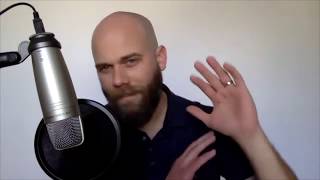
This content was created by Brad Hart. This content was uploaded by Brad Hart. This is a YouTube podcast episode titled "Training Our Greatest Thinkers to Thrive in a Changing World with Jared Nichols" (recorded April 12, 2018). It's an interview-style conversation on the Make More Marbles podcast hosted by Brad Hart with guest Jared Nichols. They discuss futurism and strategic foresight (teaching people to "think like futurists"), business model shifts (one-to-one to one-to-many), collaboration over competition, incentives and public policy, triple-bottom-line/for-benefit business trends, flow states and human potential, and critical thinking. Jared also describes his Foresight Academy (theforesightacademy.com / thenewfuturist.com) and offers practical advice about starting within, collaborating, and taking action to influence the future.
Chapters
Welcome to Make More Marbles. My name is Brad Hart and we're here to interview the game changers, the future makers, the co collaborators and creators who are here to collaborate with one another towards a better future for all of us. Enjoy the show. We've got a great guest coming up for you right now. Welcome to Make More Marbles. My name is Brad Hart and today I have Jared Nichols on the show. What's going on, Jared?
Oh, man. You know, just enjoying a beautiful day here in Charlotte.
So sunny day here in San Diego. I'm looking out of the ocean myself. It's a beautiful day. Charlotte, North Carolina is one of my favorite places. Asheville is great too. I was just out there last year. Super fun, great community, amazing people, super warm. It's got that southern hospitality vibe, but that hard charging northern energy, which I appreciate.
New York.
Garrett, tell us a little bit about your story so far and where you have been in your life and what's brought you to this place that you're at now.
Yeah, well, Brad, first of all, thanks for having me on the show. This is great. And I love your message, love what you're doing. I think it's incredibly important and we need more people doing this. So to give you a little bit of my story, my work, what I do in my profession is I teach people how to think like futurists. And the reason for that is because I honestly believe that we need more people like learning how to think this way so that we can create the kind of future that we can be proud of. Future that our kids and grandkids and their kids and grandkids will look back at us and say, hey, they weren't just thinking of themselves. They actually created something that the generations to come can actually build on. So that's a big part of my work. What really brought me to that was just wanting to make a bigger impact, wanting to contribute more. I spent 11 years as in the insurance industry, as an insurance broker. That went fine. I got bored though. And so about six, seven years ago, decided to make a transition and got into this fringe, this fringe element of strategic foresight and future studies. And it was a perfect match. So that's what I've been doing ever since. I love it.
And what was the catalyst you think for yourself growing up? Like, what was that turning point where you made that choice of, hey, I'm in insurance, this is cool, life's going okay. But what was calling deeper inside you? What was that moment of clarity that said, oh man, you know, there's A bigger game to play here.
Yeah, that's a great question. You know, I think. I think it's just. I can't really put my finger on one specific moment. I just remember a certain period of time. It was around 2008 or so, and I have one of those moments where I stopped and I couldn't believe that I was still in the insurance business, because again, it wasn't. Nobody wakes up. I've never met anybody that wakes up and says, oh, man, I'm so excited about selling insurance.
Don't actually count that short. Because I met Mike Isom and Garrett Gunderson. I read their book what Would the Rockefellers Do? Which I recommend everybody. And I got excited. Like, seriously, I had a semi for insurance. I was like, super stoked because I was a hedge fund manager. I was all about taking risk and doing all these options plays. And now we're in the crypto space. It's even riskier. It's like, for example, dynamite. Most people have mastered bottle rockets. The insurance piece gives me a lot of certainty, right. I know that my family will be covered if something happens to me. I know that I put a certain amount of money away and I'll be able to borrow against it with interest over time. These are the habits of the wealthiest people on the planet. Oh, yeah, It's a really powerful thing. And honestly, I wish we could make it sexier. That's one of the things I actually want to tackle, and I'll talk about that at some other time. But how do you make solid sound investing that seems boring on the surface, really sexy. So people actually do it and win more.
Yeah, you know, I think. And I'll clarify that, you know, I don't know anybody that even gets up and just says, oh, I love this policy, or I love this company that I'm selling for. They love solving problems. That's what you loved about being a hedge fund manager, right? I love being able to solve problems, provide solutions, you know, fight on behalf of my clients and things like that. But you're right, it does need to be made bit more sexy, more appealing, because it's been, I don't know, it still follows that old model of, you know, like the law firms, you look at most insurance sites and you look at insurance brochures and everything else, and they're using language that just makes. I think it used to just make us feel like we're important. But yeah, it really just needs to be people talking to people. That's the big. I think that's a Big problem that we see in business in general. The way that we write web copy, the way that we write articles, all of it's talking to this non human thing. It's, we're talking to like corporations when really we need to be talking more to people and actually just getting down and addressing the real, you know, issues that people are facing and having the.
Conversation they're already having inside their heads. Right. That's wrecked response copywriting world that I've studied under. I'm not the best at it certainly, but I can see the power of being able to connect with the individual. Yeah. How much more you can do for them by really speaking to what they're experiencing.
Yeah.
Create an emotional move. The logical pieces will fall into place.
Absolutely. And the key to that of course is just being genuine. I mean if you have a genuine heart, to serve people, to help people, to help them create a better future, to have a better life.
Well, it's better strategy.
Well, absolutely.
I'm a pragmatist. I'm saying make more until there's no frickin scarcity in fact. Right. We already have food, we already have enough energy, especially with solar and all the batteries and great tech.
Yeah.
Now the gigafactory is about to come online. The whole world's changing. Shelter, education, these tools are all available to us in abundance.
That's right.
New systems that need to catch up because we're still linear local beings thinking of only ourselves and first order consequences. But as Ray Dalio says, you really, to be successful, you start thinking about third, fourth, fifth order level consequences. So if people are there yet. Right. Let's assume that the people listening to this show, the marble makers out there, they're already on board with this idea. But they want to take that next step. They want to create something in the future that will serve humanity at a higher level, a better system that serves more people or promote such a system if it's not in their particular genius or skill set to do so. Just get it out there, get that word out. What are their best steps or what is your particular philosophy as far as action taking in this space?
Well, my particular philosophy on this is we have to change our, what I refer to as perceptual location. I think I made this up, so I'm really excited about it. If I didn't, I apologize to anybody that's out there that did. But the. But the way that I define that is it's the vantage point or the place that we are standing to gain information about where we should make our decisions going forward. For most people, it's looking behind us and saying, well, this is what's worked in the past. I perceive that this was right, this was successful. So I'm going to throw that out into the future and hope that it works well. But that often just, it propagates that short term quarterly return on, okay, well I'm going to do this and I'm going to judge my success by how quickly it comes back and there's value to that. Of course, in some degree we have to see some type of gratification to stay motivated. But where we start really needs to be looking further out and saying, how are we better understanding the way that the world is changing? What questions are we not asking or what assumptions are we making about the way things are now and are we assuming that they'll continue? Whether that's social structures, whether that's our institutional systems, whether that's environmental factors, big picture elements that create context, we have to start there. Because if somebody's saying, I've got something that I want to get out into the world that I want to go out and do an impact that I want to make, is it solving a long term problem or is it solving something that's immediate that needs to change? So if you're looking for that long game thinking that three, four steps out, you have to expand your view, you have to start in the future and then start working your way backwards.
So let's ground this. Jared, for a second. Can you provide an example or a story about how this has played out for either yourself or a client?
Yeah, that's a good question. There's a couple of examples. Let me think here of. Well, I guess, you know, the most relevant thing at the moment would be for myself. Back in the fall, I started to go through a transition in my own business. And this whole past year has really been about moving my business from the one to one model to incorporating a one to many model. Because the work that I've been hired to go in and do with different companies, teaching them how to think like futurists, equipping them with tools so they can start planning for the long term future, well, that's, that's, that's great, but it's also a limited reach on the kind of people that I can impact. And the thing that I found to be the most powerful in that experience was watching individual people inside these organizations transform.
Right.
You know, because the reality was for me is that I left one industry to get into another to make a bigger Impact. And so if I'm going to do that, I had to continue moving down that path to reach more people, to teach more people. So the problem that I was dealing with, though, and I think a lot of folks deal with this, was the continuity of message and alignment in my life and my business.
Right.
And so this fall, and I'll kind of fast forward this past fall, I went through this. This process of recognizing how it was like I was having to live two different types of lives, right? You had the professional me, and then you had the personal me. And I know that this is talked about quite a bit, but it's amazing what happens when you really have that clarity internally about what impact am I trying to make and what message am I putting out there and how am I actually reaching folks and am I actually being authentic in that process? And so I started to think longer term beyond just what's that next year that I'm going to be building my business for? To thinking, how can I create something that lasts well beyond me? And so that's when I went through the rebranding process of getting away from just the business being my name, to moving it towards the new futuristic. And that whole concept really is about how more people need to be equipped with the ability to think this way so that we together can create a future that is something that we can be proud of, something that is better for all of us, instead of just focusing on corporations and organizations.
Okay, if you could wave a wand and create a better structure, what would it be? Or what do you think the corporation or organization of 10, 20, 50 years from now looks like? How do people collaborate to win more in the future?
Man, that's a big question, Brad. I need more coffee to answer that one.
I order £8 at a time in a box from New York.
Oh, well. So maybe let's drill it in a little bit more. When you think about a system or something that. Or a structure that needs to change, what comes to your mind? And I can better answer that.
I'm thinking like Fortune 100 companies, 40% of them are estimated to be out of business in the next 10 to 15 years. Years. That's just where it's trending. They can't move fast enough. They can't pivot fast enough. Things that are upending them are happening so quickly, they can't respond in a realistic time frame, which is interesting and scary and going to be really fun to watch, to be perfectly honest. But I start seeing more companies go towards not just a bottom line, but a Triple bottom line. They're starting to think about not just profit, but people, planet and profit. And then there's this for benefit space that kind of merges the two between nonprofit or NGO and for profit company, or even seeing major brands like Versace and multiple others go towards that center aisle where it's like, how do we do what we do but also incorporate these other elements into our thinking? And that honestly is a better strategy because people want that. They want their dollars to mean something more than just their own gratification, their own significance in the short term. They want their dollars in purchases to be voting for a better planet and a better system that serves more people, if you will. So I see personally, that is the trend and those are the companies that will continue to win. Like for example, I just had a presentation for a toilet paper company. Toilet paper is boring. Nobody cares about toilet paper. People do care about the environment. And this company was actually replenishing trees. For every amount of toilet paper you bought, they would plant a certain number of trees. So the net positive effect on the environment was actually massive. And as such, people were happy to pay more. They got the same quality. They were able to subscribe and save. They can enroll their friends because it has like a network marketing model built into it, an affiliate model. And then additionally, they can get their paper for free but have that impact exponentially across their social networks, which is really cool. I mean, if you get three people to change their toilet paper brand, you have free toilet paper for life and you plant a forest that's pretty rad. Like, that's a cool usp. I could get behind that personally. So I switched, right. And I can appreciate when a message is delivered succinctly and you could see the benefits like that. So that's kind of what I'm saying is like, how are other industries moving in that direction where, you know, we could talk about the future as if it's some far off place, but it's also right here and now. How do we align that future vision with reality right now so that these organizations can actually win based on what's already true about humans, what they already want, and get in the line with that?
Yeah, no, I love that. And I'm with you. The future is useless if we can't leverage it in the present.
Right.
So I think the big underlying factor has to be the way that organizations are incentivized.
Right?
So you've got two prongs there. You've got a movement of people that can get behind a change, a major shift that needs to take place in our systems and our institutions. But then the other part of that as well is we need more people getting involved in the conversation around public policy. Because at the end of the day, the thing that stops so many organizations from going down that road or leading the charge down that road is the way that they're incentivized, is the way that they're, the way that our paradigm is around competition. You know, you talked about that in the beginning about collaboration over competition. I totally agree with that. I think competition is good, but collaboration is what has to come first and competition works inside of that. But a healthy sustainable economy is one where we restructure the environment. I'm not talking about the natural environment, I'm talking about the political environment, I'm talking about the regulatory environment. I'm talking about creating an environment where organizations and individuals can be moving in parallel as opposed to slamming up against each other. Right. You have those dominant narratives that it's the people against the big corporations. The corporations are made of people. So really the way that I see that changing is that more people have to also take that long term view. And not just, well, we need to think long term, but we have to stop. We get too easily distracted. We go from one issue to the next. So it's hard to get momentum right behind some of these big initiatives that could have a major impact for us. So really cultivating a conversation around that and incentivizing people to stick with it and work together. I mean, can you imagine if people and corporations were incentivized to truly work together, not just for the sake of, oh, well, we're going to get a good tax break or you know, we're going to get whatever it might be. I mean, but really have one vision for the future. I mean, that would be pretty incredible.
Yeah. And I think that comes from a place of, you know, we must fix the scarcity problem because 80% of people's time, energy, attention right now is spent on surviving.
Yeah, that's right.
You know, there's entire, billions of people out there that all they do is just get by. Yeah, it's sad because if we were to get everybody up to the level of, hey, we've got the basics covered, which is absolutely possible. The wealthiest person 500 years ago couldn't even imagine the technological advances that the average person or even the most impoverished person has access to today. And it's going to continue to grow. We're hitting the beginning of that exponential curve towards the singularity and it's only going to change more rapidly. So if we can get everybody up to the floor, the basics covered. I'm not talking about mansions and private jets for everybody, but we have basic food, energy, water, shelter and education for every human being on this planet. The creativity, the time, the energy and attention that's now afforded to focus on true and lasting change becomes exponential as well. Everything that exists in the world, and I was just talking about this earlier, so it's front and center in my mind, but everything exists, everything you look around, that's man made. It started as an idea in somebody said, that's right. An idea that also had the capacity to come to fruition, right? It had the resources, had the time, had the attention, had the energy, had the leadership, had the enrollment capability, had the persuasion, had the influence, whatever it took to make that so. And the evidence is available wherever you look. Millions of dollars are changing hands, portable power from one hand to another every single day. And that matters. You can get in a flow with that and make some cool shit happen. But the average person may not see themselves as powerful. They may not see themselves as part of that. They may not see themselves as being able to step in and direct these resources in the way that they feel is best. It doesn't have to be coming from them. It's just getting behind something that you care about. Who's a message or a messenger or a. That's gonna empower you to then do more with that. Because I don't know about you, Jared, but I'm not in the business of creating followers. I'm in the business of creating leaders. That's what leadership is.
Yeah, that's exactly right. Well, and I think to your point there, the other big issue that we're dealing with right now, I mean, when you really think about the battleground that we see today, and I use that terminology intentionally because it's really about a battle over the mind, right? I mean, we. Because our attention is so short and we have people that have a lot of creativity and a lot of passion. But the missing component is critical thinking. We've cut that out of so much of even just the way that we teach children, the way that we are incentivized to learn. Right? I mean, we need to learn how to think more critically about what we're watching, what we're reading and understanding these dominant narratives and ideas that are pulling people from one extreme to the other. And what that does is it creates that sense of anxiety and uncertainty for so many people because they don't know which is the right way. When you have these two dominant extremes saying, no, we need to go this way. No, we need to go that way, and you need to pick a side. Well, then what that does is it creates a situation where people aren't doing anything. And I think that that's one of the biggest problems that we have today is that people need to be told that it's okay not to have all the answers right now, that they don't have to go to one extreme or the other. Instead, they can create the conversation and develop a new narrative right here, right here in the middle. And it's people actually having real conversations that matter. Right. And not getting worked up by. Because there's a lot of money to be made on the extremes. Right. I mean, that's. That's how that empire works. And so when you are being pulled in one direction or the other, what that creates is. Is, well, it's a stalemate. You're just being stuck. And until we can get past that, I think we'll have a lot of ideas and a lot of great incentives or just a great initiative, but it will die out pretty quickly. So how would you solve that problem?
Yeah, and I think it's just showing people I have more power than they realize. Yeah. You know, we are connected. I say this a lot, and I'll say it again, because I think it's such a powerful message. It's like 100 years ago, if I told you I could look inside you without cutting you open, you'd say I'm crazy. But now He's X rays, PT scans, CT scans all day. You know, it's not even, you know, science mystery has become science fact.
Yeah, that's right.
You know, we have cell phones in our pocket that are supercomputers that are more powerful than what we put somebody on the moon with. And they're available to everybody for the most part, you know?
Yeah.
You know, what will be the. What will be the new normal next?
Yeah, we've got to give people permission to think about crazy and absurd ideas. I run this through with different groups. Sometimes when I tell them the first thing you have to do is give yourself permission to go to those places that seem impossible. And I'll throw up an image from the Civil War just to put the extreme on there. It's just an image of guys sitting under a tree after a battle. It looks like they're writing letters home. And I say, I want you imagine walking up to these guys and try just to explain, just. Just Explain an iPhone to them. Try to explain drone technology to these guys. Oh, even just try to explain, you know, pick anything that we deal with in our regular day to day life. Right now you would sound like a raving lunatic.
Yeah, my Uber was five minutes late and you only gave me four stars. And oh my God, my coffee took. You'd be like, what the hell are you talking about?
That's right. Yeah. You'd be thrown into an institution and.
The same thing about 100 years from now, if we look back on this conversation, you're like, oh, that's quaint. They were. They were communicating. Not telepathically, with language. Isn't it great now that everybody's emotionally connected at all times? Everybody can feel everybody else's stuff. We're all vibrating at the same frequency and. Oh my God, oh, my God, oh.
My gosh, that's right.
You wonder why the aliens are depicted as having giant brains and tiny mouths.
Yeah, I like where you're going, man. I don't get to have those kinds of conversations.
Well, I, you know, I just don't know what I don't know. I'm just a guy, right? I know my limitations and I can imagine, just like anybody else what the future might look like and we might be right about some stuff, but it doesn't matter and.
No, it doesn't.
What I want people to come away with is that if you start moving in a direction you trust, the pieces will begin to fall into place as you need them. Which has always been true for me. Every time I surrender to just going in a direction, saying, okay, how can I show up in the best and high service? How can I ask better questions so that I get better answers? How can I connect to the right people in the right environments right now? How can I call in what I need and be looking for when it shows up?
That's right.
Law of attraction is real. Except they left out a really big part of it. It's called law of get off your ass and go take action.
Right? You can't just sit on your couch and throw it out to the universe.
You might manifest sandwiches. That's about all you can have. Uber eats them. But, you know, you still have to take some action to get.
That's exactly right.
Luckily, we stand on the shoulders of giants and you can be a giant too. And it just starts with taking what's, what's working right, discarding what's not, and adding what's uniquely your own. And then on and on we go. That's how Humanity has flourished. We are collaborative species. I love to tell people like, you know, the survival of the fittest thing. You know, Darwin talks about that twice in the Origin of Species. He talks about collaboration being the key trait of successful species. 90 times in the same book, but nobody pays attention to that. The narrative is be afraid and be alone and don't trust anybody and stay weak and powerless and don't buy shit. It'll make you feel.
Well, it's a control mechanism. If we focus on fear, we can control. And that's what you see going on right now. Not just politically, just public discourse. I mean, there's. It's a control mechanism to get you focusing on one side or the other. And if I can keep you focused on the things that you should be afraid of, then you will not take action towards anything.
That's right.
And you're right.
I mean, it'll set you free.
That's right. You know, it's, it's. What was it? I can't remember darms exact quote, but it's, it's great. I like that you brought that up. But it was the species that traveled together and worked together that survived the longest. Yeah, that we're not just solo and out there trying to kill each other. So that really is. We have to take that into consideration. I mean, we are, you're right, who we are as people, biologically speaking. The way that we're hardwired is we're social, social creatures. The reason why things like Facebook and movies and anything that we get into is so addictive, if you will, is because we're vicarious. Right. We want to envision ourselves in the story. We want to see how this relates and how this connects. But then we have these, we have these cultural myths and these ideas that go in complete opposition to that. Even the myth of the self made man who had no help, no friends, pulled himself up by his bootstraps, did it all himself and that's what we should strive for. It's bullshit.
Are you kidding? Yeah, actually. Jason Gaynor, do you know him? He runs Mastermind Talks. He's got a great community, made podcasts. It's basically railing against that. It's like, bullshit. Am I self made? I can talk to you about a million people that helped me along the way. And I'm the same way and you're the same way and so is everybody successful. If you're listening out there, cut the bullshit, get the help you need and provide that help in return. Because more you give, the more you get that's just law of the damn universe. I can't change it. It's frickin reality. It's like gravity. Go walk off a building if you don't believe me.
Hopefully you won't get any kind of weather.
Don't go walk off a building. You can fly.
You were being summoned from age 8.
Years old to 15. Jump off of your roof right now. I'm kidding. Please don't, don't, don't test the law of gravity. It works.
Just trust well in the future they'll be, they'll be laughing that we couldn't actually fly at this time, right?
Actually fly, bro.
Yeah, it's like walk up buildings all day long. It's cool.
I've seen recently. Oh God, I get nervous every time I watch these videos, those parkour videos of these kids in Hong Kong.
Oh yeah, yeah.
The rooftops of buildings.
Yeah. That's awesome.
Yikes. I get nervous when people drive too fast and we've been and out of traffic. It's like, man, it's just another thing. But to them, it's, it's what they.
Love, it's what they do well, it's the adrenaline, man.
That's a drug that would happen. I've been really geeking out on Steven Kotler's work recently. He's a guy that wrote Abundance with Peter Diamandis and Bold. And he's written a couple of his own books. Tomorrowland, Stealing Fire. It's all about capturing flow states and study essence of flow, right? When that, that feeling that you get into when you're, you know, doing something that you're so absorbed in, that's just challenging enough, but you're just good at it enough where you get that like dopamine hit and it's just this positive feedback loop that just keeps going, going. You can stay there a long time. That's what he talks about when these extreme athletes get into their zone where they can do things that are just superhuman. And that he believes, I think rightly so, that that's the key to accessing the true nature of our human potential to master that. How do we get into flow? How do we stay in the flow? How do we continue to work that flow muscle to where it's so strong and so accessible at any time, where we can spend more of our time in that and being superhuman and less of our time struggling and afraid and whatever else comes up when we're just, you know, Clark Kenting around as we normally do. So it's just a fascinating thing to think about there's scientific evidence to support, you know, happen in the brain. I have some friends that are working with Kotler, and just seeing where that, where that goes is really fascinating. As far as futurism goes, like, who are your favorite future people? Like, I'm a big geek fan of Peter Dumandis, Kotler, Kurtzweil. Like, who are some of your favorites?
You know, a lot of the folks that I like, you probably wouldn't call them. I mean, they probably wouldn't call themselves futurists. I mean, I really love looking at people that are on the leading edge in different industries. Right. So, you know, and as you know, right. There's a couple futurists. I usually have people ask me this all the time, how does somebody become a futurist? And I usually tell them that the easiest way is just start calling yourself one because nobody's gonna know the difference. I mean, that's the reality, right?
We, 50 years from now, mark my.
Words, I'm a futurist. Well, yeah, well, that's. So that's. That's the essential problem, right. Is that so much of what futurists do, or at least the way that it's being portrayed, is that we're out there making predictions, and there are those that are out there making predictions. And I'll tell you, man, predict, like, what's that?
Kurzweil's been right about like 70, 80% of his predictions.
Pretty wild. Yeah. You know, Kurzweil focuses on technology and he's really. He's looking at Moore's Law, right? It's Moore's Law, right?
Yep.
He's watching the way that. Yeah, so he's following that line. He says, yeah, this is. Of course this is going to make sense. If this law is true, then this is how fast we're going to see this happen. And, you know, the thing that I try to encourage people on is, you know, I just realized I'm not even answering your question. I'm just.
That's all right. It's just a conversation, brother. Wherever it goes.
Yeah. Well, so I like to look at.
People that are shame. Answer my questions.
So, sorry, do you have somebody that could do whatever.
We got the big cane. We'll just yank you off the podcast.
That's right. That's right. In the future, my friend. Not yet, but in the future. Yeah. So, no, I like reading. Oh, man. And I apologize. My brain feels kind of like mush. Like I mentioned before on our call, I've been just knee deep in launching this new program. And so my brain has been so, so wrapped up. But one guy, an economist I really enjoy reading is. Oh, man. He wrote the Empathic Civilization in the Third Industrial Revolution.
I'm gonna Google it.
Jeremy, the Empathic Civilization and the Third Industrial Revolution.
Jeremy Rifkin.
Rifkin, that's him, yeah. So Jeremy Rifkin's great. Really enjoy reading his stuff. I like following the work of Aubrey De Grey. He's a genetic futurist, really. He's the one that is really pushed this idea that aging, for example, is not an inevitability, it's an illness. It's a disease that we can cure. And so he tends to be on the forefront of that. And then there's just, you know, randomly, there's folks like Kurzweil, of course. I mean, in technology and just looking at people that are actually doing things. I don't spend a lot of time looking at other people that do things like me. I mean, we can sit back and say, yeah, you know, 20 years from now this is going to happen. That's going to happen. But what really impresses me is are the people that are creating things, that are doing things, that are actually putting it into action. That's what actually gets me excited. And I love following and watching what they're doing because that's where you start to find the signs of early, early change. It's not going to be when it's right here. It's going to be when it's out on the fringes. Right. Or it's going to be when it's. You know, the way I like to put is this. Is that information or these signs come in three different stages. When it's in stage one, it's that weak signal stage. Right. It's probably something happening in a specific industry. You know, you think of 3D printing. 3D printing started to take off in 1984, I believe. But that was just in prototyping, in the construction and architecture. And most people would have never heard of it. It was this small little thing that was only relevant to a small group of people. Well, it starts to build and creates momentum and then it moves into the second stage, right. That it starts to gain potential, that potential event stage. And it's still. Most people still aren't aware of it, but it has a potential to become something significant that could have implications for us outside of its own industry and who it's created for. But then it moves into the third stage, which is that actual event stage. And that's when you usually see it on the nightly news. And that's where most people are making their decisions. So the only thing you can do there is really react. So the goal, like in my work and why I like to look at other experts in other fields that are working on the cutting edge or working on the fringes is because that gives you clues and signs in that early or in that stage one or that early stage two, where you can start envisioning how what they're creating has application outside of its original intended audience and the industry was created in. And that's where I think you really start to. To be empowered to create the kind of future that you want to see, to influence the conversation. So, yeah, I don't really follow too many other futurists. It can easily become an echo chamber. I like to follow people.
That's how I got started in investing, actually. That was my first big win. I got to meet Richard Branson and talk about it. I ended up in Forbes. That story that led to my hedge fund and a whole bunch of other cool stuff. So, yeah, that's near and dear to my heart for sure. And it's funny how that thing start is like a little, little geeky thing in the lab and becomes, oh, the third Industrial Revolution or whatever. Anyway, thank you so much for being here, Jared. I want to just ask on behalf of the Nick Moore Marvel's audience and express our gratitude, but also how can we help you back. Our mission is to help you move your mission forward faster. And we do that through connecting resources, opportunities, people, systems together. And that's the CROPS methodology. Right. So what are some ways which we can help you move your mission forward faster?
Man, that's a generous question and thank you for that. You know, right now what I'm working on is this program called the Foresight Academy. And it's in general, it's teaching people how to think like futurists, but without all the academic speak and intelligence think tank speak and all that. But really empowering people to do that. It's something I'm doing in conjunction with the University of Tennessee. This is specifically designed to put these tools and resources in the hands of more people so that they can start taking it and making it their own, so they can start thinking about how the future is unfolding and start to influence that conversation, start to collaborate with each other. So that would probably be the biggest area when this really starts to roll out, is just to make more folks aware of this program.
How can people learn more about it? Is there a link or URL you could share.
Yeah. When does this show actually air?
We're about a six to eight week lag, but yeah, if there's a website that you can get on your mailing list, maybe they'll hear about it when it comes live.
Yeah, absolutely. So they can check out the foresight academy.com and then of course, there's my site. Thenewfuturist.com.
Okay, so the Foresight Academy. F O R E S I G H T A C A M E D Y N. Academy. Academy Academy. Yeah, if I spelled it right, dot com. And then the new futurist dot com as well. Jared, how do they reach out to you directly?
You know, of course, one of the best ways to reach me is through email. So you could reach me@jaredhenewfuturist.com or of course there's. I'm out there on social media. LinkedIn is another great place as well.
And that's Jared J, E J A R E D. And Nichols is spelled N I C H O L S. Absolutely right. All right. Thank you so much for being on the show. We really appreciate you. On behalf of everybody on Make More Marbles, thank you. Thank you so much for being here. What are some parting words of wisdom or some takeaways for the audience that you want to just leave with?
I'd say the most important thing or one thing I'd want to leave with the audience is this. Is that the place for us to start when it comes to creating the future is we have to start within. We have to first recognize what are those stories or those beliefs that are driving our decisions. We have to recognize what those are so we can start to question them and recognize that the future is something that's always out there in front of us, waiting to be created. It's not set in stone. You do have the ability to influence it and create it, but you got to do that with other people. You can't just do that on your own.
So, yeah, collaborate and get off and take some action.
That's right. That's right.
Learn from it. Keep moving.
Fail better. That's nice.
Thank you everybody for listening and thank you for being here. If you are new to the show, please do subscribe and leave an itunes review. We are grateful. Thank you so much for being here, Jared.
And thanks, Brett.
Have everybody here at Make More Marvels Land. Thanks for being awesome.
Awesome, man. Thank you.
Thanks so much for listening to the Make More Marbles podcast for more tips, hacks, and strategies to create an amazing, abundant life in your health, wealth and relationships, whatever that means to you. Head on over to makemoremarbles.com check out our cool explainer video about what we're about, and join our community of entrepreneurial game changers. We want to help you level up your life in every possible way. And don't forget to subscribe to us on itunes, Stitcher, or Google Play wherever you're listening to your podcasts. And please do leave a review. Thank you so much and we'll see you on the next podcast.
More from Brad

The #1 Reason AI Isn’t Working for You (Yet) #AI #businessowner #founderenergy




What tasks would the best assistant ever be able to do for you? #BusinessSystems #BusinessOperations



Nobody expects you to use a harder way when there's a better way. #AI #businessowner

Which side of the table will you be on in 2026? #AI #Mastermind #BusinessOwner

