Trevor Crane, Best Selling Author and CEO Epic Author Talks About High Ticket Sales With Brad
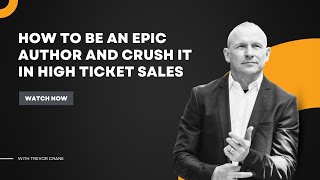
Conversational YouTube interview (Make More Marbles) where Trevor Crane (12x bestselling author; founder of Epic Author) tells his origin story (20 years wanting to write, finally finishing with a mentor, first book written in 24 hours), explains the role of mindset and mentors in his comeback after financial collapse (references bankruptcy and a $2.2M loss), and shares concrete sales and publishing tactics. Key practical takeaways: use "no-language"/no-questions (Chris Voss–inspired) to increase responses and control in sales conversations; reverse-engineer authorship by starting with mission → monetization → marketing → then write the book (idea → impact → income → book); pre-sell and test ideas (90-day pre-promotion) to validate demand and speed up writing; and a ready-to-use 15-word social post to announce a forthcoming book and generate leads. Emotional/mission elements include a client suicide that motivated a broader purpose to help people share vulnerable stories and prevent suicides. CTAs: trevorcrane.com/no, trevorcrane.com/freebook, epicauthor.com (webinar).
Chapters
Foreign.
Welcome to make more marbles Today. I am very excited to have a friend and fellow colleague in the world of making happen, being a ninja on the Internet, impacting lives. I'm also friends with his wife, Robin Crane. This is Mr. Trevor Crane. What's up, Trevor?
I'm glad to be here. Excited to be on the show and yeah, let's see where we go today.
Right on. So cool thing about Trevor, he is the 12. He's got 12 bestselling books under his belt, which is pretty nuts. He's also the founder of Epic Author, so he helps other people to achieve similar results. There's only a few people in my life that I've met, like Greg Reed, like Trevor, like Sharon Lechter, who have just done so much in the world of publishing that it's like kind of bonkers to think about the numbers.
Right?
So Trevor, I'd love to hear the story of kind of how you got to where you are today and some of the trials and tribulations along the way. I know that's a broad question, but just give me the story so far and we'll catch up to speed for the audience.
All right. So it's always kind of humbling to hear that I've got 12 books under my belt and especially coming from like how that originated. So I wanted to write a book for not a year, not five years, not 10 years, but 20 years back. I think I first learned that becoming an author might be a cool thing from Back to the Future with Marty McFly from like 1980 something just to completely date myself. But that's when Marty came back to the future and, and he was the culmination of his success or the fact that his dad had changed history was that his dad was a published author. I think that's the first time that I thought that I should be one. And when I was 20, I wanted to write a book. When I was 30, I wanted to write a book everywhere in between there. And after failing to get it done for 20 years, no less literally, it would go on my New Year's resolutions list. And it was one that I just never got done. I finally hired a mentor. Like I, I thought that it would be easy to get a book done, but I was always too busy or self flagellating, thinking I wasn't enough. Like I grew up in Arizona, the son of a horseshoer. And my biggest fear kept showing up that I'd never amount to anything. So when I ever started making progress on any of these books, I'm like, nobody's going to care. So it wasn't until I hired my first book mentor that I got my book done. I was actually my Koenigs. So my Canigs is my first book mentor. And he was able to ask me some questions that basically called baloney on my first few book ideas. So I was like, I'm committed to getting a book done. I wasn't sure, and that's not true. I thought I had the book idea. And within my first session with Mike and he's going through his program, it wasn't actually talking to him. He asked a few questions. And I think good coaches will sometimes do that instead of telling you things, they ask questions. And I called bologna on my own first book idea, second book idea, third book idea. Good God. I was like 90 days into his program and I felt like I was still starting from scratch. And then, Brad, I finally settled on a book subject that my first original title idea, by the way, was moronic. Not moronic. It was that it attracted broke people, but not the type of clients that I wanted to have and people I wanted to help. So by basically going through the process program and asking good questions and talking to people while I was getting my book done, those first 90 days, set it up so that I wrote the right book. And then the right book for me was one that made sense to me. Potential clients I could work with. And over the next year, I 10x my income. So it took me a little bit to figure it out. I ended up writing my first book in 24 hours. And really the only reason I did that is I had a deadline. I had to get it done quickly. And then I was coaching, consulting business owners and helping them with high ticket sales. And I thought, gosh, if my clients want to make more money, help more people, maybe I should help them with the same thing I did. So I started a little publishing company thereafter. And now we're going on about 10 years of being in this industry and it's just been such a blessing. I can tell you more about it in a second, but that's kind of. I only got this done because I failed so miserably. And then when it worked so doggone well, helped me get the results I wanted in life. I thought, let me help others.
So the magic formula, so far as we know it, subject to change and all the craziness in the world, is publish books, sell high ticket programs. And you're an expert at both of those things, right? I know we love to geek out about sales because we're both in the business of serving people and we were just talking about like no based questions versus yes based questions. And I want to dig in all that. But like, what do you think have been some of the biggest shifts that you've had to make in perspective over the years that have taken you from like working really hard, not having a lot of success to like, oh, this is gonna actually be easy, lucrative and fun and scalable.
So I mean, I think the biggest thing is it's a combination of mindset and mentors. So and when you start to pivot one, let's say you pivot your mindset that you want something that you don't have, or you're finally saying I'm going to commit to getting this thing done, then I think it's about finding the right mentor to help you get there. I mean that's the best way I can possibly think of to shortcut your success. And that's how, you know, I had decided for 20 years I was going to get a book done. And every year seemed like a new year of I'm going to go get them. And I just wasn't getting it done. It seemed easy. Like a book is like words on piece of paper and I could have probably published a piece of shit. You know, it's not like I couldn't have gotten something done, but it didn't make sense to my mission, my business, my brand or whatnot. You know, when I was 20, I had the idea of writing a book about a backpack and a smile. Well, by the time I got around actually putting that together, I was 30 and doing some business stuff. And I was like, that doesn't even make any sense. It's not even relevant anymore. And then my grandfather, you know, so I had all these good ideas. So from all my, I don't need to run through all the ever book ideas I ever got, but just challenging myself to look in the mirror and say I want more and I need to pivot what I think is possible. So I need to surround myself with peers and mentors that are playing the game at a higher level. And then brother truly just choosing to hire one for me, like I need to hire somebody and get some frickin help. And so that's now what you and I do is I'm just trying to find people that are like me, that were like, they know they're capable of doing something if they just found the right help. Like that's who I want to work with and that's, I'm always looking For. I remember years ago, I went to hire a mentor, and I gave him a lot of money. I gave him to me at the time. It was an insanely insane amount of money. My first payment was ten grand, and I owed him a lot more payments of 10 grand. And on my first coaching call with him, he fired me. And he fired me because I wouldn't shut up about how smart I was. You know, he. That's not exactly it, but it was a horrible conversation. I ended up finishing the conversation and crying like I had recorded it too. So I. And I tortured myself listening to the damn thing again. And he fired me by the end of the episode because it just wasn't coachable episode. It wasn't. Wasn't a frigging podcast. It was. He was coaching me, and he's like, dude, I've already refunded your money. I called up my best friend at the time, and I was like, I'm such a loser. I can't even pay somebody to help me. But I was just, oh, wow. Yeah, it's completely sucked. Yeah. And I still don't really like that guy. I'm not gonna use his name right now. But he was absolutely in integrity and in line with his beliefs. I was just not a good client for him, and it taught me so much. Sometimes I think you have to have a failure, and you learn more from that than you do from the successes and wins and patting yourself on the back. But it was the mindset that triggered me to finally invest in myself at an amount that was insane at the time, and then finding the right mentor because he was the right mentor for that particular lesson. But I had to find another mentor to help coach me and consult me to create successes. And that has been my secret to success. If anything is just finding someone to help me. And that mentor always challenges my beliefs and what my mindset can be to open up the next level.
You know, I'm finding that, like, I have a true belief. Like, I do want to help everybody. And then at the same time, I believe that if somebody is not willing to receive the help, then it doesn't matter how good or how. How dedicated I am. And you kind of have to see that. Like, I truly. It pains me when I get off a sales call. It's like, I know I could have enrolled that person, and they didn't for whatever reason. And then I remind myself, like, not everybody's meant for my help right now. They have their own personal journey to go on. So what I love about you, Trevor, is that you so adequately and I think smartly can articulate, like, the depths of the.
The.
The pain that you've gone through, the authentic, vulnerable places you've gone through with your financial life, with your business life, with all these different things. Some of the stories you told me had me rolling. Like, I just. I've known you for probably five or six years, and, like, just hearing some of this stuff over the last few weekends we were at flight club together just prompted me to want to get on a call and talk more through it. So what have been some more of those different shifts that I know you love to talk about, these stories that really you. That perspective that you have today?
Well, the Lowe's, you know, so I told you a story about filing a bankruptcy, and that that sucked. I don't recommend people do that.
The way you told it was so fricking funny. I just kind of want you to tell it again a little bit.
So hilarious. It's hilarious. My $2.2 million bankruptcy. I don't remember what parts of that were funny. You know what? To answer your question around it, though, like, I was one of the happiest bankrupt people you've ever met. And I'm not saying that I didn't cry, because I certainly did, and I felt like a loser in that whole process. But I had years before that Tony Robbins is one of my mentors, and he challenged me about something called primary question. Like, what is the primary question that you ask yourself? And by the way, I refer to this as though Tony and I were talking one on one. Like, I'm such a crazy person that if I watch a YouTub video with a mentor, let's say Tony, or I'm one of 10,000 people in the audience, I think he's talking right to me. And not only that, I'll have a crazy conversation with Tony Robbins after that. Like, he's my buddy or pal. I'll actually call him up on the phone. So here's the deal. I learned this from, I think, Napoleon Hill or Earl Nightingale and something like way back in the day, you could.
Have George Washinghouse, and you got Henry Ford, and they're all part of your mastermind. I get it.
Exactly. So I put them in my CIA roundtable, and I literally have a diagram back in the day that I used to keep, because I wanted to keep an eye on. Like, I wanted to know who sat at my roundtable. Remember, like, King Arthur and the Round table?
Yeah, Knights.
I went ahead and I had these big poster boards I had in My house. And I went ahead and decided that Tony. So I put their initials there. That Tony sat on one side. And I was like, okay, his wife sits to his. His left. So Sage is here. And then I'm down at the other side. And so I literally. And then I did it like, all north, like, northeast, southwest on who's running things. And like, I had, you know, digital marketers over here. And then I had. I had a billionaire sitting next to Will Smith. But here's the thing is that I would. And my wife sits now on my left, so she's over here. I haven't done this diagram in years, but I would have a conversation with Tony. And the only way I could do it, by the way, I had other weird conversations with people sat at my table. One of them was John Luke Picard, because I was like, hey, it's my roundtable. I'll have anybody there that I want. And Spock was at my table. But I. The only way I can actually have the conversation is I have to pretend to call them. So, dude, I have to pick up my phone and I called. I use freeconferencing.com or something like that. And I have a speed dial number on here, and I'll call them up. I now use a different app, but I've recorded, like, hundreds of conversations with me and my fictitious mentors in my head. And Brad. I talk out both parts of the.
Conversation, do the voices.
Oh, this is so I completely do the voices. Yeah, I've like. And what's crazy, you know what you need to do, Trevor, 100%. Because if I don't do that, I would have this little silent dialogue. So I have to go on a long walk. And I completely seem like a crazy person. I've been kicked out of park parking lots around the world. And walking around, like, if there's a place in the shade, I'll walk back and forth and have people coming out like, why are you talking on the phone in front of my house? And I'm like, I'm talking to Tony Robbins right now. But I'll be doing both parts of the conversation. I don't even remember the question that you asked here, Brad. Oh, mindset. So what pivoted was at a downtime in my life when I had the bankruptcy years before that Tony Robbins had given me the gift of primary question. And I chose a question that would be the guiding principle of my. The primary question I asked in all things was, what is the gift in this? So even when I was sad or getting My ass handed to me when I had put myself in a horrible financial situation. And I was not just homeless, I was home free. I had a very positive attitude about it.
Unencumbered, the tyranny of a home.
That anarchy. I really did have a positive attitude, and I would. I like to be real about my emotions. So when I get sad, I cry. When I thought I was a loser, I just say it, you know, and then. But that gift of what's the gift? Was a question that I asked myself. And I always looked at the silver lining, like, what is this for? I know it's for something. I know I'm not always going to be a bankrupt loser. And there's a gift in this. And so even when I've been robbed at gunpoint or had somebody steals something out of my car, my house broken into, a variety of yucky things that will happen, people stealing from you, whether they're partners or business, something, I always know that there was a gift in it. Even every relationship that went bad. And so I would say some of my biggest learnings were that when we fail, there's something to be learned. Not that I like to fail. I would much rather win, win, win. But I think the biggest learnings come from when you screw up. And then asking yourself good questions and finding good mentors.
You can bring that mic just a little bit closer.
Yeah, yeah. So then finding. So it's about the lows and then the building things back, Finding the right team to help you.
No, it's awesome. And it's led to. This is the penultimate moment of your career, obviously, is being on the Make More Marvel show.
So this is the pinnacle. Oh, my gosh. And I finally arrived.
I made it. No, it's beautiful. And I love that, you know, there's no bullshit. You can tell when people are posturing. You can tell when people are, like, giving you the. The polished up turd. You know, like, they're. They're kind of doing that. And there's none of that with Travers. That's one of the reasons I really wanted to have you on. It's just your mindset and the way you approach things and with the humor that you bring is just. It's so refreshing.
Right.
Because we're all going through our own private hell.
Right.
And if we can't express that in some way that's valuable and also fun and lighthearted, then it just. It gets really hard to be a human sometimes. So that's thing one thing too, is I love the way that you show up Powerfully and serve with sales. I know you've been doing this for a very long time. Some of the ways you think about it and some of the mentors you've had, like Chris Voss, you shared with me this training, just 15 minutes that was really impactful about no questions. And I just went and started using them. And I didn't really think too hard about it. And I did just work. Like, I don't know what it is. I don't know why. It doesn't make any logical sense, but they just fricking work. So I'd love to talk about that. And then finally, I'd love to talk more about your process and how you work with people to get their message out in the right book at the right time and all that great stuff. So let's start first with the no language and explain people what that is and how they can utilize it.
So Chris Bloss is the one who taught me this, and I got his book and watched him on YouTube. And actually I met him at a mastermind meeting. And that's when I first met him and became aware of him. And he spoke on stage. And he was an ex, was an FBI hostage negotiator. And so he was in one of the most difficult negotiation circumstances you can ever be in. His lives literally are hanging on the line. And he created a series of questions and psychologies, and he and a team, right? He was on many teams over the years, but they established a protocol of, like, what helps people feel powerful? How do you connect with and communicate. Communicate with people and negotiate with people who have a gun to somebody's head? And so anyway, it was pretty. Pretty different for me, Brad, because I think we're all addicted to yes. And, like, first of all, Chris brought this up when he first told me about it. But in sales, certainly, like, we all want to influence people to do what we want them to do, right? We want people to buy our stuff because we think we're here to help them. And I know that I used to go on an emotional roller coaster of being happy when people complimented me and saying yes. And I make a sale, like, I'm so happy. And then I'd feel sad when they said no. And I realized that I didn't want to feel out of control with that. So there's a great book, go for no that I read years ago, and it was about celebrating the no's. Like, you kind of said, Brad, that sometimes even though you feel sad that you didn't serve the customer, you said, there Might have been a way for me to help convince them to buy you just also knew and trusted that not everybody is there to be coached by you right now. And so if you think about it, some of the, maybe one of my mentors told me this is that you can convince people to buy your stuff. But if that could be one of the worst mistakes ever for you and for them, they're not ready for the coaching. So the mentor that I mentioned fired me, did us both favor. So at any rate, I think we're addicted to yes. And this is a counterintuitive way to get people to say yes to you, but also to put them feeling comfortable and in a way that they can control. And no questions do that. And I've taught for a decade dude how to get people into a yes ladder like hey, are you excited for their call today? And hey J and whatever, ask a series of yes questions which I think worked awesome. And those no questions, brother, are no questions that I've put into text messages, emails, simple conversations to start a sales conversation. But when people say the word no and you ask the question to get them to say it, it actually makes them feel more comfortable, more in control and it's an easier way to get them to do what you want them to do. And Chris uses so many examples of it. I'm so grateful that you got value out of my little summary of it because I studied it for and 20 hours to try to create a 15 minute training that would, that would give you something you could implement so that public.
Is that something people can check out just while people run?
Sure, brother. So I think we've got that at a link jointrevor.com no and so anybody trevor.com forward/no.
And I'm going to find some of the questions here because I think they're just really brilliant. So do you disagree? Is this a ridiculous idea? Are you against this idea? Why is that after the no. Right. You want to get the clarity right? Is now a bad time? Is this a bad idea? Have you given up on X? Do you disagree? Am I out of line? Are you opposed to I used Are you opposed to like four or five times over the last week? It's worked really well. Are you against or would it be a horrible idea or you know, you're just going for that no. You're trying to give them the authority, the power, the control so that when they say yes, it's coming from a place of yes, I'm in control versus no or like I'm saying yes Just to be like, you know, it's like false mate. Like if you play chess, you know, when you think you have checkmate, but it's really not. That's the same kind of feeling.
Yep. Well, and look at the difference. So the way I framed it in the training, I now just pulled it up here so I can see it. Do you have a few minutes? Is what I used to say. Like, do you have a few minutes or do you have time for today's call, which is getting a yes. But what Chris helped me see was this was a useless yes. It's. I was thinking I was being creative to go ahead and ask yes questions. So by the time at the end of the call, they're accustomed to saying yes. And I don't know that I was ever being manipulative in those yeses. But is now a bad time for the call? Is that what I've exchanged those two for? And then does this work for you or would you like to. Is what we will often ask in sales, like, hey, does this work for you? Like, yes or no? But now, is this a bad idea? Oh, my God. In copy. What a phenomenal. Is it a bad idea? Is it a ridiculous idea? You know, are you against instead of would you like to? And are you completely against responding to this email and giving me a yes? Or like, it's just if you can flip the script on that and everybody go to that training, you can just get a screenshot of what I'm looking at right now. Because, Brad, I'm not good at these. I can't remember them. Like, it's such a common thing that I'm addicted to to try to get a yes from people that I have to have this as a visual thing on my, on my desktop so that I can copy paste it so that I remember to put it into my language.
And, you know, it's a great training because it's 15 minutes long. Most trainings are bloat, right?
They're.
They're full of crap. And then I go to it and I, like, I wrote it all in my notebook and I keep going back to it. So that's when, you know, it's like, oh, this is instantly applicable on what I'm doing every day, right? So just to give a quick example, like, I have a person who's very well known in the industry. I won't say who, but like, they run probably a $50 million company. And we're, we're friends in the sense, like, we've hung out and I have his number. But like we don't talk all the time and he's a pretty busy guy. So one of my, one of my other friends from the Mastermind said hey, I would love to meet that person. I said, listen, no expectations. I don't know if I can get him on the phone. But I asked one of the no questions and he replied within 24 hours and said, yeah, connect me. So I was like, okay, this is a very different type of result than I'm used to getting from this person.
It is like speed of getting people to respond. And like the have you given up on by the way, is a question to like, there are such beautiful things that are going to be in that training for anybody that you point to this that they're going to love it. Have you given up on as a way to refresh an old lead of somebody that may have been ghosting you, Anybody in influence and sales. You've got somebody that's been considering your program or they're a friend or a connection or a mentor like you just described and have you given up on blank. And that's it. It's a one liner. Like I've had clients of mine that will go ahead and put that question in the middle of a long paragraph. It doesn't do the same thing. Just let the simplicity of these no questions land and you can get people to respond in minutes or days instead of in the past. They may have been ghosting you for weeks or months. Right.
I think if you think about it from like we know that the nine word email works, right? So that makes a lot of sense. Like have you given up on building a mastermind or have you given up on writing your book or have you given up on whatever. If you just sent that out to your unengaged lists, you'd probably get a of bunch boatload of people responding.
It's incredible how fat, how many. It's almost instantaneous. And people are defensive to go ahead and say, no, I have not given up on that book, that mastermind. Have you given up on quitting smoking? Yes, I've given up on. It's painful to say, yes, I've given up on it. And yet it makes the person answering the question like, no, I've not given up a chance to go ahead and draw a line in the sand and say thank you Brad for challenging me with the one simple sentence, no, I'm not giving you a line.
They want the thing and they wouldn't be on your list in the first place. They wouldn't have even paid attention in the first place. So they wanted it at some point. So either one of two things is true. They've done it, or there's a reason they've been not prioritizing it. And now it gives them an opportunity to reprioritize it. So I think it's a gift in a way.
It's a really powerful statement, 100%. And by the way, if they've given up on joining a mastermind or starting their own mastermind, and they say, yes, I've given up on it, Hallelujah, you just did them and you this phenomenal favor. Like, why should they feel guilty when they're like, you know what? No, I remember I had a mentor one time and I was really frustrated with the results we were getting for our clients. Like I was helping him promote this business. I'm not going to mention what it is. And I had 12 people. I convinced. I sold 12 people to buy his expensive program. Let's say it was 20 to $40,000, maybe a little bit more. And I bought his program and I was having a lot of difficulty implementing it with success. And I was very frustrated. And I remember he said, he asked me, not exactly the strategy, but he goes, well, are you willing to keep doing this with what we're doing? I was like, no, I'm not. I quit. Like, it was crazy because I went to him, Brad, it's like me telling, hey, I've been trying to work your program for a long time. It's not working for me and the other dozen people that I told to do it. It's not working for him. Like, I'm barely able to make it work. And I'm your friend and mentor. We're talking all the time. And he's like, are you willing to stay the course with me? And I'm like, no, dude, I'm not. And it was a gift for both of us because I got to stop putting my time and energy in something that wasn't working for me and get out. It was a gift in a very win win way.
So I think that's so powerful and I think that's a perfect way to transition and into the next topic of conversation, which is ultimately what you're here to do and how you show up is to help people write the right book at the right time, maybe get them off the fence. Maybe they've been wanting to write a book for a long time. I've written three books now. I know how challenging it can be, even with the ghostwriters and all the team to help you tell us about your process and the way you think about it from a mindset and a skillset perspective. And then ultimately what you help people do when it comes to.
Okay, so I think there's a big lie out there in the world about writing books, by the way. I'll share with you my strategy and also what most people think about getting a book done and why I think there's a better way to get it done. So there's a lie that if you write a book that it's going to go ahead and change your business and build your. And everybody's going to buy your stuff and you're going to get all the speaking gigs and all the attention. It's like Kevin Costner in the field of dreams, I think sold a complete line of bullshit. If I build it, they will come. No, they won't. And so, and I've seen so many times people build a course, a coaching program, they have an idea and they'll spend weeks or months or. There are so many amazing people that have written amazing books and they put maybe 2, 3, 5, 10 years into their opus. And then an author's worst nightmare is that they put all that time, energy, money and resources into it. And then their book and their message go nowhere. They fall on deaf ears. And it's not that it's not a good book or that they worked with a bad writer or that they're working with a publishing company that didn't serve them. I mean, a lot of beautiful books are out there in the graveyard, so to speak, because nobody knows they exist. And so most people think that the first thing you got to do is write the book. Hopefully you can see this. So write the book stands for that, right? And this is like they think this from bottom to top. First of all, you got to write a book. Then once you make it perfect, Brad, like you said, you know how the pain that it can come to come up with it or maybe insert. Write a course. Create a course. They make it first. Then they think, well, once it's made.
Just make the mastermind. And then once it's made, you can go get the people for it.
Exactly. So they think write the book, then market it. You know, once I mad my, I don't want to tell anybody about my book until it's done and it's perfect and I. And then everybody's going to love it and love me. And then once I publish it on Amazon, oh just then it's just going to happen for me. So Then they're hoping that if they market it once it's done, that everybody's going to go ahead and want to buy their stuff and that is going to help them. Hopefully give them more money than it cost them originally. By the way, is my video still.
Clear or did we actually froze? Yeah, sorry.
Okay, I'm a pause for a second because I want to make sure you can see me here.
Sure.
Actually, I don't need to pause, but how about this? You can just imagine I'm so these three letters, write a book, market it. And then the third thing they think is if I do that, it'll make me some money and then that will help me meet my mission. 1, 2, 3, 4. Let me stop my screen and see if I can get it.
Yeah, see if you can kick it in. Yep.
Stop video. Start video. Nope, still frozen. Okay, so you're gonna have to see that beautiful Forrest Gump look of me while we're frozen here. So, brother, my. My strategy of helping somebody become an Epic author instead of a starving author. An Epic Author is our company name is that you start with the mission first. If you do the bottom up, it's what's your mission, purpose, vision, values, things like that, like what are you trying to accomplish and why? And if you don't have a monetization plan, that second one up from the bottom to make your mission come true, then your mission, this book or your course or however you want to help people, you're basically running a nonprofit, you know, and you don't get to have the. You're not going to make a difference with your message. It's going to die. And then the third thing is, if you have your mission clear, your money making plan second. Then the third thing is to have a marketing plan and start marketing that to the world. You're going to have so much more success. And so what we do differently with Epic Author and what I recommend to people to write the right book is like, I told you I did, brother, I got clear about my mission. I came up with different plans for my message. And once it started working, I created my book in a short period of time. So that's kind of the way that I recommend people do it different. So they become an epic author, which makes a difference with their message and the people they want to help versus a starving author where they write a great book that nobody ever sees.
Yeah, no, I believe it. And so basically, people are by default going back. We can't get the video to start again. Oh, well, they're they're starting by default with the endpoint and you're just saying flip that around like, hey, let's start with the mission. Let's go to the money part. Like how do we monetize then the marketing and then write the actual book?
A hundred percent. And there you go. So am I back? Okay, I was just about to put in my. I've got another camera to change it. So. Yeah, so just. I think the thing here that makes the difference, brother, is that you people need to get clear about it's reverse engineering your success. A smart author will reverse engineer their success so that they get their goals. And what I do when I work with a client which is so unique from any other publisher on the planet, brother, is there's a million people out there that can help you or anybody write a great book. Phenomenal. Like I hope you do write a great book. If it's not a great book, then shame on you. Right? So you're creating a great book. But what we do differently is I help people get clear about their mission, take their ideas and have help them impact people the next day. From idea to impact right now. And by the way, Brad, most of the time we're a little bit off on our mission and how we message that to the world. So we go from idea to impact to income before we write the book. So if I work with a client for six months, which is typical length of time, I work with most of my clients, we have a good mentor program. I work with them and I help them get it done. We help them pre promote their message to the world for 90 days approximately before they write it. So we're the only people on the planet that I know talk about this and actually do the hard work of helping people take their ideas and turn them into impact and income before you write the book. And Brad, what happens is then we write the book so frickin fast. I save my clients about a thousand hours because we test market the ideas and create an army of advocates that are like, I can't wait to do this thing both for prospects. Like fill your mastermind with 10, 12 people before you go ahead and write the book about how you're going to have this amazing mastermind. It's going from idea to impact to income first and then we create the book. So lickety split fast. And then brother, at the beginning of working with an author, they're almost always asking me questions about whether or not I think this is a good idea. But when we go through this process, they don't even want my opinion anymore. I'm just helping them get it done because they're like, dude, I just made 100 grand getting people talking about this idea and getting people to do it. I don't need your advice anymore on whether or not this is a good idea. It's proven and everybody can start this process today. By the way, I'll give you my little 15 word post that everybody can make right now to pre sell hundreds of your books with one little post. In fact, Brad, it's probably the most engaged Facebook post or LinkedIn post, social media post you have made, any of your audience has made in the last year. And if not, it's going to be definitely a contender in the top five. It's something that everybody can use today. And I say engage, meaning you're going to get feedback and you're going to have a dialogue and you're going to get more likes, more comments and things from this one simple post than almost anything anybody has done in the last year. If you want me to give that.
Oh, please.
Oh please. Oh no. Oh no. So here it is. So this is. If so, let's do this. Trevor Crane is a publisher. So I am a publisher, y'. All. We missed that before. And I want to publish your book. Brad, let me take a step back and tell you why, because you asked a little bit about. There was one of the questions that you asked when you framed this about us talking about this. That is the bigger mission beyond this. And it is why I do what I do and why I'm grateful to be here and why I'm. I don't have a lot of bullshit left in my body. And when I, when I notice that I'm full of crap, I try to acknowledge it right away. And I don't want to, don't want to just persuade and convince people to do things. And it's because of another down dude. I had a client years ago, Stephen, and he was about three months, three months in a month program. And he quit. And he told me, I don't want to do this anymore. I don't want to make any more payments. And I was trying to follow up with him because my clients become my friends. And I felt really sad because I knew his mission. I knew the wife that he had, the kids that he had. I knew how important it was to him to share his story with his dad because his dad was such an inspiration in his life. And two months after quitting with me brother, he committed suicide.
Oh, man.
And I hope you've never had a client that's committed suicide, but this was a tough one to handle. And I'm an entrepreneur and I like to take responsibility for things. And there was a part of me that felt guilty for having a client that left me committed suicide. And I'm such a, I think a positive guy and a nice guy and a good guy. Like, how could that ever happen with anybody around me? I made it a little bit about me brother, but I had to look in the mirror and not put on the guilt around that, but to figure out what it meant. And one of the questions I like to ask myself again, I'm sure I got this, one of my mentors is what else could this mean? And instead of being angry at Steven, which I still am, honestly that he took himself out, I just looked in the mirror and I was like, how can this make a difference for me? What else could this mean? What's the gift in it? And I realized that it wasn't about me, that maybe Stephen needed somebody else's voice. And we're talking about authentic communication and things. I believe that I was given the gift to be in this industry helping people with their books done. And to find up on there, on the shelf over there I've got How to Write the Right Book is one of the books that is now like a framework. I'll give that to your audience. If you want, I'll give you a link to it. But I believe that it's not about me and my voice. What I get the opportunity to do is help people find their voice and share their authentic, vulnerable, real heart centered stories. To have the courage to share the skeletons in their closet. That if Steven, if I'd have been playing the game at a higher level, brother, then Trevor Crane or Epic author or whatever would be more of a household name. And I would have helped the people, maybe somebody watching your show right now that has somebody out there that if they would have heard your story, you're literally. People's lives are hanging in the balance and that my job is to figure out how to get out of my own way and help and connect with enough people to help them share their story. And I think if we all could look in the mirror and have the courage to share vulnerably and authentically about where we really are, I don't think we'd have suicide. So. So my bigger mission is to help stop suicide with all the first responders that commit suicide or veterans that commit suicide or teen suicides. And this isn't a happy, happy conversation. But it is more of a driving force of why I'm so focused on. I think I'm on video again. I'll share with you my diagram of why it's important to have mission first in what people want. And then you reverse engineer the sequence of mission, money, marketing plan, get out there with your ideas and make a difference first. Which is what I'm going to challenge everybody to do now with this 15 word post is to go ahead and get out of your own way and just have the courage to post vulnerably what I'm about to give you. This is something will take everybody here less than two minutes to implement. So write these 15 words down because I am a publisher and I want to publish your book. If you're watching this right now, then you are magnificent. I know that you have done amazing things for people and that there's something else for you. You could probably write a dozen different books. My job is to help you find the right book and I'm a publisher and I'm approaching you right now through Brad to go ahead and help you write and publish the right book for you. So I'm offering you a publishing deal. Now. I don't care if you ever work with me or not. I hope you do, but I want you to now post online. I'm so excited. Exclamation point. I just met with a publisher who wants to publish my new book. Unless I mess that up, that's 15. You don't need an image. You don't need to go ahead on Canva and make anything. You don't need to do a video. All I would challenge you to do is post that right now. I'm so excited. I just met with a publisher who wants to publish my new book. And watch what happened. Your friends and family and your mom and your next door neighbor and the crazy cat lady and people that were stalking you on Facebook or LinkedIn or Instagram or whatever are going to come out of the woodwork and they're going to compliment you. You're going to get a thumbs up, a conversation. They're going to go, oh my gosh, that's so cool. And they're going, this is going to. And every one of those thumbs ups or comments is a lead that is you have done what most authors won't do for freaking months or years. You went ahead and told the world you have something coming. Just like billionaires or the best marketing companies in the world tell you about what's to come. Apple does it every year. What we're almost in September. In September there's going to be another iPhone10000 and people are talking about it. It does not exist, but people talk about it. Hollywood does it. We know the next decade of superhero movies that are going to come out. They don't know who's going to star in them. They don't know how long the thing is going to be. They haven't written a script for it, but they're announcing to the world that it's coming. Elon Musk does it. There's like over a million people have bought his new cybertruck he's been talking about for three years. Google it. I'm guessing in the last few days he said something about it. He's telling the world what's coming. You have the opportunity to as well. And when they ask you, oh God, what if they ask me what my book is about? Go. That's a good question. We're trying to figure that out right now. My publisher said I've got a lot of good books in me. We're going to try to figure it out. Like Elon Musk doesn't even know what's going in this damn cybertruck yet because they haven't finished building it. I'm not making that up. I haven't talked to him personally. But make this post, then just see what happens. And then every thumbs up or comment about it is somebody to talk to. Maybe do a podcast with, maybe interview for your book, which is one of the. You guys have instant authority because you are a sought after commodity and you don't have to get your book done yet. This is just now you finding the right message that can land with your audience. You'll have dozens of or hundreds of interested people in your new book. You can title it and figure out whether it's about marshmallows or money or mushrooms or Mars or the missionary position. Whatever you're into, you can figure it out later and make sure that you got an army of people lined up, buyers. Because I'll tell you what, Brad, you can get compliments, which is just great. And everybody listening here, if you share with the world something you feel passionate about, you're going to get applause. They're going to be like, oh, oh, oh, you're so good. Oh, I love you. You're so smart. Because you're probably, I don't care if you're a great mom, great dad, whatever the deal is, someone's going to compliment you or you'll get criticisms from the haters or somebody who really loves you. And they're like, I don't know, honey, I don't know if that sounds good, like you're going to. But neither of the. None of those matter. Men tell you what matters. Those of you that want to have an impact with others, you get compliments, get criticisms for what? I want clients. I want people to go, hmm, I want some of that. That sounds good. That makes sense to me. What was it? E.T. the hip hop preacher. His name is Eric Thomas. Amazing speaker on YouTube, whatnot. You could check him out. Just phenomenal. And he said, I'd rather go where I'm celebrated, not where I'm tolerated. Go where you're celebrated, not where you're tolerated. And so what you're looking for is that in between. Not compliments, who cares? Not criticisms that if you're doing anything worth anything, and somebody is probably as hard as it would be to do, someone's probably criticized Brad Hart here. I don't know how you could possibly do that, but somebody probably doesn't like him, you know, because he makes a stand for what he believes in. And I hope you give very little caring or thought to paying attention to the feedback you're getting. But in the middle are the people I get the opportunity to help.
Yeah, I think that's a great point. And you really laid out a lot of great stuff. So I want to urge you to do that 15 word post if you've ever had a book inside you or wanted to create a book, because that will ultimately lead to market research, conversations and really narrow down your idea. And then like Trevor said, you goes back to that post. Hey, I finally published my book. Here it is. You want to buy it? Great. Here we go. We published, you know, a couple books now, and I'm always asking questions about, hey, have you read my book? What's your feedback? I'm in my fourth version, some of my book. So I'm, I'm huge on that. Get the client conversation started now before you ever have anything to sell, so that when it shows up, it's not like, oh, I got to think about it. It's like, oh, I'm already into this. They've already been emotionally sitting with it. So that's thing one. Thing two is I think it's so important to get the help. As Trevor said multiple times throughout this interview, the only reason he's made progress in his life is because amazing mentors, whether they're imaginary, whether he had conversations with them or not, that's only because of mentors, right? He's at that kind of success. And I'm in the same boat, man. Like, I have to be clear and candid. Like I Nobody self made. Jason Gaynor say this once. Nobody's self made. Everybody's community made. And the sooner we can acknowledge that and stop with the weight of all this, like, you know, on one side you feel like an imposter and a fraud, on the other side you feel like, you know, you got to do it all on your own. It's just, they're both bullshit. The, the truth is, take all the help you can get. Find a mentor, do what you got to do. Find a way. So I'm really excited.
And then, Trevor, Brad, can I share, can I share real quickly something about you? Because your audience may not know this, but like, this is also just evidence of me practicing what I preach. So my wife asked me a question about finances and money and investing and stuff. And just to be clear, guys, I'm not the best person in the world to advise you about where to put your money in crypto or stocks or anything. And my wife has been doing a lot more study around it. And she was asking my advice. God bless. You know, there's very rarely that my wife comes to me for advice about anything, just to be clear. But in this case she did and she was giving me. And she and I were trying to decide where we were going to put some of our money. And we'd made some choices and sometimes the choices went up. Invested in crypto when it was before it was even cool, and it went up and then we made some choices. Mostly my wife, that's not to blame her, but she just makes more of these decisions than I do. And we were sitting here facing, okay, what is our plan? And part of this was like, how are we going to now behave? Are we going to put our money here, here, here, here? And my go to question is to definitely evaluate those things. But I just went to my wife and said, well, who can ask to get this answer? And in this case, you know, my wife had already hired you to help her with some of these decisions. And I was like, well, why don't you go to Brad? So I always, instead of telling people, which I don't find is always the best way to influence someone, I asked my wife who she thought she could contact. And she didn't want to talk to anybody. She wanted to do me and her figuring it out. And I was like, well, who could you go to ask? And I already know her mentors. Brad, I mentioned that you remind her of one of her mentors named Jeff. That has been her mentor since before I knew her and I know he's advised her around some of the investing things she done that worked well. But I basically, I think that there's a really good answer to a lot of these things. Who can you ask? Who can you get help from? I spend more of my time, energy, attention and focus trying to find a who can help me than I do who can buy my stuff. And the mentor told me this a long time ago. And for those of you who don't know, Brad's the man on how to help you make some of these decisions. And as a good coach or mentor in this I've seen you do this with my wife, you don't just tell her what to do, you also ask her questions. So at any rate, I think it's a foundational beautiful thing to focus on is who can help you and Brad. I met Grant Cardone one time. I was interviewed on one of his shows. My wife and I did a little partnership with him at one stage and we had a TV show with him for a year. But Grant told me the first time I met him and he mentioned a couple of different things but one of them is the more successful he becomes, the more help he needs. I think there's this misconception, Brad, like you were saying, we think we all have to do it ourselves. That's a scarcity broke mindset and it exists in us. Like it's up to if it's going to be, it's up to me, you know, but it's not the truth, it's not what's going to serve you best. Find a who can help you, mentor you and already knows the the golden brick road directions between here and the Emerald City. And for us with money, Brad, it's you. You're one of the people that we talk to and you don't make decisions for us and our money. We will win and fail based on our own choices. But we at least had the intelligence to say hi mentor who we've asked to help us and has agreed to help us I think in a mastermind capacity as well. What would you do with this situation and friggin listen and just, I don't know, I just really love you for that, that you've been a resource for my wife to go to and ask for help and you're such a phenomenal listener. I just want to say thank you again. I know I complimented you privately, but a little bit of a Personal plug for you. It's just.
Yeah, I just, I don't ever know how to take a compliment except to say thank you and I'm grateful and I'm glad I could make an impact at an important time in you guys lives because you're doing all the right things. You just maybe got a little off balance because you're doing so much of things. And it's just my job to be like, okay, let's bring everything back into harmony and get you back on track to the next phase of evolution. Right? If you're going from the journey of I'm a six figure entrepreneur to a seven figure entrepreneur and now I want to be an eight figure entrepreneur, well, you almost have to let go of all the stuff that got you to seven figures in order to get to.
Eight figures every step of the game, brother. And like you just said, I think that when I help people the most, it's not that they're doing the wrong, the wrong things because you just complimented my wife and I saying we're doing a lot of the right things, but if you get them in the wrong order in sequence, you know, like years ago I tried to make cream of mushroom soup when I was a little kid and I was first like, like, you know, my wife, my mom said you gotta, you know, make your own soup, whatever. I don't know how old I was and if you like mess that up, like, you know, I've seen my mom put cream of mushroom soup in the microwave or whatnot, but if you don't take it out of the can first, you know, or my mistake wasn't that, is that I didn't mix it with anything. I just like poured it into a pot or whatever and it's like, no, you're supposed to read the instructions. Like you can be doing all the right things in the wrong order in sequence, brother. My, my magic formula here on authorship is do all of these, just do them in the right order in sequence. Reverse engineer your success. Make sure you have people lining up to go ahead and go, you know what? I want some of that, you know? Yes, I would like to invest some time and money with you and get a whole bunch.
And if you get to that place and they don't line up, then maybe you cannot spend a year of your life chasing down this idea because nobody gave a shit in the first place.
Or for me, Brad. When I finally found the right idea, I needed to figure out the different way to talk about it, to make it be attractive to the people I wanted to help because I didn't expect.
To have that knowledge in a vacuum without talking to people about it.
And we're. And all I'm suggesting. Let me see what the summary of things is. Brad did a good job Mindset. Believe you can find a mentor to help you find the right one for you and have the courage to go ahead and hire people. And if they fire you on the first call, you know, golly, well, then shucks. But then, you know, just be coachable and I would share that. Just put your ideas out there in the world authentically, vulnerably. I've never seen where somebody shares their deepest, darkest secrets and that the world doesn't come to their beck and call. Like so much love and support. And not from a victim standpoint, dude, but from the conversation of I'm over that, but I need some help with it. And we oftentimes think we put together a cool front.
Yeah, well, and the other thing to recognize is like, people want to help, but they can't help you if there's something deceptive or weird about the way you're behaving. Like if you just come to people authentically and vulnerably and say, hey, I'm having a problem here, they probably want to help you and they probably can help you or some of them can. And you're giving them an opportunity to serve and give because that's what everybody wants. Right. It's like we don't feel completely fully actualized and realized until we actually can give. So by you doing that, you're giving somebody an invitation who wants to give and to serve to help you, which is part of the equation. Right. There has to be a giver and a receiver. There has to be, you know, somebody who can, who can receive their love and their affection. It's like the person who declines or doesn't allow people to pay for dinner, it's like you're robbing that person of the opportunity to buy you dinner.
So you said that you. It's been an awkward thing to feel how you deal with compliments. I saw two people do it in a 24 hour period and one of them was robbing everybody of the gift of like receiving the compliments. So it was Tony Robbins and another mentor of mine. And I saw Tony Robbins receive compliments well on stage in front of a whole bunch of people. Right? So he was. It was at the end of a four day event with Tony. Some of us were in the audience on stage with him, like where we were saying goodbye, everybody. We've been coaching you for the last four days. And all of the crew, the volunteers showed up to go ahead and say, Tony, thank you so much. And Brad, in seconds, somewhere between two and five seconds, he looked the person that complimented him in the eyes you and then moved on to the next person. And I got to see, I was so close to this group of people trying to get close to Tony. I got to see how warm they felt. Like, oh, yes, Tony gave the gift. It wasn't the gift for Tony. He doesn't need that praise. He received the compliments so well. I saw people just so excited and happy and proud of themselves and feeling loved because their compliment was well received. In the same 24 hour period, I saw another one of his trainers who I love by the way, and everybody loved and they were complimenting him and he wasn't receiving the compliment well. And everybody was feeling bad. Like they were like, hey brother, I love you. Thank you so much. You really helped me. And he's like, no, no, no, no, it's all about you, blah, blah. And it was weird because I got to see their faces and they didn't receive like they felt bad. And it was like when you don't, when you're not a good receiver, it's like we have little kids, Brad, and you have a spoiled little kid and they like open up a present and they go, ew, I don't like it. You know, it makes grandma who spent all this time trying to figure out the perfect Barbie doll for your daughter or my daughter or you, right? They put all this time and energy and effort into it and then the little kid treats it like it's a piece of shit and it makes everybody feel awkward and uncomfortable. And the giver never want to give you something again. So I realized it was, I had to see it, Brad, to go ahead and see the difference between a bad receiver and a good receiver. And I was like, oh my God. The gift of giving isn't the giver really. The gift of giving is like it is that two way street. You've got to have somebody receive graciously or you're robbing the person of that gift. And to bring this to what happened to me this week, I've got someone in my life that's going through a health challenge right now and they need, they're going to have a heart surgery. Like it's pretty crazy situation and they don't want anybody to know. And so I'm in the position financially that I can help with this. And I wanted to just write a check. And I talked to my wife about it, money decision on what we're going to give. And she said, well, Trevor, I don't think that. And she told me a story about a friend of hers that did it differently. And so she said, trevor, why don't you do a little public declaration of this and see if you can't get anybody else to help. What a beautiful gift. Why rob all the people that are out there that want to help? Why would you? It's kind of an ego move for me to go help this person and write a check for it like I have now. Doth saved your damn ass life. Instead of give people the opportunity to connect and contribute and feel great about themselves. And just on this whole thing of asking for help, you might say, oh, that's for Grant Cardone, not for me. You know what? There's an Achilles heel. There's the kryptonite for successful, intelligent people, like your biggest mentors and the people that you want to connect with. And here's their kryptonite is that if you ask them something nicely, especially if it has anything around to do with a cause, by the way, you are a cause and your vision is a cause. You ask nicely. It's pretty much an intelligent, successful, cool people want to help you. And so we oftentimes rob them of the gift of asking for help. And that's what I hopefully challenge everybody to do today with your new book is to ask the world health. You're giving them a gift and you get to maybe create an army of advocates. Brad, like if I'm going to write a new book instead of coming and I'm going to promote it instead of me coming to you, Brad, and saying, hey, Brad, will you promote my book to your audience? Look how cool I am. I wrote a book, Brad. Would you endorse it? Would you tell me, tell all your friends how awesome I am, Tell you a better strategy. Brad, I'm writing a new book. I would love to go ahead and ask you some questions, get some help. You're such a great guy and ask for help. And it's intelligent, successful, cool people want to help. And Brad, allow you the opportunity to become part of this book. It's almost gonna be. You'd almost look like an idiot and not try to endorse it down the line. By the way, since Brad's an intelligent, super cool person, I'll probably create a better book, better course, better program, a better mastermind because I've asked cool people for their help. And now they feel like they're part of it. It's such one of those reverse that part of influence we all think we need to sound cool. How about you just are just real and ask for help when you need it. Tell the people, tell the world about your ideas. Figure it out along the way. Co create that shit.
The downside is, no, I can't do it. I'm too busy. Sorry. Next time. Whatever, right?
Or they ignore what's the worst and it's not baseball. You get to try again.
Yeah, exactly. It's not three strikes in your house. It's like you could. You could hit up 100 people and if 30 of them said yes, that would be amazing. That would be an incredible result.
So you know. Do you know Chet Holmes?
I do. I've met Amanda. I never got to meet Chet while he was alive. I know he's passed away now, but I'm aware of his work. Yes, the Ultimate Sales Machine.
So he's. Chad Holmes is the author of the Ultimate Sales Machine and shares a story. Well, like you said, he's passed away now, but he shares a story that he put Tony Robbins on the top of his Dream 100 list of who he wanted to work with. And Tony said no for over a decade. I'm not sure if it was 12 to 14 years, whatever it was. But that wasn't a no to Chet. He was going to keep following up with him until he could partner with him. Chet and Tony were the. Because of Chet's help, they created Business Mastery together. Now, I know there are other people that were involved, but Chet kept following up until he could figure out how to add in a value that Tony said, yes, I will partner with you. So we were talking about geeking out about sales and influence. What a beautiful example of someone who just didn't accept no for an answer. Kept trying to figure out, how can I connect with you in such a way that we can do something together? I don't think there is a no. I mean, maybe there is, but there's just a no. Not now. No. No, I'm not ready. No, you don't have clarity on your message yet. Or I'm just going to go ahead and not really work with you until you're persistent enough to show me that you're the real deal. Because most people give up on their dreams before they even try.
That's right now. And it's a shining example of being real, being authentic, being vulnerable, asking for help, and giving people the gift of receiving as well as receiving yourself can change your life. It's changed our lives. It's changed so many lives of the people we look up to and respect and around us all the time. Trevor, I hate to cut this short, but I do have another meeting coming up. So I'm hoping to tell people where they can find out more about you. If we could recap some of the resources you mentioned, write the Right book, the no Language and also epic author, where would you send these folks?
What links simple. My name trevor crane.com so trevor crane.com and if you go to trevor crane.com freebook I'll give you a copy of the book I mentioned, how to write the right book. And if you go to epicauthor.com, you can find out about some of our things we do with publishing. And there's a free webinar you can sign up for there and we'll just help you go from blank page to bestseller with our little training there. That's pretty incredible. And I look, anybody can reach out on social media and we're here to help. So let us know.
Okay, great. So Trevor Crane, that's T R E V O R C R-A N E.com freebook to check out the book which is the right the Write Books book which is great. Epicauthor.com and also check out the webinar to go from blank page to bestseller. Trevor Crane, thank you so much for being an influence in my life and to so many and such a positive human and just a wonderful person. Thank you for being here and we're so grateful to have you.
Thank you for letting me yell at you and your audience for a few minutes.
Anytime, brother.
All right.
Have a great rest of your day. Happy fourth, everybody. If you're watching on the day, hashtag replay. If you're watching the replay, we'd love to see you again soon. And stay tuned right here for more amazing people and great stories. Talk soon, everybody. Take care.
Bye bye. It.
More from Brad

The #1 Reason AI Isn’t Working for You (Yet) #AI #businessowner #founderenergy




What tasks would the best assistant ever be able to do for you? #BusinessSystems #BusinessOperations



Nobody expects you to use a harder way when there's a better way. #AI #businessowner

Which side of the table will you be on in 2026? #AI #Mastermind #BusinessOwner

