Wired Magazine Founder Kevin Kelly on the Future, Unpopular Opinions, and the Inevitability of Tech
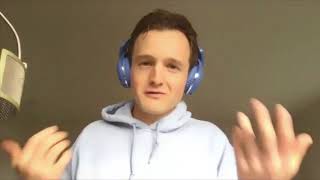
Kevin Kelly, Wired's founder, argues AI will become a cheap cloud commodity like TensorFlow and Azure, creating opportunities for newcomers to experiment and fail. He holds unpopular positions: he opposes internet anonymity and supports some form of world governance, and he's interested in experimental ideas like seasteading and charter cities.
Chapters
Welcome to Make More Marbles. My name is Brad Hart, and we're here to interview the game changers, the future makers, the co collaborators and creators who are here to collaborate with one another towards a better future for all of us. Enjoy the show. We've got a great guest coming up for you right now. Welcome to Make More Marbles. My name is Brad Hart, and today I am thrilled, fascinated, and blown away by a man who literally sees the future, Mr. Kevin Kelly from Wired magazine.
My pleasure to be here. Thanks for having me.
Thank you so much for being on the show. And I just kind of want to dig into it because I'm blown away and fascinated by everything that you've done in your career. And I want to ground it in your own words for some of the people that maybe are just kind of learning about you or they've seen other things you've done. A question I really love to ask people is, you know, people will respect you for your successes, but they'll love you for your failures. Can you help people ground some of the things that you've done over the years that didn't work out so well that have made you into the man you are today that we see before us?
I tried college, and that failed for me. And I went one year and dropped out. In fact, the last semester, the second semester of that first year, I basically read Ayn Rand and other books instead of studying for my finals. And so you could say in a certain sense that I failed at college. But leaving college was one of the best things I ever did. It was a little bit more difficult to do. Back in 1970, there were fewer people who actually skipped college from my cohort, my high school, for instance, everybody went. So it was a little bit more of a traumatic event. But having to invent my own life was much better than following the prescription. I had a couple businesses that I started, and while I was able to sell one of them, the other one I shut down. But I started them with $200 each, and I got a better business education than I could have gotten with an mba. I knew that going in that there was a very low rate of success. But I figured that, which was the truth, that I would learn more from actually doing a business rather than studying it. And so even that fail was a fail forward. And I think there were many things that we tried at Wired that didn't work. And there's no particular one that gave me an aha epiphany. But I think you don't necessarily want epiphanies from failures. You want. You want to have a lot of small, steady failures that course correct you in a constant way. What you don't really want to have is to kind of backlog your failures until you have one big catastrophic event that wipes you out. That's really not the way to. To deal to have your failures. And so I've been fortunate to be able to pace out my failures as something that are similar to course corrections, similar to things that aren't so traumatic. Although, you know, in dramatic field at Wired, we failed. We had an IPO that failed. I wasn't involved in all the particulars of it, but that was hugely traumatic. What did I learn from that was have better timing, be luckier.
So there wasn't a whole lot to glean from that particular fiasco.
Exactly right. It was a fiasco. It was terrible. There was other mistakes that led to it, none of them very obvious. And so it was like, yeah, no, just avoid the wrong timing when you're having an ipo. Time it perfectly. And so I think we can empathize with each other's failures a little bit more than our successes. But I think part of what you really want to do and part of what civilization does is to try to domesticate our failures and so that they are. They recur often frequent and smaller, that they become ways for us to learn from rather than having to have them be so dramatic or traumatic.
You hit it right on the head. It reminds me of my favorite quote, says, a fool repeats his mistakes. A wise man learn from them, but a genius learns from the mistakes of others. And as we go into the future, we're creating this kind of exponential rise into this future of, you know, where you say that it's inevitable, these singularities that are going to incur or this big singularity that's going to occur. I don't know which, which camp you specifically adhere to, but you. You seem to be somebody that. That sees the future in progress, you know, barring any major cosmic events as inevitable. What are some of the things that you believe will happen first and foremost that will then set the stage for later things? And how do you see some of these pieces coming together?
I'm not sure what the pieces are we talking about, so maybe you can be a little more specific. So, yeah, absolutely.
I would love to rephrase the question.
The future is a very, very big.
It's a big topic. Let's get specific. Let's talk AI.
Okay, Right.
I look at the current economic system as human actors with Augmented technology competing on a relatively level playing fields, getting less and less level, and there's more of a widening gap. But then I look in the future, maybe 15, 20, 30 years down the road, AI and robotics creating a world where nobody can compete. And then what does that world look like? And I know you spoken at nauseum about the topic, so I'd love to just get your perspective from a point of view of you're already talking to the smartest people in the world. How do you see this playing out and what can we learn from that?
So there are several ways to look at this, and I more and more these days want to look at it globally. From the global perspective, things are generally looking better. There's more of a level playing field. In other words, if you take an average person on the planet today, they have more of a chance to participate in this global culture, they have more of a chance to participate in technology than they did five years ago or 10 years ago. So the correct global perspective is that this is the best time ever to be trying to do something and make something happen. Because there have never been better tools than ever before. They've never been cheaper than ever before, they've never been more access to them than ever before. There's never been cheaper money, et cetera, et cetera. So this is by far the best time ever. The world on a global average, there are pockets. It's not, you know, the future is not evenly distributed, even the present is not evenly distributed. And so there will be exceptions, but on average this is the best time and in the future will be even better. So I think some of the perception that it's more difficult is because you're ignoring the huge vast continent of what's to come. So yes, all the Internet slots may be over occupied, but we have these other new things coming, artificial intelligence for one. And so what I would say about artificial intelligence as a first step is that there are no experts, AI experts, compared to what we know in 30 years, say there's nobody who knows anything about this. We have, we collectively as humans have synthesized one type of cognition, which is pattern recognition. Only one of them, maybe dozens, if not hundreds of types of cognitions in our own brains. We have synthesized one of them, which is with deep neural nets, which is pattern recognition perception, image perception, sound language perception, pattern recognition, that's only one type. There are dozens of others yet to be synthesized. And even the synthesis that we have done with deep neural nets all work in a very particular way, which is they take millions of Data points to train them. That's why all the largest AI companies today are all the ones sitting on huge amounts of data, because it takes big data to do it. However, we have an existence proof in the form of a human toddler, 4 years old, 5 years old, who doesn't require a million examples of dogs and cats to distinguish between a dog and a cat. They require only 12. So the algorithms, the AI that can do small data set perception, we haven't figured that out yet. We know it can be done because we have millions of examples of toddlers who can. Which is only to say that we're just at the beginning of all these things to figure out. We have made huge strides with just synthesizing one particular peculiar kind of cognition. All the others are still out there to be discovered, harnessed, exploited, monetized, etc. So the playing field is hugely biased to newcomers. Right now there's this huge. We think that Google and Amazon have sewn it up because of network effects, and they have for that particular type of cognition. But that's like, you know, we have. They've invented one kind of, one kind of artificial power, maybe electricity, but there's nuclear power, there's water power, there's. So there's so many other things to do. And so I reject this idea that the environment is somehow more constricted now than it was before. It's only constricted in the things that we already know. Right. But there's more. The things that we don't know, vastly, vastly, vastly outnumber the things that we know. So I think it was Jack Ma, the Alibaba leader, who was saying something. So there's kind of like two different kind of people looking at the future. There are those who have to see something real before they believe it, and then those who believe it before it's real in order to make it real. And a lot of what we're talking about right now is people who can kind of like imagine the things and make them real. They don't exist, but they can kind of imagine that they should exist or could exist, and they make them real and then, so they believe first and then they see, versus people who see first and then they believe. And I think that's where we're headed into this, the world of AI is that it's so huge, so vast, so big, so unknown, that there are just huge opportunities for the smallest person. And that's just AI. And we can multiply that by virtual reality and genetic engineering and blah, blah, blah, and it's just like, oh, my gosh, people don't realize what we're sitting in front of. And they're blinded by the fact that all the seats are occupied. And they ignore the fact that our job is to invent new seats.
We don't even know what all the seats are yet.
Right.
We have only a certain number of ways that we can perceive the universe. And there might be tens of thousands of ways. Like, for example, if you 100 years ago said, I could look inside you without cutting you open, you just say, well, that's not possible. But now we use X rays and PET scans and CT scans every day. What will we know next that we don't know today? And the things that we don't know that we don't know could fill up the entire universe. And in fact, they do. So I love the opportunity to learn from a master such as yourself the ways in which I'm not considering the problem in the right way and, you know, kind of gain that perspective that I don't have is that we don't know what we don't know. And what we learn will kind of blow our minds. And that's always what's been fascinating about life. And that's why I get so excited to interview.
Yeah. And, you know, it's. I think it was Carl Sagan said, you know, they said they laughed at Galileo, they laughed at Copernicus, and they laughed at Bozo the Clown. So not everything that's strange or wonderful or wild is actually going to be true. And the issue is that I think there's a limited space for thinkism, for just thinking about things. You can overthink. You know, part. Part of what a lot of people want to do about AI is they want to figure everything out by thinking about it. Figure out what is good and what's not good, but thinking about it beforehand. Thinkism is very limited. We. Most of what we. The only way we can really tell which technologies are going to work, which ones are just myths, which ones are fairy tales, which ones are harmful, which ones are beneficial, is only by doing them and living with them. Not just even create them, but we actually have to live with them for a while to figure these out. That's the only way to assess whether these things are viable, whether they're beneficial, whether they need to be steered to some new role, is only by using them. So I'm a huge advocate for steering and evaluating and inventing by use because I think we particularly intellectual people of a certain age and certain background who like to Think, tend to think that thinking is a solution to the world's problem and doing really is a solution to the world's problems.
I love that. And you really, when you're thinking about something, you're just pattern recognizing is what humans do best. And that's what we've evolved to do. But there might be, you know, endless ways to really approach a problem that we're not even equipped or don't even understand that we're not equipped to go after. And then by kind of doing, you're just figuring out and reorganizing reality in a certain way. There's this, you know, law of attraction everybody loves to talk about, but it doesn't mean anything unless you couple it with the law of action. So go out there and try some stuff and fail. I would just love that message. That's a really great way to look at it. Like we don't know how weird and wonderful it'll get, but we do need to keep trying things. So to piggyback on that point, what are some of the tools that people can access right now with AI where they can just start to figure it out that maybe the average person hasn't really become aware of? Like I hearken it to, AWS is a great platform to plug into vast amounts of power in the sense of computing. Now, what is a kind of corollary in the AI space that average people can start to buy as little or as much as they need of it to begin to work on problems in new ways?
Right. So the framing of this is I believe AI will become a commodity like electricity. We now deliver electricity on the electrical grid, which reaches every home and office and factory in the country, if not the world. And you can buy as much of AI as you want or need. You don't generate it, I mean of electricity. But the same is going to be true of AI where we have a grid that's called the cloud, where you can buy as much AI as you need or want. And the services selling cloud based AI right now is Google, which is TensorFlow and then Microsoft Azure. I don't know if Amazon selling AI right now. I don't think they are. But IBM also has the Watson which I think they're also selling. It may not be as easy as consumer friendly, but. But any individual can now go to Google TensorFlow and you can purchase. I think the rate's 100 hits for 6 cents. And Azure has similar rates. And most of this again is just perception, pattern recognition, that's what you're getting. So you can do like image pattern recognition. You could buy their AI to try to recognize, you know, say, patterns, clothing brands or something in videos that you. Video frames that you load it up. The issue still is that these have to be trained, so you still need a lot of data to train them. And training AIs right now is more art than science. Although Google just released a set of tools called ML Machine learning something, an ML tool or ML kit or something. And what they're doing is they're using AI to help you train your AI set. They're using a different AI to facilitate the training of your, of their TensorFlow. So it's kind of like AI assisted training. So the training of it is. And you need data to train it. As I said, you need big data, which is an issue in order to play with it. But anybody can play. And if you're interested in this, this is by far the best way to learn. If you took a couple hundred dollars and spent six months learning how to mess around with this and trying to improve it, you would, you'll be one of the world's experts by the end of the year. Right? I mean, it's, it's like that is much, much better than taking a course on Audacity or whatever about AI. You'll learn a lot more by just buying some AI, fooling around with it.
That's a really key point, is that people don't play as much as they really should with these tools. And that's why I was asking the questions, because I don't think most people realize that you can go and buy AI in, you know, that kind of narrow lane for sure. But it's, it's a, it's an available commodity today that people go start messing around with. And I know people that have built AI companies that, for example, do traffic recognition patterns and they've been working on this stuff for seven or eight years and they are the experts of their day. But it doesn't take much to really get that distinction. It's just that you've made so many mistakes and learned so much in this little narrow, tiny field that you now own. That's what makes you an expert, right?
And it's not, and it's just not becoming an expert in what's known. The advantage of playing around is that you'll be able to try and do things with this that know nobody, including the inventors, had ever thought of doing. Right? I mean, that's where the innovation comes from. If you play around with enough, you'll attempt something that nobody thought these tools could do. And maybe you modify them and then suddenly you're in a new territory, you're in a new territory of innovation, of doing something with this that the inventors never even thought of.
So let's switch gears just for a moment because I believe economics is functionally a science that's always in flu. I don't really believe it can be nailed down, just as human beings can't really be nailed down because their wants and needs and desires are always changing. Thereby the way that they make decisions is always changing based on technology. What are some of the, and I'll frame this with a quote, Winston Churchill is oft quote as saying that democracy is the worst form of government, except for all the others. And I feel the same about, you know, capitalism, like just like feudalism was a great system back then. Something will replace it. What are some of the ways that you believe, and maybe some of the technology that it will drive, like blockchain for example, if you'd like to weigh in on that, that will change the economic landscape and ultimately create better systems that serve more people. And then finally, what is a world that you'd like to see and influence into creation yourself?
Right. So I think one of the ways in which our kind of economic infrastructure will shift is we've already seen some evidence of it is in the invention of some new institutional forms. So it's very clear that technological platforms like Facebook, maybe Twitter and Google to some extent are already in a position that's in between a corporation and a government. They're kind of quangos, quasi NGOs. They're, they have some attributes of a corporation for profit, and they have some attributes just because of their size and scale and depth of penetration to our lives of governments. And so I would expect to see kind of a, you know, a new form take shape more formally that would have some of the both responsibilities that governments would have and some of the rights the governments claim as well. The second thing, and these are wrapped up together, the second thing is this increase in scale. So what we're making is we're making kind of a planetary size robot machine. And nobody realizes it, that basically you have this one large huge machine that it's the size of the planet that has quintrillions of transistors connected to it, has you know, exabytes of storage, it's got yodabytes of memory. It's just immense. And this is the new platform and other tools that we're inventing will enable us to collaborate for the first time at the scale of millions of people working together on something in real time that has never been possible before. And out of that new scale will come amazing achievements and problematic politics and all kinds of other stuff that we can't imagine. And new economics as well, based on the fact that we have a single global planetary size apparatus with millions if not tens of millions, if not hundreds of millions, if not billions of people working together on something in real time. And that's I think not just a metaphor, that's not, you know, the kind of world brain or the superorganism, whatever it is. We're beyond the metaphor stage to actually be able to quantify this, to actually be able to see it. And there's so many unknowns about this. But I do think that this will have a huge effect on the economics. In addition to the other things that we're talking about, in addition to the fact that we have these quasi governmental institutions and then we have these other issues of. How, what should I say of how we. I wrote a book called the New Rules for the New Economy and one of the things about it was how the laws of economics shifted as we moved into the digital arena. Because bits don't work like atoms, they're non rival. You have in network externalities we have all these other dynamics that take place. For instance, we have to have more of a tolerance for natural monopolies, which is again going back to the Googles and Facebooks. They bring benefits. They aren't the same thing as industrial monopolies. They need new regulations. But if we have a world where there are many, many, many, many of these natural monopolies in all different sectors, that's a different kind of an economy than the industrial capitalism that we've had in the past. So I think we can make a long list of this. As I said, I wrote a book, my second book on this. But in addition to those is the new scaling thing which I think is the most unrecognized of those attributes that will be reshifting your economy.
And I think you're absolutely right, is that there's no reason in a perfect landscape for Google with the best mousetrap or a Facebook with the best mousetrap in their particular industry to just completely dominate it and then usurp all the attention and time and money of everybody who wants that thing, right? If Facebook is the best mousetrap there, it is for everybody and they'll just keep iterating and who's really going to come and upstart that, except they're in creating a new. In perfecting a new vertical, if you will. But then there's always new industries being created, as you said earlier. So it's constant.
Right. Those natural monopolies would be a little scary if not for the fact that they are displaced very easily. As easily as they're built up and as they rise, they fall easily. Think of IBM or Microsoft, which I've been old enough, long enough to have read many stories about what could possibly stop IBM from taking over the world. What could possibly stop Microsoft from taking over the world? And the answer was, was for IBM was not another computer company. They were displaced by a software company. And then Microsoft was like, if you try to compete in os, you will never win against Microsoft. Well, who displaced them? A search company. You'd be crazy to try and displace search in Google, though many people are still trying. What displace them? A social media company. There are a lot too many people trying to displace Facebook and social media. They're not going to work. What's going to displace them? I don't know. A VR company. So the thing is, we're constantly inventing more and more ways to have a winner take all. More and more ways to have a monopoly. More and more verticals, if you want to think of it. So if there was a limited number of verticals, it would be bad news. But the thing is, is that all these verticals actually increase the likelihood that other verticals will be invented.
I have a great question. What's your most unpopular opinion that you just know in your bones is going to be the thing.
So actually there's a wonderful gal on the Internet called Julie Galef who's been collecting these unpopular opinions. And I have a list of them actually somewhere I was just going to dig up. But I don't even have to dig one up because I have one top of my head, which is I think that anonymity on the Internet is a really bad thing. And what I would like to see is true names. So you need to have your own true name and you need to stand up for what you say. And you can't hide behind even pseudo names and you can't certainly hide behind fake accounts and that there should be filters or other verifications so that when I'm on the. On the social media, I only want to see things that real people say I don't want. And even if they retweet it, if they're retweeting about, I don't Want to see it? I don't want to, I don't really want to have it appear. And I think if you have, if you just. That alone, if you have real people, individuals saying things that they are going to be accountable for, 90% of what we're seeing would go away. 90% of the kind of the trolling, the harassment, the hatred, the vitriol.
And it's only because they feel, you know, like to have a platform.
Right. It's a really, it's a really bad thing. So that's not necessarily popular even in my little circle at Wired. So yeah, I think anonymity is like, my analogy is like, it's a rare earth element like arsenic, which is absolutely necessary for cells in very small doses, but anything beyond a minute dose is actually toxic. So yeah, we have to have enough anemones somewhere for the whistleblowers and the dissidents, but it needs to be like, you know,.001%. Anything beyond that is just completely toxic and bad for the system.
That's a great point. Can we shift gears just to talk a little bit about leadership lessons? So you've basically built since 1993amedia company which is one of the most, I mean, I read it certainly and I know plenty of people that listen, prolific and consistent over the years, just creating amazing content, forward looking. What have been some of your leadership lessons along the way that maybe other institutional leaders can take with them and be more effective?
I can only speak for the time when we were running it, when we owned it and ran it. It's now owned by Conde Nast, which is a very different dynamic. I think. For us, our audience was ourselves. One of the things that set Wired apart in the beginning was that we didn't talk down to people, we talked up to them. We kind of actually used insider jargon. We, if we introduce something or if we mentioned something like DNA, we didn't have to explain it again. It was like, how many times have you heard the explanation of DNA? Like, you know, like, why do we have to introduce this again? So we were talking up to people, we treated them as adults and we, we brought them inside. So where the leadership comes in is in not letting success bind you from future success. I mean, I think so, yeah, we got that going. But then the issue is that works, then you tend to codify into a code and it becomes written in stone and then that becomes your prison and you can't deviate from that when in fact you may want to change that as you evolve. And the Problem with that evolution is there's no leader that I know that doesn't want to get better. But the problem is that often the direction to get better is to devolve, to become less perfect, less good, less profitable, less accepted. And you have to kind of go in the other direction against excellence. And that's, I think, where true leadership comes in, is when you're working against excellence. It's very easy, I think, to get people to follow. Yeah, we're gonna work towards excellence. Excellence becomes much harder to go the other direction. And you know, as an example, you know, that's the kind of chronicle Steve Jobs where they've made the perfect thing and he wants to undo it and at the last minute, because there's something else that who knows if it's going to work, but he's sure about it. But what's the evidence? And so you're going against all the things that all the professionals are telling you you should do. That's the right thing and that are going to be more profitable. And you are going in the other direction. That's the problem that Microsoft had. They were perfecting, perfecting this os. There was this huge opportunity of the emerging Internet. Bill Gates saw it, but he couldn't go against that momentum of perfection and excellence and unravel and undo it. I think that's very, very hard. And I think the only way that I've seen companies ever do it is when they're leaders do it. You can't assign it to the middle management because they're just penalized too much for it. It actually has to start the top where you're saying we're going to head downhill, where it is less profitable, less proven, things don't work. There's smaller market margins, there's a smaller market, there's a higher risk we may die. That's leadership, is to be able to.
Give up greatness for a time in order to achieve a higher level of greatness down the road, to break it down, to destroy it, to rebuild it.
Better, right to be when you're stuck on a local Optima and you want to rise to a higher global optima.
So, Mr. Kelly, I just want to say again how grateful I am to have you on the show. But this is the Make More Marvels podcast, and one of the things I ask every guest on this show is it's not about what you can contribute, which is vast and fills volumes. You have many books that people can obviously read and learn more about what you're all about. But what are Some of the ways that we can help you to connect to the resources, the opportunities, the people, the systems, maybe that will help you move your mission forward. So maybe just first kind of get us clued into what that is now in your life and what you'd like to really leave an effect on the world with. And how can we help?
Right.
I believe there are people listening that would certainly love to do that.
So I actually may start with a second answer to your previous question about unpopular ideas. So something else that I think is pretty inevitable that my friends on the left think is a terrible idea. My friends on the right think it's a terrible idea, which is world government. So I think world government is necessary at this time. And I mean a true world government in the sense that there will be a government that would operate at the global level, that would have a global enforcement, you know, police, whatever you want to call it, that would have taxes at the global level, and that would have huge benefits in terms of tackling some of the global problems that we have, like climate change, international crime, etc. Or cybercrime. And so how that actually works, how you could actually have a representative democratic government with 7 billion people, I have no idea. It boggles my mind.
Blockchain is a piece of it for sure.
Blockchain is certainly, I think, an important part of any kind of distributed system where you want to have trust. But I don't think blockchain alone by any measures will get anywhere close.
Neither do I.
Agree. So just the issues, the kind of meta issue of who decides who decides who decides who's involved in making this thing, and who decides that they're involved, and who decides they're involved. And so there are paradoxes and unfairness all the way down. So in other words, the beginning of this is inherently unfair. No matter what you do, it's unfair. So those kinds of paradoxes inherent in creating this next level, and there's also no escape, which is kind of scary. So there's lots of things about it to be alarmed about, but I do think it's inevitable and I do think we need it. And the reason why I'm bringing it up is I'm thinking about it and I'm looking for people who are, who've given it far more thought than I have about how the logistics or the architecture of this would actually work and work in a way, in sense of it would be appealing to us as an individual or appealing to me. What's a structure? What's the infrastructure that I would like to See take place. And I think the best way you evaluate it is to say, would this work if you were born as a random person in a random place in the world, Would this work for you that way? And so that's how you judge it, whether it's going to work. And in conjunction with that idea of looking at world government and the world super machine that we're making, I'm also. I spent enough time traveling around the world in many foreign places from my home in Pacifica to see that there's a great convergence happening in lifestyle at a certain level. Similar clothes, all the young people around the world, same apps on their phones, same subjects they studied in school, the same desire to live in a waterproof box with air conditioning and WI fi. And so there's a great convergence. And so my question is, what's going to diverge? Where are the divergences and what else is going to converge? Where are the convergences where the divergences as we make a kind of a global platform, as we make a global culture. And I don't have answers to those. These are questions. And so I'm putting this out as if your listeners have answers or know something or have studied this or have a paper that they can recommend or are the experts themselves. You know, contact me because I'm interested in taking this seriously. Not just as a metaphor, not just as something that's 100 years away, but something that's within our lifetime.
And what's the best way to reach out if somebody does have a contact like that for you?
Kevin? Yeah. So my email has been public for forever. It's kkk.org and email is the best way to reach me.
Wonderful. And I'll be respectful of time. I'll also follow up with something that I think would be really interesting. It's this idea of seasteading and startup governments.
Yeah, I look to sea study. I'm not a fan having living near the ocean. I understand the logic of it, but practically, my gosh, you couldn't have a more difficult environment than living on the ocean. It's tough. So I have the seasteading book, the recent one that came out. I'm been. You know, Extropians have had long interest in seasteading the transhumanists. I haven't been convinced that that's actually a viable. It might be something that could provoke something. But as an absolutely alternative is man, that's. That's just expensive.
Yeah, agreed. And it does provide kind of this little incubator to try things out and that's really what you're looking for is like who's got a better system? Well, these people that are trying out UBI over here might have a better system or these people are trying out seasteading my. But it's only in playing around that you find the, you know.
Yeah, I mean I would certainly never stop them. It's just that I'm not gonna contribute. I mean sort of like if a yacht is a black hole that you pour money into, It's like Times that by 10 million in terms of that's a super black hole that you pour.
Money into and it's tax money at that point if you're doing startup governments. And who likes paying taxes down a black hole?
But I mean I think the charter, Paul Romer's idea of charter cities around the world, you know, kind of like Hong Kong like things or Singapore things in Africa that that to me has far more promise where you actually carve out an urban area and you make exceptions for all the local laws you make your there I think you can really see some stuff and it has none of the hardships of trying to do something at sea.
Kevin, I just want to say thank you again for being on the show and I know you have a time deadline so I want to let you go, but thank you, thank you, thank you on behalf of everybody listening and we're going to reach out with ideas for you and hopefully some something will shake loose. And just wanted to say thank you for being here.
You're very welcome. It was real honor and pleasure and I had a lot of fun. Thanks again.
Thanks so much for listening to the Make More Marbles podcast. For more tips, hacks and strategies to create an amazing abundant life in your health, wealth and relationships, whatever that means to you. Head on over to makemoremarbles.com check out our cool explainer video about what we're about and join our community of entrepreneurial game changers. We want to help you level up, up your life in every possible way. And don't forget to subscribe to us on itunes, Stitcher or Google Play, wherever you listen to your podcast. And please do leave a review. Thank you so much and we'll see you on the next podcast.
More from Brad

The #1 Reason AI Isn’t Working for You (Yet) #AI #businessowner #founderenergy




What tasks would the best assistant ever be able to do for you? #BusinessSystems #BusinessOperations



Nobody expects you to use a harder way when there's a better way. #AI #businessowner

Which side of the table will you be on in 2026? #AI #Mastermind #BusinessOwner

