Your Brand Is Your Biggest Asset: How To Make It Stand Out with Jonathan David Lewis
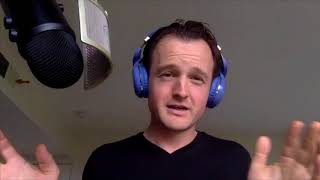
Jonathan David Lewis talks about why brands fail in fast-changing markets and what separates survivors from the rest. He uses game theory and survival psychology to explain how team health and clear purpose keep companies resilient, and shares a three-step framework: admit problems, submit to reality, commit to change.
Chapters
Welcome to Make More Marbles. My name is Brad Hart, and we're here to interview the game changers, the future makers, the co collaborators and creators who are here to collaborate with one another towards a better future for all of us. Enjoy the show. We've got a great guest coming up for you right now. Welcome to Make More Marbles. My name is Brad Hart, and today I am thrilled to welcome to the show, Mr. Jonathan Lewis. Thank you so much, Jonathan, for being on the show.
Definitely. Really excited to be here. Thanks for having me.
Oh, my pleasure. And, Jonathan, I've been just checking out some of your stuff, and I'm just blown away by everything you've accomplished. You're a pretty young guy. I mean, you're about my age, right? About 30 something?
Yeah, I'm right on the edge of that millennial cutoff.
Right on, brother. Yeah. One day, just like five years ago, they started calling us millennials. I'm like, I wasn't at that meeting. I'm not a millennial. What does that mean? I can remember a day without the Internet and smartphones, but Brand versus Wild, and, you know, this book has been, you know, just kind of been bouncing around my circles for a while. I know people talk about it. I just want to kind of get it from your thoughts and then, you know, about the book and what you're trying to change in the world and just kind of ground it, if you can, for the people at home with a story for those that might not have heard of you before. Yeah.
Brand versus Wild. I mean, really, we've been working in marketing, advertising for 20 years now, and I've been a part of it for over 10 years. And the world has just fundamentally changed for us, for business. And technology is kind of at the root of that. And as we've been navigating intense change for our clients and for us, you know, we've been trying to figure out what the heck is going on, how come certain things that used to work are more and more ineffective. And, you know, what in the world is going on, let alone pick up your phone, look at the headlines. The Brexit trump. Artificial intelligence, robotics, automation. Things are just changing too fast. So Brand versus Wild is really my effort to get my arms around what is going on in the business world today, and how do I. And how do my clients stay relevant when everything we think makes us successful and has made us successful for 100 years is changing and isn't going to remain relevant tomorrow? So the wild is how you and I feel every day when we get up and are just overwhelmed by the headlines and overwhelmed by the demands on us. And technically, the wild is actually rooted in our business research. But from an emotional standpoint, which is really where it starts. It's just you and me trying to wrestle with the world around us and create something of value and make it in this world when it used to be a little more straightforward. And now it's kind of scary out there.
Yeah, absolutely. And I kind of feel this pain. I think everybody in the world is trying to tell their story better and get better at understanding what people care about, because I think to be. And maybe you share this value, like, to be a really great marketer or salesperson or any type of influencer, you have to be. There's some of the most empathetic people on the planet. You really have to be able to put yourself in somebody else's shoes, get past your own ego and your own story, your own stuff, and just really think about what did they need, want and desire, and how can I help them overcome whatever is keeping them from taking action on it? That's it. That's the whole game.
It is. It's that simple and it's that difficult. You know, being empathetic requires a little bit of humility, a little bit of trying listening and not talking all the time. And. And that's hard for us. I mean, human nature doesn't necessarily like that or accept that we can often work quite differently. And in fact, you know, kind of the basis of the book is the amazing thing we've discovered that was so fascinating is that our own research, where we've done two national studies and discovered there's seven factors that affect business growth. What was so fascinating about what we've learned in the book is there's really no difference between a group of survivors who are struggling on top of a mountain or in the middle of a desert, and a group of business people who are just wrestling with some unexpected challenge. Both groups are going through the same predictable response to disruption. And we learned that our own research is highly correlated with the latest in survival psychology. There's just all of these interesting overlays between people in intense situations and you and I just doing business. And to your point, one of the key differences between those that are able to deal with harsh circumstances and going down a tributary of the Amazon and dealing with malaria and all these things and who live and those who don't, who deal with those circumstances and go backwards or die in real survival situations is your internal health as a team is the relationship, the health of your relationships around you, which is built on empathy and listening and all of those traits that don't necessarily come naturally to us.
Yeah. And it's kind of like, at least in my experience, it's been more of like a deprogramming to get there. Right. It's like, I think that might be our natural state, like our. Our competitive advantage, if we have one as a human species that we're willing to do more for others than we're ever willing to do for ourselves. Right. When people really step into contribution, they become greater than the sum of their parts. When you come together, it's like, you're cool, I'm cool. But when we come together, we become better than some of our parts. When I look at people and their capacity to love really is their number one competitive advantage, it makes me wonder, really, if that's what we are, if that's what we're here to do, if that's what you believe or not, that's fine. There's no judgment about it. But this is kind of how I look at the world. How do we peel back the layers of programming, societal crap that have been piled on and piled on and all the trauma and all the crap just this kind of unpiled on. How do we get people back to their most natural, loving, joyful state? And if we can do that, we can unleash a lot more capacity because people don't have all these browser tabs just kind of running in the background of all this crap that's just taking up their time and energy and attention and not really amounting to anything productive.
Yeah. You know, it's interesting when you. When you look at how we can be the most, how we can produce the most together, you really do produce the most when you're working with somebody else. You can. You have better ideas. You can create more. More wealth, more generosity for others when you're working together. I would say our natural state, especially when the pressure's on, is to sort of hunker down, to look inward, to get scared. Fear is one of those main obstacles. And something that we've learned is our predictable response to disruption. Our predictable response to any sort of unexpected challenge is to go from fear to drift to inconsistency to savagery. And you can see this in any company as they're facing a challenge, or you can see it in any person, or even these fascinating survival scenarios as people are trying to climb Mount Everest or traverse Antarctica. When the pressure is on, we turn savage and we go down this very predictable path. There's this really fascinating story in Into Thin Air by Jon Krakauer where this expedition is a very trained and expert climbers are trying to climb Mount Everest, and some of them come across, they get in big trouble, somebody dies, and they need help. And this other expedition comes along and actually gives them help so they can continue well up farther on the mountain, they. They come across another group who needs help, and they decide not to help. They decide to continue the climb even though they were given help previously. They come back down the mountain, and some reporters are asking, what is the morality? How did you justify this decision? And the answer was, above 8,000 meters, there is no morality. And so when the pressure is on, we really do turn savage. We turn on each other. Even though that's the most dangerous thing we can do, it's not productive. It puts us in a worse position in business, in life. But that's sort of our natural state. When we're afraid, we turn inward and we turn on each other. And the opposite is required to really be resilient and be successful in this new economy where disruption, the pace of disruption is getting faster and faster. We're going to be dealing with these challenges more and more. We have to be understand how to be resilient, how to be selfless, how to find that capacity to love, because that is what is resilient about us. So I think you're really, really onto something with what you were saying there.
Thank you very much, Jonathan. And oh, my God, so many threads to pull on, because I'm the make more marbles guy, right? I'm not a marble taker. I'm a marble maker. I want to grow and contribute more, and I want other people to do as well. And I truly believe and agree with you that nothing of merit was ever created alone. Right? We love to talk about Steve Jobs and Elon Musk, but hundreds of thousands of people were part of that vision and millions of customers around the world. So that's, you know, an irrelevant statement that I can do it on my own. It's just not true. However, you know, I also believe that scarcity is real. Not as much as people think it is. There are situations like into thin air or like, alive, where the plane goes down over the Andes and we got to decide who to eat first. I vote copilot. Just kidding. It's probably his fault we crash in the first place. But that's not most of life. Most of life nowadays especially, we have the capacity to create so much abundance. We Already produce enough food, I think in a day to feed the world for a week. Right. We already have almost free unlimited energy. We're getting very close to that. We have the solar and the capacity to build these things. Within five, 10 years, we'll be able to do that. We have water filtration systems that the guy billionaire change, I can't remember his name right now, but the billionaire essentially started five hour energy, is now putting all his money into that that exists today. You could park a barge off of California and fix the drought or 20 of them or whatever it would take. And then finally shelter, right? We can 3D print structures. We're already building. I was just in Guangzhou in China at the product fairs. We're building skyscrapers that nobody lives in next to homeless people. We have the capacity, we have the ability. Do we not also have the responsibility to now change the game of economics? So that doesn't just benefit those who understand how to play it and have the drive and the ability to move forward along it, but maybe we can create a new floor through which nobody can fall through and unleash that time, that energy, that attention into creative pursuits.
I think what you're saying is really fascinating and also absolutely true in that we're in an age of abundance. And the capacity for abundance has never existed in human history due to technology, the industrial revolution. I mean, we have created wealth and abundance. It's unimaginable. I mean, people 100 years ago couldn't even imagine what's happening today. The problem is, and I think this goes back to your previous point, I think the problem isn't our capacity to create abundance. Our problem is people, is we tend to be selfish. We tend to turn on each other when the heat's on. And this is the same is true in business. We don't tend to go towards our best selves when the pressure's on. We go towards the opposite. So the problems are in business, you can be the smartest person in the room, you can have the best ideas. And I'm in marketing, I'm in advertising. We have a lot of really good ideas, many of which will work for our clients, many of which never get to see the light of day, are never executed, not because they're not great ideas, but because of people, because of fear, because of lack of courage, lack of focus. These things we've identified through our research and which have been confirmed in survival psychology, that when you're going through these difficult times as a company and it doesn't even have to be Necessarily some cataclysmic event. It can be simply drifting. If you don't know who you are, if you're feeling lost, then these other factors seep in, you get afraid, you start to act wild, you start to become inconsistent. You go through CEO after CEO, CMO after cmo, partner after partner, and it just makes the matter worse. So again, it's not the difference between those groups of survivors, Ernest Shackleton, Teddy Roosevelt, these men and women who did amazing things in survival scenarios. The difference wasn't the externalities, it wasn't how many supplies they had, how smart they were, how many people they had. The difference was the internal health of their teams. How aligned were you, how much focus did you have, how much courage did you have? That was the difference. So yes, we have abundance in the world. Do we have the focus, do we have the courage, do we have the alignment? That that's the core problem we're perpetually fighting.
And I mean, if you listen to Tony Robbins, people do things because of pain and pleasure, right? Do we have enough pain associated to not doing something and enough or doing the right thing, the wrong thing, or whatever you believe that to be. And enough pleasure associated with the new outcome, the new world that we see a little bit outside of ourselves, just a little bit like I love entrepreneurs and I'll tell you why. And this I borrowed from Kurt. So Kurt, if you're listening, thank you. Entrepreneurs are people who create before they consume and they create more than they consume. And if everybody just did that, the world would change overnight.
Overnight.
Just contribute just a little bit more than you consume and they would shift everything. So how do we get people, in your opinion? You've studied psychology and survival and all these different pieces that, you know, what does humanity do at their worst? How do we get people to overcome their ego, their fear, their programming? You know, make a choice out of love or contribution or seeing the bigger picture. Maybe that's their wiring. It just came to me like their DNA is wired to keep them alive first. So many self development experts talk about how, you know, if your cup's not full, how are you going to help anybody else. And that's absolutely true. If you're run down, if you're beat up, if you're scarce, if you don't have enough, you can't help anybody else. So maybe that's the thing. It's just getting people to that place where there's no floor to fall through and then they don't have to act in scarcity or, and survival.
Absolutely. I'LL give you a hint. This is the last. This is the conclusion of the book. You don't have to read the book now. I'll tell you the conclusion.
You should still read the book.
But yes, okay, it's as simple as this. Selflessness. All right? Selflessness. Success is selflessness. And it is the hardest thing in the world because going back all the way back to the beginning of this conversation, humility, the ability to listen. And the achievers in this world, even Steve Jobs, who's famous for his arrogance, had an unnatural ability to hyper focus on his customer and hyper focus on serving them in a better way than they were being served. Today you look at any of the great companies, any of the great brands, REI has a crazy generous return policy. Starbucks spends million, wastes millions of dollars a year replacing cups of coffee because you didn't like it. You know, it had one extra packet of sugar or something.
Is it weight or is it an investment in customer service?
Exactly. That's their marketing. It's these generous companies. It's generosity, it's selflessness. Now, let's go all the way. Let's go to the core here. And this might be something. I don't know if we agree or not. Are people selfless? I would say people at their core are not selfless. They are selfish. And so getting to a place where we can work together requires a lot of work. It requires that pain and pleasure you discuss and setting the right incentives in place so that people can see they can actually get more if they work together. Thank you. That is a real thing. It's just getting people to see that because they are selfish. Now let's get even more controversial here. Now you look at systems in the world. Communism, socialism, capitalism, none of them are perfect. They all have different outcomes. The reason capitalism, although it gets out of whack and does have problems, the reason it has created more abundance and more wealth than any other system is because it is built on. It is allowed to flourish in a system known as our democratic republic, which is built on checks and balances, which is built on an understanding that we are selfish. And if we can set an incentive, a pain and pleasure system in place that overall you're going to work in your own self interest, is actually working with others. And the competitive nature of I'm going to drive down costs and add value because that's the only way I'm going to get more customers that actually helps more people. So you're putting into place in your company these incentive structures that enables people to See that? By me serving my customer, by me serving my teammate, I will get more than if I just operate out of selfishness, which is my natural state.
I love that. It's like collective selfishness for collective gain.
Exactly.
The driver still greed and selfishness and meeting our needs individually. But we can also realize that, hey, me just doing this on my own, I got to find some other competitive, greedy, selfish people to get along with that we can deal with and we can collaborate with Again, I'm being a little bit. But when people can transcend their fact that, oh, hey, no man is an island, they get that piece, they get their needs met, and maybe they go down the rabbit holes, right? Some people, they don't really make the shift until they get enough pain because of overabundance. They've had their needs filled in money or sex or power or whatever it is in such a way that it's caused so much pain in their life. And they see the other end of the pendulum swing, that they're finally willing to come back to the middle. Because I think nature really craves balance and equilibrium, and it's going to trend towards it. You know, chaos becomes order and order becomes chaos. But, you know, we are also conscious in this process. We can create what we decide to create, including hell on earth. And we've seen that multiple times throughout history. So, you know, incentives being what it is, if. Great quote I heard once was, if necessity is the mother of invention, incentive is the mother of execution. How do we incentivize the average person to get out of their own stuff and just do a little bit better, help a little bit more, contribute, partner up, whatever it is? And then I guess maybe my other question, because I have you here and I really want to, like, see where you've gone down this rabbit hole, because I've thought about it a lot, is how do we start to create a syntax? Like, we both communicate in English, right? That's our syntax. That's the way we communicate ideas and thoughts to each other. It's not the best thing that we've ever created, but it works. Language has been there since the beginning. It allows us to tell stories and relate to each other.
So great.
However, what's the syntax for us to collaborate where people don't feel like they're getting screwed or a raw deal or what about me? Or this and that, where we can come together? Kind of like, you know, the consent operation, you know, like, you go and you talk to, you know, people are really down the rabbit hole on consent, sexually and they're having these really great conversations with this different syntax about taking care of yourself and about your boundaries and about your no meaning. You know, you can trusting your no meaning. You can trust your yes. How do we institute that in business? And have you thought of the context of the syntax, the way we could do that? Because I think it's really fascinating.
Yeah, there's some really interesting game theory that I think adds some help here. And that's chapter five is all about game theory and savagery and how incentives really do determine a lot in our own behavior. And one of the famous games in game theory is called the stag hunt, where essentially you have two people with a simple choice. Each of them has to make the decision individually and each of them has to make it simultaneously. The choice is this. Do you want to hunt the stag for two points or do you want to hunt the hare, the rabbit for one point? This is the kicker. You both have to choose the stag in order to get the two points. Otherwise you get nothing. If you choose the hare, you get the single point, no matter what. Now, that is where a lot of us find ourselves, where selfishly, I know I'll get something if I choose the hair. So I'm going to essentially achieve mutually assured mediocrity, because I know I'll at least get something by being selfish. How do you reorient the organization so that everyone can see you can have two points, you can have more as long as you work together. You have to cooperate in order to get to the point where you can hunt the hare or hunt the stag and get those two points. That is where incentives come in, where vision comes in, where leadership comes in, where you say, guys, there's a lot more we can have here. You can have a better life. You got to just work with the person next to you. And it really does boil down to that. And you find hair situations. You find mutually assured mediocrity often in large corporations, in large bureaucracies, in large governments, because the incentives are far more in place for you to be selfish and get your one little point and go home and be okay with that and never rise to the occasion. Really tap into what's possible inside of you, the creativity, the ingenuity, and the wealth creation that you could create if you were just work with the person next to you. So I look to game theory and the incentives, the pain and pleasure that are really revealed through, through game theory to understand how do you put things into place. And there are case studies, IBM and how they had their turnaround in the 90s, Lego, Marvel, all of them had to figure out how to incentivize mutually, you know, cooperation over this mutually assured mediocrity.
I love that, and that's a great point, is that ultimately everything we do can be functions of games. Like, John Nash is a brilliant mathematician. I don't know if that was one of his or not. But, you know, we talk about the prisoner's dilemma, we talk about the stag game. It's like, how do we either through pain or through pleasure, kind of incentivize each other and understand that there's a bigger game of play and get this knowledge drilled into people's heads where they really understand that there's something to do here. And we could do it through storytelling, we could do it through math, or however they relate to the learning matter at hand. But I'd really love to get, to get drilled in because I asked you a really long question. So I apologize. On that context or that syntax where you can really get it for people.
Yeah, I think. Okay, going down another level, beyond game theory, how do you actually put an incentive in place? One of the first things you can do is give people a purpose in the company. And because purpose by itself elevates you beyond yourself and it takes you outside of that. I scenario where it's about me into the we context, where it's about us. Purpose allows all of us to point at something beyond ourselves. So our company's purpose is to be a blessing. Yes, we're in marketing and advertising. We sell stuff, we help you be your best you. But at the end of the day, we're here to be a blessing to our clients, to each other. And ultimately, if we're doing those things, we'll be a blessing to our clients, customers, and the world around us. That's our purpose. That allows me to have some context, some filter for every decision I make. If I decide to be selfish, that's not being a blessing to my co worker or anybody. If I decide to cheat somebody or do make a move out of a lack of integrity or a lie or anything, that's not being a blessing. Now another area, don't be evil. That's Google's famous thing that gives you a filter to make decisions. Now, they're probably too big now to follow that. You need a purpose outside of yourself. Because guess what? That's the key. Something outside of yourself. And when you look at the survival scenarios, there's all of these. This is this fascinating thing called the will to live. Every. All of the researchers understand that it exists, that it's out there. Nobody understands how it works. It's almost. It's this mysterious force where you'll have two people in a survival scenario. They both have some same level of physical strength and health. One will, in this extreme scenario, will choose to die. The other will choose to live, and thus it will become so. The person may have had the same level of health. They'll die because they've given up. And they found this first in prison camps in Korea and in Vietnam, where those are extreme scenarios. And American prisoners, not because they were unhealthy, not because they were sick, not because somebody hurt them, simply because they were giving up on life, were dying. Those that had a will to live, same thing in these other survival scenarios. Somebody can have the worst circumstances on Earth. They'll dig down deep inside, they'll find something outside of themselves. Like, they want to live another day for a loved one, or they believe in God and they want to live for God and at least give it a shot because they believe in Him. You know, they have all these things outside of themselves, which gives them the will to live, which gives them what they need to get outside of their own head and press forward and work with each other for greater abundance.
That's a great point. And, you know, I'll bring it back even further. I took a Holocaust literature class in college, and they made us read a book by Viktor Frankl called Man's Search for Meaning. And Victor was a huge contributor after the war into, you know, telling his story and just making sure those stories stayed alive so that people could understand that, you know, we have to. We have to be vigilant that this can never happen again. And one of the things he came to. If you ever read that book, I think it's required reading for anybody. But one of the things he came to at the very end was like, the people who believed that there was something worth living for, they lived, and everybody else around them died the second they took their eye off the ball of what they were going to do. And it didn't have to be much, right? It could just be like, I want to live to the next meal or the next day or the next whatever, right? But just having some reason, some will to live was the difference. And it was a choice, really, at the end of the day, you know, and sure, there were things that, you know, could fail you whether you wanted to or not, but if you had the. Like you said, you had all the advantages or the Same advantages, and you could survive. That was the difference between survival, survival and not surviving.
The way I break that down in the book is kind of three steps. It's admit, submit, commit, and first, regardless of your scenario, regardless of you could be the richest person on Earth and you can also be the unhappiest person on earth, the emptiest person on Earth. I mean, it's really not the externalities. First, you admit, wherever you are, you need to admit that I am not happy, I am not successful, my company is not where it needs to be. You need to admit it because often we live in denial. We hate to think about perhaps we're not where we need to be. Then you need to submit. Now this is different in that you actually first, admitting it is one thing. Submitting is this idea of actually giving into that circumstance and giving into the tools you have and not living in la la land where you say, well, if only I had X, I could do X. If only I had this, I could do that. You submit to the tools and the skills and everything you have at your fingertips. Then you come in and this is where the will to live comes in. Really, human beings are amazing. We are some of the most resilient people on Earth. I mean, it's amazing what we can go through and survive if we want to, if we're willing to, if we commit to living, we can get through the most hellish circumstances on earth. So admit, submit, commit is really a way to kind of acknowledge where you are and get yourself into the right mindset to then overcome whatever is in front of you today.
That's huge. And thank you. That's a huge, valuable, easy to remember type of thing. Like, I love these little bites information. It's like we've gone down the rabbit hole on this. We've looked at all the data and here are the things that are going to get you out of a bad situation. Right? Don't lie to yourself. It's not worse or better than it is. Right? Admit, submit to, hey, this is the situation. And then you can start to look at it from a new angle, right? What are the resources we have at our disposal, including the will to get through it, and then finally committing to taking action and getting yourself out of it. And that's a beautiful. Thank you, Jonathan, for that. So, so many wonderful things we could dig into here. I really love to talk about the idea of the values in the mission statement. Just go back to that for a minute because I don't know if you're familiar, if you've done Landmark, but there's a guy named Dave Logan who's really popular in Landmark. I haven't met him, but another person I have met is John King, who wrote a book called Tribal Leadership. And they talk about the different levels that an organization goes through, right? Level one being like, you know, everything sucks, including me, you know, and then level two is like, okay, you know, the individual actors are like, you know, life sucks. But, you know, I see some people have it figured out, right? Some people are doing better than me. Like, they're open to the possibility of a better life. Level three would be like, everybody around me sucks and I'm the best. And, you know, level two and level three kind of go one on one. But then they really start to turn the corner is, we're awesome and everybody else sucks. We as a collective now, this is stage four, and people stay at stage four. Like, big companies are at stage four. We're the best. Everybody else kind of sucks. And then at the very last stage, which is where some. What he posits in the book, or what they posit in the book, is where some companies get to it for a specific determined amount of time, is level 5, which is cancer sucks, or world hunger sucks, or, you know, computing devices suck. We want to change it. And then they kind of go back to being, we're the best, and everybody else sucks. So how do people kind of hack that and you're, you know, using that kind of framework. How do people continue to level up through those organizational structures to really do the impact in the world that they want to create? Like, if I could leave one legacy behind, I would love for people to be able to go and say, all right, this is how we operate. This is how we work together. We see the benefit of it. Let's go to town and let's create more wealth for everybody.
Yeah, that's interesting, I would say. I mean, you should. First you need to identify that purpose, which, in terms of getting out of your own head and starting to get your team to rally around this idea of we and actually be a team, you identify a purpose. It's something you don't actually ever get to. It's something that's so big and so wonderful that you're just always working towards it, but that's not enough. You need a focus. And so to get to that focus, this is something that a lot of companies who have great purposes miss. Because there's kind of fuzzy land where, yeah, let's be a blessing. Let's not be evil. What does that mean. So then you have a focus. And for a company who may be struggling or needs to somehow organize into an actual team, you need to ask yourself, what am I really, really good at doing? What brings me some sort of pleasure and gets me excited? In what am I passionate about in my own work? But that's not enough for your focus. You need to then ask a second question. You know, what does my customer need? And how can I serve them, actually serve them? The money question is this. Where do those two things overlap? And where they overlap, you find relevance, you find focus. So you have your. You have your purpose, which takes you out of yourself. It gives everybody, perhaps up to, you know, up to stage five, I would say, where purpose is really pushing you outside of yourself, above we're just better than everyone else. And then you have your focus, which can change over time. It changes slowly, but just change over time, which gives you action, allows you to commit to something that's going to continually be relevant over time. And it is selfless in nature. And it's kind of this interesting overlap between selfishness and selflessness because it is about you. It's something you're good at and you're passionate about, but that's not enough. It has to be about them, too. And if you can find where those two things intersect, all of a sudden you're kind of. You're up in stage five, where you're trying to be. Trying to do something greater than yourself, but also putting it into action every day and finding a reason to come to work.
I love that. Thank you. You drilled into some really key points there. And it came back to, really, the beginning of the end is like, what do people need? Want desire. Like, I need one desire to add value to the marketplace and get leverage and make wealth. Right. Let's say that's your goal, your outcome, and what do people need? One desire. And to find that product market fit is really just the intersection of those two things.
Right.
What about, what can I provide and what do people want? Let's find where it fits and then we'll grow it from there.
Right.
So many people get caught up in. And I just had Tucker Max on the show today, actually, and he said, you know, the team is important, and that's one way to grow a company. But if you're going to fail your way forward to product market fit, that's a painful experience. I don't know if you've experienced. I certainly have because I'm not a product guy and I know that. So I try to get really good products, people on my team, or find out whatever he's selling and just trying to do more of that. Sometimes with success, sometimes without. But how can people really hack this to get into the point where they're really. You think it's a willpower thing? Do you think it's a design thing, a skill thing? Like, what do you think is the key thing that's holding people back from just playing this game? Because in the future, jobs aren't going to exist, man. We got the world coming with AI and robotics and VR and just all these things are going to replace so many jobs.
It's people. The thing holding back people is people. And where again, if you're in business today, you're probably okay at what you do, you may not be great, I don't know. I think I'm great, you think you're great, but you're probably okay enough to be in business. So from a skill set standpoint, that is just one element. You need to be good enough. It's the barrier of entry. The difference is the people. And it's not necessarily like having a great, you know, just a great team with a lot of skilled people. No, it's people aligned around one single objective with focus. And all of those things fix all the internal junk, that predictable response to disruption, lack of fear, lack of focus, inconsistency and misalignment, savagery. All of that suddenly goes away when you have alignment, when you're on the same team going in the same direction with courage, with conviction, because you have focus. So while that's part of the reason my company has drilled so far down into this, we say that we're the world's only brand transition experts. We understand what the team dynamics and how people don't get along and what stops you from moving here to there. Whether it's succession or mergers or, you know, changing business model, whatever it may be, we understand what's between you and there. And it's very little of it is expertise. We can find that it's out there. There's a lot of people with expertise. It's you, it's your team. It's getting on the same page. And that's why even though we're in marketing and we're very good at it, we start with you and your team because that's the only thing that's going to get you from here to there through that transition.
Yeah, that's leadership, really. It's self leadership first getting you to do the thing and then once you're doing the thing, how do you get other people to do the thing? And that's where influence and persuasion come in, and sales and every other thing. And people look at these as dirty words. They're just tools. Guys, let it go. Let the story go. Nothing would happen if somebody didn't convince you at some point, and nothing would happen in your own life if you didn't convince others. Right? That's what we do. We're. We're convincing machines. And the best ideas tend to bubble up to the surface and become things that we all need, want and desire.
And really, I love how much people hate the word branding. And, you know, it's used so much, and everyone rolls their eyes, but it's like, well, do you take a shower in the morning? Do you take out your clothes? Do you go shopping? Do you put on makeup? You're branding every single moment of your life. And even people you know who kind of shunned that. Well, by shunning it, you're adopting your own tribe, and your brand is shunning branding. So it's like, we. There's no way, as long as you are not on a desert island by yourself, that maybe that person finally can stop branding. But as long as there is a relationship in your life, you have a reputation, and you're communicating something through your actions, through how you look through your words to other people. That's the fundamental aspect of the core of branding. Just a message from one person to another. So there's a lot of words, there's a lot of lingo thrown around, but it's pretty basic. It's human nature. It's how we talk to each other. And that's where your question around language is pretty interesting. One of my favorite movies the last few years was Arrival. And kind of the core of Arrival was this idea that language is pretty controversial. Language determines how you think. So someone's language, perhaps there's certain concepts that are harder to get through because you're hardwired to think a certain way. So kind of the. I don't want to ruin the movie for anybody because it's an awesome movie, but the core of the movie is this idea that if you can just learn a language with a certain idea, then you can open your mind to entirely new ways of thinking, entirely new ways of working together, which is the core of that movie. So language is everything, and the words we use are everything. And that's why, you know, on one hand, political correctness is dangerous because you're censoring language on the Other hand, you can't let it get out of control. And you don't want to just be horrible with your language. You know, language has power. Language is everything. So I think again, you're really, really onto something. When you talk about the words we use and how we communicate with each other, is there something even better than the English, English language? Maybe there is, yeah.
And it's not even necessarily just language, just seeing how limited language is like, you have to be really talented to convey a feeling through language. You have to be a great world class storyteller. To do that, to do it outside of a conversation, without that direct feedback even takes another set of skills and another set of skills, which we call copywriting, we call ad tech, we call funnels, we call, you know, TV commercials. Being able to send a message that creates a response to the recipient is the tool of billion dollar companies. And it needs to be the tool of every person on earth. And we need to understand the value of being able to do that. To insert a feeling or incept an idea into somebody you've never seen, touched or heard and it's scalable, is the ultimate way to create wealth. Because all wealth, at least right now, I can't speak for the future, but right now, all companies exist to serve people. At the end of the day, people spend money, people do their thing. That may not be the case forever, but the idea I want to posit here, guys, is if you want to be part of making the new world, which is, you know, maybe a desire you have, maybe it isn't, you really got to understand how to lead, persuade, influence, sell whatever idea it is that you're really passionate about through the methods that we're talking about. You got to go all in on this because it's the most valuable tool you could ever have in your tool set. And it's, you know, it's just a hammer, right? The hammer in and of itself is not good or bad. It could be used to build a house, it could be used to cave somebody's skull in. It's really the wielder of the hammer, right? The hammer's out there. Go learn how to use it, you know, and make what you want to make. Create what you want to create.
Leave your legacy. Absolutely. One of my favorite books is a book by Patrick Lemcione called Getting Naked. And it's probably my top business book of all time. And in it, there's two concepts for me that I think are really at the crux of, of getting business done not being good. At what you do, but getting business done. And the first concept is entering the danger. And this is the idea that we all sit in these meetings, we all talk around things, and we all have these meetings where nobody's saying what really is the problem. Everyone's dancing around it. Well, you need to be willing to enter that danger. You need to be willing to get weird, get awkward. But it's not enough to get awkward. You have to do it a certain way. And that's where Patrick Lencioni says, do it with kind truth, where truth by itself isn't enough because truth by itself can be harsh or turn someone off. But kindness by itself is enough because kindness by itself is impotent. Get weird, get awkward, get into that. Enter that danger with kind truth. And in that vulnerability, you can really change somebody's outlook. You can actually. That's. That's greasing the wheels of communication, where if somebody knows that you actually have their. Their best interests in mind, that's weird. The world is selling us stuff all day. If I believe you have my best interest in mind, then that's why it's so powerful for REI to take back. You know, something you just broke at home or Starbucks to replace your drink.
Or LLB in 10, 15, 20 years before they even did that. Yeah. They used to be able to wear a pair of L.L. bean sandals until they fell out the bottom. And then you send them back, they send you a new pair. Wore the things out over a decade. They're going to send you a new pair. And that's customer service that's led. It's incredible. So, yeah, I totally get that. I totally agree. Entering the danger is a great point. Right. Conflict really shows people what they are and who they. What they care about. Right. It's not being nice. You know, I always tell people, don't be nice. Nice is fine, but it's not going to get you to excellent. Outstanding. People are kind and they're valuable. I'm going to add one more to it. They're awkward. Sometimes they say the uncomfortable thing. You know, I was in Africa with Tim Ferriss a long time ago, and he said a few things that really stuck with me. He said, the quality of your life is determined by the number of uncomfortable conversations that you're willing to have. That's where the real juices is. Those things that you never would have considered had you given into fear. So start operating out of love or. Or whatever drives you. Right. Just start operating out of a place of. Nope. Sorry. Ego. Gremlin. I Know you're going to keep me safe and keep me alive, and that's your job, and I appreciate it, but go sit the hell down. I got this. I'm in charge. It's going to be okay, because you can now operate from a place where it's not just the downside, but the potential upside.
That'S so powerful. My entire business is built on willingness to have uncomfortable conversations the right way. And that. That's where, again, that's where you begin to get alignment and focus and courage. Where often in these. In companies, in my own company, when you're facing that challenge, you hunker down, you shut things off, you assume things about other people. You know, you get turf wars. Everything is in the way of having a honest, kind conversation. And if you're willing to get awkward and I mean, there's industries, my industry, if we're doing our job right, my industry is built on our ability to be a third party with perspective and come in and have the weirdest conversations in the right way, because that's where the power is. Then we get to work on our expertise, which happens to be marketing. We're good at it, right? But before we ever get there, we get weird. Let's get weird in the right way.
You build that rapport, right? People need to know, like, and trust you before they'll do business with you. It's just human, right? Just before we had language, we had body language. Before you could grunt and point at rocks, and that meant rocks. And we both understood, we. We made gestures, right? And that's kind of how we still work. You know, 90% of communication through humans is still physical communication, which is why I love video as a medium. Even though this is an audio podcast, even it's gonna be on itunes. Stitcher. There's nothing quite like getting into it with somebody face to face. There just isn't. Never will be. That's just how we're wired, right? Unless we change our biology drastically, I don't think that's going to change. So, you know, I don't want to. I want to be very respectful of your time, Jonathan. I want to kind of start to wind this down, but it's been an incredible. Like, this is one of the better podcasts I've done. I just want to say that I've done several. Several dozen. So thank you for that. I'm grateful. And on behalf of the Make More Marbles audience, we're grateful to have you here.
Thank you.
So what is one thing that you would like to be known for what's your legend, what's your story that you want to create in the world?
Oh, it has to go back to my purpose. You know, I want to be a blessing. And that begins with the person next to me in my company who if I can build them up and show them a vision for themselves and help them be their best selves, then they will do that for another person in my company and then we will collectively do that for our clients and then they will do that for their customers. And it's a ripple and it goes all the way to the culture. And we have set up strict guidelines for ourselves to really try. I mean, it's a goal. We don't do this perfectly, but there are certain things I don't want to do. I have power in this culture because of my influence and so I don't, you know, I will not put something out in the world that if a 9 year old kid sees it on their coffee table, it's going to mess them up or make them, you know, put them on a wrong track. That's a power we have. And that's why Godaddy and Carl's Jr. You shouldn't do that stuff. You know, you're impacting people in the world in the wrong way. There's a wrong way to communicate, even if it makes you a quick buck. So my, if there's one thing I hope to do, I hope to be a blessing in my tiny, small, insignificant sphere of influence. Hopefully at the end of the day, somebody was blessed by my life.
That's a beautiful sentiment and it really underlies your values and that's really what we're here to learn. It's not about the things you've done and they're all great and we respect you for your successes. But what people really love you for is who you are at the end of the day, your failures and who you are at the end of the day. Right. That's what they can relate to and that we create power, we create something that's better than the sum of our parts. Right? You're cool, I'm cool. But when we come together, there's something extra there.
You just described all of branding and marketing.
I love that. That's beautiful thing and God knows I need help with branding. I've been working on this brand for three years and I don't think I'll ever get it right. Exactly. But I'm getting closer every day and you know, I know it's not my skill, I know products aren't my skill. I know branding isn't my skill, but where I really excel is one on one. I can talk to people all day long, and I love it. And I'm lit up, and I don't even eat sometimes because I just know I'm in my flow, and everything that comes in my life is a result of those connections I make. Everything. So. All right, I want to leave you with this question. Everybody that's on the show, I never tell them beforehand, or I don't really tell them exactly what I'm going to ask them. We have a couple core values here at Make More Marbles. One of those things is that we want to be marble makers and not marble takers. We want to create more, and we want to give back to the people who give to us, even if they don't have anything to give. I might have said that a little wrong. Apologies. So I misspoke. But what we want to do is plant seeds and grow crops. And crops is an acronym. It means Connect Resources, opportunities, people, and systems together. So knowing your end goal, knowing your vision, or having an idea what your life would be to be a blessing. What is a connection, a resource, an opportunity, a person, or a system that can help move that narrative forward for you?
Let me clarify. Is this for me and my business, or is it for me to serve people? Or is this for.
Yeah, this is for the furtherance of your narrative as a person, your business, whatever it is that you're trying to achieve. There's somebody out there listening. Myself or my team or somebody on our list or somebody that's gonna listen to this on itunes or stitcher that might have that answer for you. And what would that be?
I don't get it.
You don't get it?
I don't understand the question.
You don't need or want or desire anything in life more than you have now. That's a pretty good place to be.
No, no, certainly. So. So you're asking, what do I want?
Yeah, what do you want? If somebody could wave a magic wand and solve your biggest problem or accelerate your vision today, right now on this show, what would it be? Thank you for clarifying, because that gets me better at asking the question. Thank you for that.
Definitely. Definitely. Sorry for the confusion.
Yeah.
I want more honesty about my business.
Okay.
Because we. Because marketing and branding is commoditized. And so my goal is to find what Tim Williams calls the magic in marketing and not the logic, which. Which is being commoditized. So I need honesty in my. For my company and for my team for us to really see ourselves as we are provide magic and less logic. So I think perspective, that's what I need.
I like it. And how can people offer their perspective to you? How can they reach out to you and give them, you know, I'm sure there's a lot of smart people listening. They want to reach out, send you an email or through your site. How would people contact you?
Absolutely. Jonathan David Lewis.com not only can you find all my social platforms links links there, but at the bottom you get a free chapter of the book and you can see more about my company and everything we do. And of course, you know, leave a review of my book, tell me how it is. Hit me up on Twitter. I'm on there all the time. Give me some perspective. What, what are even this conversation. You know, I've been very enlightened by all of your perspectives on the world and people. I need that in order to do my job better, which is blessing people.
Thank you Jonathan and thank you so much on behalf of everybody in the Make More Marbles community, listening all around the world. Thank you. And we are thanks so much for listening to the Make More Marbles podcast. For more tips, hacks and strategies to create an amazing abundant life in your health, wealth and relationships, whatever that means to you, head on over to makemoremarbles. Com, check out our cool explainer video about what we're about and join our community of entrepreneurial game changers. We want to help you level up your life in every possible way. And don't forget to subscribe to us on itunes, Stitcher or Google Play, wherever you're listening to your podcast. And please do leave a review. Thank you so much and we'll see you on the next podcast.
More from Brad

The #1 Reason AI Isn’t Working for You (Yet) #AI #businessowner #founderenergy




What tasks would the best assistant ever be able to do for you? #BusinessSystems #BusinessOperations



Nobody expects you to use a harder way when there's a better way. #AI #businessowner

Which side of the table will you be on in 2026? #AI #Mastermind #BusinessOwner

