#114- Brian Samson on Scaling Recruiting Firms Through Nearshore Talent
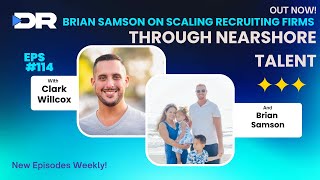
Brian Samson, founder of Plug Technologies, built a nearshore staffing firm supplying Latin American software engineers to U.S. clients. He pairs senior U.S. developers with teams from Latin America, leveraging shared time zones and cost efficiency. Samson moved from VMS recruiting at Sapphire Technologies through multiple startups before landing on the nearshore model.
Chapters
Foreign.
What if the boldest move you make in 2026 isn't learning a new AI tool, but prioritizing your professional development and community by getting yourself in a room with people leaders who are serious about elevating the world of work. The Evolve, TA and HR experience is back in Atlanta January 29th. It is a one day in person only conference for talent acquisition, HR and people leaders who are done with business as usual. So here's the deal. A lot of events give you a logo, a lanyard and a whole lot of talking heads. Evolve gives you something different. Three curated tracks, talent and tech, people and culture, brand and career. These are practitioner led sessions with real playbooks and tools that you can use right away. You're not going to just collect new connections. This event is intentional. It's human centered, data informed and nervous system aware. It's built for leaders who want connection, honest conversations and again next day actions they can bring back to their organizations and their teams. So if you are ready to recharge, reconnect and rise with a community that loves this work, grab your seat for Evolve 2026. You can find it at www.yourcareerbff.com. evolve2026. Great events don't repeat they evolve. Join us in Atlanta on January 29th. See you there.
All right, today I'm joined by Brian Sampson, founder of Plug Technologies, which is a leading new firm connecting Latin America talent with U.S. companies. But more importantly, why does it relate to you? To me? Well, he's accomplished what I haven't accomplished, you probably haven't accomplished, which is an all time high of 90k in weekly spread, which is insane. He's got a cool story, a cool life, like just a lot to talk about. But Brian, is that correct? 90k in weekly spread, all time high as an account manager.
Oh, I think that was my team
way, way, way back, back in the day. Well, I saw it from the LinkedIn profile.
Yeah, yeah, way back in the day. Yeah. So I was at, cut my teeth at. Man, you gotta, you gotta have an old audience. If they know this company called Sapphire, like the gem. Sapphire Technologies. Yeah, we had like 40 branch offices. I was working out of Chicago, which is where I'm from originally.
Yeah.
But had nothing to do with Chicago National Accounts division. So you know Pfizer, IBM, Verizon, like the big dogs throw out throughout Rex. And if any of your audience has ever worked in that like Procure staff, you know, throw in chum to the
fishes at VMS World. Yeah.
So here, here's a fun, fun fact for you. One of my very first accounts they threw me at was Pfizer and mostly in like Groton and New London, Connecticut. So people that kind of know that I think there's some naval bases out there, but Pfizer is huge out there. So they had 168 staffing vendors and I was just one of them. I was just this random guy in Chicago, like monitoring procure staff and the VMS systems. Like minute by minute, you know, when are they going to throw some. Some more chum in the water and you know, like it project managers or, you know, I forgot if it was Java developers back then, but who knows? So, you know, by the time you get the rack and then you go on dice.com, which was the thing back in the day, and you know, you're trying to find whoever's available. I mean, it was, it was painful. It was so much competition. And then, you know, eventually I found workarounds and, you know, but man, that was, that was like a going to the deep end, you know, way to start your staffing career.
That's. And so that was your foray into how you got into recruiting?
Yeah, yeah, that was, that was very first recruiting job.
Yeah. Or so were you like me where you got a call out of the blue, hey, do you want to do this? You're like, what is that? Or like, who. How did you get introduced? Right, to recruiting?
Yeah, Well, I lied a little bit. So I had my very, very first job out of college was I got into a mortgage company and this.
We.
We probably caused the housing crisis and I didn't even know it, you know, because I'm like 22 years old and have no idea what subprime is or anything. My mandate is just to, you know, do some HR and then recruit some loan officers and. But anyway, you know, did that for like eight months and I, I was frustrated because, you know, I had the Midwest work ethic, you know, like grind. You know, Everybody's gone at 5, I'm still there at 8. Like, what can I do more? You know, and I. My salary, which was pretty low anyway, it didn't matter if I got more deals or not, you know, just. Or placements. And. And then I got a cold call from like this recruiting agency and they're. And they're like, well, you know, if you make so many placements, your comp is going to be this way. What. What do you mean? I can get like paid on my deals. Are you kidding? So like, just like that, I was Gone. Yeah.
God. Now it's a little harder to make the placements, though, when you're external. Right. Versus internal. You realize why you get paid more. Right. Was that, like, a little bit of a shock at first, or did it just kind of click for you right away?
I was one of the lucky ones where, like, my second month, I probably put four deals on the board and, you know, just. Yeah, it was, you know, I. I was the guy that was already, like, innately competitive. I had the work ethic. I would look at the whiteboard, I grew up playing baseball, and, like, calculate an ERA when I'm seven years old, you know, and. Yeah, and, like, I knew not only my stats, but, like, the stats of every. Like, all the seven or eight other recruiters in the bullpen. I like, if they. If they had a question, like, hey, what's my conversion rate? Oh, right now you're tracking a 4.2 to 1 right now. You know, like, you know, I was that guy. Like, I. I was just made for this world of, you know, competition whiteboards.
You want.
You want to raise, make a deal?
Yeah, absolutely. I mean, that's it, right? If you're not getting there, you know, go get some more clients and. Or require some better roles, but some better wrecks. It's kind of the name of the game. And I'm with you, man. Did you have, like, a manager or mentor you came in that just, like, showed you the ropes, got you off on the right track? Like, what was beyond just kind of the innate competitiveness, like, what were some of the keys to success you were starting out.
I think when I was getting going, I actually liked the way that I was set up is, hey, Brian, you know, run your desk like you're running your own business. And that's all I needed to hear. You know, just like, I'll leave you. I'll kind of leave you alone. Once a month, we'll do a report on all your stats, and you can talk through what's going on if you have questions or something. But otherwise, like, kind of figure it out. And I think. I think that was really good for me. Like, I like being in the bullpen, and this is something that I feel fortunate for when I went through all that, because imagine if I was a rookie in 2019 or 2020, and then this whole bullpen scenario went away. And I've gotta do all this throughout Osmosis. So I wouldn't say I had, like, somebody with their hand on my shoulder. Hey, let me. Let me talk you through this. Two step close. But I had all the osmosis of like so many different conversations that I could hear. And you know, and I still remember like some of the random stuff, you know, from 20 years ago of placements my colleagues were making or challenges or how they did the two dollar holler or the three step close or whatever, give in, get back, you know, still remember all that stuff.
It's, it is a little bit sad that people don't have that experience.
Yeah.
Because that's where we called it. You called the bullpen. We called it the pit over at Aerotech. And I did learn so much from like whispering my first week or two or months talking on the phone because anyone else to hear me or judge me or anything else and, and all that and look up like how is he at 3k, 10k in spread like we don't ever hear him talking. Yeah. Which is hilar now given loud and obnoxious. I am all the time on recording and content and everything else. But it is kind of just that I did learn and talking to different managers and how you had to go to lunch with. I had to go to lunch with all the managers in my first 90 days. And just hearing the stories, you pick up on the different themes, all that. Then you kind of pay attention, you read the playbook, the company, the best practices and then what people are actually doing and where is there overlap versus where hey, this is not in the manual of stuff going on. And you do you pick up on so much which, you know, it seems like a lot at the time, but now it's like I can work remote, I could be remote. But before Aerotech I had no discipline to be able to work remote or doing like I did need to see that. To your point, the osmosis now it's like it's so ingrained and internalized. I understand the need for remote. Things are way more expensive now and all that stuff. It's hard to do and I get it. And it's like you see everyone else being remote just because you can do the job remote. Is that the best for your career? You should.
Yeah, right.
And it's like if you can get a stint, man, that's it makes all the difference.
Yeah, I, I couldn't set it better. I mean this, that was my education was just listening, listening, listening for four years, you know, every conversation, it was awesome. Yeah, Also, also the banter, you know, like I don't know about you but like the smack talking, the banter, like that's what got me, got Me pumped to get to work every day.
It's. I mean, it was like we had, like, a workaholic situation. Like, a couple my best friends there. We all got an apartment together, like, five months into me starting there. And we were all kind of. They were more recent grads. I was, like, four years out of school, so I was, like, the more immature older brother. Like, they were the more mature ones than me. Like, kind of getting my stuff together, even though I was three years older than them. But we all had, like, a house together for a couple years. Like, it was a great time. Like, we'd carpool until we all got promoted. So then we all needed our own cars to get to work on that. But we'd look for days where we could carpool together now from, like, Santa Monica to the Torrance office out in LA and stuff like that. So, like, it was just a blast. Like, still on a group chat with those guys 12 years later, stuff like that. Like, it's just the best. I don't even. Neither of them are even in the industry anymore. Both still selling. Right. But not. But, like, it is. It's just like, you talk shop and, like, it's funny. Like, we weren't, like, that competitive with number. It was, like, kind of unsaid when you're like, that's like, kind of. You know what I mean? It's like he kind of just like. No, but it was just, like, fun to be able to have people to, like, talk shop with and. Yeah. Like, talk stuff about work and, you know, you comment on people and stuff like that. Of course, we didn't talk smack about anyone or you never do that. But, you know, like, it's. It was just good. It was good to have that outlet because, again, how much of a grind all this can be, too?
Yeah. Yeah.
Let me.
Let me ask you, Clark, were you the. The Blake, the Adam or the Ders of your group?
No, my Matt was the DS for sure. I. I'd be. Yeah, whatever. Yeah. Probably the. The one with the long hair at that time until I got my stuff together. But at that time in that period, like, I had great numbers, don't get me wrong. But I was. I was a meathead. Yeah. So it'd either be the Adam or the guy with the longer hair, one of those two. Because I. I was always the first to volunteer for karaoke. That gives you any insight. So, yeah, whoever that character is. Yeah, it was fun. The show came out around the same time, stuff like that. But, yeah, it was a good. It was A good time. Yeah. So I mean, you have the, they have the bullpen. If I'm not careful because you run your own podcast, you'll be interviewing me. But. And for those that don't know, it's the Near Shore podcast, so check it out. But you're there for about four years. When did you start? I mean, you scaled multiple companies, right? You've, you've been VP of talent acquisition and help companies grow and all that. Like, when did you, like, all right, I got the staffing piece. I'm an individual contributor. I gotta go fly. Right. What was the journey like after that?
Yeah, I think when I look at my career as a whole, I've always preferred to go more broad than super deep. So, like once I felt like I was pretty good at something, I would try something adjacent and then pretty good go adjacent. So, you know, I got pretty good at the agency world, pretty good at managing. You know, that spread number, that was me running. You know, I think by the time I was 26, I had a team in Boston City, Woburn, which is a suburb, and then Chicago. So I had like 16 recruiters or something, you know, the age of 26 and you know, got like decent at leading probably, you know, made all the mistakes in the book and then moved to Southern California and then moved to San Francisco. So San Francisco was just a run of in house guy, VP of talent, kind of a fringe executive, you know, and learning like how the tech startup scene worked and you know, you, you, you start to understand the, like when you're an agency guy and you're an in house guy and you, you kind of see both. And I remember the very first time I was in an in house and then I had agencies pitching me, they're like, yo, Brian, we haven't met yet, but I got the perfect candidate for you. And I'm like, what? Like who are you? And you don't even, you know nothing about the company, nothing about the job. Like, did I sound like that? You know, so yes. So it's kind of funny, but you know, learn a lot about startup culture. You know, learn like how much what I thought ta at a startup had way more in common with marketing than human resources. You know, you're thinking a lot about employer brand, you're thinking a lot about go to market strategy, you know, your avatar, you know, all that stuff. And messaging, I mean, I'm talking to the master at messaging. And by the way, like, this is the first time Clark and I met, but this guy has gold nuggets. That I've, I've been reading for years on LinkedIn about, about messaging. But yeah, I kind of learned all about that but you know, got good enough. But it's not like I was, you know, VP of talent for Uber or Instacart or something. You know, these are all like series A, series B startups. And then got the itch just over 10 years ago to go on my own, be a founder first. First real founder story was I actually raised money. So I raised about $2 million and it was more of a like dev shop, if your audience knows that term. So we were responsible for the fixed price solution and we were building MVPs for FinTechs in San Francisco and New York. I relocated to Buenos Aires to kind of build the whole company down there and we had sales in San Francisco, did that for four years, then started an RPO company called Bali Staffing and perfect time because that was right before COVID hit. So I mean that was a horrible time. But then quickly the greatest time of my life and I just thought I was like the best salesperson on the earth, but really I was just selling ice to people on a hot day. But yeah, we grew that to like 60 recruiters that were leasing out to VC funded tech companies. And then more recently it's Plug Technologies, which is spelled with two GS P L E G G and we've got about a hundred nearshore, which means Latin America software devs that we lease out to US companies.
And in terms of who you work with right now, like what does that typically look like?
Yeah, so I think what I've learned is I believe in you, earn the right. So like you've got to level up and like earn the right. And then you know, it's like kind of a staircase to get to the next staircase. So by the way, like we have not earned the right to be a direct vendor to Uber or somebody like that. You know, we're not, we're not there yet. But we, we've cut our teeth, proved ourselves on some early to mid stage VC funded tech startups. Today we have two primary clients and I think your audience that's in the staffing world will relate to the second one. The first is, you know, work with like some middle market, medium sized companies. They need a team, you know, they need five, six people, Java developers, qa, whatever. The second, this is where I think we could, we could really help some staffing companies and they could help us. So for those that are doing U.S. staffing, especially U.S. contract staffing right now. We all, we all thought we were great at sales in 2020, 21, 22. But unless you're an outlier, 23, 24 and maybe 25 have kind of been underwhelming for most. You know, there's I think close to 16 or more thousand, 16,000 staffing companies out there. And you know, these last three years have just kind of been okay, you know. And we're seeing things happening geopolitically too. It doesn't matter where you are, what side of the aisle you're on. You're seeing politics at work here with things like, you know, China's not in good graces right now, India is not in good graces, the 100K, H1B, all these things have an impact. And you're also seeing scarcity at the top of the food chain, like data engineers, AI, so forth. So there's a huge wind in your sails right now for Latin America nearshore software developers. And if you work with tech companies and mid market companies, even if you're not selling it to them, your clients are thinking about Latin America. They're thinking about having a shared time zone for their team. They're thinking about staff augmentation, they're thinking about optionality and flexibility. You know, CFOs had like no power in 2021, but now they have tremendous power in 2025 and 6. Nothing, no contracts get, get through anymore without a CFO and probably general counsel saying, okay, if this goes sideways, how do we get out of it? How do we, are we saving money here? You know, they really care about that. So Latin America, you know, you get the, the same time zone, you get a cost savings and you get great talent that understands the US market. So your clients are already thinking about this and it's not easy. You can't really do it overnight to set up compliance entities, all the stuff in Latin America, be able to recruit. You know, even if you speak Spanish, it's hard to recruit because you need this institutional credibility. In Latin America, talent doesn't trust newcomers. They trust people that have reputations already. All this, all this matters. But what you do have are relationships with the US companies. You have contracts, you have payment terms, you have all the things that we're looking for and we have all the things that you're looking for. So we've done about a dozen partnerships with U.S. staffing companies that kind of float the idea, hey, what do you think, Mr. Client? Would you be interested in maybe Latin America? Would that give you some, you know, give you something interesting to think about. And that's a huge differentiator in this market. It's a great way to stand out. You know, instead of, you know, sometimes fairly or unfairly, we get commoditized as staffing partners, but selling something a little bit unique, a little bit different. And no one even has to know that you don't have the infrastructure down there. You just have the ability to deliver it. Use a company like ours. We're a US Company. There's no funny business here. You know, we do US contracts and we just white label it all. So you're the company that everybody sees. We recruit the engineers, put them on our payroll, we flip them over to you, and then you build them out to your client and nobody's any the wiser. You make money, we make money. We need you to scale. You need us.
It's. I love it. And I think for the one people that are thinking, well, am I going to get less rate or make less money and all that, I think the point that I want to highlight that you said, is that these are things that their clients are already talking and thinking about. And so leaning into the uncomfortable, leaning into the tension. If you were going to lose the business anyway that you currently know, you might as well get in on some of that stuff, right? And see how you can value. And that's the theme I seem to be coaching over and over again as we do marketing or sales coaching or whatever else is just lean into the tension, lean into the potentially awkward, because they're going to have the conversation anyway. And if they're not having right now, there is value in being the one to bring up that conversation at the topic a lot of times, because it's another way to look at yourself as a consultant, an industry expert, and kind of think, you know, 10 steps ahead and not get commoditized. Right. Which also to your point, I would say almost every agency is commoditized until they're not, though they prove otherwise, that they should be. Which is why I love LinkedIn and the power of LinkedIn content, because it's such a great way to stand out. And the LinkedIn activity has skyrocketed the last few years. So, like, for most everyone listening to this, your market, at least on the business development side, is definitely on LinkedIn. Even on like this trades and everything else. They're on there now. Candidates, I would still say most of that is on LinkedIn. You'd be surprised. I haven't really seen a skill set that we haven't been able to make a placement from, from LinkedIn and that includes even mechanics and technicians and stuff like that, nurses. But on the BD side, the clients, the cfo, they're all on there, right? Hr, ta, they're all on there. So I want to just enforce that from kind of what you said, which is all super spot on, but I can kind of hear some of the doubts for the listener and also just like, nope. Like this is, you have to have the ability and be able to like incorporate partnerships in white label is like a must if you want to really be able to add some value adds with, as a boutique firm without having to like have it all.
Yeah, maybe let me even throw some real numbers out here because. Yeah, you know, so they're not, they're not mysteries. So I think most of your audience will agree. And again, there's outliers but US contract staffing, and I'm not talking about perm, but US contract staffing is down over the last couple years. Almost everyone I talk to, there's fewer deals, there's more competition, it's harder to get. So where maybe you know, you're, you're pumping out, you know, a couple deals every month, maybe now it's, it's really hard to get that one or two $25 spread deals, you know, that you're used to. And what a lot of these companies are now thinking about are pyramid shaped team size. So they've got a senior developer in the US and we don't want, we don't want that part of our business. You guys have it, you know, you guys take your 25 spread. But that client is going to be way more interested to even do that placement if they know that they can have a weighted average cost on that whole team. So you've got that one senior developer in the US on top for 120 bucks an hour or whatever your bill rate is. And then the average billing rate for all these Latin America developers, you know, is going to be somewhere in the 45 to $60 an hour bill rate. So then you're selling this kind of average fully loaded cost of $68 an hour for a whole team. Right. They still get one senior US developer that they can talk to, yell at, communicate, whatever, and then everybody else is in Latin America and, and then you're going to get really half the margin on each of those nearshore placements and the full margin on the US placement. And your client thinks you just filled five roles.
Yeah. How? Because I love it. Like I love the model like the numbers all should make sense and they should make sense to anyone listening, like kind of where you can add really that value. Prop. How did you come to tap into this near shore market, right, and get here? Like, what led you down kind of this path, this solution? Because this world, you can look, there's so many things out there, right? But you had a lot of success. Your internal, external. What led you down kind of this path?
Yeah, kind of a like wild, wild life story at the, what was it? Probably like early 2015. So my, my wife grew up as an expat in Asia or you know, daughter of an expat, you know, who worked in hotels. So, you know, while I was, you know, growing up in the suburbs of Chicago, she was growing up in Tokyo and Seoul, Korea and you know, like these cool places. And I really wanted to have that expat experience. So I ended up getting into this program where I've got an MBA from UCLA in California and then also National University of Singapore. We're very, you know, like just focused on ourselves, you know, in the US So you wouldn't know it, but NUS is the number one school in Asia. So I thought like, okay, like this is going to open a lot of doors. Turns out it was a lot harder to, you know, try to get a job in a different country over Skype than I. So my next option was, okay, maybe I'll find somebody to kind of sponsor me over there.
Okay.
I knew, I knew like a pretty successful person in Shanghai, you know, said, hey, what, what, what about, you know, hiring me as your VP of talent as you grow your business out there? Well, do you speak Mandarin? No. All right, come back to me with an idea. So I came back, you know, kind of used some of my MBA powers and you know, put together like an 80 page thesis pitch deck, discounted cash flows, all this stuff and showed him this gap that I saw with fintechs. Like you've got all these fintech founders. This is, you know, 10 plus years ago. No shortage of capital. They can easily get it clear. Product vision and roadmap could care less about how the, the tech was built. Just wanted like, could somebody just build this for me? You know, so that was my thesis and, and I think it was, it was a pretty good one and got the $2 million and, and then it was like the world is my oyster, like where should I put my team? And you know, I was still kind of like thinking about Asia and these skyscrapers and you know, these cool, like, you know, tomorrow's the future. But, but years ago, years prior to that, I had done, you know, a couple weeks as like a solo backpacker in Argentina, you know, staying in hostels. And I was like, you know what that was? That was a really cool city. People seem to speak English. It was interesting. I knew some people there, so I kind of bet the company on Argentina was going to be the place and persuaded my wife. You know, we didn't have kids yet, we've got two now, but at the time, hey, let's have our expat experience in, in Latin America. So we moved there, you know, like immersed ourselves in. And that firsthand experience was huge for me because I got to see all the amazing things. Also a lot of like, crazy, like, I can't believe they do it this way.
Yeah.
You know, volatility and high inflation. So, you know, they've got to have menus and chalk and kind of this like crazy world. But I also recognized that our understanding of Latin America in the US is really based on like newspaper headlines. And we assume that because the country is a certain way, that the people are a certain way. And I, I saw it firsthand that the people were amazing. And the reason we kind of discount them is unfair. You know, we're discounting them because the government makes dumb decisions. But the population is like scrappy, gritty, great English speakers, smart, creative thinkers, clever, you know, good problem solvers. I mean, everybody wants that. It doesn't matter if you're in Cincinnati or New York, San Francisco, like, everybody wants that.
Yeah.
Well, I experienced all this firsthand and, you know, now I'm on my third nearshore company. They're all still active companies. And this is all that I want to do is, you know, be an ambassador for Latin America, tell people about what they're missing out on. You know, this is an amazingly talented population on our time zone at a reasonable rate. Like, this is the perfect arbitrage opportunity I've ever seen.
I love it. That's a great story. It's the in person stuff, I think, right? Being in that location, I think you've been in the places and lived in the places and traveled. I think we talk about being in the bullpen, right. And how valuable that is. It's kind of right, it's, it's a, a version of that. And really immersing yourself, is that some of the key to not be able to do some of this stuff kind of remotely and kind of where you're at now?
Yeah, yeah. You know what? I think maybe I'm like coming to realization here on the show that just like 2004 and the bullpen.
Yeah.
Is the same as 2016, 2017. You know, living, experiencing kind of breathing, eating steak, the tree line streets and skirt steak.
Right. Or hangerstake right down. Yeah. Malbec.
Yeah, yeah, yeah. The skirt skate is. Skirt steak is in trania. You know, the ribeye. Oho da vi. You know, just amazing stuff. And, but like experiencing that it, you know, it allows me to do all this stuff remotely. So there, there's some serious weight, I think into living and breathing it. I think it's really hard just like, you know, I struggle to get an expat gig, you know, from a different country. I think it's got to be really hard to do recruiting and set up a whole business if you've never been in the places that you're trying to do it.
Yeah, you gotta have that buy in. I mean it's one of the best pieces of advice I got when I moved to Ohio from one of my, my best friends that got me here was, you know, this is going to be what you make of it. You can't go because I was looking to be at a place and I want to leave la. Like where do I go to? Like wherever you go. Like you got to invest, you got to plant the roots, all that. And I think a lot of that became more obvious this decade to people. But this was back in 2019 where the world hadn't been flipped upside down. This stuff wasn't as top of mind or kind of part of like an everyday conversation the way I think it is now where people are realizing, you know, I mean, how many people got chickens and all that stuff, right? And you know, try to kind of try their homesteaded or started baking or whatever in 2020, but really the year before it wasn't to that level yet. And he just, it's like what you put into it is what you will get out. And the more people trust you and see what you're doing with, the more you'll get back. And I applied that same thing to LinkedIn and everything else. That's why I kind of threw out my expectations as I'm just going to keep, keep showing up. And I think picking your lane, owning your lane, all these things I'm hearing from you, like just like those principles and themes apply everywhere. And when you know that and you see it, that compounding effect has such a, it's just such value and it's just, it's so rewarding. Both I Mean, financially, it's rewarding, but also in terms of the network and just the ease of things that we used to be hard but aren't as hard anymore. Right. You're getting, Getting better referrals or cold outreach or cold inbound that is actually warm. Right. Or you record a podcast and, you know, you kind of already feel like you might know me a little bit. Stuff like that. And that's like, it just makes everything just flows a little bit easier. And so I say that I'm kind of think like, as if people work for you or you've done these partnerships. Like, some things might work out perfectly right away. It's rare, Right. But like, if you feel like strategically it makes business sense, like, stick it out a little bit. People post after a couple of weeks where they go, it didn't work for me. It's like, number one, you don't even know how to define success. Typically when you're saying that, right. It's like, but like, maybe redefine what your expectations are and what success looks like. Like, you know that you might need to buy in a little bit, you might need to get some reps, you might need to sell and not close anything for a little bit before you actually get what you need and you figure out how to make the offering, how to practice your pitch and all that. Like, embrace the process a little bit more if you do that. Plus, like, own your lane and have some passion behind it. Like what you talked about, like, hey, these are good people that I want to get more opportunities to. And they can give really, they can do really good work. Like, that's a good starting point. Like, just keep building at that. Right? Because you've built what, multiple companies, 4 million ARR and above, and had 50 plus team members and done all this stuff. It seems to be like, just. It doesn't happen overnight. You gotta kind of like have the plan, like, just like chip away at it.
Yeah, I've. I've made all the mistakes in the book, by the way. Like, I, I don't. I don't need any of this to come easy because you said it. You said it right on. You just need a lot of reps sometimes. Like, you, you gotta, you know, and my, My wife is part Japanese. And like, I, I really appreciate Japanese culture of, you know, like, you just work every day to perfect your craft.
Yeah.
You know, and I think sometimes we want it too fast.
It's.
It's healthy to kind of slow down and, you know, what am I doing today to get better Every day.
I love it. I love it. I mean, to that mold, like what are. You've been a VP of talent. A few companies. You started. Well, you started internal, then went external and then kind of put your own. Like what are some of the big lessons learned? Or if you kind of had to distill it to like the main two or three. Like what, what does that look like?
Yeah, I'll. I'll steal a quote from one of my, my buddies is nothing good in my life has happened without a relationship. You know, I guess I kind of said that with like a double negative, so it sounded weird. But like all the good stuff has happened from a relationship, I'll put it that way. And there's a lot of things. Like I had dinner with somebody in 2012 and 2019. You know, like something happened. We're actually closing a deal this week from a referral of somebody that I sat next to at this contract recruiting gig for like three months in 2012 and she saw something that I put on LinkedIn this year and made the. Like I barely even knew this person and. But yeah, you know, it's, it's amazing.
Like 12 years, 13 years. I'm sorry, I'm off 13 years before I started recruiting. Like, that's crazy. Yeah.
So, you know, just, just know like your. What you invest in today will pay off tomorrow. But if you try to force stuff and like make the relationships today pay off today, that short sightedness could hurt you.
It does hurt you. Right? And Right. There's an interesting balance between. Because people are like, well, that's passive. Or like it takes forever. Content takes forever. I was getting leads after my first week of posting.
Yeah.
But there's leads I'm getting now that I wouldn't have gotten four years ago. Yeah, those two things can be true. So there's like putting yourself out there intentionally with the right approach, but then there's allowing the compounding effect to happen too. Yeah, right. It's the two things. And that's such a point that people miss over and over. I find myself correcting it. I feel like I need to make a video about it or playbook or something because it is. It's so both those things. You have to be able to hold multiple thoughts and dual thoughts at the same time. Think it's so critical in business development nowadays. That's why I put B, I put marketing and sales under bd because it's always to be. It's like, yeah, you're selling. But that's kind of the right now the marketing is kind of the longer term piece of bd, but then combined it's like you could have a week. I had a post about this last week where I'm like at 150 connection requests sent crickets. 50 of those connected, right? So it's maybe actually of 200 in a week. I typically get about 80 people accept. So 80 people are getting a message from me every week. But then I have my inbound leads and I have past clients and then I have current clients. How do we expand on more? And then I have people that never signed up. Hey, can we get coffee next week? Like, it's just all of this stuff happens and next thing I kind of am snobby about meeting new people. Right? Because. But like, that's a good place to be. But I have time for it. I make time for it. But you have to like, but that's a whole journey versus four years ago. I was just like, someone replied to me, yes, this is great. Like, I got a call, they want to buy. I don't know what I'm selling. What do I sell them, right? And let's say to your point, as soon as I embrace the journey and I stopped trying to get results overnight, become a billionaire overnight, only realize I don't care about being a billionaire, don't care about being a millionaire, to be perfectly honest. And it was just like that was the shift. And everything becomes easier because people, your energy, people can trust you more. Right. You're not, you don't come across as like shady or anything else. And we all know what shady looks like because we all see it and comment on every day. But we all really know what it looks like when someone has good outreach and good rapport, good relationship. Right. It's like know what bad looks like to then kind of know what good can look like for you.
Yeah.
Is like, I don't know.
Yeah. You know something that maybe you, you, you got me thinking about. Clark was in just like when I started my career in that mortgage industry, you know, like everyone thought they could be a mortgage broker in 2005. Right? Everyone, everyone thought they could be a. But how many of those are still in the industry?
How many thought they could be that in 2009?
Yeah.
Yeah.
Everybody thought they could be a recruiter in 2021. If you're still in recruiting after the last three years, that is a signal that you know you're meant to do this. So treat it, make good long term decisions. You know, treat it like, okay, if I've made it through the last three years. I'm destined to make it another decade. So make decade type decisions.
That's a great point. And it's spot on. Right. I think if you are here now and surviving and thriving and I'm, I'm sheltered for some of the doom and gloom because I think just what we do with people I get to interact with are typically trending positively in the right direction. Ideally because of a lot of the work that we're doing with them. But I hear the rest of it and I, I, you know, I have not every conversation of someone that's killing it and I get it. But there is, there is just like it's like March Madness. There's a little bit of like survive in advance and that just has to happen. And there's different levels of where you just had to have to kind of grit and bear it.
Right.
And you there, there's like levels of things you can, it can kind of fluctuate where, where you're at. But if you are here, yeah, you are meant to stick it out. And also, you know, comparison is the thief of joy. 2 I could kind of share with people like at least one on one on recorded line, like well give me a couple names and I could probably give you like some of the backstory and stuff like that or what they're talking about or as soon as you start you know, talking about certain things, are they like talking to their ideal market or are they kind of talking about self serving content? Right. You can kind of see some of those. I've been at this long enough. I've seen people come up and I've seen people flame out already and all that versus just like what keeps it steady and what keeps it like what do you do? Well, what are your clients value forward and like just like keep on that path because it's, you're not going to solve every problem that's ever existed. You can get really good at solving a few of them for the right people that see that value in that I'm like that's enough. Like that's really, that's like pretty good if you're doing that like you can build something you're proud of and not overthink it or not just like skip around or skip or switch niches all the time. Which is always kind of the worst or the aggregator recruit anything or all recruiters are going to know, right? When a candidate says oh I'll do anything, it's kind of like, well it's going to be almost impossible to Place you. Yeah, right. So don't be that version of it.
Yeah, yeah, yeah. Right on.
Yeah, that was. I could have just said that because everyone knows what that means. Um, but yeah, any last kind of takeaways? So I kind of wind this down and. And, you know, any takeaways for the audience and building a business, being kind of staffing right now, we've cover a lot of good stuff, some good motivational stuff here.
Yeah, I mean, I'm sure there's a lot of great staffing, people listening and also people that are maybe wondering if now is the right time to be an agency owner and go off on yourself.
And,
you know, I was the guy that. I didn't know any entrepreneurs growing up. My family. Like, my dad worked for this manufacturing company for 33 years, so I. This is like all foreign to me, but if I have any regrets in life, it's. I waited till I was 35 to go on the entrepreneur route. So I'm 45 right now. Man, I wish I had started it when I was 25. You know, like, once you realize that all these learnings are compounding, all these relationships are compounding, you're working for your retirement, not somebody else. Yeah, I mean, once you. Once that resonates, you know, I'm. I'd be happy to talk to anybody and just give them, you know, some thoughts, guidance, whatever, on, like going off on your own, you know, as a. As a solo recruiter, trying to get your own agency off the ground. But I really encourage people to do it because there's nothing like betting on yourself.
Amen, I think. Well said. I started officially this version of it at 34. Yeah, I gave a very weak attempt at 31, but 34 is when I started this. And I'm with you. There's a balance of all the pieces kind of had to come together for the right time of stuff versus just not even knowing I could even do this until I was age 30.
Yeah. Yeah.
So I'm with you. Like, study it early. You don't have to learn about it and quit your job the next day, but plan out for it. And one of the things my friends always told me is like, hey, if. If someone's going to pay you learn. Like, learn the skills for you that you can take away if they're not going to pay. Like, make sure you're learning more than just doing the job that you're learning on their dime. If you're kind of like. And mapping up the exit, but then just kind of rip the band aid, so it's super inspirational. If you're listening, like take Brian up on that. Like connect with him on LinkedIn. We'll have a link to you around the episode page. Hit him up. Talk to Talk Shop obviously knows what he's talking about. He's built a few businesses but can also help you add to your services and your capabilities as well. So it'll be a productive conversation. Dude, I just appreciate you being on here and sharing the gold wisdom. I'm glad we're able to make our technical difficulties work and make this happen. This is a great conversation, man. You know, looking forward to kind of getting to know you even more. I know this is our first time chatting so.
So yeah, yeah. I really appreciate the platform, the opportunity. Thanks, Claire.
Likewise, man. Well make sure to like subscribe. Five stars. All that good stuff. Connect with Brian on LinkedIn. Hit him up for a chat and until next time, happy hunting y'.
All.
Sa.
More from Brian

From BPO Agent to Client Experience Manager: Ana Rodriguez on Nicaragua's Nearshore Talent

From BPO Agent to Client Experience Manager: Ana Rodriguez on Nicaragua's Nearshore Talent

Building Sales Teams in Mexico: Mario Oliveros Figueroa on LATAM Talent & Cross-Border Selling

From Automation Engineer to Data Platform: Victor Fernandes on Brazil Tech Talent

H1B Crackdown & The Nearshore Shift: Robert Bouchard (H1B Guy) on LATAM Talent | 🎙 TNC

Nearshoring Yourself; step by step to building an expat life in Mexico |🎙 The Nearshore Cafe Podcast

Scaling high-performing teams in Costa Rica staffing legend Doug Firestone on growing to 225 LATAM

How to Scale in LATAM? Navigating Currency, Taxes, and Labor Laws | 🎙 The Nearshore Cafe Podcast



AI in LATAM: How to Break Into Mexico’s Tech Market |🎙The Nearshore Cafe Podcast