47 Countries, One Mission: Finding Top Tech Talent in Latin America | 🎙 The Nearshore Cafe Podcast
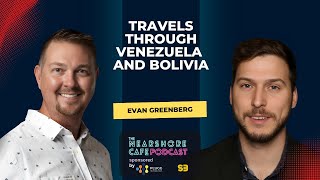
Evan Greenberg, Director of Client Solutions at Plug Technologies, has traveled to 47 countries and explains why Latin American developers are attractive to U.S. companies: they cost 40-60% less, share compatible timezones, and excel in ServiceNow, SAP, and MuleSoft. Strong English proficiency and local recruiting expertise matter most.
Chapters
Welcome to another episode of the Nearshore Cafe podcast. I'm Brian Samson, your host. Before I get into our show, let me thank our sponsor, Plug Technologies, plugg.tech. Great way to connect talent from all over Latin America with US companies. This is going to be a fun episode. We're going to go all over the world. Usually we'll get hyper-focused on, you know, Argentina or Peru or Mexico and so on. Today we're going to talk to Evan Greenberg, who's been to 47 countries. So you want a little taste of the world? This is the show for you. Without further ado, Evan Greenberg, Director of Client Solutions for Plug. It's great to have you on the show.
Yeah, thanks for having me. Really appreciate it.
47 countries, a lot of the world. How did this, this travel bug even get ignited? Like, was this something that happened when you were a kid?
It was, yeah. So my, my mom actually traveled a lot for work. She traveled Singapore, Thailand, you know, all over and, you know, brought her family. So from at a young age, you know, I was in Bangkok, Singapore. Places like that and really just love new cultures. Also in 4th grade, my, my dad, uh, bought me a, uh, a geography book and I read it in like, I think a day and memorized every country flag and just about all the capitals. So from a very young age, I, uh, always had a passion, uh, for geography.
Amazing. I think, um, You had said something about a family trip to Venezuela as well. Was that, yeah. Can you share about that?
We did. Yeah. Yeah. That was an interesting one for sure. So my mom's very adventurous in, in travel selection. And we went to, so we went to Caracas, I think for a day or two, and then we went to an island in Venezuela, uh, Margarita Island. Then we, then we decided to go into the Amazon, which was awesome. We, uh, we actually took like a riverboat on a 5 or 6 day adventure to Angel Falls. So, so that was really cool. We slept in hammocks each night. Uh, monkeys were crawling around our feet. It was, it was a lot of fun. I think I was very skinny, but I think I lost like 10 pounds. So when I left, I was even skinnier. So yeah, it was, it was a great time. Haven't been back, back to Venezuela, but would definitely love to, but really Got a real cultural appreciation for, uh, the people in Kanima that, where we, where we went. Um, and it was just, it was just a great experience.
And, and remind us, how old were you when you did that trip?
Oh, on that trip I was probably like between 12 and 14.
Yeah.
So, you know, I, I wasn't, at that point I hadn't been to a ton of places, but it was, it was still a place that I, really appreciated going and just loved the culture and just had a great time.
Now we hear a lot about Venezuela in the news, you know, with inflation and like worthless money and so forth. But you went maybe at a different time, right? And it's sometimes hard to forget or hard to remember that countries evolve and, you know, just like Argentina, you know, 100 years ago was one of the wealthiest countries in the world. What was Venezuela like when you were there?
Yeah, so when I was there, I'm pretty sure I was, they were under Chavez. You know, there was always like a pretty strong military presence everywhere at the airport. A lot of businesses pretty much everywhere. I never really felt unsafe, but yeah, there was, there was definitely a huge presence pretty much everywhere we went. Well, except for the rainforest, of course. But yeah, no, I never, I never really felt unsafe and, uh, You know, we, we traveled with my whole family, so my brother and my sister and my parents. We had a big, big crew of us and yeah, we just, that again, that's kind of where like my travel springboarded and, uh, you know, I, I, I, that's kind of where a lot of it started. Since then I've probably been to, you know, 40-something countries. It, uh, it was definitely one of the first ones. Yeah.
That's amazing. I, I think. Travel really can ignite and, you know, 25% of Americans have a passport and many of those, they're only using it to go to Cancun or something. And here you are, you know, preteen teenager going to Venezuela. Not, not a very common destination. How did that even come up? Like the discussion come up? I mean, Was it, okay, we can either go to Cancun or we can go to the rainforest in Venezuela. You know, how, how did that even come up in the family conversation?
Yeah, no, great question. I'm trying to remember back cuz it's been a while, but again, my mom's super adventurous. She usually picks off the beaten path places. So she knew she wanted it. Margarita Island is essentially an extension of the Caribbean, so it's It's a little bit north of, it's an island north of Caracas. Ah, so it was, it was similar to going to the Caribbean, uh, essentially. So I, I think that's why she picked it. Yeah.
Yeah. That's awesome. Um, so then, you know, fast forward us a little bit when you were, I guess, on your own, an adult, you know, what were some of the first places you went to?
Sure. In, in Latin America or just anywhere?
Anywhere in the world.
Yeah, I would say some of the more unique ones. I've been to Cook Islands. I've been to Faroe Islands. I would say Malta was pretty unique. Been to Italy several times. That's still one of my favorites. Actually got married in Italy as well. I would say those are some of my favorites. I mean, they're kind of all my favorites because they're all a little bit different, you know, different foods, different cultures. You know, if you, if you love traveling, you have an appreciation for everyone because they're all different. Yeah. So, so I try not to pick favorites, but I would say one of the rarer ones was probably Cook Islands. Yeah.
Yeah. We, yeah, we, we, we hear about, we get ads here in Hawaii for the Cook Islands all the time. I've never been, but it looks totally unspoiled, untapped, pristine. That is that, was that your experience?
Yeah. Cook Islands is unique. There's actually no, like stoplights on the island. There's, there's a couple, I'm not even sure that there's stop signs. There might be a couple, but Cook Islands is super unique because it is probably what Hawaii was maybe 20, 30, maybe 30 years ago. Um, there may be longer. There's no chain hotels. It's just very, it's also the main island Rarotonga is actually lagoon protected.
Mm-hmm.
Um, I'm someone that is pretty fearful of sharks, just to be honest. And so, I kind of like that clarity of being in a lagoon protected area, which is nice. But yeah, no, it's nice cuz there's actually a direct from LA. I think it's once a week. So, I actually got a free flight to LA on points and then I, I paid the difference and I think the flight was like 50% off. So it was, it was very economical to get there, which is usually not the case.
Amazing. How about Italy? You've been there quite a few times. Where'd you go? What was your experience there?
Yeah, Italy's definitely, again, I said I don't like favorites, but it's kind of a favorite just because of food and culture. But yeah, so I got married in Puglia, which is the boot of Italy opposite Amalfi Coast. That's a special region. You know, they're known for wine, olive oil. It's more of an agricultural kind of area, but it's got some of the most unspoiled beaches. It's got limestone cliffs. The place that I got married actually does Red Bull cliff diving, a championship every year. So that's pretty cool. Other places I've been in Italy, you know, it's funny. I haven't been to all the, you know, quote unquote touristy cities in Italy. I think I spent maybe, I think I spent like one day in Rome. I try to, you know, go to other places. One of my favorites was actually Sicily. Love Sicily, just, you know, it's close to Africa, so that's a place that, you know, the, the food is a little bit different than other parts of Italy. Um, yeah, that, that's definitely a special place. I spent a little bit of time in Venice and kind of Northern Italy. I went to Trento, which is up near the border with Austria. Took a train around Italy, actually more like Venice and the Northern part. That, that was super fun. Uh, but yeah, I definitely recommend Puglia to anyone that's trying to go a little off the beaten path and the price is right as well. And, uh, there's also a direct flight from New York that started like, actually, I think it starts in May or something this year. So Americans cannot go to Puglia without going to Rome or other places in between.
Very cool. You mentioned the food just a little bit. Can you tell us more?
Yeah. Well, I'm, you know, again, like I'm a pasta lover and, uh, You know, I like, I like good wine as well. So you really cannot go wrong with, with that in Italy. I would say the seafood in Puglia was really, really special. They also do the orecchiette pasta, which is the ear-shaped pasta that's unique to that region. Just a lot of local vineyards and a lot of local farms, which kind of make it, you know, super, super unique. Yeah.
Let's, uh, um, maybe switch a little bit to Asia. Where, where in Asia have you been besides Singapore and Thailand as a kid?
Yeah, those are the, those are the only ones that I've been to was, was Singapore and Thailand. And I was probably 15, 16, something like that. I think I was in high school actually. Yeah. But actually fun fact there, uh, at the time I was on the world's longest nonstop flight, and I, I think I got like a plaque or something, which is pretty cool. The flight was like 19, 20 hours, uh, something like that. And it was, uh, yeah, it was definitely a long one.
Was that the, the New, the Newark to Singapore? Was that, is that what, what that was?
It was, yeah, it was Newark. It was actually, it was, I think it was Newark to Singapore.
Yeah. Yeah.
Yeah. Yeah. And so, yeah, that was unique. You know, I, I don't really like sleeping on planes. Uh, I think I played video games about 12 hours. Um, and then got sick of it and maybe, maybe, maybe that caused me to go to sleep. But, uh, that was definitely my long— that was definitely the longest, uh, that was definitely the longest flight for me. No, Singapore, Singapore was great. Singapore's got some very good restaurants. Even the street food is super good. Obviously it's a huge hub for for businesses now, banking and just about everything else under the sun. But yeah, Singapore, Singapore was great. Thailand was also great. Went to a Muay Thai match. Um, that was super cool. You know, it was super interesting. Like somebody got knocked out and they just left them in the lobby. That, that was a little startling. But yeah, I would say the, I would say the overall experience in Thailand was great. The scenery's great. The, the temples are really nice. Obviously the food's really good. I'm into spicy food, so definitely a good place for me.
So this is the Nearshore Cafe podcast. We do talk a lot about Latin America. You touched on Venezuela. Where else, where else in Latin America have you been to?
Yeah, sure. So I've been to Peru. Again, the reason I went to Peru, I found a, I found a flight deal on Scott's Cheap Flights. I think they changed their name to Going recently, but I found a flight deal from Charleston to Peru for like $200 round trip. I would, and you know, I just, that was, that was pretty rare, so I had to go. So I went with my wife. I think it was in the last like 5, 6 years, something like that. Uh, we had a great time. We, we love seafood. It, it was a great time. So we did, we did Lima. I think we stayed in Miraflores.
Mm-hmm.
And then, uh, it was my idea, we, we skipped Machu Picchu, like Machu Picchu's still on my list, but you know, you have to make like extra preparations and things like that. So we actually went to the Peruvian Amazon.
Interesting.
And so near the border with Brazil, it, it, it was very interesting at our hotel. We stayed at some sort of like eco lodge situation, uh, in, in Puerto Maldonado. There's a, uh, you know, there were like sloths outside our window, monkeys, all sorts of things like that. I think we did a night crocodile tour. That was pretty cool. We had a great time. It was a little bit, we went during rainy season and it rained a lot. So that was a little downside, but yeah, it was, it was, it was a great time. And Peru is special 'cause there's so many different kind of micro areas of Peru that make it special. Like obviously Cusco, then you have rainforest, then you have sea. So I thought that was super special. Outside of Peru, yeah, I've been to Colombia. I went to Colombia about 2 years ago. Years ago, I just went to Bogotá. Love Bogotá a lot. Again, awesome food. Colombia is unique cuz you have, you know, Pacific Ocean, uh, Caribbean influence, then you have rainforest influence. So it was neat trying food from like all those different areas. That, that was a lot of fun for me. I used to watch like tons of episodes of Anthony Bourdain. Yeah. And so I'm very influenced by a lot of the places that he traveled as well. Uh, I, I think I've watched like every single episode actually. So, so, so he's kind of like a hero for me. Other places I've been, uh, probably the most unique would, would be Bolivia. Yeah. Um, we went there after Colombia. That was very unique in terms of, well, geographic landscape, you know, it's in the Andes. I believe the elevation's like 13,000 feet. Um, at the time I lived in Santa Fe, so I lived at 7,300 feet, so I was already about halfway there. So I was, I was pretty well, uh, I was pretty well prepped. Yeah. 13,000 was a bit, was, was a bit tough going for a jog. So, you know, even walking, even walking was, was tough. Yeah.
That's almost 3 miles above sea level. Wow. Was it, it was just hard to breathe.
Yeah, it was. Yes. And the food was really good there. It was so interesting. We actually had really good pizza there, which not sure why they had great pizza, but it was amazing. Actually really good Bolivian wine. Fun fact, Bolivia has wine country close to the Argentina border.
Oh, interesting.
Which, which you probably know, cause you spent many years in Argentina.
Yeah.
Bolivia was super unique. The other place we went to was Lake Titicaca. It's like the highest alpine lake in South America. The border's Peru. Uh, that was interesting because we had to take 2 boat rides. We had to, we had to drive for hours and hours and take 2 boat rides.
Did you start in La Paz and work your way there? And yeah, tell, tell us about that, that journey.
Yeah. Yeah, we did. So we, we had a travel guide. I, I, I don't really like driving in other countries, just, just, just a personal thing, but we had a guide and We drove to a certain point and there was a very narrow stretch of water, but not a bridge. And so we had to get on this little kind of like dinghy boat, I guess, just to take us maybe like 2-minute boat ride. And so, and it probably took an hour because the, they had to like load the car and everything. So that was interesting. And then when after that, we had to drive again for like, I would say another hour or 2.
Wow.
And so, and then, so we got to, we got to a city called Copacabana in Bolivia and it's actually modeled after the one in Brazil. 'Cause it kind of looks the same. It looks similar. Uh, I mean, obviously we're talking beach versus lake, um, it's modeled after that one. Yeah, it was super interesting. So once we got there, we went, I went to an island called Island of the Sun. And, uh, it's actually, it's famous in like Mayan culture and whatnot.
Yeah.
But yeah, it was, it was, it was a long day, but it, but, but it was a lot of fun. Yeah. Lake Titicaca was super cool. It's a huge, huge lake. Definitely some, some, some great memories. Even bought like an alpaca jacket from a local. Yeah. That was super cool. Just to support. Support local as well.
Now, is that the normal, like Lake Titicaca is known? I mean, I personally, I don't know anybody who's been there besides you, but is that, is that the common way to get there? Is it, is it really, is it normally that arduous?
I think it is. Yeah. Cause there's, you pretty much have to go over that, that narrow stretch of water.
Yeah.
That'll, so once you, once you get over that stretch again, you gotta drive maybe an hour or two to Copacabana. And then you're basically at the start of Titicaca on the Bolivia side.
Yeah.
But then you still have to, if you want to go to close to the Peru side or go, go to the island, you have to take a, you have to take a boat. So it, it was definitely pretty arduous, but super fun experience. Just, just glad my wife also enjoyed it. So yeah.
Now you said La Paz is about 13,000 feet above sea level. Uh, how about Lake Titicaca?
Lake Titicaca, don't quote me on it, but I think it's, yeah, I actually don't know the answer.
Yeah. But I mean, I'd imagine if it's the highest Alpine lake, it's pretty high up there. Yeah. So this is interesting, you know, Bolivia, you, you, you're, you're up there, you're up there in Bolivia. You know, other people might talk about the salt flats. Did you get a chance to, to see those?
I wish I did.
Yeah.
I'll have to go back. Yeah. I actually just, I actually just did some research, uh, 12,500. So pretty, pretty close to La Paz actually. Wow.
Wow. Amazing. How about the, um, just like the culture, the people, you know, what do you remember about your, your time in Bolivia?
Yeah. Again, you know, the people were super friendly, locals, travel guides. One of the places was cash only and I, I don't usually carry cash and they were so nice that I came back the next day and paid them in cash. Like in America, no one would do that, honestly.
Yeah.
So, you know, again, I thought the people were awesome. I thought, you know, it's funny, a lot of the places that I traveled to, maybe 2, 3 years later, they're on like top places to visit kind of lists. Bolivia is actually one of them. I think they were recently on Conde Nast or Travel and Leisure's, you know, place to check out this year. And actually the hotel that I stayed at was, was on that list as well. So that was, that was also pretty cool.
Yeah. It's not, uh, it's not talked about a lot or, or nearly as, as much as it should be. You know, sometimes I think the landlocked countries get forgotten about.
Um, that's for sure.
Really good.
And it's funny cuz we usually, we usually try to pick unique places or go to somewhere that has a beach, but for this one it was definitely more about cultural appreciation and it was not a beach vacation as you mentioned being landlocked, but it was awesome seeing the Andes. It was awesome, you know, going to a new country. Um, it's also fun traveling with my wife 'cause she's, she's super open to new countries and loves travel as well. So it's, uh, it's definitely fun that we can both do that together. Yeah.
And maybe if we could go back to Colombia for a second, if you were just to give some tips to somebody visiting Bogotá, What are your, you know, top 2 or 3 travel tips or, you know, things that they should check out or be mindful of or whatever?
Yeah. So in Bogotá, again, I was probably there about 5 days. I mean, for one, I love the coffee. That for— I'm a super coffee nerd. I would say the coffee, definitely go to like a local coffee shop, do a coffee tasting, try all the coffee. I would say the other, the other thing I really liked, the food was great. So there was a restaurant called Mesa Franco or Mesa Franca actually. Um, that was one I really liked. There's a restaurant called Leo that's really good. A lot of these are, you know, supporting like local food in Colombia where, you know, it's not just, you know, some sort of like fried food or something. It's super local to like a specific region of Colombia. I thought that was really cool. Let's see what else. I mean, the other thing I really liked in Colombia. I would say it was really easy to get around. Uh, a lot of Uber, like Uber was super easy. Airport was super nice. I never felt unsafe in Colombia. I know certain countries kind of get certain, uh, images and whatnot, but again, I never felt unsafe in Colombia. I had a great time. Uh, you know, we, we did some touristy things. We went to like a nice church up on the mountain in Colombia. But yeah, if I were to do it again, I'm not sure I'd change too much. I mean, we fit in a lot and, uh, yeah, we, we had a great time.
Yeah, I think that's great. Well, uh, this is the Nearshore Cafe podcast and we, uh, we love talking to people like you who've experienced it firsthand knowledge, you know, kind of seen it, uh, maybe for business people that are learning about the talent in Latin America, what should they know? Like from your experiences, why, why would somebody want to look at Latin America for talent?
Yeah, that's a great question. So yeah, this is something, you know, we hear a lot in, in terms of, in terms of university systems being really high level. Again, like in Monterrey, they have a really great university. That is similar to like MIT, where a lot of engineers graduate. Obviously Brazil has like half a million developers. Argentina's got a ton of really good talent for developers. But, you know, even, even other countries, right? Like Latin America is super big and there's a lot of opportunity. We've seen a lot of companies move operations and certain jobs to Guatemala and Nicaragua, even Bolivia a bit. My wife's company, their whole inside sales division is actually out of Costa Rica. And I've seen some other big companies move things to Colombia and other places as well. But yeah, I would say in general that, that talent pool is super, you know, it's huge. A lot of companies in the US like, uh, timezone alignment, right? They don't want to deal with, um, people being 12, 15 hour difference. Just, it's just better for collaboration, communication. There's a lot of cultural synergy that is aligned with Latin America talent. I would say the other thing again is kind of the cost effectiveness, right? I was reading something the other day where, you know, Seattle, there was kind of a debate around Seattle versus San Francisco for engineers. And people are saying now that Seattle is like maybe more like better, more prominent for certain reasons. I think in Latin America, the advantage is definitely the, the cost effectiveness of the talent. You're going to get a highly skilled resource for, you know, potentially 40 to 60% cheaper than, uh, you know, someone in the US, right? Um, without, without the, without the quality, um, that you're giving up, right? So I, I've definitely seen that a lot. Yeah, I think, I think that's it for that.
Yeah. Yeah. Evan, tell me more about, you know, in your role as director of client solutions, you're talking to a lot of different companies, you're seeing different technologies that are hot right now. You know, tell us a little bit more about what you're seeing and then maybe even the opportunity for leveraging talent in Latin America.
Yeah, sure. So again, here at Plug, we see a lot of different technologies and including technologies and roles, but Definitely ServiceNow, definitely SAP, MuleSoft, Salesforce. There's, there's a lot of, obviously AI is super hot, but with AI being super hot, ServiceNow just bought an AI company in the last week. There's a, there's a huge talent gap and talent shortage of ServiceNow implementers and developers. So that's definitely something that we are seeing in the market. In terms of overall jobs, you know, we're seeing a bit of everything, right? Most are probably engineering. But a lot on the non-IT side as well. So yeah, it's definitely, uh, it's definitely super interesting. And, um, you know, there's a lot of, there's a lot of companies that might have operations in India or other countries, but they don't have recruiting prowess in, you know, Mexico or Colombia or Brazil. And we're definitely seeing a lot of that where people, companies, or their clients are really asking for skill sets and talent in, you know, in countries across Latin America, like Brazil, Chile, Colombia, you know, all over. It, it's definitely been, um, it's definitely been a really, uh, I would say those have been really hot areas. Yeah.
Evan, for somebody who's been to 47 countries, you've got a kind of a pulse that countries are unique, people are unique, culture is unique. How you might lead a team in India might be totally different than Vietnam and Africa and so forth. How about if a company's looking to build a team in Latin America, do you have any, like, just a couple tips or advice on, you know, they can get the best out of their investment and best out of their team?
Sure. Yeah. You know, I've definitely seen that Latin American talent is super hardworking. Uh, obviously I touched on the university systems being really strong. Um, I would say another thing, you know, English has been really strong with, with a lot of the talent. So there's not really that communication gap. Um, I would say those are kind of the, the main things that I've seen. You know, yeah, yeah. I think those are kind of the main things.
Okay. Okay, great. Last question here, Evan, as somebody who's been to 47, what are, uh, the, the other ones on your list? You know, like if you were to get to 50, what are the, what are the next 3 that are jumping outta you right now?
So I would say definitely Argentina. It's just, it's one I've been talking about for a long time. I would say Uruguay and You know, those can, those can be combined, which, which is nice. They're kind of close. Outside of that, you know, I've not really been to Africa. I do have a, I do have a baby that's a little bit older than 1 year old. So I don't know that I'm going to Africa anytime soon or anywhere too, too far. But South Africa is definitely on my list as well. Just always been intrigued with, with animals and my parents got to go to Kenya and Tanzania. In the last 10 years and they really like that. So, um, I would say those are definitely some, some top ones for me. Good.
Around the World with Evan Greenberg. This has been a really fun conversation. Uh, it's a podcast sponsored by Plug Technologies, plugg.tech. Great way to connect talent from all over Latin America with US companies. Evan, thanks so much for your time today.
I enjoyed it. Thanks for having me. Let's do it again.
All right. Thanks everyone.
More from Brian

From BPO Agent to Client Experience Manager: Ana Rodriguez on Nicaragua's Nearshore Talent

From BPO Agent to Client Experience Manager: Ana Rodriguez on Nicaragua's Nearshore Talent

Building Sales Teams in Mexico: Mario Oliveros Figueroa on LATAM Talent & Cross-Border Selling

From Automation Engineer to Data Platform: Victor Fernandes on Brazil Tech Talent

H1B Crackdown & The Nearshore Shift: Robert Bouchard (H1B Guy) on LATAM Talent | 🎙 TNC

Nearshoring Yourself; step by step to building an expat life in Mexico |🎙 The Nearshore Cafe Podcast

Scaling high-performing teams in Costa Rica staffing legend Doug Firestone on growing to 225 LATAM

How to Scale in LATAM? Navigating Currency, Taxes, and Labor Laws | 🎙 The Nearshore Cafe Podcast



AI in LATAM: How to Break Into Mexico’s Tech Market |🎙The Nearshore Cafe Podcast