Build-Operate-Transfer Explained: The Secret Strategy for Scaling Tech Teams in LATAM | 🎙 TNC
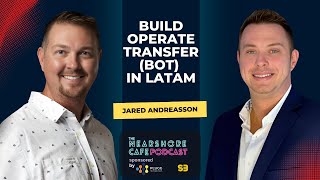
Brian Samson and Jared Andreessen from BlueCoding discuss the build-operate-transfer model for scaling tech teams in Latin America. BOT works best when you need a dedicated team for 18-24 months before bringing operations in-house, and costs typically run $8,000-$15,000 per developer monthly depending on location and experience level.
Chapters
Welcome everyone to another episode of the Nearshore Cafe podcast. First, let me thank our sponsor Plug Technologies, plugg.tech. Great way to connect talent from all over Latin America with growing US companies. There is a concept out there called BOT, build, operate, transfer. If you've heard of this, you're curious about it, this is going to be the show for you. We've got Jared Andreesen, an executive with BlueCoding. Jared, so great to see you again.
Yeah, man, thanks for having me back. Appreciate it.
So let's start there. BOT, uh, people are probably curious. They don't even know what this stuff stands for. What is it? What should they know about it?
Yeah, so it's build, operate, transfer, and we use it in the context of Latin America, obviously, but essentially it's for companies that are looking to establish a presence and an entity in a Latin American country. And that can be anywhere from Mexico to Argentina. Most of the time it's mid to large size cities and companies are looking to hire a significant amount of people in a small area. And it's a lot of mid to large size SaaS companies, really company industries, not super applicable, but that's what it is. And we're kind of seeing significant interest in the market right now.
Can you maybe think through like the decision-making matrix? You know, there's StaffAug company, there's like fully outsourcing your dev and then there's the BOT and the trade-offs and why I might even want to do this if I'm a VP of engineering somewhere or a CFO. Yeah.
So there's obviously numerous modalities when it comes to nearshoring. I would say the most popular is probably staff augmentation. And the majority of that is done from remote resources. But a good option for companies that are looking to have people in office or a hybrid model would be BOT. Essentially what they're doing is leasing an office in a Latin American country. They're establishing an entity, or we are establishing the entity for them. We're doing all of the hiring, and then we're sort of operating that for a couple years before transferring that back over to our partner. So I guess the decision-making process is first you have to understand whether you're remote or hybrid or on-site. You have to look at costs and I think BOT, a lot of the appeal to it is some of that cost savings and still getting some really high quality talent that speaks English. And, you know, let's say you're a large SaaS company and you're located in San Francisco. BOT could be a 70% cost savings compared to San Francisco. Now, if you go to Minneapolis, it might only be a 30 or 40% savings, but it depends where you're located in the US and really what your goals are. But as you're aware, being located on the same time zone and if you have other US customers or tech support or call center support, anything like that you have to fulfill, BOT is going to be a really good option for you.
Is there generally, and I know like there's a lot of nuances of this, but is there generally like a team size that like it makes sense? Like I imagine you're not doing BOT for 3 people. No.
I think staff augmentation is a much better fit for 3 people. But what we're kind of seeing in the market is a lot of new entry, which means smaller teams. So maybe a company is looking to outsource a particular IT team that deals with certain support tickets, and that requires 20 people. So what they'll do is they'll rent a very small office in Mexico City, they'll hire the individuals, And really less is more when you start BOT. So hiring those 10 or 15 people, learning how to operate them, and then scaling up over time is generally the preferred client. You will run into clients that need to hire 100 people in 90 days and onboard them all, which can get a little crazy and hectic, especially when you're coming into a new market or a city that you don't have a ton of familiarity with.
Yeah. What, what's usually the first thing that happens in a BOT? Like, do you hire Do you have like an HR person or like office space scout or like what is the, you know, title?
We use the term country manager. Okay. So that person is going to be boots on the ground, have the key to the office, be talking to people in person, dealing with all of the day-to-day nuances of running the business. And it might just not be one person, but it's the country manager is essentially the project lead and the person that would be handling the majority of the engagement. Really, the first step is visiting the city where you want to do BOT and seeing what part of town you want to put the office, um, what the infrastructure looks like, bus lines, public transportation, and understanding the costs. And even, you know, in BOT, pretty much everyone is hired as employees in their home country, so you have to look at some of the government requirements and benefits that are offered and severance. And I think that a lot of people located in North America aren't very familiar with that in Latin America, and they assume it's like the United States. It's actually much stricter in some cases. Mexico, for example, has much stricter requirements around severance and what employees should be paid. So you really have to look at the right location for your organization.
Yeah. Speaking of that, are there more popular cities or countries than others that you're seeing right now for the BOT model?
Yes and no. I think it depends on what you're looking for and what's most important, whether it's talent, cost, a culmination of both, and really what roles you're looking for. Because if I'm looking for a lot of very high-end senior developers, I might go to Buenos Aires or possibly Mexico City or Rio. If I'm looking for a team of CSMs or account managers, I would probably look at Santo Domingo or Medellín or Bogotá. And then you factor in the cost perspective. BA is expensive. The talent there is really good, but you might only have a 20 to 30% cost savings versus North America.
Yeah.
So really you kind of have to survey everything you're looking for, kind of dive into the metrics in each individual city and kind of make your decision. Decisions from there.
Yeah. But in Staffog, there's maybe a trend that I see, and it's not a 2025 trend, it's maybe the last 5, 6 years of USD because of volatility in currencies. Is that, is that the case with BOT, or is it, is like you said, it's, it's really a choice? If you're going to BOT, you're also automatically choosing local currency?
Yeah. Um, so BOT is a little bit different. Because everyone would be an employee of that country, you're mainly paying them in their local currency. Now, there are ways to pay them in USD, but primarily it's going to be in their local currency. And I would say on average, people that are hired more through a BOT modality are being hired on more at local rates versus North American rates. So, you know, in staff augmentation, you might have a senior developer that's making very similar to what he would make if he he lived in the United States or Canada, but BOT is a little bit different when it comes to that aspect.
Yeah. How about hardware? How do you think about that? Because there's different countries and customs and nuances and—
Yeah. Well, that depends on the customer also and what their requirements are. Sometimes resources will have their own hardware. Sometimes the companies will want to provide hardware. Sometimes organizations will have a specific vendor that they send hardware from. And then many of times we have a local supplier that we provide them with hardware with in that local country. So BOT can be much more complex than staff augmentation, but the juice is worth the squeeze once you get set up.
Yeah. When you think about the types of customers that tend to go the BOT route versus the StaffAug route, what are, what are like the patterns that you're seeing?
Probably revenue. BOT is more applicable toward large size organizations and maybe not large, but midsize with a few hundred million dollars in revenue. Staff augmentation is going to be a great option for some of those smaller companies that are scaling. And that can really be anything from pre-seed to post-seed to $50 million in revenue. And we even have organizations that have a billion dollars in revenue doing StaffAug. But I think there's a point in a lot of organizations where they might have some investors, there's pressures to scale, and there's only so much capital. So do you put in a massive office in the United States in a large city? or are you looking for a location that might be at a lower cost?
Yeah. You know, we had Ron Noden on the podcast recently, who's a SVP at Quorum, an advisor, and something he talked about that surprised me was 80% of M&A transactions nowadays involve companies with people in 2 or more countries.
Yeah.
So I'm trying to think of this maybe from the CFO standpoint. There's the cost savings standpoint, which is kind of obvious. Everyone talks about. But there's the backend side of what is my company valued at down the road? And I think the argument can be made that it's either a neutral or a positive impact to valuation by doing the BOT model and just having, having these people as your employees. And, you know, you're, you're in multiple countries now.
Yeah, I would agree 100% with that. Not just from a pure cost perspective, but being located in strategic locations for your customer base is super appealing, especially if it's not going to break the bank.
Yeah.
And, you know, I would say a lot of customers don't even go the BOT route necessarily, mainly due to cost. They're looking at locations that are being established in multiple countries to fulfill their customer base.
Yeah. Jared, let's switch gears a little bit. You took a trip recently, a company trip. Tell us all about it.
Yeah, we went to the Dominican Republic. We have a lot of team members located there. We went to a city called Jarabacoa. Which is kind of up in the mountains, I think south of Santiago. Yeah, that's right. Had a really good time. Saw a lot of people. Went whitewater rafting, almost drowned. I'll tell you the story about that. It's a good one. So our raft had myself and our CFO in it, and we're both bigger guys. We weigh over 200 pounds apiece. And in the back of our raft was our marketing manager and our special projects manager, and they're about 100 pounds apiece. So our raft was riding down the river at an angle the entire time because you you had two big guys in the front. And these were level 4 and 5 rapids. And I'd say 35 minutes into the trip, we went under. The entire thing completely flipped.
No way.
Wow. Yeah. I got banged up pretty good. My knee swelled up to about twice the size that it normally is. But we all lived. It was fun. I was a little sore. I'm not getting any younger. And the poor Dominican raft guy that tried to pull me up into the raft, I was probably 3 times his size. But it was good. I love the DR. I love the people. It's a lot of fun. I'm actually hoping to move there one day. It's a nice place for me.
Yeah. That's crazy on the rapids. I actually had no idea DR had 4 and 5 class rapids. You know, I think about like Alaska, West Virginia, not—
It was a surprise to me when I showed up to go rafting also.
Yeah.
I did not research this. Um, our CEO just said, hey, we're going rafting and He's a very adventurous guy, so I was not mentally prepared to go on the river, but nobody's going to say they're not gonna go. So we all hop in the rafts and we do it and we lived.
Yeah, I love it. Walk us through the, the meal plan when you were out there. What, what was the food like?
Oh, let's see. We had it catered and it was a lot of local Dominican cooking, a lot of plantain, a lot of things I don't eat in my daily diet now. And even the sausage is different than a lot of the breakfast items. But that's what I love about, uh, traveling in Latin America. Um, one of my favorite foods is arepas. I don't know if you're familiar with what those are, but yeah, absolutely. Yeah, and actually the best ones I ever had were next to the Venezuelan embassy in Mexico City. Okay, I don't know why that's like a core memory of mine, or why they were so good. But I can tell you unequivocally, if I go back to Mexico City in the near future, I'm going right to that restaurant. I need to look up the name and I'll share it.
Yeah, I was going to say, most Venezuelans I talk to, they stand fast that this is their claim to culinary delight is the arepas.
I would not disagree with them. I don't even know what all that stuff is, but I love it.
Yeah. Yeah. Jared, what's going on in the world right now? Tell us about, you know, last time we talked, this is pre-election. We're, I guess, 6 months in tariffs economy. Like, what does that mean for you guys? What does that mean for nearshoring? Hmm.
The short answer is I don't know. And it changes daily. And I check the news daily and something else has happened. We're seeing demand go up as a business. We're as busy as we've ever been. I'm not feeling a lot of the negative effects here from a financial standpoint. However, man, there's a lot of controversial stuff going on in the world and there's a lot of people with very strong opinions. And then you have AI and you have the stock market that seems to be fluctuating on a daily basis. And I don't think anybody knows exactly where the world is going. It's like one day we're going into a recession, the next day, like the stock market's at an all-time high. It's a lot to deal with. As people, like going to bed one night and the next day you wake up, you're like, well, let's see what today brings. Yeah. But I think I'm considered one of the very older millennials now, and we've kind of seen it all. Like, we lived through '08, we lived through 9/11, COVID. Nothing surprises me anymore. Um, so I'm just kind of riding the wave, hoping for the best. Expect the worst, hope for the best, I guess.
Yeah, I was gonna ask, you know, um, I guess there's two schools of thought with it being on a hiring company right now is with, you know, I, I like to describe to people, you know, maybe what it's like to be an entrepreneur in that it doesn't matter what the rules of the game are, I just need to know what the rules are so I can, you know, operate my business. And if the rules are in flux, then I'm in flux. And I think this maybe goes for CFOs everywhere, you know, as they're trying to do planning and forecasting. Yeah, okay, capital for hiring. So I guess one school of thought is it's unpredictable, so you might be paralyzed with your budget. The other school of thought is, um, I want flexibility and cost savings because it's unpredictable. Can you talk through that a little bit, or does that summarize what the market looks like, or is there a third, third path I didn't hit on?
No, I think you nailed it on the head there. And the only way we found to approach uncertainty is just be very conservative in everything that you do. Make sure that you always have too much cash. Make sure that even if you're not doing distributions, you have that cash sitting somewhere because who knows what's going to happen 6 months from now. And it's interesting because I talk about this with our internal management team all the time. You know, we talk about scaling and getting larger and what cash reserves we should keep. And you probably get 10 different opinions for any situation. Um, and, you know, I know a lot of VC firms have slowed down funding in the last 2 years from that crazy '21-'22 timeframe. Sure. Um, but I even think the majority of the customer base that we want to work with and we like to work with are organizations that have the same approach of being a little bit conservative. And I just think that's the only way to approach it. Now, I think there's an argument that you'll never become a billion-dollar organization by being conservative. And I'd agree with that. I guess the cool thing is I don't really want a billion dollars. I have no need for it. There, there's some people out there and organizations that do, but I don't know. I think every day is different. You really just have to do your research, trust your gut, and be conservative with your cash reserves and even your marketing and advertising and your budgeting. You know, just be uber conservative in everything you do and plan, plan, plan. Have option A, B, C, probably all the way through F at this point.
Yeah. Speaking of the letters, tech startups as they go through their funding rounds, how does that, how should they think about this? You know, as there seems like fundraising is fewer and further between and maybe they're, they're looking to build their team, get to the next milestone. How would you advise them?
Well, I think I could talk about this personally because I own another small organization that's very small in revenue and it's a startup. And I like to be very cost-conscious, especially when you have unpredictable revenue or you have customers churning or whatever it is. And I have a few folks that work with me from Latin America. They're very low cost. They're very good. They're educated. They help the business run on a daily basis. And I think if you're a startup or somebody that even has a small amount of funding and you have to make it last, I think nearshoring In general, whether you do staff augmentation or direct hires or whatever modality you choose, it's really a great way to start, not just from a cost perspective, but culture and access. I can probably be in any major Latin American city in half a day with the exception of like Buenos Aires or somewhere in Chile. But I think it depends on what you want to do. You know, if you're, if you have to hire a support team of 20 people, that's certainly different than hiring a marketing manager or your first accounts manager or whatever. Role it may be. But I do think LATAM in general is a really good place to look, um, especially given the market and everything going around, around in the world. I might be a little bit biased, but those are my thoughts.
Yeah. Yeah. Uh, last question I'll ask you today is if you, you know, if you're like me, your LinkedIn feed is 90% about AI, right? Like either It's, you know, it's the birth or the death of everybody. You know, what, what are you seeing? This is about as vague of a question as you can get, but I'm sure you've got an opinion.
Yes. I also like to be conservative with my thoughts when discussing AI, but I think of AI as I think of Bitcoin or electric vehicles or anything else that is early in the adaptation stage. If you look at electrical, electric vehicles, you know, they're on the road. There's organizations that are very profitable making them, but the majority of people still drive gas vehicles. It might be 30 years in the future before the majority of electric vehicles outweigh gas vehicles. And that's how I feel about AI. I think it is a great tool to help augment your team. Whether that's marketing or development or whatever industry you're in. And I think it will continue to evolve. I don't see there being organizations in my lifetime that are fully 100% AI.
Yeah.
Unless you've built an AI application, because you're still going to need people to make edits or make changes or write code. I think it's probably dangerous if AI can do all of that itself, because then it's its own entity and we don't need to exist, but it's a great tool. I think it's evolving on a daily basis and you can see by everybody's feed and all the companies that are being built that the variety of applications in the next 10 years is going to be insane.
Yeah.
But for now, I like to take a conservative approach that it's a great tool. Developers and human capital is not going to be extinct. The roles might change a little bit though. I think even in marketing, you know, prompts and having somebody who really knows how to utilize AI and understand it is going to be a massive differentiator in the next few years.
Yeah. Yeah. Any tools that you and your team are using, you know, minus ChatGPT that you like or would recommend?
I think every tool we use now probably has an element or an API into AI at the moment. And that's even talking about Salesforce and some of the contact searching tools that we use at the moment is being integrated into every tool. As far as specific ones I'd recommend, I don't know, I was playing around with Gemini last night and comparing it to ChatGPT and understanding what the differences are and where it's pulling data from. And I think that's going— I know we're not talking about specific tools I'd recommend, but I think understanding the way AI calculates information and where it pulls from is going to be a massive advantage for companies even in the next 12 months. From an SEO perspective, from a customer attainment perspective, if I could tell anyone what's most important to learn right now, I would say get a general understanding of AI and machine learning and understand how it works. Those are my thoughts.
Yeah, no, I agree. I think that's— if you're not trying it out, I think you're falling behind and the curve just gets steeper and steeper every day.
Yeah, it reminds me of those books from like the early 2000s of like the Electricity for Dummies. Like everybody should be reading an AI for Dummies book and at least getting a base understanding. As soon as you catch up and feel like, you know, you think you have a handle on it, it's going to evolve even more. So continuous learning is probably the most important skill at the moment.
I think that's spot on. Jared, if anybody wants to find you, what's the best way to do so?
Yeah, I represent an organization called Blue Coding and HireSouth. So bluecoding.com and hiresouth.com. You can find me on LinkedIn. My name's Jared Andreessen. And even if you don't need anything, I'm happy to chat about the industry, anything you're seeing. I don't know. I just like to chat.
Well, I definitely recommend Jared's a great guy. Obviously knows a lot about build, operate, transfer. And DR, a place I've never been to yet.
But you should go. We got to go.
Absolutely.
All right.
Well, thanks everyone for listening to another episode of the Nearshore Cafe podcast. I'm Brian Samson, and our podcast is sponsored by Plug Technologies, plug.tech. Great way to connect talent from all over Latin America with US companies. We'll see you next time. Thanks.
More from Brian

From BPO Agent to Client Experience Manager: Ana Rodriguez on Nicaragua's Nearshore Talent

From BPO Agent to Client Experience Manager: Ana Rodriguez on Nicaragua's Nearshore Talent

Building Sales Teams in Mexico: Mario Oliveros Figueroa on LATAM Talent & Cross-Border Selling

From Automation Engineer to Data Platform: Victor Fernandes on Brazil Tech Talent

H1B Crackdown & The Nearshore Shift: Robert Bouchard (H1B Guy) on LATAM Talent | 🎙 TNC

Nearshoring Yourself; step by step to building an expat life in Mexico |🎙 The Nearshore Cafe Podcast

Scaling high-performing teams in Costa Rica staffing legend Doug Firestone on growing to 225 LATAM

How to Scale in LATAM? Navigating Currency, Taxes, and Labor Laws | 🎙 The Nearshore Cafe Podcast



AI in LATAM: How to Break Into Mexico’s Tech Market |🎙The Nearshore Cafe Podcast