Building a $6M Remote Sales Operation in Colombia 🎙 The Nearshore Cafe Podcast
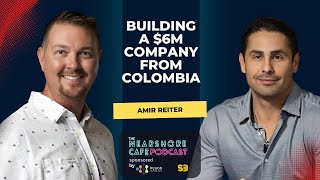
Amir Reiter built CloudTask into a $6 million remote sales operation with 265 contractors in Medellín, Colombia. He started after a 2016 advisory trip, hired his first person in Miami, and scaled from an agency into a B2B marketplace. Colombian talent costs less, speaks English well, and works hard, but requires in-person relationship building and respect for local culture.
Chapters
Welcome everyone to another episode of the Nearshore Cafe podcast. I'm your host, Brian Samson. If you're interested in doing business in Colombia, running a software company out of Colombia, wow, this is going to be an episode for you. I've got Amir Reiter, CEO of Cloudtask. Before we officially welcome Amir, let me thank our sponsor, Plug Technologies, plugg.tech. Great way to connect talent, especially technical talent from Latin America to growing US companies. Amir, so great to have you on the show.
Likewise, dude. Appreciate the invitation.
Amir, where in Colombia are you calling from?
Yeah, I'm in Medellín right now, but I spend a lot of my time in San Francisco where we have an office and headquarters. And then I sneak back nearshore for the good food and the good weather and the safety and security and Just loving it here.
I've actually, I've been in a lot of places in Latin America. I have yet to make it to Medellín.
Oh, you'd love Medellín.
I've heard it's like perpetual spring, but for those like me who've never been there, they call it the eternal spring. Yeah. Yeah. Tell me, tell me more about Medellín, like quality of life, what it's like living there.
Yeah. I wrote an article called The New American Dream. It's on Substack. And I just, you know, for me, it's 65 to 82 degrees every day. There's no daylight savings. So like you're not up at 9 o'clock with the light. Like I sleep at 8:30 and I'm like just on an amazing schedule, which is like, you know, really underrated, right? The food itself is 75% cheaper and healthier. And then, you know, everything, the cost of living is just much lower. And healthcare, like my healthcare in America is like $900 a month for my, for me and my family. And here it's $190. And I just, you know, I, for me, it's, it's an amazing place that I just I just truly love. And there's just an awesome entrepreneurial network. There's like the CEO of Beehive, shout out to Tyler Dank, who just moved here. And just a lot of tech people and a huge community. I'm in like a paddle group of like 100 like CEOs of tech companies that live down here, which is great. And then, you know, I, I go to San Francisco all the time for just my clients and just, you know, meeting the people that aren't as fortunate to be able to just move back and forth. Right. I guess I'm very lucky to be able to just have that liberty to be in two cities and split my time, right? But yeah, it's, it's, for me, it's just a magical place. You know, I know that you, you were in, uh, BA, right? Buenos Aires. Um, so I kind of look at it like a BA of Buenos Aires. That's like a smaller city that's just closer to the Americas, right? Like, like Buenos Aires is like maybe like, I don't know, 8-hour, 10-hour flight to the States.
Yeah.
And like, you know, Colombia is like 3 hours from Miami, but it's just, I went to Argentina and I fell in love as well. Right. So I, yeah, like it's a beautiful place. Yeah.
Awesome. Yeah. We'd love to, we'd love to check it out. Tell us a story. Like how, how did you end up there?
Yeah. So I had an advisory board member of Eric Agmon, who was the CEO of Answers on Demand. It was a POC ERP medical software and he sold it for a great deal. And he was like, Lemire, let's go to Colombia. And he was my mentor. And I was like, sure. You know, like, like I'm learning, you know, like my mentor, I'll come with you. I was like the 32-year-old at the time. That was like gifted with the gift of gab and socializing. And he was the, you know, 60-year-old recently divorced, you know, getting back into the game type of person. Sorry, Eric, if I, you know, air your laundry on this call. He'll be fine. So I went there and then I also had a team in the Philippines at the time, which was great. They were awesome. But I came down here and my, the guy at the hotel was, who's now our VP of global talent. His name was Danny Agudelo. And I just had, you know, I was chatting with him and this guy spoke fluent English. I was like, yo, what do you know, what do you make a month? And he's like $700. And I was like, wow, you're the same quality of a SDR in San Francisco. Making $8K. And I decided that it would make sense to— at the time, I wasn't running a B2B marketplace. I was an agency, and we got to about 265 employees. I really— I kind of brought down like B2B SaaS outsourcing from a sales and customer success perspective. I had amazing customers like RingCentral, Expensify, Apollo, all SaaS companies that would hire CS, CX, and SDRs and AEs through us. And so that brought me down was like the talent I met. And just the, you know, the adventure of something new where like I already knew what like Home Depot and I kind of knew the whole America story like the back of my hand and like you could close your eyes and basically predict the next 15 years of your life where like in Colombia, just this cool stuff, like just random weird things and you're just like, this is strange but cool. So it's also very mentally engaging and just different cultures are great, right? And so that brought me down here, just a random trip with an advisory board member and then at the time I had a, you know, an agency, like a call center type of thing. And I, uh, built a team here at that time.
And, and, well, you remember what year this was? That this all happened?
2016.
2016. Okay.
Okay. Oh, how time is flying. Yeah. I'll be 42 in June. Don't fucking ask me how, but fortunately I got married and have a daughter. So, you know, I'm, I'm, I'm not Peter Pan anymore.
Yeah.
Yeah.
Funny enough, 2016 was the year that I, I, uh, first went to Argentina. So we were, Doing it like the same year, just in different countries. That's awesome. Yeah.
Our energies connected 8 years later for the podcast.
Yeah. Yeah. I like it. I like it.
Small world.
Did you meet your spouse in Colombia?
Yeah. I was buying computers for my team. She was working at the electronics store outside. And I said, guess what I said? I said, hi, how are you? What's your name? I'd love to take you on a date. Right. For anybody listening, that's pretty much all you need to say to get a date. Anything else is too much. Yeah. Yeah. And we were like friends for 8 years. She was going through law school.
And then, you know, we had a very mature conversation about building a family.
And she's actually our chief operating officer. Her name is Jessica, and she's just great. You know, very fortunate to have a very traditional/non-traditional relationship where my wife gets to really focus on the family but also gets to, you know, be a part of every meeting in the company. And she's got equity in the company, and she's smart. She just— she deserves this. She earned it, right? So really lucky in that. I would bring the baby in, but, you know, too much time.
Yeah, yeah.
Show me a picture. There, the picture. That's the wife and the baby. Yeah, love it.
Yeah, love, love, love the family.
That's awesome. Um, so I'm a rebel, so I was like, we're gonna have 5 kids, you know? It's great.
There you go. So was it, was Medellín the first city that you set up in?
Yeah, and then I got an office in Bogotá as well, but Bogotá is a little bit cold and a little rainy and a little dangerous.
Yeah.
Medellín is a sweet spot for me. I'm just really big into like nature and hiking and like on the weekends I Go to like a waterfall hike. And I have a Vizsla, which is an awesome, very hyper dog. I got my dog in Argentina. We flew to Buenos Aires to pick him up.
No kidding.
Yeah. Yeah. It was the, the, the, you know, from a champion breed and he's a little model. He like, he like poses for pictures and stuff. It's in his blood. It's funny. Yeah.
That's great. So talk us through that very first hire, because there's people listening here.
They're— Yeah.
Like, wow, this is a really interesting thing. They're kind of hanging on every word of the, the VP of talent, you know, amazing arbitrage, like first hire, you know, how did that all work out? Like what, what did you do to make that happen?
I, you know, I set up my job opening with my clear description of the job, my clear expectations and my salary range. And I, you know, allowed people to apply to it and I reviewed the resumes and I interviewed people that matched that job opening. And then I made an offer to the people that I felt were best fit. Unfortunately, the average L The average, everybody in my company now has been with me for 8 years, which is awesome. And they're all contractors. So anybody who says they have to hire a W-2 for longevity is just not really thinking smart because it really matters, you know, like your culture and your, you know, payment structure versus the contract, right? Like the average 2 months. And, you know, I made friends with all the people I hired, the 265 that were actively working and probably hired like 700. A lot of them have gone on to bigger and better things, opening up agencies. And I just kept a good network of them and stayed friendly with all of them. Yeah.
And did you make that first hire, you were still living in San Francisco or you were already in Medellín by then?
I was in Miami at that time.
Yeah.
I was in South Beach. Yeah. And yeah, his name is Julian Moreno. He's now one of the VPs at Globalization Partners, which is a big company. He was one of my first hires out of Bogotá and he brought someone else that he knew in his network and I flew to Colombia and got an Airbnb and we were all sharing it together. And then I actually had like this penthouse that was huge that I actually had some of my founding employees lived with me. One, Eddie Bajo, who's my co-founder, actually married married Maria Sanchez, who was like the lady who was like my CFO and did all the government's passports. And they ended up getting married and having a kid. And it was interesting. It was like a, like a work frat house, but good time. I like to live life a little bit, you know?
Yeah. Now California, Miami, these are places where Spanish is already prevalent. Did you have to worry about, like, did you have to become bilingual to do it? Is everything—
No, I barely speak Spanish.
Done in English or Spanish?
I had handlers the whole time. So I've just been handled. Like Maria was my initial handler, right? Like, so just take me to all the banks. I'm signing things, I'm stamping things. So everybody I hired spoke English and I was like friends with them kind of. So like I constantly just had handlers and like now my wife is my handler. Um, so she does all my visas. She's a lawyer. She takes me to the doctor's office, tells me to shut up and not be rude. You know, things like that. She's happy I don't speak Spanish because, you know, I got a little bit of a gift of gab and I just, you know, I, I talk a lot. So she thinks it's good that I don't speak Spanish, but entiendes un poquito, like, like I'm gonna, you know, I'm gonna continue learning. But I'm an anomaly, like for someone who doesn't speak Spanish, I met like the coolest people in Medellín, the business owners, the private families, like the founders. So like all my friends are just like top, top performing people. So I guess that's like who I want to hang out with anyways. Yeah. But I'm also, you know, I'll admit that it's a little bit embarrassing that I don't speak Spanish fluently, but nobody's perfect. You know, I got areas of opportunity and got to work on it.
I think that gives a lot of people from the States confidence. You know that you can not only—
I'm like, you go run to Miami and they don't speak English.
Yeah. Yeah.
Like I go to Miami and they're like, how about— it's just different. 'Cause you're like, you should speak English, right? And here you're not like, you should speak English. You're like, shit, I should speak Spanish. Yeah. Um, but like, wait a second. Google like translates language in real time. I don't know if anybody saw that update. Sorry. No excuses now.
Yeah. You know? Yeah, for sure.
For sure.
You know what? What, you know what's funny is, uh, When I was in Argentina, absolutely. But, uh, I live in Hawaii, uh, really don't get a chance to practice it. And just like you, Amir, everybody that I work with speaks advanced English. So like, you know, their English gets better, my Spanish gets worse. Yep.
Yeah.
Yeah. Yeah.
And I was like, like, I think having respect for the culture and the people and the land is equally as important as language, right? Yeah. Like I don't come here and try to like push my, I try to push my ambition and my speed. And things that will help people get to the next level. But I embrace the culture, embrace the people, and I have a lot of respect for it. And it's a journey, right? Like now that I have a daughter, I'm sure that she's gonna be learning how to speak and I'm gonna be learning how to speak Spanish. Yeah. With her, right?
Yeah.
Life's a marathon, right? So maybe in like 10 years, me and you will be in Medellín speaking Spanish together.
Love it. Love it.
Yeah. Never know, right?
So Cloudtask.
Yeah.
Tell the audience a little more about—
Yeah.
What it is, what does it do?
Yeah, we're a B2B marketplace that's focused on GTM services, full-time candidates, and software. So we're kind of bringing together, um, the account executives, the SDRs. There's almost 120 positions that are just, you know, customer-facing roles. Obviously, you know, we partner with you guys on the development side, right? Um, and then lots of software like Apollo, Clay, Warmly, all the technologies that people use for go-to-market functions. And in GTM you got sales, marketing, operations, customer success, customer support, right? And then with agencies, think about like all the call centers, telemarketing centers, inbound centers, lead generation agencies, SEO agents. There's almost 50 types. So we basically help buyers know what they're buying and not have buyer's remorse because it's such— there's like 40,000 call centers and 40,000 agencies, 1,000 GTM softwares, right? So we really make sure that people know what they're buying, like what the business challenge really is so that they don't have buyer's remorse. And, you know, think of it like an Upwork or, you know, an Airbnb or an Uber, but just for GTM functions, right? For sales, support, operations, CX, which is big, right? So we're focused, but focused on a very big part of the market. And that's what we do, right? That's what we do. We help people find the right sellers and the right partners. We might even get you listed because we have a business challenge called Building Teams and then Website Development. And that's where you're going to be in because that's the business challenge you solve for, right?
That's right. That's right. We'll definitely talk more about that.
Oh, it's done. Hey, sorry. You're in. You opted in.
Yeah. I appreciate that.
Yeah.
What I'm, what I'm really interested in, Amir, is the scale that you got your team to. I mean, phenomenal. And, and, and how did that? Maybe intersect with like the original vision of CloudTask.
Yeah.
And like where CloudTask evolved to and scaling around that and—
Yeah. Yeah.
Like the advantage of, of doing that.
We scaled to 265 contractors. We were about $6 million in revenue. And, and, and in America you wouldn't be profitable with the math there, but because the cost of goods is 75% lower, we were very profitable and successful. And yeah, I really pivoted because I saw an opportunity to solve a big problem. And to build a billion-dollar company. And depending on how I stick the landing, I might be like, oh, that was a great idea, pat on the back, or be like, you're an idiot, right? Because I took a very profitable business and ripped it apart. But it was, you know, for me, I just, you know, I saw myself kind of stuck with success, which is not a bad thing, right? It just, I really saw the fact that buyers didn't know what they're buying and that the status quo, like someone had to take a chance to like really help the industry because people just wanted to hear. If you told, like if you came to me and you're like, hey Amir, want to hire some sales development reps, we need to generate meetings, and I told you, hey, it would take 90 days because, you know, there's no market validation, and, and I can't promise you 15-minute meetings, the person would go to the competition who lied to them. And I felt like that, that wasn't the way people should buy, right? So by being a marketplace, I got 5,000 options. I could really pay attention to your real business challenge and give you options and like not sell you because like I got it all. So it's kind of like if your, if your car is a BMW, but I got all the brands, like I'll give you the right brand because I just didn't like the fact that, you know, status quo was like telling people what they want to hear. And that was the normal, right? And at the same time, like from a capitalistic, like I wanted to fix a big problem and I wanted to do a good thing, but I also wanted to be rewarded for doing that. Right. I don't want to state that, like, you know, I wanted to build a billion-dollar company by doing that. And also at the same time, helping people getting out of the call centers like you're doing, right. Which is a noble thing because you're helping young professionals that work very hard just access jobs and opportunities they didn't have a chance to before, right? So that was why I did the pivot. And, you know, hopefully partnerships like ours, you know, make it worthwhile in the long run. Yeah. Just different business model, right? One burns cash, one makes money.
Love it. Yeah. Tell us more about the actual scaling of your company because I'm just like super impressed that—
Yeah. Um, yeah, yeah. So we scaled from zero, from zero to $6 million in like 3 years.
Yeah.
And a lot of it had to do with getting in a plane and meeting everybody face to face and driving. Like some of our biggest clients, I like land in New York City and then I drove to Boston 7 hours and they're like, yeah, you won the business because you're the only CEO who got in the car and like drove 7 hours and like looked me in the eye. Yeah. So I built really strong relationships with people who, you know, it's required when they're trusting you to build and manage teams. And, um, I treated the employees with more of a sense of entrepreneurship where I was like teaching them like, you know, the world is yours. And like they kind of saw me cold calling and like doing like whatever I asked them to do, I'd do myself. Right. So I think in this culture there's more of like, I'm the boss, you're the employee. And if they called me the boss, I'd be like, I'm not your boss. I'm the chief. Right. Like I might be the, like leading you, but I'm not your boss. Right. Like I'm willing to like roll up my sleeves and work side by side with you versus putting my feet up and bossing you around. And I think that was a big part of the reason why I scaled fast. It was because The culture was more like a San Francisco startup versus, you know, like, like, yeah, like I was less like, this is your job, more like, you know, this is your career type of thing. Right. And, and really just, you know, I think that it was natural because I really felt that way. And I think people can tell, right. That I was just ready to like get down and dirty with them, you know?
Yeah. Yeah. I like it. Can you, you walk us through maybe even how you set up the org, like Did it mirror what, like the type of titles and positions and departments? Did it mirror what you might see in San Francisco or? Yeah.
Yeah. Yeah. You know, like had a COO, you know, I had a, uh, 3 account executives, maybe 5 account managers, a VP of operations. Very, very similar. No different. Everybody spoke English. Everybody worked for American companies. Most of the people I hired already working for AT&T and Cricket and, uh, you know, these big organizations. Yeah. You know, uh, my co-founder Eddie Bajo was working for Fitbit. Uh, customer support. So yeah, same title, same structure. The only difference was like, hey, there's 22 holidays on a Monday in Colombia. They're not for you, they're against you so you could be lazy. You're gonna work on this holiday. And it's a different mentality of like, you know, instead of like drinking on a Monday because like, think about it, right? They have 22 Mondays off. Okay, well China's not taking off on Monday.
All right.
And you're competing against a global stage. So I just kind of like showed them that like, hey, You're kind of being duped by your government into thinking that these holidays are— they didn't even know the holidays. They didn't even know the holidays. What is the holiday? They had no idea. Multiple same days, right? But they don't know. All they knew is they had a long weekend and they can go party and it held their career back. And it was a way for the government to keep the poor poor, right? They think you're giving them something, but what they're giving you is a way to just climb the ladder and fall back down. Yeah. Right. So I kind of came in and said, I want to work for a plumbing company. Go do that. You wanna work for us, you're gonna get education, exposure to tools, exposure to AI, which now, you know what I mean? Now, but you're gonna work in the American days, right? Yeah. So it's a give and a get, right?
Yeah.
I think, you know, you've probably seen that in Latin America. They're more trained on like how to sue the employee than they are how to make it up. 'Cause that's what they get. They're given, they're not given the opportunity to move up the ladder. They're given opportunity to sue the employee. Right. Yeah. And, and I was like, yeah, you can't sue me. I'm an American. You know, like, like, you know, like I'm not, you know, I'm not hiring you under employment contract or independent contractor. And you're going to have to work hard and earn skills. People are given things that distract them, right? So, I felt like the government was pulling the shades over the eyes of the general population while the top 1% is working and crushing weekends. The average person is partying and taking off. And right, like, okay, if you're— and it's backwards in this culture. A lot of the kids are taking care of the parents. The parents don't retire at 50. The parents get supported by the kids. There's one way to break that trend by somebody saving money and investing, right? So some of the guys I'm working with now have like stock portfolios. They have Bitcoin because I talked to them about that, right? And I would say stuff like, hey, it's not fair that you're— now that you make more money, you give your family more money and they retired at 50. Like, where does it stop, right? It's a never-ending vicious cycle. And I just kind of like told them the truth. It hurt their feelings, but they could see that I kind of meant it from a point of like, empowering the next generation. You're right.
Yeah, I like that. I think that's really good advice. Is there any other advice that you give maybe US CEOs?
Yeah, yeah.
We're trying to build—
fly down, meet your team, take them out to dinner. Like I have a company called Expensify. They have 48 account executives for 5 years. Well, guess what? They flew out, they met the team, they took them and they're still there, right? Yeah. Everybody who flew out to visit their team still has the team. Anybody who just hired it like an outsourced third party, fire them. So, um, treat them like they might work with you for 8 years, get to know them, and build real relationships in person.
Yeah, that's great advice. Great advice. I want to talk more, Amir, about AI. You're, you're very well versed in it. Your company's such a— what do you see? What are some of your predictions? And then maybe even how it might impact nearshoring?
Yeah, yeah. Faster, cheaper, more efficient. I see it making everything faster, cheaper, more efficient. And I see the fact that companies are gonna have— could probably be able to be leaner on the headcount and achieve more. But there also might be more startups, right? So instead of having bigger companies, I would predict that there's going to be many small specialized companies, right? So if you need a million people employed and that was in 500 companies, now it might be a million across 2,000. And I think that what I'm trying to do is just get the hands, get the tool. Like I have an example, I got this guy, Daniel Goodell. I joked around because on LinkedIn I put some posts about like how he didn't speak English when I met him, which is not true. He did. And now he's like programmed a candidate assessment on Lovable, right? And just like letting people know that like, You gotta break things if you want to learn something. Just start using these tools. Use Manus.im, use Lovable, use ChatGPT, use Gemini, use Perplexity, and ask it questions. It's about the questions you ask it. If you ask it, how do I improve my career and protect myself in the next 5 years, it'll give you an answer that can help you. If you ask it, you know, who should I bet on in the next basketball game, you might get some good information, but it's not going to— so it's like anything is as good as the questions you're asking. We're just getting information faster, right? So just make sure— make pretend that you're You're using the tools the right way. And then, you know, there's gonna be a big opportunity for you to be a transform agent, meaning like, hey, I'm gonna come to your company and share everything I know with AI to make you do things faster, cheaper, more efficient versus being replaced by it. So if you don't wanna be replaced by it, you should be using it. If you're not gonna use it, expect to be replaced by it. Yeah. And I sent an email to my team basically saying, hey guys, We're going to grow to a billion-dollar company with 12 employees or less. You have a choice. You can either use these tools and I'll pay for them, or you can resign. Nobody resigned and everybody's using the tools.
Awesome.
I love it.
I love it.
And that even goes for me.
Yeah. Yeah.
Yeah.
I'm sure you saw the email from, I think the Fiverr CEO, right? Like even, even the CEO.
Yeah. That was something similar. I saw that and it's true. Right. Cause it's like, you're not like, you're just, you're like, telling them the truth. And it goes for me too, right? Like, like as a CEO, like there might come a day, like a year from now, or like I can get replaced by AI, right? I might own, I might own that AI in that point, right? Which might still be beneficial, but like, I don't think anybody is safe from innovation and change. And it's not a you versus them type thing. It's like we're just innovating fast and, and you could be a leader or a laggard, right? What's your favorite AI tool?
Yeah. I've been having a lot of fun with caption app, you know, where you can kind of draw your own avatars.
Are you vibe coding? You vibe code? You're—
I'm not a vibe coder, but I'm seeing a lot of this vibe coder trend. Are you?
I don't know. I don't know. Maybe.
Yeah.
Depends.
I'm seeing, I'm seeing the trend. Maybe, maybe I'll, I'll become a vibe coder. It seems like there's, yeah, I think there's a lot of FOMO right now around vibe coding.
So we'll see.
Yeah.
I'm like, you know, it's, it's, I started making prototypes, so like, I wouldn't say I vibe coded, but for me to communicate with my CTO, my dev team, I've started to able to like use Manus to get this prototype on a website. Makes— so it's technically vibe coding. So yeah, I guess I am vibe coding, you know. There you go.
There you go. Good, good stuff. Well, as we start to wind it down, I just want to ask a fun question.
Yeah.
Uh, what are, what are some of your favorite must-go-to restaurants in Medellín?
Somebody visit— Don Diablo, best steak. Yeah. And then I go to Hakonami, which is the best sushi.
Yeah.
El Cielo is like a 5-star restaurant, which is awesome. Yeah.
Awesome. Awesome.
Cool.
We'll definitely put those in the show notes for everybody.
Yeah. Yeah.
Well, Amir, this has been super fun. I'm just really impressed with how you took the risk, built something really special, did it all in Colombia, and embraced the culture. So kudos to you.
Likewise to you, man. You did the same thing. So I'm also impressed. And I appreciate you having me on.
Absolutely. Well, you're listening to the Nearshore Cafe podcast. This is Amir Reiter from CloudTask. This podcast is sponsored by Plug Technologies, plugg.tech. Great way to connect talent from all over Latin America to growing US companies. We'll see you next time on the Nearshore Cafe podcast. Thanks for listening.
More from Brian

From BPO Agent to Client Experience Manager: Ana Rodriguez on Nicaragua's Nearshore Talent

From BPO Agent to Client Experience Manager: Ana Rodriguez on Nicaragua's Nearshore Talent

Building Sales Teams in Mexico: Mario Oliveros Figueroa on LATAM Talent & Cross-Border Selling

From Automation Engineer to Data Platform: Victor Fernandes on Brazil Tech Talent

H1B Crackdown & The Nearshore Shift: Robert Bouchard (H1B Guy) on LATAM Talent | 🎙 TNC

Nearshoring Yourself; step by step to building an expat life in Mexico |🎙 The Nearshore Cafe Podcast

Scaling high-performing teams in Costa Rica staffing legend Doug Firestone on growing to 225 LATAM

How to Scale in LATAM? Navigating Currency, Taxes, and Labor Laws | 🎙 The Nearshore Cafe Podcast



AI in LATAM: How to Break Into Mexico’s Tech Market |🎙The Nearshore Cafe Podcast