Building a Fintech Powerhouse in Brazil: Pedro Góes, CEO of Paytrack | 🎙 The Nearshore Cafe Podcast
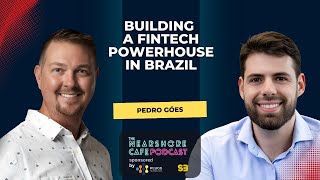
This content was created by Brian Samson. This content was uploaded by Brian Samson. This is a YouTube podcast episode titled "Building a Fintech Powerhouse in Brazil: Pedro Góes, CEO of Paytrack | 🎙 The Nearshore Cafe Podcast" (recorded April 15, 2025). It is an English interview-style conversation hosted by Brian Samson with guest Pedro Góes, CEO of Paytrack. They discuss Paytrack’s travel & expense management platform and corporate card product, international expansion and currency challenges, COVID impacts and product resilience, revenue/funding history and VC environment in Brazil, company growth (from ~15 to ~400 employees) and talent/geography (Blumenau vs. São Paulo), and practical advice for entrepreneurs; the episode also thanks sponsor Plug Technologies.
Chapters
Welcome everyone to another episode of the Nearshore Cafe podcast. I'm Brian Samson, your host. First, I want to thank our sponsor, Plug Technologies, plugg.tech. Great way to connect talent from all over Latin America to growing US companies. If you're interested in the world of fintech in Latin America, especially Brazil, this is going to be a great episode for you. I have Pedro Góes, the CEO of Paytrack, and we're going to have a great conversation. Pedro, thanks so much for joining us today.
Hi, Brian. Thank you for the invitation. I hope we'll have a good chat here.
So as we, we led off, Paytrack, it's a really interesting fintech that is for the Brazilian market. Tell us more, like what is, what does it do? What does the product, products do? Who is it for? All that stuff.
So Paytrack is an all-in-one solution for travel and expense management, right? We help large, medium-large, and enterprise companies to spend better their money. So from the beginning, when we have a booking travel, so the hotel, the flights, the car rental, from this part to the travel until the last part where you have to do the accountability of the expenses related to this travel. And not only travels, but also some department spends. We also help the companies to control, to manage, and to have an easier way to do all of this. As you said, as a fintech, we also provide cards where the company can use to manage and to spend their money. So it's truly an all-in-one solution for Brazilian and not only Brazilian, but Latin America companies.
Interesting. So your customer base is expanded outside of Brazil?
Yes, yes. We have some customers outside from Brazil. First, of course, there were Brazilian companies that started to use Paytrack in other parts of the world. As we are helping enterprise companies, this is really common. They have subsidiaries around the world and Paytrack usually is the solution for all the companies.
Interesting. If I may ask about currency, because it's you know, much more complicated when you have multiple currencies that are in the system. And sometimes you have volatility in currency as well. Can you talk about how Paytrack thinks about that?
Yeah, actually, first of all, Paytrack have to be prepared to work outside from Brazil. So our card solution is able to help companies not only in Brazil but in other parts of the world. And when we think about a currency here, Actually, we see it more as a problem of our customers because the Brazilian companies that are traveling abroad to do deals, to provide services and stuff like this, that are suffering a lot nowadays because of the value of our currency, of real, which is our money. So we've seen it. We've seen that the international travels have decreased a little bit. In the last year. But unfortunately, the companies have to do their business and they will have to travel again. So it's not that good when you have this, this occurrence, you know, as we have in it now.
Yeah, I was going to ask you about that. You know, I'm the first to say I think travel is recovering. People are excited to go to conferences. They're excited to visit customers. They're on a lot more airplanes. How did Paytrak navigate COVID? That was very, very turbulent.
First, it's true what you were saying. The companies and people realize that of course we can, we can do a lot of stuff like we're doing now in a virtual space. This is, this is awesome, but there are a lot of business services that it's really important to be connected with your customer, with your partner, and you will have to, to travel to be there. Period. And the companies are coming back and the volume of travel inside Brazil is bigger than it was before COVID So when we were at COVID, people start to talk the world will be completely different, nobody will touch each other again. No, the things are coming back. Companies are bringing their employees to the headquarters again. So we've seen this movement that a lot of things changed But a lot of things came back to the regular way, the normal way, the way it were before. So this is one point. The second point about your question, Paytrack has a really strong solution for expense management, right? So during the COVID a lot of those big companies stopped to travel, but they still had some expenses to be managed. As we are working with big companies, they didn't stop their operations. Sometimes they were not traveling by plane, but they were using cars to get to the customer to do the service and stuff like that. So of course that we were impacted as a company. Our revenue had some, some, some damage. But as we, we have a good portfolio as customers and their operations didn't stop, they just changed. We could help them to manage that money in the other way. For example, even home office expenses, right? So people were working from home and they had like internet sources that the company gave to them, and we helped the company to manage that with the pay track card and all the solutions. Again, we were, we suffered, But if we look to some competitors, I have competitors in one side of the market because I have one side which is travel management. On that side, my competitors went down 90%, 8-90% of their revenues. There was no revenue stream for them. And I had all the expense management and software solution bringing money home, you know. So it was a time where we could even close a lot of big deals. You know, because big companies had a smaller operation, they could change to a modern solution like Paytrack. So as you could see, I tried to have a— of course it was a huge problem, COVID and all the health situation. This is something terrible. But I try to remember as a business, we suffered a lot here as a company, but I tried to have, I don't know, a good point point of view. In Portuguese, we say to look at the glass, you know, the glass is full, empty, or half full. You know, I try to have this half-full approach, you know. So that's it.
Yeah, that's great. So your business, is that like a SaaS model, like monthly per user? Is that generally how you're billing your customers?
Exactly. This is the first revenue stream, and we've got the second and third one, which is which are related with the travel services, right, that are bought inside of our platform, like the flight, the hotel booking and stuff like that. And there is also a revenue from our card solution.
Yeah.
So we have multiple sources which help us to, in a problem like COVID, to be more, more, more prepared. And of course, once that that things got normal, we could be fast and grow a lot. So that's the story of Paytrak those years.
Yeah, you know, here in the US, you know, we'll hear about companies like Expensify, you know, that are maybe for smaller startups. There's obviously like Amex Travel and things like that. For most companies that I think are small, that maybe don't even have a software, you know, they're using like Google Sheets or something to—
Exactly.
Is that the same thing? Like they graduate from Google Sheets to a company like Paytrack?
Exactly. That's the same thing. And here in Brazil, when we started 8 years ago, we found even large companies still using the Google Sheets, Excel and stuff like this. So it was a huge opportunity here as a market. And We started as an all-in-one platform, and now 8 years after, we've seen that a lot of expense management solutions are bringing travel management solutions or card management solutions. And that's a really interesting part of the history that we are living in this moment, which is a market that is transforming, is evolving. And we are looking to this bundle solution. So Paytrack has a good position because from the beginning, the thought was to have all the possibilities inside the platform. Yeah.
Yeah. I want to dive a little deeper into your personal career journey, Pedro. Super interesting. And, you know, for those that don't know, you're the CEO of the company, but you didn't found the company. So that gives like a really interesting kind of insider-outsider viewpoint and a chance to bring a different perspective to the business. Can you tell a little more about, you know, how you got into Paytrack, some of the different roles you've had?
Yes, yes. So, well, my story actually starts, um, I don't know, maybe 15 or 16 years ago. I started in a law school here in Brazil, a really good law school in Brazil, a university, right? And after 2 years, I used it to follow some, some business magazines and, you know, stuff like this. And I read a book which is called, in English it would be something like Letters to a Young, Letters to a Young Lawyer, Letters to a Young Engineer, stuff like this. And I read a book about a young lawyer which he started his career as an intern, and at the end of the life he became a really big lawyer here in Brazil. It's a true story. And the firm that he created was responsible for M&As, big M&As in Brazil. And when I read that, I thought, God, I want to do this, but I don't want to be the lawyer. I want to be in the business side, you know, lawyers. I don't know if there is some lawyer watching us, don't take it personal, but my father is a lawyer. Sometimes it's not that cool. And well, so I changed it. I started to study engineering. I went to France, I came back to Brazil, and I decided to have I have my own company, my own startup, okay? Now we're talking about 10 years ago maybe. And well, I created a solution, I got some money and we created a solution to help companies to understand their customer satisfaction. But it was a solution for small companies in Brazil, they didn't have that pain. So I learned in practice the idea of a nice-to-have product. You know, or a vitamin, not a painkiller. And that was tough. So I stayed almost 2, 3 years in this project. I had just a few customers, and I realized that I— to be, uh, to have my company or to be, um, entrepreneur in this, in this technology area, I should have more, more comprehension about really pains that the companies have. So I decided to work in other startups that were maybe some years ahead, you know? And that's how I got in Paytrack. When I arrived here, we were less than 20 employees. I think I was 15, 16. Okay. And I came here to help the company because we were getting the first customers and there was a guy doing support, there was a guy doing the onboard, and I would have to do the customer success. Right. More or less like that. And I arrived here and the first month they liked me, the founders really liked me and they gave me the support. So I had one person in my team. Now I'm a leader. And the other 2 or 3 months I got the onboard team and things were going like this. One year later, I had the opportunity to, to structure the, the marketing and sales teams. Because from my, from the company that I started and Paytrack, I worked in another startup in this, this meanwhile. In this startup, I was responsible for customer success, but I worked with a product for marketing and sales people, right? SDR, CRM, stuff like this. So I have more or less a knowledge and I had the opportunity here at Paytrack and I stayed almost 3 years as responsible for marketing and sales. And that was the time that Paytrack really could find a growth path, you know. So it was a really amazing job. I did it with a really nice team. The manager that was there at the time is still here now. He is the director of sales, director, right? So I had a lot of good team with me and good people with me. And that was an amazing time. After Danny, which is one founder and it was the CEO. She put me to solve SERPs problems, then she put me to solve the travel agents problems. So in 5 years, I run in, I don't know, 7, 8 areas of the company. I put them all together, I split them, I did a lot of crazy things. And at the end of 2023, she invited me to become CEO. As the company was, was in a, in a, in a, how can I say it, it's starting to become bigger and it would be important to have all this, this KPIs, process, all this structure we should be able to put in the other areas to keep growing, you know. Yeah, that's more or less the challenge.
Yeah.
So in 2024, my first year as a CEO, we did a really strong job in this part. So putting all the areas in a more professional perspective. And also it was a year that we did an amazing result as sales. And also it was able to get our partnership with Riverwood. So we had a deal with them. Put money in the company at the end of the year. The company always grew quickly and always almost bootstrapped, you know, that's our story. And now we have more money to really accelerate our growth path. So in 3 or 4 minutes, that's the story, my story and story of Paytrack a little bit that I've been able to participate.
Yeah. Now when you talked about the founding of the business and so interesting as you took it from, you know, 15, 20 employees and Now we have almost 400. Almost 400, incredible. Can you talk a little bit more about the funding to get started? So was it entirely bootstrapped or was there a little bit venture money to get it off the ground?
Nice. So to talk about the funding, I think it's interesting before to talk about the founders, Danieli and Edson. They are two entrepreneurs here in Brazil. They are amazing people. Edson is the product guy, the ideas. He had this view about all-in-one solution, bring cards, bring travel, 80 years ago. Nowadays it's common, but he had this vision there. We have also a strong integration with our customers, ERP, HR solutions. So that's also a little bit of secret sauce of Paytrack. And Edson brought that from the experience that he had before, 20 years in a big ERP solution here in Brazil, okay, company. And the other side, there's Dani, which is a really saleswoman, a powerful woman. We say like Brazil, fucking, fucking, when you put the knife in the teeth, you know, and you go there and, and make the things happen. So, so these two people decided to abandon their careers in like in good companies big companies and started Paytrack with their own money. So during this time we had one small funding, right? During this time, actually two small fundings, but really small. We always had cash flow, you know, but it was more a protection from them. They put their money in the game and worked a lot in the past 8 years. Yeah, we can't imagine how they work. So that's what happened. And when the— I told you this because When, what happened last year, you know it worldwide, not just last year, but last 2 or 3 years, the venture capital started to realize that not all the projects that have been sold, they know we're going to grow 7 times, 10 times, 15 times, our valuation is 15 times the ARR. And you know the crazy thing that happened, it's slow down and there were few good companies in the market and I think Paytrack was one of them because we always had a consistent and a relevant growth, always in a more or less break-even situation, you know. Of course, at the very beginning, the money of the founders, but after a while we could grow with our customers. So that was something that it was really good in the point of view of the funding, you know. So that's what happened at the beginning of the year. We weren't looking for funding. We were, oh, let's do our job. We are growing. We have cash. But companies started to approach Paytrack and I want to understand, I want to know. And at the end of the year we said, okay, I think we've got a good partner now. It's not only the money, they have knowledge to help us to improve our management. You know, and that's the way we, that's the path we took last year, end of the year.
Yeah, I think that's great. I think all companies, when they have the preference, they want smart money, you know, and advice, connections, infrastructure, all sorts of things. And I wanted to ask you, Pedro, just as you've seen probably changes in the last, you know, 8 to 10 years in Brazil, you know, we've had a few guests on that are VCs. And they've talked about the increased opportunity, more funding is going to Brazil. We've had Practical Venture Capital on, we've had BVC, Brazil Venture Capital. Can you talk about maybe how that's changed over the last decade and are there more investors? Are there more startups?
Nice.
What does that all look like?
Nice. Well, Brazil is a huge continent. A huge country, sorry, it's almost like a continent, you know, and which brings us to the funding groups, bring an opportunity mainly for B2C companies. So that, in my opinion, that's what I've saw in the first maybe 5 years that you mentioned. You said about last 10 years, if we get the first 5 years and even after this, but it was mainly B2C companies. Because Brazil is huge. Any number that you put in the sheets, it will be a lot of money if it works. So I think that's where the talking about VCs in my, my weekly experience, I'm not so experienced, but in my, my point of view, that's, that's the first part of the story. And then 5 years later, it started to achieve more in B2B companies. Also Brazil, when we look about B2B companies, it's easier to find SMB solutions. So that's another characteristic that we see here in the investment. Paytrack is a little bit different because our product is to medium and enterprise companies. So it's a kind of different approach. And I saw here in Brazil the same thing that happened around the world the last 3 years that I mentioned before. The VCs started to become more, more, I don't know, more worried about high valuations. So the deals slowed down to understand if the opportunities were real or not, you know. So that's, I think, a quick review what happened. And now I've got some numbers worldwide. It seems that this first quarter, it's starting back to have more deals and more money coming from VCs. Of course, there are a lot of this is about AI solutions, right? So that's the new trend, that's the new buzzword, and the money is flowing over there. And we'll have to see what will happen in this next, that's the next chapter of the story, you know, the AI solutions, how they're going to merge with the existing business and how it's going to transform the customer life. Yeah.
You know, the other thing I wanted to ask you about, and maybe this is more like broadly about Brazilian culture, is your perspective on risk-taking. You know, like you go to San Francisco and everybody's entrepreneur, you know, like they're, they're, you know, going crazy. Other side of the world, like Japan, you know, it's much more conservative and, you know, make the safe bet. Maybe if you could talk about for those who've never been to Brazil, you know, what that culture around risk-taking and entrepreneurship is like?
Really, really good question, you know, because when you, when you talk about San Francisco and what we've heard here, you went there and you have or you had access to money, you know, so I'm not saying it was easy. It's never easy. Everybody has a tough job. That's not the point, but it was easier to get money to start your company, to start your ideas, to bring things from the paper to real life. In Brazil, it doesn't happen like this. You have to first bring to real and have something. Of course, there were also cases that people would do good pitches and receive a bunch of money, but that's not the reality here in Brazil. Here, I see that the entrepreneurs are risk takers. So they are people that really put their money, put their effort, put their careers, you know, in front of everything to start their business, to try to make something great. So that's one point. The second point, here in Brazil we have a government that brings a lot of charge, a lot of taxes. It's not easy. And if you want to do something really in the formal way, you will have to pay it a lot. Paytrack did it from beginning. Everything in the right path, but it brought to the founders mainly a lot of cash necessities for something that doesn't change the life of the customer. You know, it's money that you're giving to the government and the government doesn't help that much. I'm not talking about left or right, in general the government doesn't help that much. So I think that's the second point that we have here in Brazil. We used to say here that the government's like your partner, you're associated in the business, you know? Yeah. One partner that you've got because 30-something percent of your results you have to give to them. So he's associated with your business, you know?
Right.
But he doesn't bring anything, he just collects. So that's, I think, the second point. So people who who start business in Brazil, they are a little bit crazy, maybe, uh, because it's not easy. It's not easy. And yeah, it's tough.
Yeah, that's an interesting concept of the, the silent partner that only collects.
It's a silent partner. Yeah, yeah, your partners. My company, it's me, Brian, and the government. 33, 33, 33. That's it.
I can appreciate that analogy. I think that's That's great. Tell us more about, so I'm sure, you know, there maybe was even pressure at some time during the journey to move the company to Rio or São Paulo or even Florianópolis, but you're in a city that not everyone knows about. Can you share more about the location and what's to grow in that city?
Nice. So our headquarters stay here in Blumenau, which is a city in the south of Brazil. Near from Florianópolis. It's a really German city, so we have the second, the second biggest Oktoberfest in the world, and it's, it's amazing, really good. You have excellent beers here, and the company started here. Actually, nowadays we have an office in São Paulo because we understood that to, to be close to, to big accounts, it would be easier, it would be better for the company. So we have 300 100 employees here, 100 there. That's the proportion. And it's interesting, Blumenau, it's this place of the state, Santa Catarina state. It's a place where it came a lot of German in the last, I don't know, 100 years. They are a people that they are really, really industrial people, you know. So they started companies, some companies 100 years ago. Companies that made t-shirts, that made bed sheets and stuff like this. Some of the huge companies in Brazil are from here. So as those companies started to grow, they needed some technology solutions for the HR, for the ARP. So Blumenau started a technology pool, you know, maybe 4 years ago. And now the people that work in those in those tech companies, tech companies from the other, the other time started to create their companies. So Edson, Edson, the founder is one of that example. He worked 20 years in a company that has 40 years more or less, and he started his own company. So it's interesting because we are from, we're not from a capital, we are from a small city, but for this story, it's a city that we have good tech team, talents. Now, to end this, this part of the story, now we're starting to, to get some, some pain points. Because when we look, for example, some marketing specialists, some product specialists, some, some enterprise sales, you start to know we have to go remote workforce or São Paulo or stuff like that, because we are reaching, you know, a roof. So that's the, the, the, the story and the point that we are now.
Sure, sure. As we start to close out the show, Pedro, as CEO of a successful fintech company, you know, as you talked about implementing KPIs, things that more mature companies are worrying about, what kind of advice would you have for other entrepreneurs, both in Brazil and throughout Latin America that are trying to build a great company? What are maybe your top 2 or 3 pieces of advice?
Nice. 2 or 3 pieces of advice. I think first of all, they will be like Maybe common advice, but focus in sales. Sales is the first thing that you, you know, have to be looking to. Of course, that you don't have a good product, you will sell, you'll do the deal, and later you have the churn. But it's better to have this solution and then you will build a better product than you don't have sales and you don't even know that you don't have a good product. So at the beginning, this is the first point. You have to go out and make deals, period. That's the first thing I would say. And after this, understand that sales, one part is really, you know, run and put effort and put energy. But on the next phase, you have to put intelligence because you won't be able to, you know, to go from 10 to to 80 or to 50 or to 80, you won't be able just with energy and effort. You have to put intelligence, you have to create a structure that will bring you leads, that will qualify them, that will, you know, so I think that's the second part that you reach a roof really soon after you discover the how to do the first sales. And from the beginning, have a good CRM, have a good, you know, you know, structure to understand what's happening in this process. I think that's the point. And the other parts of the company, you will be able to solve after you're bringing everything you solve when you have customers.
I think that's great advice. And I think great universal advice. Doesn't matter if you're in Chicago or Montreal or Brazil, right?
And try to start with a good CRM to start. Even you are small, try to start, you know, thinking big, the sales, because otherwise you're going to stop really soon. Yeah. And that's it.
Amazing.
Amazing.
Well, Pedro, this has been an absolutely fantastic conversation. I've learned a lot about building a real strong fintech business out of Brazil. Thank you so much for being here today.
Thank you, Brian. Thank you. It was really good.
Well, let me thank our sponsor, Plug Technologies, plugg.tech. Great way to connect talent from all over Latin America, just like Brazil, to growing US companies. Thanks again, everyone. We'll see you next time.
More from Brian

From BPO Agent to Client Experience Manager: Ana Rodriguez on Nicaragua's Nearshore Talent

From BPO Agent to Client Experience Manager: Ana Rodriguez on Nicaragua's Nearshore Talent

Building Sales Teams in Mexico: Mario Oliveros Figueroa on LATAM Talent & Cross-Border Selling

From Automation Engineer to Data Platform: Victor Fernandes on Brazil Tech Talent

H1B Crackdown & The Nearshore Shift: Robert Bouchard (H1B Guy) on LATAM Talent | 🎙 TNC

Nearshoring Yourself; step by step to building an expat life in Mexico |🎙 The Nearshore Cafe Podcast

Scaling high-performing teams in Costa Rica staffing legend Doug Firestone on growing to 225 LATAM

How to Scale in LATAM? Navigating Currency, Taxes, and Labor Laws | 🎙 The Nearshore Cafe Podcast



AI in LATAM: How to Break Into Mexico’s Tech Market |🎙The Nearshore Cafe Podcast