Building a Fintech Startup in the Dominican Republic | 🎙 The Nearshore Cafe Podcast
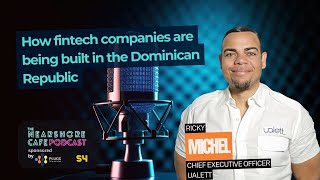
In this Nearshore Cafe episode, host Brian Samson interviews Ricky Michel, co‑founder of Wallet, a fintech that provides instant liquidity to gig‑economy workers, especially rideshare drivers, in the Dominican Republic and the United States. The conversation covers the origin of the company’s unique Spanglish name, its 2018 founding and 2022 institutional funding, the early “angel‑investor at a funeral” story that taught the importance of being pitch‑ready, and the deep user research that shaped a mobile‑first product tailored to drivers’ on‑the‑go lives. Ricky explains how Wallet operates as a hybrid US‑DR entity, with a US LLC for market access and a Dominican subsidiary that houses the core engineering team, and describes a merit‑based recruiting approach that values skills over pedigree. The discussion expands to broader Latin‑American tech trends, noting the post‑pandemic surge in VC, BPO, and fintech activity, and the strategic advantages of time‑zone alignment and English proficiency. The episode closes with a light‑hearted tour‑guide segment promoting the Dominican Republic’s culture and hospitality, and Ricky’s advice to entrepreneurs to build solutions rooted in personal need.
Chapters
Welcome everyone to another episode of the Nearshore Cafe podcast. I'm Brian Samson, your host. Today's episode is sponsored by Plug Technologies, plugg.tech. A great way to connect talent from all over Latin America to growing US companies. If you're interested in building a company from the DR, Dominican Republic, understanding how fintech companies grow there and talking to an amazing founder, this is going to be a great episode for you. We've got Ricky Michel from Wallet, which is a very interesting spelling. So maybe we'll, we'll start there. Ricky, welcome to the show and Tell us more about the naming of the company and the spelling of it.
Thank you, Brian. And so honored to be here with you and your marvelous partner, people that hear your program. But first of all, you provide a coffee, right? So I imagine at least at this episode, your coffee is from Dominican Republic. If it's not, it's not going to be that good.
I love it. I love, I love the, so I actually do this podcast from Hawaii, which is The only state in the US with, uh, with its own terrific coffee.
Well, let's, let's, we got, I'm going to challenge you, you, you on that, but you're right. It's, it's, it's a bet. So thank you. Look, the name was a little bit of challenging at the beginning because we built a fintech trying to solve a liquidity problem for an unserved community, the gig worker community, the independent community, freelancers community. So. Remember the banking industry, the traditional banking industry didn't allow them to be part of their ecosystem because it was too complicated to understand their needs, their workflow, their cash flow model, and their FICO score wasn't that good because not of there were missed payments or missed remittance. It's because the way their income goes in through their flow. But back to the name. We brainstorm and said, you know what, we want a wallet for them, we want a liquidity box for them, but we also need to trademark that name to become more secure and to become some— to be a real brand, right? So we combine a couple letters in Spanish, we use the Spanish combination and we create the UALATT. We substitute the W because, you we put the W, we cannot trademark it exactly way. So we build a hybrid, let's say Spanglish name. And that's how we build the wallet. So if you are from the States and your native language is English, you can say wallet. If you came from the Latin American, right? You can say wallet also, but now it's wonderful because we have clients even from Malaysia, from Africa, from China, and they also said wallet. So it's good to, to, you know, to host the whole, the, the whole purpose on one simple name and one strong name at the same time. So that's how everything starts.
Amazing. That is one of my favorite naming stories I think I've heard, and I've heard, I've heard, I've heard quite a bit. So I like that.
Thank you.
Thank you. Well, let's, let's, uh, take it back a little bit. So my understanding is Wallet was founded in 2022. Was Is that correct?
No, sir. In 2018.
2018. I must have had—
No, but I know why you said 2022 and you're right. On 2022 was the first time we raised institutional funding.
Oh, okay.
Yeah. It was our biggest, you know, fundraising, let's say round A, formally round A, because before the first 4 years, we were based on angel investment. And see investors that believe in— that's why you see that big sign behind me saying Believe, because that was how we created the model. But in 2022, it was when we finally become a real structure and solid company because of that institutional investment.
Take us back to maybe 2017, right before the— the original founding of 2018, where were you? What were you doing in life? And how did this idea even come about?
Well, we need to walk a little bit more back because, uh, we, we were, we found this company, 3 friends. It was me and 2 more partners. And now we are, I am the godfather of one of each son's. It's incredible. So we are compadres.
Amazing.
So yeah, it was back in 2014. So we were doing a different kind of fintech model based on MCA world also, but more as an ISO model, independent service officers, but it didn't work. It was too advanced. It was too complicated for that time. So for every loss, you get a win, right? You get something special. If you are, keep your eyes open. And that's what we did. We took the best of that mistake and by 2020, by 20, 2015. Yeah. We built the first framework of Walla. It was something about the gig workers back then, just that the only gig work category that you can find was the rideshare driver. Yeah. So we build a model around the rideshare drivers to provide them liquidity fast, clean, not friction, in a friendly way. Interesting. And full digital, right? Nobody believed that, that, that could happen because they were so away from the system. They, their, their capacity to be, to allow them to become part of the system was difficult. Well, but if you want to be success, You need to build difficult things and become easier things, right? That's the only way you build something. And back in 2017, I test you. I'm going to challenge you. If you tell me where we find, and I met that angel investor. I challenge you.
Where did you find that angel investor?
3 chances, 3 strikes. I don't know if you play baseball, but I gave you 3 strikes.
Okay. I do. I do love baseball. So. Well, I think the two cities that probably have the most in the States are New York and San Francisco.
Yeah, but not city, a place, in a specific place, a location, a place, a place. You can name it.
A place. I'll take the easy guess and say a coffee shop.
Strike one. But later on, I'm going to tell you how important it is, a coffee shop for us.
Okay.
You're so close because a coffee shop is so important for us.
I love the, uh, I love, I love where you're taking this interview. I like, I like the guessing games. Let's say a restaurant.
Try 2, my friend. Last call.
Last call. I'm going to say a baseball game.
I love baseball, but not in a funeral. Wow.
Okay.
Yes, sir. So every— and why I say, say in a funeral. Because it was the reality, but my, and the, and this podcast is about mentoring or, you know, or do some kind of, let's say advice to those entrepreneurs that wants to hear how we build things, right? I was ready. My pitch, it was in my back pocket.
Yeah.
So that funeral, that angel investor was almost retired. He was away just playing golf. He saw me, I saw him, say, how you been? How you doing? How you been? He said, I saw you at the radio station in a program about entrepreneur.
Sure.
What you doing? And I said, well, I'm building some fintech, this and that. He tells me, you know what? My advisor always told me that every dollar that I spend in tech is a win. So I said, here's my man. So I pitch him at that place, 2 minutes, and he requests me to go to his office. And here we are, 8 years later, Wallet is more than a cash advance. So my point here is to show how important it is to be prepared. That's how important it is to be ready to shot because it's one shot and you will never know when it's going to be that opportunity. So be ready.
Yeah. Now Ricky, when you were talking about the rideshare drivers, um, and you know, in the pre-show you said you spent a lot of time in the States and then in the DR as well. Were you talking like Uber and Lyft drivers or there was also like a whole string of kind of taxi cabs that were using apps and yeah, tell us more about that.
We transitioned from the regular taxi base cab drivers to the rideshare drivers. We live and die into that world for around, let's say, 2 years, eating with them, walking with them, visiting their places, their, their spots where you can find their needs, talking with them. So we spend around 2 years working with that specific industry, and we learn a lot from, from that industry, from that segment, right? From that niche. And after those 2 years, we built the perfect, let's say, POC to launch product. And that product, probably we, right, we increased the size, improved a lot of things, but it's the same core that we find back with those drivers, with those taxi drivers from the traditional taxi drivers through the rideshare drivers. So you're so right. You need to understand the full line, the full, the full circle. And that's what we did back in, in 2014, 2015.
Yeah, I remember that time. So I was living in San Francisco and, um, I think you kind of saw this inflection point probably even maybe a year earlier of 2013. Like, you know, in New York, the medallions used to sell for a million.
Yeah, yeah.
You started to see one industry fall while the other industry rose. So a lot of anxiety, you know, stress, tension.
And remember, they, they were in a position where they can project their incomes. Yeah. For years, right? Not for weeks, for years, right? From that, everything explode and disappear and goes to insanity, to an insert. They don't know how to, to build their, their new stage as human, as person. So that's why we try to connect the opportunity around rideshare for those taxi drivers that were kind of lost.
Yeah, yeah, yeah. You know, I wanted to ask about the— because, you know, you probably have almost like two different worlds in your head that you're designing for. You know, there's, uh, the DR and then there's the States, right? And what were things that maybe the ridesharing drivers had in common and, and, you know, where, where might it have been different in those environments?
Yeah, rideshare driver, probably the majority of their, let's say, skills, variables, conditions are the same no matter where you are. Yeah, it's a, it's a hustler. It's a person that leaves the street 24/7. Nothing is easier for them.
Yeah.
Hardworking people. I think it's so respectable people.
Yeah.
So you need to build, if you're going to provide them some product or service, you need to build something that fits in their needs, in their lives and their style. It's more custom-made, more tailored style. If you want to be success. So that's since day one until now, and we fight for that. We improve our research. We bring the best of the best to help us to build that customer-fixed product with no mistake because it's about trust. If you want to engage with the rideshare community or with the gig worker community, they need to trust you. They need to believe in you. And you need to show them that you are here to provide that extra mile for them. So honestly, it's not easy, but it gave you a lot of strength. It gave you a lot of hope when you work like that, because you follow that. You cannot just follow. You need to deliver some trends and to rebuild the model constantly.
Yeah, I really appreciate. Because I can, I can feel you had a lot of empathy for your user and you really took time to understand your user. Did you build this mobile first? And maybe you could even kind of help us think through how you even designed the interaction flow for that user.
Well, yeah, the interaction flow, you remember when I, when, when I tell you, well, we spend a lot of time with them. So acting with them, their situations, we build the right interaction flow. When, how, when we're going to solve that. Quickness, fast, no friction, because remember, you're living in your car, you eat in your car, you sleep in your car. And sometimes if you don't have something right away, it's the difference between accept or not. Delete or submit a request. So that stage by stage, we build it with them. One of the co-founders also of Wallet used to be a driver. He used to be a car driver, let's say SUV style, Uber driver. He spent his life in the mid, in all the stages of a driver life.
right?
So he also understands so well the life cycle of a driver. So remember, before it was a black car driver or a regular taxi driver. After rideshare, everything changed, right? Everything becomes different, more competitive, more segments to fill out. So that's why for us was so important to build the first stage under the traditional drivers. To understand their, their world. And then from then move on to the next stage. That was, that was the, the rideshare industry.
Yeah. Tell us more about building the company. So what was it first officially founded in DR or the States and how do you, how did you think about where to put the team and so forth?
Yeah, it's like found a company, a tech. If you want to become a hybrid model in between two countries, two worlds, right? You need to fund at the same time in both places. We incorporate, we create the LLC that hosts wallet as a US company base because we serve to US customers, to US market, right? But at the same time, we build a subsidiary to help the US-based company in customer support, in tech support, and all those factors and variables that you need to become success in the management world. But back then was just 2 people in DR and 2 people in the US and that's it. But I think that the key here, Brian, is to, since day 1, you need to decide the big picture. Even if you just have 2 people, but you need to see yourself with 1,000 people, how the company is going to be successful even at that level, it's to build the first vision on the right way. And that's what we did. We built the company in parallel with the subsidiary in DR to support and just 2 people in US to launch the POC back in 2020, 2018.
Yeah. Are your engineers in DR or the States or both?
We have engineers in DR since day one. One of the co-founders is a Cesar Cabrera, he is our CTO and he built a phenomenal team of engineers in DR in different categories. Those guys are special because they build with passion, with quality, with hyper-tech issues or performing the best tools on tech right now. They put it together to provide to our customer base, the best customer experience and, and, and, you know, interaction. Yeah. And we also use in US third parties to supervise and to stress the platform, to stress the developers that we have in Dominican Republic. But it's like, oh, like I said, it's a hybrid. It's the combination. For example, right now we have a lot of our chief staff is in US and they all, they all are from the United States, but now they feel like they are from DR as well. and they, they act like that and it's in their hearts, you know, and it's a cross-function. It's beautiful. It's, it's, it's the real married date in between one country and another working for the same goal. And in Wallet, we all work for the same goal, no matter where you are in Hawaii. If you're in Hawaii, you're going to be a believer. If you are in let's say in Norway, you're going to be a Believer as well. So it's a, it's a family and it's a, it's a way of thinking.
Yeah. Tell us about the recruiting process, especially on the, on the technical side. Were they mostly recruited from a certain university or different criteria you were looking at?
Yeah, use different criteria. Depends on which category we are looking for or which gap we need to we want to build, which area we want to boost or improve, but we don't have any specific standard on university side. We believe more in your skills and we test when we are recruiting engineers or software staff, we test them. And no matter if you came from Harvard or you came from the Base Junior Institute, if you have the skillset, You're going to be on board. Trust me. Yeah.
Yeah.
It's, it's, it, we, we don't want to, you know, underestimate the talent and that's, that's really dangerous because you find Brian, you can find kids from nowhere that gave you the biggest win as a company. So I respect that. And as a CEO, I try to, you know, to feel out the company.
Yeah.
Telling everybody to not underestimate. Estimate nobody because it's dangerous.
Yeah.
Remember what happens with Gatorade and Coca-Cola. That's right. That's right.
That's right. You know, on that note, one thing I wanted to ask you about, you know, over the last, especially 5, 6 years, we've seen a ton of VC funding go to Latin America and a lot of kind of brand new startups. But before that big flood of cash, there was a lot more like consulting tech companies, you know, so they're exporting services. Solutions type companies. And it's a little bit different, you know, say being a Java developer,.NET developer, you know, for working from DR or Buenos Aires or São Paulo for Bank of America, right? Or something like that. And you kind of need a different mentality, you know, to be an early stage startup. And there's a sense of ownership and big scope. And can you talk about, you know, how you kind of built that technical mindset and like startup environment in, in DR, which I imagine, you know, doesn't quite have the startup scene of like a San Francisco where they're everywhere.
Yeah. Great question, Brian. Look, it's about eligibility. It's about how well you prepare your persona and your mindset to understand that the world changed right now. Remember back. Let's say 10 years, 20 years ago, Latin America as a support space, big companies, mid-size companies, just think in Latin America as a customer support-based opportunity. But as you said off, off stage, right? When you told me 2020, March, right? To say before and after, I think after the pandemic, you know, the world shakes and explode. And everything came back, but when everything came back, big companies, mid-size companies understand that they need to look for out of their shorts. They need to walk away from their shorts. And that's when Latin America exploded because the talent was there. São Paulo, Buenos Aires, Chile, Santiago, Chile, DR. We have a ton of kids that went to the United States. Prepared themselves full-time in the best schools possible you can possibly find, and they came back to their countries and stayed there. That the asset was there. It was just about to discover those assets. And I think after 2020, that was the real situation. Yeah. Many companies pushed back like you did. You went to Buenos Aires and you explore a lot of potential opportunities over there, right? And I, you probably have some good connection there that for whenever you need them for a project, for a proposal, you just going to knock that door because you know that door is already, is ready to host whatever you give them. So I think after the pandemic, everything changed. Latin America become not just the hub for customer support. It becomes the biggest hub for BPO. Business process outsourcing in the world right now. Not just for United States, even for Europe. Now Asia is putting their eyes in Latin America.
You're absolutely right.
To become the interface in between United States market, Canada market, and them. Why? Because we have the same time zone, we have good English level, and in the tech side, we increase our knowledge, our capacity in a huge mode after the pandemic. So everything makes sense. That's why you see that aggressive wave to Latin America and investment and new tech. For example, you know that right now the two biggest remittance platform, digital platform for remittance from the United States to Latin America were found in Latin America, but now they are based in the United States. One is Felix and one is Tupana. It's based on stablecoins, but those are fintechs that growing incredible, incredible high. Why? The hybrid between Americans, Latin Americans co-working together. It's impossible not to lose with that combination. It's impossible.
Yeah, Ricky, I want to, um, shift to something a little more fun. Yeah, although I'm having a lot of fun, I'll say.
Thank you.
A lot of our audience has never been to DR. Play tour guide for us. If they go, where do they need to go? What should they eat?
I'm gonna tell you something, and don't take it— don't take me, you know, arrogance, but this is the reality. Like the Argentines say, Our meat, the steak from Argentina are the best. And I mean, we are the perfect spot for you to discover where everything starts in the New World. In DR, you're going to have the first road, the first port, the first formal street, the first building, the first market, the first church, the first university, and many of the firsts of the New World. So that's, that's something that I invite everybody to visit my beautiful country because, and, but the most, the most, the secret weapon is how warm and friendly we are. We love to see that great smile that you have right now in Hawaii. We want to see that, but in DR land. The only problem is that after you visit DR, I don't think you're going to have a different destiny for, at least for if you want to go to beach place.
Love, I love the confidence.
Yeah.
Ricky, this has been a lot of fun. I really appreciate you coming on the show.
Thank you.
Talking about the gig economy, what you're building. I wish you and the Wallet team the best of luck.
Thank you. I just want to leave this for your audience and for the people in Latin America that hear hear this program. I think you have to believe in— if you are an entrepreneur, you need to build something that nobody's doing. Think in your needs, and when you're thinking your needs, you're probably gonna build something special because from your needs, it's when you, when you discover your needs, it's when you really build something. So believe. Let's make it happen.
Wise words. Wise words by Ricky. Well, thank you again. Thanks to our listeners and our sponsor, Plug Technologies, plugg.tech. Great way to connect talent from all over Latin America with growing US companies. This is the Nearshore Cafe podcast. We'll see you next time.
More from Brian

From BPO Agent to Client Experience Manager: Ana Rodriguez on Nicaragua's Nearshore Talent

From BPO Agent to Client Experience Manager: Ana Rodriguez on Nicaragua's Nearshore Talent

Building Sales Teams in Mexico: Mario Oliveros Figueroa on LATAM Talent & Cross-Border Selling

From Automation Engineer to Data Platform: Victor Fernandes on Brazil Tech Talent

H1B Crackdown & The Nearshore Shift: Robert Bouchard (H1B Guy) on LATAM Talent | 🎙 TNC

Nearshoring Yourself; step by step to building an expat life in Mexico |🎙 The Nearshore Cafe Podcast

Scaling high-performing teams in Costa Rica staffing legend Doug Firestone on growing to 225 LATAM

How to Scale in LATAM? Navigating Currency, Taxes, and Labor Laws | 🎙 The Nearshore Cafe Podcast



AI in LATAM: How to Break Into Mexico’s Tech Market |🎙The Nearshore Cafe Podcast