Building a global FinTech startup from Uruguay
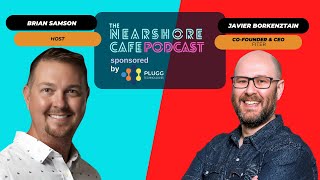
Javier Burkenstein built Fyter in Montevideo into a global fintech serving 30 countries by implementing Apache Fineract, the open-source banking platform. He bootstrapped the company to profitability without venture funding, hired autonomous talent across Africa and Latin America, and kept his remote team of 25+ cities connected through written communication and AI tools.
Chapters
Welcome everyone to another episode of the Nearshore Cafe podcast. I'm Brian Samson, your host. And if you're into fintech and how to build a fintech company out of Uruguay, You are going to love this episode. I have Javier Burkenstein, CEO of Fyter, on the show. Before I introduce Javier, I want to thank our sponsor, Plug Technologies, plugg.tech. Plug is a great way to connect all the talent from Latin America to growing US companies. Javier, Thanks so much for being here on our show today.
Thank you for having me, Brian. It's a pleasure to be here.
And Javier, you're dialing in from Montevideo, Uruguay. Is that correct?
Yes, I'm from Uruguay. I live in Montevideo. Yes, I'm at the south.
Yeah, I've been there before, and this time of year it's like summertime, you know, nice warm weather, people walking, you know, along that— I forgot what it's called, like the Rambla, right? Walking the Rambla, walking the Rambla with their mate cups. Yeah, is that, is that what you'll be doing later today?
Absolutely, yes. Well, mate we do every day. I have mine here just in case.
There's nothing like a beautiful Sunday afternoon walking the Rambla with mate, right?
Well, a barbecue is better. Yeah, I can tell. Barbecue Yeah, Uruguayan barbecue with the fire, the meat. Yeah, that's something that I know if you eat meat, but if you like meat, that is something that you can enjoy a lot here in Uruguay.
Javier, I'm really excited to talk about fintech today. Fyter is a fintech company you've built right out of Latin America, right out of Uruguay. Let's just tell me, what is it? What is Fyter for those who don't know you, don't know the company? What is it? What are you building? Tell us more about your vision for it.
Absolutely. So FITR's mission is to accelerate the adoption of open source solutions in the financial industry. So today we are the number one implementers of Apache Finirac in the world. Apache Finirac, it's an open source core banking solution that, that provides solutions for LMS, loan management system, accounts like transaction accounts, checking accounts, balance accounts, deposits, term deposits, things like that. The KYC of the client, the database of the client, accounting, some, some basic accounting for, for the products. And, and it's really flexible, expandable, and it's open source. So our, our mission currently, it's we are a service company working on that, on this space. Our vision is to build a fintech distribution of different open source technologies that we can deliver to multiple clients around the world. So Feeder started in a non-traditional way. Feeder was founded by myself and my partner Robert in 2017 while I was in Uruguay. He was in Mexico, our first client in— sorry, he was in Australia, our first client in Mexico, and the delivery team for that client was in Uganda. And since then we've been growing and having clients in almost 30 countries around the world and teams in probably 25 cities around the world or even more. So we are a remote company. We would like to say that we work from the world to the world. And as a company that is not bounded or limited by geographies or regions, we recognize that and we see that the potential growth is It's huge. So we have a lot that we can accomplish yet.
What was your background before you, you started the company?
Well, I, I am a mechanical engineer. Uh, I also did an MBA, so I used to work like in a, in a mechanical engineering consulting company the first 10 years of my career. Then I started working in a fintech startup that back in the day we used SMS to pay. We did some sort of tokenization of credit cards and the link was the SMS. So we created a lot of very interesting pilots of payments from taxi payments using SMS, tickets from buying tickets from the cinema. You could buy like a cinema ticket from your phone with a feature phone. Smartphones didn't exist back in the day. So that allowed me to understand some parts of the financial industry, the retail financial industry, the payment industry within the retail financial industry, and realized that there was a lot of opportunities there of improvement, of modernization. There's a lot of friction within the industry, so there's a lot of opportunities over there. The payment ecosystem. It's one of that has a lot of fintechs. And during a transition in my career when I decided to be an entrepreneur, to start my own company, to— that was something that I always wanted to do. I found this technology, this open source technology that eventually pivoting, I ended up like, you know, connecting the dots backward, you know. You realize that all your experience, it's somehow interconnected. You don't do things randomly. It just— every step allows you to do the next step. And sometimes, some— sometimes things that you did like 10, 15 years ago It's experience that you have that allows you to, you know, to explode and to use it. So in my background of project management, of fintech, and understanding of the industry, understanding of the financial landscape, understanding of complex projects, dealing with complex organizations, allows me to, to, to manage Fitter as a business organization And, and now we are serving fintechs in the lending space, in the neobank space, uh, providing them with the core banking solution.
Amazing. What did the banking system and the fintech ecosystem look like when you started the business back in 2017? What did that look like, um, especially in, in Uruguay?
The landscape in Uruguay, it's similar to the landscape everywhere in the world. You have a group of banks, typically global banks, that are few, that are monopolizing the entire industry. Back in the 2010 to 2015, the first big, big neobanks, the first huge new wave of fintechs, the Monzos, the N26, the Nubanks, the, you know, those all, those big names of today were starting during those, during those years. So we realized that Our vision back in the day was, imagine that this is the early 2000s and you were selling software for supermarkets or for warehouses, and your client number one would be Walmart. Everybody was— everybody in the company was trying to sell to Walmart, but suddenly there is this company called Amazon that wants to buy your software, but they don't have volume, they don't have nothing. That's why they won't build our software. We need to focus on Walmart. So fast forwarding into 2020s, it is clear that the Walmarts of the financial industry are already here, and serving them when they were small will allow us to grow with them and will allow us to understand and to exploit and to grow in a different landscape. Serving the big banks, it's very difficult, but serving the new startups that are going to be the big banks of the future That is our vision back in the days. And we were very lucky of having a few of them. Some of our clients now, they expanded and have like millions of clients themselves. They're like big neobanks today. So somehow we were successful and in that direction we were successful and we are seeing now that the big banks They all now want to see and they all want to implement this technology because they realize that it's more flexible, most cost-effective, allows them to execute and to be nimble, faster. You know, it's a better solution for them today.
Yeah, I think so. I think so. You mentioned Robert earlier, your co-founder. Tell us more about the story. How did you and Robert get together on this?
I used to work in a foundation that was the initial of this open source technology that's called Mifos. And I had a client working within Mifos and Robert was the contractor for that project. And I realized that he was amazing. He was doing an amazing job. Uh, he was really proactive, fast, you know, doing really an amazing job. I didn't do— I didn't have to do anything. He was just doing everything perfect. So, um, and, and we've been working like half a year, year and a half, by his being contractor and I was just, uh, part of the, of the, of the team. So when I decided to leave this organization and move to my next step, Robert contacted me and said, hey, why don't you do something together? And I was saying, okay, let's try, let's see. We start thinking and it was clear for us that there was the need of a global company serving fintechs, serving this new wave of startups. And, and that need was clear for me, and that was what I wanted to do. So I joined Robert. The funny part is that we've been working— we were working about 2 years, 2 years and a half, uh, and, and we haven't met each other face to face. We haven't been not even in the same country, in the same country. So when Fyder started to grow and eventually we were able to pay ourselves a ticket and an Airbnb to, to see each other, we both fly to Dubai. We rented an Airbnb in Dubai and we spent the weekend like planning the next 6 years of the company. And if it weren't by the COVID I think that that plan will be very, very Very precise. We are now executing that big plan, big idea, and things are getting together. But what's nice to finally been able to give us a hug and to see each other face to face after working together for many years, building a company, starting a company, and never being in the same room.
Uh, tell me more, um, and our audience is always very interested in this, um, just the company building part, you know, building a company from Uruguay, um, you know, maybe if you could even talk about like your first couple of hires. Did you raise capital? Was that something that you needed? Tell us more about that.
Well, one of the things that, that makes me really proud about Fyder is that we bootstrapped the company. We always been cash flow positive. It's like, it's, uh, we, we never wanted to raise external funding, although it's something that we always discuss because it's, it's something that it will allow you to accelerate and to grow faster, but also it will bring other complexities, you know. But being, I always say that the, the best in the, the, the best investor, it's a happy client paying every month. Uh, and, and I, I, I keep that, uh, as a motto because, uh, I truly believe that you, when you're building a company, yes, you just— if you are in a startup and you need to accelerate and you are in a very engaged, very competitive landscape, of course you need capital. And, and I'm not saying that venture capital is something that shouldn't exist. It has to exist, it provides a service, but it's not for everybody. And for us, we believe that bootstrapping is the way, is the best way. I'm very proud of being able to reach at this level without external funding, which I never absolutely discard. It's always a discussion, it's always a question of should we raise capital, why, for what. And if you want, if one of the things that we are doing is transitioning to a product company, you know, our vision is to build this distribution so that it's having our own product, and that will probably require more capital. But that's another discussion and something that we are executing, but on the old way, you know, by bootstrapping it, by paying from our own capital. But yes, the first hires were like technical people, developers. I truly believe that the talent it's evenly distributed around the world. Opportunities are not. So you can find talented people everywhere in the world. Of course, there's a huge concentration of talented people in some areas in the world, but it is because people travel to there from different parts of the world. Like Silicon Valley, you have people from everywhere in the world. Israel, you have people from everywhere in the world there. So yes, you have a concentration of talented people because you have a unique concentration of people from different parts of the world that are taking a risk, that are going there, that are like wanting to go there. So that has like a— separates them apart. But for the rest of humanity, that there is a probably a normal distribution that talent is normally distributed across the world, and you can find talent everywhere in the world. And I think that we want to democratize the access of opportunities, so we try to hire people from places that companies do not normally hire, like, you know, Africa, South America, some parts of Asia, etc.
Yeah, where, where in South America, um, have you hired from?
Well, from Mexico to the south, we have people in Mexico, Colombia, Argentina, Brazil, uh, Bolivia, uh, Uruguay, of course. Yeah, we have people in Central America too, like, uh, yeah, Africa, we have people from Nigeria, Kenya, Uganda, Rwanda, South Africa. Uh, we have, we have had team in Cameroon, Ethiopia.
Think about, um, how many different countries you're in, even in just in Latin America. Uh, you know, different personalities, styles. How, how have you thought about, um, just getting everybody on the same page and making sure that the collaboration was, was strong?
That's— it's always difficult. It's not simple, and it always takes time and effort. One of the things that we try to do, and when we realize that we are not doing, we try to just take a quick decision, is that we don't hire people that need to be micromanaged. If you need to be micromanaged, we can't we can't help you here because we are not in the same room, we're not in the same country. So you have a task, you have a goal, you need to do it. And if you can't do that, this is not the place for you to work with. So that's kind of trying to find the people that fits in our culture, that doesn't have micromanagement, that is objectives-oriented, that we define a task, an objective, and then you have to do it. And if you have a problem, you need to come back to us and say, okay, I'm having this issue, I cannot make this progress, or try to find a workaround. Our values are simple. We say that we are humans, that we trust, and we care. So we are humans because We all have realities, we all have issues, we live in the same planet and we understand that things need to be treated and we realize as humans. We care because we all have families, we all have responsibilities and we treat our world with care. That is something that we always do. And we trust because we need to trust in our team. And also trust, it's at the foundation of the financial industry. So trust is really important, not for us trusting our team that they will do the work, they will behave, but also convey that we are a trustworthy company and we can help our clients build that trust that they need for for the clients.
I think it's great, um, your culture of autonomy, no micromanagement. As you think about your dispersed team across Latin America, in like, uh, daily stand-ups, or is there any management practice that you would recommend to maybe other founders that are building not just in one place but across the continent?
We have small teams that are responsible for different phases or different parts of the process. You know, we have— I always see, I always picture Fidor as a train with two engines. An engine on the front that is pushing, which is the delivery team, the team that that does the project, etc., and an engineering behind that is like pushing. In front it's pulling and in back is pushing, it's a sales team. So every team behaves different because they have different needs. But yes, technical teams usually have daily standups. We We are a lean company. We have like sprints, we have daily stand-ups, we have all the ceremonies of lean management and development, modern technologies for development. But one thing that is really important in distributed environment is that you need to rely on text. Text is really important. You need to write everything down and just being able to make sure that everything is written so others can take it and understand it and continue the work. Because having meetings, an excess of meetings, it's not very productive in a remote environment.
Something I wanted to ask about that with the text is you have people in Africa, but you also have people in various countries in Latin America, as we talked about, where maybe English is not first language for most. How are you documenting that? Is it in Spanish? Is it in English? Is it a different language?
Our official language is English, and we have a lot of tools that help us to do that. Now we have tools that record every meeting and transcribe the meeting and gives you like a report of the meeting, the to-do list, the question that is— we use AI a lot in tools that embedded AI on themselves, like GitHub Copilot, of course ChatGPT, Gemini, but we use Read AI, which is this this tool that connects into our calls and transcribes every meeting. So with just a prompt, you have an email with all the to-do lists and you don't need to spend like hours taking notes as we used to do in the past and putting those notes together, everything done. Now it's done automatically with just one prompt. And also we use a lot of AI for prospecting, cold email, cold contacting. So, um, there is a lot of tools that are leveraging AI in ways that allows you to execute like if you were 100 team, but with a team of 2.
Yeah. Javier, have you had any issues, um, recruiting this, um, with, with the way your, your company's set up, you mentioned senior talent, um, can, uh, are fluent in English, can work without micromanagement, autonomy. Have you had any issues finding these types of people in Latin America?
Not really. You know, in Latin America, in the tech space, uh, at least the people that it's already willing to work for international companies. They do have a solid English level and they are really used to work for US companies or European companies. So in Latin America, we have a pretty good level of people that can work with us. Of course, it's— you always make like bad choices and you need to correct. Some mentor told me a few years ago that managing, it's about hiring well and firing fast. When you realize that someone doesn't fit, you need to take a decision. It's a two-way decision because a no-fit, it's bad for both. So you need to take a quick decision. And taking quick decision for entrepreneurs, for, you know, founders, is usually difficult. It takes time, you know, because you have like an emotional attachment with the team that help you build part of your company. But it's really necessary when you're growing, when you're scaling. Sometimes you reach to a level and you are stuck in a level, not because the market, not because the external condition, but because of the internal capabilities that you have. So you need to break that by bringing people that higher the bar, you know, move the bar a little bit high. And that's really important. Continue bringing people that move the bar a little bit higher. It's where it's, it's the best thing that you can do.
Javier, I wanted to, um, just ask you a little more about your co-founder relationship. And because you don't see each other very often, um, uh, how do you, um, uh, you know, communicate that that trust? And, you know, do you, do you bring any, uh, like gifts or anything special, you know, to when you guys see each other?
We try to see each other at least once a year, and some, some years we are lucky enough to see us like 2 or 3 times a year. We usually, we try to treat us very well, like we don't— because we, we live in literally half of the world apart. Like, I'm in Uruguay, he's in Australia. It's 13 hours. When it's my morning, it's his late night. Sorry. Um, I used to walk my dog like at 10 PM my night, and I was talking with Robert on the phone like for an hour while I was walking the dog around my home and, and But we, we try to see each other, like we use like an opportunity for like there's a huge conference in New York, so let's go to that conference and, and so we can see each other and, and, and, and kill two birds with a stone. But also we, we try to, to, to stay. I remember that, that, uh, one of the first time that we see each other, uh I gave him a present and I think, what, which present can I give him? Like, it's, I need to take it like half wall apart. So I took the first invoice that the company did. I frame it in a nice frame and I give him like, okay, this is a gift for you because this is the first invoice that started everything. And another day he sent me a gift like an NFT with the video of the first email that a friend of us connected each other. I said, I have a friend that is Javier, I have friends Robert connecting, and he— so we tried to treat each other because the partnership is really important. The building a company, it's hard. There's always hard moments, there's always tension, there's always moments that you want to, I know, it's like a roller coaster. Everybody knows that, but it's real. The struggle is real. So a good partner that, like Robert and myself, that we are really complementary, that we are We have two different backgrounds, we have two different stories, we focus on two different things, we see the world in different ways, but we know what we want to build. We have a clear vision of what we want to achieve, and that is the most important thing. And we complement each other. Sometimes I see things with a real optimistic, and he's real pessimistic and I'm real pessimistic but he's optimistic, that, that doesn't worry. That when, when we are worried is when we see the things in the same way. When we see the things in the same ways, okay, let's think that because something is happening, something is not wrong, something is not right because we are seeing the same thing.
That's great, I love it. Um, my last question for you, Javier, a little more, uh, tourism related. For those who are listening and they've never been to Montevideo before, what are your maybe like top 1 or 2 tips for them? And also, uh, the best time of year to visit.
For me, this— the best time of the year is February. Um, the weather is nice and you have The carnival. Carnival, it's a huge thing here in Uruguay, especially in Montevideo, where you have these popular stages all over the city that every night you have shows of local groups that are called murgas or candombe, and you have like big parades in the street of Black people with drums, playing drums in a very, very heavy way, which is incredible because of the sound, the energy that you can see. It's like Rio but kind of different, like not that like big thing but more real and And you can have, like, you have a lot of places to eat good meat, and you can go to the beach, you can enjoy the, the carnival. So for me, February is the best time of the year to come to Montevideo. Absolutely.
Javier, this has been a fantastic conversation. Love hearing how you built your company. Love the discussion around fintech. Before we go, let me thank our sponsor one more time. That's Plug Technologies, plug.tech. Great way to connect talent from all over Latin America, as Javier talked about, to US companies. Thanks everyone for listening to the Nearshore Cafe podcast. Thanks again, Javier, and we'll see you all next time.
Thank you, Brian.
More from Brian

From BPO Agent to Client Experience Manager: Ana Rodriguez on Nicaragua's Nearshore Talent

From BPO Agent to Client Experience Manager: Ana Rodriguez on Nicaragua's Nearshore Talent

Building Sales Teams in Mexico: Mario Oliveros Figueroa on LATAM Talent & Cross-Border Selling

From Automation Engineer to Data Platform: Victor Fernandes on Brazil Tech Talent

H1B Crackdown & The Nearshore Shift: Robert Bouchard (H1B Guy) on LATAM Talent | 🎙 TNC

Nearshoring Yourself; step by step to building an expat life in Mexico |🎙 The Nearshore Cafe Podcast

Scaling high-performing teams in Costa Rica staffing legend Doug Firestone on growing to 225 LATAM

How to Scale in LATAM? Navigating Currency, Taxes, and Labor Laws | 🎙 The Nearshore Cafe Podcast



AI in LATAM: How to Break Into Mexico’s Tech Market |🎙The Nearshore Cafe Podcast