🇨🇴 Business, Culture, and Cuisine Insights 🌍 Nearshore in Colombia | 🎙 The Nearshore Cafe Podcast
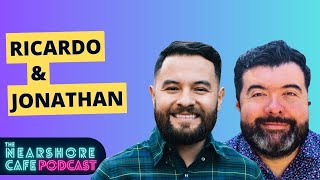
In this episode of the Nearshore Cafe, host Brian Samson interviews Colombian natives Ricardo Marquez and Jonathan Ruiz, both senior designers at DocuSign, to explore life, culture, food, and business opportunities in Colombia, with a focus on Bogotá. They describe Bogotá’s high‑altitude climate, the daily rhythm of layered clothing, frequent rain, and the city’s blend of urban development and abundant green spaces, noting the efficiency of public transport and the popular Sunday "Ciclovía" where streets close to cars for cyclists and families. The conversation delves into Colombia’s multicultural heritage—European (Spanish), African, and Indigenous influences—illustrated through music, dance, and especially cuisine. Traditional dishes such as ajiaco, mondongo, sancocho, and holiday desserts are explained, and a range of restaurant recommendations are shared, from the iconic Andrés Carne de Res to high‑end experiences like El Cielo and surprising finds like St. Louis‑style ribs in Bogotá. The hosts compare Bogotá’s food scene to other Colombian cities, noting Medellín’s spring‑like climate, its tech‑hub status, and Cali’s vibrant Feria de Cali. They address common misconceptions about Colombia’s safety and drug‑trade legacy, emphasizing the country’s modern transformation, high literacy, and growing tech infrastructure. Ricardo and Jonathan recount their personal career journeys—from early design work in Colombia, education at Carnegie Mellon, to senior roles at DocuSign—highlighting the blend of research, UX, and product design. Practical advice is offered to U.S. companies seeking Colombian talent: explore beyond well‑known talent pools, tap university networks and small agencies, and leverage the favorable cost of living and strong work ethic ("berraco" spirit). The episode concludes with light‑hearted personal anecdotes about favorite English phrases, home‑cooking cravings, and budget‑friendly Colombian souvenirs such as leather goods from Vélez and handmade hammocks.
Chapters
Welcome to the Nearshore Cafe podcast, home to the most interesting stories and people doing business in Latin America.
Welcome everyone to another episode of the Nearshore Cafe podcast. I'm Brian Samson, your host. And on the Nearshore Cafe, we talk about people doing business in Latin America. And we have a special treat today. If you are interested in Colombia and Bogotá and culture, food, doing business, working in tech, this is going to be a really fun one. But first, let me thank our sponsor. Our sponsor today is Plug Technologies, plugg.tech. Plug is a great way to find software developers all over Latin America for growing US companies. So let's get into our show today. We have Ricardo Marquez and Jonathan Ruiz. Welcome, guys, to the show.
Brian, thank you for having us today.
Thanks, Brian. It's a pleasure to be here.
Absolutely. Well, both of you are from not only Colombia, but the biggest city, Bogotá. A lot of our listeners have curiosity about LATAM, but maybe they haven't visited everywhere. Myself included, I have yet to make it to Bogotá. Could you give us a sense of just life in Colombia, life in Bogotá? What is that like?
All right, let me take it first and start from the basics. Bogotá is a city high up in the mountains, so it feels very foolish usually But it's weather-wise, but also like attire-wise, it's really funny because you can actually go through the whole spectrum in the same day. So in the mornings it goes down to like, you know, maybe 30 or 32, 35. Midday can go up to 80. And because it's the equator and it's up in the mountains, it rains almost every day. So then you have to have some kind of like, you know, coat or umbrella or something like that. And it goes down to like the 40s when it rains and then up to 60 when it's night. So So you have to be really prepared with a lot of layers that are water resistant to go through a day in Bogotá. But it's a city that is very plush in terms of nature, trees. The development of the city has done a lot of good in that sense. And that's one of the things that I really miss about it is that mix of like urban development, you know, plush, you know, forests. And of course, you know, I have to say that's something Sometimes the traffic is incredibly slow. But, and the last thing that I would say is because the traffic is so slow, public transportation is something that has been something that works really well in the city. Yeah. So, you know, that's, that's how I grew up. That's how I moved all around. And, you know, I miss not having to need a car to move around in a city as big as Bogotá.
Yeah. Now, did you both grow up in, in the same neighborhood? The city?
That's a good question. Do you know which part of the city you grew up, Jonathan?
I don't know. I grew up in the south of the city, but yeah, I mean, I grew up in the north.
Yeah.
Oh, you grew up in the north. Gotcha. So just to echo what Ricardo said, I actually came to the States when I was 10. So my memories of Colombia are very, of course, limited because I grew up there until I was 10. But yes, some of the things that I do remember, the weather and how cold it gets at night. You actually have to sleep with a couple of blankets, like really thick blankets. That's right. For the listeners, I now live in Miami, right, which is the total opposite, very hot. And I sleep with a very thin, right, just a tiny blanket. But anyway, so I remember that. Something that I recall very vividly is it's an event that happens on Sundays. It's called La Ciclovía, and they close down a whole street so cars don't pass and everyone gets out and they can take out their kids. It's safe because there's no cars and they can ride bikes. They can ride skates. So I remember skating with my siblings. So you have this very wide street just for you to skate and ride bikes. So I recall that vividly when I was younger.
Yeah, that's something that I've really come to appreciate about LATAM overall is just an emphasis on major plazas, pedestrian streets, Of course, there's always traffic to contend with, but they really seem to make a special focus to provide spaces for people.
Absolutely, absolutely. And, you know, the thing that I remember now that Jonathan has brought so many memories with the ciclovía is also how you can make it a social event. So you go out with friends, of course, and then you ride together, but you can stop to get, you know, fresh fruit juice in almost every, you know, every block, or you can get some kind of like, um, you hear music anywhere. So you have all these groups of people getting together as well as like doing sports. Um, and, um, and then that social openness is something that, you know, the weather allows and kind of like, you know, people are really open and that community is really great.
Yeah, yeah, it's not, uh, it's not 100 degrees outside.
There's—
you can, you can be together. Yeah. Um, so, you know, when I think of, of, um, you know, various countries, what I love about LATAM is, um, just the nuances, you know, country by country. And say Argentina, you know, has strong Italian influence. How about Colombia? You know, where are some of the influences? And maybe also talk about maybe the expat community as well in Colombia.
Yeah, I mean, yeah, go for it.
Yeah, no, I was just going to say one great example that was really well done. Um, I don't know if, if you, Brian, or, or listeners have, um, have watched Encanto, uh, the Disney movie that came out a couple years ago. Yeah, I feel like that movie—
my kids like that.
Yeah, yeah, yeah, yeah. I feel like that movie really encompasses, you know, what Colombia is and, and, and, you know, the influences that, that, you know, you have the European, of course, you have the African, right, which is very, very ingrained in our culture. The music, right? I grew up listening to salsa.
Yeah.
I learned how to dance when I was probably 3 years old. I'm not kidding. And I also want to instill that in my children now that we live in the States, although it's a little different. But yeah, so much influence. Also the indigenous, right? The indigenous in Colombia as well. Very heavily influenced. So yeah, anyway, Ricardo, you wanted to say something?
Oh no, well, I mean, so many things to tell actually about this, but to your question, I think that to Jonathan's point, there is this whole, Bogotá is a plateau and it used to also have a really strong indigenous community that became farmers. And when my grandparents grew up and then like, you know, like kind of like my tradition, my family has been there for several generations, then there is this mix of like the urban sprawl happening. Yeah. And at the same time, kind of like the farmers mixing. So you would find, you know, farmers markets that would be really close to like very affluent neighborhoods. And that was, that was really appealing to expats, you know, like in the last century. Now, what I hear and what I see, sometimes I go there for projects and, you know, to work with teams there. What I hear is that The expat community, it's still fairly, you know, fairly small and fairly located in specific parts of the city, like the northeast, for example. But because of that influence and because of how the city has grown, then they still keep some of those, you know, like traditions. But for example, the restaurant scene has expanded immensely. So I was telling Jonathan at some point, I think I mentioned to you, the best St. Louis ribs I've had in my life were in Bogotá. Why? I have no clue. It's just that I don't know if it's the materials or anything, but they were really, really great. So definitely recommend it for people who want to go, you know, spend a week in Bogotá or something like that to navigate the restaurant scene. It's very good. And it has also, you know, to Jonathan's point, I remember this teeny, teeny restaurant in the middle of the city that is a mix of African roots and Southern indigenous food.
And it's just amazing.
It's something that I've never seen before, you know, anywhere. So definitely recommend it.
That's incredible, just the different cultures that melt in Colombia. You know, it sounds quite unique. Like, I can't think of another country with this European, the Spanish, this African, uh, convergence.
Yeah, no, definitely, definitely. And, and it's interesting because, you know, now, um, you know, some, some of us have gotten a chance to go to Europe, right? And, and now you can see you know, certain aspects in Europe, right? In Barcelona, in the little plazas, and you're like, oh, I can see how that influenced the way that we designed our streets, you know, and how, you know, the colonizers came in and then they sort of like try to— but it's also like a different flavor of it, you know? So it's pretty interesting. So I think, you know, to piggyback on the food scene, I think I've heard multiple friends who are not Colombian who've been to Bogota and who've been to different cities in Colombia, and they've all said that Bogota has the best food scene in Colombia, which I thought was very interesting. Yeah. Because I've been to Medellín, Cartagena, different cities, Cali. But apparently, yes, Bogota has, in terms of diverse, like in terms of culinary experiences, diverse, um, you know, from like super high-end restaurants to like street food. Um, you know, Bogotá seems to be it. So that's, that's an interesting— I don't know, Ricardo, if you've ever heard that, but that's what I've heard from my friends.
Well, I hear that is, that is actually, you know, renowned in South America now, you know, because the industry has grown so much and it has specialized. Yeah. And that's what got me curious into like trying different things. And that's how I ended up with that place with like, you know, like amazing You know, some of the strips and that kind of stuff.
That's cool.
Um, but when I was a kid, there was none of that, you know. It was, it was very much like, you know, very traditional Colombian food, which is also really good, but it's very different.
Yeah. And, and just expand on that. How would you describe, um, traditional Colombian food?
Oh man, from Bogotá? Okay, I guess I have to talk about, um, ajiaco, you know, start from there. Uh, because there is a lot of stews and a lot of soups, and ajiaco is like this, uh, mix of different types of, uh, potatoes like, you know, products and they melt into this very creamy chicken broth-like flavor and mixed with some very aromatic herbs. Then they create this mix of like liquid, very creamy soul food. Yeah. That when you have it and, you know, sometimes my family used to have it over Christmas or my grandma used to make it for, you know, like New Year's Eve. And that was something that it just almost was like a, like a landmark on like how to get together and share this very rich type of food that at the same time is very comforting. So there's a lot of that comfort type of food, at least in, you know, in Bogota because of the weather too. Um, but, um, it's, it's amazing. I still miss it. Oh yeah.
Amazing.
Yeah. No, I was gonna add, I was gonna add, uh, to the, to the the soup and the stews. I feel like there's so many different ones. Um, yeah, you have mondongo, you have a whole bunch of different sancocho. Well, sancocho, I don't think sancocho is from, from, um, from Bogotá, right?
I don't know, but it's very popular too. I mean, you can find it everywhere, right? Yeah.
So it's just like different types of stews. Um, and of course, given the weather, you know, you, you're always, you know, you want that warmth. Uh, yeah. But that's, that's, that's, uh, usually like in, you know, around like Ricardo mentioned, during the holidays, you know how here in the States we do Thanksgiving and we have a turkey, right? Over there is the soup and you have this big pot because the whole family is coming, right? So it's a big pot with a big spoon and everyone's just having this awesome stew. Yeah, that's what I remember.
Amazing. And I'm sure you can't beat grandmother's.
Of course. My grandma used to get different types of herbs and capers and then mix chicken, but also oxtail for flavor. And that makes for actually very powerful. But one thing you may remember now that we're talking about holidays is also desserts. So like the same stewy, kind of like syrupy type of dessert, fruit-based. So like different types of fruits made into syrups, into jams, that kind of stuff. That's something that I grew up with when, you know, Latin America in general, but Colombia is also very traditionally Catholic. So my grandma used to make with my aunts and my mom 7 different types of desserts on Good Friday. And, you know, we wouldn't be— my parents didn't let us like listening to any kind of like fun music or salsa or anything like that because it was a day to like, you know, like be respectful. But we could eat all the sugar that we wanted. So it was really great.
That's hilarious. That's awesome.
That's great. So occasionally our viewers will take advantage of recommendations, you know, rather than go to Yelp, they want to hear from the experts. I just wanted to, if you had any specific restaurants that you'd recommend anyone when they go to Bogotá, anyone that you wanted to give a shout out or recommendation to?
I have one. Okay, go for it. Um, it's a restaurant called Andrés Carne de Res, uh, but it's, it's so much more than just a restaurant. It's like a, like an experience, uh, from the, from the, from the, from the moment you drive up to the restaurant, things are different. You're gonna see a cow outside. I mean, it's, it's very, very, very interesting. And once you go inside, you know, the, the decoration is, um Yeah, it's, it's, it's, it's an experience from, you know, from the, the moment you walk in to, to the food. There's music. Um, so, so yeah, I would totally recommend. I think there is one in Bogotá and then there's one out in the outskirts, uh, a town called the outskirts, right?
Chia. Yeah, that's, that's the one that I think Jonathan is talking about is definitely, you know, taking the hike and going to the outside the city to basically have an afternoon. Last time I went to my, with my kids We spent from like 4 PM until like 10 or something like that because there were so many things to do. And at the same time, just kind of like munch and have different things. And, you know, it's barbecue-oriented.
So it's—
yeah, we've, we've talked a lot about Bogota. Um, uh, anything, um, uh, we should add maybe about some of the other cities that you, you brought up? Um, Cali, Medellín?
Yeah. Um, Medellín, what I hear from friends, like American friends who have been there, is that the, the infrastructure and the kind of like the, the and the companionship that different companies give to people who have never been in Colombia made it very, very special. So like the same, and also weather-wise, the same way that Bogotá is very fall-like, Medellín is very spring-like. And so you see, you see this wonderful, beautiful landscapes like, you know, Jonathan was saying from Encanto, because they got those landscapes from areas around there. Yeah, so definitely recommend it for people to, to visit Bogotá and Medellín. And then I have to give a shout out to Cali, which is the third biggest city in Colombia. But going there in between Christmas and New Year's where they have the Feria de Cali, which is one party that lasts like 7 days, is definitely an experience that, you know, if you go safely with locals, you will not forget and it will be amazing. So yeah.
Yeah. One thing we try to be authentic on the show and sometimes reputations, you know, come across and Colombia, you know, has a reputation that I think is quite dated. But if you don't know, you don't know. Can you maybe talk about what are some of the common misconceptions that people have about Colombia and how they might be wrong about it today?
I mean, I can, you know, just briefly mention, you know, since we were talking about, you know, different cities, I think Medellín is one of the main cities that has gone sort of like a transformational renewal, if you may say that, you know, from, you know, the urban projects that have, you know, started to public transportation. I think Medellín has an amazing cable cable system that goes from the valley all the way to the comunas. So it's beautiful. If you're ever in Medellín, you have to experience that metro cable system. But I think given the history, of course, in the '80s, '90s with drug trade, with the cartels and all that, of course, that is part of our history. And I think Some of us are fortunate enough to, to have never dealt with that, but of course there's, there's, there's a lot of, uh, history there. Um, now of course, as you know, Hollywood and, and, and, you know, the Netflixes and, and, you know, all of these streamers, um, they will create content around it because it sells, right? People, people want to watch that, and it is interesting, right? Um, but, um, unfortunately it also as the country is trying to sort of like show a new face and attract more tourism, you have these shows sort of like reminding people of the past, which is okay. But at the same time, yeah, that could be a misconception, right? Colombia, the Colombia of now is not the Colombia of the '90s, right? So it has evolved, has changed. My wife, for example, she's not Colombian. She had never been to Colombia, and we went to Medellín for a wedding. By the way, a lot of people are doing weddings in Medellín because of weather and how beautiful it is. And we were so pleased to see so many expats and so many people from different countries and the ability to be out with my phone and not worry about will somebody come and try to steal it, right? So it's definitely evolved and it has changed for the better, which I'm happy for. But yeah, there's definitely, of course, that history that you cannot ignore.
Yeah, yeah. I mean, the only thing that I would add to everything that Jonathan has said, which is, which is really great, is that Colombia has a small infrastructure, but it's a significant infrastructure on things like technology, for example. So Medellín, to Jonathan's point about transformation, went from being a city that was very traditional and kind of like reading about all these, you know, things that we see on the Netflixes and all the streamers into a city that went to close to 100% literacy and also been a tech hub in the northern South America. So, you know, the investment in technology has been growing steadily over time and it's really significant. And also I'm proud that, you know, the talent that Colombia has in general has been applied also with local people, not only the people that, you know, that we have the chance to get out of the country.
Yeah, I can certainly validate that. The demand, once people have been exposed to talent in Colombia, and I hear Medellín all the time for software development especially, they double down and triple down. They love it. So it's fantastic.
That's amazing.
I'd love to switch gears for a second and hit on your careers. Maybe we'll start with you, Ricardo, first and just talk a little bit more about your journey, moving to the States, getting into technology and your career in that respect.
Right, so just to give your viewers a little bit of context, both Jonathan and I are experienced designers. And I started, you know, just on the classic application of design, which in Colombia is a very small industry, more related to agencies and that kind of stuff. So my early work had to do with two things. One was just regular graphic and web design, very commercial, and then a different application of creativity doing research. And I always wanted to mix those two. And before that, when I was really young, I went to engineering school. So that part of research and design and, you know, creation and the part of technology was something that I always wanted to merge. Fast forward so many years after doing freelance and different types of jobs in a market that was very limited Then I started getting more work here in the States and ended up here just working more or less in the same area for like another 5 or 7 years. And I had the chance to then join UX after going to Carnegie Mellon for human-computer interaction. And not only was that was a great experience in terms of like, you know, switching gears in my professional career and getting more specialized in tech, but also it answered that question that I always had of mixing these three things that I always wanted to mix, you know, on research when I was in Colombia, I was part of a little startup. And I was really proud that we were able to create a couple of new methodologies for research and always been very customer-centric. And that mentality, you know, I tried to bring it here. And I've been trying to keep it over the years. Just to not make this the story too long. Once I joined the technology and moved to Silicon Valley, now I'm in the East Coast. But when I joined that and later in working in Europe for a couple of years, my focus has been to creation of new products and new opportunities, but always with that mentality of how is that we can bring these things back to a market like Colombia or a market like, you know, people in the States, like regular people in the States. And that's why I ended up working in places like Intuit thinking about a small business, here in DocuSign, thinking about the people who actually want to make agreements happen, which is what we are right now. But also in, in places like working for Telefónica in Madrid, where we created an offering for a phone in partnership with, with Mozilla, that was basically a smartphone that was free for some markets in South America. And that was such a great way of helping people because it was giving access to technology in a realistic commercially viable way for things that were unthinkable, you know, before that offering or Google's, you know, under $100 phone. So some of these things made me very proud. And now, you know, that I have, you know, led teams on different projects and that kind of stuff, I'm trying to focus more kind of like coming back full circle to helping people with the ideas that I'm doing. And it's a journey, right? And I'm very glad to do so. And of course, my main source of pride is meeting wonderful, wonderful, talented people like Jonathan, for example. And that's what moves me, you know, to continue going forward and working in all these different places that I've been working.
Yeah. And Ricardo, if I may ask a few follow-ups.
Sure.
First, you know, maybe with education, Carnegie Mellon, top school for design and UX. Maybe you could talk about maybe some of the similarities and differences between with your bachelor's degree in Columbia and then going to CMU.
Yeah, I think that the similarities is how people were so passionate, how the work was very applied. That's one of the reasons why I really wanted to go to Carnegie Mellon. I didn't want to go into some deep, you know, more strategic type of approach to things. I wanted to make it more hands-on and Carnegie Mellon offered that. It was very practical. It was very, you know, like, like, like applied. So I think that that is a similarity that I saw when I was in my bachelor's degree, it was very project oriented. But the thing that was very different was the outlook and the kind of like the pragmatic sense of the ambition that people have. So I think that in Colombia, because of the size of the market, and of course, things have changed so much since I went to my bachelor's degree, the expectations of what can be done are a little bit different. And one of the things that opened a lot of possibilities for me in terms of like just my mindset and mental model was seeing the ambition, but the application, like the translation to do things that other folks, my peers at Carnegie Mellon had. And that opened to me so many ideas and possibilities that got me later to, you know, working as a startup as a co-founder and like all that stuff that I never imagined I could do when I started the program. So I'm very grateful for that.
Yeah, excellent. And then tell us just a little more about what you're doing today with DocuSign.
Sure. So at DocuSign, we both are part of the user experience team. We call it product experience. And I am part of the senior leadership of the 150-something souls that we are taking care of these things. And my team takes care of taking the work that, for example, Jonathan is doing in mobile. And Jonathan, I'll let you describe your job better later because I want to be true to what it is. But taking work like that or work that people are doing in web and start connecting those dots so our customers can see, you know, an offering and an experience that is fluid, that is uninterrupted, and that is very supportive. So connecting those dots is what my team does. And what I do is to create kind of like the path for the team to create, to connect those, those things internally. Yeah.
Wonderful. Thank you. And then Jonathan, if you could also share a little about your career journey. And I'm also quite interested in, because you moved to the States when you were 10, if some of that early upbringing has influenced your career or, you know, how you think about design.
Yeah. Yes, yes. So yeah, I mean, to sort of like take you back to when I was 10 years old, I come from a family of— my dad is actually a musician, so he's an artist. So I remember him drawing. He had like sketchbooks. And he's also a musician. So I was always drawn to the arts. I think it was something that came easily to me. Um, I started playing drums from when I remember, um, and, and drawing, uh, you know, just sketching and doing things like that. Um, so, you know, the, the way that, you know, my upbringing in Colombia influenced me was, um, the fact that, that in school we used to, you know, we have— we had like art classes and crafts. I remember, um I was part of the salsa band. You're not gonna believe this, but, um, I was part of a salsa band when I was in Colombia, and we performed, we performed in front of the school. Um, I remember playing the, the timbales, which is the, you know, um, so, so yeah, it's, it's insane, uh, and, and the cowbell, you know, little things like that. But, um, but yeah, that's like dear to my heart because that's what I grew up, you know, and I was always drawn to the art. So I think when I came to the States You know, I did a little bit of middle school, high school. In high school, I joined the, you know, the— I think it was Photoshop class or something. Um, and so I started, you know, from, from early on in high school already sort of like diving into, into, you know, doodling around and messing around with this, this, this, uh, program software. Back in the day, of course, um, computers, you know, were a lot more limited. Um, so, you know, I would always try to sneak in into, into these labs and try to I remember the Macintosh, um, you know, I thought it was so awesome. Um, so anyway, um, once it came down to deciding what to go to school for, I remember I actually, I actually wanted to go to school for music, uh, believe it or not. I wanted to get a, uh, a performance major. Um, but you know, the life, you know, takes you in different directions, and I, I actually, um, was not able to I didn't pass the audition for a specific school, and that was sort of like my turning point. And I said, maybe I should focus on my second passion, which is more like design. At that time, I didn't know that you could be a designer and get paid for it, but I definitely enjoyed storytelling. And back in the day, of course, with the web, you know, building MySpace, you know, pages for my friends, you know, and copying and pasting the code without really knowing what the heck it was doing. But that was sort of like my outlet in terms of creativity. So long story short, I started with a degree of graphic design with a minor in photography, and then I jumped into advertising, and that was my major. So I got a BA in advertising. And I joined an ad agency. Well, I actually started while I was in school. I started in a print shop, so I was designing flyers, business cards. But I think that was very important in my early career because I got a chance to see the end-to-end process of something as simple as a business card, right? Like, okay, you design it, great. Now you have to print it. Now you have to cut And now you have to make sure that the colors match the design, you know. So it was like the, the, the, you know, the printing process that was interesting. I also created wraps. I remember wraps, uh, for cars. That was interesting. Um, but anyway, I, I definitely, um, learned a lot because there was, there was a group of, uh, more experienced designers. So, um, even before I graduated, I was already, you know, making a living as a designer. So, so that was fun. And then Fast forward, I joined a small startup, an ad agency. I was the first designer they hired. So, you know, I got a chance to choose my own title. So, of course, I called myself art director 'cause I was directing myself. But I got a chance to really grow in that role as well. I actually made a lot of mistakes, but, you know, you learn. They're not mistakes, they're, you know, they're more like learning. And one of the clients for this small ad agency here in Florida was Shazam, the music app. So you all know Shazam music recognition. So I worked closely with the Shazam team. They had an office in New York and one time at a happy hour in New York, talking to my counterpart in Shazam and she mentioned, have you ever, have you ever thought of moving to California for a job? And, you know, I said, honestly, no. My first thought was always New York because, you know, New York is the mecca of advertising. But long story short, I applied to the role, I got the job. So that was sort of like how I broke into tech. And in that role within Shazam, I became a product designer. And from there I joined a startup. Startup. And then from that startup, I joined DocuSign, which is where I'm right now. And I'm currently leading and managing the mobile team. So we have two apps that are native, the Android and iOS app. And yeah, I'm currently leading the design for that team. So that's where I'm at right now. I work remotely, right?
Yeah. Well, as a longtime DocuSign customer, I can say that the products are very, very well designed. So you guys are doing a great Good job.
Thank you.
We're trying to make it much better, I think.
Yeah.
And the mobile especially, it's funny how whenever you need something signed, like, don't worry, just sign it on your phone. It's very easy.
It's very convenient for sure.
It's very intuitive.
Yeah. Yeah. Well, let's move to some fun questions here. I know that English, you guys are obviously fully fluent, but it wasn't your first language. And I'm curious if there is an English phrase that maybe you've picked up that's become like a favorite phrase for you.
Oh, man. All right, I'll think about that one. Go for it.
Yeah, like more than phrases, I think it's just words that seems like I use a lot, but apparently is one of them. Apparently. But I didn't know until my wife told me, hey, you say apparently a lot. And I'm like, thanks for that. Now I'm more aware and I don't use it as much, but I probably said it once throughout this conversation.
I'm sure.
Yeah.
Ricardo, anything stick out?
I think I go by periods, you know, like, you know, over time. The one that I have right now is, there is no them, there's only us. And I heard that in a documentary. And then it has applied to so many things that I just use it a lot. You know, my team's rolled their eyes when I, when I tell them that, but I do believe it. I think that at the end of the day, we're trying to achieve something. There's no them, there's only us.
I love it.
That's awesome.
How about when you have a, have a taste for home cooking? Where do you go in your, in each of your cities? Where do you go when you have a taste for home cooking?
Well, I, I'm, I'm in a very interesting place called Miami. Um, and, and, and, you know, it is a very interesting place because it's, it is very, very heavily influenced by Latin America. So I think here in Miami, I can go pretty much anywhere and, and get, you know, a Colombian restaurant somewhere. Anywhere. Yeah. So here in South Florida, I meant. Now, if you go outside of South Florida, it's a different story.
Thank you.
But yeah, here's South Florida, of course, there's a lot of choices. But I live, my parents also live here in Miami. So if I want something that really, really like home cooking and something that really reminds me of my childhood, I'll I'll reach out to my mom, my dad, and be like, hey, I'm craving this, and they'll make it for me.
Nice.
Which is awesome.
You have the whole, the whole full monty. Um, so, uh, Pittsburgh has a couple of places that are Colombian. Um, I haven't tried them yet except for maybe like a food truck or something like that, and, and they're, they're, they're good. Are they like the best food that I've ever had? No. The best, the best Colombian food I've ever had was in Queens.
Queens, New York.
Yeah, it was, it was really amazing. And it had something about home that I couldn't define. And it was just a family place, right? But what that creates here in Pittsburgh is that Pittsburgh has a really good food scene. So you find here things that are not exactly Colombian, but, you know, Peruvian, for example, there are multiple places that are really good. So I take the family and my kids there. And, you know, definitely, definitely reminds me of that. And these, you know, high up mountain step of food and it's just amazing.
I was actually, super quickly, Brian, my wife and I, we went for our anniversary to this place called El Cielo, which is this Colombian place, but it's high-end Colombian, which was interesting. It's a different take in Colombian. And it's like a 17-course meal, but they take you through a journey of of all these different places, all these different plates, all these different textures. But one that you would enjoy, Ricardo, which I thought was amazing, was so perro caliente. It's also something that we eat a lot in Colombia growing up. And they made this perro caliente, but it was this tiny thing. But instead of like a sausage, it was a sausage made out of lobster. And the bread itself. Yeah, it was just like this. But once you tasted it, it tasted just like perro caliente. So he brought you back. So that whole experience was amazing. If you ever get a chance to go to El Cielo, I forget the name of the chef, but they also have one in Medellín. And amazing.
Amazing.
I'm writing this down. I will definitely check that out. I'll definitely check that out. I love this topic and Ricardo, it's fun talking to you about this too, because now I know the best St. Louis ribs are in Bogotá and the best Colombian food is in Queens.
It's amazing. And then the best Spanish food I've had ever is here in Pittsburgh too, and it's called Marcia. So, you know, I love it.
The world's becoming global.
I love it. That's right.
That's right.
I love it. And then two last questions here. The first is more of a, when you travel back home, if you can think of maybe like if you had $50 or less to spend and it wasn't on food, just on something other than food, like a good purchase you can think of, something that comes to mind there.
All right, I have that one for you. There are many good places to buy stuff because Colombia has had a tradition of like good leather craft, you know, for shoes and that kind of stuff, but also like, you know, just different types of, you know, clothing. But I really like this place, Vélez. And Vélez has a really good offering of like, you know, very colorful purses for women and wallets for men and then shoes and that kind of stuff. They had a line of Encanto, which was a very artistic line, you know, of purses. It was beautiful. So that's my favorite place to go and get a wallet or get some kind of like accessory that I need. And I try to go there every time I go home.
Great. How about you, Jonathan?
Yeah, yeah, Vélez is great. First thing that came to mind was like a hammock. There's these beautiful hammocks that are handmade. Um, oh, that's cool. So, so we ended up actually getting one, uh, on our trip to Cali, and we have it, we have it in our back, in our backyard.
Oh nice.
But it's made out of, uh, it's like threaded. It's beautiful, colorful. It reminds you of, of Colombia every time I see it. So, so that's why we bought it. Um, and, and yeah, that's, that's, that's what came to mind.
Yeah, that's cool.
I like that. Good answers. Good answers. Last question for, for business leaders in the States that are thinking about Colombia, they're thinking about talent there, they're thinking about opening up offices there. Any advice that you'd have for them so they can be successful operating in Colombia?
Being asked now, okay. The, the, I think that, and you mentioned this before, the amount of talent there is, is there is really high. And I think that you don't have to dig too deep with a couple of good contacts to find people who are amazing. So what I would say is, don't, don't, don't limit yourself to like the one or two, you know, like known places to look for talent. Looking in universities or like small businesses that have had interesting projects. For example, in design, you can find very, very amazing people who are not too high on rates and they have a lot of ambition to create great things. And I think that's what's worth exploring, like in Bogotá, for example.
Yeah, great advice. How about you, Jonathan?
I mean, I would say, you know, if you're an American, business owner and you're looking for talent and you want to set up shop, I think Colombia is a great place for multiple reasons. I think the talent pool is pretty awesome. One fact that the dollar goes a long way, right? So you're talking about 4 times the dollar. So you're probably going to get a larger real estate if you need, or if that's something that you're looking for. But I think it comes down to the people. People are just— yeah, Colombians are known for— I don't know if it's just Colombians. I would say, I would argue it's just South Americans. But Colombians are known for hard work and having integrity. So the people who I've worked with, I still talk to my cousins who are professionals, and there's so much much passion for what they do. They're also entrepreneurs, right? It's that mentality of, we call it berraquera, just berracos. Just like, I don't know how to translate berracos, Ricardo, help me out here, but just bad. Yeah, I don't want to say the word, but bad at.
Right.
Yeah, that's the best way to—
Don't worry, we're Yeah, we won't censor. It's wide open.
Yeah, don't worry. Okay, so anyway, so I think the people. The people. And of course, Ricardo also mentioned the infrastructure is definitely a lot better and you can totally make a successful business there.
Awesome.
That's great, great. Guys, this has been a blast. Such a fun show. I learned a lot about Bogota, Colombia. I'm sure our listeners will as well. Well, um, thank you so much for, for being here. This is really fun.
Thank you, Brian.
Thank you. This was really great. Yeah, yeah.
Well, let me, um, thank our sponsor one more time. That's, uh, Plug Technologies, plugg.tech. Great way to find software developers all over Latin America, especially Colombia. And, uh, until next time, uh, thanks for listening to the Nearshore Cafe.
More from Brian

From BPO Agent to Client Experience Manager: Ana Rodriguez on Nicaragua's Nearshore Talent

From BPO Agent to Client Experience Manager: Ana Rodriguez on Nicaragua's Nearshore Talent

Building Sales Teams in Mexico: Mario Oliveros Figueroa on LATAM Talent & Cross-Border Selling

From Automation Engineer to Data Platform: Victor Fernandes on Brazil Tech Talent

H1B Crackdown & The Nearshore Shift: Robert Bouchard (H1B Guy) on LATAM Talent | 🎙 TNC

Nearshoring Yourself; step by step to building an expat life in Mexico |🎙 The Nearshore Cafe Podcast

Scaling high-performing teams in Costa Rica staffing legend Doug Firestone on growing to 225 LATAM

How to Scale in LATAM? Navigating Currency, Taxes, and Labor Laws | 🎙 The Nearshore Cafe Podcast



AI in LATAM: How to Break Into Mexico’s Tech Market |🎙The Nearshore Cafe Podcast