🇨🇿 Chile to San Francisco 🇺🇸 🌎 | Startup Operations Success Story | 🎙 The Nearshore Cafe Podcast
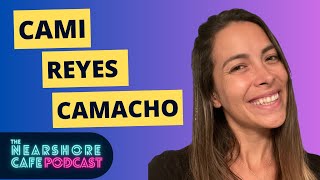
Cami Reyes Camacho, head of operations at Native, a real-time translation messaging app, moved from Santiago to San Francisco for an MBA and later Denver. She scaled DocuSign's design team from 4,000 to 9,000 people across eight countries during COVID, then built Native's distributed team across eight countries speaking eleven languages.
Chapters
Welcome to the Nearshore Cafe Podcast, home to the most interesting stories and people doing business in Latin America.
Welcome everyone to the Nearshore Cafe Podcast. I'm your host, Brian Samson. I am very excited to welcome our guests today. Before I do that, just a quick shout out to our sponsor. That's Nearshore Direct. GoNearshoreDirect.com, a great way to access talent all over Latin America for growing US companies. And speaking of growing USA, Cami Reyes Camacho is head of operations for a fast-growing company. Cami, it's so nice to have you on the show.
Thank you. Thank you, Ryan. I'm very excited to be here.
So Cami, I know you're, you're very well traveled. Where in the world are are you today?
I'm actually where I like to call home in the last couple years. So that's Denver, Colorado.
Nice. Nice. And, um, tell us where you started. Where, where did your journey begin? Where were you born and where did you grow up?
Yeah. Um, so I'm from Chile. I was born and raised in Santiago. Um, basically did all my school there. Then I graduated from my undergrad. Then I started working innovation, and I, I mean, I always, I felt that I was curious about traveling, so always kind of like traveling where I could, like being around. But when I was, um, 23, I started working innovation, and everything was like Silicon Valley, San Francisco, Silicon Valley, San Francisco. So I ended up deciding that I needed to be there if I wanted to keep growing in innovation. So I quit my job, I sold everything, and I moved to San Francisco. That was 4 years ago. Wow. Yeah. So I was there 2 and a half years, and then I've been in Denver for like a year and a half now.
Yeah. When people say— when people think about moving halfway across the world, they usually think horizontally. But coming from Santiago, that was a vertical move. You really came to the other side of the equator.
And I think that I didn't fully realize that I was like, I think I didn't realize it was that far. And I think I didn't realize that how big of a move it was.
Yeah, yeah, absolutely. Well, before we jump into the San Francisco and Denver time periods of your life, You know, not everyone that listens has been to Chile, Santiago, a beautiful place, by the way, like the Andes Mountains and incredible. Can you tell us more about Chile as a country, Santiago as a city? You know, what should people who've never been there, what should they know about it?
Yeah, I mean, I always say that I love to talk about Chile. I love Chile, like, in general. I think it's a great adventure country. So if anybody's thinking about, like, adventure, I think it's, um, a very good place, a very good destination for it. It is very special. You have, like— we're basically surrounded by mountains. Actually, we have kind of like a joke in Chile that we say when God was creating the world and he had all these things and he was like cautiously putting them around the world, and then it has a very tiny little land left and a bunch of things too that still had to use and just put all of them. Because in the north you have like the driest desert, then you have mountains, then you have ocean, then you go, you have beach, then you go down, you have forest, then you have Patagonia, Easter Island. Like it's a— there's just a little bit of everything in such a tiny land that I think it's definitely worth exploring.
Yeah, absolutely. Um, how about, uh, food? I mean, I've been there. The fish was tremendous. You know, what, what should people know about, about food there?
Uh, first they should know that pisco sour and pisco is from Chile and not from Peru.
Uh, oh, I did, I did not know that. That's like a constant fight. Because when you go to Peru, it's all about pisco sour. I did not know that.
Yeah. So that's like our fight is like, who's the, because it's the only two countries that produce the produce pisco. So it's like a fun thing. Like, I go sometimes here in the US to liquor stores and I ask for pisco and they ask me, depends, is it from Chile or Peru? And I'm always, of course, Chile. And I have not been sold pisco because of that sometimes. But definitely seafood, a lot of seafood. I think that, well, we have more ocean than land, so Salmon is always very good. Any type of like ceviche, like shrimps are good. Like I feel there's a lot of options, but also like meat, like we're big meat producers. I don't think as good as Argentina, but pretty good. The same with like wine, Carmenère or Cabernet Sauvignon are also very good. So any of that, I think you can't go wrong.
Yeah. Yeah. And what's the, You know, especially for someone as well-traveled as you, it's probably more apparent, you know, cultural differences and, you know, uh, tell us about the, the people, like the spirit, the culture of, of Chile. What, what are some things that might come to mind?
I, I mean, I think, uh, Latinos in general, we're very warm people. Like we're like, as we like to say in Spanish, we're friends of our friends. Like we're very kind of like, open-hearted. We share a lot. There's a lot of like this community feeling. So I think that's pretty characteristic. I do think that the Chilean humor is very special. Like, it's a very dark humor community in general. So I, I love— I personally, I love it, and I'm all day like laughing with people, and there's so many jokes and sayings. Um, so that's For sure. I think as I move here, it's been funny because I've heard more people having an opinion about it, and I think that have helped me because it's different when you're an insider because you have your friends, you're kind of like part of it. So I feel it tends to be nicer. But then actually a lot of people have told me that they learned it, people were very nice and very friendly to them, and that it helped them to go through the things, even though the language barriers is is there and like there's not that many people that speak English. And apparently people are very nice also with foreigners. So I think that's very exciting and also good for people to know.
I'm very intrigued when you say dark humor. Tell me more about that and dark humor in Chile.
Uh, I, it's like, it's kind of like more straightforward. I think there's like something not so many ways around. So if somebody is kind of like, I don't know, messing it up with something, somebody is going to call that person and be like, what are you doing? Or something. And then we're all going to just start laughing about it. And so I think it's like way more simple in some ways. Like I feel that, um, Maybe also it could be inappropriate in some other things, but I think it's, uh, culturally, like, we, it's more light. Like nobody takes it, no, but you don't even take yourself that seriously. So everybody's always like joking and making fun and like you do something. I was like, whoa, what happened there? And it's like constant kind of like even in professional settings, like there's always this kind of like looking for the tiny joke or looking for the thing. And. Because of that we have so many sayings, which is hilarious. So, and they normally, I don't know what they refer to animals. So when people come visit, they're like, why do you say that? It's like, to be honest, I don't know. We just say it. And, but yeah, like just way more kind of like very light.
Like, yeah. Yeah. Uh, if I can put you on the spot, is there a saying that comes to mind that, uh, that maybe comes up a lot and that describes what you're trying to say?
Let me think. I mean, now I'm thinking about one that I kind of like translated and use at work a lot that is like, you need to have more waist. But it is referring to like salsa, like when you have to actually like move your waist to dance. So it's kind of like when you're being too rigid or inflexible with something. So people are going to be like, oh, you have to have more waist on it. Like, and they, they're just going to tell you that. And that means that you're being like very rigid about this subject and not giving a lot of space to negotiate or kind of like move away around.
And how would you, and how would you say that in Spanish so we can get the proper, the true proper saying?
Tienes que tener cintura.
I love it. I love it. Well, uh, we're always learning on this podcast, so thank you for sharing. Um, and, uh, how about the, the work culture and the professional setting there? Um, you know, for those that, that have never been, you know, there's glistening skyscrapers and, you know, uh, like, uh, an amazing, uh, work culture. But tell us more about that, you know, like what kind of companies are there and you work in innovation and startups, you know, what does the, the tech startup world look like in Santiago?
Yeah, so I think good context on that, like Santiago is huge. Like I don't think sometimes people realize how big it is. Like it's 6.5 million people. So it's that, it's kind of like, I think Los Angeles is like 5. So it's like humongous. It's a very big city, pretty much a third of the country. Which is also what makes it so centralized. But I do think that they have, like, the government— there's been a lot of efforts around innovation. So I think it's actually pretty mature for South America, and there's a lot of help and incentives to bring people to develop their innovations there and stay there. And definitely feel that everything in South America is it is still developing countries, so it's a little bit more delayed than, for example, the US or Europe. But I do want to— I do believe that it's kind of like fairly common, kind of like coming through. And I do think after being in the US a couple of years, like you realize how some things in the maturity of like banking or financial services or things like that, you can still see how they're not fully grown there yet, but they're definitely It's like looking at it and feel that you're like kind of like 5, like 3, 5 years behind, but you know that it's moving in the right direction. And I do think there's a lot of innovation. It's like, I think startups in general in South, in South America, they've been kind of like exploding over the last maybe 4 years. Like so many new ones, so many. I feel that I wanna believe that it's probably millennials kind of like taking the leap and being like, I want to do something that I'm passionate about and kind of like finding those things and just trying. And when you have these government options, investments, and it's kind of like, okay, I can actually leap and see if it takes me somewhere. So I've been seeing a lot of startups growing over the last 4 or 5 years.
Yeah. Tell us a little more about your time with, uh, I think the company was called The Canvas Group, and it looked like you were doing a lot of innovation type of things there. Can you tell us more about that?
Yeah, so I was at Canvas for 4 years. I was a— we had like 3 main, uh, verticals that we worked. So one was innovation, then we have one that it was strategy, and then we had another one that it was culture. And at that time I was leading the innovation one. And basically what I would do was building innovation areas in big companies. So it was mostly, mostly around financial payment methods, insurance, that type of industries. But I also had like logistics and other. And I will have my team and we would help companies to build the innovation strategy and then how, what is the structure and the process, how that is going to live inside, and then coach them so then internally they could start developing innovation projects.
Oh, interesting, interesting. Um, maybe help me understand a little bit about, um, uh, the receptiveness of some of the, the companies. They're obviously doing projects with you to drive their innovation. Um, uh, you know, maybe help us understand like the, um, the innovation culture years ago, the innovation culture today, has there always been this desire? Is it exploding right now for a particular reason?
I think it's more friendly now. I think when I started this, which damn, it was like 8, 10 years ago, like it was like design thinking was like the new thing and it was like, you need to listen to your customers. And it was like, that was like the big innovation and you were kind of like, helping companies to do that, to actually listen to their customers. And I feel that today, probably because of the startups, that's been kind of like pushed and forced the other ones because they have— you see these new companies coming with like better user experience and like better UI. So, and taking customers from these big corporations. So I feel that they've been definitely pushed in a big maybe way, way, way then, I think for the good. So for sure today, I feel that you go to these companies and you talk about UX, you need to have designers, and designer is not somebody that is going to be making something, something pretty. And, and I feel that 10 years ago when I started, that was the conversation. It was like, why do I need to listen to my customers? And what do you mean about a designer? Why would I need a Right.
Yeah.
So that was pretty intense. And I feel that today, at least that's not like people know. So it's like more, okay, how do we shape that? How we make that work with whatever the company, how the company works.
Yeah. And I like what you said before about startups kind of pushing everybody else to move because, you know, it's either move or, or die sometimes. Right. And especially with your perspective, having worked in the startup world and the tech world in the States, what might somebody expect if they were to go to Santiago and they wanted to work in tech? Is it like a WeWork and everybody running around with MacBooks and hoodies and working on startup ideas? Is it quite similar? Is it a little bit different? What do you see?
I think it's, getting there is definitely not like San Francisco or Silicon Valley or things like that. For example, like, uh, oh, okay, I have a tattoo I have here in my arm. You can see it. Like, um, I had another one that it was kind of like, um, in a place that I can— I could kind of like hide when I was going to work and when I was in Chile, because that was a thing. And it was like like, oh, they're gonna take me seriously. When I moved to the US, everybody had— it was not even a thing. Nobody cared. And I feel that little by little, like, it's moving more there. Or sneakers, or not having to be like wearing the suit. Like, I feel all those things, definitely the startups have been the ones that have been pushing it. Like, the quality of you as a professional, or the quality of the work that you do does not depend on that and it should not be measured by that.
Yeah, yeah, 100%. 100%. I like that. Let's talk a little bit more about you and this journey halfway across the world. Just tell us more about like what was that drive and catalyst? And I'm sure many people have had this dream, but very few have done it. Tell us more about that journey.
Yeah, that's actually a funny question because I think that the drive were two main things. One was this almost blind conviction that it was like, Silicon Valley, everything is happening there, I have to be there. And it was just all these things that I would read, the news, everything, like decisions were made there and I was like, I, and I, at that point when I made the decision, I'd never been to San Francisco. So I was like, I'm just, I should be there. So it was like a very blind idea. And then the second one, I think it was actually being naive about it because I landed in the US, I had 2 luggage and I had nothing. Like I don't, I did not have any family here. I did not know anybody in my program. I did not know anybody like anywhere. I literally was Googling everything, like bank, Bank of America, sounds good. Cell phone, T-Mobile, might as well. Like it was just grocery store, Trader What? Oh, I think you should go there. Like everything was like, I think I didn't realize how much I didn't know until I moved here. I was like, oh wow. Like, and I always say like the first 3 months, there's for me, the graphic description of myself would be, a wet puppy in a corner. I was like, what am I doing? What am I doing? And everything was new and it was so different. Also, like, I felt that I had a good English level, but jokes, humor, it's very hard. Or I knew when you learn a second language, it's very formal. Like, you learn very properly. So then I feel that there's an adjustment of finding your personality on the language. That is very interesting. Like, yeah, nicknames, the way that you're going to express, like, for example, San Francisco, people would say hella, like, that's hella good. I was like, do I want to say that? Like, and it was like, that feels weird. Like that, I don't think that word can come out of my mouth. But then I was like, I love freaking. I was like, oh, I love that word. So I would, I, it was an interesting journey. I was like to find this new personality of yourself in this language and in these new people.
So I think that's great. Um, uh, I'm, I'm curious, you know, even some of the specifics, like where did you, how did you find your first apartment and where did you live there?
Oh, so I did not got into the housing of the, of where I, we, I moved here to get my, my Design Strategy MBA at San Francisco. So I applied for the housing of the school, did not get in because they all were all taken by the undergrads. I was like, oh, okay. So I literally went on Craigslist and Facebook. Yeah. And I was like, and I start talking and I was like, I'm just gonna try not to get scammed. That was like the first thing. It was like, I'm just trying because I, and then I luckily it all worked well, but actually it was not in a— it was in a neighborhood that it was close to school, which is what I could see on the map. So I could bike to school, which was great, but it was very far from where everybody lived and all the things happened. So after like 6, 7 months, I moved like closer to Golden Gate Park and Divisadero and like all that area. That is where actually people live. So I was like south of the Dogpatch. So I was like, ah, there's nothing here. Like, so things like that. I was like, I look at it in the map and I was like, 10 minutes biking, so close. But then I was like, but yeah, but my school was already far from, it was in Potrero Hill and I was like, it was already far from my body. So I didn't.
Yeah. Well, you're, you're taking me back to all those neighborhoods. I, I spent about 5 years in San Francisco and, and, uh, you know, there's nothing like it. There's no other city like it.
That's for sure. Yeah. Very special city. Like I feel that there's something very, unique about SF that is the identity of the neighborhoods. Like, you can— I live in NoPa and I was like, I would literally walk through the Panhandle, which was a block from my house, and it was in Haight-Ashbury. It's a totally different thing. So I was like, the intensity identity of each neighborhood, I was always very shocked about. I was like, wow.
Yeah, yeah, that's— intensity is a good word. I think that's the right word. I like that. I like that. And tell us more about what you were doing professionally your time there.
So at that time when, so when I first moved, I started my grad program, I had 3 jobs. I was still doing kind of like part-time job at Canvas, like helping my team with the new, with the new structure. Well, I left and then I had 2 jobs at CCA, which was my school. Because the first year you cannot work outside as an F-1 visa holder. So, and after that year, I applied for an internship at DocuSign. That was middle of COVID That was May of 2020. And I worked at DocuSign as a design program manager and design operations for 2 and a half years. And then last year I made the transition to Native as head of operations.
When you joined DocuSign, um, that was a pretty good-sized tech company at that time. I remember when DocuSign started, you know, I, I think I was new to San Francisco and they were a newer company. And in 2020, um, it's almost like working for big tech. What was, what was that experience like?
It was, I mean, and especially I think, um, DocuSign particularly, like online signature during COVID was like going crazy. Everybody needed it. Like, so it was such a big boom. Like I joined the company and we were, I think we were something around 4,000 or I think 5,000 people. And I left the company, we were 9,000.
Wow.
So we almost doubled in 2 and a half years, which is crazy. Like I joined a team that we were 70, uh, design, research, and operations. And I left and we were 140. So it, it, it was very interesting for a lot of ways, not only for the like the tech itself, but also like scaling teams, which for me as a person that works in operation, like it's very loaded. Like it, that is, I don't know if it's one of the hardest jobs that they make you happen, like doubling a team operationally and keep them happy and healthy and take care of them into like, it's very aggressive while everybody was doing like through all this mental health journey during the pandemic.
Yeah.
So, wow. It was very intense because I came from like a different flavor of operations. Like I was an outsider, I was a consultant. So I would come, I would only know this part, I would make that one work. And that was one of the reasons that I wanted to transition to tech. I wanted to be, I say like consulting is like delivering babies. Being in-house is actually making the baby grow till the baby's 18. So a lot more legwork and a lot more years. So that I bounced into that. Luckily I had a great team. My boss at the time, Diane Gregorius, she was amazing. She had worked in operations for so many years, so I was able to absorb everything that she knew and she was teaching us. But, and I always say like, we were very lucky that she had like that clarity of the vision because That was key for us to kind of like grow and be able to do that. Like I wanna say pretty successfully.
I'm just curious, some of the design challenges that you were working on with DocuSign.
I mean, it was from capacity management to team health to how to create like the culture of the team when you, like I joined the team fully remote. And 40% of the team was fully remote, like never seen anybody in person and building sense of belonging and all that. Like it's very challenging, but I think it's very interesting because at the end I feel that I became, that has become my expertise over the years. Today my team is fully remote. So when I started there, I was like, oh, I know how to do this. I was like, we're in 8 different countries. And I was like, yeah, I can do that. I know this. I like, I know the drill. I know what to do. To do. And so today I might even think that I feel more comfortable with distributed remote teams than in-person teams.
Yeah. Yeah. How do you think your upbringing in Chile helped you do all the things that you wanted to do with your, your opportunity with DocuSign?
I, I mean, I think, uh, Definitely isn't like a different vision, like a complementary vision from the people that I was working with. Like being, being an immigrant, being a Latina, I think that in all these things kind of like I feel that are more community creating, like Latinos were known for that. We are known for creating communities. We're known for being kind of like warm people. So I feel that there, there's a lot of those things that can like come more naturally. And it helps build that kind of like, hey, how are you doing? How would that be? How's your son? And you remember the name, like things like that, that I feel that sometimes they feel little, but they come across like a long way. And that helped me for sure at DocuSign. And now also with my team, a lot of my team is in Europe and I, I use a lot of nicknames to people, like, which telling you with the language thing, like how you find your things. Like I use a lot like, Sunshine, cutie, like a boo. I love those and I use them a lot when I talk with anybody, even like joking. Like I would join with the leadership team and I'll be like, hey, sunshines. And it's a big part of my personality. And I think that people perceive that, like they feel it even though they might be very different, but they feel the warmth. There is like, oh, this person cares. And I think that's how you build trust in anywhere where you can grow a team. Like, I don't know how else to do it.
Yeah. Yeah. It makes me think about a quote about people need to know that you care before they care. Right. And, and I think that's a huge part of culture in Latin America and something I really, really embrace and see what you're saying. So today you're at a company called Native. Tell us a little more about, about what you guys are doing there.
Yeah. So Native is instant messaging with translation. So if we think kind of like a WhatsApp but with translation or Slack. So first, very close to my heart. One of the reasons I was one of the first use cases because I was working at, at the time I was working at DocuSign in my second language. So I was like the perfect case for them. Like, tell us the struggle, the deficiencies, like all the things. And I actually start— I broke down in the middle of the interview. I was just like sobbing and I was just like, it's so hard. Like you lose yourself. It was like, and I was, and I think at that point I was like, oh my God, this is very important. Like I really care about this. And then also like, I feel that I was very lucky and very privileged to learn English. That's not something that is that given in South America. My dad prioritized that because he— my dad doesn't speak English and he thought it was very important. So I think that it's crazy for me to think that there's all these brilliant people capable of doing even better than a lot of people that speak English. Like, they're so great professionals and they just cannot show their full potential because of luck of where they were born and not because of their capabilities. So native, I feel like, came like a way for me. It was like, this is my— this is what I can do to give back to my community, but also to all the ones that are not English speaking. So then they can reach their full potential. They can be kind of like, they can connect and get those jobs, or the companies can access those talents that today maybe they cannot, or it's not an option they would see because of the language barrier. And so that's what we're working for. And the team is super spread. We're in 8 different countries together. We speak 11 different languages and we like, yeah, we're all, we're all over the world. I think we only have 2 Americans in the team, which is very weird for a startup. So I think that's pretty cool.
I think that's, that's very cool. Awesome. Uh, what's the, um, the website for Native if anybody wants to check it out?
Yeah. So the website is native. Native.tech.
Great. I just had a few other questions for you, Cami. As you talked about the intensity of the neighborhoods of San Francisco, I like that phrase. Tell us about your favorite neighborhoods back in Santiago.
Oh, that's a good one. I, well, I do think that if my friends listen to this, they might make fun of me in Chile because I've been out for 4 years now. So they might say like, you're outdated. But I'm still gonna give it a try. And there is a neighborhood that is called Barrio Italia that is like— it, it has that kind of like that European feeling, kind of like the coffee shop and the independent like art and craft and things. And I feel they always have events, like you go and there's like live music, there's always something cool happening. So I feel that it's a neighborhood that if you go, you can't go wrong, like it's always there's always going to be something happening and you're always going to have fun or find like a cool coffee shop or craft store or something. So that, I think that one is a very cool one.
Cool. I'll check it out on my next trip. Um, uh, this question I think is, uh, very interesting for someone, uh, like you, uh, often, uh, we'll ask people either their favorite Spanish word or their favorite English word. And you having with your experience, but I would love to hear if you have a favorite English word.
I do actually. This is so funny because I think that I don't know if I have a Spanish favorite word, but I definitely have two favorite English words. And I think I always say, I think it's phonetically appealing for me. It probably is. It's phonetics that we don't have in Spanish. So when I heard them the first time, I was like, Oh, what is that? Like, it sounds so cool. Um, so the first one is knowledge.
Okay.
And the second one is dysfunctional.
Dysfunctional. Interesting.
So yeah, I was like, there's something in the sound that I am like, we don't have that combination. That's— this is fascinating. So it's funny because I think when it's not your language, you can do that, like phonetically appealing, because in your main language, you know what the meaning is. So it's like, oh, that dysfunctional is actually not even a good word. Like, you know, it doesn't even mean something like nice. It's not something that you want to say to people. But for me, it's just phonetics. I'm like, it sounds very interesting.
Yeah, good answer. Another question we like to ask is, so if somebody's in the States and they travel to Latin America, their best purchase under $50, but maybe I'll flip this to your best purchase in the US, something that costs less than $50.
Oh, I was gonna say South America under $50, easy. And now like, now you flip it to me.
So we also have inflation in the US, so, so who knows?
Under $50, best purchase. Let me think. Um, I think probably, I don't know if I have one particularly in mind, but in general, like gadgets, like for tech things, I feel that I go to Amazon and I'm like, anything you can think, it's like $10 and you get like this tiny thing that you put and then you can put all the other things. We don't get those in Chile. So any of that, I was like, when I first moved to the US, I was like, bring them in, like all the gadgets and the things to put the thing. And I was like, oh, this is very cool.
That's great. And, you know, last question for you, Cami, and I get this a lot, you know, as we are seeing really to me, this is the decade, you know, for Latin America and we're getting a lot more, a lot more curiosity from people like, oh, you know, you know, tell me more about Latin America and doing business there and so forth. If you were talking to someone who was intrigued by the prospect of doing business in Chile, opening up shop in Chile, hiring somebody from Chile, you know, any one of those things, what sort of advice would you give them so they could be successful?
Yeah, I think that Definitely get a good partner, which that can mean anything. If you're opening a subsidiary, you need to have at least— it could be a Latino person, like it doesn't have to be like, but I feel that you need somebody that navigate the nuances of the, of the, of the culture and the language and all those things. If you want to hire, like, like you guys or other companies that can like help with like connect with those people and know it, Because if you go kind of like just kind of like cold call and you just stand there and try, like it's probably going to be hard because things are not as developed and they can— you can be kind of like spinning a lot more. And I feel that now there's so many great partners that you can align with depending on what the need that you have is, that definitely use that. Because if not, it's going to be a hard landing.
Yeah. Yeah. Great advice. Well, Cami, what a pleasure. This has been so fun to have you on, on the podcast. I learned a lot, by the way. And I just want to thank our sponsor one more time. That's Nearshore Direct. Go nearshoredirect.com. Great way to find talent all over Latin America for growing US companies. Cami, what a pleasure.
Thank you.
Until next time, we will see you on the next episode of the Nearshore Cafe. Have a great weekend, everyone.
Thanks for joining us at the Nearshore Cafe podcast. Tune in next week for a new episode featuring another special guest.
More from Brian

From BPO Agent to Client Experience Manager: Ana Rodriguez on Nicaragua's Nearshore Talent

From BPO Agent to Client Experience Manager: Ana Rodriguez on Nicaragua's Nearshore Talent

Building Sales Teams in Mexico: Mario Oliveros Figueroa on LATAM Talent & Cross-Border Selling

From Automation Engineer to Data Platform: Victor Fernandes on Brazil Tech Talent

H1B Crackdown & The Nearshore Shift: Robert Bouchard (H1B Guy) on LATAM Talent | 🎙 TNC

Nearshoring Yourself; step by step to building an expat life in Mexico |🎙 The Nearshore Cafe Podcast

Scaling high-performing teams in Costa Rica staffing legend Doug Firestone on growing to 225 LATAM

How to Scale in LATAM? Navigating Currency, Taxes, and Labor Laws | 🎙 The Nearshore Cafe Podcast



AI in LATAM: How to Break Into Mexico’s Tech Market |🎙The Nearshore Cafe Podcast