Cultural Diversity in Tech: Lessons from Latin America
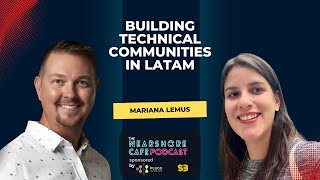
Brian Samson talks with Mariana Lemos about building tech communities in Latin America, nearshoring challenges, and what companies should know when hiring there. Lemos draws on her experience at MuleSoft and Salesforce to offer practical advice on language, culture, and community programs that work in the region.
Chapters
Welcome everyone to another episode of the Nearshore Cafe podcast. We've got a real treat if you are interested in building community, and that's the, the biggest thing on people's mind as they think about nearshoring is how do I get in touch with the right people and build the right community. I'm going to introduce our guest in a second. First, let me thank our sponsor, Plug Technologies, plugg.tech. Great way to connect all the talent from Latin America to growing US companies. Let me welcome Mariana Lemos, a community expert for Latin America. So great to have you.
Oh, thank you. It's a pleasure to be here and an honor.
Thank you. And where in the world are you today, Mariana?
Querétaro in Mexico.
All right.
All right.
How long have you been there for?
A few months since last year we came here and we love it.
Cool. And where were you prior?
So I'm Venezuelan. I was based in Argentina for 5 years. Then we moved to Mexico City and stayed there for 4 years. And now we are in Querétaro. So, yeah.
And if I remember right, you had some time in Canada too?
Oh yeah, after I graduated from my university, I had the opportunity to live in Canada for a few months to study English. So that was a beautiful experience as well. Many friends I have based in there.
You really had a chance to be all over the Americas. So this will be an exciting perspective.
Even in Australia, I went to Australia for one month to work. So I'm lucky.
Yeah, absolutely. Absolutely. Well, as I mentioned in the intro to the show, community is a huge part, you know, as the world has really changed post-COVID world, remote work, same time zone, all that stuff really matters. So nearshoring has been on the minds of a lot of companies, a lot of CFOs, Uh, HR leaders, CEOs, you know, where do I get the right talent? So I think a lot of mistakes these companies might make is they kind of rush into Latin America without a strategy of how to access the right people. And as you, as the community expert, I think we're gonna really dive into that today. Um, so first, maybe let me just even ask, like, what is, what is the role of the community manager in, uh, in Latin America big tech? What does that even mean? What are you responsible for?
Well, essentially my, my role was global, um, but, uh, it requires a lot because, um, when you are building a global community, You need to understand your people that are based all over the world. And it was beautiful as well because you get to know the different cultures. So I essentially grow the Latin American community, but it was not only that. Like, I had the experience to work with people from India, from Asia, from Europe and Latin America. And I speak like I'm Venezuelan based in Mexico. I know the people in Argentina, but I had friends now in Brazil as well, like small cities in Brazil that are truly in that case were truly MuleSoft experts that wanted to interact in a community. So it was not a matter of, we didn't have borders. There. It was all welcome. If you know the tool, if you want to interact, if you want to share knowledge, you feel welcome. And that was part, essentially part of my job, to, to make them feel like this is a safe space where you can share feedback, when you, when we can speak your language about integration, that not many people like to speak about that. But they found a place there, and that's the beauty of our community.
Yeah. Now you started, if I had it right, Mariana, you started your community experience with MuleSoft. Is that correct?
Yeah. Life is, I mean, I was in Argentina and I was looking for a job and I told my dad like I have until that month before I need to come back home for money. So, and so I, one month before that, I got a job offer in Accenture for finance because my background is economy, and another from MuleSoft in marketing. And I said, let's go to marketing, I like that. So one friend referred me to the job and I joined, and the position was like community operation manager, community operation. It was not manager, it was community operation. And I was like, what is that? But I love, because I'm a people's person, I love to chat, I love to connect with people, and it was essentially that. For a type of people that it was developers. And, and I, and I had the experience to meet them, to understand their personalities, the way they like to be managed. And, and I spent there for 7 years. So quite a lot and a lot of experience.
Now, I don't know if I had ever shared this with you, Mariana, but I had done a little bit of work for MuleSoft. Way back in 2012. So I just picked up like a contract recruiting opportunity for a few months. I was working in their San Francisco office. And if I remember the years right, they were just starting to get Argentina off the ground around that. I think it was like the first couple of engineers. So I guess in your career trajectory, we're like 40, maybe 6 years. So this is like 2017, 2018 is when you were at MuleSoft. What did, um, what did their Argentina presence look like when you started? Like, do they have an office? How many engineers? Can you tell us more about that?
So the headquarter was in San Francisco. However, the biggest office were in Argentina. So you can imagine in Puerto Madero, like, I don't know, the biggest team were the engineers. So it was like the main product development were there. And I, I, uh, you are used to developers, so you know developers, they take their time, but you can see them at 7 PM at night. You are like all tired and they are like coding and talking. And so I was there, like, and, and it was beautiful. Um, now we speak about Salesforce, big, big, a big company, but I started with MuleSoft, that it was a smaller company focused on tech. The, the founder is a, is a developer as well. So they, they put a lot of money, a lot of effort in, in hiring the best skilled people. And I remember like going to lunches with all the developers talking about the integration and I was like, yeah, how's life? Nice. You know, I'm not tech, but I was in the middle of that. And I'm grateful because when I moved to Mexico, it was kind of different. The Mexico office was most focused, focusing on sales, business development. Nothing related to high-tech developer environment that I was part of.
If you remember about how many, so it was the biggest office for MuleSoft. Could you recall like best guess about how many engineers were working in that Puerto Madera office?
We were huge. Like, yeah, I don't know. Let's say 100.
Wow. Okay.
Huge. Like, yeah, because I'm telling you in terms of general, like all types of developers, QA, front end, all types. And, and the director of engineering, it was, he loved to speak about that. Like, I remember like if they were walking to the office, like, hi Mariana, and he's a big guy, you know, and how are you? Yeah, we were developing this. This tool and, and I'm so stressed. And, and he said, but, but my wife is mad because I should go home. So I said, yeah, let's go, you know, you need to balance. But it was beautiful to be inside of that mind. It's different.
Now, now MuleSoft is a tool that, um, is used, you know, kind of widely in the engineering world. So was your job more focused internally or externally?
Good question. Uh, no, I, I, my job was mostly to work with partners, customers, mostly externally. So, um, I needed to, um, to open the bridge between the project, the product management, the product manager, and the partners who use the tool, who to test. So the community was essentially that, to make them feel welcome, to share knowledge, to do webinars, to do meet— well, we call them meetups, virtual, in-person, to come into our conference and speak about the product. So we have different types of roles like community meetup leaders, mentors, and ambassadors. And ambassadors were the truly advocates of the product So when you started the conversation that you say to me or to us, the community has a lot of impact in business, it's true. Because let's say it's indirect sales, like those people, the developers, maybe they are not the people who make the business decision, but they are the people who are using the tool. So they are going to say to you if it's work or is a disaster. And the thing is that in big companies like MuleSoft and then Salesforce, it's really hard to get to those people, the community members, to speak with CIO levels or executive levels. So the community gives them a voice to say 'Let's speak about the truth. This is working, this is not working.' And they are really honest. So part of my job was to clear the air and say, 'Okay, I'm listening to you. Let me see what I can do.' And also to speak with the PMs and with the director of engineering and say, 'You need to find time to speak with your community because it's not only a matter of money, it's a matter of this is working, this is not working.' go with that route. So we have that kind of lucky, that position to be between.
I think that's, uh, good advice for any tech company is, you know, uh, like the engineering, um, ethos usually is like go hide in your cave, code, and then see what happens. But the constant communication, um, keep talking to your customers, keep talking to your partners, gather feedback but that's not something that maybe is like intuitively part of their personality. So they need someone like you to bring it all together.
And the good thing is that I didn't tell you, but we were a team of 4 only working in this global community. And I speak Spanish. So people in Latin America tend to be shy and they are never going to say anything to a big executive based in San Francisco who are So that was part of my job to say, let's speak. How are you? Do you feel good? What do you need from us? I don't know, Mariana. I don't— I mean, we should have more content in Spanish, or I know people like women based in Colombia who are a contractor. How are you? You know, that kind of connection, human connection, was part of my job and the most part of my job that I enjoy. Give them a—
Yeah, I'd like to dive a little more into that. I think you're on to something, that being able to communicate in your first language, people are much more comfortable, authentic, at ease. You kind of hear the whole story, not the best foot forward story, right? Is there maybe an example you can think of or like a little story about?
We were a community in the past, only local, but then the pandemic hit and we started doing, okay, let's do virtual and all kinds of events. And we were like competing each other from between communities or just the attention, right? So we started doing like, let's organize a conference. And we organized a conference based first in languages, languages and location. So it was beautiful because we get together people from, from LATAM. Let's do a MuleSoft conference LATAM. And we had Brazil, we have Mexico, we have Buenos Aires, Peru, all kinds of content based in their language, in our language, which is Spanish. Talking about big high integration in Spanish that are not usual. Let's be clear, they're not usual. But then we didn't stop there. We did a conference in Europe talking about in Italian, in Portuguese, in Spanish as well. We did French, but it was not so great. Not many people attend, but we offer that. We wanted to feel the community members that they can speak their own language and learn the tool. And thanks to that kind of conference that we did, we create local-based groups that they can teach their language. And if I can make an example, Women Who Mule, it was a group created, it was global, but then we split Women Who Mule Latam, Women Who Mule EMEA, Women Who Mule J-PAC, And it was good because it was presented in their time zone, in their language, and with their own type of content that they want to present.
The language is obviously a common barrier, um, and, uh, and also a way to bring people together. Um, but I think lumping all of Latin America into one group is also a mistake. Can you talk about how you thought about integrating people from Peru with people in Argentina and Chile and Mexico? And we'll maybe put Brazil to the side for a second because they're Portuguese, but just because they all speak Spanish doesn't mean that they all see the world the same way. And how did you think about that?
First, speaking their language, talking in Spanish. Second, not obligate them to be part of everything, just giving them the freedom. Like, you want to do an event at 6 PM on Wednesday, it's okay for you, just do it. Like, whatever it works for you. And also, I would like to share a story that one developer ambassador really high-tech based in Bahía Blanca, like a small place in Argentina. We were in a big conference, yearly conference, 3 days of workshop, a lot of keynotes, a lot of information. So we were there and I say, hey, hello, how are you? You come here, you came here to learn and, you know, and he said, no, Mariana, I invest, I put my money to came here to San Francisco to meet the community. Because, yeah, because I want to meet them in person. We have been working for a long time. We have projects together. We have those people, people and developers in Peru attend to their meetup virtually and speak in their meetup in Bahía Blanca in Buenos Aires. And they met thanks to the community. When he said that, I thought like, I did everything. That's it, you know, that kind of interaction. And, and it's not only to be part, is be part of something, is essentially that. It's not the big corporation sell force of news, of noise. It's a matter of you have that interest that I like, let's talk, you know. And other example that I can tell you, and it's not, not in Latin, but it's beautiful, the level of connection is one developer, two developers wrote a book and one developer was based in India and the other was based in Houston and they met thanks to the community. So not all the time I can be, because I tend to be a person to, you ask me and I say yes. You know, I spoil people and we cannot spoil all the people in Latin America if they cannot, but they essentially make a good, good relationship globally. Let's say.
I also want to ask you, Mariana, just because you've had the chance to live in so many different places and especially, you know, Mexico, Argentina, and, you know, as you've traveled, What are some of the interesting differences that maybe you could point out?
Well, words in— I mean, we speak Spanish, but it's different Spanish. I'm super Venezuelan, super. And if you ask me in Argentina, they say, learn to speak Spanish. And I'm not going to learn to speak Spanish because I know my Spanish. So yeah, that's language barrier. Even in Spanish, the cultural style is different. Like in Mexico, the spicy food, the all kind of different food that you can taste is way too different. For example, in a war environment, in Argentina. I remember, like, in Venezuela, like, people go to their jobs here too, in Mexico, 7 PM, and work, work, work, and then go back, traffic, super well dressed, and, and everything is like, what is your last name, what are you, what do you do, you know, status. In Argentina, it's your brain. Like, I'm going to go with sport shoes, sport clothing in summer, but I'm going to stay there until I can develop, I can fix that bug that I have. And it doesn't matter where you study anything, it's a matter of the person that who you are and, and the things that you can bring. And that is beautiful. And I think that I'm super proud to say that I can take the best part of everything and, and, and say in this podcast, you know, that is worldwide and is public, that is beautiful.
Just a fun question for you, Mariana. Where can you find the best arepas in Argentina?
Well, in Argentina, in everywhere, in my home. Yeah, I like to cook. It's funny because I went out of my hometown, home country in 2016. So many years, but I always tell my family, my friends that I'm based all over the world, but I always will be Venezuelan and buy my arepas and cook. Yeah. Same. I mean, anything like Mexican will say, I make a good chilaquiles, you know.
I also wanted to ask you, Mariana, about, um, just working in big tech. It wasn't long after you joined MuleSoft that Salesforce acquired, um, so, uh, you kind of went from like fast-growing startup MuleSoft to big tech Salesforce, and then spent a lot of your career with Salesforce. What does it feel like to work in big tech but, um, from Latin America?
Kind of tricky because small companies has their touch and big companies has their budget. So, um, I was like, I was just starting in MuleSoft when the acquisition started and we all were scared because, okay, maybe they are going to fire us or what is going to happen, you know, but then, uh, it, then everything's went normal or okay. And being part of a big tech community, like tech company, like Salesforce is life-changing. And now that I'm not part of that, I get— I have the structure because it's normal to me. Like, I like things organized. I know the jargon of marketing. I know— I love the opportunity to travel abroad, to go to San Francisco a couple of times a year, New York. And it has the good things and it has things that is not so good, but it was a beautiful experience. And I get to say that mostly people think about that is a lifetime experience. Like we can compare with Google, with Amazon, with big tech companies.
If you were to give advice, let's say you were speaking to your community and they asked for advice on, um, As someone from Latin America, it's my first time ever working for a tech startup. What should I know? And then maybe the same question, it's my first time working for big tech. What should I know? Could you give some advice to people that might be listening?
Don't have the imposter syndrome. And, and, and I'm telling you that because like you can work in a small company, in a medium and big company, and it's matter of the right attitude that you have. Like, I was in a room with people that study universities like Berkeley, like Yale, I don't know, huge university. If you ask my university, it's a small, didn't have English, so, but I was there and no one will tell you like, oh, you are Maybe they will tell you, you are doing amazing. But if you believe that you are doing amazing, that you deserve to be there, you can go everywhere. Like, have the right attitude, be a good listener, learn from others. And if you don't know something and you are shy to ask, maybe ask a friend, like, what does that mean? But don't be shy, don't be shy. You are going to make mistakes and they are human too, you know.
And then Mariana, um, uh, we talked a lot about building community today. If you were to maybe summarize with like your top 1 or 2 most important pieces of advice for especially tech companies that want to grow their communities in Latin America, either teams, talent networks, users, things like that. What are like your top 1 or 2 pieces of advice for them?
If they want to grow in Latin America, I will say first know the culture. Take your time to at least visit once, especially the directors who make the decision. Know who you are working, or at least hire a good country manager in the place to get to know. But essentially, it's know your people because the people that are members in community, they are doing a volunteer job. They are not being paid to be there. So if you know their personality, their location, what do they want, for example, in the community that I developed, they could share knowledge in different ways, like even either writing blogs, presenting in videos, presenting in events. So if you know their personalities, you can offer them, hey, if you would like to build your brand, you should do that. And essentially for companies who would like to establish in Latin America, the people in Peru is not the same people in Brazil, like they like different styles, or, or it, or in Argentina is different like in Mexico. Um, it's important that you, that you travel, and I know, Brian, that you know that because you took the time to, to travel there to meet us, and, and it's different, it's different. So this will be that one advice. And second is, um, respond quickly. If you don't know the answer, maybe say, I don't know yet, I'm going to follow you in a couple of days, allow me to have that. And other advice that I can say is give some incentive, like, it's not only money that we want, it's mostly that don't make us feel like a number, make us feel that That if we are a developer, give us a certification voucher to use to grow our profession, some swag or a message saying, hey, I know from our manager, hey, I know that you have been working extra hours or something, well done, you know, something to be human touch that in this world AI, everything is fast, everything is now. Some human touch would make even this, like recording this podcast with you, like it's the highlight of my day because I said like Brian is in Hawaii, I'm in Mexico, but we are connected with something, you know.
I appreciate that. No, this has been, uh, such a fun experience. Thank you so much, Mariana, for sharing for all this great advice about building community and big tech, working across borders. A lot of great takeaways today.
Thank you.
Well, this is the Nearshore Cafe podcast. I'm Brian Samson, your host. Our great guest, Mariana Lamos. And this podcast is sponsored by Plug Technologies, plugg.tech. Great way to connect talent all over Latin America with growing US companies. Thanks for listening. And we'll see you next time.
More from Brian

From BPO Agent to Client Experience Manager: Ana Rodriguez on Nicaragua's Nearshore Talent

From BPO Agent to Client Experience Manager: Ana Rodriguez on Nicaragua's Nearshore Talent

Building Sales Teams in Mexico: Mario Oliveros Figueroa on LATAM Talent & Cross-Border Selling

From Automation Engineer to Data Platform: Victor Fernandes on Brazil Tech Talent

H1B Crackdown & The Nearshore Shift: Robert Bouchard (H1B Guy) on LATAM Talent | 🎙 TNC

Nearshoring Yourself; step by step to building an expat life in Mexico |🎙 The Nearshore Cafe Podcast

Scaling high-performing teams in Costa Rica staffing legend Doug Firestone on growing to 225 LATAM

How to Scale in LATAM? Navigating Currency, Taxes, and Labor Laws | 🎙 The Nearshore Cafe Podcast



AI in LATAM: How to Break Into Mexico’s Tech Market |🎙The Nearshore Cafe Podcast