Episode 015: Brian Samson - CEO & Founder of Plugg Technologies
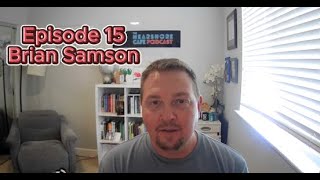
In this episode of the "Past, Present, and Future" podcast, host Paritz Cohen interviews Brian Samson, the CEO and founder of Plug Technologies. Samson recounts his unconventional career trajectory, beginning with an accounting degree and a demanding summer job in a fast‑food restaurant that sparked his interest in people operations. Disillusioned with traditional accounting roles, he shifted to agency recruiting, where a commission‑based model aligned with his competitive drive. He later moved to San Francisco, becoming head of talent for several venture‑backed tech startups, most notably scaling the engineering team at LendingClub from 19 to 90 engineers in 14 months, contributing to a $10 billion IPO valuation. Ten years ago he ventured into entrepreneurship, founding three nearshore staffing companies that now generate about $4 million in ARR each; the latest, Plug Technologies, employs roughly 100 engineers across 11‑12 Latin American countries. Samson explains Plug’s “peer‑staffing” model that eliminates intermediary layers, pays engineers in US dollars, and uses a sprint‑based delivery approach to ensure quality. He contrasts nearshoring with offshoring—highlighting time‑zone alignment, cultural proximity, and talent mindset—and discusses how generative AI can automate routine tasks but still requires critical‑thinking engineers for complex, custom work. Throughout, Samson emphasizes learning on the fly, the importance of culture fit, and the strategic advantage of nearshore talent in the age of AI.
Chapters
Hi, and welcome to Past, Present, and Future. Are 3 Questions, the podcast where we learn about people's career journeys, how they got to where they are today, and where they'd like to go to next. I'm Paritz Cohen, a technologist and a wordsmith, and in my time in industry, I've been fortunate to work with both large companies and small startups alongside a number of very talented and hardworking individuals. This podcast is some of my conversations with them where we learn about their journeys and what motivates them. If you'd like to be in the podcast, please feel free to reach out. You don't have to have a certain level of seniority or a number of years of experience. We all have something to share and learn from each other. If you'd like to sponsor the podcast or get involved in the collaboration, we'd also like to hear from you. All right, looking forward to our journey together. As we learn more about each other and enrich ourselves in the process.
Hello everyone, welcome to another episode. Today we have Brian on the show. Welcome, Brian.
Hey, thanks for having me.
All right, let's start from the beginning. I'd love to hear a little bit more about the beginning stages of your career and kind of as you learned a lot about the talent industry overall.
Yeah, sure. So right halfway through my undergrad career, I had a really influential summer. So at the time I was working on an accounting degree, so about maybe halfway through that, and I had an internship with a manufacturing company in a cubicle farm. You know, this is like probably the year 2000 or 2001. So, you know, I date myself a little bit. And, um, uh, you know, I've always been a pretty hardworking, industrious guy, so I was doing 40 hours a week at that and then another 40 hours a week on top, um, that summer working at a restaurant. Um, so, um, you know, kind of like a quick service, like a, um, uh, the Midwest version of Chick-fil-A, you you know, so like hot dogs, burgers, beef sandwiches, 40 cars in the drive-through, you know, type of volume. And, um, uh, so just like working like, like a maniac. And, um, I started to like see my future, you know. So I saw the guys that were, you know, accountants, and they were, you know, in their 40s, 50s, 60s and I wasn't like inspired, you know, I just didn't feel like it was that interesting. And then, you know, on the other side, I'm like in the adrenaline of, you know, this fast-paced restaurant and different cultures. A lot of people from Mexico, you know, were working the line and I was working alongside them, doing a lot of training, seeing the recruiting process, learning and development, you know, all that. So that was super foundational. And I went back and changed my major and my, my school. It was kind of just a general management, you know, was like the, the theme. And, you know, I wasn't sure if I wanted to work in a restaurant, but I knew that I wanted to be much more on the people side than the numbers side. And then I had a, had a first job with a mortgage company. And I was doing— this is like right in like that, you know, the kind of companies that, that are the reason we had the 2008 crisis. So, you know, what do I know when I'm, you know, 22 years old? But I was doing a lot of like internal recruiting and, you know, always had that work ethic. So I'd like stay till 8:00, 9:00 at night. People had long, you know, left at 5:00 and I'm trying to crank and crush my hiring goals, hiring a lot of loan officers. And they also did student loan stuff, debt collections and consolidations. But anyway, to make a long story short, I got paid the same salary all the time, no matter what. And I got a recruiting call about a job to do more agency style. And I'm like, you mean if I make more placements, I get more money? What? And that was incredible. Like, that's all I needed to hear. So left that, got, you know, right into the agency staffing world, working out of Chicago, and then kind of spent the first, you know, 6 years of my career as an agency recruiter, just You know, like your boss would say, um, if you want to raise, make a placement, right? So that, that's all I needed to hear. I was innately competitive, you know, always looking at the whiteboard to see not only where I was but where everybody else on the team was. I knew everybody else's stats, you know, like a lot of people could barely come up with like their own commission formula and I knew what everybody was making, what I was making, what I needed to do to make this much money. Like, it was just a really good fit for competition numbers, um, and, uh, getting paid for my, my results.
That's awesome. And I think, like, an important— I think pivotal moment in a lot of people's careers is the moment when they realize, do— am I doing what I feel I should be doing, what I actually enjoy doing, and kind of am I seeing an impact for the results of kind of what I'm working on and what I'm putting in, the input that I'm putting in. And I think that's great. I think that's— so building on that, those are kind of those are like the beginning moments and kind of dipping your feet into the talent and agency world. You also had some pretty exciting experiences with kind of doing that like at scale for some some other like technical organizations. Would love to hear a little bit more about that.
Yeah. So on the recruiting side, you know, you're either agency or you're in-house. So I ended up moving to San Francisco, um, and, uh, um, kind of quickly got out of the agency world into this like exciting world of venture capital funded tech startups. And they're everywhere, you know, they're everywhere in San Francisco. You walk into like a, loft building and there's 80 of them, you know, and all these different, different suites in the building. So I ended up becoming a head of talent for a bunch of these companies, which is just like a fancy way of saying, you know, I was, I was usually like the only recruiter, but also responsible for systems and kind of building the employment brand and things like that. And if we raised enough money, I'd hire, you know, a small team of sourcers and recruiters. But that was really fun. You know, you learn a lot about how, how important that role is for a small startup, because if you don't hire the right people for that company, that could be the death of that company. And the inverse, if you hire the right people, that could be a multiplier effect. And, you know, I think about, I was head of technical recruiting for a company called Lending Club, which has kind of lost a lot of its luster. But there was a time it IPO'd in 2014, and it was the second biggest IPO in the world after Alibaba. And when I joined, there was like 19 engineers and it took them 7 years to recruit 19 software developers. And then in about 14 months, we grew that to 90. And that allowed them to professionalize, build all the software at the right scale, do the proper transaction volume and redundancies, concurrency, remove all the latency, like, you know, some big heavy hitters and And I was really proud of that, and that allowed them to IPO at a $10 billion valuation. So that was really cool. And, you know, I felt like I had a huge impact on that.
No, that's incredible, especially at companies, smaller companies as they scale. You're not just hiring for people for jobs to be done, but you're hiring the future leaders of the company because as the team grows and as they hire people under them, like these are the future leaders of the company. If there's not cultural and goal alignment, it definitely kind of leads to future fissures and kind of doesn't lead to the longevity of the company. So this is kind of just your experience of kind of coming up in the talent world and kind of leading your own talent organizations and brands. And let's kind of bring that into today, learn a little bit more about Plug Tech and what you're working on currently.
Yeah, sure. So about 10 years ago, I finally had enough courage to start my own thing and become an entrepreneur. But I had like kind of partial courage because I, I found an investor, you know, who invested a few million dollars and allowed me to pay myself, you know, close to where I was at. And ended up moving to Latin America. I was in Argentina for a little while and, you know, kind of learning entrepreneurship and international entrepreneurship, you know, like all on the fly. And then I had to quickly maneuver myself from, because, you know, we had the tech side covered, but this whole gap on the other side of the business. So, you know, I had to learn how to not just be like a recruiter, but be a founder and be the business guy on the founding team, you know, learning finance and accounting and collections and marketing and strategy and, you know, a whole boatload of stuff that I didn't really have exposure to. And I think you kind of have to learn it all on the fly. And funny enough, in parallel at that time, I was also working on an MBA degree. And, you know, I used some of the stuff I got from, from the classroom. But a lot of it, you just have to grind it and learn from your mistakes. And, and then the question is, you know, are you using your money? Are you making mistakes with your money or somebody else's money? Right. But that was really cool. And about 4 years ago, So I've built 3 different, what we call nearshore, which is Latin America talent for US companies. So I built 3 different nearshore companies. They all still exist and they all have grown to doing $4 million in annual recurring revenue. The, the latest is Plug, which I started about 4 years ago. So Plug has software developers all over Latin America. Mexico, Brazil, Nicaragua, Argentina are the countries that we have the biggest position in. But I think there's 11 or 12 countries that we operate. And we've got a team of recruiters, salespeople, managers, operations, payroll, compliance, you know, kind of the whole nine yards. So I don't think I would have been equipped to do that, you know, on my first day, you know, as a, um, as an entrepreneur. But, um, I've used my own money, you know, for this business, and we're about 100 people, um, you know. And, uh, every time I do something, like, I remember it, and then I can use it to make a better decision tomorrow.
It's amazing. It's, it's really kind of in a sense, to kind of to take the saying a little further, when people kind of engage your services and work with you, they're being able to kind of, in a sense, benefit from the lessons that you learned and kind of learned on your— they're learning, they're basically, they're benefiting from the lessons that you learned on your dime to kind of to operate more effectively in the region.
Yeah, that's absolutely right, yeah.
The only thing that came to mind as well is like, I think part of that career journey and kind of going where we feel what makes the most sense to us is that sometimes parts of our career that we move away from come back to haunt us in a way. Like you moved away from the accounting and eventually it came back to be a part of it. So it, it's interesting how on both on the educational side and kind of in the career side, a lot of that kind of comes together and definitely relate to it. Like on the MBA side and other parts of my college education that weren't useful in the beginning of my career have kind of become more relevant as my career has progressed. Yeah, I think when it comes to any sort of outsourcing, whether it's consulting, staffing augmentation, vendors, nearshoring, offshoring, I think definitely there's a lot of considerations that businesses kind of have to take into account. I guess if you had to, a two-sentence overview of what the benefit of of like, let's say we're just kind of evaluating all different types of models, but what sets nearshoring apart from all the other kind of outsourced engagement models?
Yeah, great question. Nearshore is maybe a newer word in the vocabulary of this world. I'm sure your audience, you know, all very smart people, have heard of offshoring. And just a very simple way, Although, you know, I'm based in the States and we tend to think of the world as like where, how it relates to the States. It is all relative. So offshore just simply means, I think, two things. There's an ocean in between, so probably a big time zone gap. And the second is it's almost always a case of a developing country supporting a developed country. And when you think about nearshoring, there's no ocean in between. You're on the same time zone. So from a state's perspective, Latin America is the nearshore option. Asia is the offshore option. But if you happen to be, say, in Australia, the Philippines are probably the nearshore option. And, you know, maybe Eastern Europe is the offshore option.
And that's, I think, time and kind of the time zone. And I think cultural differences are some of the main challenges a lot of teams run into when kind of going into building these projects and to kind of figuring out how to approach things. I mean, as a former engineer, even in code, there's different sensibilities in how you structure code. And a lot of that can be lost in translation across oceans, as it were.
Definitely, definitely.
I think so. Two main things that come to mind for me when I think about kind of the outsourcing of work, and kind of this brings us to the future portion of our, of our program and kind of thinking towards the future, is there's one aspect which is in how do you kind of ensure kind of effective delivery when it comes to that work outcome? And not just the work outcome, there's the style, there's the quality, there's the sensibilities. And really kind of preventing everyone's worst fear is, are we sinking a lot of full-time employees at kind of into resourcing, into managing an outsourced team that isn't necessarily kind of bringing us that ROI? We're actually losing even though quarterly we may be saving a little bit. That would be question 1. And question 2, and when I think about this, I think there's a lot of similarities in a world and timeframe of where a lot of companies rightfully or wrongfully so are suggesting that, hey, I can do this same result with agents and using GenAI, but it also kind of has some of the similar drawbacks. Where does industry kind of proceed in the age of where there's this perception of I don't need to outsource, I can just use GenAI? So there's two questions in here and—
Yeah, awesome, awesome questions. I'm gonna try to keep all those in my head, but if I forget—
No worries, we can reset and reframe, of course.
Okay, so the first question is really, I think, a quality question. You know, how do we ensure quality control? And I want to make sure that it's clear of like the, the world that Plug lives in, because I've also been on the other side with the very first company that I had where I was in Argentina. We were a full-service engineering solutions business. So we, we were responsible for the end product, you know, and making sure the solution worked correctly. The The benefit of that is if you're really good at scoping and you're really good at excluding all the scope creep and you can maximize the output of junior engineers that are the lowest cost for, for us internally, if you could do all that really, really well, it's wildly profitable. But there's risk because, you know, what if a bunch of your team quits or, you know, there's alignment issues or the code's not integrating or, you know, the product doesn't work sometimes, as you know, you know, software doesn't always work the way you want it to. There's a lot of risk there, you know, and I saw some drawbacks, you know, in we had everybody in, in an office, which meant that all— and this is, you know, kind of pre-COVID before it was, it was normal. But, you know, think back to like 2016, 2017, 2018, you know, that era. There were some work from home engineers or people that just didn't want to commute, you know, like an hour to get to your office. And I think that goes for almost any city. So we— I don't think we really thought through that, of our total addressable market isn't everyone. It's not even all the people in our city. It's the people in our city that are open to 5 days a week in, in the part of the city that we put the office, right? Um, so, you know, we had a lower addressable candidate pool that I think we had thought about. The second thing is we had a whole layer of people, you know, architects, project managers, tech leads, you know, all these people kind of in between us and the client, or the engineer and the client, the person doing the work. And then you have, you know, all this top heaviness. And then, you know, we were also— another problem we had is we were paying in local currency, trying to, you know, have some currency arbitrage, you know, which I think is a silly game to play. You know, really, we should have just focused on, you know, building great products for our customers, right? Um, kind of knowing, knowing what business you're in, or reminding yourself to keep the main thing the main thing. So anyway, you know, all said and done, um, Plug operates at a different style. We are peer staffing because, um, the lessons that I learned is we want the whole continent of Latin America to be options as candidates so people can work from home or wherever they want. Um, we pay in US dollars so that I think attracts people that are kind of used to that US structure style and I'm not saying the US is devoid of inflation because that wouldn't be true, but it's relatively stable as a currency. And then we also just got rid of all the layers. So the client has a pure relationship with that engineer instead of all these people in the middle. And, you know, there's no more scope. It's just usually a sprint model, you know, like What does that engineer and that engineering director want to work on that week or those, this, for this 2-week sprint? You lock it in, you do the QA at the end, you know, and it all, it all works and it allows them to pivot, be flexible, kind of change gears. So, our real role in quality is recruiting, you know, recruiting a shortlist of great people that are vetted for culture, vetted for English, vetted for, you know, that model. The other question is a great question. It's what is Gen AI, the impact that it's having. And I think nearshoring is going to be a huge Uh, what am I trying to say? Nearshoring is going to really take off because of this. And let me explain where I see agents right now. Is it's almost exactly a replacement for offshore workers because offshore workers are, um The reason most companies decide to go offshore, it's purely about cost, but then they realize you have to have exact step-by-step-by-step processes to make those go well. And if you've ever been on a customer service call with United Airlines and they connect you to the Philippines, I love the Philippines, you know, I think it's got a lot to offer, But let me ask you, you know, if, and your audience to think about, if it's a very simple request, brilliant. But if it's a little bit of a customized thing and it's not in that 18-step process, it's gonna get Wild West and create a lot of frustration on that phone call. We're, I think, nearshoring has really become a great impact for a lot of US companies is there are critical thinkers there. There are people with cleverness, scrappiness, and they're also more used to like US-style management. So if they see something they don't like, they'll raise their hand and they'll tell you and they're very passionate about it. You know, whereas maybe Asia is a little more hierarchical and they're kind of afraid to say, whoa, what are we doing here? You know, they'll just kind of nod their head and okay, okay, boss, even though inside they think it's a terrible idea, they'll do it. So where am I going with this in AI? I think agents are really meant to replace clean, clear processes and workflows. But I think agents still struggle when they have to think on their own and respond to a million if-then scenarios and kind of Wild West custom, uh, things that are coming at it. So you want people that can do that, but at the same time kind of think on their feet and work within guardrails, not an exacting process.
Very, very eloquently put. And I definitely— that is, that is essentially the gap. And I think essentially like this applies not just to nearshoring, but to professionals of all shades and stripes. It's really about how do you utilize this new technology in a way to maybe automate some of the more routine and kind of more manual aspects really kind of use that and build on that to be more strategic and to kind of build kind of in a similar kind of product philosophy. Really, really glad to have you on the show today. I think it'll be really valuable. I know it's something for me I personally am passionate about is understanding kind of corporate strategy and different ways of kind of maximizing value from kind of certain business decisions. So definitely a fascinating discussion and thank you for joining the show.
Oh, my pleasure. I had a great time.
More from Brian

From BPO Agent to Client Experience Manager: Ana Rodriguez on Nicaragua's Nearshore Talent

From BPO Agent to Client Experience Manager: Ana Rodriguez on Nicaragua's Nearshore Talent

Building Sales Teams in Mexico: Mario Oliveros Figueroa on LATAM Talent & Cross-Border Selling

From Automation Engineer to Data Platform: Victor Fernandes on Brazil Tech Talent

H1B Crackdown & The Nearshore Shift: Robert Bouchard (H1B Guy) on LATAM Talent | 🎙 TNC

Nearshoring Yourself; step by step to building an expat life in Mexico |🎙 The Nearshore Cafe Podcast

Scaling high-performing teams in Costa Rica staffing legend Doug Firestone on growing to 225 LATAM

How to Scale in LATAM? Navigating Currency, Taxes, and Labor Laws | 🎙 The Nearshore Cafe Podcast



AI in LATAM: How to Break Into Mexico’s Tech Market |🎙The Nearshore Cafe Podcast