🇲🇽 Exploring Nearshore Opportunities in Mexico 🌎 Market Insights | 🎙 The Nearshore Cafe Podcast
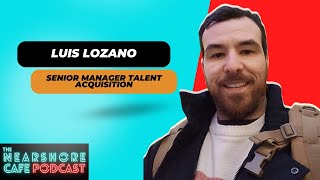
In this Nearshore Cafe podcast episode, host Brian Samson interviews nearshoring expert Luis Lozano to dissect the evolving landscape of nearshoring in Mexico. They trace post‑pandemic shifts, noting a surge in tech app development and a broader digital push that sparked investment in the country. The conversation breaks down three primary nearshoring segments—manufacturing, business process outsourcing (BPO), and professional services—highlighting recent growth patterns and the resurgence of manufacturing as firms relocate from China. Political factors are examined, with a focus on President Andrés Álvaro López Obrador’s labor‑friendly reforms, their impact on outsourcing firms, and the stability offered by the upcoming Mexican election. Luis explains Mexico’s pro‑labor orientation, recent tightening of outsourcing regulations, and how these affect both local and foreign businesses. A detailed comparison of hiring models—payroll with a Mexican entity, international contractor, and corp‑to‑corp—covers setup timelines, tax rates (e.g., a 2 % contractor tax versus higher rates elsewhere), termination fees, and equipment import considerations. Currency dynamics are discussed, noting the peso’s appreciation from ~25 to ~16 per US dollar and the double‑dip effect on US‑based budgets, with forecasts of potential salary adjustments. The hosts also touch on the US election, suggesting that trade tensions with China will likely boost nearshoring to Mexico regardless of the outcome. The episode concludes with practical advice for newcomers—company formation timelines, travel tips for Monterrey, and contact information for Luis (LinkedIn, WhatsApp). Throughout, the dialogue balances analytical insight with a conversational, upbeat tone, offering actionable guidance for companies considering Mexico as a nearshoring destination.
Chapters
Welcome everyone to another episode of the Nearshore Cafe podcast where we talk about the people and stories doing business in Latin America. If you are interested in Mexico specifically, this is the show for you. We have Luis Lozano, who's an expert in nearshoring trends, especially economic. All sorts of great stuff we're going to get into today with Luis. Before we do that, Let me thank our sponsor, Plug Technologies, plugg.tech. Plug is a great way to connect resources from Latin America to growing US companies. Well, let's welcome Luis to the show. Luis, how are you?
I'm fine. Thank you. Thank you, Brian, for bringing me in. Yeah, it's very, very exciting. Very excited to have this conversation. I think we have— we know this for some time. And I am very happy to be able to join the Nearshore podcast.
Yeah, thank you. I think we're going to have some fun today. So I've got a lot of questions. I know, Luis, you've really kept your pulse on the trends for many, many years. You've seen nearshoring explode. Today we're really going to dive into Mexico. And why don't you just, um, why don't we start off like big picture, you know? Um, what have you seen maybe since the pandemic in Mexico? Um, you know, what are, what are some of the, the kind of biggest newspaper headlines and trends that you've seen with nearshoring to Mexico?
Okay, it's, uh, it's very interesting, I think, uh, starting there because actually I see, and maybe we can talk that obviously on the call. Um, but, um, yeah, so I, I see like there are two, uh, specific trends that are have— that have been happening in the last 4 years. The first is after the pandemic, we can start that, and, um, and we can go from 2020 is, uh, when the pandemic hit, to 2022. And then we have another episode of nearshoring in 2022 of war, uh, after 2024 And we are starting to see another chapter, so it's very interesting. So let me start with the one you mentioned. So in the pandemic, what happened is obviously we have these 3 months of uncertainty. Nobody knew what's going to happen. All the world stopped. I mean, any company, every country didn't know what to expect. So We started to pick up after 3 months, and that's where we, I think, as a, yes, the humankind decided let's go digital, right? Let's really try to push that this time. And so we started to see a lot of trends of not just nearshoring, obviously that's important, but mostly like let's work remote, let's try to make it happen, let's get a lot of apps on the market, so people can really ask for food or to get delivery of things, travel, and leisure were pretty hit on that for the next few years. And so I think what we saw was a trend in the software industry, let's focus on that if that's okay for you, where apps were the hottest things in the market. Right? Like, there were a lot of companies pushing that, a lot of demos, and obviously where we were like having like a surplus of investment coming from different places to Latin America, obviously in Mexico specifically, because that's where we are going to talk today. Um, so that's what I can tell you. Like, really, the, the apps industry, uh, and the apps, you know, I mean, in all the industries, but I will say like, it's like the tech industry per se, uh, where it would— were very hot, and there everybody was searching for this opportunity to grow their businesses.
Let's, let's, um, kind of dive into some of the subtopics there because, you know, there's nearshoring— is, is a loaded word, um, but, you know, there's all these different pieces. There's manufacturing nearshoring, there's, um, uh, what I call professional service workers, like you said, software engineering, UI/UX, things like that, accounting. And then there's maybe more of like the BPO call center type of nearshoring. And I'd love to hear what you're seeing, especially recently, you know, amongst those 3 different groupings. Is it volatile? Are they all growing? Are there potential roadblocks? You know, how are you seeing those, those three?
Yes. So if you ask me these questions in January, I will say like we are stagnant, like we are not growing. But right now, uh, everything shows different. Uh, it's, uh, we are starting to grow again. So we, uh, so when we start the, the call, I mentioned three different like chapters, and we are in the clear chapter for me and based on what I am seeing in the industry. And obviously BPO manufacturing is also very important. If that's okay, let me tell you a little bit about that. So obviously the BPO has been always a huge thing, like, okay, they need a call center or technical support guys or that can't really help the marketing in the US or Canada, right? But also we have the manufacturing that is, I think, is taking a second, um, uh, yeah, second round this time, uh, because the, uh, so I think in the '90s what happened was that all the companies in the US, uh, with the treaty that we have, come to Mexico. Yeah, around 20, uh, yeah, in the 200s or so they started.
You're talking about, uh, NAFTA?
Yes, exactly, exactly. And so what happened is that everybody come here to Mexico expanding that, but then, uh, after the, the crash, I would say in '28 or so, they started to move to China, right? And so everybody were there, so manufacturing take a hit in that moment, okay? It is still happening in the, in the frontier between Mexico and the border, right, between Mexico and the US. And I see a resurgence right now, like, uh, you, you will see a lot of nearshore, and I think that's a lot of is happening. Now you're like manufacturing of everything, cars, right, like, uh, computers, um, a lot of, of, of stuff that was happening in China, they are moving the factories back to, to, to onshore or nearshore, in this case Mexico. So I think that's, uh, so that's the other piece I wanted to mention, that I, I see, uh, uh, yeah, as researchers, I will say that of manufacturing in Mexico So we will see a lot of new companies coming in.
Yeah. Yeah. Interesting. Let me take a little detour off of the economics for a second. And it's a political year. Yes, it's a political year for the US. And so maybe Mexico. It's also an election year for Mexico, too.
Yes, that's right. Yeah.
Um, yeah, so maybe, maybe let's start there. So, um, uh, if— forgive me if I mispronounce— uh, Obrador is the Mexican president.
Yeah.
Um, how have his policies over the last few years, how have they impacted nearshoring?
It didn't. It just, uh, it was, it was better for the, for the country. Uh, so because when, uh, he took office Um, everybody told like, okay, maybe this is going to go down, right, because of, uh, the way that, uh, he, like, he's leftist. Uh, so, but it didn't. Like, uh, he has done pretty good job, um, on, on keeping things, uh, good, like, for, for businesses to come to Mexico. And we can, we have seen that. And even though normally If you go to the previous elections, you normally see that there is a lot of situation between the exchange rate in the US and Mexico peso, US dollars and Mexico peso. And you will see that every time that there is a change in the president, you will see that the US dollar just spike. It didn't happen. It's actually dipping. So it's like, yeah, if I can tell you, like, uh, I think, uh, it's, it's good. Um, uh, he, uh, is, is giving the power and the opportunity for the states and for the government, uh, entities to do their job. I think that's the most important. And so I just see that as a— and everybody is seeing that as a Okay, it's a, it's a continuous and stable country, so we want to do business there. So that's why we are seeing that. And it's very interesting because it didn't happen before.
Yeah.
So yeah, it's great. It's great.
Yeah. Stability and just space for businesses to operate. And, um, like you said, less, less volatility, less uncertainty of are they going to jump in or not? Are they going to overregulate, underregulate? And really, you know, I think businesses in general, doesn't matter if you're in the US or Mexico or wherever, they just want to know what the playing field is going to look like and then they can run their business, right?
Yes. And yeah, I mean, obviously we are not here to talk about politics. But, um, they see that it could con— I mean, it could continue with the same party. I mean, it's, uh, um, I don't know if they, they are going to win or not, but if they do, I think that's what everybody's seeing. Like, there is a high probability of the same party, of Obrador, to win. And so it's, it's the same, right? If we were doing good, like, yeah, we can continue. I mean, I, I don't know if it's going to improve or not, but at least it's the same. And that's That's normally what happens with the US president wins the second term. So it's like, okay, it's the same. Okay, I know, I know what to expect.
Yeah.
Okay. Yeah.
So yeah, yeah, yeah. With Mexico for a second and out of my own curiosity, were there any groups that you think were impacted negatively from, from the last few years?
Yes, there have been some, obviously. I mean, It depends on how it goes, right, with you. And, uh, but, uh, and, but yes, obviously that I think the most impact, uh, were, uh, for actually— and it's very interesting that you mentioned— for the staffing augmentation companies that were not, um, doing things the right way, to say, uh, something. So they were very hit, uh, because the there were some changes, right, in the constitution. So, so they needed to, to fix it, or— and, and many of them were out of business. So, so yeah, I, I will say that the last, um, the last years has been very hard for— yeah, for, for outsourcing companies, not just staffing, right, but outsourcing in general, uh, because that's one of the key things that Obrador wanted to fix, if you call it like that way. And so, uh, is, is it, it is more restrictive. So that's when you say like, okay, maybe they, they are going to restrict something. Yes, they restrict that. It's not like in the US that you can have a lot of corpse-to-corps and all that. It's not like that anymore. I mean, you can do it, but you need to do it the right way, the, the way that the government wants right now. But I think that everybody that wasn't following that is already without. So I think, yeah, the good companies stay. So I think it's even, even good for the, for the, um, uh, yeah, for, for in general, for, for Mexico, is, is good to have this, uh, this law because where there were a lot of, a lot of, uh, um, loopholes in the, in the law. Yeah, they closed that and, and I think that's, that's good. And also big companies, they are paying more taxes, so Yeah, that's also good, I think.
Yeah. So maybe to simplify, do you think right now the economy of Mexico is pro-labor or pro-business?
Yeah, I think it has always been pro-labor. And basically, I will say that not just Mexico, but Latin America, for people that is looking at this podcast from Latin America, is pro-labor. Has always been. Um, but lately, I mean, Alvarado is pro-labor 100%, so a lot of the tweaks that we have seen is more pro-labor. But that doesn't mean that is a deterrent for, for investment. I believe that is a better play field. And so it, it, it, it make it like that, right? Because when you are talking with candidates, they were like, oh I have this scheme and other person has this scheme and maybe you— so it's, it's more like aligned, uh, I will say. Uh, so I think also it's good. I think everything that comes to, um, to help the labor is going to be beneficial for, for everybody in the, in the long run. That's, that's my thing.
Yeah. And I also wanted to ask you, and, and, you know, are the, the audience that listens to this is, is curious, they just want to learn more about how stuff works and Latin America has many different countries, many different nuances, how contractors, employees, entities, how all this stuff works. And sometimes Mexico can feel a little intimidating for a new business trying to figure out, can I contract this person? Do I need to have an entity? Do I need to pay them in pesos? And if I'm labor, can I work directly as a contractor? Do I lose my pension and all the benefits of being connected to the labor force? I know that's kind of a big question, but the more you can kind of share, like, what does that look like would be fantastic.
Okay, so what I'm going to do, if that's okay for you, I am going to take the US as an example, uh, and then, and then, because I think a lot of the audience is going to at least know how that works, and it's different from country to country. So normally in the US you will have like either payroll or contractor, or obviously corp to corp, right? So it's, uh, that's, that's like the three. Obviously there are a lot of other options, and, uh, and, and you're— we are not talking about how you pay taxes yet. It's like, okay, how I can hire somebody to work with you. In Mexico, we have the same things, but we have different options. So that's, I think, that's where the confusion begins, right? And being pro-labor, there is different things that you need to consider when you hire somebody. So for instance, you can also have payroll, right? And you need an entity in Mexico, okay, obviously. And I think The majority of the US companies doesn't take into account that in the US you can open a company very quickly, like within a month or less. In Mexico, it takes 6 months to 8 months to open a— and that's if you get like your name approved, right? I have this fun story that we were building a company and it takes 20, 22 names to get approved. So it took us like 6 months to get, to get approved. Uh, so that's, that's just to start the process, and then you need 6 months or 8 months, and then you need, uh, to be in Mexico to be able to open. So you— so there are a lot of things that you need to consider. Okay, so if you want to hire, is a payroll you want the easiest way, I will say, because maybe that's going to be interesting for the audience, right? So the easiest way is to go contractor, international contractor. I think is the best way to do it. And that not just help— I mean, that way works in Mexico, in, or in every other country. Now Mexico has a preference, uh, or, or let's say not a— doesn't have a preference where you get the money, as long as you pay taxes. Okay, so if you are in the U.S. and you pay somebody to Mexico as a contractor, there is a way to pay only 2% in taxes for the person that is receiving that money. Whether if you go to Colombia, for instance, you need to pay 30 or 40%. Okay, for that. So it's really, really different, and that happened within this administration. So that just came in. Before, you didn't need to pay anything, but right now you pay only 2%, and then it's like, okay, you are on the law, you are making everything fine. So payroll, you need a company in Mexico. For contractor, you don't need a company in Mexico, you can hire them from your U.S. company. Okay, and yeah, so when it comes— and maybe, I mean, I don't think we will have time for that, but you also need to consider termination fees, right? You need to— it's totally different. You need also to consider like if you are going to send the computer or some equipment, because you have these taxes when you send equipment from the US to Mexico. I have seen it all. So I think there is a lot of things. The easier way is go to contractor. And meanwhile you do that, you may want to realize, okay, maybe I want an office in Mexico, and then you will need to, to build your company. But it's going to take a year. It's not going to be easy.
Yeah, yeah, yeah. Um, thank you for, uh, explaining that in a way that, that, uh, someone from the US might, might, uh, might look at that. So while we're talking about the US and politics.
Yes.
Like we, like we know it's, it's an election year in the US as well. Yeah. How does— so, you know, we in the US, in the media, we always hear about immigration and the wall and. Yeah.
Yes.
So, but nearshoring isn't that, right? You know, nearshoring doesn't really have a lot to do with immigration. So I'm curious, what do you think this election year in the US means for nearshoring? You know, are there policies that people in Mexico are kind of, you know, listening for or things that different candidates or parties are talking about that, you know, would have an impact on nearshoring in Mexico?
It's a, it's a, it's a, I think it's a good question, uh, but in this case I will say that, uh, I don't know, maybe I am, I am not correct on this, but that, but my belief is that it won't impact. Actually, I think it's going to improve nearshore. Let me tell you why. Because whether, I don't know, regardless of who ends up in the office in the US, the I mean, obviously they need to say yes, the wall, and yes, immigration, but that's not really the, the problem. The problem is Ukraine and Russia. So they will, they will continue to work on that, continue with the trade war with China, and that only helps. Like, because if they are trade having issues with, with China, so somebody needs to put that, as, as I mentioned before, the factory somewhere. You cannot put them in Russia or Ukraine as before, right? You cannot do it. So you need to bring it closer to home. So I will say that it will impact the U.S. if they bring more, if they decide to bring more or continue with this trade war with China, is going to impact U.S. directly to get more, yeah, more labor or more employment. And but also will impact positively in Mexico. So I don't see Again, I think the next 6 years, because it's the term for Mexican president, I know in the US it's 4, but I think at least what's rest of the decade is we are going to see it, Nisour just getting stronger. That's my prediction, at least hope I am right. But yeah, I see that. I just see that happening because it's the right thing to do. Everything points toward that. So yeah, I don't think it's going to impact negatively more than— yeah, they need votes and they need to say, say whatever they, they, they, they need to say to get the person to go vote for them. But I really don't believe that they are going to, to get in the war like they did, for instance, um, Trump, that were in the, in the, in this war with Mexico at the beginning of the administration. I don't think it's going to happen, uh, regardless of who they want. But, but I mean, again, I, I can be wrong, but I don't think it's going to impact negatively.
Yeah, I want to go back, Luis, to earlier. We, we hit on currency just a little bit on how the dollar is tracking. And could you talk a little more about that? Um, the peso versus the dollar, what it looks like today, how people are maybe forecasting that, and, and really like what does that mean for everybody? You know, if the dollar gets weaker, the dollar gets stronger, like how— what does that mean for companies that are trying to nearshore?
Yes, um, I, I, yeah, I, I am, um, every, every month I, I sent, uh, Mexico, uh, tech update, and I, I actually talked about that, uh, and because I, I think was the right time to do it, um, from at the top of the, of the, of the market, if we talk about the US and Mexico, uh, peso the US was trading at about 25 pesos per dollar. Right now it's about 16, so 30% less. Okay, uh, so, so that really impacts because most of the budgets are in the US dollars, are not in Mexico, in Mexican pesos. So if, if a company is coming and they plan a 5-year— just imagine somebody in 2019 that they planned the last the next 5 years, right? And they just realize after 1 or 2 years that their purchasing power is not just reduced because— and maybe I will get a little bit technical here, but you have 2 ways in which you reduce your purchasing power. If I am a company in the US coming to Mexico, right, So is one is obviously the inflation. Inflation happens and in every, every country, and it hit us every year with a percentage, right? So my purchasing power is lower. But another thing that is happening is because I— because, um, Mexico peso is gaining terrain against the dollar, obviously my dollars are worth less. So it's double, uh, double dip on my, on my purchasing power. And so I, I think what most of, uh, in the— I will talk now about Mexican candidates, right? Because I think we need to be more aware that this is going to impact the salaries for sure. It has been a situation where the U.S. companies have been adapting and adapting and adapting Like, okay, maybe I was able to hire a software engineer for $4,000, now I need $5,000. That's okay. When are we going to stop? I think it's going to stop very soon. So, so, so, so I think that's where Mexico is going to, uh, to, to get like, okay, a halt, right? Like, oh, we were making a lot of money, that's great, and we can make more because there is no money, right? So I think it's going to happen soon. That's going to happen soon. And, uh, and, and talking about prediction, I think during this year we will see a rise. And actually, if this trend continues, we will be, uh, it should be a, uh, a salary reduction of the offers, right? So I, that's something that hasn't happened since I am, uh, I started 15 years ago, but I, I see that it, it could, it could happen Just imagine that we hit 50 pesos per dollar. It's a lot. You already lost a lot, a lot of your purchasing power. And, um, and if inflation again is very high, and so I don't know, it's interesting. Um, but in another, in another thing that also I think, um, you know, yeah, I think it's important to mention is that that's what we wanted. Like, that's what exactly what we wanted as Mexico when we, when we signed the NAFTA agreement. That it already changed and everything, but when we signed that, we wanted to be an equal to U.S. and Canada. I mean, I think the dream is, is closer. We are not yet, obviously, but you can see that as the gaps start to reduce between very special people working in Mexico to US or to Canada. Okay, that— I mean, you have people right now that are paid more than people in the US. Like, yeah, it's incredible. And with the same, like, same level, just because they— I mean, right now companies don't care much about that. Like, okay, I need the best people and I want to hire them. So, so I think it's a very interesting fact. Obviously I am not talking about FAANG and all this big companies that pay a lot of money, right? But in, in general, so I, yeah, I think, uh, it's, it's, for me, it's very, very exciting to see it, it coming to fruition, right? Because I see a good trend where we are going to be more impaired, and it has its consequences, like, obviously. But, uh, in other, in, in other instances, our purchasing power in Mexico could be the same or a little bit lower. But if we go, for instance, to overseas we will be able to, to pay, to pay for more things or travel or everything. Like, so I think it's great. I think it's, uh, you need to— I mean, you need to sacrifice somewhere, right? So I think, uh, that— I don't know, I, I believe it's a very interesting moment right now for Mexico.
Yeah. And I think overall, um, what the US should, should understand is that a strong Mexico is actually good for the US. You know, like you talked about with, especially gives an alternative to China, right? From a manufacturing side, it opens up the doors for a larger labor pool. All businesses want a larger talent pool to draw from. So I think it's great. I think it's really good for overall supply and demand economics too.
Yes. And now that you mentioned that, I think Another important thing to mention is that, uh, there is going— there is still going to be a lot of savings as well to come into nearshore. Because maybe, uh, the top talent, like the senior people, management, is going to be very similar. Maybe you will even pay similar salaries to the US. But when it comes to, to, uh, to labor that doesn't speak, uh, English, that's just like there's where the saving is. Like, you will be able to have like a top management, um, uh, yeah, scheme where you have this management team that can speak English pretty well, well paid. And that has happened since the beginning of this trade, right? But I think right now it's showing a little bit more, like getting even closer in the payments. But when you go and say, okay, I need 1,000 employees, yeah, for sure you're going to save money in Mexico. That's for sure. And not just 30% or 20%, maybe 60% or 70%.
Yeah, totally. Absolutely. Absolutely. Well, as we start to wind down the show, I've got a couple of fun questions for you, Luis.
Sure.
So Monterey is a city that a lot of people are surprised with how amazing it is. Um, for someone who's traveling to Monterrey for the first time, uh, do you have any travel tips? Where to eat, what to see, what to do?
The first thing that you need to understand is how big the city is, right? That's the first thing. And so either if you want to, to party, you have options. If you want to go, uh, to the, to small towns, you have options. Options. If you want to go with the nature, you also have options, right? And I think that's where people normally don't know, and that's okay because you can do it all. Obviously, for instance, if you want to go for some night— again, you like nature, there is a lot of travel that you can do, ecotourism. right? It's also a pretty good thing. Um, and but depending on how extreme you like it, you can pretty— I mean, you can be climbing mountains, going to rivers, right? Stuff like that. Very, very fun stuff. Camping is also— I mean, we are between mountains, so I think it's also pretty good to just, um, walk, uh, to the top of the summit of the mountain. I think also this is pretty, pretty good. But also we have like different small cities close by that you can go. Again, if you want to, if you like to eat, there is a lot of things to eat here, a lot of cuisines, right? We have, if you like to party, there is a lot to do in the night as well. So yeah, I think the only thing that we don't have is a beach. For, for, yeah, but, but everything else I think is, is, uh, you have a place to go, uh, and actually also shopping. I mean, if you like shopping, there is a lot of pretty, uh, good, um, yeah, yeah, companies and, uh, and, uh, yeah, and stores here, uh, where you can buy stuff. You can, you can buy almost anything you need. So yeah, I will say that in terms of food, obviously cabrito is— you need to try it. Not everybody likes it. Don't worry about the smell, just taste it. It's a little hard at the beginning. Yeah, it's a strong smell, but it's good. I really like it. I really like it. And obviously, like beef carne asada is amazing. I mean, I have been in other cities, fortunately, and I think I will rank Hermosillo first and then Monterrey in food. Probably I will get riled by that, but yeah, it's good. I think it's amazing. It's an amazing place. I have been living here my whole life, but I have traveled and stayed more than 3 months, like, but living in different cities. In the US and also Mexico, and I always came back. So yeah, I don't know, I really like the city.
Amazing. And the last question I have for you, Luis, as someone who speaks both Spanish and English very, very well, do you have a favorite English word or English phrase?
Well, yes. I mean, I am thinking, I think One that I like, I mean, let's talk about, uh, business and then I can talk about one, right? Yeah, so in business I will say, uh, make it happen. And that's something that, uh, yeah, my dad always told us. And, and I just, before I, I, we started, I was thinking like he was also on the nearshoring side because, yeah, because, but even in the manufacturing and stuff. So I mean, like, we We were doing the same thing, right? 20 years apart. But yeah, I think making happen. And I will say, like, in a fun side, for all the Star Wars fans, like, hello there from Kenobi. I think that's the one that I use the most for memes and all stuff. Yes.
That's great.
That's great.
I love it. Well, you heard it here from Luis Lozano.
Wow.
We really hit on a lot of interesting geopolitical economic topics. I learned a lot. I know our audience did too. So thank you, Luis, for coming on the podcast.
Thank you, Brian. Thank you. Thank you, everybody. Yes, I am here to help if you need anything.
Luis, where can people find you if they want to reach out to you?
Yeah, I think my LinkedIn profile. I am very active on there. We can share that link there. Yeah. And actually, I think I have my phone number, my business phone number there as well. So yeah, WhatsApp or LinkedIn is the best way. Cool.
You got it. Well, everyone, thank you again for listening to another episode of the Nearshore Cafe podcast. This podcast is sponsored by Plug Technologies, plugg.tech. Plug is a great way to connect resources From Latin America with growing US companies. We'll see you next time. Thanks again for listening.
More from Brian

From BPO Agent to Client Experience Manager: Ana Rodriguez on Nicaragua's Nearshore Talent

From BPO Agent to Client Experience Manager: Ana Rodriguez on Nicaragua's Nearshore Talent

Building Sales Teams in Mexico: Mario Oliveros Figueroa on LATAM Talent & Cross-Border Selling

From Automation Engineer to Data Platform: Victor Fernandes on Brazil Tech Talent

H1B Crackdown & The Nearshore Shift: Robert Bouchard (H1B Guy) on LATAM Talent | 🎙 TNC

Nearshoring Yourself; step by step to building an expat life in Mexico |🎙 The Nearshore Cafe Podcast

Scaling high-performing teams in Costa Rica staffing legend Doug Firestone on growing to 225 LATAM

How to Scale in LATAM? Navigating Currency, Taxes, and Labor Laws | 🎙 The Nearshore Cafe Podcast



AI in LATAM: How to Break Into Mexico’s Tech Market |🎙The Nearshore Cafe Podcast