Exploring the Andes Plane Crash 🎥 | Emotional Lessons Learned 🎙 The Nearshore Cafe Podcast
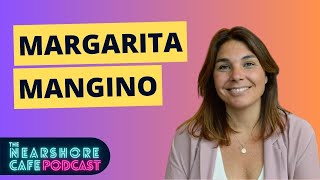
Uruguayan entrepreneur Margarita discusses her country's tech talent and business environment, her career building a fractional CMO agency, and her father's survival of the 1972 Andes plane crash, which is the subject of an upcoming Netflix documentary premiering at Venice.
Chapters
Welcome to the Nearshore Cafe podcast, home to the most interesting stories and people doing business in Latin America.
Oh, wow.
Okay.
Yeah. Very, very leading the way in Latin America.
And it's so— it made me so proud to see that we are becoming that advanced country again. But because the governments, it doesn't matter if they change, they continue with the politics that the other one was implementing. It's not like, I will kill everything that they did before. Right. It doesn't work that way here. So it is very important for all the country. We are among, we're in this together. It doesn't matter what political party you are. We, we need to, to work together to, to advance the world, the, the country, right? So it's, it's kind of refreshing to, to, to know that.
Yeah. Um, as, uh, as an American, that, um, that hits home because every 4 years we swing one extreme and the next 4 years we swing the, the other extreme. And, um, it's, it's great to see, um, forward progress all the time. And you can see it with, uh, with the country.
You've had parties that are investing more in social initiatives and other ones that are more into business and doing business abroad. For us, we are such a small country that our inside market, it's not enough. So we need— it's always thinking about exporting and how we can sell, do like a a partnership country or another community or, or that kind of thing. Because it's, it's, we can live from what it's the market inside, only the market of Uruguay. So yeah, yeah, yeah.
Um, I wanted to also ask, because we're on this topic, um, how has that impacted maybe the talent market in, in Uruguay? Um, and maybe if there's certain pockets listeners should be aware of, whether it's design or software development or banking, you know, are there certain sectors or talent pockets we should talk about?
Tech talent. It's amazing. We are among one of the countries with better tech talent over here. We started investing in promoting that IT industry and tech industry for a long time. And we have, I believe, if I'm not wrong, more than 500 development companies, software companies in Uruguay. And one of the things that we usually have very good English and really, really good talent. So it's kind of hard to, it's limited, right? So we are so few that a lot of companies over here, what happens is that if they want to scale and they want, they want to grow, we tend to hire in other countries, Latin America too, because it's not enough for the population here that we have. But we have really good universities that are always renewing the new generations that are coming. We are very well known for, for the technology industry especially.
Yeah.
Yeah.
I'd like to hear a little more about your career, your journey, especially what you're working on today and then maybe, you know, what you were doing prior.
Okay. Well, I started to work very young and I was 18 when I had my first job. And I was studying at the same time. And the best thing that happened to me, it was that I started to work with someone from my family that he gave me, he gave me the opportunity and we, we launched the operations of a nonprofit organization from an American nonprofit organization that supported entrepreneurs. And it was early 2000s. The word entrepreneur here in Uruguay didn't exist. We didn't know what an entrepreneur was. So it was really, I don't know, motivating to me to learn a lot about that world. And it made a huge mark on me. It made such a huge mark that I met my husband over there. We have been 20 years together so far. It opened a world for me of these tech companies that were thinking globally, scalable businesses that were growing outside and very dynamic in a very dynamic industry that I fell in love with. And I was studying actually communications and at some point I graduated, but I felt like I needed more. I wanted to have a better understanding of the business world. And that's why we married with my husband and we went to live in Madrid to study. I studied an MBA in Madrid actually. And when I got back, I actually got an offer again from Endeavor, the nonprofit organization. And I started to work over there again, but not on marketing, but more on business. And it was like, expanding the MBA because I was learning so much of all these startups and these companies that after 4 years, I decided that I wanted to invest myself more in growing in the tech industry. And the last, after I left the nonprofit, in the last 10 years, I have been working in the IT world, mostly in marketing and sales, mostly in the B2B market, but working in product companies or in development. And in the last month, I actually ended my last job in a software development agency where I was Chief Growth Officer and co-CEO and launched myself my own company. So I became the entrepreneur, right? A full-time entrepreneur. I was, I already founded another company with my, with my husband and another partner. Like 2 years ago in the renewable energy sector that wanted, that is very well known here in Uruguay. And we wanted to help companies to become more professional with their data analysis and everything. But I, I have mostly a part-time job over there. And so, but I wanted my own, like, uh, Entrepreneurship. So I started Market Minds that is actually a fractional CMO agency and with another kind of services, I'm trying to empower founders that need help with their marketing strategy so they can take their brands to the next level. Something that I identified in the, this lot of years working with the startups that actually usually marketing is the founder. Is under the founder umbrella and sales and operations are always a higher priority for them. Yes. So marketing is more like the addition of different initiatives, random initiatives without a strategic, actually a strategic plan behind. And that's where I focus and try to help them. Yeah.
And that, um, if anyone wanted to find that, um, can you give the website, um, or any other places they should look?
It's market-minds.co.
Market-minds, and that's.com?.co,.co, C-O..co, okay. Market, we'll make sure we get this right for our audience. Market-minds.co.
Yeah, thank you.
And Fractional CMO, I can validate, you know, I've had many great conversations with Margarita about marketing. She's a great go-to person if you're thinking about marketing strategy. I think another thing that you bring to the table, Margarita, is grit and perseverance, which maybe I'll speak that possibly you learned that from your father who is, who had a very, interesting experience. Could you just take a few minutes and tell us more about that? And I'm sure, you know, there's a lot to dig in there.
Yeah, of course. Well, my dad was on a plane accident, plane crash accident back in 1972 in the Los Andes Mountains. It's one of the most famous stories of Uruguay, of this group of rugby players that were going to Chile to play a friendly match, go having fun for a weekend, because Chile was really cheap at that time and really happy going to spend the weekend over there. But the thing that happened is that when they were going and flying over the Los Angeles mountains, the plane crashed and they actually survived the crash, which is amazing. I went to the place and if you see where it hit the mountain and how the main part of the plane just slides through the mountain, through the snow, it's kind of— wow. Impossible to imagine, you know, it's like so impossible, but they not only survived the crash, but they also survived 72, 73 days in the mountain, in the middle of winter with lots of snow. The only thing they have around was snow. So they had to learn to survive over there and they lost so many friends. In the middle that it's, it's devastating. The story is amazing and it's devastating at the same time. And yeah, the thing here also is that Uruguay is a very small community. So in the same group of friends, of parents that were of the same community, there were kids that came back and kids that didn't. And I have, for example, in my family, I have my dad, he came back, but some cousins of my mom didn't. And actually the brother of his, of her brother-in-law didn't come back also. So it was really hard for a lot of families and for all of them over here. Yeah. It took my dad 30 years to talk about it so openly. Yeah. Yeah.
Yeah. I mean, this was in the '70s before a lot of technology. So when the plane didn't arrive in Chile, everyone probably assumed the worst. And then 72 days later, these survivors appeared.
Yeah. I heard One time we, it's, this story is so amazing that the clubs that were part of this initiative of having friendly matches every year, they actually took like, this year I go to Chile, this year they came to Uruguay and they, it was like something to have fun and engage between two different rugby clubs. But after the crash, they kept doing it until now. Yeah, doing it until now. And I had, I went twice, twice at least. And one of the times, one of the guys that actually was at the airport waiting for them shared his story about how they heard about it and how they were like, why are they not here? And how they went to the embassy in Uruguay to be connected and learning. What is, how was the search and everything? And, but it actually, 72 days is 2 months and a half. So life goes on. Yeah. Like life goes on. And my mom was already my dad's girlfriend at that point. They were together since they were 14 and my dad was 18. He was really, he wasn't among the youngest. And one of the things that my mom couldn't accept is, was that he was dead. She was convinced that my dad was alive together with his mom. And there's a lot of stories about moms and girlfriends that thought about it. And my grandpa was like, you two are crazy. He couldn't even imagine that he was actually a pilot. So he knew like what it was about, a plane crash. So it is, there are so many facts around the story and then it is amazing. It's an amazing story. My dad, my dad actually, his story doesn't end there. So Our, when he got back, he actually, with the money that they got for the first book, he bought a piece of land because he wanted to be a farmer, but then he lost the farm because of a business of his dad. With 3 little kids, I was the third and I was only 3 years old. He put everything we had on a car and we went to live to Rio de Janeiro. 36 hours on car. So from Monterrey with nothing. So we started over again in Brazil. We stayed there 6 years and he did really well. We got back to Uruguay because my mom wanted to come back to Uruguay before it was too late for us, the kids to come back. And he started a new business over here. And 2 years later, he lost everything again. Started from scratch and not everything, but it was like the business wasn't that bad, do that good. So we started to reinvent ourselves. He needed to reinvent himself again. And it was a story of his life. Actually, he reinvented himself so many times that I think it was like a lot of the learnings that he had over there and a lot of the learnings that I have ingrained is like Yeah. Things can always get worse. When it's money and job, it's just a job and just money. It will come and go. So, yeah, it, it, it, there's a lot of other things that can be so much worse that it doesn't matter. You are laid off. Come on. You have a lot of resources to turn around the situation and, and You can't complain, right? It's like, I grew up without the possibility of complaining. I was actually talking with a guy today and it was like, hey, I can't complain. It was like, oh my God, I have stuff. That's so— but, but yeah, it's, it's like, um, it's an amazing story and it made him— this story made him so strong and so resilient. Yeah, I learned a lot from him.
Yeah, I mean, so much to take away there, but, um, always get back up. Always get back up.
I mean, that's the story of my dad in the accident is very peculiar because he broke his leg in two parts of his leg. So in the 72 days, he never walked. Wow. Some of the guys that they were the doctors, they were 19 years old, right? They were medicine students. One of them, Roberto Canessa, wrapped his leg, accommodated the leg, made some tourniquet or something, and he said, okay. And my dad has the leg just As he lived it in the mountain until today, because he, when he came back, he went to the doctor, his dad took him to the doctor and the solution was break it again. And my dad said, no way. I won't break my leg again. Leave it like that. It's working so I can walk and it's all good. But he never had the surgery. So his vision from all the The other people was from behind. He was always looking to the others. Yeah. Incredible.
I agree with that.
Incredible.
Yeah. So there's the Hollywood movie Alive that some people know about the story. And I think you mentioned there's another film coming out. Can you talk about that?
It is Bajona, that he's the director of the movie of the tsunami, actually. And he just started, produced the last movie that is going to be launched on the Venice Film Festival on September 9th. Actually, it's produced by Netflix too. And my dad already, all the group of the survivors already saw the movie twice. And now all the families have the opportunity to go tomorrow to an avant-premiere. Before it's launched, like, publicly in the film in September. So incredible. I have to tell you, it's like, I know I will have to face a lot of emotions tomorrow. Uh, yeah, make me a little bit scared about it. And I know that I have to watch it with my kids after that at some point. And I was just remembering the other day that I had the same thing when I was their age. When Alive Hollywood movie was launched, it was 1993. I was the same age of my kids now. And yeah, but the big difference between then and now, I believe, is that at that point we had the book, we know the story, but my dad didn't. Talk openly about it. So it was, we had a question, we had always mom to ask her, but it was something that we will walk around. It's not easy to talk about. My kids, it's very different. My daughter, my eldest daughter, she already went to the site of the accident with me and my dad. A few years ago, and they saw a lot of documentaries. They read books. My dad told the story to them in first person. So I believe they will have a lot more resources than I did, but it will be a shock always because it's one thing is what you imagine on your head. Another thing is seeing in, in, in So I'm very expectant for tomorrow, but also a little bit nervous. Yeah.
Well, good luck with the viewing and thanks for sharing that. I can't wait to see it when I'm able to. So thank you.
Thank you.
Well, as we start to wind down a little bit, we have some more lighter questions for you. So obviously you're an advanced English speaker. But English is your second language. And I'm curious if you have any favorite English words or English phrases that come to mind.
Okay. Yes, of course. I love English first. And I love that you can say a lot with fewer words. You need a lot more words in Spanish.
True, true.
So I love that about the English. And for example, I love the word excited, or this is excited. It's so hard to translate it sometimes. A lot of words say the same. It's like, it means a lot. It's like, it's a lot in just one word, right? Yeah.
Yeah.
Um, I, I, I, I would need some advance of this question.
Yeah, well, that, that's, that's, that's a great, great place to start. We were, we were very excited to have you today. So thank you. How about for those that we talked all about the food in Uruguay, but how about if you're visiting Uruguay and someone has $50 to spend on something besides food, is there anything that you may recommend that, you know, is notable or an interesting thing to purchase there?
My husband is saying dulce de leche.
That's a good answer. It's food, but we'll let it count.
We'll let it count. Food. That's okay.
That's okay.
Here, very similar with Argentina. And here is very similar. I don't know if you could buy actually something for $50 in leather because it's so expensive, everything here.
Yeah, that's true, that's true. Um, and I also wanted to ask you, um, because we talk a little, a lot about doing business here, doing business in Latin America. Now more than ever, people are curious about it and they're interested in hiring talent, setting up businesses wherever. If someone in the States had their eye on Uruguay or Uruguayan talent, what would be your best recommendations so that they're successful in that venture?
I, I would say that starting a company here in Uruguay is very easy, and we have some zones here that are called free tax zones. So we have a lot of companies that are establishing their companies here, taking advantage of the good talent that we have and selling to other places in Latin America or the world, because it is— they are like these special zones for people that want to do business in other countries, right? If you want to do business in Uruguay, I would say the market is too small. You have to look into other countries too in Latin America. But I would say that if you want to start, like, we have very good software development agencies. Here in Uruguay doing great work, working with US companies. So I for sure would say that that's a great place to start. If you want to start working with some, at some point with Uruguay, contact some company in the software development agency, not only staff augmentation, but actually building the end-to-end Brazil. We have companies that are doing really good job in the US with great companies over there. Yeah.
Amazing. I can recommend clients actually. Yeah. We may, maybe even in the show notes, we may drop a few names there. Um, but I just wanted to thank you again, Margarita. Um, such a pleasure to have you on the show today. Um, I learned a ton and you also made me very hungry for Uruguayan food.
Of course, let me know when you're back here and I would love to make you a tour. Absolutely. I have so much fun too. And I love this podcast that you're doing across Latin America.
Thank you. Well, final thank you to our sponsor as well. That's Nearshore Direct. GoNearshoreDirect.com, great way to find talent all over Latin America for US companies. Until next time, thanks for listening to the Nearshore Cafe podcast. Take care.
More from Brian

From BPO Agent to Client Experience Manager: Ana Rodriguez on Nicaragua's Nearshore Talent

From BPO Agent to Client Experience Manager: Ana Rodriguez on Nicaragua's Nearshore Talent

Building Sales Teams in Mexico: Mario Oliveros Figueroa on LATAM Talent & Cross-Border Selling

From Automation Engineer to Data Platform: Victor Fernandes on Brazil Tech Talent

H1B Crackdown & The Nearshore Shift: Robert Bouchard (H1B Guy) on LATAM Talent | 🎙 TNC

Nearshoring Yourself; step by step to building an expat life in Mexico |🎙 The Nearshore Cafe Podcast

Scaling high-performing teams in Costa Rica staffing legend Doug Firestone on growing to 225 LATAM

How to Scale in LATAM? Navigating Currency, Taxes, and Labor Laws | 🎙 The Nearshore Cafe Podcast



AI in LATAM: How to Break Into Mexico’s Tech Market |🎙The Nearshore Cafe Podcast