Exploring VC in LATAM 💵 | Market Trends (Part 1) 🎙 The Nearshore Cafe Podcast
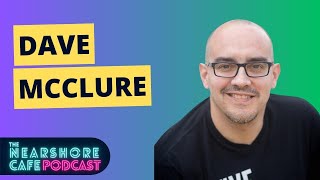
Dave McClure discusses 42Geeks, his immersive trips for investors and entrepreneurs across Latin America. He highlights Brazil's fintech boom and Pix payment system, Uruguay's stability, and Argentina's talent despite hyperinflation. The region remains undercapitalized but growing fast.
Chapters
Welcome to the Nearshore Cafe Podcast, home to the most interesting stories and people doing business in Latin America.
Welcome everyone to another episode of the Nearshore Cafe Podcast. I'm Brian Samson, your host. And first I want to say a quick thank you to our sponsor, Plug Technologies. Plug provides software developers for for growing US companies and operates all over Latin America. Very excited about our guest today. He is a legendary investor, founder, managing partner of PVC, Practical Ventures, prior 500 Startups, early PayPal, and what we'll talk about a lot today is also co-founder of 42Geeks. Welcome, Dave McClure.
How you doing, Brian? Nice to meet you.
Yeah, absolutely. So Dave, I had the chance to see a presentation of 42Geeks at the Modernist in April back in San Francisco.
Oh, right. Yeah.
But not everybody knows 42Geeks. So can we first talk about who it is, what is 42Geeks, and also the interesting story behind the name?
Yeah, well, so I guess in a way it's a reboot of something we used to call Geeks on a Plane, which I started way, way back, I think 2009 or '10 with Christine Liu and some other folks. And then after I started 500 Startups, we did it pretty regularly for about 6, 7 years. We did 2 or 3 trips a year to different parts of the world. But the general idea is kind of, I call it nerd tourism. So it's, we take a bunch of entrepreneurs and a bunch of investors. We go to different parts of the world and we try and learn about the startup ecosystem, the venture investing ecosystem. We usually meet with other startups and entrepreneurs and other investors and VCs and occasionally governments and, um, and probably a few corporate entities thrown in there. And, uh, and we do some cultural events. We always end up doing a lot of eating and probably a good bit of drinking as well.
Sure.
So it's certainly a lot of fun. There's some business that's thrown in there. Certainly a lot of bit of pleasure as well. But it's, you know, it's mostly about people who are interested in exploring what the tech ecosystem looks like outside the US and other parts of the world. And like I said, we started doing that probably 12, 13 years ago. We took some time off. But, you Chuck called me up, was like, hey, we should really restart this again. And we changed the name just because the other entity was still partially, I guess, 500 related. But so about a year ago, we kind of rebooted that and we've done 3 trips so far, about to do our 4th. We've been— went to Southeast Asia last year. So we actually came here to Singapore and visited Vietnam and Thailand and ended up in Bali. And then we did a trip to the Middle East earlier this year in February. We went to Israel, Palestine, UAE, and Saudi. Yeah. And then just a few months back, we went to Latin America and we saw Uruguay, Brazil, and São Paulo. And then our Our next trip coming up, we're going to be doing Taiwan, Korea, and Japan in October. So hope to do about 3 trips a year and visit different, both developed and developing tech economies around the world. And the people who come with us usually have a great time. A lot of it is just them meeting each other. So I sort of call it like summer camp for nerds on the road. But we take about, Usually about 7 to 10 days, visit 2 or 3 countries, and there's anywhere from 30 to 50 people. If you're asking about the name 42, that comes from Hitchhiker's Guide to the Galaxy. For those who are not familiar with that, I won't explain it. You should just read it. But, you know, 42 is the answer to, you know, the life, universe, and everything, or also what's 6 times 7. We'll make sure to put that in the show notes for everybody. You bet.
And so on these trips, can you talk a little more about, you know, are you visiting companies all day or, you know, what is the typical itinerary like?
So usually we try and anchor around a couple of events. So sometimes there's, you know, other conferences going on that we're joining. Sometimes we're visiting like an accelerator setup or a larger platform company that's, you know, key to the region. I think, you know, like I said, there's some government involvement. So we got, when we were in Saudi, we got to meet with the Minister of Investment, which was pretty crazy. I mean, we actually thought we were going to meet with the Deputy Minister, but the Minister himself ended up showing up. And, you know, I don't think most of the people on our trip knew who he was, but he was the guy who was previously Chairman of Saudi Aramco and was, you know, running, basically the person setting global oil prices for two decades was the person who was sitting there talking to us, which was incredible. Astonishing.
Yeah, this is maybe the first trillion-dollar business too, right?
I think that was a bit of an outlier. I don't expect we always get that kind of VIP to sit down with us, but that was amazing. A lot of times we're visiting companies in the region that have gotten to some level of success and we're, you know, maybe 100 or a couple hundred people that are already, you know, past maybe Series B or C and, you know, hopefully doing $50-100 million in revenue or more. Um, and then we often meet with a bunch of startups who are, you know, looking to grow and get investment. And, you know, sometimes people in our group are writing checks. That, that isn't the exclusive purpose of the trip. Um, so it's, you know, it's meeting with large and small startups. It's meeting with investors, either other angels, other VCs, sometimes other corporates. And then also understanding what role government has to play in helping develop policy and investment frameworks. And also we'll do cultural events that are normal things that tourists do, just that we're a little nerdier than the average tourist. Food is a big part of every trip, so we really, really love to eat. Um, so we, we have a slogan, which is kind of stealing from Marc Andreessen and Andreessen Horowitz, you know, software eats the world, but geeks eat everything is the, is the, is the soundbite there. I like that. I like that. So, so we always try and explore the food as well as the technology of the places we're visiting. And, and we visit 3 or 4, usually 3 or 4 cities along the way. A couple, couple days each city. Yeah.
Well, this podcast really hits into Latin America, and before we get into your 42Geeks trip that you recently did, what was your experience with Latin America before all this? Maybe your first trip ever and some of your other experiences?
Well, I'm trying to remember when the very first time that I went. I think in 2008 or '09 I went with the State Department, the US State Department, on a trip to Colombia that was sponsored by some some folks who were— it was a little bit of tech entrepreneurship innovation, but also a little bit of happening out of the US government. And I think at the time, Colombia was kind of starting to maybe settle down or stabilize with a lot of the things that happened with— there was an internal war. I don't know if I would necessarily call it a civil war, but there was like FARC guerrillas and a lot of security-related issues, um, and that had just started to maybe calm down a little bit. Um, so that, that trip was sponsored by folks in the U.S. government who were bringing tech entrepreneurs to the region to see about how technology could help improve, you know, things going on in the country. And we visited both startups and governments and also some, some nonprofits who were doing education stuff. And that was, that was my first real experience in seeing Latin America, aside from some other stuff I had done when I was in college. And it was pretty interesting to see both sides of stuff. We were in Bogotá and I think Medellín, and then we also had a trip into the middle of the jungle, which was kind of pretty intense. I mean, we visited some small villages there that I think were I think the government was doing some kind of PC. I can't remember the name of that program, but they were giving PCs to kids in schools down there. But we were literally on a military cargo plane with a general and we landed in like this place where there were tanks around. We were in camp. We were surrounded by people who were in camo and it was like right in the middle of— Oh my gosh. That was like, you know, really— Wow.
That's pretty intense.
Wild first experience. Yeah. Subsequent to that, you know, I— when— after I started 500 Startups in 2010, I had some friends who were investing in Mexico, and David Weekly, who was the founder of another company called PB Wiki, I think, and then two local Mexican tech nerds, one who was a developer, one who was a designer, And they'd been running kind of a startup house type of event, kind of hacker house event. And so David was getting a small VC fund started down there with those guys, and I think his wife or partner at the time also. And we were small investors. I think they were aiming to put together like a $2 or $3 million fund to invest in tech startups. And a lot of these guys were very involved in the start up a developer community in Mexico City, uh, and also, uh, I think Guadalajara and, um, Monterrey also. Um, so, uh, the, the fund ended up being a lot smaller than that, um, and we ended up being probably half of that fund. And then about a year after that, uh, we kind of just decided, hey, we should just join forces. And so those guys ended up becoming, uh, the Latin America team for 500 Startups. And, uh, and César and Santiago— Santiago now is still running, uh, 500 Mexico or 500 LatAm, I think. Um, and they've, they've done really great. I think they're, they're raising their third or fourth fund. I think they've invested in 200 or 300, at least 200 or 300 companies down there. Um, and really all over the region. So, so that was kind of the beginning of a more regular involvement there. There was another woman, Betsy Yang, who is also a managing partner at 500 Startups, who was a Brazilian native, and she had joined us, and we were also doing some investments down in Brazil. I think this was kind of in the 2011-12 timeframe, both of those things started happening. So we had a pretty significant exposure to Latin America through those two countries, and then through the rest of the region as well. And it was really, really clear to me that there is a big market opportunity. Just in those two countries alone, you're talking 300 million people. The rest of the region is probably another 200 or 300 million people. At the time, there was very little US investments in tech companies in Latin America. I mean, there was starting to be some attention from US VCs in Brazil in a few places and Mexico selectively, but it was, it was still pretty undercapitalized, both domestically and certainly from, you know, US perspective. So we, we kind of, even though we had a small budget for the market, we were pretty active investors, uh, even the first year or two I think the Mexican VC and later 500 Mexico team was doing 50 to 100 investments per year, mostly at pre-seed and seed. Uh, Bedgy was doing probably 10, 15 investments per year in Brazil, and then we did other investments in the region. So we, we were one of the very few US-based investors who was active, uh, in the Latin American startup scene, which didn't take much really. If you were even there writing any number of checks, you were among the people who were doing it. But I think for us, because we had people on the ground who were both from Brazil and Mexico, we had a little bit more visibility into what was going on. And there were probably 5 to 10, maybe even less active VCs in both countries. I think probably less than that really. These days there's a lot more, but still, I would say Latin America is still, you know, relatively undercapitalized compared to the opportunity. And I'm sort of glossing over 10 years of growth where SoftBank had a major presence and then not so much of a major presence. And, you know, so there's, there's been an acceleration of activity in Latin America that started happening in 2017, '18, '19, and then kind of a pullback after that, which has been a little unfortunate. But still, huge opportunities, a bunch of companies that have gone public. MercadoLibre, which is sort of like eBay for Latin America, is a $70 billion market cap company. DLocal, which was an IPO out of Uruguay in payments, that's had some pretty strong success. And a few others on the way. I think Nubank and some others have some Ups and downs, but still, you know, fintech and e-commerce have been sort of the two big pillars of the Latin America startup scene over the last 10 years. So that's a whole bunch of stuff. And I, you know, probably skipped a lot there, but we can dive into any of that if you want.
Well, I wanted to first ask just about the checks in proportion. So for example, it's so much more expensive in California, hiring, and a big percentage of that, yeah, a big percentage of that goes for talent, right, of any software company.
Well, a big portion of that goes for rent and everything else too. Yeah. So it's not cheap to hire people or to pay the rent.
Well, I guess, yeah, people and real estate are a lot cheaper in Latin America. So The check sizes are obviously smaller.
Well, they're smaller, but they go a lot further. So we were doing probably, I think I would say in the US, we were probably doing $100,000 average size checks, maybe a little smaller, larger. In Mexico, we were probably doing more like $25,000 to $35,000 average checks, but you might actually get more out of a $25K check in Mexico than a $100K check. In the US.
Yeah. When you think about like milestones that these startups are trying to achieve, do you think that got you more bang for the buck?
Like more— Well, certainly. I mean, I think, you know, in the US you might look at a pre-seed round at, you know, $250K to even up to $1 million. In Mexico or Brazil, maybe Brazil's probably a little bit more expensive, but still I would say a lot of people were doing $50K to $100K, you know, sort of checks, but, but there wasn't as much of an established market. So a lot of times it was just either individual angels or a very small number of funds that were deploying capital. Uh, this was, you know, 10 years ago now. I think that's changed. Um, but it's still relatively inexpensive. Um, I think Mexico City is now becoming a lot more expensive. Uh, so it kind of depends on where in Mexico City you are operating startup. You can, Certainly spend a lot of money if you want to live in the chichi sections of town, but there's probably some parts of town that are less expensive. In Brazil, kind of same thing. There are certainly very expensive parts of Rio and São Paulo if you want to be there. There's very inexpensive parts of those towns as well. So there's kind of the highs and lows of all of that.
Yeah, yeah. And Dave, if you don't— if you wouldn't mind, um, let's, uh, let's dive into just your personal experiences on this, this last trip to Latin America. Um, so maybe start with São Paulo. That was your first stop, right?
Yeah, and it was, uh, it was the first time I've been back down to Brazil for a while. I used to go to Brazil kind of, uh, frequently, at least maybe once a year, uh, sometimes more, more than that. But I hadn't been down for probably 6, 7 years. Yeah. You know, São Paulo is obviously one of the largest cities on the planet. I think probably 30 million, 25, 30 million people in the overall, you know, extended metro area. So huge, huge economy. And, you know, it's, it's a very vibrant city, amazing people, tremendous food.
Any particular cuisine, food that you remember from the trip?
Well, we were in Argentina, Uruguay, and Brazil, so I had a lot of meat for about 10 days straight. I had more beef than I could possibly even think about eating. But you also get a lot of fresh fruits and vegetables. I mean, you're sort of in the jungle, even though you're in a major urban city. Effectively in the jungle. And so you get a lot of tropical, you know, sort of cuisine and food, which is great. I like meat too, so that was awesome. And, you know, a fair amount of seafood as well since you're on the coast. So that was terrific. Again, you can, you can choose to pay whatever you want, and, you know, you can spend a lot of money or not a lot of money on dinner. Or food there. But yeah, I think, you know, maybe not that everything's, you know, rainbows and unicorns. There's probably some security and crime issues you need to be aware of, and that's certainly true in Argentina as well. But, you know, still, it's an amazing and growing economy, and I think the people are incredibly social, and that's not isn't just a qualitative statement, that's actually a measurable quantitative statement when you're talking about social media. And so just, you know, there's a lot of sharing of experience that is both the interpersonal side and then also in the social media world. I think there's some measures of Latin America and specifically, you know, South America social media being the most active users on the planet, maybe competing with the folks in Indonesia and Southeast Asia and maybe in Middle East as well. So it's a lot of everything, I guess I would say. But, you know, for me, it was the first time I'd seen it again since not having been down there for probably 7 years. And a lot of things have not changed, but then a whole bunch of other stuff has taken off, particularly in Brazil. There's a payment system called Pix, which I don't know if people are aware of, but just kind of started less than 2 years ago, I think maybe a year, year and a half ago, and half the people in the country are using it. Like, I'm not exaggerating. The adoption is crazy.
Penetration is insane.
Wow. I think it was north of 40% in like about a year. And so that was super crazy. Like we didn't even know about that going down. And then we were talking to people like, what are you talking about?
And do you think there's any lessons to be gleaned from their go-to-market strategy or anything that I don't know exactly the whole story there.
So I'm probably not the best person to tell this tale. It was a somewhat government-sponsored effort and there was significant involvement with the banks. So I think that had a lot to do with it being widely available. I don't think there's a lot of costs associated with it, so it's maybe somewhat subsidized, but it has resulted in a huge amount of payment activity. There's maybe a similar effect to some extent that's happened in India with the way that they've done their— I can't remember the name of the national identity system there. And then strangely, I think, I'm trying to remember, but I think Turkey maybe 10 years ago had worked with a bunch of local banks to help get e-commerce payments off the ground there. But it's just really a pretty amazing change when you see that much behavioral adoption in such a short period of time. And you don't normally think about Brazil as being this huge technology advanced outlier, but in that area, they seem to have had quite a bit of success. So that's not throughout the rest of Latin America. That's just in Brazil right now. But I know other people are trying to figure out how to copy that success story.
Yeah. And I was going to ask you just your personal thoughts on business aside, maybe just Brazil versus Uruguay versus Argentina. How might How might you describe them? Yeah.
So a very interesting thing was, you know, when I'd been down to Argentina, I'd been to Buenos Aires, I think twice before. And certainly we'd done a lot of deals with people in Argentina. You know, Argentina is a bit of a basket case economically speaking, but there's a huge amount of talent down there, a lot of software developers and designers. And, you know, there used to be this story about, you know, Latin American, South American companies where they're incorporated in Chile They were started by Argentine developers, but really the market was Brazil. And I think that's maybe still true. There's certainly a lot of Argentinians who, you know, develop for the Brazilian market. But the other interesting thing was that was the first time I'd been to Uruguay and Montevideo. A bunch of people that I had known who were investors in Argentina had moved to Uruguay. And particularly the VCs. And they were still doing investments or running businesses in Argentina, but a lot of people had kind of set up shop in Uruguay.
Yeah, it's kind of the Switzerland of Latin America, like the banking.
Yeah, or the Singapore or the Dubai, if you want to use those analogies. So I guess for whatever reason, the government of Uruguay is run by, how do I put this delicately, sane people who are reliable. And, uh, you know, I probably shouldn't be talking shit about Argentina, but I don't think I'm the first person to say that Argentina has some challenges.
Yeah, we've had plenty of Argentines on the show who would say the same thing.
Yeah. Yeah. In fact, I was just watching a YouTube video on Argentina inflation this morning and, you know, while we were down there, it became a topic because I think inflation is running at 110, 120% in Argentina. Yeah. But this is not news. I mean, it's been like out of control inflation for 20, 30 years. I've— yeah, the country's defaulted on its currency or whatever bonds more than 10 times.
Yeah. Yeah. I'm sure you, I'm sure you went to some restaurants where the prices were written in chalk.
Well, yeah, like there's places where they talk about raising the prices during the afternoon to keep up with the changing currency. That's not a, that's not an exaggeration. That's just like, yeah, that's true. Yeah. So it was, it was interesting to see that like Uruguay had picked up this opportunity to sort of be a little bit more manageable economic situation, situated kind of between Brazil and Argentina, which are these two huge populations and economies. Uruguay, I think, is maybe only 8, 10 million people. I'm not quite sure. But relatively stable and well-run government and a lot of forward-thinking economic policies, again, similar to how you see Singapore and the UAE in their regions. So that was kind of interesting. And the place where we also visited in Uruguay, I think it was about an hour or two drive from Montevideo, is called Punta del Este, and a lot of people hang out there. I guess it's a really popular destination during the summer, which is in the wintertime for the US. But we visited a startup house there that was inhabited by startup developers 9 months of the year, and then they rent it out to tourists for 3 months of the year and pay for the rest of the year out of that, which is a great story, I guess, except for the 3 months where you're maybe living elsewhere. So that was interesting to just see those folks had, you know, how they were sort of managing some of the challenges in the economic environment. We had dinner with some folks, I won't name-drop, but some very VIP folks in both São Paulo and Uruguay who were, you know, quite involved with a couple of VC firms and with MercadoLibre, so we got to hear a little bit of the inside story of both of that. It was really interesting looking at both the opportunity and the challenges in those environments. And I think that's an ongoing issue for anybody investing down there is tremendous opportunity, but some tremendous economic challenges and volatility and political issues to be aware of.
More from Brian

From BPO Agent to Client Experience Manager: Ana Rodriguez on Nicaragua's Nearshore Talent

From BPO Agent to Client Experience Manager: Ana Rodriguez on Nicaragua's Nearshore Talent

Building Sales Teams in Mexico: Mario Oliveros Figueroa on LATAM Talent & Cross-Border Selling

From Automation Engineer to Data Platform: Victor Fernandes on Brazil Tech Talent

H1B Crackdown & The Nearshore Shift: Robert Bouchard (H1B Guy) on LATAM Talent | 🎙 TNC

Nearshoring Yourself; step by step to building an expat life in Mexico |🎙 The Nearshore Cafe Podcast

Scaling high-performing teams in Costa Rica staffing legend Doug Firestone on growing to 225 LATAM

How to Scale in LATAM? Navigating Currency, Taxes, and Labor Laws | 🎙 The Nearshore Cafe Podcast



AI in LATAM: How to Break Into Mexico’s Tech Market |🎙The Nearshore Cafe Podcast