🌐 Fintech Revolution in LATAM ⚡️ Nearshore Innovation Insights | 🎙 The Nearshore Cafe Podcast
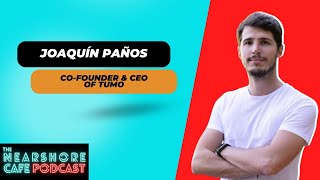
In this Nearshore Cafe podcast episode, host Brian Samson interviews Joaquin Panos, co‑founder of Tumo, about the rapidly evolving fintech landscape for Latin American freelancers and remote contractors. They map the six‑step customer journey—from talent sourcing and compliant hiring to payroll, last‑mile payments, cross‑border remittances, and tax compliance—highlighting how the shift toward US‑based contracting creates tax and regulatory headaches for workers. Panos explains why Argentina, Mexico, Colombia, Uruguay and other LATAM markets differ in salary gaps, currency volatility, and benefit structures, and how these dynamics drive demand for better solutions. Tumo’s product vision is presented as a “TurboTax for Latin American contractors,” a consumer‑focused web app (mobile‑friendly, WhatsApp‑supported) that automates tax filing and offers personalized support. The team adopts an Uber‑like rollout, starting with province‑level compliance in Argentina before expanding regionally. Early‑stage traction includes a small development team, manual processes, ~50 active users, a growing waitlist, and a focus on high‑quality service. Technical choices include React/Next.js front‑end, Java back‑end, AWS infrastructure, and future Python/ML for data scraping. Panos shares his background: a Berkeley Haas MBA, participation in Lean Launchpad, UC Launch, SkyDeck, and lessons from MercadoLibre’s culture. He also recounts his upbringing in Tierra del Fuego, personal food favorites, and language quirks. The conversation wraps with contact information for Tumo.
Chapters
Welcome everyone to another episode of the Nearshore Cafe podcast, season 2. We are very excited to have Joaquin Panos on the pod today. Joaquin is an expert on cross-border payments for freelancers and contractors. We're going to get into that in a second. So if you are interested in that space at all, you're working abroad, you've got team members abroad, You're gonna learn a lot today. Uh, before we do that, let me just give a quick thanks to our sponsor. That's Plug Technologies, plugg.tech. Plug is a great way to find, as we're talking about contractors with Joaquin, it's a great way to find those contractors, those software and tech contractors for growing companies in the US. But without further ado, Joaquin, thanks so much for joining us today.
Thank you very much, Brian. It's great to be here.
Excellent. Well, I gave a little teaser about Tumo, and that's maybe where I want to start. What a big space, what a growing space. You know, we started to see— it's not like outsourcing and offshoring haven't existed forever, but more than ever I've seen this space take off with solutions for payments and everything. So maybe just tell us a little about the problem space, period. You know, what is the problem that we're all trying to solve here?
Good. Well, it's great to start with that question. I think that when you look at this space in the remote ecosystem, and let's talk about the ecosystem, at least in Latin America in general, it's very similar, but what you see is that there are 6 steps in the customer journey when looking at it from the worker side. This does involve both parties like the hiring company and the worker side. But first you have, you could call it the talent sourcing. So you have a lot of businesses who are doing this, like matching the talent in Latin America with the companies in the US or Europe. Then you have the compliant hiring part, which is important. So after you find the talent, you have to make sure that this talent is hired compliantly. You have the payroll, which is the third step. So making sure that these, that these workers get paid correctly and giving a solution for the businesses that hire them. And then you have what we call the last mile, which is giving these workers a place where they can get paid. So it can be a digital wallet or a bank account. Most of the solutions are borderless, but what we see in Latin America is that there is a preference to get paid in US dollars and ideally with a bank account in the US. So now you have companies solving that. And then the last two are transferring the money abroad. So sending it, say, from the US to Argentina. And lastly, the tax part, which is, okay, I've done all this, I received my money in Argentina, but now I need to pay my taxes, how do I do that? And there's a lot of uncertainty over there. What we see is that there are now more and more solutions for the different parts of the customer journey. And we in particular in Tumo are focusing on that last mile. And right now starting with the very last part, which is the taxes, where we see that there's not a clear tech solution in general. And this is one of the main concerns of workers. And let me just develop a little bit more there. What we see is there's a huge shift that happened in the last few years of mostly people working full-time who now moved to this— working for full-time for a company, a local company, but now they have moved to working remotely for a company abroad, and they're hired as a contractor. And when they're hired as contractors, that's when most of these problems happen, because all of a sudden they now have to they care about everything and like an independent worker does and things that they didn't have to do before, such as paying taxes. Because in most cases in Latin America, companies do that, do those things for their workers, but now they have to do them themselves. And this is where there's a big problem and an unsolved problem.
Yeah, that makes sense. And speaking from my own experience working in Argentina personally and You know, it feels like there's kind of two leaps that a lot of these people are making. They're kind of skipping over working as a contractor for a domestic company in Argentina just because all the work is in the US. So they kind of go from, you know, there's a FIP, which is like the IRS, you know, of Argentina, and they've got their Aguinaldo and their taxes are all covered and their benefits and Yeah, you know, the downside of course is, you know, the, it's, it's very complicated. Like I remember trying to model this out once and like, you know, can we just use 38% or something as our placeholder for, you know, extra burden, extra employer burden? And they're like, no, no, no. Like every, there's so many different nuances, you know, you got to figure this out. So it's also complicated on the employer side. So I'd like to get into that part in a second. But just the employee side. Yeah, maybe talk about, you know, this big shift in people kind of leapfrogging the domestic contractor world and going straight to the US and why this is becoming a bigger problem every day.
Okay. I would say that as Latin American economies become more unstable, and specifically as the gap in salaries between Latin America and the US widens, and this is because salaries in the US are generally like getting higher, it's becoming more and more attractive for people who live in Latin America to work for companies abroad. And since now it's, we're having a lot of, uh, digitally native companies where from the get-go, they start hiring people abroad. This is becoming easier and just for people to find these jobs abroad. And Latin America has a huge advantage where the time zone is very favorable for companies in the US. And you have a high percentage of skilled labor professionals, a lot of professionals in the tech world. And high levels of English speakers. So all these helps for this shift and this transformation and just people starting to look for jobs abroad.
Yeah. Now you're from Argentina, which I've seen is almost like the perfect use case for this, where very volatile economy, very volatile currency. And a country that is just uniquely suited for the US market. How about the other countries in LATAM? And there's many. Are there others that, like, they're way behind or decades behind in this even being an issue for them? Is it similar in other places?
Yeah, good question. Definitely Argentina is the— you could call it the worst or the best example. Up to you. Uh, we have all the problems combined and multiplied by 10, uh, where inflation is a very bad thing. And that's why also people look for salaries in, uh, dollars, in US dollars, to be protected from inflation. But, um, these problems appear in other countries in, in different ways and in different levels, but Uh, what I was saying before about that gap, that salary gap widening, that is happening in all the countries. And that's why it's, it's just a, it's a trend that will continue to happen, uh, that it will, it will be more attractive to work for a company abroad. Then, um, some things will make it more or less appealing, such as the fact that people are hired as contractors when you work for a company abroad, then it's up to the worker to gauge how, um, how much or how favorable it is to maybe give up other benefits such as the equivalent of 401k, you know, prepaid medicine, uh, not having to do your taxes, those things that are solved when you work full-time for a company, for a local company. And that you again have to give up when you work for a company abroad. When you take the case of Argentina, because the, the gap, the salary gap is so huge, it's almost an easy answer. And with that, with the extra money that you get, you can pay whatever extra thing you need. But maybe when you take the case of Mexico, where salaries are already pretty high, well, it's, it's up to the worker.
Yeah. Yeah. And I think it's interesting you bring up Mexico in particular because I've seen more tie-in to like the full-time worker, the pension system. You know, no one wants to like leave that entirely because it's, it makes life a lot harder. Do you see that too? And maybe because of that, the total addressable market might be a little bit lower for Tumo in Mexico?
Yes, although the trend is, as I was saying, you will see more and more people, um, like move to, to this way of working. But what's interesting is Mexico is also now a place where a lot of startups are starting to settle there, and there's a lot of hiring from Mexico to other companies— I mean, other countries in the region. So you do see a lot now for instance, of Argentinian workers who live in Argentina but work for Mexican companies. It's also happening a lot with people who live in Colombia and, and are now starting to work for, uh, Mexican companies. So it's an interesting mix that we're getting where it's not just working for a company in the US or Europe. No, Mexico is also a, a country that's hiring a lot. And you— I'm starting to see Uruguay as well. As a place where companies are, you know, having their, like, they're settling there and hiring people.
So Joaquin, I wanna talk a little more about the product vision for TUMO. When you were concepting this, and even today as you're further along, is this a consumer app? It's really built for the freelancer, or maybe where does that business come into play with the product?
Perfect. So yes, we did, uh, think of this having the worker and the consumer in mind. Just, just to give more context, where what we're building is sort of a TurboTax for Latin American, uh, remote contractors and freelancers. So we take everything, we take care of everything that's tax related for these people. And we, we did think of it as a consumer app because Even though there are different possibilities of providing these through the companies and them as, you could say, channel, sales channel or marketing channel, the ones that really have the needs right now are the workers. Because as I was saying before, these independent workers or the way that they're hired, makes them have to be responsible for their own taxes. And a company cannot do the taxes for one of these workers because if they're hired as contractors and if the company gets involved too much, the hiring company, then they risk falling under misclassification, right? And there are a lot of potential issues that are tied with this. So it's very important to provide a very good service for the worker here. Really good UX and a good experience because the end user are the workers.
Yeah. And then just curious more about the product. Is this mobile first, mobile friendly? How did you guys think about that?
So it's mobile friendly. It's a website and we're using now a combination of tools. We're also using some WhatsApp to provide service and mostly to answer the different questions that users may have because, well, WhatsApp is very popular in all Latin America. And second, it's normal to have a lot of questions related to taxes in general and what's reported, what's not, what do we have to do? And one other thing that is important is that no one likes paying taxes. No one is happy paying taxes. So we have to make sure that this process is as smooth as possible for the people, easy to use. And one of those things is making it web-friendly and being able to access it from the browser because I'm not, I really wouldn't be willing to download an app just to pay my taxes. So the easier it is, the better.
Yeah. Now I wanted to, maybe go back to, uh, something I hit on earlier with, um, it's not a very clear— well, maybe take Argentina for example. Um, I didn't find it to be a very clear place, um, you know, like, yeah, registering a company and what to do. And so, um, I know where you're going. Yeah, so, so maybe I'll, I'll ask it, and then if I, uh, if I'm, uh, feel free to add more context. But, um, I imagine to build a software, you've got to be able to, you know, fit this into the rules and the tax rules and regulations of the country.
Yeah.
And for an ambiguous country, how did you go about doing that?
Good. No, that's a great question. In short, I would say that our approach is an Uber-like approach. And what I mean by this is, let's take the example of Uber. When they launch, they don't say like, hey, I'm going to launch in Spain. They say I'm going to launch in Madrid specifically, or in a certain area of Madrid. We are taking the same approach because what happens with independent workers, this applies to almost every country in Latin America. One of the good things is that there is a national tax regime or like, yeah, structure that is, that applies to no matter where you live in that specific country. It's the same regulation for independent workers. Same thing happens in other countries. But then you have like the localization part of the different states or provinces, as we call them here. So what we are doing now is We're just operating in Argentina right now. And what we're doing is providing our service for the country, but for specific provinces, making sure that everything is working correctly and that we get all the laws the right way and the tax regime, and then slowly expanding to other provinces and in the future, other countries. One of the important things is making sure that you are on top of everything and are like stay up to date with whatever change may happen. But what we, what we see is that companies are, are the ones that suffer more these changes because it's more frequent for companies than for independent workers. So this is, this is a positive thing, although there are changes all the time, but not as frequent.
Yeah, that makes a lot of sense. And I see a, I see a strong correlation, you know, with how the U.S., you know, like if you live in New York, you live in New York City, you're paying certain taxes or restaurant taxes and you don't do the same thing in Wyoming, which is a low tax state. And that makes a lot of sense. If you're in Ushuaia or Salta or wherever, you know, it's, it's a completely different thing.
Exactly.
Yeah. Just talk about Tumo, the company for a second. You know, where are you stage-wise? Tell us a little about the team, the traction. We'd love to hear more about that.
We are in the early stages of developing the product and testing several of these things with users. We started doing this, like working with Tumo with this product in mind earlier this year. We formed a team of developers and designers in late May, early June, and that's when we started with this. And what's interesting is that originally our idea included doing remittances as well. And as we started doing progress and testing and just like doing a lot of customer interviews and discovery, we found out two things. That on one side, the remittances and that transfer market is getting crowded with good solutions. And on the other side, no one wants to get into taxes and there are no good solutions for taxes. I think it has to do with the fact that it's not a sexy problem. No one wants to work doing taxes. And also the fact that regulations are complex. So that's when we decided to focus on just doing taxes. We started testing with users, giving the solution, this full solution for independent workers slash remote workers just 2 months ago. Now we are, we're close to hitting 50 users. We want to make sure that we don't want to grow too fast because we're still doing several things manually while we develop the product. And we want to make sure that we give a very, very good service because it's really important that if you are paying someone else to do your taxes, you have to feel that trust, right? And you want to make sure that you will not have a problem in the future. And this is a very important part for us, the quality of the service being on top of the users and whatever they need. So combining doing their taxes with Providing a good customer service is important, and that's why we're limiting the speed of growth. But we do see our waitlist growing a lot and generating a lot of interest. So it's good to get those signs of validation and traction.
Sure. Now, I spent some of my career in the fintech world, and getting the tech stack right, you know, is very important for that. It's got to be reliable. How did you think about the tech stack? And if you don't mind sharing, you know, some of the technologies you're using.
We're using the frontend is mostly React and Next.js. We're using a combination there. We're transitioning a bit more into Next. And for the backend, we're using Java because it's a very popular language for both to like in the fintech space and also to just in general, there are a lot of developers who are very, who have a lot of experience in Java. So those are the two main languages that we use. We use a lot of AWS services as well to get set up and to get everything running. And we are now preparing to do some scraping on different websites. I don't yet have an answer on what specific language we are going to use, but we are like, this is going to involve a lot of Python and machine learning as well.
That's great. Yeah, great choices obviously on AWS and Java, you know, and I'm sure investors and users care about reliability and so forth and that matters quite a bit.
Yeah, what I didn't say is that security here of course is a huge part and Java is very good for that.
That's absolutely correct. Yeah. I wanted to also talk a little more about your, your education, the, the MBA at Berkeley, you know, in particular, and tell us, you know, about your journey into that program and your experience.
Okay. So yeah, I started my MBA journey 2 years ago, a little bit over 2 years ago, August 2021. It was my first time moving abroad. So I had lived in Argentina my whole life until then. And I knew I have always worked in tech companies and technology involved in one way or another. I have always really liked tech in general, and I knew that I wanted to go to like Silicon Valley, be as close to Silicon Valley as I could to just get more in touch with these companies, with technology in general. And because I also know that I wanted to start my entrepreneurship road and just being there was excellent for that, close to VCs and other startups and all like that entrepreneurial spirit. So as I was saying, August 2021, I moved there, started classes in Berkeley Haas where I got my MBA. And I would say that from early on, I knew that it was the right place, the right people there. One of the things that there's in common among all the class, it's not a big class. It's just in my year it was 292 people, if I remember correctly. And the thing in common is that it's all really good people and they have a good heart. And that's what I have always valued the most. It's very kind people, very generous people, always willing to give you a hand with anything or just have a talk. And having that, those sort of classmates and being so open-minded just helped a lot with exploring different things. If I wanted to have a conversation with someone who worked in BC, I could do that. I could just send a Slack message and organize a coffee chat or something. Someone who had worked on a startup or who was planning to build a startup. And that also facilitated for me what happened next. I met one of my classmates was Ricky from Ecuador. He is one of the co-founders in Tumo. And we, in second semester, we decided to take a class together, which was called Lean Launchpad. And that's when we applied with the idea of Tumo. It was a little bit different, but we started, you know, pivoting, doing a lot of customer interviews, interviews, research, uh, just in general. We ended up just that class, after 4 months or so of classes, uh, with over 140 interviews to people, you know, in that space in general, who sent money, who were lawyers, who had, you know, some— something to do with the space, accountants, a little bit of everything. So that was, that was just fabulous. And After that class, I knew that this was what I wanted to work on in the future. So the remaining year, I, earlier this year, January 2023, we applied to UC Launch, which is a program, an incubator, and that's part of like the whole UC university that also helped us with Tumo. Then we got into Skydeck. Pad 13, which is like a UC Berkeley affiliated accelerator. Lots of good startups and entrepreneurs are coming out from there. So all of those things helped a lot and it was a great experience.
Sure. Yeah, I'll tilt my laptop for a second and we're in my UCLA Anderson. Yeah, so we're all part of the UC system together. Perfect. Yeah, Skydeck is an awesome incubator as well.
Yeah, yeah. And the whole UC university is just great. And in that UC Launch program, there were people from different universities, from UCLA as well. And it was just an amazing experience getting to know all of them, different backgrounds. Just great.
Yeah. And then I also wanted to ask about your time at MercadoLibre, which is really one of the most successful companies ever from Latin America. And What were some of the lessons or learnings that you took away from your time there?
Great. I think the culture is so important and the work that they did on the culture, they have this thing they call the Meli DNA, which are the 6 principles that everyone sort of has to follow or that that bonds people. And there are a couple that I really highlight that just following that made my job easier. And I think everyone's job easier. I could say that I sort of follow those principles already. And being like, being part of a company where those principles are one of the most important things just makes so like everything so much easier. One of those is what they call beta continuo, or continuous beta, which is like we're always iterating and trying things. The other one is competimos en equipo para ganar, which translates to we compete as a team to win. And those two things, I think, that make the fact not only that people are just motivated to work, but also I don't want to say motivated to make mistakes, but the fact that, uh, you may— if you make a mistake but with a really good intention behind, and just like making sure that with, with the customer in mind, which is also like one of the principles, uh, and with like making— like if it's, you know, with the motivation behind that you really want to improve things and make it easier for the user and just provide the user of better experience. I think all those things combined just make your work easier. You do end up working more, but you all work as a team and just like the results end up being visible. Amazing culture, amazing team in general. The best professionals I have ever worked with were in MercadoLibre. So yeah, just amazing experience and also a great, you could say, school for me to learn.
Yeah, yeah, that's awesome. That's awesome. Um, tell us more about, um, your upbringing. So we've talked to a lot of people from Buenos Aires, the big city, um, but you're from, uh, you're from down south. Uh, tell us more about, uh, exactly where you're from and what that was like, uh, growing up so, so close to the ice.
Yeah, uh, well, so I grew up in Tierra del Fuego, which is the southernmost part of the continent. It's a little island that's right above Antarctica, and I grew up there in a city called Rio Grande. So there are two— there are two cities, one that's called Ushuaia, that's the most popular one, that's where the different, uh, ships go and where the tourists go. There's ski center, you know, a little bit of everything. And it's known as the, like, the southernmost city in the world. It's also known as the end of the world. And the city that I grew up in is just like, I think it's like 150 miles away from that one, a 2-hour drive more or less. And it's a little bit up north and I think it was so different to living in a large city. The population back then when I grew up, it was around 50,000 people. So one of the things is that, you know, everyone knows you. It happened mostly with my parents, right? So I would be like in the streets and they would ask me like, hey, are you like, your father's son, or your mother's like, I know your dad, or whatever. Uh, and it was a, it was a really good experience. At the same time, growing up, I always knew that that was not where I was going to stay, because it's, it's sort of typical that, uh, the kids as they grow up, they know that they're going to go to the university elsewhere in Argentina. That was my case. So I was sort of prepared all along to leave, leave the city and then go to Buenos Aires. But one of the, one of the things that I think was interesting is that I, I knew that I was going to leave and that just made it easier, like leaving my parents' house because that's what I knew that was going to happen. But at the same time, I felt this, like, when I moved here to Buenos Aires, which is where I'm based now, I knew that I had to really work hard and study a lot and then, like, get a job and just be responsible in general. So for the first couple of years when I moved here, I had sort of like this intensive course on growing up and becoming, becoming an adult. Uh, it was different from most of my classmates from university who were still living with their parents. Of course, not everyone, uh, but it had its— it had some benefits, some, some downsides. Uh, downsides were that I had to like do the chores and go to the supermarket, pay the bills, whatever, in my apartment. The, the one of the positive things was that my apartment was close to the, to the college and to the university, so most of my friends would, like, you know, come to my apartment after that. We would study together, we would party together, and, like, lots of stories happening in my apartment because I was the one who was living by myself. I did live with my brother for some years, but we were in a similar situation, so that was fun.
Yeah. One topic we hit on with a lot of our guests is food. And with, with your, your experience abroad in Berkeley and then also growing up, if anyone were to visit Ushuaia or your hometown, just give us like one restaurant recommendation that, that people have to check out.
Good. If people go down south, specifically to Ushuaia, they definitely have to try the king crab. Um, I don't think I recommend any restaurant in particular. Just like, if you see that there's king crab in that restaurant, just go in and try it because it's always really good and you don't find that elsewhere in the country. It's only down there in that island. So definitely get king crab.
Yeah. And then how about your time in, uh, in the Bay Area? Um, any particular types of food or restaurants that stand out for you?
I became a huge fan of bubble tea. So there's in Berkeley, I think in the whole Bay Area in general, there's a lot of bubble tea places everywhere. And you don't get those here in Argentina. I saw a few now, I think 2 new ones in Buenos Aires in the last couple of years. Whereas in Berkeley, you have one every 2, 3 blocks maybe. And I just, I I think I visited at least 20 different bubble tea places and I loved it. I became a huge fan. So that's a must for me.
In another conversation, we'll have to talk more about that. I almost became an investor in a boba tea franchise. So for another day, we'll have to talk about that. But I did do a lot.
What's the correct way of saying it? Is it bubble tea or boba tea?
Like, either one, honestly, boba or bubble. Either one. Yeah. But they both come with, you know, the little, the little tapioca balls. Yeah.
So good.
Yeah. But yeah, we'll have to talk about that some other time. I did a lot of customer interviews with people that drink a lot of boba tea. So it was, it was funny.
I would be your client.
Absolutely. Well, maybe, maybe there's a, there's an underserved market in Argentina right now for boba tea. Who knows?
I would love to build something that's bubble tea related. Yeah, trust me. That's great.
And then one final question for you is about language. With English being your second language, we talk to a lot of people from the States, like their favorite Spanish word. How about English? Is there a favorite phrase or word that you picked up from your time in the States?
Tough one. I don't know. I'm not sure. I think I got this "um" a lot. I didn't used to say this. It just stuck with me. It's not a good thing, but I do say it a lot now. And let me see if there's something else. I'm really not sure.
That's okay.
Yeah.
Well, I will say that "entonces" is a much more pleasant way of kind of like breaking the conversation. So I wish English had something like entonces, but we just have um and ah and like and stuff.
Well, I think, you know what, I had one public speaking class in Berkeley and I realized there, and one of the feedback that I was given by my classmates and the professor is that I say so a lot the same way I would use entonces in Spanish. So I try to, I use that as a kind of like to begin the sentence. And what I've been practicing is saying it less often because it was not good. I would say a lot.
Yeah. Yeah. Well, I really enjoyed this conversation today. This is, this is fantastic. Joaquin, where can people that are interested in Tumo, where can they find it?
They can go to tumo.app, the website. Or they can also find us on LinkedIn as Tumo. We're now getting a lot of people to sign up to the waitlist. So that's where they can find the link to the waitlist. And if you feel that you want to talk directly to me and ask some questions, I'm always open to have any conversation, see if I can help you in any way. So you can also look me up on LinkedIn. And I'll be happy to, yeah, set up a meeting or just chat, whatever you need.
Fantastic. Well, let me thank our sponsor one more time. That's Plug Technologies, plugg.tech. Great way to find software developers all over Latin America. Thanks again, Joaquin. Great to see you.
Thank you very much for having me. It was very, like, so much fun, and I hope you will stay in touch.
Absolutely. Until next time, we'll see you all on the Nearshore Cafe podcast.
More from Brian

From BPO Agent to Client Experience Manager: Ana Rodriguez on Nicaragua's Nearshore Talent

From BPO Agent to Client Experience Manager: Ana Rodriguez on Nicaragua's Nearshore Talent

Building Sales Teams in Mexico: Mario Oliveros Figueroa on LATAM Talent & Cross-Border Selling

From Automation Engineer to Data Platform: Victor Fernandes on Brazil Tech Talent

H1B Crackdown & The Nearshore Shift: Robert Bouchard (H1B Guy) on LATAM Talent | 🎙 TNC

Nearshoring Yourself; step by step to building an expat life in Mexico |🎙 The Nearshore Cafe Podcast

Scaling high-performing teams in Costa Rica staffing legend Doug Firestone on growing to 225 LATAM

How to Scale in LATAM? Navigating Currency, Taxes, and Labor Laws | 🎙 The Nearshore Cafe Podcast



AI in LATAM: How to Break Into Mexico’s Tech Market |🎙The Nearshore Cafe Podcast