🏆 How a VP of Engineering leverages nearshore developers? |🎙 The Nearshore Cafe Podcast
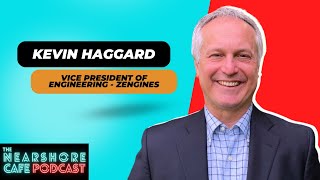
Kevin Haggard, VP of Engineering at Zengens, discusses hiring and managing nearshore developers across India, Jordan, Ukraine, and Latin America. He prioritizes soft skills over whiteboard coding, emphasizes time-zone alignment for early-stage companies, and stresses treating remote engineers as full employees with clear communication and personal relationships.
Questions this video answers
Kevin explains that overlapping work hours enable quick, impromptu meetings and real‑time Slack huddles, which are crucial for an early‑stage startup to hit milestones. While asynchronous communication is possible, having the majority of the day in the same time zone reduces delays and accelerates decision‑making.
Chapters
Welcome everyone to another episode of The Nearshore Cafe podcast. I'm Brian Samson, your host. We're sponsored by Plug Technologies, great way to connect software developers from Latin America to growing US companies. We've got a treat today. If you're in a hiring position with a US company, engineering leader, product leader, you're going to want to listen. We've got a real life example of how someone went through this, uh, and they evaluated and hired nearshore team members. Uh, we're lucky to have Kevin Haggard on the show. Kevin's the VP of Engineering for Zengens. Uh, welcome to the show, Kevin.
Thank you, excited to be here.
Uh, Zengens, let's start there. Uh, what is it? What does it do? Who's it for? Can you tell us more?
Yeah, sure. So we're very early stage startup, we're pre-Series A, What Zengin focuses on is data conversion. So trying to help people or companies move data from— you can think of it like moving from large mainframe systems, out-of-date systems to more modern systems. And so we're trying to help them with that data conversion, also helping customers, our clients move their customers in an onboarding situation where they're trying to bring data onto their platform from one of their from one of their clients and helping them do that. So we're trying to automate that process as much as possible, leveraging machine learning to help with that. So it's a big problem. A lot, it's, companies spend billions of dollars on this every year, especially like large financial institutions. That's typically who we're targeting, but we're not limited to just that. That's kind of where we've been focusing at first, but we'll expand beyond that as the company gets older and more mature.
Yeah. And tell us a little more about how you came into Zengence. How did that story happen?
Yeah, I knew one of the co-founders. I was taking a break from spending some time with my kids and just wanted to take a little break from work. I hadn't done that before in my career, so I was excited to do it. And then, and the co-founder and I had worked at a previous company before and we just stayed in touch and it, yeah, like he was telling me about Zengence all along. And when I decided to take my break and as I started to start, when I started looking, it's like, hey, are you interested in joining us? It ended up being a good fit. And so, uh, met with the team, liked everyone, and they liked me. So I joined Zingence a little over a year ago.
That's great. And, and your title is VP of Engineering, and there's semantics, I think, across the industry of, you know, uh, you ask 10 VPs of Engineering what they do, you may get 10 different answers. What does that mean for you today?
Yeah, so for me, I am responsible for everything, uh, technology within the company. So from from securing our assets, infrastructure, IT, our devices, to the delivery of the software. And I have a really good— some really good partners, like our VP of product and design that I work with. So he is driving a lot of the requirements and designs with his group. And then my team is responsible for making sure we deliver what we say we're going to do. And and trying to make it work and keep it up and running as well.
Yeah. And what does your, your team look like today?
Yeah. So we're a mix of, we're about 15 people. We're a mix of data scientists, full-stack engineers, both backend, frontend, and then a couple of people on infrastructure, like operations. They all do a little more than that, but like your typical SRE team. Yeah, but a little more than that just because of the size of where we are right now. Sure. But as we grow, they'll kind of more formalize and wear probably less hats, but not for a while.
Yeah. Yeah. The old scale versus scope question. Yeah. Yeah. And would you mind sharing a little more about what the tech stack looks like?
Yeah. So we are— majority of the tech stack is backend is Python, Postgres, MySQL on our, on our databases. We use Redis a lot for messaging and for caching. And then we've got, we're switching to React for our frontend away from Vue, mostly because of just the availability of people that are available, obviously TypeScript as well. And then, and then Next.js as well. Yeah.
Okay. Okay, great. And if you don't mind, a little bit about some of the other places you've been a VP of engineering at, can you give us some, sense of the scope and the scale and size?
Yeah. Yeah. So I was VP of engineering at RetailMeNot. We were— this was thinking of like online, it was basically online coupons helping people try to save money.
Yeah.
There, I think at one point had somewhere close to 150 people in the org reporting to me, bunch of various teams. So definitely much different scale than we are today at Syngens. And it was— had its own challenges. One of the teams I led there was like an incubation team. So we were trying to help the company find the next big thing that we should pursue and had some good successes. We had a lot of failures, as you would expect. Really fun. We made a few acquisitions that I led when we integrated them into the company as well. So that was and we— and that was a global team as well. Most of the people were in Austin, but we had people all over, especially like Eastern Europe and Phoenix, where some of like hubs of hub spots for where we had people.
Okay.
After that, Security Scorecard, which is a security company that focuses on giving a public profile rating, uh, like help you understand your cybersecurity posture. Think of like if you're a vendor, uh, or if you're hiring some vendors and you want to know what their security posture is, there's a to have an outside point of view of the security posture of that company and basically give you an A to F type rating and help you identify, understand some of the issues that they were facing as well. So there we had— we're probably— I can't remember the exact size we were. We're probably between 50 to 60 engineers Argentina, uh, let's see, Czech Republic. Um, I think we had some other— mostly Argentina. We had people in a few other locations too. And then, um, all across the US. We were, uh, we were a fully remote company. Well, not fully remote. We were a remote company, uh, with a headquarter in New York, uh, before the pandemic. So we were— majority of us were working remotely, uh, okay, at that time. Yeah.
Yeah. Interesting.
And then, yeah, then after that, SimSpace, another cybersecurity company. Okay. And that was thinking of like cybersecurity training, helping people prepare for attacks. And a lot of it was DOD-related engagements, or we were delivering software to them. And again, teams kind of all over, but definitely all over the US, then heavily in Peru as well.
Oh, interesting. Okay. Okay. So I think it's fair to say you've done a little bit of hiring in your career.
Yes, definitely. Definitely.
Yeah. Well, maybe we'll start with your US hiring experience. Can you talk about maybe some of the— you don't have to name names, but some of the better engineers that you've hired? What does that look like to you? What are you usually looking for? Into these types of people?
Yeah. So I, when I'm, when I'm looking to hire people, it, it kind of depends on the level too. You know, if, if we're going for someone with a lot more senior, seniority and they're gonna be driving a lot of the work, I look for people who can talk through how they delivered the work that they've done. I'm really interested in the interpersonal skills, like how well can they mentor and help others? Because we hear this, you know, about 10x engineers. I'm not a big fan of or believe in that, but there are those people who can enable others to deliver a lot more. And that's usually when I'm looking at the senior people, how are they enabling others to be more productive, get things done? You know, besides just the technical skills, which are really— those are extremely important, but those soft skills are just as important. Because if you— if they can't help the rest of the team grow and deliver, then um, it just typically aren't as successful. So I look for people that have, uh, really those type of soft skills. And there's been some really good, uh, I've been fortunate to work with some really strong engineers, um, that I hope I will get the opportunity to work with again. Um, yeah, some of them I've worked with a couple of times, um, but hopefully find a third and fourth time to get to do that as well. Yeah. On the more junior side, uh, like when their people are like earlier in their career, I'm looking for the hunger besides the technical skills. The technical skills are really important too, but I've hired people with English degrees who've gone into tech and computer science degrees from some of the best tech schools in the US. And one thing, the ones that do really well just have a passion for learning and kind of just go-get-it attitude, whereas like they're not waiting for you to tell them everything they have to do to be able to do work. They are good out there, discover that you can just tell that they soak up like a sponge, just soaking up as much information and trying things, will break things, but, and take feedback really well, but then we'll talk to others about how to do things. And so again, coming back to the soft skills are extremely important around like communication and being able to ask questions. But yeah, for the, I look for I really try to figure out a way in during the interview process to see what, you know, how they react and like what, what those skills are going to be like. I try to stay away from coding exercises in terms of whiteboarding sessions or online coding exercises. I don't think those work well for— I mean, they do for some people, but not for everyone. It's better to give people a choice. Often what I like to do is say, bring us an application that— or some code that you've written walk us through it, tell us about it. You can tell them a lot. You can learn a lot about what people are passionate about and how well they know, um, the tech if they walk through their own code.
Yeah, it's really interesting what you said about, uh, your hiring process today. Did you always feel that way, or is this—
oh no, yeah, kind of switch—
yeah, switch your, your thought process on that?
Yeah, it really came, I think, when I was at, uh, retelling now, it really sank in. We were hiring so many people and we had interviewing days where it was like whiteboarding sessions and just people walking through tons of code. And you could tell that for some people, we knew they were probably really good engineers, but they just weren't doing well on that scenario. So we started thinking like, what else could we do? So we started doing take-home exercises and that people come back, which are good, but you're also cutting into people, you know, they have a job and it's a hot market, especially going back to like, you know, like 2012 to, you know, up through the pandemic was a hot market, was hard to hire people. So you had to be, you had to make it to where it wasn't too much of a burden for people to do the interviews as well. And so I had to start changing it. And then, you know, I think recently with a lot of the layoffs that have happened in the tech market just being down somewhat, people have have a lot of companies have started putting those barriers back in place. Um, I'm not a huge fan of that. I actually think it's still important to like, how can you make the candidate experience as good as possible? Because if it's good for them, it's actually probably good for you as a hiring manager. So I've really tried to change away from giving, uh, questions around like theoretical stuff that they could be doing here. Um, but like, and During the interviews, we'll talk about what we do, and then we'll ask them when they— when we get to the coding part to, uh, or like going through their tech, try to give them something if they can figure out a way to relate the work that they've done to what we're trying to do. Um, and in this instance, that's kind of hard because a lot of people have done data conversions, but in other aspects, people have, uh, in like other industries or other companies have done something similar, and they can show examples of that. So, but yeah, I think a that shift really happened for me a few years ago of trying to make it easier and make it a better candidate experience for doing the interview. Even in this market, I still think it's— that's important to do.
Yeah, especially for the really great talent. You know, experience matters and you're always looking for any differentiator you can have, you know, competitive advantage. Yeah. How do you think about the the steps in the process, you know, about how many times do you need to, do you or your team need to touch that engineer to feel like you've got all the information that you need?
Yeah, typically I'd say about 4 people, 4 to 5 is the max. And, but it's, every interview is different in terms of what we're focusing on. We try to make sure we're not covering the same topics. And, and then after that, it's— I like to ask them if, you know, if they've learned anything in the interview, like, or people heard about people that they want to also meet. But you typically know within 4 to 5. I will always do the first screen and get us to get a feel of like, do we progress on or not? And then, and if we do, then I'll introduce them to the group and then they'll meet, then they'll go and meet everyone else.
Yeah. When you're spending your time the way you want to as a VP of engineering, how much of that time is spent on recruiting?
Oh, yeah, I would say the majority of it. When I'm able, especially when we're hiring a lot. I mean, it's interesting, we're not hiring a lot right now, so I'm not spending a ton of time there. But again, when We're in a— when you're in a growth mode, I'd say the majority of it is spent there. And that's where, as a VP of engineering, you got to have really good leaders that can help support running the day-to-day. And I still have to be there for the critical delivery or critical issues that are happening. But I think the majority of it has to be recruiting. Also important to that, it's not just— when I think about recruiting, it's not just recruiting for the people coming in. It's also like, what am I doing to recruit the people that are here to keep them at the company? Because the cost of turning them, leaving is expensive to replace. So, um, yeah, I would, you know, I would say probably somewhere 60 to 70% of my time would be spent there.
When, when was the— you know, you had mentioned earlier, um, a few different countries that you've worked with.
Yeah.
What was your first experience of working with engineers outside the U.S.? Can you talk more about that?
Yeah, um, that's probably when I was at Deloitte, um, I, uh, early 2000s, we had some team members in India. And, um, yeah, that was probably the first time. And, but I, there was more interfacing of like I was just handing off work. I wasn't really, uh, I wasn't in a manager role, so I wasn't, you know, it was really just kind of helping them, um, get their work done, uh, checking work, things like that. And then, but I'd say probably manager from like where I really felt like I got close to the team and really got to know them. So I was at Weight Watchers very early in my career, early 2000s. We were the dot-com part of Weight Watchers and it was like a startup within the bigger company. Well, we actually were a separate company at the time, but we were doing the digital experience and I was working with the team in Jordan. Uh, it was phenomenal experience. I was surprised because I'd never heard anyone outsourcing to, uh, to Jordan.
Yeah.
And, uh, and but it was, it was at that time, I mean, so many companies are trying to outsource. It was actually really a great, uh, spot for us because there's not— weren't very many other players in the market. So we weren't facing competition of like we were like you would in India at the time where, yeah, you know, company where so many companies were outsourcing at the time, they would scoop up thousands of people. And so for us to retain people was almost impossible. But by going to Jordan, uh, we weren't facing that same competition. We were getting phenomenal talent too. Yeah. So it was, uh, that was really a fun and interesting experience. And plus, just getting to spend time in the country was really fascinating. I learned a ton just to, you know, about Jordan and getting to see Petra. I got to go there 2 or 3 times with the team. It was a really, really great experience. So I'd say, you know, I think since then I got a little, you know, I think if I can travel to the countries where people I'm working with, that gets me even more excited.
Yeah, that's awesome. And then what led you over to Eastern Europe?
Yeah, so we were, I think it was Was it— I think it was Retell Me Not when the first time we were doing work there, um, in the Ukraine. And, um, just, uh, we needed people that were really good at, um, like advanced logic or like algorithms. And it's interesting, in Eastern Europe, the math— um, they're— the way they teach math and, uh, computer science is just, uh, very, uh it's just really strong. And as people coming out of there, like, really good backend engineers. And yeah, we had really great success with the team there and really good people, good, you know, good English skills as well. So we didn't have really a lot of communication barriers. Really, the time zone was the biggest challenge that we had, but that wasn't too bad. We had a few hours of overlap every day, so that wasn't really much of a problem. But that was also a really great experience to be able to spend some time there. And then I've gone back to Eastern Europe, like the Czech Republic with Security Scorecard. That was really good talent as well, both on front end and back end, which was— I hadn't done front end in Eastern Europe before, but found some really good people there doing the work. Again, time zones were a challenge, but, you know, still quite a bit of overlap before, uh, yeah, too big of an issue.
Yeah. When you think about the intentionality, you know, of, uh, India, Jordan, Ukraine, uh, Czech, um, was it, uh, originally a follow-the-sun operation, or you were just looking for like the best engineers you could find, or yeah, costs, you know? What were some of the original intentions for those?
Yeah, we were, um We weren't really looking at follow the, uh, follow the side. We were really kind of looking, uh, just where we made— somebody had had experience working in that market before or in that area, um, looking for a really good talent pool and, uh, and just, and where people were available. And, um, and also, um, kind of the people that we're, that we're going to be working with and from a leadership perspective, uh, and for managing the day-to-day companies or outsourcing companies that had good leadership in place to help support and grow the people there as well. Yeah, you know, and I think it's kind of from my various stages of companies, like, as you're more mature, um, like, uh, you know, like a 200 to 300— 200-plus company, you have a lot more processes in place. You probably have a, you know, your HR department that can help. Um, you can afford to have these other, um, the, the, your partners manage a lot of the day-to-day for you because you're focused on your, your full-time staff. But in like early stages, like me, I like to be much more hands-on, um, with the, the team that I'm working with, almost where I'm acting like the, the hiring manager for them because I'm treating them like that. I'm doing one-on-ones with them, getting to know them because they're so, we're so small. They're a critical part to our delivery. Like, we can't have a misstep. But at the larger companies, there's a, you know, you have more number or more people. So, you know, you need local leaders who can do the touch points with them and get to know them better and, and support them. So, um, I think that's, you know, I look at it differently now, uh, the size, based on the size of company I am. But then, you know, another company in the future, I, you know, or as Engine grows, I would look at it differently depending on what stage of the company we are.
Yeah. Do you tend to work in an agile sprint stand-up type of style?
Yeah, we follow more of a Kanban approach, and, but we'll put dates and objectives out of like what we were hoping to hit, and that's kind of help us around like prioritizing. If we're trying to go by this date, what do we need to cut out? What do we really need to focus on? Just kind of help just clarity of what we're trying to deliver. But it is definitely agile, maybe a little chaos at sometimes, just as, you know, early stage, you're having to react to things. So that's, you know, part of it.
Sure, yeah. And what led you to Latin America? Can you remember the first time you hired out there?
Yeah, so again, back at RetailMeNot, we were looking at, we wanted to find someone that was in similar time zones. And that we could work with. We were, we just wanted more overlap, you know, just during the day, like when you're instant messaging back and forth, like on Slack, you want to be able to just be able to chat or say, hey, let's get together and chat about something, not have to wait till the next day. So we, we started, we looked in Argentina, we found a good partner there, started working with them, but we did in a limited capacity. It wasn't until We probably had 10 people that were working with us at one point on a specific area. That only lasted for a couple years, not because of their capability, just because of the way the business was growing. We needed to trim staff, so we cut there first. And then we— then Security Scorecard, we had a good portion of the team in Argentina because of one of the early engineers on the team was from there and then was able to hire a lot through his network and, uh, and grow that. So, um, I think we had 20-something people there at one point. Yeah, um, really good, really good team members. Um, so yeah, I think the first time was probably— yeah, I think it was becoming— not when I went into, um, Argentina. And that took a while too because we looked in, um, let's see, I think we were looking in Honduras Some of the other Latin American countries, we were having a lot of, we just had a lot of missteps. We couldn't find, like, we were really, we were really struggling to find good technical skills, good communication skills. But I mean, I would say the technical skills just weren't where we were hoping to find. And it's, you know, part of that's we were, not to say that those skills don't exist there, we just weren't able to find the the partnership people there that we needed, but we were able to find it in Argentina at the time.
Yeah. Argentina is a little more mature. They export a lot of software services. A lot of people do that. And I'm excited to ask you about the travel part because you've traveled a lot of these places. Tell us about your first time visiting Argentina and your thoughts.
Yeah, loved it. Um, yeah, I, I haven't been back a long time. I want to, I, I want to take my wife and the kids. They've heard, heard me talk about a lot. I've had some of them come to visit here. My family's met them, so they're anxious to go. Um, uh, food and the people are great. It's, uh, especially the food, the wine and the steaks. Like, I could— I would be a very happy person. I am a very happy person when I'm eating there. And so, uh, definitely hope to get back. And it's a, it's a beautiful country too, so Buenos Aires is very, uh, has a very European feel to it in terms of like if you're used to like, um, you've been to Europe and you've traveled to European cities, the architecture and stuff is very similar to that. Um, so it's, uh, you know, it's, it's beautiful. I really like it. Um, yeah, there's some beautiful parts to travel outside of the country or outside of the city as well. Um, so I hope to go back and do more there. I would love to explore Patagonia and Mendoza more. So eat and drink my way through Argentina would be great.
Yeah. Well, if you ever make it to Mendoza or Patagonia, those are some of my favorites.
Happy to share some travel tips with you. Yeah.
You've really hit a lot on communication plus technical skills. So I guess what Argentina has is the overlap over some of the other countries. But can you talk a little more specifically about any patterns or things you've seen, especially from a communication standpoint when you're working with Argentina?
Yeah, I think it varies. You'll find some people that are very shy or very— English is a second language. And so you've got to find some people that feel comfortable communicating. It also depends on the size of the team. So when there, when we had a larger team, we didn't need everyone to have— be really strong in English, um, because we could, we could rely on some of the, uh, the other people to do— to be more effective in that. But the leaders, uh, had to have really good communication skills, had to be able to travel and spend time with us, same for going to there. Um, and so I think the patterns are Um, yeah, I think not everyone is comfortable or, uh, as skilled as in speaking. And so, um, we— I think that good at written communication, um, you got to be a little slower too, and like how you're communicating things. So don't be, you know, I think, uh, after living in New York for 13 years, I can be very— at different times I can be very rapid-fire in how I'm talking. Uh, yeah, then I'm from Texas originally, so I can be very laid back as well. But tend to— with business, I can just rapid-fire and I make sure I don't do that. Be very articulate in what I'm saying and give them time to think about what we're doing and not, you know, just not expect an immediate response or just a constant dialogue back and forth. There needs to be pauses in there. That's why written communication is really good. And if you see that from them, I feel really confident that they're going to be a great hire, you know, with the other skills that are there too. But yeah, you know, I think I don't find, like, I will say I don't know if in Argentina that the skill set I've seen or the pattern has been different there than I have seen in other countries. It's more, I think, just that second language part of just like, where are they at that level? And my Spanish is terrible, so I have to rely on them to do the heavy lifting for that, unfortunately.
Yeah. Is there anything else that sometimes people talk about the passion of the country there and the people, or in my experience, I've seen a lot more pushback sometimes. Like if they don't agree with the technical decisions or the trade-offs, you might get that. And sometimes you want that, sometimes you don't. Yeah. Can you talk more about that?
Yeah, definitely. Um, it's a really good point. I'm glad you brought that up. Um, yeah, definitely in some, some places you'll get the, I'm just, you tell me what you want me to do, I'll go do it. Uh, but there are the others that really kind of want to have a discussion about the way it's being implemented. Um, I would say, uh, in my experience, Eastern Europe, Argentina, um, were really good about pushing back or asking questions, um, and, um, and challenging, uh, and I would say Ireland as well, um, and the, um, and then in other countries like India and Jordan, um, I would say those tend to— I mean, just, this is— I hate being so, uh, not to stereotype, but it, you know, I'd say it's not fair to everyone because not everybody's like that, of course.
Yeah.
But the, uh, you know, there are a lot of it's like waiting to be, or not waiting, but we'll be, you tell them what you want to go do and they'll do it and they'll usually do it very well. Um, but they're not necessarily questioning it. And I think that, you know, depends on what people are looking for, uh, to decide what's best fit for them. Um, and I personally like the, the challenge. I like people pushing back and asking, um, you know, not always agreeing with the way to do it. Um, just my style for as a manager. But in other times, you just kind of need people to follow, do what I tell you to do, don't question it, get it done type thing. But you can find that anywhere.
Yeah, sure.
Both personality types exist.
Yeah. And I'm sure we'll have quite a few software engineering leaders, you know, listening to the show. And if you have any advice for them on like how stage of your company might matter in, um, uh, you know, this is exactly what I want, just do it, versus, you know, I don't know, maybe earlier stage you might want some more collaboration and pushback. Do you have, do you have an opinion on that?
Yeah, I mean, I, my opinion is always get the people who go, get people who are going to challenge, even if, um, or try to get them to challenge, um, or ask questions, feel comfortable with that. That's just my opinion, um, at all stages of a company. I definitely think it's earlier— it's important at the earlier stages because you're trying to— well, people could see that different ways. Like, I see it that way because you're, you're young in what you're doing. You want to make sure you're doing it right. You want to hear various opinions. And also at the earlier stages, I like to go for more senior people, which is not always beneficial to the company because of cost, but Uh, I think the more— it's— I think it's a fallacy that just because you're hiring cheaper labor that you're going— or like younger people that are less experienced— that you're saving the company money. You actually could be spending more because of delivery time, um, not understanding trade-offs that are being made. So I actually like to emphasize fewer hires, more senior people in the earlier stages because it— I think it, uh, improves the, uh, our chances of getting it right. Excuse me. So in, in the later stages, I think then you're looking for that more mix of skill sets. You need your more senior people, but you also need the mix of people who are learning and being mentored and growing in their career because of the evolution of— like, it's a longer, more stable company. You're going to have people there for multiple years. You need to create that kind of pyramid or that level.
Sure.
And give the people that are more senior chances to mentor others. So I, I try to think about staffing or like where I go for that. But you do have to— and then weigh in the cost factor to it. So certain areas in Latin America are more affordable, like, or in South America than others. And same with like Eastern Europe. There was at one point we were Eastern European salaries weren't too different from salaries in the US. Um, so it wasn't about there, you know, it was about just getting great people wherever you happen to be. Um, it wasn't— we were outsourcing from a cost perspective. Um, it was just we were trying to find the best staff we could. Um, and then if you're looking— but if you're having to be cost conscious, you have to look at what are your— what those countries— what the, what the average salary is for those. And so And you can get senior people in those other countries, but the pool may not be as big as in some of the others. Like in Argentina, there's a big pool. It's a much larger population than if you were trying to go to, you know, like a smaller, just a smaller country like Honduras or something like that.
Yeah. It makes me think about your earlier point about maybe fishing where others aren't. Like when you were in Jordan, you had less competition. There's great people everywhere. You know, are you, are you just, are you fishing in San Francisco with everybody else, or, you know, did you find some arbitrage? Yeah, yeah, yeah.
Um, I think it's harder to do that now because of the, uh, well, at least it was recently because of the pandemic and then everybody working remotely. Um, with a lot of companies forcing or pushing to go back into the office, that makes it easier for companies like us that are fully remote to get back to that and, uh, and find talent in those areas that others wouldn't maybe go pursue. Yeah.
And then Peru has come up.
Yeah.
We don't want to make this only about Argentina.
Yeah.
How did you stumble into Peru? You know, Mexico and Argentina seem to be on the— and Colombia seem to be on the more commonly used nearshoring countries. Peru is a little less common. So we'd love to hear the story around that.
Yeah. So Security Scorecard, when I was working there, there was already a relationship established there. And it was specifically because of the type of tech we were doing and the The company we were working with had a lot of experience in functional programming, a specific language that we were looking for, and had really good staff. And we were finding just as we were expanding our tech stack, getting out of that, there were a lot of other people within Peru that were meeting some of the needs that we had. So we got excited about that and kept recruiting and expanding there. And I've been to Peru on vacation for myself, not unfortunately with business. And it's also phenomenal country to visit and such a diverse geography. It's really cool to get to visit there. Coming back to where I like to go travel if I can elsewhere stay. But anyway, Peru didn't work out that way for me. I just was fortunate enough to travel there earlier, but I would love to get a chance to go back. But good English skills. Technical skills were, I just didn't know what to expect and been very impressed with the people that we've had there. And both now that we're working, we work with you guys on as Zingens, we are, you know, we've hired a couple of people there and they've been doing a fantastic job. And so we just keep finding them really good talent, good diverse talent too around different tech stacks. Been pretty, yeah, I think it's not a, it wasn't a place that was on my radar a few years ago, but like now when I think about it or like when I think about where I want to, if I want to build a developer hub in a specific area, especially like if we're going to try to bring people together occasionally, we do, you know, remote, we want to get together periodically as we expand more in our hiring. We'll hire in the US, but we'll also hire more in Peru. But at some point we'll probably all meet up in Lima and just somewhere central for them to be able to get to meet. But yeah, talent there has been really great. I think this is true with any country. The largest thing, I mean, I think one of the hardest considerations is figuring out hardware situation. So unfortunately our application requires pretty hefty machines, like a lot of RAM and And so it's not always easy to get the latest and greatest into the countries. And so you have to work with them to plan for that and just take a little longer lead times and think about the cost of that too. So that's probably been the biggest challenge for that. Actually, that is the biggest challenge. But outside of that, like technical skills, communication, at least with the people I've worked with, have been there. Really been really good, on par with what I've seen in other countries as well.
Have you seen, um, uh, the challenge and, um, challenging trade-offs, challenging, uh, that, that you, that you might see in other places too?
You know, um, you know, I think, I think the, uh, I'm still learning. I think I'm still learning a lot about Peru. I think there were, you know, kind of coming back to mixed personality or the types of personality types. I've seen both there, like people who are just do what you want, they'll get it done. Then there's the other of, hey, I'll question and challenge you. And I think that kind of has with seniority and comfort level. And so that part's been good. I think what has been really beneficial to us is the cost, the labor market there is, the cost of labor is much better for us than, or than for like some of the other countries, like in Argentina. Argentina is just a lot more expensive, and I think the cost of living there is much higher than it is, and especially with inflation, than it is in Peru. So that is, you know, I haven't— I don't think I've really run into challenges from staffing or like the type of skill sets and stuff like that. It's all been on par with what I've experienced in other places, and and financially good as well.
That's great to hear. Yeah, we've, uh, we've had a few people from Peru on the pod, um, including startup founders in Peru that have raised, um, VC money from the US, and they're just able to compete like, like there's a lot less competition because the domestic Peruvian companies can't touch it. So I'm sure as you're fishing again, I think a common theme of the show is arbitrage and finding untapped markets, whether it's Jordan or Lima. And it's great to hear that. Yeah.
And thinking about people in Peru raising money from VCs in the US, I think that reminds me, I think depending on the kind of company you are, what kind of what are you looking for in the people? Are people comfortable with risk and doing a startup? And I haven't seen anyone in Peru concerned about that. And so there's like, I've usually had long relationships, had very little turnover with the people that I've worked with. And obviously, as engines, we're still very early on, so wouldn't expect that. But previous company, very consistent. And I think that was really nice. So like getting— you could build a team there and not worry about it changing on you too, too frequently, which is, uh, very helpful because you invest a lot of time in getting them and building up the knowledge. So I think, you know, in these countries, where do people feel comfortable, or the type of risk are they willing to take, uh, is important too. Um, like I think some places that I— in some countries I've worked, people were very typical, like wanted to be at the large companies. Who they worked for is a large part of their identity. And that, you know, brand names mattered. But in some countries, that doesn't matter as much. Like, they don't— it doesn't— it's not as much about their identity. It doesn't— and it's not as impressive about the name of the company they're working for. It's about— they care more about what are they getting to do and what skills are they developing and learning, getting to work on.
Yeah.
Yeah.
Well, I want to be respectful of your time. You've already been so generous, Kevin. Rubin, what did we miss? Is there anything that we should be asking?
Yeah, there was one thing.
You know, Kevin, every day when we're talking to our clients, prospects, and over the last year and a half, we've heard this over and over again. The reason to go nearshore has been time zone alignment. I mean, that's been the number one overwhelming reason. Of course, there's other things— cost, cultural affinity, things like that. I'm just wondering from your perspective, How does that affect your projects, the efficiency, how quickly you can get things done? If you can just speak a little bit to that, that would be great.
Yeah, the time zone part is extremely critical just for— I mean, I believe in asynchronous communication and not having everybody be on the same hours, but the fact that the majority of your day is spent same time, it's easy to sit together, have impromptu meetings just to like get together and talk, especially like developers, like wanting to be able to jump on a call, just do a huddle on Slack for, you know, 10 minutes. And so like do that any point in the day, like in the afternoon. Um, it's extremely important, especially like, especially when I think about our stage of company. We are— we don't— we have to be very careful, um, that we are hitting the milestones that we're trying to, uh, accomplish so that it sets up the business to be successful. So that to me was extremely important. So when I— when we, we started discussing doing some outsourcing as engines, I could have easily have gone to some really good partners I have in Eastern Europe and gotten very good talent. It would have been more expensive, but that— what I was less concerned about that than I was the overlap at the time, being able to quickly have a discussion, not having to wait until the next day to have it, or And so I just, I think having on that same time zone or very similar time zones is extremely, just too real, just extremely important at that earlier stage. And I think kind of depends on this. It could be us as a company, but it could be at your, any other company, the stage of the product that they're working on, the things that they're working on. It's very early on, having lots of discussions and being able to communicate is so important. When it gets more mature, you can rely on little, more formal channels to have a communication about stuff, plan things a little more ahead. So, but yeah, that's was the, that time zone was a number one factor for, for Zinjens and for me when we were looking at a partner for outsourcing.
That's great. That's great. And of course, what you said about a great testament to the country of Peru that probably a lot of the people listening today aren't going to be thinking about in terms of finding talent where you have found some excellent talent, and that exists in other countries around Latin America as well.
Man, they should go to Colombia, Peru, or whatever. I mean, Colombia or Brazil.
Stay out of Peru.
Stay out of Peru. I'm just kidding.
That's great. Kevin, is there anything else, like any last words of advice you might give other VPs of engineering that have never nearshored before? Advice so they have some success as they begin their journey down this path?
Yeah, yeah. I think being really good at written communication, clear with, you know, what to expect, how you're going to work with them is really important. Spending time with them and treating them like you, almost like you do an employee of like helping coach and mentor, spend time getting to know them. Building, just building those personal connections that you would with, uh, any full-time employee is extremely important to do. And like, I think the more you treat them that way instead of a hired gun or like just a mercenary, uh, the better off you'll be because they'll be really vested in what they're trying to do. And I have found some, you know, when people understand what they're trying to accomplish and are part of that overall goal and not treated as just that mercenary type delivery is phenomenal. And I can just— because they're part of— then they really contribute, contribute business ideas to what you're doing. So I would say, uh, treat them as much as you can legally as an employee, and, uh, and, uh, and include them in everything that you can, uh, as a part of the company. And if you can send swag, send swag, you know, just a little— those little things matter and are important.
That's great advice. I think I've seen this in my own career of sometimes there can be an us versus them.
Oh yeah.
And if you just make it us and us, it makes all the difference.
Yeah. If you can afford it, bring them to visit and get your team together or go visit. It's that I have found, I've been in those finger-pointing situations where that us versus them almost all the time that gets removed as soon as they start spending time together. Spend a little bit of time, just get to know each other. On a more personal level, not just a person over a camera.
Yeah, great advice. Well, Kevin, this has been absolutely fantastic. We went a little over. Hope you don't mind, but this has just been a world of gems. So appreciate that.
Yeah, thanks. Enjoyed it.
We'll thank our sponsor Plug Technologies once more. That's plugg.tech. Great way to find software developers from Latin America. For growing US companies. Thanks again for listening to the Nearshore Cafe podcast. See you next time.
More from Brian

From BPO Agent to Client Experience Manager: Ana Rodriguez on Nicaragua's Nearshore Talent

From BPO Agent to Client Experience Manager: Ana Rodriguez on Nicaragua's Nearshore Talent

Building Sales Teams in Mexico: Mario Oliveros Figueroa on LATAM Talent & Cross-Border Selling

From Automation Engineer to Data Platform: Victor Fernandes on Brazil Tech Talent

H1B Crackdown & The Nearshore Shift: Robert Bouchard (H1B Guy) on LATAM Talent | 🎙 TNC

Nearshoring Yourself; step by step to building an expat life in Mexico |🎙 The Nearshore Cafe Podcast

Scaling high-performing teams in Costa Rica staffing legend Doug Firestone on growing to 225 LATAM

How to Scale in LATAM? Navigating Currency, Taxes, and Labor Laws | 🎙 The Nearshore Cafe Podcast



AI in LATAM: How to Break Into Mexico’s Tech Market |🎙The Nearshore Cafe Podcast