🇨🇿 Insights from a Chilean CEO 🌍 Global Work Comparison | 🎙 The Nearshore Cafe Podcast
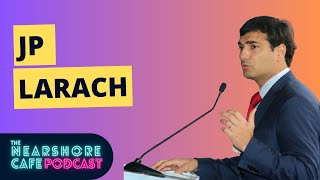
In this Nearshore Cafe podcast episode, host Brian Samson interviews Juan Pablo (JP), a Chilean engineer turned business leader. JP shares his upbringing in Santiago, education at Universidad Católica, love of rugby, family life, and Chilean culture (wine, barbecue, metro, colectivos). He recounts a decade‑long career at LATAM Airlines, describing roles in route economics, alliances, and the frequent‑flyer program, and reflects on the multicultural environment across Latin America, noting distinct business attitudes in Argentina, Brazil, Peru, and Colombia. JP discusses his decision to pursue an executive MBA with a global Asia focus, highlighting how exposure to China, India, Singapore, and other markets broadened his perspective on work styles and discipline. He now serves as CEO of CPT Towage, a tug‑boat operator with 52 vessels operating in six Latin American countries, and outlines industry trends such as labor efficiency, automation, fuel‑consumption reduction, and consolidation. JP offers advice for foreign firms entering Chile, positioning the country as a stable, low‑corruption hub for regional expansion. Throughout, he provides vivid anecdotes about Chilean lifestyle, transportation, and business culture, offering listeners a nuanced view of Latin American work environments and emerging maritime services.
Chapters
Welcome to the Nearshore Cafe Podcast, home to the most interesting stories and people doing business in Latin America.
Welcome everyone to another edition of the Nearshore Cafe Podcast. I'm Brian Samson, your host. This podcast is sponsored by Nearshore Direct, gonearshoredirect.com. With me today is a friend of mine and more importantly, a business leader from Chile, Juan Pablo. Juan Pablo, or can I call you JP?
Of course, Brian. How are you?
Yeah, todo bien, my friend. Todo bien. How are you?
Great, great. We have a very beautiful day today, but you're here working as usual.
I love it.
I love it.
Well, JP, you know, we're lucky to have a business leader from Chile like yourself on the show. And what we try to talk about on the show is business cultures, especially with a LATAM focus, and work styles, personalities, stories, you know, that's always the great stuff. And you've got a really interesting story, you know, we met in a global MBA program Ironically, it was focused on Asia, but you and I were like the two guys focused on LATAM, you know, in the, in the, the session. So we'll get to that and we'll get to your, your work experience in a moment. But I think it's, it's gonna be good just to hear how it all started. Maybe tell us a little more about like where you grew up and where you went to school, just kind of like your growing up and childhood.
Sure. So hi, everyone. Well, my name is Juan Pablo, as Brian said. I was born here in Santiago, was raised and born here. Santiago is today more or less 8 million people city. So it's similar to São Paulo, Buenos Aires in terms of sizes. I mean, it's smaller, but it's a very fast city. I went to school here first and then to the university here as well, Universidad Católica, which is one of the best universities in Latin America. I studied industrial civil engineering. Here it used to be 6 years, so it's quite a long time. You get to know math, physics, chemistry, and all these stupid things that you never use, but they make you think, and they teach you how to think and solve problems. So apart from that, well, I'm married. I have 2 kids, 2 girls. We all live here in Santiago. It's quite a nice city to live because you have 1 hour you can go to the beach, and 1 hour you can go skiing in the winter. So we have a lot of mountains, as you can see in the background. And it's a fun city to live. It's not as fun as Buenos Aires, the nightlife is much better there, but you know, we also enjoy life and we have good wines and good salmon.
Yeah, speaking of the wines, what kind of wine is Chile famous for?
Well, we are famous for a lot of wines, we produce a lot of wines, we have probably one of the biggest wineries in the world. But do you know my favorite one? It's a Carmenère. You know, the Carmenère is a wine that was English in France, and a French guy came to Chile, saw the grapes, and he said, okay, this is Carmenère, this is amazing. And now we produce a lot of Carmenère, which is my favorite one because it's not as acidic, it's not as hard as Cabernet Sauvignon. But it's very famous here and I really like it. So if you come to Chile, try Carmenère or buy some.
Yeah, absolutely. And then what type of food does that go best with in Chile? Does that go with fish or what?
No, here, I mean, we are meat people. We are meat people. So every weekend we meet with friends, families, and we do barbecues. So we got very good meat. We've got a lot of American meat, also from Argentina, Uruguay. So we are very meat consumers. We produce a lot of meat as well. So barbecue is what we do. But of course, we have a— because, you know, Chile is very thin and long, we have a lot of sea. We have very good seafood.
Yeah.
So the red wine is for the meat and the white wine, it's for the seafood. We have very good seafood and I really enjoy eating seafood here. It's cold water, so the seafood is very good.
Yeah, yeah, I've had it. It's excellent. It's excellent.
And, uh, exactly.
Yeah. And, uh, um, you know, speaking of barbecue, um, so I've had the chance to go to JP's home and I remember you had the most incredible barbecue area I've maybe seen at a home. Could you, maybe we'll even show a picture, you know, on the video, but could you describe it a little bit, like, you know, what it looks like? And also you have this engineering background, so I'm sure you thought a lot about how to, how to put it together.
Yeah, sure. So to be honest, it wasn't my idea. So I have seen a lot of barbecues, especially in Argentina and Uruguay. They have this, this different kind of barbecues. So this is not gas, this is wood or coal, right? So when you have a big barbecue and you want to keep pushing fire, you don't want the fire to kill your meat. So you want to cook the fire, you want to keep the fire outside from the meat. So this barbecue is a grill. And then in the side, there is a place where you put the wood or the coal, and then you keep moving it from the bottom to the grill in order to have a balanced fire and a balanced heat all the time along.
Yeah, it was excellent. I think about it often, you know, because I just use the regular American grills, and the meat is never as good as it was when I was in Latin America. Um, yeah, I mean, Argentina, we would have asado quite a bit, you know, where they would light the fire and then spend hours just perfecting the fire before the meat goes on. Um, but often in the US, you know, we just light the fire, we throw the meat on, and it's done in 10 minutes. But in, in Latin, it's, uh, a labor of love and hours getting just the right fire.
Exactly. And also you can do some tricks with the smoke, right? You have the, the fruit wood, so some apple wood that will give a special taste through the smoke to the meats, which is also nice. Smoky taste.
Yeah. I also wanted to ask you, JP, you know, as we talk about your growing up, you were a rugby guy, right? A rugby player?
Yes, I used to play rugby. Well, rugby is not our first sport, so I wanted to play soccer first, but I wasn't too good at soccer. So when I was 14, I started playing rugby here. Actually, I played very hard for 7, 8 years. I actually went to a World Cup, Under-19 World Cup for Chile. I played 6 or 7 years for Chile national team. Went to play to South Africa, to Europe, to all countries in Latin America. Oh, it was a fun time, a tough time. We train a lot, but we play a lot. It was really nice. You know, sports at the end give you a mentality of a good mentality for business and for life, right? I actually love that my kids like sports. Too, because they know that if they want something, they need to work hard. If they work hard, they get a reward and they get good results. So that's why I try to convince them to do sports.
I think that's great. Yeah, same here with my little kids. That's what we're trying to do. Yeah. So right after school, did you— Um, I, I, I sometimes I'm confused if I should call it LAN or LATAM Airways, because I think about the planes. Um, but, uh, did you go right into that? Was that your first, um, first move after school?
So sorry, can you repeat the question? I was putting the mic off because the noise.
Sure. Um, so, uh, we'll, we'll cut that part. Don't worry. Um, So, so, so JP, I think right after school, I know you had this long career with the airline. Tell us a little more about that. Like, what kind of role did you have when you started? And I think you, you moved later on in the strategy, but maybe tell us more about your career there and the kinds of roles you had and the work style and culture of the company. That'd be really interesting.
Sure, well actually after university I went 2 years to an investment bank, to Deutsche Bank, well it was a short term and then I decided that I wanted to work in something more real, you know, and since I love to travel, I have been traveling all my life, I had this opportunity at LATAM Airlines, LATAM is the biggest airline, used to be and still the the biggest airline in Latin America. And I got to LATAM and worked in commercial roles. So they have this area called Route Economics where I got in first, where you get some— I don't know, you get to manage routes. For example, the route from Santiago to Los Angeles, or the route from Santiago to Miami or to New York. And you have to, I don't know, adjust the prices, talk with the travel agencies to sell them more because they have too many empty seats. Or change the timetable to a more corporate timing, things like that. So anything to make the route more profitable and work with the pilots or with the maintenance team in order to reduce the cost. And to be honest, LATAM was an amazing experience. LATAM Airlines, it's a company which has a lot of people from everywhere in Latin America. There are a lot of Argentinians, Brazilians, Peruvians, Colombians. There's people from everywhere. There's very good people, like a lot of very well-educated and experienced people. So it was really fun to work in this company. Actually, the business is very fun because you sell dreams. So you sell flights to somewhere. And so it was really nice experience. Also the industry is really dynamic. So one day you have a lot of demand, but the next day there is a volcano explosion and you don't have demand at all. So you need to adjust the prices or cut capacity or move the flights or move them somewhere else. So it's a very dynamic industry. Which everything impacts it. And actually, the people that work there were a lot of young people as well, so it was fun. So you work hard, but you also party hard. So you end up on a Thursday night, everyone went to the bar, had some drinks, partying until 5:00 AM. And then the next day, everyone was hungover, but 9 AM there working and having fun again. So yeah, it was a very good fun.
Yeah. Um, you know, you mentioned something, uh, interesting. So if I, if I have it right, the headquarters was in Santiago. Um, but, uh, you're working with people from all over Latin America. Um, uh, help me understand a little more about like maybe like the business culture of Chile and Santiago and what was similar or maybe what was different with some of the other countries that you were connecting with?
No, I think every country in Latin America has their own culture. I mean, there is a saying that says, for example, the best business you can do is sell an Argentinian for the price he thinks it is and buy it from the price he actually Worth it. So it's funny because Argentinians are very good to sell. They have a very good personality. They are very direct talking. While, for example, Peruvians or Colombians are more calm. They don't have too much personality. It's difficult for them to say what they are feeling or what they want to do. Brazilian from the other side, they are so relaxed. They always enjoy life. Tudo bem, tudo bem, and life is good. So it's difficult for them to— sometimes they say they are going to do it, but they don't do it. So it's something— all the culture is different. And working in a company which has all these cultures helps you to actually understand the way you have to interact with these different people from different countries. Yeah, I don't know if you know the story, but actually LATAM was formed in Chile, and we actually merged with the Brazilian TAM, which was a different company. The two biggest Latin American airlines merged together and they formed LATAM. And at that moment, well, we were based in Chile and managed every country besides Brazil. And since we merged with Brazil, I was moved to Brazil with my team. And then that's why I know a lot about the Brazilian culture. So before getting to Brazil, we have some classes of culture. We have some Portuguese classes and a lot of culture immersion in order to understand these differences between Brazilians and Chileans. In order to work better, right?
And you were in São Paulo, was that right?
Yes, I lived 2 and a half years in São Paulo. São Paulo, it's a very interesting city. Life is like New York, right? It's full of people, full of traffic. People are so nice, people are so happy. I mean, they can spend 6 hours in a traffic jam, but everything is good. They don't care, they give you the way, and yeah, it's so much things to do at night, so much places to go have dinner or lunch. So it's an incredible city. It's not very beautiful, to be honest, from my point of view, but it's an incredible live city to do anything what you want.
Yeah, what was your favorite type of thing to eat when you were there?
And the queso. So they have this small rounded, uh, round piece of bread which is filled up with cheese. Every meeting that you go, they have this on the table, and you like, you eat one, then you eat another one, then you eat another one, like 30 of them. Probably 20 kilos more living there.
I love it. And then after your time there, did you return back to Santiago?
Yes. So at the beginning, they wanted to understand more— we wanted to understand more the business in Brazil, the difference between Latin America and Brazil. And they separated the business in the international, which was managed in São Paulo, and the the domestic, which was managed in Chile. But to be honest, the cost was much higher and the main shareholders were based in Chile. So 2 and a half years they decided to— after the World Cup, they decided to bring it back to Chile, where it's still here. So all LATAM is managed now from Chile. So I came back to to, to, to Chile. I, I changed the role anyway where I was working. I, I work in, in, in the alliances team, which, uh, we were negotiating a joint business between LATAM and American Airlines and EIG in Europe. So I work in that for a few years, and then I worked in the LATAM Pass, which is the, the frequent flyer program. It's the most profitable part of the airline industry, which is not very profitable. So this is the, the one that makes the profit, which is a lot of fun. I mean, I sold miles to the banks, so the credit cards, the vintage, the finance industry was, was a lot of fun. I spent almost 2 years there and I was very— a lot of fun, to be honest.
Were you in that role when you decided to do the MBA program?
Not in the LATAM Pass role. I was actually in the alliances team where I was negotiating the JV between American Airlines and LATAM and between Iberia and British Airways and LATAM at that moment.
Yeah.
Now, you did—
now, obviously you were in Santiago working for a Latin American airline, and then you decided to go to an international Asia business school. Tell us more about that decision and, you know, just your experiences doing that.
Yeah, so at the beginning I knew that I wanted to do an MBA, so I was not sure if I— well, when I have this opportunity to move to Brazil, I was like, okay, So I'm going to wait for the MBA. I'm going to have this opportunity to live abroad in Brazil. And when I finished that, when I came back, I was too old to make the traditional MBA, I mean the normal MBA. I didn't want to be the oldest guy in the class. So I look at the Executive MBA, and I took a look at the ranking. So I look at the first one, the second one, the third one. Some of them were— I mean, the structure was not very comfortable for me. So let's say it was every Friday in New York for 15 months. The second one was in Miami, but it was similar structure. And I found this MBA, which we took together, which was a 2-week program. In different places in the world. So for me, I could still work. I could travel very cheap because I was working in an airline. And in the ranking, it was a good MBA. I mean, it has UCLA and NUS in the background. So I decided to take it. And I think it was a great goal. I mean, a great idea because I really enjoy it.
Yeah, yeah, it was, it was really fun having you in the program. I think you, you brought a lot, a lot of, a lot of fun culture to the program. When you, when you graduated, how did that change what you wanted to do?
Well, actually, the MBA gave me a stop on my career and start thinking. I started thinking on what I wanted to do, what I wanted not now, not just now, but in 10 years' time or in 15 years' time. And well, I looked at my career from a different point of view. I looked at my experience in the past and what I wanted to do in the future. And I think it was a great time to think, to learn, and to look at my life, my business life, from a different point of view, to be honest. So I appreciate a lot the time. I enjoy knowing people from very different backgrounds, from very different cultures. I mean, here in Chile, you know, we are very far from everywhere. Everywhere. So you don't see, you don't get too much, too many people from Japan, you don't get too many people from India, you don't get too many people from China. So at the end, this, knowing these cultures, knowing this different kind of people, I think helped me a lot to understand more about what this world is today. I mean, how this world is today, which is more much more dynamic, more diverse, more— you can be working from Hawaii or you can be working from China and being in the same meeting exactly how you could be in the same room, right?
Yeah, yeah, same experience for me. That's great. You know, for me too, it was my one and only time I've been to India. You know, for listeners, you know, the So the program, we went to Singapore twice, we went to Shanghai, Bangalore, and then Delhi. I'd love to especially hone in on like Shanghai, Delhi, and Bangalore, and like your perspective, you know, you know, from growing up in Latin America, your perspective on that region, and maybe like how the work styles might be similar, you know, they might be different.
Exactly. It was good fun. We also had fun. We went to see some very nice companies or industries. So it was a very good program, actually. I recommend everyone who wants— who is not sure of studying or not— I mean, having this time off or this time to think outside the box, think outside from your normal life, I think Actually helps you understand a lot of things.
Yeah. What did you think about India and China and how, especially coming out of the transportation world, what was your take on them?
Well, so when you say about China and India, probably the only similar thing they have is they have more than 1 billion people each. Both countries, but they are so different, right? China, you see the people, it's so organized. Everything works very fine. People is fighting to get into the metro or subway, and people is very regulated of what they can do, what they can't. They are very respectful as well on the rules. They have so much restrictions on the— you can't use WhatsApp, but you can use Facebook. So it's so incredible, Chinese people, how they actually live, how they actually work. I mean, it's amazing, the culture, how much discipline they have.
Yeah.
And the other side, you have India, which is, oh, it's a chaos, right? When you get there, I don't know, sometimes you want to run off and get out as soon as possible because it's so dirty. People is burning rubbish in the streets, or they actually They are seeing cows in the streets, and people don't really respect, don't really, I don't know, have any discipline or any working culture. I mean, some of them, right? But they seem more happy at the end. The Indians, they seem happier than the Chinese. So I don't know, it's all this immersion of culture, of of discipline, happiness, and so much things are happening to your mind. And you see, you try to get the best part of each and try to see what is good for you. So the experience was amazing in these two countries, actually.
That's a really interesting comment about the happiness because I often, like, I agree with you on the chaos, and, but I often don't give enough credit to just like the peacefulness and the happiness of the culture there, you know.
And it's the same here in Latin America. I mean, Chileans, they are more direct. They get angry when things don't work. So if the bus is not on time or it's not working, they complain and they shout, they're angry. In Brazil, for example, people don't care. The bus is not coming, okay, we wait for the other one. And they are used to this kind of life and they complain less. I think that's part of the culture, but you understand when you live there that probably people sometimes is more happy in these kinds of countries, but they used to live with what they have, right?
That's right, that's right.
What they have.
Yeah, well, speaking of transportation, you know, I had the chance to ride the metro, the subway in Santiago, and it was incredible. Like, it was one of the nicest lines. And this is probably over 10 years ago that I did it. I was like a backpacker going to hostels and stuff. And it reminded me of Singapore. It was just like so well, well built. And I don't know if people realize that, but, you know, kudos to the engineers, you know, in Chile.
Yeah, the metro is something that is working well. I mean, it's not too big. We need more lines. It's getting wider. But yeah, it's something that we should be proud of. It's a nice way of transportation.
Yeah, and on the other hand, something that I experienced in Chile, again on my backpacker trip, was something I had never seen before, was the colectivo.
Colectivo, yes.
It was kind of like Uber before Uber, I guess.
Yes, so colectivo is more like Uber Pool, right?
Yeah.
They still have it, but the Uber Pool, they have these signs on the top, they are cars, right, for 4 people, and they have this routing they do every day, every time, and well, they are usually in some, subway stations, and from that subway stations they have this routing and you can pick it up. I used to use it a lot because when I was young, because it was a little bit more expensive than a bus but much more comfortable and fast. So actually it was quite nice. I thought at the beginning that Uber was gonna kill them with this Uber Pool, but I don't think they got the the authorization from the government to, to operate it because they would kill this industry.
Yeah, that's a good point. Uber Pool before Uber Pool, right? And, uh, I remember I took it, um, uh, from like a subway station. Um, it, it worked, it worked great, you know, from a subway station, like must have been like 50 kilometers out to like the river so I could do a rafting trip. And I was like, you know, like trying to like just hope that the guy who told me like, don't worry, you'll catch a colectivo around here. Like, you know, look, look for this thing on the top of the car. And I just, okay, I guess I'll trust you, you know, but it showed up and it was really affordable. I think it was like a dollar, like about the equivalent of like a dollar to go 50 kilometers. It was incredible.
Yeah, it's nice. It's a nice way of moving.
Yeah, yeah. I wanted to just ask you a little more about Chile overall. So we know that it's— there's some nuances around it, but I think I You know, I'd read there's a lot of great things for doing business there. You know, there's hundreds of thousands of engineers. I think the IP protection laws are the best in all of Latin America. I don't know if you have any, you know, because you're such a global guy and you've seen all these different countries and nuances, if you could comment on things like that.
Chile, it's, I would say, the most European or developed country in Latin America. And this is because the infrastructure, the government, and probably the most important one is corruption anyway. But it's the less corrupt country. So here, for example, you cannot pay something to a policeman if they stop you in the street, which something sometimes you can do in some countries in Latin America. So that gives you a, like, a spot of how the institutions actually work. So I would say that the biggest difference between Chile and the other countries in Latin America are infrastructure, are this less corruption, and also that the institutions work better than in other countries. So that will— that actually had helped the industries to become better than our neighbor countries. And there is a lot of, I don't know, bigger, big companies in Chile which is actually doing business in Peru, they're doing business in Colombia, or they're doing business in Mexico. So most of the The best companies in Chile are actually based or they actually have operations in different countries in Latin America. Of course, if you compare it to Europe or to the US, there's still a big education gap. And that's where we need to focus, right, in Chile, because there's a big disparity of education and wages between the, I don't know, the lowest part of the company and the upper part of the company. But what actually makes the difference between Chile, I think, and the other countries is the stability of the economy and the way the the institutions work. I mean, they work.
Yeah, yeah, I couldn't agree more. When I've done business in other countries in LATAM, it's very, how you say, ambiguous. Like, you don't really know if your application will be approved or the banking or the infrastructure. You just —like pray, right?
In Brazil, you don't know your tax structure. I mean, it's so complicated, the tax structure that you will have as a company if you are in one region or in a different region, if your product is moving from one region to another region. I mean, it's impossible to understand how much tax you're gonna pay. I mean, it's fair because it's equal to everyone, but anyway, it's so difficult to understand. Well, you actually don't have that That things here in Chile, the rules are more clear, and that makes it easier to do business.
Yeah, I think so. I think so too. Well, speaking of doing business, uh, tell us more about, uh, what you're doing today and, and, uh, the company.
Sure. Well, today I'm, I'm the CEO of CPT Towage, which is a tug operator. So I don't know if you're familiar with the tugs. So the tugs are these kind of boats, big boats with a very powerful engine. Okay. And what they do is they help big ships to park in the ports. So when a big ship of gas or a big ship of container comes to a port, they are not made to park in the port. So you need these big ships or these big tugs to push it to the dock. Oh, interesting. Okay.
So maybe like tugboats and pilots and— Exactly. Yeah.
Okay. So we currently operate 52 tugboats. We operate in Argentina, Chile, Peru, Ecuador, Panama, and Mexico. And well, each country has his own rules, his own— interesting way or businesses, but it's a fun industry. It's very dynamic. It's very intense. It's very competitive, but it's a fun industry, to be honest. Very fun industry.
Yeah. What do you see for the industry over the next couple years? Any trends or predictions?
Sure, so in the future there's quite a few things going on, right? First, efficiency. So this, you know, then you see the difference in the cultures. For example, in Argentina we use 7 crew, 7 crew to operate one tugboat at a time, right? 7 crew, 7 people. In Peru we use 4, or in Chile we use 5. So, this kind of things when you compare to Singapore, for example, they sometimes operate with 2 or 3. So, this is something that we need to move on in the industry. We need to be more efficient. Sometimes we have that noise. I don't know why. I put it back. Sorry. You're fine. So, but, uh, so that the being more, more efficient in terms of labor, it's something that of course is going to be in the future of this industry, become autonomous also. So there are some studies and some projects there to, to have autonomous operations. And there's a lot of things about fuel consumption, so we are, we are looking to, to to have more efficient operations, less emissions. Some of our clients are requesting these kinds of efficiencies. We also want it for the environment and for the cost, right? The fuel, you know, it's an important part of the cost structure. And also, there is a lot of consolidation going on in this industry. We recently announced an acquisition of a share of our company in Panama from PSA Singapore. So we actually are getting some consolidation. The industry together is consolidating because once you have these clients, you can have these regional contracts. You can like, uh, attend the, the clients in, in all the region. And, um, and that's something that is also going on in the industry. As I mentioned, it's a fun industry. It's very dynamic. And, uh, well, uh, I'm trying to, to move on on, on these trends.
Yeah. And, and JP, I want to make sure we, um, our audience knows where to find you and your company. What's the, the website or the best way to find CPT?
Sure, our website is CPT TowWatch. So cptowatch.com. There you can find the, well, the, our operations. We do a lot of salvage as well, maritime works, and we're growing.
Excellent, great. And I just have two more questions for you, JP. So the first is, you know, I think Chile is an amazing country with, with great people. And but there's nothing like somebody who, who knows it like you. If for, for those who might be listening that are considering, maybe they're, they're from the States and they're considering doing business in Chile or opening up an office or something. What's your best advice for them so they can be successful?
The best advice for an American or an overseas company trying to do business in Chile is to look a lot about this, measure the size of the business. Chile is a very small country. But there is a— the per capita GDP is quite high. So it's actually a very nice country as a trial for expanding to Latin America. So I would say to any company which is looking to come to Latin America, to Brazil, to Argentina, or regionally, to start with Chile as a— it would be a good example to start. I would recommend them to make a trial here in Chile to launch their products or to launch their services here, and from here there is a very good platform to expand to other countries in Latin America. We have connectivity, we have, I mean, good services, so it would be easy for you to start a business here.
Yeah, as you describe that, it makes me think a lot about how US companies use Singapore to get into Asia. You know, they have this safe, stable, good infrastructure, good GDP, strong services, and then they can expand into the rest of Asia. Use Chile the same way to expand in the rest of Latin America.
Usually companies do that, right? They do have a Chile as a hub for Latin American speaking countries. Brazil is a different world, so probably most of the companies are actually based in Brazil and outside Brazil, so they have both things. But you know, Brazil is a huge market, but it's very difficult to do business there. If you do business right, you make a lot of money, but it's very difficult. There's a lot of companies that actually have, uh, have, uh, have problems.
It's really been a blast having you here on the podcast. Um, so fun hearing about Chile and your experience and working as the CEO of CPT. I want to give another thanks to our sponsor, uh, that's Nearshore Direct. Go nearshoredirect.com. Uh, JP, uh, thank Thanks again for your time.
Thank you very much, Brian. Have a great time. We're happy to speak to you and anyone anytime. Thank you for having me. Our pleasure.
All right, everyone, we'll see you next time.
Thank you. Thanks for joining us at the Nearshore Cafe podcast. Tune in next week for a new episode featuring another special guest.
More from Brian

From BPO Agent to Client Experience Manager: Ana Rodriguez on Nicaragua's Nearshore Talent

From BPO Agent to Client Experience Manager: Ana Rodriguez on Nicaragua's Nearshore Talent

Building Sales Teams in Mexico: Mario Oliveros Figueroa on LATAM Talent & Cross-Border Selling

From Automation Engineer to Data Platform: Victor Fernandes on Brazil Tech Talent

H1B Crackdown & The Nearshore Shift: Robert Bouchard (H1B Guy) on LATAM Talent | 🎙 TNC

Nearshoring Yourself; step by step to building an expat life in Mexico |🎙 The Nearshore Cafe Podcast

Scaling high-performing teams in Costa Rica staffing legend Doug Firestone on growing to 225 LATAM

How to Scale in LATAM? Navigating Currency, Taxes, and Labor Laws | 🎙 The Nearshore Cafe Podcast



AI in LATAM: How to Break Into Mexico’s Tech Market |🎙The Nearshore Cafe Podcast