💻 Managing Tech Projects from Mexico 🇲🇽 | Nearshore Best Practices 🎙 The Nearshore Cafe Podcast
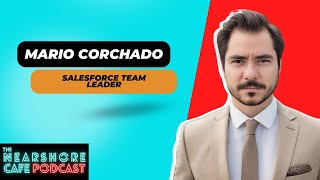
Mario Corciato, a Salesforce leader in Mexico City, manages a cross-border team of five Mexican engineers and U.S. developers for a healthcare client. He coordinates work through Jira and Teams, emphasizes English proficiency and clear story definition, and pushes back on the idea that Mexican teams work slower: professionalism and responsiveness stay high.
Chapters
Welcome everyone. Welcome to another episode of the Nearshore Cafe podcast. I'm Brian Samson, your host, an entrepreneur who works and does business in Latin America. Today I'm very excited about our guest, Mario Corciato. Mario is going to talk to us a lot about leadership, technical leadership from Latin America Working across cultures, borders, a lot of great stuff, a lot of great learnings to come. Before I bring Mario on, just want to give a thanks to our sponsor, Plug Technologies, plugg.tech. Plug is a great way to find talent all across Latin America for growing US companies. Mario, welcome. Great to have you on the show.
Thank you for having me, Brian. It's always a pleasure.
Mario, we're going to have a lot of fun today. And as I mentioned in the intro, technical leadership is something that I think we're going to have some great discussion around. Just for those that don't know you, haven't had a chance to meet you yet, Just give us a little sense on what you're doing today. Like, where is your career right now? And then we'll talk about the journey in a moment.
Sure, definitely. Well, currently I'm working with Plug-in Technologies as a team leader, as a Salesforce team leader. This is the second time that I have in my career the opportunity to be part of a team and leading it. So yeah, that's, that's where I'm standing at.
Excellent. And you're, you're based in Mexico City?
Yeah, exactly. Yeah, Mexico City.
Cool. Um, so, uh, the world has changed a lot in the last couple years. COVID really created, you know, remote, pushed harder into nearshore, you know, teams on the same time zone. Um, where's, where's the rest of your team today?
Well, the rest of my team pretty much is, uh I mean, most of them are in the part of Mexico City and the rest of the team is in the United States in Florida. And well, that's where we're standing right now. We have a couple of fellows that are in India, but yeah, we're just like going a little bit into that part as well.
Yeah, interesting. And can you give a little context? Are they all— so you're focused on Salesforce today or Are they all Salesforce developers? Who's in the US? We don't have to give names, but like the type of work that's being done in the US, the type of work that's being done in Mexico.
Sure. Yeah, definitely. Well, basically the team that we have here, I mean, what have we been doing right now with our client? And well, right now we're enabling the client in our client, it's in the vertical of healthcare. And being in that industry of healthcare, I mean, there's a lot of urgency because we have patients. It's something a little bit more delicate to just have a client. And, you know, all, basically all the vocabulary that we're handling with the client, it's patients itself. So that's something very important. And we're enabling the team, we're enabling our client to have different functionality in Salesforce at all levels, front, backend. And of course we are always helping them in the sense of processes, how to get acquainted with new processes or how to improve new processes they have, what they want to implement, giving them the best practices of Salesforce and giving them the best and out-of-bugs products that we are constructing for them. So that's basically what we're doing when and where a little bit of located and what industry. So that, that would be it.
Yeah. And about how many team members are you working closely with in the States and about how many are in Mexico?
Well, it's about here in Mexico, it's about, it's about 5 people that we're working. And in the States, we're working with a large team of, well, it's, I think it's 2, 2 more, 3 more developers. I think it's another 3 QAs. You know, the Scrum Master and the two architects. So that's how it is.
Okay, got it. Yeah, I was just going to ask about maybe the hierarchy because there's so many different ways to do this in tech and you've got agile environments. I think you said there was a Scrum Master on the team. You mentioned architects. Is there— are there project managers and business analysts or is that something kind of shared by the by others?
Yes, definitely. We have business analysts and the product owners sometimes. Yeah, we have that. We do have a manager, which is the engineering manager, and he's as well located in Florida with the team there. Great.
And help me understand a little bit of like just how work gets done. Like, are you guys doing daily standups and how are you dividing things up? How often are you meeting? That would be a great start.
Definitely, yes. There's very close communication with the client. Of course, every day we have a stand-up and we have recurrent meetings that are part of the Scrum ceremonies and all that stuff because they have a full implementation of the Scrum Agile methodology. And on our end, we are doing the same meetings. We're doing a stand-up that is for the teams here in Mexico every day just before we We jump into the stand-up meeting for the client. We're just aligning the whole team, what's going to happen, what is happening, what I was working, what I'm going to be working, any blockers, yes, how we're going to be handling this. And yeah, then we can jump with the client. We're ready to jump with the client. So every time there's a presence and everybody has to be there for both meetings and the rest of the meetings, of course, that they're going to be involved in case we have different stories here and there. The work itself, it works on how they're pitching in the stories or how they're pitching in the work that we have. We have a backlog, standup, planning meetings. That's how the work is coming in. And by the time that we are getting the work, we're getting the stories, sometimes I'm taking all the stories and I start distributing it depending on what are the skills of every, each one of the members of the team. So yeah, that's a little bit on that.
Yeah, very good. And just you personally, have you worked in like an Agile Scrum environment for a long time, or how has your career gone?
Yes, actually that started like 6 years ago or so, a little bit more about that, because I was, you know, Waterfall was, you know, the thing just years before, but now it's Agile, and it first started with Scrum Ban. And well, it started evolving into what we have right now with Scrum Agile and well, how it merged with the different methodologies.
So Mario, the leadership part is something that I'm quite interested in and what's communicated up, what's communicated down, what's communicated across, and with you kind of being like the glue in all this. A lot of roads lead through Mario.
Exactly.
Can you talk a little bit more through that, like how information is moved throughout and in your role in all that?
Sure, definitely. There are certain meetings that the rest of the team is not— they're not going to be there because they're going to be working, you know, they're hands-on completely fully. And, you know, the retrospective and the, you know, all the grooming of the stories, I'm part of them. So I have and I have knowledge, I have that handicap knowledge that it's going to be bringing the team into their feet by the time that they're getting the stories or the work that they're going to be working. So that's the first part in the sense of the work that we're going to be having. So once we have the stories on the sprint, on the current sprint, I'm going to be getting in with every each one of the members and see, okay, this is your story, this is what it's about. On the grooming or in the retrospective or in the Yeah, and the, um, uh, yeah, so when we were reviewing the stories in the, in the meetings, uh, they tell me all the details of how this is going to be working, how does it work, where does it come in, what's importance of every, each one of the details that it's going to be moving parts of the story. So my, basically my job here is getting in one or two steps ahead from, of them on the information of the stories of what's going to be happening, what is coming in as well, to have that visibility And well, that's how I react in the sense of work and stories that are coming in with the team and how to coach them and how and what information they need. And I mean, there's gonna be some questions, of course, and that's why we're gonna be compiling that question, see if we can solve them in our team first. If someone has any background on that, if not, then we're gonna be asking the client, hey, you know something, we have to clarify all these certain pointers here so we can continue you and, you know, have the stories been delivered and completed on time.
That's a really great point you brought up, and it made me think about leadership and in delivering the just the right amount of information for the team, because sometimes you can overload them and overwhelm, and other times there's just not enough and it really inhibits them. So there's, there's kind of a skill set in leadership of delivering just the right information and context at the right time for the right person.
Exactly. Yeah. I mean, they will have a lot of stories, right? And it doesn't make sense to them to be in that meeting and exposing them to all this information because they're bringing a lot of requirements and everything. Sometimes the stories are not ready. So that's something that I'm going to be just like as well raising our hands like, hey, the story just have this detail here and we need more details. So that brings a little bit of noise to the team if I get it, if I let it through. So I'm not going to be doing that. I'm just going to be like pausing that, talking with the client. Hey, we need this and that in this story so we can start working. And if we can contact someone or we have a point of contact or a business analyst, I don't know, product owner or manager that we can contact and we can get the context of the stories, that will be something that I'm going to be jumping in and saying, okay, then this is ready, we can work on this. So yeah, it's a hand-on-hand effort there by the client and our end as well.
That's awesome. And how about some of the technologies needed just to run communication? Like, is this a— are you guys on Slack or Jira or other tools? And maybe what you're using for communication with your team in Mexico versus how you're receiving information from the states?
Right, I mean, everything runs through Jira. I mean, that's, that's the main tool because that's where all the details and questions and pointers and everything that the client wants us to do with that specific work, it's coming through Jira. We have, if we had to go into a meeting or something, we use Teams directly. So we're shooting meeting requests every now and then here and there, uh, so we can we can get acquainted with what needs to be done or if we have to clarify something or we have to do things differently. That's something else as well.
Yeah. For companies that are maybe new to nearshoring, sometimes language is the first thing that they worry about. Like, is my message going to be received? Is the team fluent in English? Can you shed some light on that? Like how that might work or how much of a factor that is.
Yeah, well, it's, it is actually, it is a factor since the very, I mean, just right off the bat saying that when you are hiring people or you're trying to interview someone who you know that he has the skills for, but for this platform, which is software as a service, which is Salesforce, and you have to go through that part of evaluating them in the sense of, okay, what is What's your level of English? I mean, you can communicate professionally and technically. That's the second factor you have to be considering. Yes, I mean, there's some certain challenge there, but once they're, I mean, on board, there's no problem. And there's a lot of people that in Mexico City and in Mexico all around that, I mean, they do handle the language itself. So I'll say it's not a language barrier. I'll say it's just a matter of practice. So when we're getting boarding over here, it's something that they will learn just, you know, up in a more organic way. So it's not a challenge. They do require a certain level so we can get them acquainted so we can get forward, but it's not a challenge.
Yeah, that's great. That's great. And just kind of forget about Borders for a second. Let's talk about great teams. When you think about some of the best teams that you've been a part of or you've led, Can you talk about them? Like, what were some of the attributes that they had? What makes a great team?
What makes a great team is different knowledge in different areas of IT. Depending on the background, sometimes we have people that just went out of college and you're training them. So they're going to be learning a lot about you and you can learn a lot about them because they have really fresh information as well from college. But the diversity of ideas and diversity of how every and each one of the elements of the team are going to be or can tackle a problem. That's, I mean, that's the juice of having different people working in your team. So the diversity of that ideas and the diversity of getting people from different, you know, they've been working, I don't know, maybe in healthcare, they've been working on retailing or they've been working on different ways. That gives you another set of fresh eyes for every and each one of your team members that you have in your team. So that's one of the elements I think it's the best thing. And I mean, I can identify every and each one of them and the best teams are just about that. Everybody pitching in and trying to solve problems together. Communication is one of the factors I think that is gonna be involving this. Yeah, I mean, that makes a happy project and it makes a happy team as well. Collaboration and friendly.
Love it. And how about engineers in particular? What do you think makes a— or what separates like a great engineer from an average engineer?
Well, I think it's, you know, it's like art, you know, it's like, it's like, you know, there's going to be always someone who jam and bring you this amazing solo and everything, but he's not jamming with the team, right? I mean, by the time that they're not jamming with the team, we are not making a song. We are just making a solo introduction to something. So an engineer, sometimes it's like they're very jealous of their knowledge because they have been through a lot, lots of nights and lots of books and lots of documentation. It's just part of how they have to engage with the team and how they can become one of the pinnacles of their team as well. And that makes a good team in the sense, and then for the eyes of the client as well. The key there is to make them part of it without forcing them. So it's just a part of being a little bit shy, a little bit in the part of their personality, most of them. But I mean, it's people that it's willing always to help. So engineers are— we cannot live without them and we can definitely go ahead working with them without a problem.
Yeah, love it. I wanted to talk about the cross-border again for a second. And if you could shed some light on what do you think is the same and what do you think is different like when you're working maybe, um, just with a team in Mexico or Latin America, uh, and when you're working with a team in the States, like what's different, what's the same? Could you share more about that?
Sure, definitely. Um, well, the first thing that comes to my mind is the, uh, the, I mean, the, um, yeah, it's, it's, it's about rhythm of work, the quality that the client expects, the expectations of the client, and of course that you have to continue working with that expectations. I think that's the two things that you have— we have to consider there. Um, in my experience working in a team in Mexico City is, you know, it goes a little bit into part of our culture. It's, you know, it's a little bit more relaxed and everything. And when we're working with a client in the United States, it We have to adopt their cultural work. We have to adapt to their rhythm, to their quality, because it's not the same. Of course it's not the same. We understand that. And by the time that we are working with someone, it's in a different country and you're delivering product in a different country. That has to be in your mind all the time. It's an awareness of it's not the same thing and we have to cover all the client's expectation being that our priority one.
Yeah, yeah. Um, you know, one, uh, uh, working within nearshore, we've, um, seen a lot of maybe common misconceptions, right? And, you know, sometimes I think it's forgotten that Mexico City is a giant, bustling, energetic city. So even when we use the word relaxed, um, we don't want people to think like, oh, you know, between after they have a big lunch and a siesta and you won't hear from somebody for a couple hours maybe. Maybe you can talk about that and any other maybe misconceptions people might have about working with teams in Mexico or Mexico City. Right.
I mean, working with teams in Mexico City is— I don't want to say it's just like the same like working with people in the United States or on-site. It's not going to be the same. There's going to be different, of course, cultures, yes, there's going to be a little bit of cultural impacts as well because we express things in a different way. I'll say that that's just the thing, right? But in the sense of hard work, responsibilities, awareness, and being there, a presence with the client, I don't see really a gap or something that will have to be considering just before I take that decision. So it's just a matter of getting the right people, getting the right people that it's going to be, you know, pointing the team and, you know, we can start delivering.
That's great. That's great. I want to talk a little more about you, Mario, and we know what you're doing today, leading teams. Would you mind just sharing a little more about your journey? We don't need to get into client names or anything for confidentiality, but How did you get where you are today?
Well, it's, uh, it's been a long journey. It's actually been, uh, a little bit more of about 10 years and 20 years in the industry of the IT. And well, yeah, basically it all started, you know, with college, you know, being in, in, in, uh, computer engineering. And well, by the time that I jump. I mean, the first thing you learn here in Mexico, it's not a rule, but you start with Java, right? You start being a developer in Java. And when I got into Salesforce, it was a cultural impact, technically a cultural impact, because it's not the same having tables and that's Oracle database, it's here and this and that. Everything is in the cloud, so you don't anything else, or everything's there. So yeah, I mean, what it took me to get here is just being part of different teams, being part of, you know, different verticals in the industries such as banks, automotive, you know, pretty much it's— I've been in banks all the time. So this retail, I've been there retail, and of course now in the part of hospitality, which is healthcare. So yeah, it's been a long journey in the sense of different clients and different ways of working because every one of the companies have their own constraints, they have their own logic, have their own ways to do things, even if they're in the same vertical. So I mean, that will be amazed you because you think, no, they're going to be doing the same. No, they're not doing the same thing. Maybe they're using the same tool, but the tool, it's being used in a different way. And well, that's part It's part of the journey and how I find myself with being a lead, it's being part of the team, being part of the team at all times. I consider myself as well as part of the team, a peer, someone who's always hands-on so I can help you as well. That's been part of my philosophy of how you can get into this point of being a team lead, someone who's going to be enabling you technically and of course, enabling you in, in, in, in different aspects of the project as well.
That's great. That's great. Let's talk a little about, uh, travel culture, tourist guide, New Mexico City. Um, for those who have never been, what are, um, let's say they'll be there for, for a week.
Okay.
What, what should someone first time in Mexico City do? That first week? Where should they go? Where should they eat? All that great stuff.
Well, uh, if you're not a fan of tacos, you're gonna have a bad time. That's something for sure. I mean, Mexicans are here, especially, uh, in Mexico City. We— you can find tacos, you know, 24/7. There's no, uh, there's no place you wouldn't find any tacos. So yeah, basically, um, I mean, there's, uh, very, very nice restaurants, you know. There's, um, there's a part of the big city, you know, downtown, there's very, very nice, you know, sites and streets. Basically, Máserik is one of the streets that I will recommend because it's a very nice place. I mean, it's a very nice avenue. It really reflects the part, you know, the glamour of Mexico City in all its extent. If you want to go a little bit into, you know, archaeology or something like that, there's very, very good museums you can visit, which is the Anthropology and History Museum that's located in Chapultepec. And from there, Chapultepec, there's a castle. So you can walk all the way from the museum to the castle, and then you can get some tortas ahogadas, which is, you know, it's bread meat and it's squashed with some sauce there. And yeah, definitely, I mean, you can find from tacos to very nice restaurants here as well. And I can recommend, you know, different, different sites, like going to the pyramids. It's just like 40 45 minutes, an hour or something, you can go to pyramids. It's 3 long pyramids, which is amazing. It's a very interesting place to be. There's Avenue of the Dead, Avenida de los Muertos, which is all the way down. You can see the pyramid at the end. It's an amazing sight. And you can do a, I think it's a balloon tour around the pyramids, which is amazing. I haven't done it, but it's in my plans. But I have friends that have done that. And it's impressive. It's amazing. So yeah, we have city— I mean, we have pyramids, we have tacos, we have very nice restaurants. And you can go even to the ones that are, you know, just crossing the street in the corner. You can find that as well. So it depends on how— I mean, it accommodates to all your budgets. So you can be— Mexico, it's very, very, very dynamic in that sense. So yeah, definitely, it's something you have to experience.
Yes. Yeah. And it's a big city. A lot of people there. Is it, would you say it's like a 24/7 energy, 24/7 vibe to it?
Yes, definitely. Especially downtown. It's a city that never sleeps. And yeah, that's something that it's been for around lots of years, especially when we have this You know, the only time that I— what I want to say is that, but the only time that I will consider Mexico City being, you know, a little bit more relaxed in that sense, it will be in the times of pandemic when COVID just hit and strike. That will be the only time that it's like a, you know, it's a time in the frame in Mexico that nobody wants to go there, but Yeah, I mean, after that, it's just like once again mariachi, once again tequila, it's just like party on. So we had to continue. So yeah, it is very, very, very glamorous. We have different sides, different budget, and yeah, it's completely a city where you can do and you can find anything that you want.
And if I remember right, the altitude is up a little bit. Does that moderate the climate a little bit? Certain times of year that are better than others to visit, or is it about the same weather throughout the year?
Well, it's— I think it can be cold, you know, the part of, you know, December, January, but the rest of the year it's gonna be like very nice weather. It rains, but it's not like that bad, and the sun is great here. I mean, we have, we have very nice weather over here. I mean, I've been in different parts of the world. I think Mexico, it's a it's a blessed place to be when you are searching for the very nice weathers throughout the year. It can be cold, but not that cold. It's not going to be snowing, and there's going to be some sun, but it's not that hot. So it's all the time, it's a very nice weather to be.
Excellent. Mario, how do you, uh, like your tacos prepared? Uh, steak, chicken, fish? Yeah, what do you, what do you like on there?
Uh, well, I think it's, it's called tacos al pastor. Which is, I think it's pork, and they just season it with different stuff, so it ends up being a little bit red. So I love them. My son is actually one of that go-to for the pastor tacos. So, yeah, that's how it is. It's like onion, some cilantro, and lots of salsa. The spicier, the best, the better.
Amazing. Well, Mario, this has been an absolute blast. I really appreciate you making time to talk about technical leadership, tacos, all things Mexico City. What a great time. Thanks for coming on today.
Thank you. Thank you for having me. It's been an honor and it's been very nice to meet you, Brian. Thanks so much.
Absolutely. Well, thanks again to our sponsor, Plug Technologies, plugg.tech. Tech, great way to find technical talent all across Latin America for growing US companies. This is the Nearshore Cafe podcast. Thanks again for listening. We'll see you again soon.
More from Brian

From BPO Agent to Client Experience Manager: Ana Rodriguez on Nicaragua's Nearshore Talent

From BPO Agent to Client Experience Manager: Ana Rodriguez on Nicaragua's Nearshore Talent

Building Sales Teams in Mexico: Mario Oliveros Figueroa on LATAM Talent & Cross-Border Selling

From Automation Engineer to Data Platform: Victor Fernandes on Brazil Tech Talent

H1B Crackdown & The Nearshore Shift: Robert Bouchard (H1B Guy) on LATAM Talent | 🎙 TNC

Nearshoring Yourself; step by step to building an expat life in Mexico |🎙 The Nearshore Cafe Podcast

Scaling high-performing teams in Costa Rica staffing legend Doug Firestone on growing to 225 LATAM

How to Scale in LATAM? Navigating Currency, Taxes, and Labor Laws | 🎙 The Nearshore Cafe Podcast



AI in LATAM: How to Break Into Mexico’s Tech Market |🎙The Nearshore Cafe Podcast