Monterrey Business Guide 🇲🇽 | Talent, Tips, and Tacos 🎙 The Nearshore Cafe Podcast
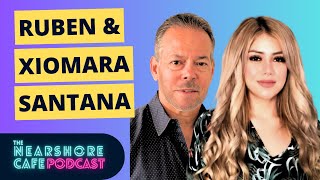
Xiomara and Rubén break down life and work in Monterrey, Mexico, a tech hub three hours from the U.S. border. The city runs on cabrito and carnes asadas, full-day lunches at 1:30 pm, and a skilled workforce from Tec de Monterrey. Recent peso weakness has hit contractor pay, dropping to about 16.5 pesos per dollar.
Chapters
Welcome to the Nearshore Cafe Podcast, home to the most interesting stories and people doing business in Latin America.
Welcome everyone to another episode of the Nearshore Cafe Podcast. I'm your host, Brian Samson. I want to give a quick shout out to our sponsor today first. That's Nearshore Direct. Go nearshoredirect.com. Great place to find talent from all over Latin America for growing U.S. companies. If you are interested in Monterrey, Mexico, you like the topic of Monterrey, we've got a treat for you today. I want to introduce our guests, Zio and Ruben Santana. Welcome to the show, you guys.
Hey Brian, thanks.
Hi Brian, thank you for having us.
Thanks for having us.
Yeah. Well, as I mentioned in the, in the intro, Monterrey, What an amazing city. What a great place. And I'm talking to the experts on this, this place. Um, so I've actually never been to Monterrey and I'm sure a good portion of our listeners have never been there either. Let's just start, like, give us a sense. Where is it? What's the weather like? What is the terrain like? Just give us a kind of a sense there.
Monterrey, which, um, the state of Nuevo León, it's, uh, located, it's between Coahuila on the left side, right side Tamaulipas. It's about a 3-hour drive from Monterrey to Laredo, Texas, so it's a very short ride to get to the U.S. border. If you are— we're right now in Atlanta, Georgia, so if we take a flight from Atlanta to Monterrey, it's about 2 hours and a half. Weather, it's pretty hot. We just came back about 2 and a half weeks ago, and they had a heat wave, and it was about 102 Fahrenheit to— yeah, or I'm sorry, 110. So it's— it was pretty hot this last time.
It was really hot.
Yeah, really hot. Yeah, yeah, yeah. And, uh, is it, um, is it mountainous? Is it desert? You know, what's the— what's the landscape like?
It is known, um, to be The city of mountains. We're surrounded by mountains everywhere from Cerro de la Silla to the Cerro del Topo Chico. There's— we're just completely surrounded by mountains.
Yeah, so if you like hiking and you like, you know, mountain climbing, it's a great place for that. A lot of people there in the city do that. Uh, yeah, it's beautiful, surrounded by mountains. It was one of the things that attracted me to Monterrey was every morning waking up and looking at the— at that mountain.
Yeah, every time I see a postcard or a photo of Monterey, is there one mountain in particular that's like always represented?
Yes, it's like Xiomara mentioned, the Sierra de la Silla or the Saddleback. That's the one you always see in postcards. And it's just beautiful. It's beautiful. Really, really nice.
Really nice.
As you go further north, the mountains begin to change. Like you don't see any greenery. They're just rock and this beautiful rock that's very shiny, uh, sometimes blinding, uh, in some spots.
Yeah. And you said easy to get to. Um, is that a newer thing or has Monterey always had direct flights to a lot of the, um, the major, uh, US airports?
Oh, direct flights. Um, mostly direct flights. Um, it's just so easy to get to. There's a lot of, uh, companies that are in Monterey. And this past time that we went, we just got to know there was more, even more companies coming in. So you have people coming in from left to right. You're, you hit the airport and you see people from everywhere around the world. It's, it's crazy.
Yeah. Very true.
Yeah. So it's really becoming a cosmopolitan city, expats, people from all over the place. That's, uh, that's great. Yeah. I mean, just an aside for me, um, Latin America is so much easier to get to, you know, and that's, that's not something to be taken for granted. Um, uh, almost every major city in Latin America has a direct flight to somewhere in the US. It's, you know, a few-hour flight. You're off the plane in the same day. It's, uh, you know, you don't have the jet lag from the time zone, right? So that's, that's huge. Um, well, let's talk about, uh, kind of day-to-day living. I'm really, really interested in this part. So, you know, like every city, I'm sure there's certain neighborhoods for certain things.
You gotta do it like you're one and done. For example, I would first take them to go see Parque Fundidora. It's Monterrey's riverwalk. It's a beautiful riverwalk. There are boats that take you along the river. You see You have a beautiful scene of the Cerro de la Silla. There's a park right beside it. So they always have events. They have markets there. It's, it's just beautiful for, for someone that has not been there to go see. For pertaining to shopping, I would hands down take them to San Pedro, which is, you know, you have your typical US stores, you have your Lululemon, you have, you know, just your H&M, just stores like that. But if you want more of a traditional, um, you know, shopping culture, um, I don't know how you say artesanías, um, or artisan type. Yes. Oh yeah, I would take them to Santiago, Nuevo León, which is about a 45-minute drive. It's— they have a town called Pueblo Mágico de Santiago. They have one of the oldest churches. It's so beautiful. It's, it's a little town. They have amazing food, you know, traditional Monterey food that goes all the way from having cabrito, which is the most famous one. Cabrito is goat. Um, to me, Monterey is a meat city. Everywhere you go, you're going to eat meat, or there's meat in the menu. So it's kind of hard to get a salad.
Now this part I was, I was really excited to, to dig into. Uh, yeah, so don't let me interrupt. Tell me more about this. Yeah, the meat world of Monterey.
Well, just going back to the, you know, most people that come into the city of Monterey and they arrive drive at that city center where in San Pedro, as she mentioned, you almost feel like you're still, you're in New York or you're in some major U.S. city. The buildings, a lot of high-rises, beautiful high-rises, great restaurants. The mall is amazing to go sit in, a lot of outdoor seating places to eat at. Of course, the culture lends itself to amazing service in every restaurant that you go to. So It's very, very, very, very nice. The food is, you know, Nuevo León, the northern part of the state, there's a lot of cattle. And so the meat tends to be very, very good. I'm not going to say it's as good as a place like Argentina, Brian, but it's, it's, it's very, very, very good meat. It's a little bit different than what you would normally have here in the U.S. But great cuts of meat that's available, and that's pretty much what people love eating almost. I mean, it's rare that you sit down at any kind of a dinner without meat.
Yeah, yeah. Now you mentioned goat, zio, and steak. So goat and steak are the primary choices, right?
Those are the top. Me personally, I'm not a fan of goat. But people love it. That you go to Monterey for the first time, you know, even you have to try it. That's just, you know, a go-to meat from talk, from having tacos to a piece of, to a piece of meat, a dish that has meat. And you pretty much consume that like on a week— obviously on a weekly basis because that's all it is. When, um, when I was living in Monterrey, everybody would talk about reunions. So, um, I would always think Monterrey about 3 things, and this is socially. One, carnes asadas, which are reunions where you're grilling meat. Um, Number 2 has to be soccer. So we have our 2 soccer teams, Tigres and Rayados. I'm a Tigres fan, so go Tigres. And 3, it has to be the food. It's just, again, meat is separately from other typical food in Monterey. And that's, I think those three are just the big ones out there. There's no conversation without those three things involved.
Exactly.
I was told by somebody when I arrived that, Rubén, don't even venture out for anything much more than meat. First of all, they told me tacos, number one, I mean, whether it's morning, whether it's lunch or late night tacos on the corner, I mean, amazing, amazing. I once tried to order— I was at a restaurant and ordered a salad just because I just felt like I needed something other than meat. And the waiter looked at me and he brought it to me, but then he was waiting for me to order more. And I said, no, I'm done. Like, that's all I want. And he's like, are you sure? You don't want any meat? I'm like, no, I don't want any meat. So it's just interesting how the culture is just surrounded by eating meat all the time.
Yeah, it reminds me the way you describe it a lot of Buenos Aires, you know, where it was very like after a few months there, I was dying for greens. I would just like dream of broccoli, which is funny, but the meat was always fantastic. Are there any restaurants you may you might plug, uh, for those that are visiting Monterey?
Yeah, so I think for, for us, hands down, every time we go, we always go to, um, Embajada. It's located in, um, San Pedro. It's, um, in the mall. Uh, the mall is called Fashion Drive, and it's, it's very known. It's just a cool, casual Um, restaurant, obviously typical food there. Uh, what's really good about it other than the food, it's the view. So we always try to get a, um, a table outdoor even though if it's so hot out, they have, you know, everything going on so you're, you're, you're kept cool. Um, and just the view, you have the view of, um, the mountain You have views of, of the, of the buildings. It's just a beautiful, awesome view.
But for, uh, some good meat also, La Nacional is a really, really great, like, good meat restaurant. Um, and there's, there's, there's others, but yeah, I mean, everywhere you go has got good, decent meat for sure.
Yeah. What do you think makes Monterrey, uh, unique or different versus, say, Mexico City or Guadalajara?
Good question.
Wow, that is a tough one. Um, I'll take it. Yeah, you take that one.
So I would say, Brian, that it's really, um, for me is because it's so close to the U.S. border, uh, there are so many people that have either lived in the U.S., have family in the U.S., and to me, that's, that was the biggest difference for me. There was a lot of people that were very familiar with the US, the culture, how we work. They work very similar to us, things like that that were, that are probably, that are different than going down to Mexico City. Yeah, for sure. And the food is, the food is different in some ways as well.
Yeah. If I had it right, you were recently there for Quinceañera, and I'd love to maybe just hear a little bit about what does it mean to have a Quinceañera in Monterrey, and you know, how does that, what does that look like?
Yeah, so, um, a quinceañera, it's, it's a traditional party that, um, all of Mexico, I would like to say, um, they, they do celebrate it in any way or form, whether it's, um, it could be from a small dinner to a family gathering, and it could go full-blown to looking like a wedding. Um, and that's just a a tradition they've done for so many years. It symbolizes, um, uh, a, you know, going into, um, womanhood. Yes. Um, just another stage in life, if that makes sense. Um, and yes, we were recently down there for my, uh, sister's 15th birthdays, and she didn't want to go traditional. She wanted just a standard party with her friends, and we just made that happen.
That's great.
It's very, very common on a Saturday to be sitting out somewhere and seeing these big limos go by with these girls dressed in these like amazing dresses hanging out the top of the sunroof and waving at everybody. Very, very common. Very common.
That sounds fun. I was also interested in maybe just like the personality of the city, and maybe I'll use this example. In Japan, Tokyo is a pretty reserved city. You know, people are kind of moving quickly and there's not a lot of small talk. And then I had the chance to go to Osaka, which is almost the opposite. They kind of describe it as like the Texas of Japan and they, everyone wants to talk to you and greet you and they're loud and they're friendly. Um, you know, how might you describe Monterrey culturally versus some of the other cities in Mexico?
I definitely think Monterrey, it's a very friendly, talkative, uh, they, they would, make comments that— I'll say it in Spanish and then I'll do the translation. But when they say, "Puedes hablar hasta debajo de las piedras," meaning you could talk to rocks, basically. You could be in an elevator, and this actually happened to us every day going up the elevator when we were in Monterrey. Someone walks in the elevator whether we had, you know, food in our hands, food was coming up in the conversation, or just, you know, how's your day, um, where are you guys from, anything, any small talk you're going to get. Even if it's going grocery shopping, if it's anywhere, you're going to get this, the, the small talk.
That's great.
It does help though, I will say, It's tough if you don't know Spanish, even though it's so close to the border and a lot of people do know English and speak excellent English. But in the everyday talking, it's, it's like you got to be able to speak Spanish. It's really, really helpful.
Yeah, yeah, yeah. Let's talk a little more about the work setting, the work style there. And, you know, maybe just set the scene if each of you don't mind, you know, just taking about a minute and talking about your work career and the intersection in Monterey, you know, what you were doing in Monterey, the types of roles that you had.
When I was in Monterey, I was working for a company called Atos. I believe they are a French company and it's all IT services. I was an IT help desk support supervisor. We worked with— our client was, is a very known franchise all over the world. We would provide basically technical support to their stores. So yes, we— I had a team of about 20, 25 technical support agents. And yeah, it, it, it, and going back to what Ruben said before, because of Monterey being so close to the border, you really don't think a lot of people speak English or have a lot of things in common with you growing up in the U.S., coming back to Monterey. And you're definitely surprised once you get into these jobs that, oh my God, this person was here, this person was there. We communicate beautifully. There's so much in common. And just the communication, the work ethic is so alike. So I feel like you don't struggle for people to be on the same board as you.
Yeah, and Ruben, how about yourself?
Yeah, so I was sent there, as you know, Brian, I was sent there by a company I was working for to go start a recruiting center in Monterey. Had up to about 25 people that were working in Monterey for me there. And it was great, it was a really great experience. One of the things I will say though is that The culture, just the culture is much more laid back than the people we work with here. That's not a negative. It's just, they're just, that's the way they are, a little bit more laid back than we are. So it did take me a little bit by surprise as I'm a little bit faster and maybe working harder. But I mean, people definitely took their breaks, like to take their breaks. They would take their full lunches, all that. But it was a social thing, right? A social thing, laid back. And it wasn't about, like I said, but it was just much more relaxed than we see here. But great working ethic, very talented individuals, people with college educations that did very well in some of the local schools. And we had fun. We made it fun. And we worked hard at the work that we were doing.
Yeah. And your team, Ruben, was technical recruiters?
Yeah. They had to speak excellent English, which they all did. And they were very familiar when they were talking to candidates over the phone. They were very familiar with companies in the US and some of the normal things that you talk to candidates about. That was really good to build rapport.
Yeah. With both of you having that intersection in technology, would it be fair to say that Monterrey is a pretty strong tech hub in Mexico?
100%.
100%. I really think it really is. And, and becoming more and more so, and that's backed up by some of the research and numbers when you compare it to the other big cities like Mexico City or Guadalajara. Monterrey really is, and one of the reasons is they have an amazing college there called Tech de Monterrey. Great students and people from all over the world that are going to that school to get their education in technology. So it's in a great part of the city, nice school. Uh, and it turns out a lot of great students as well.
Right. And I even, we've heard that there's even companies that, uh, you know, TEC de Monterrey is recognized as one of the best schools, like in, um, in Mexico in general. And there's companies that even though they know there are students, you know, that are not fully graduated, they want them. Working for their company, starting to get them on board and they're out there recruiting.
Yeah. A lot of internships.
Yeah.
Yeah, for sure.
Yeah. And what I found unique about both of your experiences, you were exporting services, uh, you know, out of Mexico, you know, to the States and beyond. How does that look like in, in the city itself? the talent is, is it working with domestic companies? Is it, are they more likely to work with U.S. companies but from Monterrey? You know, what could you tell us about that?
You'll find a lot of people working for U.S.-based companies there. A lot of call centers that are dedicated to U.S. companies. And then there are, you know, like in Monterrey driving around, Accenture's there, you got Whirlpool there. That's housed at Johnson Controls, Epicor. There's just a lot of big companies, US companies that are using the talent in the marketplace there to work back with their companies in the US, for sure.
Yeah, I love what you— the authenticity around just the work style being a little more laid back. I think of, I grew up in Chicago and the first time I went to San Francisco where I ended up living for a while, I couldn't believe how people were dressed at work. But it's okay, both can be productive. Talk to me a little bit more about that laid back style and how to lead that, how to manage it, the way to really get the most out of the talent there?
Yeah, I would say for me it was just having very clear goals that everybody needed to meet. They needed to understand what those were up front and what the expectation levels were. For some of them, it was a little bit different and maybe a little bit of a shock, but, but they adjusted. But that's— that was a clear thing, and I learned that over some, some time. Not— it just couldn't be free reigning. That, that wouldn't work. That definitely wouldn't work. And I know her experience is the same. See, a lot of experiences are the same there. You just have to be very direct and make sure that people understand what the expectations are.
Right.
Now, there's been a big movement, I'd say, with people able to work as contractors for US companies. If you don't mind, I want to get a little more technical into just like how the labor system works in Mexico. We get a lot of questions about that. What does it mean to work for a Mexican company? Like maybe how and when payment is made, the pension tie-in, the benefits, you know, what are things that those that aren't familiar with it should know?
So everywhere I worked in Monterrey, it was, as you could, it's called full payroll. Um, in, in Monterrey or in Mexico, if you are a full-time employee, um, obviously other than your salary, you have your typical vacation days. Um, they do provide, um, it's called IMSS. It's, um, your healthcare. Um, you are also given aguinaldo. It's called— it's, it's different I wouldn't want to say bonuses. Another one would be utilidades. Utilidades is given, um, given May, June, and that's the overall of what the company made, the profit. And there's a percentage that goes to each employee, so it could go from 500 pesos all the way to, you know, um, 30,000 pesos. So there are a lot of benefits being a full-time employee just because everything that you are given. Um, obviously you make less, but in the long run you would see that it would equal out. Um, contract, contract. Um, I do know people that are on a contract base that love it. And it's just knowing what you as an individual have to do as an individual, as contractor. Okay, I have to get my own healthcare.
Yeah. Yeah. And I also wanted to ask about the movement over the last year with the currency.
Yeah.
What do you think about that? What does that mean for the typical person in Mexico? As you compare the peso to the dollar?
Right. So right now, if you are a contractor and, you know, the current situation with the peso, I think today has marked the lowest it has been in—
5 years or more.
5 years or more. And that's— for contractors, it's— It's not a good scene.
Why?
Because you get so used to— contractors have gotten used to the dollar— or the peso, I'm sorry, being around $19— I'm sorry, 19 pesos plus. And going all the way down at 16.48, that's really low. So you are feeling it because, again, as a contractor, companies that outsource, you need to understand that if someone's on in a contract and obviously everyone knows the currency changes up and down, but when it gets to that level, it starts affecting obviously the employees or the contractor's pocket. Why? Yeah, they have— because they're purchasing all their health or all their personal benefits on their own. So that, that's something huge that's going on right now with contractors.
Yeah, the purchasing power, the quality of life shifts with the 20% fluctuation. What should US companies be thinking about then if they were to engage with contractors from Mexico? Should they budget differently? Should they plan pay increases at different intervals? What would your advice be?
I would say for sure they should understand the landscape. If you're paying people in US dollars, you need to understand some of them aren't educated in being contractors. So that's the first thing, is educating them in what does that mean, what does that look like, and explain to them those fluctuations due to the exchange rates. So what is, you know, are you okay with that? Are you accustomed to that? Will you be able to take care of your own insurance and your— but it's still a huge advantage. I mean, they all, everybody recognizes that this too will change. I mean, this will turn around at some point. They're feeling a little bit of a pinch right now, but I do believe making sure you're paying them market value, you know, fairly so that they feel comfortable in the role that they're in.
Yeah, yeah. I wanted to ask about the workday as well. A big reason why people nearshore, US companies nearshore, is they get the workday overlap. And in Argentina, for example, there's no siestas in Buenos Aires. You know, people are kind of hustling and bustling. But if you get out to the far outer provinces where it's hot and, you know, the middle of the day is reserved for relaxation, and then things pick back up again at night and everybody's working again at night. What does that look like in Monterey, you know, specifically?
I can't say we have that, the whole siesta and we work in the evening. That's not going to happen, you know. And that's what, you know, going back to Ruben said, yes, it's compared to the US and Mexico, maybe it's more laid back. But as long as you create that urgency of what the company and what you need to meet, the needs are, you're not gonna have those types of breaks and, you know, times out of the office or anything of that sort. That just doesn't exist in Mexico, I would say.
Definitely more of a, you know, eat breakfast. Well, you would get to the office, people would eat breakfast together, you know, lunch was certainly, we, everybody would go to lunch together, um, and then, you know, your normal hours, lunch was usually later. The US here, When I was working in the US, it was 11:30, people were already going to lunch. Over there, it's more like 1:30, 2 o'clock, you know, going to lunch. So a little bit different in that standpoint. But other than that, that's really the only— there's definitely no siestas.
Right. That definitely does not exist.
That's not happening. Yeah. But certainly a respect for eating together and making sure you have a proper meal is really important.
Yeah.
Uh, what time is dinner usually served in Monterey?
Gosh. Um, it just depends. I personally, our family would have dinner around 10, 10:30.
Yeah. Yeah.
Yeah.
Yeah.
They were having breakfast sometimes at like, like some people 12 o'clock noon, noon time.
Yeah.
So it's just different.
Yeah. Yeah. I'll say, uh, very similar in Buenos Aires and my body clock was wrecked by the time I got, I got back to the States. Because we would walk into the restaurant at 10 o'clock, 10:30, finish up around 12:30 in the morning, top off the meal with a cappuccino.
You go to sleep, right?
Just wrecked. Yeah. I'd be remiss if I didn't tackle a topic that I think is always on people's mind when they think about Mexico, which is safety. Um, can you, can you speak on that? Um, how does it compare with say going to New York or Dallas? You know, what does that, what does that look like?
Well, you know what, to my point of view, um, living in Monterey and then coming back and living in Atlanta, in the US, traveling just to different cities, um, Nowadays you could be in the best city in the world and something could happen to you. I feel like obviously you always have to be cautious of your surroundings. You're not going to go into an area where maybe, um, word by mouth someone says, hey, maybe that's not a great area to, to go through, or things like that. Just being cautious of things that you're doing, going But other than that, there's never been a time we felt unsafe in Monterrey. Um, even when, when we're out with family or people, I remember when Rubén was down there and he would have clients and he would just bring, you know, take them throughout the city. I don't think there has ever been an issue where they felt unsafe.
Yeah, I would say, you know, when I first, I had no idea what living in Monterrey was and I was pretty much an expat, you know, pretty much in that situation. I had my own car, I had my own apartment, I went out at night, I went to clubs on the weekends. I was told not to go to certain places, and of course I respected that, but I never once felt threatened. I mean, you hear about the stuff with, you know, obviously the cartels, and that exists for sure. But it's not something you feel threatened with, uh, with on a daily basis. Not at all.
Right.
That's great. That's great. That's good. Um, well, I just have a few more questions for, uh, for you both. Um, we really tackled the advice question really well, so thank you for that. Um, how about, uh, your, each of your, um, best purchases in Monterey, uh, for something under $50?
I'm going to go first. So what I couldn't believe when I went there, Brian, was for the most part, if you go shopping like for clothes, it's pretty similar to the US. But what I was amazed at was shoes. So you may or may not know, I like shoes. And so I wound up— and that's my father that taught me that. And so like buying boots in Monterrey was amazing. Like I had some really amazing— and I'm not talking about like cowboy boots, I'm talking about like dress boots that you would wear, you know, to work. Um, so, so that— those are my— I probably have 2 or 3 pairs sitting upstairs that are like in that range that you were talking about that were really great deals that I was really happy to have.
That's great. Is that, um, uh, like the leather was special with all the cattle up there?
Yeah, good leather, good, good. I mean, good good shoes that were just, you know, that last a long time. And I was really happy to have those. Yeah, for sure. Those are good.
Great. You still, still have them?
Yeah.
Yeah. Now, because I'm working out of the house, I don't get to wear them really. So, but I still have them.
That's funny. How about you, Zia?
I'm going to have to say hands down tacos. I mean, You could literally just be driving or going to work, coming back from work, coming from a party or from, I don't know where, you're always gonna see street tacos, and it's the best thing ever. Wherever you go, you're gonna get a good taco.
My team used to love me. We did a, used to do Taco Fridays, and I'd order in tacos in for everybody, and it was amazing how many tacos these guys would eat, like 7 or 8 tacos. But yeah, it's, it's, it's, I think we laugh about it, but it's so very much part of the culture, right? Like it just really is. Yeah.
I love it. I love it. So each of you will have a, have a different frame here. This gets to vocabulary, your favorite word. So for Zio, I'm going to ask your favorite English word and Ruben, I'll ask your favorite Spanish word.
Oh wow. Wow.
That's a tough one. My favorite Spanish word. I'll tell you some words that I learned when I was in Mexico that I was not aware of. Like, you know, talking— my family's from Puerto Rico, so the accent or words are a little bit different. So like you would call a guy chavo or a girl chava, right? Or you would say, what else? Pastel for a cake. Well, in Puerto Rico, it's totally different. So words like that that were different for me to understand, I picked up over time. Xiomara helped me, and now I feel, you know, I can understand what people are saying. When I first got there, there were some words, I was like, okay, what language are they speaking? And this one's pretty Spanish, you know.
So yeah, that's great. Good answer.
Um, an English word, I don't know, there's still some words I I still can't say. So I don't know. I don't know. It's okay.
We'll give you a pass on that. You want to let us know another time. Such a fun show.
Wow.
This could probably double as a traveler's guide to Monterey. So thank you for all your great insight. I want to give a thanks to our sponsor again. That's Nearshore Direct. Go to nearshoredirect.com. Great way to find talent all across Latin America for growth stage companies. Ruben and Zio, thanks so much for being here today.
Thank you, Brian. And I hope you and anybody else that listens take a trip down to Monterrey. Love it. You'll love it.
Yes. Thank you so much, Brian, for having us. Thanks for joining us at the Nearshore Cafe podcast. Tune in next week for a new episode featuring another special guest.
More from Brian

From BPO Agent to Client Experience Manager: Ana Rodriguez on Nicaragua's Nearshore Talent

From BPO Agent to Client Experience Manager: Ana Rodriguez on Nicaragua's Nearshore Talent

Building Sales Teams in Mexico: Mario Oliveros Figueroa on LATAM Talent & Cross-Border Selling

From Automation Engineer to Data Platform: Victor Fernandes on Brazil Tech Talent

H1B Crackdown & The Nearshore Shift: Robert Bouchard (H1B Guy) on LATAM Talent | 🎙 TNC

Nearshoring Yourself; step by step to building an expat life in Mexico |🎙 The Nearshore Cafe Podcast

Scaling high-performing teams in Costa Rica staffing legend Doug Firestone on growing to 225 LATAM

How to Scale in LATAM? Navigating Currency, Taxes, and Labor Laws | 🎙 The Nearshore Cafe Podcast



AI in LATAM: How to Break Into Mexico’s Tech Market |🎙The Nearshore Cafe Podcast