🇲🇽 Sales Enablement and Culture Insights | Offshore vs Nearshore | 🎙 The Nearshore Cafe Podcast
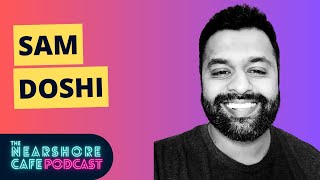
In this episode of the Nearshore Cafe Podcast, host Brian Samson interviews Sam Doshi, a sales enablement leader with a background in sales, tech, and global teams. Sam recounts his career journey from cold‑calling sales rep in San Francisco to sales enablement specialist, explaining how the role emerged in SaaS around 2014‑15 and the typical tech stack (Gong, Salesloft, Outreach, Sixth Sense, LMS). He discusses cultural nuances in sales across the US, UK, Australia, and Latin America, emphasizing relationship‑building in Mexico. Sam then shares his personal story of moving to Guadalajara in 2020, describing the city’s blend of historic architecture and modern glass towers, its reputation as the "Silicon Valley of Mexico," and the rapid tech‑driven growth. He offers a digital‑nomad guide: finding reliable Airbnb Wi‑Fi, backup mobile data, navigating phone‑plan restrictions, and daily routines that leverage Central Time. Sam paints vivid sensory pictures of Guadalajara’s food scene, plazas, and social vibe, recommends specific restaurants (Polanco, Campo Mar, Andares steakhouse), and notes that dining costs are roughly 25‑50% of comparable US prices. He also reflects on language immersion, the ease of practicing Spanish with locals, and the cultural value of hospitality. The conversation closes with Sam’s favorite Tlaquepaque shirt, symbolizing his love for the city and a reminder to return.
Chapters
Welcome to the Nearshore Cafe Podcast, home to the most interesting stories and people doing business in Latin America.
Welcome everyone to another episode of the Nearshore Cafe Podcast. I'm Brian Samson, your host, and I wanted to give a shout out to our sponsor today. That's Plug Technologies, P-L-U-G-G. Plug provides software engineers all over Latin America for growing US companies. I'm very excited to have a slug on the pod today. That's a little inside joke. Maybe, Sam, you could explain in a second. But Sam Doshi, and today we're going to talk a lot about remote work and a travel guide to Guadalajara. Sam, welcome to the show and tell us a little about what it means to be a slug.
Yeah, this is a great way to start off a conversation. Good to see you again, Brian, and thanks for the plug for the slug. Maybe that's a new saying that we can come up with here. But really, when people hear slug and they hear my name, and the funny thing is the slug's name is Sam as well, Sammy the Slug. So, I'll put it all together for everybody. I had the pleasure of going to UC Santa Cruz for my undergrad. And, uh, not only was it a great location to get, get our, you know, get, get smarter in the woods there, uh, overlooking Monterey Bay, but our mascot is a big old yellow slug. And, uh, the slug's name, I came to find out way later, was Sammy. So I think it was just meant to be.
I love it. I love it. Well, so, um, a lot to cover today. Um, uh, I really want to get into Guadalajara, but But I think first, just to kind of set the scene, tell us like, what do you do for work? And a little bit about your journey. Like, where did you start? Where did you end up?
Yeah. So what I do for work is, put simply, I sell— I train salespeople. And that's really because I used to be, and I think I'll always be, a salesperson.
Yeah.
And It all started for me after college, jumping right into the working world in San Francisco. I originally wanted to be an architect coming out of or going into school and then realized maybe I don't want to go through so much school after school. And so even though that dream was, is, is live, it was very, very much like active in my mind. I wanted to just jump right in to, to start contributing to a company and just start growing a professional career and get out of school, even though school was, it was great. But so I went right into sales and basically there, Brian, I was on the front lines. First 2 years of my sales life, we were tasked with making cold calls every single day. So minimal training, get on the phones, call businesses, call people, 100 calls a day in a 100% commission environment. And so it's funny, we were very motivated to sell in the right way so that we could pay our bills and eat. So that was some good incentive there. And then I really, I don't know, for whatever reason, I fell in love I fell in love with it and I liked the competitive nature of it. And then if I was representing a decent enough service or product, I was willing to get out there and just kind of promote it and get it out in people's minds. So decided to take it to the next level, went into consumer technology at Bose, became a sales manager, went back into software sales and decided I'd love to be a player coach. So I stayed in leadership for a while and then through those experiences and learning from other people, I really enjoyed the, the kind of coaching and putting together programs aspect of those roles. Yeah. And so I decided to go into sales management or sales enablement and, and sales training and have been in that environment for about 5, 6 years now. It's hard to believe.
Yeah.
And really that just involves getting to spend time with salespeople and leaders and putting together programs for onboarding, continuously staying sharp with the skill set. And just keeping things moving in the best way possible for a revenue team. And a lot of times I've had a chance to work with global teams. So it's been a, it's a continuous learning experience for me. So it's always fresh. It's always a challenge working at these startups, but I really enjoy helping salespeople figure things out so that they can bring the best experience to the buyer and not really worry about the process and the mechanics too often and not get overloaded.
Yeah, I was going to ask you, Sam, is sales enablement, is that a newer thing? I think maybe just a few years ago I started to see that title around. Or has it always existed but maybe called something different?
Yeah, you know, it's a really good question, Brian. I mean, it is new. Yeah, it's— I would say it's one of the new— newer-ish roles out there and really originated in tech and SaaS, I believe, really promoted the necessity for it. And enablement became a needed specialization where before it was almost like a generalist approach where a sales manager or sales leader would be an enabler. Yeah, because they were tasked with creating a playbook, creating onboarding, using their subject matter expertise, having executed the role to then pass it, pass that legacy knowledge to the next generation.
Yeah.
But then once you start having these startups that are scaling so quickly and that are needing that expertise while also needing that sales leader to sell it and lead at the same time.
Yeah.
It really necessitated the growth of that role and it became a specialist role. And I really find that I started hearing more about it. Early 2010s. And I think it, in my synopsis of it, it really started to take off, let's say mid-2014, '15 for me, hearing more about it. And that's when I started seeing it on job boards and LinkedIn and really felt like, okay, there's a strategic executionary role that is needed and let's just dive right in.
Yeah. Are there certain sales tools, or like if you think about the sales stack, like, uh, I hear of tools like Gong or something. Can you, can you talk through like what's common in a sales enablement, uh, leader's playbook or, uh, our toolset?
That's a great question. The, the holy grail for sales enablement, it's almost like a blur of an operations, business insights, coaching. So there's the art and science as we heard many times. And I believe that the dream outcome of that is to quantify everything, to almost have a crystal ball and know exactly that we're executing to the maximum level, given what's in our pipeline or what the opportunity is, like closing that execution gap. Some of the tools on the technological side, so there's a behavioral side, we need to get humans to do certain things that they feel is best for them and facilitate that. I love that. That's the soulful part, I would say. But on the technical part, Gong is, I think it's hard to ignore Gong as being the major value add on a tech stack, just because it's gonna give you that conversational intelligence and those insights to predict where you should be spending your time and the size of payoff for that time. I think other tools to manage communications like Salesloft, Outreach are really necessary because we're personalizing at scale. And we don't want to let anybody go cold right before they're about to raise their hand. And I really believe that the other piece of it is a really good content management, learning management system, because there's so much stuff floating around where, and I think the litmus test is if somebody new joins the organization, how fast can they get up to speed and just find everything they need based on their certain scenario and their role? And if we can't, If we still have that as a major question mark, then that's siphoning off so many man-hours or person-hours on getting people up to speed. And I think that's the startups especially want to get that person up to speed immediately. So yeah, Gong, Salesloft. Another tool that I really just found out, found a love for is Sixth Sense, which is a demand generation tool, which gives you a better clue in on who's ready to raise their hand. There's all these Easter eggs they put on different competitor websites and portals and G2 and things like that. And they're able to build a profile, uh, for somebody and they call it the dark funnel, like the, the what the person's doing before they enter your—
yeah, yeah. And I've been reading about this.
Yeah, yeah. It's so— it's, it's really interesting technology and we just equipped our sales team with that technology and, uh, it's starting to make a big difference on who to rewarm that's been lost, who to get in touch with that hasn't been contacted yet, and how to prioritize them. There's so many competing priorities.
Yeah. Is there maybe a guidance on size? Like at what stage do companies start to bring on a sales enablement person?
You know, this is actually a fantastic question because it is very strategic. You know, I'd love to be the second person hired at a startup and really go big and get that equity, you know, and just really run with it. But I'd really have to go back into being a revenue driver on the front lines to facilitate that. What I found in 2017 was that the average, my anecdotal look at it was right around 200 in company size, right around where you have 30 sales reps, 40, 50 sales reps. Ideally, the sales enablement coverage ratio should be like 30 to 40. I think it's these days, it's probably much more, there's much more parity there. But now I'm seeing that companies are hiring sales enablers in the first 50 employees. Where, you know, they are looking to build a sales team and right before they do, they know they need an onboarding program.
Yeah.
So I'm finding that sales enablement is coming in or enablement is coming in as that insurance on the final mile of delivery and execution because there's a lot of playbooks that are out there that we know the formula, we just don't have the behavioral backing and impetus to make it happen. So it's not like now we know the patterns, we just have to instill it. And so we can plug that person in earlier versus figuring it out first over 3 years. So we can really put that on rush, so to speak.
Yeah. And Sam, you mentioned a little while ago about global, like you've worked globally, you've thought globally. Before we get into Mexico specifically, can you just talk broadly about different countries you've worked with and how you work with them?
Absolutely. You know, I've had— I definitely have a lot of gratitude to being exposed to so many different ways of thinking across disciplines and regions. The biggest geos that I've worked with been— funny enough, Australia, where I haven't been yet, so I have to work on that— has been one that I've worked with for a number of years, a couple different companies. When I was working at LinkedIn and Carta, we had a pretty global team, and so given all that background, really it's been APAC. The UK has been big, and I was born in the UK, so that was familiar territory. Yeah. And, you know, there's other regions in Europe as well. America's been number one. Latin America, not so much. I used to work for a company named Odoo, and they had a— they had some market penetration in Latin America. So maybe about a year's worth of experience with our neighbors down south. So, you know, that was interesting as well. Some of the things I've noticed has been Latin America. It's one of the most special places to me because you can really build relationships there and people put a lot of capital and heart into who they do business with. They put a lot of value on how you are treated and how you are as a— how charming you are, so to speak, because it's a proxy for who you are as a person. How do I want to spend time with this person? Is this person a good person? Yeah, that was really thick. That was very much felt in Latin America. And we need to lead with that rapport genuinely, authentically. We need to find a reason to care about them. And then we can do business about with them. I think in the US, it's so fast-paced. I've even noticed cultural differences between the West Coast, you know, Chicago and the Midwest and the East Coast. I've noticed that when we used to do presentations and do these tests for people joining our team, New York had a specific style, Chicago had a specific style, and San Francisco was just crazy. They were just so like, not to put us ahead of anybody, I'm not even living in San Francisco anymore, but they, in the area anymore, but we just, it was a different cadence and speed of communication and anxiety level. And I've noticed in the UK, there's a, there's, they're much more sarcastic and they want to kind of, uh, have a little bit of that, you know, playfulness to it, but they definitely get down, they want to get down to business, but then also know you have a personality.
Yeah.
And I think in Australia it's a whole different bag. I'm learning for Australians, they have their own way of doing things and they are, they're very upfront, which is very honest. And so you need to treat them with the same treatment. You need mirror match how they prefer to, to operate to really earn their trust. And nothing works without trust.
That's cool. Um, just something I, I was thinking about as you were talking, how does that translate, um, with, uh, how sales is done in SaaS today with like a lot of email. It's a lot of email warmups and getting like hitting them over email in the right way at the right time before you even get a chance to get on the phone or, you know, do a demo and show that personality.
The space within you, you have to play to showcase your tone and personality is, is pretty limited.
Yeah.
And these days I feel like at least my take in 2023 here in August is going to be there are universal email principles that we can lean on. For example, give me the headline, lead with the lead, give me the headline first and how this is going to matter to me and you know my problems. Then so you lead to the pitch. Do not talk about yourself first. Rule number one and keep it short. Keep it bulleted, make sure they do the least amount of effort for maximum amount of value. And so here's your headache, I have Advil. Not I have Advil and it's really great and it's easy to, you know, blah, blah, blah. But I need to acknowledge your headache before I provide the pill. And so everybody I find resonates with that to a certain extent. I feel like once you start getting into the deal, that's when you really start like the discovery call, the disco demo or those mid-cycle deals, uh, that deal events, that's when you really need to be not only a great project leader, especially if you're dealing with enterprise sales, like you need to manage the project.
Yeah.
But you also need to manage the psychology and the emotions. So certain people in certain roles, they are never heard in a deal and they will never champion. So working with your champion, that's the ultimate in showcasing your personality, is if you can build a giant amount of trust with your champion, and that's when you can really come together and let your colors fly when it comes to who you are and how you're trying to match their culture.
Yeah.
For example, if I'm going to work with a champion in Latin America, you know, I'm going to fly out there. Yeah. Well, obviously selfishly, and we're going to build a relationship. In America, I'd love to fly where they are, but I'm going to have to showcase just raw data and value right up front. Before, it's almost like the rapport is a chaser versus the shot. And they're both great ways. I'm much more of a rapport builder, but I understand that in America there's a lot of saturation and there's filtering out process that needs to happen first before folks decide to tango. So those are just a couple of thoughts, but I think those mid and then working with, so in summary, I get, I think emailing, there's certain universality, universal rules. Mid-cycle, it gets a little bit more artful and then working with your champion, it's, you can really lean on that art and still provide value.
Good, good. Well, this is the Nearshore Cafe and the meat that I wanted to get into was Mexico, specifically Guadalajara. Sam, how the heck did you end up there?
Yeah, I'm kind of there 50% of the time in my mind. So as you can see with the t-shirt we were talking about too, I'm representing, but the origin story was really, I think, tied to what we all went through in 2020.
Yeah.
And the wake-up call of, okay, urgency has now shifted into second gear, and what do I want to do that I've been gratefully afforded the effort to do? And let me just call that out, because if I know there's a lot of folks and times in my past where I couldn't do this, and that just motivated me more to do it, but just to do it the right way and in a responsible way and respectfully. So, really, thanks in big part to my friends, Nick and Carmen and their family. They're married and they have 2 kids. I've known Nick for 30 years. I've known Carmen for 20 years. They both met each other at UC Santa Cruz, they're fellow Slugs, and they ended up getting married and have this beautiful family. We've been keeping in touch. We've started businesses in the past and we've been keeping in touch. And, Nick just loves Mexico. Carmen's family is originally from Guadalajara. And she grew up in Napa. And so it's always been in the mind. We decided to just jump right in. And in October of 2020, we took a last-minute trip. We all got wine together in Napa. We, you know, after a couple glasses, the travel plan started really formulating. And then the bookings happened. We're like, we got to book it while we're still a little bit buzzed. Otherwise it's not going to happen. And deal with the consequence, the good consequences later. So we ended up going to Napa. 4 days after going to Napa, we were in Guadalajara.
Oh my gosh. This happened fast.
Yeah. Very fast. It's just, you know, when you catch the spirit, you catch that Holy Ghost, you're just like, I need to go. And you don't think about it. And you know, if I do some research, I'm going to talk myself off. No, no research. I had no idea what the city was going to look like. I thought it was the size of Concord, California or Walnut Creek, like 100,000 people. And it's a 2 million person city as I now know. And it's like the Silicon Valley of Mexico. So, and I kind of liked not knowing about it, you know? And so we went 4 days later, we were looking at apartments in Guadalajara and having the greatest time hanging out with the people and enjoying their culture. And when we came back, I was about to sign a new lease with a townhouse in Walnut Creek. And on the way back, we were going through a connector in LAX. I called the leasing agent and canceled it. So the decision for me really solidified at two airport lounges, one in Puerto Vallarta where we were connecting, and then the second leg was at LAX connecting back up to the Bay Area. So I clinked beers with them and in Puerto Vallarta I was like, I'm in. And then in LAX I canceled my lease and then the whole logistical kind of cadence kicked off and I basically sold as much as I could. And December 15th, I flew in, landed at 5 AM, went to an Airbnb, which I had to book the day before so I could get access. And then all of a sudden really start to put my, put my Spanish to the test, which was definitely not testable at the point, at that point. But I remember waking up the next day, walking outside, and there was just a giant group of people in the middle of the street checking out a fair. And I was like, I got chills. I was like, I'm already in it in that one decision. I'm here. And now I'm in it. And I just, yeah, it was just basically a love affair from that point on. I was just like loving the culture and the experiences.
Amazing. Give us a sense of just living in Guadalajara, like the sights, the sounds, the smells, the food. Yeah. Just, you know, traveler's guide to Guadalajara. Yeah.
Well, this one I could talk about all day and I love how you made it so much about the senses, Brian, because it's truly, that's what it was. It was a full-on every Nerve in your body is just alive and you're just experiencing new things. You know how it goes where you're just like, you know, in a, I don't know, you're just in a new world.
Yeah.
Food-wise, some of the best food I've ever had in my life. I mean, we knew that, you know, I mean, Mexican cuisine is like, we love it here. It's just going to be better over there. And it's just, there's nothing like it because what I noticed is that you have all these small businesses and they really care about what they produce and they want to not only produce good food, but they want to have a great dining experience with their patrons, and they talk and they socialize. And so the community feel of aspect of everything that you do there is just so palpable, both the food-wise and just walking around. Just culturally, the colors, I think we all picture, picture that it's vibrant. It's, um, it's very, uh, charming. It's very much, let me make sure you're having a good time. And comfortable, and then I will worry about me. I don't— in fact, it's like, it's insulting to them if you don't let them make sure you have a good time.
Yeah, that—
let them care for you and be hospitable. It's just, it's so— it's, it's a must. And you start, you start looking at different things. Like, you look at folks just walking around the parks, and really, there's a lot of romance in the city. There's a lot of folks holding hands. There's a lot of grandmas walking with like family energy there. Grandmas walking with their, you know, great grandkids on a Sunday. Like they prioritize the family.
Yeah.
And those ties in such a major way that it just gives you energy when you see things and people are happy and they're just grateful. And I think just another point, and let me know whatever you want to dive into, but another point is just the feel of the city, the style. You know, when you walk around, it's like it's got the history, it's got the soul, it's got the architecture, a little bit, you know, a little bit of a colonial, a little bit of, you know, mix of traditional. And there's the Zapopan part, right? The very, like, the true Mexican kind of heritage there. And then there's the European influence. So you kind of feel like you're going back in time, but in a very modern way. And you feel like you have options. You feel like you can really live a full experience there. Because you're— and you're— you— number one thing for me is, you know, you're gonna meet somebody and, and have a great conversation no matter where you go. And that other person is going to be just as eager to talk to you about their world as you are about yours. And there's no hesitation there. So you can just lean right in and you can just get into it without— and feel good about it. So it's just, it's just the vibe is incredible.
Yeah. And when you talk about the architecture, um, I'm trying to, you know, maybe imagine or envision it. Is it cobblestone streets? Is it— are there random skyscrapers in between, you know, like old ancient architecture? Help us think through that.
Yeah, that's a beautiful place to kind of think about because it is— you've got a great feeling about it. It's got the It's, you know, it's, it's, it's a city in transformation. My buddy Nick put it really well. He's like, this is the rise of the middle class here. And it's like, you're on this, like, you're on this really cool, unique, once in a lifetime journey where the city goes from where it's at, where it's got a lot of old architecture, right? Hundreds of years old, but beautiful, beautifully maintained cobblestones, bricks, like real, like masonry everywhere.
Yeah.
An art. Like, every, every building is a piece of art because somebody decided to go a little bit extra and make it, you know, personalize it. It wasn't about efficiency, it was about soul. It's about creating something that people are going to get inspired by, and deliberately, versus like, all right, let me shave off 50% of the cost here and just put up a flat wall. No, let me paint it pink. Let me put some arches in it. Let me, let me make it a piece of artwork. Yeah, you can see it. You can see that intention. And then the second piece is there's a, there's a zone called Providencia and Andares, and that's where the new malls— the new mall is. There's a bunch of new malls. Then there's some of the malls that would rival on a different scale, but rival those in Dubai. Yeah, I used to call Andares mini Dubai because there's angular architecture and skyscrapers and modern glass and steel and different colors. It just looks like a city of the future. It's a lot of glass. Yeah, and there's all these different geometries. And so you go there and you're like, okay, I'm in a city that's like Dubai, and then I go 10 minutes outside of that and I'm in this like ancient, more historical section, this really nice little cutout bar. Or I go here and there's a giant club that's playing music that you can hear a mile away, and it feels like I'm in, you know, I'm in Ibiza or something like that. So it's— the variety is insane. There's so many different flavors that, uh, Case in point here is you'll wake up feeling like something's pulling you to go outside.
Yeah, that's amazing. The way you describe it, it makes me think of, think how it's integrated. Like they didn't build over the past with glass and steel. They maintain the past while finding, finding areas they could put some new development into.
It's a great way to put it. Yeah.
I wanted to also just ask about the English-Spanish. What does that look like in Guadalajara?
Yeah, I was thinking about this the other day. It's amazing how fast you can learn something when you need to. You start saying things in Spanish that you just never learned, but you put it together phonetically. You just reverse engineer, like, what would it sound like?
Yeah.
And so that's part of the fun too, is it makes you feel like a kid again and you're learning new things, like going to school for the first time.
Yeah.
And so, and then time moves differently, as they say, right? Because you're so active. They're so charming over there that like they will make sure that you're okay. And they'll, they'll, a lot of charades can be going on at the same time. Like we're, you know, very animated, uh, to, in, by out of necessity to just figure things out. There's a lot of English-speaking folks. There's a lot of English that's being delivered in school and taught in school. But I feel like the experience is you should definitely learn Spanish. Yeah. And I started, I remember about 6 months into it, I started having dreams in Spanish. And that was the first time I ever experienced a dream in a different language. And I was like, okay, my brain basically, well, the first step, my brain is working. That's good. And that was a good confirmation. And the second thing was like, wow, it's really actually, you know, adapting to this. And it's funny because I would— when you speak in Spanish, you— the conversation has a different flow and it's just— it's a different rhythm. And so it's a whole different experience, a whole different way to just experience the tempo of life because it's just a different tempo of language. It's reminding me how important language is and, and, and just the, the pleasant— how pleasant that sounds over there. Yeah, you start— when you start hearing people, you just feel like everything that they're talking about is just good stuff. Yeah, so yeah, yeah, I think you can get around. I think takeaways would be you can definitely get around if you know no Spanish. People will— there'll be enough English speakers to help you, um, and you can start pointing at things. But, uh, when you're in the Uber, you'll probably hear first like, oh, where you from, right? And they might say it in English, they might say it in Spanish, 50/50. But if you can use those Uber rides to practice your Spanish, sometimes what I've noticed is they'll actually egg you on and say, hey, practice your Spanish with me right now. Again, showcasing how much they want you to get in it, to get to be in it, you know? So just, yeah, really, really easy to get in. Really a lot to chew on if you want to learn, and you'll learn naturally just by getting around. If you don't have a car, you're just taking Ubers, that's a big help.
Yeah. Sam, what did you mean when you said it's like the Silicon Valley of Mexico? Can you provide some context around that?
Yeah, that's really what that has to do with is the amount of tech infrastructure that's being invested into the city. For example, there's a large footprint of international corporations that are, that have engineers there. What I noticed that the Bosch has a building that they own there, I believe, or have some ties with. And there's a lot of engineers from India. That are working in Guadalajara and they'll be there for a temporary amount of time. They'll live in one of these high rises or they'll get into the city somehow and it's close enough to work and they're just there to take care of a job and then they get to experience the beautiful culture. But yeah, for example, Bosch is there. There's some other companies, there's some big hotel chains that are there as well. And so they're just catering to this kind of international contingent of consultants or freelancers or workers in the tech world especially. Tech and manufacturing, I would imagine. And you see these footprints growing more and more. And alongside that, you're noticing that there's a lot more construction. I think when I left, there was 20 or so high rises going up for apartment buildings and condos. Oh, wow. And yeah, if I look out in this street called Chapultepec, which is like the main avenue for all the bars and restaurants, one of the bigger ones, you start to see you know, there could have been 5 to 6 huge cranes building 20, 30-story, 40-story buildings and they're putting a pool up at the top. And so, yeah, it's, it's really going into this exciting, fast growth era. And that reminds me of Silicon Valley as well here in the peninsula, San Francisco and San Jose, where it's like there's massive amounts of capital flowing in, just buildings going up everywhere. And it's all driven by tech and just this prosperity that's come in and for opportunity for locals and international folks. And it's starting to change the complexion of the city. But you also on the outskirts, very close, 10, 20 minutes away, have pueblos. So you have literally have cities that have a plaza that hasn't been touched or changed in 100, like 100 years. So, and then. You can see from some of the rooftops in those homes, homes that have been there for 50 plus, 60, 100 years, you can see a new skyscraper going up in the city.
Yeah. Sam, from my understanding, you were working full-time when you were there. Tell us about remote digital nomad, remote worker life out there.
This is something I like to think about a lot because there were two phases. One was absolute chaos and scrambling. And funny story is I once stayed at 3 Airbnbs in one day because it's probably a user error because I did not do the diligence of making sure that my Zoom life was going to be able to connect to the rest of the world. So I had one meeting I was able to pull off on my phone, left the Airbnb, got in touch with the host and said, I got to cut, I got to get out of here and booked another one. That one failed. I went to a hotel, talked them into letting me use a side conference. Room and tap into their Wi-Fi and they had no charge, no problem. So they were very much like, this guy's completely lost and he's about to get fired. So let's help him out. So, you know, I just, yeah, it was scramble mode the first week, but it was actually the most fun week to be honest. Cause I felt like I was in a, I had purpose every day to get something done. But having said that, rest of the year I was there. Total, total breeze because they're so digital nomad friendly. There's so many Airbnb listings, $50 a night, $100 a night. If you pay more than that, you're getting the fastest connection. You are getting a pool on the roof. You're getting— not that this is the main thing you're looking for. Like, I'm sure people want to get more involved with the culture and just forget about all the luxury stuff. But if you want to live it up, you're going to get a pool on the roof. You're going to get a gym on the roof. You can get a really nice 2x2 or 2x1 or 1x1. Like, you're going to get— and the router is going to be extremely fast. Now, one thing I would watch out for is some of these Airbnb, uh, units, the host will have 4, 5, or 8, or 10 different units in one building, and they'll all use the same router. So if they say this is fast internet and all their units are booked, you do have the risk of that shared connection getting pre-taxed. And, uh, best, best play there is to have a backup plan, like use your Upgrade your international plan. I have T-Mobile, and upgrade it so that you can go way beyond 5GB. Go to 50, go to 100GB a month and make sure there's nothing stopping you. Last thing I would watch out for is absolutely don't— watch out for your phone plan's restrictions, because if you're using your phone over there for more than 50% of the year, they're going to kick you off of the US network and you're not going to be able to leap for or piggyback off of the antennas or the, uh, the infrastructure there because they're thinking you're— well, you're there, so that breaks our agreement with the telecoms. I'm— only reason I know this totally random knowledge is because I was in a yelling match with T-Mobile saying that you just cut my, my connection. Yeah, right when I lost my, my debit card in the ATM where I needed to call customer service. So I was calling customer service using Dialpad for my work laptop.
No.
So, you know, you figure out all these things, you feel like, oh, I learned a new skill, learn how to scramble and not, you know, lose my— blow my top here. But yeah, I would say if you want to feel good and like totally calm, have a— have redundancy. Have a local phone number with unlimited Wi-Fi mobile hotspot ability. Um, and most these Airbnbs, 9 times out of 10, like, you're gonna be fine.
Yeah.
But I will say one drawback— it's not a drawback, but just something to get used to— is once you're in Mexico, you want to be in Mexico 100% of the time. Even though I love the US, I'm here right now, I'm in San Diego, but if you're there, you want to be there 100% of the time. So it's hard to sell the dream of go to the beach, be on the laptop. I think it matters what type of work you're doing. So I would say compartmentalize it. Like if you can work where you're just slamming through work in the beginning of the day before noon and then go to the beach without your laptop, that's what I would do. Yeah. Unless it gets boring and then you're like, well, I can work anywhere. I'm integrated. But I think in that first couple months, like really just jump in. Don't get, uh, distracted. I think the tough thing is if you're getting yelled at by your boss— not that my boss does— but if you're getting— if you're dealing with conflicts or difficult things in the US, you're problem solving in the US, in the US culture, that's going to come through the laptop. Yeah, you're basically inviting it into your, into your sanctuary. So that's the tough thing about working from home anywhere, right? I invited to my, my apartment here, but over there you're going to feel a little bit more tension because you're like so far removed.
Yeah. Yeah. When you found your rhythm, what was the, what was the workday? Like what time did you wake up? You know, just kind of talk us through the, the whole experience. Like when did you work out? What did you have for breakfast? Like, like the, the whole, you know, uh, remote worker day.
Yeah. Yeah. It, it, I like how you said it getting into the rhythm, 'cause it took, definitely took a little bit of experimenting, like what really works, like what is that gonna look like? Yeah, for me it was, uh, yeah, all through my laptop. I had no monitors or anything. I was like, I'm just gonna work for my laptop, you know, no setup. I would usually be sitting there at a random Airbnb table or a cafe. And so a lot of this, a lot of cafes that have these little conference room areas too, which I found, which is really cool. Um, wake up, you know, I would normally start work 7, 8 AM when I was living in California, but no, I definitely took advantage of the fact that I was Central Time there.
Yeah.
And so I was able to go get some coffee. So I wake up, right? 7, 8, go get a coffee and get that caffeine in the veins. Then open the laptop, get into work. I would try to crank out all my meetings with people before noon.
Yeah. Yeah.
Just so I was like, oh, I got a whole rest of the day. I can still do project work. I can still do stuff that I can bring my laptop with me, but I don't have to be alive. I can just basically type and be in the environment. So I really started, I split the day. Heavy stuff, like heavy deep work meetings, morning. After 12 o'clock, that's my treat. Go out and go walk around and just go get immersed. I'm very much a night owl, so sometimes I can stay up until 2, 3 in the morning. Usually I cut out by 1, at least, hopefully earlier. But yeah, usually my routine is like go work out 5, 6 o'clock where I don't feel like there's a looming deadline ahead of me. The one thing I'm not good with is I really enjoy working out, but I don't like having to work out, and if I feel like working out more, I have to cut and go to a meeting. I like to kind of have the freedom, so I do that at night. And then it was just go hit the city, you know, go talk to my friends, go, go meet some people, go out and just get some food. It's a really good rhythm of life, and the pace is, uh, is so different too. There's not that as much traffic as here. Everything is walkable.
Yeah.
And there's a lot of gathering places. In Mexico, plazas and squares, and people are filling it in. Where here it's so car-centric, right? You don't really see people. Everyone's kind of like sealed off. So it's just, yeah, the vibe there is very much like that European vibe that you can imagine.
Yeah, I love that about Latin America is just this like vibrant city centers, plazas, people, and they're not glued to their phone. They're not in a rush somewhere. They're just they're just there, you know.
And yeah, one thing I noticed is that they're not— which I loved, which was they're not— they have swagger, right? So they have the ability to say, I don't— you know what, I don't feel like showing up for this meeting. I'm gonna— I have something more important to do. And they just do it. Um, and to me, that's so foreign, and I love it. I'm inspired by it because here we're so deadline-oriented. If we're a minute late, we're sending an email to apologize for being a minute late.
Yeah.
And we're so regimented calendar block-wise. And so just really quick, I just want to say, Brian, you know, there I noticed when I was setting up my cable for the first time in the apartment that I, uh, spotted Like, they didn't show up for 2 weeks and I was not mad. I was actually very proud. They're like, and they literally told me, I'll show up when I can show up and that's it. And I was like, that is the most beautiful thing I've ever heard. Because you could get mad, right? But I'm like, then I'm the problem. I'm like, oh, I'm going to give you a bad, you know, one-star review and all this stuff. And I'm like, no, this is the, this is, that was, this is where it stems from. This expectation of you drop everything for me, forget that. Because then that means I cannot have to live under that pressure if I don't put that person under that pressure. So I loved it. That was one of my favorite, favorite, favorite experiences was getting blown off by the cable installer because they were like, yo, I have something more important to do. I have a life. So it was a reminder that, oh, that's what's important.
That is amazing. I love that. I love that piece. Let's talk a little about food and, you know, favorite, actually, even if you want to give them a call out on the show, if there's a name of a restaurant that, that was just a great experience for you and any advice on what people should order if they happen to be there.
Yeah. Yeah, this is a great question. We all love food. So, you know, we can— let's dive in. So one of my top— two of my top favorite restaurants, one is Polanco. It's kind of on the western side of Guadalajara, just outside the, the central, uh, part of the city. Really good seafood, really good just everything fresh. And, uh, you can get pastas there too. And every place has good food for, for kids too because it's so family oriented. Um, Polanco is one for sure, gotta hit that up. There's a restaurant I went to, I forget the name, where I had grasshoppers the first night I was there. I didn't go back there, but I understand the appeal. But there's a lot of like that kind of stuff too you can get into if you want to be more exotic. The other, the restaurant that was one that we frequent quite a lot was Campo Mar. Like really good seafood, really good appetizers. Just, you can get great entrees there too. Just delicious chef, just almost very bespoke stuff. Layers of flavor just presented extremely well. Just delicious is the word I would use. I forget the name, but if you go to Andares, there's a steakhouse there where I got this ribeye and it was like one of the best ribeyes I ever got. And I just dream about going back there. And I had oxtail there one time as well. And they had just great drinks. And I'm big into cigars and less into drinks as I used to be, even though, well, if you catch me at the right weekend, you won't believe that. But There's a really nice cigar place in, in Andares as well, and Chapultepec. Um, there's just— it's so comfortable if you like that kind of thing. And there's another restaurant where I need to— I need to maybe put it at the show notes or something like that when you kick it out. But one of the— one of the— speaking of ribeyes, one of the equip— equally best ribeyes that I've ever had. It came out on that kind of Himalayan salt stone, and they put that— so the kosher salt right at the— right before presenting it. They were carving it up and just that whole experience was incredible.
What did the price point look like for this amazing food? Is it about what you'd spend in San Diego, 20% less, half as much? What did that look like for a really world-class meal?
Yeah. If you're thinking world-class meal, top-notch, something you'd right up there. I mean, you're looking at 33%, like a third. You're looking at max, like if you go crazy with it, 50%. Yeah. But most, a lot of the times we were getting world-class meals to the perfect phrase for it, 25%. You can, so basically if you, if you have a family, you're paying for one. If you have a family of four, you're paying for one. And it's, you can, what I noticed is the, how it changes you. And, uh, you know, obviously you want to share the wealth. You're going to take out whoever else is there and pay, take the bill, right? Pay the same, spend. What I found out is this: I spent more there because I was unhinged, but I got 10x more in return.
Yeah, yeah.
So I didn't save any money, but basically I didn't care about that because I was like, I'm going for broke, literally. But I got 10x more than I would here. And I love it here, but it just doesn't stretch as far. And what I would try to do is not come off like a total jerk about it and flaunt because I'm in their culture because I'm like, I'm appreciating their culture. That's where I want to be. They built something that I want to be at. And I was like, let me just take out as many people as I can. So, you know, let's all come up. And that was just a great experience. But yeah, such a huge difference in Delta in what you spend. Massive, like half price minimum.
Yeah, I love that too. Let's start to wrap it up. But I wanted the big finish to be about that shirt you've got. Tell us all about this.
Yeah, so if you take a look at this shirt, you'll notice it says Tlaquepaque, right? Which became one of my favorite words. And it's a plaza south of Guadalajara. It's about 20 minutes south of the main city center. And it's where you can get some of the best birria, the best, you know, experience. It's like a circular area with stores and restaurants all around it. And there's a middle kind of gazebo where they have a live band or they sing or they take requests and they'll pass around the mic to people in the, in the crowd that circulate it. And you just sit there on a Sunday and you just have a good time and everybody's doing the same thing. So just the best, the most fun you can have. It's just incredible. I was like gonna, after being there for a couple months, I was like coming back to California. I was like, let me get some gifts for everybody. I ended up buying more stuff for myself than buying gifts for anybody else. So I, this, this and another shirt, uh, were two of the things I picked up. This one I liked because it had the, that style of Batman showing in that kind of, you know, uh, old style. Uh, so I was like, okay, that's perfect. That's what I'm gonna be wearing that one for as long as I can. And it gives me a reason to go back if I wear it out.
Love it. Love it. Sam, man, this, this has just been a blast. I think a lot of people listening are going to start booking tickets to Guadalajara.
As long as they take me with them, you know, I'll be there. I work for free. If we're traveling, I work for free. It's been a blast, Brian. I mean, I really appreciate the opportunity.
I like it. Well, thanks. Thanks so much, Sam. Thanks to our listeners. Thanks to our sponsor, Plug Technologies. Plugg.tech, great way to find software developers all over Latin America for US companies. Sam, hopefully we can have you back again, and everyone, we'll see you next time on the Nearshore Cafe.
Thanks for joining us at the Nearshore Cafe podcast. Tune in next week for a new episode featuring another special guest with exciting stories.
Mm-hmm.
More from Brian

From BPO Agent to Client Experience Manager: Ana Rodriguez on Nicaragua's Nearshore Talent

From BPO Agent to Client Experience Manager: Ana Rodriguez on Nicaragua's Nearshore Talent

Building Sales Teams in Mexico: Mario Oliveros Figueroa on LATAM Talent & Cross-Border Selling

From Automation Engineer to Data Platform: Victor Fernandes on Brazil Tech Talent

H1B Crackdown & The Nearshore Shift: Robert Bouchard (H1B Guy) on LATAM Talent | 🎙 TNC

Nearshoring Yourself; step by step to building an expat life in Mexico |🎙 The Nearshore Cafe Podcast

Scaling high-performing teams in Costa Rica staffing legend Doug Firestone on growing to 225 LATAM

How to Scale in LATAM? Navigating Currency, Taxes, and Labor Laws | 🎙 The Nearshore Cafe Podcast



AI in LATAM: How to Break Into Mexico’s Tech Market |🎙The Nearshore Cafe Podcast