🇦🇷 Scaling a Startup 🌎 Argentina to Miami 🇺🇸 (Part 2) | 🎙 The Nearshore Cafe Podcast
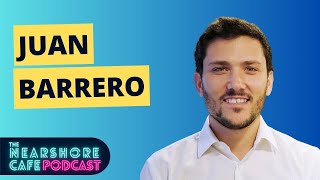
In this episode of the Nearshore Cafe podcast, host Brian Samson chats with Argentine entrepreneur Juan about the cultural fabric of Argentina—its food, especially Patagonian lamb, and the all‑consuming passion for soccer—before diving into Juan’s personal journey from a small town to a globally‑focused founder. Juan recounts his education abroad, early service‑based ventures with his father, the creation of a fractional CFO firm, and the launch of Lazo, an all‑in‑one finance, legal, and fundraising SaaS platform for startups. He explains how Argentina’s high‑quality, English‑proficient talent, honed by decades of multinational delivery centers, offers a “senior‑level at junior‑price” arbitrage for U.S. companies, while the country’s chronic currency devaluation pushes professionals to seek foreign‑dollar‑paid work. Juan shares insights on hiring Argentine talent, the challenges of doing business amid political and economic instability, and practical advice for U.S. entrepreneurs looking to nearshore. The conversation closes with light‑hearted anecdotes about English words, favorite low‑cost purchases, and a call to leverage Argentine talent despite systemic hurdles.
Chapters
Welcome to the Nearshore Cafe podcast, home to the most interesting stories and people doing business in Latin America. Yeah, I was going to say, usually when I would have guests to, or when I was there and I would have guests come visit, we would go to La Cabrera because that's like a kind of an easy transition in. It's also very, very good. And it's the only place I knew that served at Western times, right? Like you could eat at 6 PM. You didn't have to wait until 10 PM, right?
Yeah, yeah, totally. And it's gonna open in Miami, I think so. I think I heard about that. Okay.
Yeah. There were two other places that were personal favorites of mine. I'm just curious if you had been to Campo Bravo and then Calden SoHo. Do you know either of those?
I've been in Campo Bravo. I like it. And the other one, I know— I don't know, when, when do you go to that one?
Oh, it was like, uh, in like kind of like right by Plaza Armenia, um, kind of around that area. Yeah, uh, called in SoHo.
Yeah, yeah, yeah. Maybe next time. Yeah, let me know. And I'm a big fan also of the, uh, Patagonian Lamb.
Um, my family, we, we really enjoyed that.
Yeah, my family has like a, like a farm in the Patagonia, and, and I'm like, I'm a very fan of, of the, that Patagonian lamb. So also, whenever you come to Argentina, if I'm there, uh, we will, we will do a lamb too.
Yeah, I'll let you know. Um, uh, when I was in both Shaltan and Calafate, oh my gosh, the lamb was incredible. It was so good. I've never had anything like it and maybe never will. This is fun. So the other thing I wanted to talk before we get into business, because I know from our prior conversations how much soccer, football, you know, matters to you. And, um, tell me, um, in our audience just a little more about how important that is to Argentina as a country, culture, um, the World Cup experience. Can you talk more about that?
Yes, I think, um, I don't know how many countries, probably Brazil, Argentina, Uh, but in Argentina, soccer is like, um, you have to play soccer. Like, your parents, all of them are gonna send you to play soccer. So it is in your blood from since you, you are kid. I think it's changing a little bit, but still, like, the people are like crazy about soccer. And then there is like everybody is fan about one team. And it's not like in the US, you have baseball, NBA, football, you have MLS now with Messi here, but we can talk about that too. But in Argentina, we only have soccer. So like we have the other sports, but they are not professional and they are not that big. So basketball, we have other sports, rugby, hockey, and but In Argentina, football is like— and so, sorry, soccer, like we call it football in Spanish, um, is like huge, huge. And then you have these big two teams, River and Boca, and it's like a Democrats versus like, um, um, Democrats. Yeah, yeah, it's like a very, very rival, and people are more into the other team lose than their team win, you know, right? Like, I'm a River fan, so I, I enjoy more seeing Boca losing than River winning. Like, everybody's like that, you know. Sometimes probably a lot of people are not gonna tell you the truth, the truth, but the people is like very, very, very rival. And then you have in there, you know, like Racing, Independiente, Estudiantes, Gimnasia. You have all the teams like very rival and they all think the same way. And it's, yeah, it is like a, the conversation in everywhere, you know. Just if you don't, if you're not watching soccer, you, you miss the conversation. You are not there in the conversation, in those barbecues, you're not there. Because sometimes you don't talk about football, soccer, always. but he always comes to the table, always. And now, like, everybody is watching the MLS. It's incredible in Argentina because Messi now is playing in the MLS. Everybody is now watching the MLS that never, never, never, never, never, no one knew any team about a US MLS team. So now people are watching them and this, and everybody is with the Messi jerseys. So It is, it is amazing how people get crazy. And I don't know if you've seen the, the images when, when we won the World Cup, but they were like, oh, incredible. Yeah, on this, in the same place.
Yeah, yeah.
I don't know how many, but it was crazy. And, and Argentina said like, we have like a very poor currency. And Argentina is always in the World Cups one of the countries that take the most fans to the World Cup. People sell everything to go to the World Cup. And, and Argentina is having like a real like the devaluation and people are losing a lot of, um, um, how do you say when you Well, like their wealth, right? Yeah, they're well poor in the country. In the international, you have to travel, they— you can buy less dollars, right? So people are in Qatar, in the last World Cup, there was like always half of the stadium was Argentinians. Like, it was amazing, 20,000, 40,000 people in the stadium. And you can't believe how Argentina is doing that bad and how many people are, are there, you know. It's just it's, it's really crazy. And of course, if you go to Argentina, you have to go to a River or Boca game. And yeah, you, you can see videos on YouTube, you will see River Stadium right now is amazing. Like, people, yeah, they, they, they did some refreshment and they rebuilt a little bit the, the stadium. And now the, the atmosphere in River Plate— Boca Stadium used to be, I think, more fun but it's probably a little bit more dangerous. But River Stadium now is really, really, really cool. And it's even, I think it's good to go with family. You can still go with family and that. And you know, in Argentina, it's like 6 years ago they start like not allowing anymore the visitors, the guests. Yeah. Fans. You only can go the locals and the, you don't, you like, you people from other teams can go to the River Stadium. You have to be from River to go there. And of course, there are always people who are from the other team who goes with all the jersey and, and they go to see the game. So like, it's that crazy that people like— and of course, the difference, for example, you here in the US, you can, you can drink, buy a beer in, in the stadium and have like a an important moment with your friends and go with family or whatever and relax. And you cannot sell alcohol at all in those stadiums because the people get crazy.
Yeah, don't hate me, but I went to Boca, not River, when I was there. But it was— what an experience. I mean, now when I go to sports in the States, it feels so boring. Right? Like it's quiet. Like what's, what's, you know, you need like the, uh, um, like the, um, the, uh, scoreboard to, you know, tell you what to do, like clap your hands, you know, but when you're, when you're, when you're in, when you're, when I was at Boca, like it was like a musical and everyone's shouting and yelling and little kids are shouting insults and it was what a, what an experience. Yeah. Yeah, it was so fun. By the way, it's funny what you said about the IDs. So my wife and I went and we had to use, like, fake IDs. Like, I was Margarita or something from— I had my Boca ID, and it was hilarious.
Yeah, it's fun. I also appreciate how Americans are so good building shows, right? Like, you go to an NBA game and then you have people dancing, people like cheering, like the, the— so I think that is also cool. So it makes like more a show. But I think that's why Argentine soccer is so different, because the show is something totally natural, right? It's not like—
yeah, yeah.
And, and that's— yeah, but I really admire how Americans are good building shows too.
Yeah, thanks. So let's talk about business a little bit, Juan. So I appreciate you representing with your t-shirt Lazo. Tell us what does Lazo do and how did you, and a little bit about your journey to come up with this.
Okay, Lazo is an all-in-one finance, legal, and fundraising SaaS platform. Basically, I'm building a product after scaling two services companies. Just a little bit about me. I was born in this small city. I went to United States for a Rotary Youth Exchange Program. I was an exchange student. I was the only one speaking Spanish in Wisconsin. So people used to call me one, two, three. They used to make me that. Um, but I went back to Argentina that year. In the United States gave me like really the motivation to become someone, to, to visit the world, to open the eyes, and to— because I was coming from this small, very small town in Argentina. So that year really changed my life and gave me that energy that I still like have since I— since then. So I studied hard in university. I studied— my father was a CPA in is a small town. So I study accounting, finance, and business administration. And then I got some scholarships. So I got to— I wanted to visit the world, right? Like after that year in Wisconsin, I wanted to visit everyone. I wanted to meet international people, other cultures, places, and travel around the world. So I was— I didn't have money. My family wasn't wealthy or didn't have money to give me for traveling. So I was always looking for scholarships. So I got a scholarship to study in France, I get a scholarship to study in Germany, then I, I got another scholarship to study in, in Taiwan. So I got this international experience, like also traveling all the time. All my savings were always for, for traveling and to getting to know people, to, to have more education, to have more resources for myself, and So I went— basically, I started to work in big corporations at the beginning, 5 years, and then I wanted to become an entrepreneur. I noticed that I didn't want to just have every 6 months like a, a evaluation of how was my development in the company. So I wanted to prove myself every day. So I want to feel like I want to build myself, I want to have liberty, I want to just keep traveling. I want to— like, I'm not gonna have money to keep traveling if I keep working here, so I need to build my own business. So I started, I started with my father the first business, which was a knowledge-based services, which is serving these farmers. That was farming, and agribusiness is the number one economic activity in Argentina. So we— I was seeing that no one was really solving the founders— the, the farmers' problems in terms of finance, administration, legal. And the farmers are really production people, but they are not finance people normally. So I wanted to give that part. So we built the consulting thing with my dad, and we got to like 60 people. We scaled that business very fast. And one day my father said, I don't want to have any more problems. You're pushing too much. You're always going more forward and bringing more problems to the table. And I wanted to keep bringing more problems and he didn't want it more. So we split the company and I decided, okay, I think agribusiness is not going to give me this international thing that I had in my blood. So I started to work with the startups, um, and I built another company which was like the first fractional CFO company in Latin America that is called CFO Startup. Very original, the name. But we— I started building that service team, and it was my first time, um, creating services for international customers. So with local talent, Argentine talent, so to other companies in the world, but in Latin America. So we built this consulting firm also for startup venture-backed startups and VCs. So we provide like this fractional CFO, valuation, fundraising support, tax support, legal support. And then for VCs, we, we were doing like deep dives and due diligence and those kind of activities. So always being an entrepreneur in this finance legal industry. So basically, one day I noticed that after like, uh, scaling also this company, I realized that with people it was gonna be hard to scale. And I had this always motivation of like, and, and the curiosity to see the US market in my industry, how the market was changing. So I got a lot of knowledge about the companies that were operating in the US, what they were doing. So I was a follower on the US market. So I decided, okay, I wanted to build a product company. I built already, I proved myself that I can build services companies, but I wanted to do something bigger. I wanted to transcend. And now that I'm here, like building a product company more scalable than the ones before, And I realized that also in my previous experience, I had a lot of experience working with NGOs. Like, I was spending a lot of time in NGOs besides my company. So I, I was looking always for purpose, always to transcend, to, to create something big. I always— I have the, the fortune that my father always told me that, hey, throw— always think big, right? Like, always think big, because to go down, you always will have time. So, um, and I'm always— was a person that I believe that I was a lucky person, um, and a very fortunate person. I, I always feel that, that way. So I always feel like, okay, if I don't do the changes, if I'm not— I'm not gonna transform what I have next to me, who is gonna do it? Because I'm the one who has the opportunity, not many other people. Like in Argentina, in Latin America, if you have education, if you have the opportunity to travel abroad and everything, you are like very rich. And rich in your mind, rich in your capabilities, in your skills. So I always thought that I was rich in a lot of things, in a lot of ways. So I've always felt that responsibility of making an impact. So right now that I'm feeling like a scalable company, a product company, helping thousands of founders of startups, building this platform for, for founders, I feel like I don't need to go to politics, I don't need to go to NGOs. I feel like I'm, I'm gonna have a lot of impact, not only with all the founders that we are helping, also with the people that work for us and the people that we are hiring, and people who are like we are giving a lot of opportunities to educate the people to work for the world, which is what we're doing. And yeah, I'm very, I'm very, um, experiencing one of my best moments in my life because I always like— this is kind of the— after 12 years like being an entrepreneur in this industry, like I feel like I found my place and I think I'm gonna have this I really see it. I can see it. I can, you know, when, when you have very clear in your vision, hey, this, I can see the path here. So I'm very self-motivated right now in this moment, and but I'm also very thankful for and grateful for, for the, the, this moment. And also, I'm, I just had a daughter, my first daughter, 7 months ago. So between this airport, uh, this This thing about my challenges that I have, personal challenges in my professional experience and my family experience is being like the greatest, probably one of the greatest moments in my life. So very happy also. And I think it's good to share here too.
Yeah. Well, congratulations on all your success. Congratulations on your daughter. Having kids is the ultimate startup. So I appreciate that. Well, I also wanted to hit on the labor, right? You're using a lot of really talented people from Argentina for your own startup, which is the ultimate dog food, the ultimate validation. For me, for my experience, a lot of our listeners, the arbitrage opportunity. And how I really explain that is senior people at junior prices is really the opportunity. Can you talk a little more about that and maybe the impact of the currency in Argentina coupled with the talent and their capabilities of moving your business forward? Can you hit on that a little bit?
Yeah, to talk about the currency, we need to talk a little bit about the failures of the politicians, um, because crypto has become kind of like an important currency also for Argentine people or for Venezuelans. When the institutions are not very strong, crypto comes like a good— like a second, second currency in the country. So people like to they who have the skills to speak English, or sometimes who have a skill that have been trained by free university in Argentina, but now those people are working and making an impact for companies in, in other, in other countries, right? So there is a failure here of the system because it's great to have free education. I love it. And that's why Argentina has so great, great talent because of the education. But at the same time, most of the people who is more well educated are not working for Argentine companies. A lot of American companies, European companies, Mexican companies, or Brazilian companies, or other countries' companies are hiring these people because they are really good. They normally— well, with the US you have the same time zone, which is very important to, to work directly. Then you have like, probably with Argentinians you have like more cultural similarities versus Asia or Africa or other, other regions. Um, also the, the time zone and the cultural fit. But the, the problem today with the currency is that the, the currency is so devaluated, then people who makes money in pesos argentinos, in Argentine pesos, are every day more poor, like, compared to the, the average in the world. So what, what people wants to do now is just, hey, I want to have a job in, in the US, I want to work for another company. So based— sometimes you have like a A guy who studied— like, I'm gonna go to the top of, of the people, like people who study in Ivy League or in top universities in, in the US who had that opportunity in their life. Of course, there are a few went back to Argentina. They're, they're probably did like a 8 years investment banking in Goldman Sachs, and they are now living in Argentina, and they they are rich making $5,000 a month, and they don't, they don't need more, you know. It's just, and they're rich. So, and probably, and when you graduate from, from a lawyer, engineer, or like something, let's, let's don't talk about a software development, let's talk to other professions. The rest of the professions, you, you still make— you, you graduate from university and you make probably $300, $400, $500 at most a month today. So that's why people wanted to work for the US, because that people probably to work for the US or to work for other country, they want to— they will make $1,000, $1,500, $2,000. And yeah, and the opportunity here is to have like all these kind of people that is already well trained, that probably speak very well English. Some of them are native or like bilingual, some of them are proficiency, and some, some of them they understand and you can still work with them for some, uh, tasks. But there's a huge opportunity of hiring amazing people for by $2,000 a month, $3,000 a month, and they probably are 15 years of experience working for high-tech startups, working for JP Morgan in Argentina, working for PwC, working for Accenture, working for— and those people have international standards. They speak English. They have inter— so the mindset is American mindset. So one of the opportunities that I found out when, when I was building Lasso is that Oh, a lot of, a lot of US entity, American Fortune 500 companies have delivery centers in Argentina. So specialized for finance like Standard Poor's, JP Morgan, PwC. Accenture has 15,000 people trained, working for Europe and for the US, 15,000. It's amazing how many, how much people they are. So imagine if I don't have the opportunity to build a new company, if I really find a market opportunity and hire those talent that have been like already trained by JP Morgan, by Accenture, by Disney, IBM, Chevron, Exxon. All, all of them have delivery centers in Argentina. They also saw that opportunity and they start— they actually, they are training those people, and this has been for more than 30 years. So it's a lot of people trained, a lot of people trained by 500 companies.
Yeah, yeah, I'm really glad you said that, um, because I think for a lot of people in the States, they're just starting to wrap their head around Latin America. And sometimes, you know, you view things with your own bias. Like, if I'm just starting to discover it, it means that this is a new thing. It's not, you know, 20, 30 years of American companies training workforces, investing offices, And I love what you said there about the standards. That's probably the hardest thing to translate if you're— and it's not just American companies. If you're an Argentine company, you're trying to do business in India, just being on the same page with standards, right? And India could have been any place. It could have been Portugal. It could have been Ghana. Just having the same level of standards and understanding work ethic and quality, all that matters. I'm so glad you brought that up. Juan, this has been an incredible conversation. Just thinking through the labor dynamics, the food, the culture, everything about Argentina. It's been awesome. I have a few questions here at the end that I wanted to wrap up with. The first is, as you mentioned, English is prevalent in Argentina, but it's not your first language. And I'd love to hear if you have maybe a favorite English word or English phrase that you've picked up along the way.
I always have, like, I don't know if it's my favorite word, but it's the more intentional one. That is called one of the first words that I kicked my— got my attention when I was learning English. And I, like, I came to the US without speaking English when I came to Wisconsin.
Yeah.
So it took me, like, just to do a little bit fun story, like, the host family that was taking me to their house to stay with them, took me to a hamburger place. And I knew hamburger, the word, but I didn't know like, and people like, I remember the people were trying to explain me cheese and doing the cow, like simulation of a cow, just to, if I wanted to be, to have a hamburger with the, with cheeseburger. But just my favorite word was in that family, the same family that picked me up. One day they were taking me to school and they say shotgun. So it was the word that— what is shotgun? And they have to do like a draw, a drawing.
Yeah.
To explain me what was a shotgun because I didn't know any translation and whatever. Like, and I still, I think I have, still have that drawing that with the shotgun with the, the guy in the shotgun. So every time I, I, I use that word and it feels like I'm more like American or more from Wisconsin. I don't know, but I love shotgun. That's my favorite.
That's great. That's great. How about when you go back to Argentina and like we talked about, the dollar gets you quite far aside from food, maybe best purchase for under $50 US?
I think River Boca game. Totally.
Yeah. Yeah.
Good answer. Totally.
Good answer. Good answer. Good answer. And then last question here. Your advice for other entrepreneurs, other business leaders in the States that are maybe they listen to this podcast, they're like, hey, I think Argentina sounds pretty interesting. I'd like to look into doing business there, uh, what kind of advice would you have for, uh, for those, those entrepreneurs who wants to do business in Argentina or, um, or work with the, with, work with the talent in Argentina? Okay, what kind of advice would you have for them?
Hire them. The advice is just don't think much about it, like, just try it, just try it. Because, or like, yeah, a lot of people, like, now that they know me and here in the US, so I always try to connect them with headhunters because like, hey, you're gonna spend a lot of time like finding the way how to hire better. But I always offer myself, I say, hey, I can help you, like I, I can go with you a little bit just to, to get you around and to hire those people. But, and to do business is, is hard in general, like the, the doing business rate is not really good in Argentina. I think if you want to do agribusiness or if you want to do software development or like a knowledge-based thing, are really good business. But the rest of the business are too risky and very short-term. Yeah, unfortunately. Yeah, we are gonna change that. I'm gonna be part of making that change for Argentina.
Yeah, well, this is, uh, the best part of the show is candid answers, right? Leverage the talent, but The politicians haven't quite made it an easy place to do business just yet. I can also validate that. Juan, man, this has been so much fun. So much fun. I learned a lot too. I really did. Thanks so much for making time and being on the show.
Thank you so much. It was a big pleasure and stay in touch. Thank you so much.
Absolutely. Well, let me give another shout out to our sponsor. That's Plug Technologies, plugg.tech. Great way to find software developers all over Latin America, including Argentina. Thanks so much for listening, everyone. We'll see you next time on the Nearshore Cafe podcast.
Thanks for joining us at the Nearshore Cafe podcast.
Tune in next week for a new episode featuring another special best with exciting stories.
More from Brian

From BPO Agent to Client Experience Manager: Ana Rodriguez on Nicaragua's Nearshore Talent

From BPO Agent to Client Experience Manager: Ana Rodriguez on Nicaragua's Nearshore Talent

Building Sales Teams in Mexico: Mario Oliveros Figueroa on LATAM Talent & Cross-Border Selling

From Automation Engineer to Data Platform: Victor Fernandes on Brazil Tech Talent

H1B Crackdown & The Nearshore Shift: Robert Bouchard (H1B Guy) on LATAM Talent | 🎙 TNC

Nearshoring Yourself; step by step to building an expat life in Mexico |🎙 The Nearshore Cafe Podcast

Scaling high-performing teams in Costa Rica staffing legend Doug Firestone on growing to 225 LATAM

How to Scale in LATAM? Navigating Currency, Taxes, and Labor Laws | 🎙 The Nearshore Cafe Podcast



AI in LATAM: How to Break Into Mexico’s Tech Market |🎙The Nearshore Cafe Podcast